
Research article · 2024 · Full text
International Journal of Advanced Biochemistry ResearchA brief synopsis on conductive textiles
Volume 8(2S) · Pages 440–444 · DOI: 10.33545/26174693.2024.v8.i2sf.631 ↗
Research areasTextile materials and evaluations
Abstract
Author-writtenOver the past few years, the purpose of clothing has evolved beyond its fundamental role of providing simple physical protection from the environment. It has now assumed the role of an interface with the capacity to sense and convey information about both the body and its surroundings. The demand for electro conductive fibers and textiles is experiencing rapid growth, extending beyond antistatic applications to encompass various areas like sensing, data transfer, monitoring, corrosion protection, and electromagnetic interference shielding. The emerging trend of embedding electronic circuits and wearable devices into garments is becoming increasingly popular as it contributes to enhance the overall quality of life. Thus, this paper summarizes the history and development of smart textiles, Techniques of producing conductive textiles along with its types and application fields.
Summary
Source-checkedPlain-language reading of the full paper, prepared with AI and checked against the text. Each point links to the authors' own words.
Why it matters
- Clothing has evolved from providing simple physical protection to acting as an interface that can sense and transmit information about the wearer's body and environment. View evidence ↗
- There is a rapidly growing demand for conductive textiles for applications including sensing, data transfer, monitoring, and electromagnetic interference shielding. View evidence ↗
- Smart textiles are defined as materials that can respond to environmental stimuli, which may be chemical, electrical, magnetic, or thermal in nature. View evidence ↗
The question
- The paper aims to summarize the history, development, production techniques, types, and application fields of conductive and smart textiles. View evidence ↗
What they did
- The review categorizes smart textiles into three functional classes: passive, active, and ultra-smart. View evidence ↗
- Conductive textiles are defined as fabrics created by weaving, blending, or coating metal strands during manufacture. View evidence ↗
What they found
- Smart textiles progress through three generations: passive (sensing only), active (sensing and actuating), and ultra-smart (sensing, reacting, and adapting). View evidence ↗
- Integrating metal wires and fibers provides high conductivity but introduces issues regarding cost, weight, and potential damage to machinery. View evidence ↗
- Carbon fibers offer excellent conductivity but cause aesthetic issues due to their color. View evidence ↗
- Among inherently conductive polymers, polyaniline is highly valued for its thermal, chemical, and environmental stability. View evidence ↗
- Galvanic or metallic coatings can create highly conductive fibers, but they are limited by poor adhesion, substrate suitability, and corrosion resistance. View evidence ↗
- High-frequency electromagnetic waves can cause heat emission in the human body, which may weaken high-risk organs like the eyes. View evidence ↗
- Steel's moderate conductivity makes it suitable for anti-static clothing and carpet backing. View evidence ↗
- Noble and color metals, such as gold, silver, and copper, provide higher conductivity than steel. View evidence ↗
- Single-walled carbon nanotubes possess metal-like conductivity combined with high thermal insulation and super-fiber mechanical strength. View evidence ↗
- The defense sector is the largest global user of conductive textiles due to their strength, conductivity, and protective capabilities. View evidence ↗
What it means
- The authors conclude that conductive textiles are becoming essential for modern applications and will eventually actively interact with and improve daily life. View evidence ↗
Visual summary
1 visualsIllustrations explain the paper; they do not show study data.
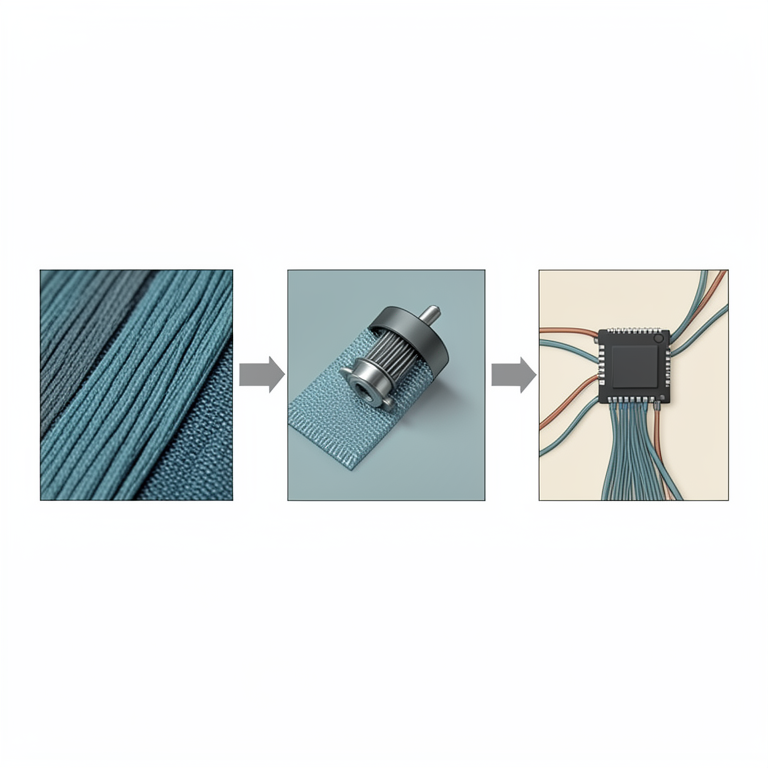
Generations of Smart Textiles
AI-generated conceptual illustration (Conductive textile fabrics and integrated electronic components). It explains the idea and does not show study data.
View source evidence ↗Figures & tables
From the original paper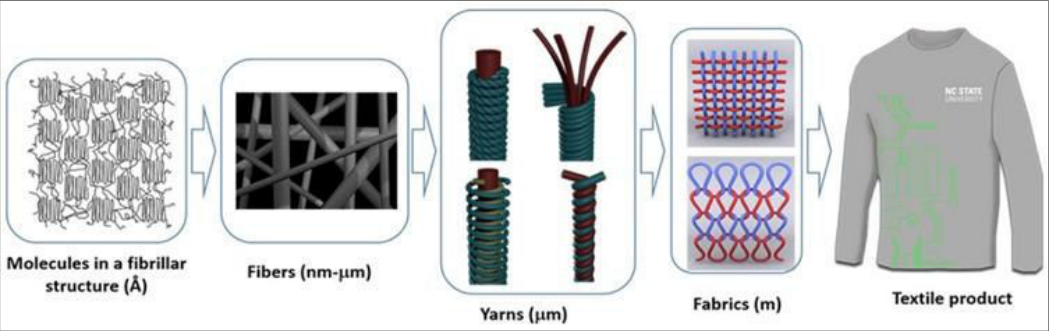 Figure 1
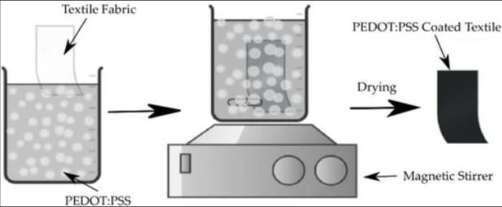 Figure 2
Introduction
Textiles that can respond and alter to environmental stimulus are referred to as smart textiles. The source of stimulus and response could be from any of the sources like chemical, electrical, magnetic or thermal [5] . Smart textiles are also called as electronic textiles (e textiles) or smart fabrics which contain electronic component in it and enhance the characteristics of automobiles, wearables and other products. They are either manufactured into a textile based product, or produced with the objective of being embedded into the textile material [7] .
History of smart textiles
These are some significant events in the development of smart textiles [7] . Year Development 1600
It is said that the first conductive threads originated in the Elizabethan period, when the gleaming accent attire is woven with golden thread. The theory of using metallic thread for conductivity is existed since ages. 2007
Leah buechley invented the microcontroller for creating e textiles which is called as 'Lilypad'. Later, Adafruit makes its own version called 'Flora'.
2014
Dupont presented their stretchable conductive ink at Printed Electronics 2014 2014 MIT Biosuit creates a strong use case for electronic textile in industry 2015
Google's Project Jacquard lead the tech eyes to e-textiles at Google I/O
The very smart textiles essentially consist of a unit, which works like the brain, with cognition, reasoning and activating capacity [5] .
Conductive Textiles
A conductive textile is a fabric made from the strands of a metal that are woven, blended or coated during the manufacture of the textile material. Conductive metals such as gold, silver, carbon, nickel, titanium etc. are commonly used to incorporate in the textiles to produce e-textiles [1] . In strict sense, conductive textiles are not intelligent as they do not react to their environment directly; probably they make many smart textile applications possible especially those that monitor body functions. They are broadly utilized in smart textile applications for example communication, sensors, electrostatic discharge clothing and heating textiles [3] . Nevertheless, the conductive textiles are more frequently used in the production of heating textiles that are used in blankets for operation theatres. Moreover, conductive textiles can enhance the distanced communication between the patients and medical personnel via wearable technologies embedded into the clothing [2] .
Techniques for manufacturing the conductive textiles
The most common manufacturing methods to produce conductive textiles are given below [6] .
Fig 1:
Textile structures as they progress from long chain polymers to the final textile product [8] . Copyright 2018, John Wiley and Sons: Hoboken, NJ, USA.
Addition of metal or carbon in various forms such as particles, wires or fibres
Textiles can attain conductive characteristics through the incorporation of carbon or metals like steel, silver and nickel into their structure in the form of fibers, wires, micro or nano particles et,. Metal fibers can be manufactured either through shaving process or bundle-drawing process. Metal wires and fibers that are integrated into the textile structures exhibits high conductivity, yet they also have some drawbacks like cost, weight and the potential harm they may cause to textile machinery. Carbon filled fibres and carbon fibres possess excellent conductive qualities, however, they do present certain aesthetic issues with color.
Utilization of inherently conductive polymers
Some of the Inherently conductive polymers are polyvinyl alcohol, polyaniline, polyamide 11, polypyrrole etc. Polyaniline has garnered significant interest among these polymers owing to its commendable thermal, chemical and environmental stability. Despite being discovered over 150 years ago, polyaniline has lately gained the scientific community's attention due to the revelation of its elevated electrical conductivity. Conductive polymers are increasingly recognized for their advantages, although their current drawback lies in their relatively high cost. These polymers find application in scenarios demanding low weight, flexibility and conductivity.
Application of conductive substances coating
Another crucial aspect involves the utilization of conductive fibers that have been coated using a variety of techniques.
Highly conductive fibers can be generated through galvanic or metallic coating; however, these techniques come with limitations concerning corrosion resistance, adhesion, and suitability of substrate. Metallic salt coatings also exhibit certain limitations in terms of conductivity. Conductive polyester filaments and yarns of this nature find application in various fields. Incorporating conductive yarns into fabric construction enables the fabrics to acquire diverse functionalities. These enhancements contribute to properties of both textile structure as well as the conductivity. As a result, conductive textiles find significant applications not only in military and medical fields but also in the realms of fashion, architecture and design owing to their aesthetic appeal. Textiles endowed with conductivity function are employed in numerous technical applications, including safeguarding individuals and electronic devices against electromagnetic interference (EMI), data storage and transmission, heating, wearable electronics, electrostatic discharges, sensors and actuators.
Types of conductive textiles
Typically, there are four types of conductive textiles as follows:
Anti-static textiles
The accumulation of static electricity can result in the building up of electric charge on the objects surface which leads to various issues in the realm of textile materials, product handling and manufacturing. In the course of textile processes, are often generated from the friction between fibers and fabrics. The movement of fibers and fabrics at high speeds on various surfaces such as transport bands, driving cords and conveyor belts results in the repulsion of fibers and yarns which leads to the generation of electrostatic charges from the friction between fibers and fabrics. Such static electrical charges have the potential to generate electrical shocks and may lead to the ignition of flammable substances. Two techniques are recognized for preventing static electricity in textiles.
One involves creating a conducting surface, While the other entails producing a hydrophilic surface.
Through these methods, antistatic textiles are manufactured to mitigate the potential hazards arising from electricity or static charges [5] .
EM shielding
Given the rising electromagnetic pollution stemming from various sources like radio channels, television as well as mobile phones, research on safeguarding against electromagnetic waves has garnered significant importance. Electromagnetic shielding (EMs) involves restricting the spread of electromagnetic fields within a space. Electromagnetic waves are generated through the amalgamation of both electrical and magnetic waves, delineated by a specific frequency and wavelength. When an electromagnetic (EM) beam traverses an object, it engages in interactions with the molecules of the object. These interactions can manifest as reflection, absorption, refraction, polarization, and diffraction throughout the object. Upon the entry of a high-frequency electromagnetic wave into a human body, it induces molecular vibrations, resulting in the emission of heat. This heat may pose a challenge in dissipating within the network of veins, particularly in high-risk organs such as the eyes, potentially weakening them. Additionally, there is an elevated risk of conditions like leukemia and other cancers. Shielding is a common technique employed to protect both individuals and electrical equipment from radiating electromagnetic fields. This protective barrier can take the form of either a rigid or flexible structure. Electromagnetic shielding textile materials are available in various forms, including woven, knitted, and nonwoven fabrics. The primary components of these fabrics are fibers and yarns. To attain effective shielding behavior, these fibers must possess electrical conductivity. Conductive yarns can be created by blending conductive fibers with conventional staple fibers or by twisting conductive and insulator filaments together. As an illustration, conductive metallic yarns such as silver, copper etc. can be enveloped with insulating textile materials, forming hybrid yarns. These hybrid yarns can then be incorporated into woven or knitted structures. The EM shielding efficiency of materials holds crucial significance, particularly in applications where safeguarding human health and sensitive electronic devices is a primary concern.
E-textiles
Conductive textile fibers serve as the fundamental elements for wearable smart textiles, specifically designed for diverse applications, including electromagnetic interference shielding, electrostatic discharge, sensors and data transfer within clothing. Electronic textiles (e-textiles) play a crucial role in determining the conductivity of smart textile electronics. In textile applications like lighting, a significant current is required, making low-ohmic fibers the preferred choice. However, for specific sensing or heating applications, lower conductivity proves more effective. Consequently, it necessitates fibers with lower electrical conductivity. In the realm of e-textiles, flexible and mechanically stable conducting materials are essential to ensure electronic capabilities in apparel.
Functional coatings
Functional coatings in many applications serve as the interfaces and surfaces of materials, offering advantageous functionalities beyond their intrinsic bulk characteristics. Consequently, coatings offer a versatile approach in enhancing textiles with conductive properties. Following this, the textile fabric serves as a supporting structure or carrier material for conductive finish. Traditional techniques like roll coating or dip coating are commonly employed to apply bulk coatings in the form of lamination or saturation, covering the entire surface of the textile. Nevertheless, with the emergence of nano-technology in textile researches, the evolution of innovative process techniques and the progress in coating formulations and inks, there is an opportunity to apply coatings increasingly in finer structures [5] .
Fig 2:
Fig 2:
Metal conductors Ferric materials
The conductivity of steel is moderate, making it particularly suitable for applications such as carpet backing and antistatic protective clothing. Resistance for applications such as electrically heated clothing is best achieved using low ductile stainless steel. The inherent bending hardening of the fiber is apparent, restricting the wrinkling of steel fabrics. However, the presence of nickel in stainless steel may pose a risk for allergies, limiting the use of stainless steel in certain technical textile applications.
Noble and color metals
Gold, silver and copper exhibit higher conductivity than steel. Vacuum spraying is a cost-effective method for producing metallic-coated fibers with conductive properties. However, there are limitations, such as unstable construction due to poor adhesion between the metal and fiber. The process is challenging, and the resulting fibers have low resistance to wear and corrosion. Galvanic coating, comparable to vacuum spraying, is feasible only for conductive fibers. While plasma sputtering has enhanced coating thickness control and adhesion issues between metal and fabric persist. The cost of noble metals is high due to their superior electrical performance and the ability to produce finer fibers. Examples include silicon rubber, FEP, PFA, PTFE, among others. Notably, the availability of silver has increased recently, attributed to advancements in digital photography technology.
Carbon
The intraconductivity of certain materials such as carbon approaches that of metallic conductors. However, their production is challenging. Composite structures involving fibers like carbon, nylon, and polyester carbon sandwich fibers result in significantly lower conductivity. The inclusion of any amount of carbon imparts a black color to the final product. While carbon is chemically resistant, it is not as wearresistant. On the positive side, it offers better thermal insulation compared to metals.
Carbon nano tubes
Single-walled nanotubes exhibit extraordinary properties, such as super-fiber mechanical strength, high thermal insulation, and conductivity similar to metals. The conductivity of these nanotubes is significantly influenced by the molecular structural orientation in the CNT and the number of walls.
Recent advancements include the production of polymer composite CNT yarns and even nano fibers with a CNT core structure. This progress suggests that in the future, fibers with both exceptional mechanical and electrical performance could be manufactured using nanotubes, resembling the properties of metals.
Metal salts
Copper sulfide and copper iodide are commonly employed for electrically conductive coatings on fibers due to their ease of processing with standard textile technology. However, it's important to note that only low conductivities can be achieved with these coatings.
Application fields of conductive textiles
Increasing recognition of the enhanced performance and common uses of conductive textiles, such as e-textiles for flexible electronics, electromagnetic shielding (EMs), and anti-static textiles, has resulted in an increase in the use of smart textiles and associated products in a variety of end-use industries. The demand has increased due to a growing global awareness of the features and advantages of using conductive textiles in smart textile applications.
Military & Defense
Military uniforms demand textiles that offer exceptional safety, durability protection in challenging environments including resistance to damage along with considerations for comfort. Conductive textiles are flexible and light in weight and offer high strength & superior conductivity making them valuable in military applications. These textiles provide protection against various weather conditions such as cold, heat, rain, wind, manage sweat and also integrate high-tech materials to safeguard against ballistic impacts, biological, chemical and nuclear threats. Due to these attributes, conductive textiles are swiftly adopted across the defense sector, making it the largest user of such materials globally. Furthermore, conductive textiles find applications in tenting gears, military parachutes, ropes, and safety harnesses.
Healthcare
In the medical sector, conductive textiles find applications in both clinical and non-clinical settings. These textiles are designed to offer functionality as well as comfort simultaneously. Conductive textile products aid doctors and medical staff in monitoring and communicating a patient's conditions by detecting, acquiring, and transmitting physiological signals.
Consumer Electronics
Conductive textiles are integrated into products like smart goggles, augmented reality headsets, smart watches, and multimedia players with computing capabilities. Their incorporation facilitates the development of thin, small, lightweight, and reliable products in these categories.
Sports & Fitness
Conductive textiles play a vital role in the sports and fitness sector, where they are utilized to monitor various health metrics such as sleep patterns, calorie consumption, heart rate, and blood pressure. The growing awareness of health among younger individuals has resulted in a significant demand for conductive textiles in this industry.
In numerous smart fitness products, heart rate monitoring is achieved by measuring the electric impulses that the brain uses to control the heart muscle. This is made possible through the use of electro conductive fabric positioned close to heart.
Smart clothing
Aesthetic and performance functions are identified as two primary categories in the realm of smart textiles. Aesthetic smart textiles leverage technology for fashion design, showcasing capabilities such as lighting up and changing color. Examples include light emitting clothes and luminous dresses, which represent typical and commercially available instances of aesthetic smart textiles. Regarding performance, smart textiles are further classified into three categories: passive smart textiles, active smart textiles, and ultra-smart textiles.
Conclusion
Overall, there are many situations where conventional textile materials are required to conduct electricity. The garments with wearable electronics/devices/system highlight the application of such conductive textiles. The development of conductive textiles has spread to a variety of industries, such as sports, fashion, the military, and healthcare, demonstrating their adaptability and revolutionary potential. The increasing need for conductive textiles highlights how important they are becoming to contemporary applications, pointing to a time when textiles will actively interact with and improve many facets of our daily lives.
Acknowledgement
AcknowledgementThe author is thankful to all the referees for their useful and determined work and also declared no potential conflicts of interest with respect to research, authorship and/or publication of this article.
Figures and tables from the paper
References
5 in the original paper- Tseghai GB, Malengier B, Fante KA, Nigusse AB, Langenhove LV. Integration of conductive materials with textile structures, Overview. Flexible sensors for structural health monitoring. 2020;20:23.
- Hasan, An overview of smart textiles. Textile Learner. Retrieved on 23 October 2021-2023 from https://textilelearner.net/an-overview-of-smart-textiles/
- Kadoglu. Conductive yarns and their use in technical textiles. Technicaltextile.net. Retrieved on 24, November 2023 from https://technicaltextile.net/articles/conductive-yarnsand-their-use-in-technical-textiles3739#:~:text=with%20conductive%20substances- ,Adding%20carbon%20or%20metals%20in%20differen t%20forms%20such%20as%20wires,and%20micro%20 or%20nano%20particles.
- Loomia Technologies, 2022. What are smart textiles?. Retrieved on 21, October, 2023 from https://www.loomia.com/blog/passive-vs-active-smarttextiles
- Talha A, Kony C, Alper B, Ghosh TK. Flexible Interconnects for Electronic Textiles. Adv. Mater. Technol. 2018;3:1700277.
Cited by 2
From OpenAlex, OpenCitations and reference lists read by Scinovex
- Assessment of the Influence of Fabric Structure on Their Electro-Conductive Properties ↗
Magdalena Tokarska, Ayalew Gebremariam, Adam K. Puszkarz · Materials · 2024
Electro-conductive fabrics are key materials for designing and developing wearable smart textiles. The properties of textile materials depend on the production method, the technique which leads to high conductivity, and the structure. The aim of the research work was to determine the factors affecting the electrical conductivity of woven fabrics and elucidate the mechanism of electric current conduction through this…
❝ 5PDF - Micro-CT-Based Experimental Study on the 3D Structure–Electrical Conductivity Relationship of Metal-Coated Woven Fabrics ↗
Magdalena Tokarska, Adam K. Puszkarz, Marcin Makówka · Materials · 2026
The investigated materials were metal-coated woven fabrics. X-ray micro-computed tomography was employed to characterize the fabrics, including their coating, yarn, and pore structures. Electrical resistance was measured using a four-electrode configuration inspired by the van der Pauw method. The obtained results revealed strong relationships between structural parameters and electrical properties of fabrics. Multidirectional resistance measurements confirmed continuous electrical conduction and…
❝ 0PDF