
Research article · 2024 · Full text
International Journal of Advanced Biochemistry ResearchPhysiological and biochemical changes in contrasting chickpea genotypes under Fusarium wilt stress
Volume 8(2) · Pages 410–415 · DOI: 10.33545/26174693.2024.v8.i2sf.607 ↗
Research areasPlant Genetic and Mutation StudiesGenetic and Environmental Crop StudiesBotanical Research and Chemistry
Abstract
Author-writtenChickpea is an important pulse crop grown worldwide for its rich protein content. However, the yield of the crop is adversely affected by various biotic and abiotic stresses. Among biotic stress, Fusarium wilt (FW) caused by Fusarium oxysporum f.sp. ciceris (Foc) adversely affect the chickpea production and can cause 100% yield loss. The plant also possesses defense mechanism to counteract the pathogen attack by employing various morphological, physiological, biochemical and molecular changes during this host-pathogen interaction. The present study aims to understand the physiological and biochemical changes that occur during chickpea-Foc interaction in two contrasting genotypes, FW-resistant (Pusa Green 112) and FW-susceptible (ILC 482). Drastic changes in physiological parameters like relative water content (RWC) and electrolyte leakage (EL) were observed for chickpea genotypes under Fusarium infection. The RWC was heavily compromised in susceptible genotype (ILC 482) and electrolyte leakage was elevated in this genotype under Foc stress. While, no change in RWC and EL was observed for resistant genotype (Pusa Green 112) suggesting a robust resistance mechanism operating in this genotype. Alteration in antioxidant activities were also observed in the genotypes under Foc attack. SOD activity was higher in Pusa Green 112 under Foc stress suggesting an efficient ROS scavenging system present in this genotype. Exaggerated CAT activity in ILC 482 (susceptible) suggests excessive ROS production. Such drastic increase in CAT activity at symptom development stage is a late response to impart protection against pathogen infection. Furthermore, the MDA level was also compromised in ILC 482, suggesting heavy membrane damage due to Foc attack. Hence, the present study provides new insights into physiological and biochemical changes that occurs during chickpea-Foc interaction.
Summary
Source-checkedPlain-language reading of the full paper, prepared with AI and checked against the text. Each point links to the authors' own words.
Why it matters
- Chickpea is a globally significant pulse crop valued for its high protein content. View evidence ↗
- Fusarium wilt, caused by the fungus Fusarium oxysporum f.sp. ciceris (Foc), is a devastating biotic stress that can lead to total yield loss in chickpea. View evidence ↗
- The Foc pathogen enters through root tips and clogs xylem vessels with mycelia, which blocks water transport to the rest of the plant. View evidence ↗
The question
- The study aimed to identify the physiological and biochemical differences between a Fusarium wilt-resistant genotype (Pusa Green 112) and a susceptible one (ILC 482) during infection. View evidence ↗
What they did
- The researchers analyzed two contrasting genotypes, ILC 482 and Pusa Green 112, at 2 and 10 days post inoculation (DPI). View evidence ↗
- The study measured relative water content (RWC), electrolyte leakage (EL), and malondialdehyde (MDA) levels to assess water status and membrane damage. View evidence ↗
What they found
- Electrolyte leakage increased to 34% in the susceptible ILC 482 under stress, while the resistant Pusa Green 112 remained stable at 24.5%. View evidence ↗
- Under Foc stress, the susceptible genotype ILC 482 exhibited significantly higher CAT activity (133 U/g FW) than the resistant Pusa Green 112 (89.4 U/g FW). View evidence ↗
- The resistant genotype Pusa Green 112 had higher SOD activity (143 U/g FW) compared to the susceptible ILC 482 (132 U/g FW) under stress. View evidence ↗
- Both genotypes showed similar levels of GPX and APX activities under Foc stress, suggesting a basic shared defense level. View evidence ↗
What it means
- The authors conclude that the resistance of Pusa Green 112 is likely due to a more efficient antioxidant defense system and better maintenance of cell integrity. View evidence ↗
- The authors state that further research into the molecular mechanisms of the interaction is needed to fully understand chickpea defense against Foc. View evidence ↗
Visual summary
1 visualsIllustrations explain the paper; they do not show study data.
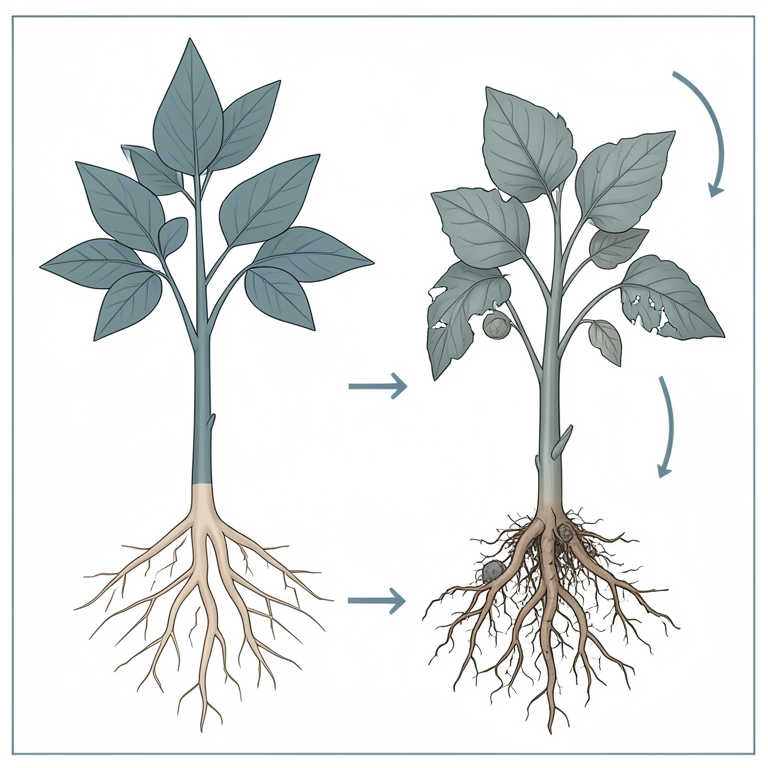
Mechanism of Fusarium Wilt Damage
AI-generated conceptual illustration (Chickpea plants (Cicer arietinum) and Fusarium oxysporum f. sp. ciceris fungus). It explains the idea and does not show study data.
View source evidence ↗Figures & tables
From the original paper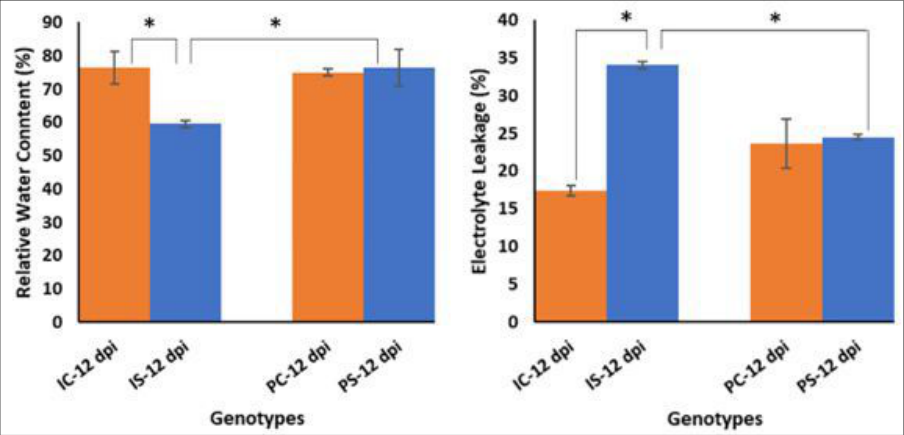 Figure 1
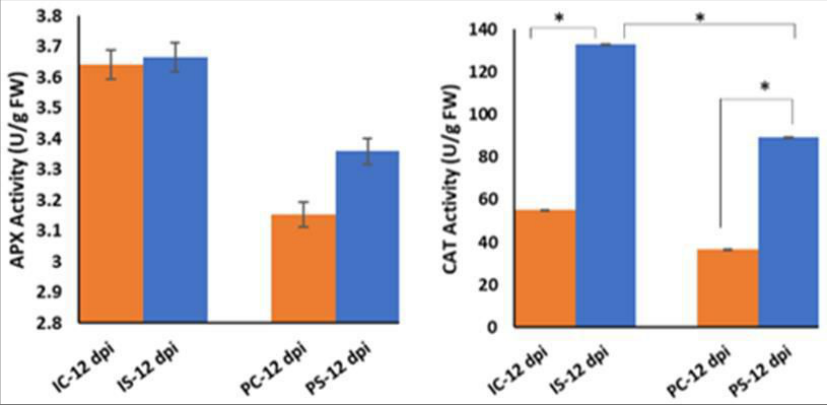 Figure 2
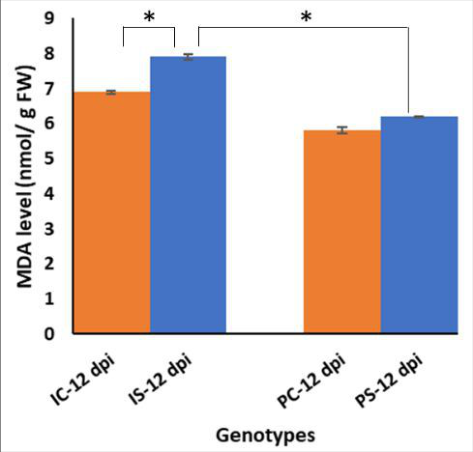 Figure 3
Introduction
Chickpea (Cicer arietinum L.) is a legume crop grown for its good dietary protein content. It is the topmost pulse crop in India and grown in a land area of 10.94 Mha with an annual production of 11.9 Mt (FAOSTAT, 2021) [1] . At global level, chickpea is the 3 rd topmost pulse crop and grown in an area of 15 Mha with an annual production of 15.88Mt (FAOSTAT, 2021) [1] . The average productivity of chickpea is very low (1.05 t/ha) as compared to its genetic potential of 6 t/ha (Parween et al., 2015; FAOSTAT, 2021) [2,1] . This huge difference in productivity is mainly attributed to various biotic stresses like Ascochyta blight, Fusarium wilt, pod borer infestation and abiotic stresses like drought, salinity, heat and cold (Kashiwagi et al., 2015) [3] . Among biotic stresses, Fusarium wilt is one of the most devastating fungal diseases in chickpea and accounts for 100% yield loss (Yadav et al., 2023) [4] . Fusarium wilt is caused by a soil-borne and hemibiotrophic fungus, Fusarium oxysporum f. sp. ciceris (Foc). The pathogen has the characteristics features of both biotrophs and necrotrophs (Lyons, et al., 2015) [5] . The infection cycle starts with biotrophic phase and then switch to necrotrophic phase at later stage of infection. The fungus spreads through infested soil and contaminated crop residues. The pathogen enters the host through root tips and mainly clogs the xylem vessels via mycelia. Clogging of xylem leads to blockage of water transport preventing movement of water to the upper parts of the plant.
Physiological changes include reduced relative water content, electrolyte leakage, changes in chlorophyll fluorescence activity as well as pigment content (Bhar et al., 2017) [7] . Biochemical changes include ROS burst, higher ROS scavenging activity, lipid peroxidation, production of phytohormones like SA, JA (Garcia-Limones et al., 2002; Gupta et al., 2013; Bhar et al., 2017; 2018) [8,7,6] . The molecular changes include induction of various defense signaling molecules, defense genes like PR genes, various transcription factors (Chakraborty et al., 2020). The present study is done to understand the physiological and biochemical alterations in chickpea under Fusarium wilt stress. Two chickpea genotypes contrasting for Fusarium wilt resistance, ILC 482 (FW-susceptible) and Pusa Green 112 (FW-resistant), were studied for various physiological and biochemical parameters at two time points of infection, 2-and 10-days post inoculation (DPI).
Materials and Methods
Plant infection assay: The chickpea seeds were surface sterilized using 0.1% mercuric chloride for 5 min followed by five washes with double distilled water (ddH 2 O) for 5 min each. The seeds were sown in medium-sized clean plastic pots (3 seeds/pot) filled with autoclaved soil rite-mix. The pots were then transferred to a growth chamber with the following conditions-14 h light/10 h dark, temperature range 22-25 °C and relative humidity (RH) 60 -70%, and light intensity of 135 μmol m -2 s -1 . The plant infection was done by root clipping method as described by Tullu et al. (1998) [8] . For stress samples, the twelve days old seedlings were infected with Foc spores (10 6 /ml). For control samples, the seedlings were treated with ddH 2 O. The control samples were designated as PC (Pusa Green 112 Control), IC (ILC 482 Control), and stress samples were designated as PS (Pusa Green 112 Stress), IS (ILC 482 Stress).
Physiological parameters Estimation of Relative Water Content (RWC)
The protocol for RWC was adopted by Bhar et al. (2018) [9] with slight modifications. The fully expanded leaf from the top of the plant was taken for the study. The RWC was calculated using the formula given below. RWC (%) = [(Fresh weight -Dry weight) / (Turgid Weight -Dry Weight)] x 100.
Measurement of electrolyte leakage (EL)
Electrolyte leakage (EL) was measured according to the protocol given by Jatan et al. (2019) [11] . The electrolyte leakage was measured based on the formula given below.
Antioxidant activity assay GPX activity assay
The GPX activity was estimated using the protocol given by Hameed et al. (2014) [12] . The activity was estimated by using pooled samples of shoot and root tissues with 100 mg each. The enzymatic reaction was initiated and increase in absorbance of the reaction was measured at 470 nm. Absorbance was recorded after every 20 s for 1 min. The enzyme activity was calculated based on tissue fresh weight (U/g FW).
CAT activity assay
The CAT activity was estimated using the protocol given by Chance and Maehly (1955) [13] . The activity was estimated by using pooled samples of shoot and root tissues with 100 mg each. The enzymatic reaction was initiated and immediately the decrease in absorbance of the reaction was measured at 240 nm. Absorbance was recorded after every 20 s for 1 min in a UV-Vis spectrometer (Lambda 35, Perkin Elmer Inc., USA). The enzyme activity was calculated on the basis of tissue fresh weight (U/g FW).
APX activity assay
The APX activity was estimated using the protocol given by Chen and Asada (1989) [14] . The activity was estimated by using pooled samples of shoot and root tissues with 100 mg each. The enzymatic reaction was initiated and immediately the decrease in absorbance of the reaction was measured at 290 nm. Absorbance was recorded after every 20 s for 1 min. The enzyme activity was calculated based on tissue fresh weight (U/g FW).
SOD activity assay
The SOD activity was estimated using the protocol given by Dhindsa et al. (1981) [15] . The activity was estimated by using pooled samples of shoot and root tissues with 100 mg each. One unit of SOD activity is defined as the amount of enzyme required to cause 50% inhibition of nitroblue tetrazolium (NBT) photoreduction rate. The enzyme activity was calculated based on tissue fresh weight (U/g FW).
Estimation of Malondialdehyde (MDA)
The MDA was estimated to check the degree of lipid peroxidation by using the protocol given by Viswakarma et al. (2015). The MDA level was estimated by using pooled samples of shoot and root tissues with 100 mg each. The absorbance was measured at 532 nm and corrected for nonspecific turbidity by subtracting the absorbance at 600 nm, The MDA content was calculated based on fresh weight (nmol/g FW).
The formula for the calculation of MDA content is given below
Where, ε = Extinction coefficient of MDA-TBA abduct at 532 nm = 15 mM -1 cm -1 V = Volume of crude extract
Statistical Analysis
The physiological and biochemical data were analyzed by using one-way analysis of variance (ANOVA) with post-hoc Tukey HSD (Honestly significant difference) (https://www.socscistatistics.com/) to test statistical significance between means of control and stress treatments at P-value < 0.05. The figure's values represent mean ± SE (n = 3) of three biological replicates per genotype per treatment.
Results
The Fusarium wilt symptoms like drooping of leaflets and stunted growth were observed at 12 days post inoculation (dpi) in susceptible genotype, ILC 482 while no such symptoms were observed for resistant genotype, Pusa Green 112. Based on the phenotypic changes, we carried out the physiological and biochemical studies of control and stress samples at 12 dpi.
Physiological changes in contrasting chickpea genotypes under Fusarium wilt stress: RWC was studied to understand the effect of Fusarium infection on water status in plants, as FW affects the water transport by clogging the xylem vessels by mycelia deposition. A drastic reduction in RWC was observed for ILC 482 (IS-12 dpi-59.5%) under Foc stress at late time point (12 dpi) as compared to its control counterpart (IC-12 dpi-76.5%) as well as stressed Pusa Green 112 (PS-12 dpi-76.3%) (p< 0.05) (Fig. 1a). EL assay was done to understand the degree of membrane damage occurring due to Fusarium infection. An increase in the electrolyte leakage was observed for ILC 482 (34%) under Foc stress (p< 0.05). On the other hand, the resistant genotype, Pusa Green 112 (24.5%) did not show any remarkable change in electrolyte leakage status after Foc stress at this time point (Fig. 1b).
Biochemical changes in contrasting chickpea genotypes under Fusarium wilt stress:
The activity of four major antioxidant enzymes, namely, GPX, CAT, APX, and SOD were measured to determine their role in chickpea defense against wilt stress. GPX activity assay revealed that both ILC 482 (79.3 U/g FW) and Pusa Green 112 had similar level of GPX activity (89.1 U/g FW) under Foc stress (p< 0.05) (Fig. 2a). CAT activity assay revealed that the activity is tremendously higher in ILC 482 (133 U/g FW) as compared to Pusa Green 112 (89.4) under Foc stress (Fig. 2b). APX activity assay revealed similar level of APX activities in both ILC 482 (3.7 U/ g FW) and Pusa Green 112 (3.4 U/ g FW) under Foc stress (Fig. 2c). SOD activity assay showed slightly lower level of SOD activity in ILC 482 (132 U/ g FW) as compared to Pusa Green 112 (143 U/ g FW) (p< 0.05) (Fig. 2d). The rate of lipid peroxidation in chickpea genotypes under control and stress conditions were measured by quantifying the MDA levels, a by-product of lipid peroxidation process. The susceptible genotype, ILC 482 (7.9 nmol/g FW) showed significantly higher MDA levels as compared to the resistant genotype, Pusa green 112 (PS-10 dpi-6.2 nmol/g FW) under Foc stress. The higher level of MDA in susceptible genotype under Foc stress hints that membrane damage is caused due to Foc attack (Fig. 3).
Discussion
Relative water content (RWC) is a useful indicator of water status in plants (Soltys-Kalina et al., 2016) [16] . The exposure of Fusarium infection led to reduced relative water content in susceptible genotypes ILC 482 as compared to resistant genotype, Pusa Green 112 at 12 dpi. This suggests wilting occurs due to severe water shortage caused by clogging of xylem by fungal mycelia in the ILC 482 roots. Electrolyte leakage indicates the degree of cell membrane instability which in turn gives an idea about the cell death (Hatsugai and Katagiri, 2018) [17] . The electrolyte leakage was severely high in susceptible genotype as compared to resistant one suggesting occurrence of severe membrane damage and cell death due to Fusarium infection. Production of ROS (Reactive Oxygen Species) like hydrogen peroxide (H 2 O 2 ) and superoxide (O 2 •-) (oxidative burst) is one of the earliest defense responses against pathogen attack (Vlot et al., 2009). However, excess ROS can damage cellular components due to their toxic effect. Production of antioxidants are indicative of resistance against Fusarium attack as these enzymes remove the excess ROS produced during oxidative burst (Narula et al., 2020) [18] . Antioxidants (also known as defense enzymes, ROS scavengers) such as GPX, CAT, APX detoxify the most abundant ROS, H 2 O 2 , and SOD detoxify the superoxide radicals thereby maintaining a ROS homeostasis inside the plant cell (Wojtaszek, 1997) [19] . In ILC 482 (susceptible), the enzyme activities were similar (in case of GPX, APX), higher (in case of CAT) and slightly reduced (in case of SOD) as compared to Pusa Green 112 (resistant) at 12 dpi. Exaggerated CAT activity in ILC 482 (susceptible) suggests excessive ROS production. Similar observation was also observed for another study on chickpea infected with Foc Race 5, where susceptible genotype, JG 62, showed significantly higher CAT activity (Garcia Limones et al., 2002) [8] . Such drastic increase in CAT activity at symptom development stage is a late response to impart protection against pathogen infection. Furthermore, lower SOD activity under Foc infection in susceptible genotype, JG 62 confirm inefficient antioxidant system during the infection process. While the resistant genotype, Pusa Green 112 showed higher SOD activity at this time point suggesting robust ROS scavenging mechanism that imparts resistance against the pathogen. MDA (Malondialdehyde) is the final product of the peroxidation of unsaturated fatty acids in phospholipids present in the plant membrane and signifies the degrees of membrane damage (Ayala et al., 2014) [20] . A significantly higher peak in MDA level in wilt infected susceptible genotype as compared to resistant genotype at both the time points means that the membrane lipids have been heavily damaged in susceptible genotype due to Foc invasion. Hence, the present study provides new insights into physiological and biochemical changes that occurs during chickpea-Foc interaction. Further studies on molecular mechanism involved during this interaction will give a clearer picture regarding the chickpea defense against Foc infection.
Conclusion
The study on Fusarium wilt (Foc) stress in chickpea genotypes revealed significant differences in physiological and biochemical responses between the susceptible genotype ILC 482 and the resistant genotype Pusa Green 112. The physiological assessments indicated a substantial reduction in relative water content (RWC) and an increase in electrolyte leakage (EL) in ILC 482 under Foc stress, highlighting the genotype's susceptibility to Fusarium infection through its impact on water transport and membrane integrity. Conversely, Pusa Green 112 demonstrated resilience, maintaining stable RWC and EL levels, indicative of its resistance to Foc stress. Biochemically, the activities of antioxidant enzymes (GPX, CAT, APX, and SOD) and levels of lipid peroxidation (measured as MDA) were analysed to understand the oxidative stress response. Both genotypes exhibited similar GPX and APX activities, suggesting a basic level of defense against Foc-induced oxidative stress. However, significant differences were observed in CAT and SOD activities, with ILC 482 showing higher CAT activity but slightly lower SOD activity compared to Pusa Green 112. The higher MDA levels in ILC 482 further confirmed the susceptibility of this genotype to membrane damage under Foc stress.
These findings underscore the complexity of the plant defense mechanism against Fusarium wilt, involving both physiological alterations and oxidative stress management. The resistance observed in Pusa Green 112 is likely attributed to its efficient anti-oxidative defense system and better maintenance of cellular integrity under stress. Understanding these contrasting responses provides valuable insights into the mechanisms of resistance and susceptibility in chickpea genotypes, offering potential pathways for breeding Fusarium wilt-resistant chickpea varieties.
Figures and tables from the paper
References
18 in the original paper- FAOSTAT; c2021. https://www.fao.org/faostat/en/#home. (Accessed on 26 April 2023).
- Parween S, Nawaz K, Roy R, Pole AK, Venkata Suresh B, Misra G, et al. An advanced draft genome assembly of a desi type chickpea (Cicer arietinum L.). Scientific Reports. 2015;5(1):1-14.
- Kashiwagi J, Krishnamurthy L, Purushothaman R, Upadhyaya HD, Gaur PM, Gowda CLL, et al. Scope for improvement of yield under drought through the root traits in chickpea (Cicer arietinum L.). Field Crops Research. 2015;170:47-54.
- Yadav RK, Tripathi MK, Tiwari S, Tripathi N, Asati R, Patel V, et al. Breeding and Genomic Approaches towards Development of Fusarium Wilt Resistance in Chickpea. Life. 2023;13(4):988.
- Lyons R, Stiller J, Powell J, Rusu A, Manners JM, Kazan K. Fusarium oxysporum triggers tissue-specific transcriptional reprogramming in Arabidopsis thaliana. PloS One. 2015;10(4):e0121902. https://doi.org/10.1371/journal.pone.0121902.
- Gupta S, Bhar A, Chatterjee M, Das S. Fusarium oxysporum f. sp. ciceri race 1 induced redox state alterations are coupled to downstream defense signaling in root tissues of chickpea (Cicer arietinum L.). PloS One. 2013;8(9):e73163.
- Bhar A, Gupta S, Chatterjee M, Sen S, Das S. Differential expressions of photosynthetic genes provide clues to the resistance mechanism during Fusarium oxysporum f. sp. ciceri race 1 (Foc1) infection in chickpea (Cicer arietinum L.). European Journal of Plant Pathology. 2017;148:533-549.
- García-Limones C, Hervás A, Navas-Cortés JA, Jiménez-Díaz RM, Tena M. Induction of an antioxidant enzyme system and other oxidative stress markers associated with compatible and incompatible interactions between chickpea (Cicer arietinum L.) and Fusarium oxysporum f. sp. ciceris. Physiological and Molecular Plant Pathology. 2002;61(6):325-337.
- Bhar A, Chatterjee M, Gupta S, Das S. Salicylic acid regulates systemic defense signaling in chickpea during Fusarium oxysporum f. sp. ciceri race 1 infection. Plant Molecular Biology Reporter. 2018;36:162-175.
- Tullu ABE, Muehlbauer FJ, Simon CJ, Mayer MS, Kumar JAGDIS, Kaiser WJ, et al. Inheritance and linkage of a gene for resistance to race 4 of fusarium wilt and RAPD markers in chickpea. Euphytica. 1998;102:227-232.
- Jatan R, Chauhan PS, Lata C. Pseudomonas putida modulates the expression of miRNAs and their target genes in response to drought and salt stresses in chickpea (Cicer arietinum L.). Genomics. 2019;111(4):509-519.
- Hameed A, Iqbal N, Malik SA. Effect of D-mannose on antioxidant defense and oxidative processes in etiolated wheat coleoptiles. Acta Physiologiae Plantarum. 2014;36:161-167.
- Chen GX, Asada K. Ascorbate peroxidase in tea leaves: occurrence of two isozymes and the differences in their enzymatic and molecular properties. Plant and Cell Physiology. 1989;30(7):987-998.
- Dhindsa RS, Plumb-Dhindsa PAMELA, Thorpe TA. Leaf senescence: correlated with increased levels of membrane permeability and lipid peroxidation, and decreased levels of superoxide dismutase and catalase. Journal of Experimental Botany. 1981;32(1):93-101.
- Soltys-Kalina D, Plich J, Strzelczyk-Żyta D, Śliwka J, Marczewski W. The effect of drought stress on the leaf relative water content and tuber yield of a half-sib family of 'Katahdin'-derived potato cultivars. Breeding Science. 2016;66(2):328-331.
- Hatsugai N, Katagiri F. Quantification of plant cell death by electrolyte leakage assay. Bio-protocol. 2018;8(5):e2758-e2758.
- Narula K, Elagamey E, Abdellatef MA, Sinha A, Ghosh S, Chakraborty N, et al. Chitosan-triggered immunity to Fusarium in chickpea is associated with changes in the plant extracellular matrix architecture, stomatal closure and remodeling of the plant metabolome and proteome. The Plant Journal. 2020;103(2):561-583.
- Wojtaszek P. Oxidative burst: An early plant response to pathogen infection. Biochemical Journal. 1997;322(3):681-692.