
Research article · 2024 · Full text
International Journal of Geography Geology and EnvironmentImpact of lumpy virus on bovine animals of Jalgaon district with the special reference to Chopda Tehsil
Volume 6(1) · Pages 101–104 · DOI: 10.22271/27067483.2024.v6.i1b.207 ↗
Research areasPoxvirus research and outbreaksAnimal Disease Management and EpidemiologyAnimal Virus Infections Studies
Abstract
Author-writtenAlways absolute relationship between humans and animals from a long time ago; even from ancient times can see that humans and animals complement each other, from the time of ancient humans to modern times. The evidence of humans domesticating animals as far back as the Neolithic period. Also find evidence of this in the ancient civilizations of Egyptian, Harappa and Ho Hang Ho. The evidence of this even in this very ancient culture. Humans started using natural resources to meet their basic needs; one of the important resources is animals. From animals we get food, clothes, science, and many more. In today's modern times, despite the progress of science, Human not been able to make simple milk, so the importance of animals in human life is very high. Over time, humans started animal husbandry and today animal husbandry is practiced on a large scale in modern ways. Will see what are animal husbandry and its types and importance.in this Research paper we Find the Impact of Lump LDS Virus on the Bovine Animals in the Jalgaon District with the Special Reference to Chopda tehsil.
Summary
Source-checkedPlain-language reading of the full paper, prepared with AI and checked against the text. Each point links to the authors' own words.
Why it matters
- Lumpy skin disease (LSD) is a pox disease affecting Asian water buffalo and domestic cattle, identified by skin nodules. View evidence ↗
- LSD outbreaks cause significant economic losses, with the most severe impact felt by backyard and small-scale farmers. View evidence ↗
- The disease reduces the commercial value of hides due to skin damage and leads to reduced milk production, infertility, and death. View evidence ↗
The question
- The study aims to determine the impact of the Lumpy Skin Disease (LSD) virus on bovine animals in the Chopda tehsil of the Jalgaon district. View evidence ↗
What they did
- The researchers used a simple analytical methodology based on secondary data collected from veterinary hospitals and the Panchayat samiti in Chopda. View evidence ↗
- The study tested the hypothesis that lumpy skin disease has a major impact on bovine animals. View evidence ↗
What they found
- The mortality rate for major cattle was 846 per 1,000 animals, which was higher than the rate for small cattle at 750 per 1,000. View evidence ↗
- The study found that the impact of the virus was more significant in major bovine animals compared to small male and female animals. View evidence ↗
- The disease was found to be more common in young cows, who also exhibited the highest mortality rate. View evidence ↗
- Older cows and heifers showed fewer effects, which the authors attribute to farmers focusing on the breeds of milking animals. View evidence ↗
- The economic impact of the disease was primarily driven by the high morbidity rate rather than the mortality rate. View evidence ↗
What it means
- The authors concluded that their hypothesis was correct: lumpy skin disease has a major impact on bovine animals in Chopda Tehsil. View evidence ↗
- The authors recommend segregating infected animals, stopping animal transport from affected areas, and using insecticides to eradicate vectors like flies and mosquitoes. View evidence ↗
Visual summary
3 visualsIllustrations explain the paper; charts are replotted from the paper's own table values.
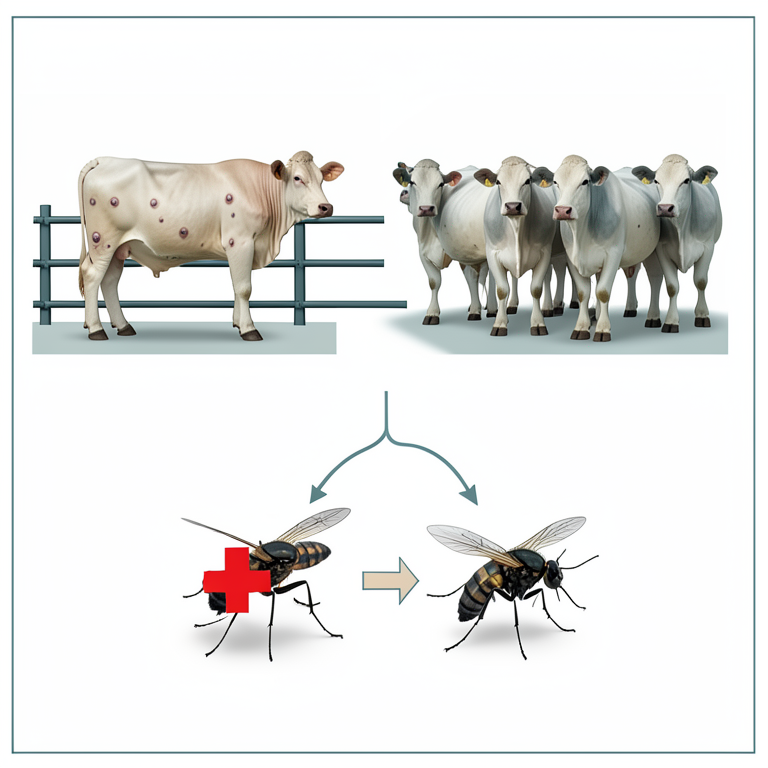
Disease Control Strategy
AI-generated conceptual illustration (bovine cattle). It explains the idea and does not show study data.
View source evidence ↗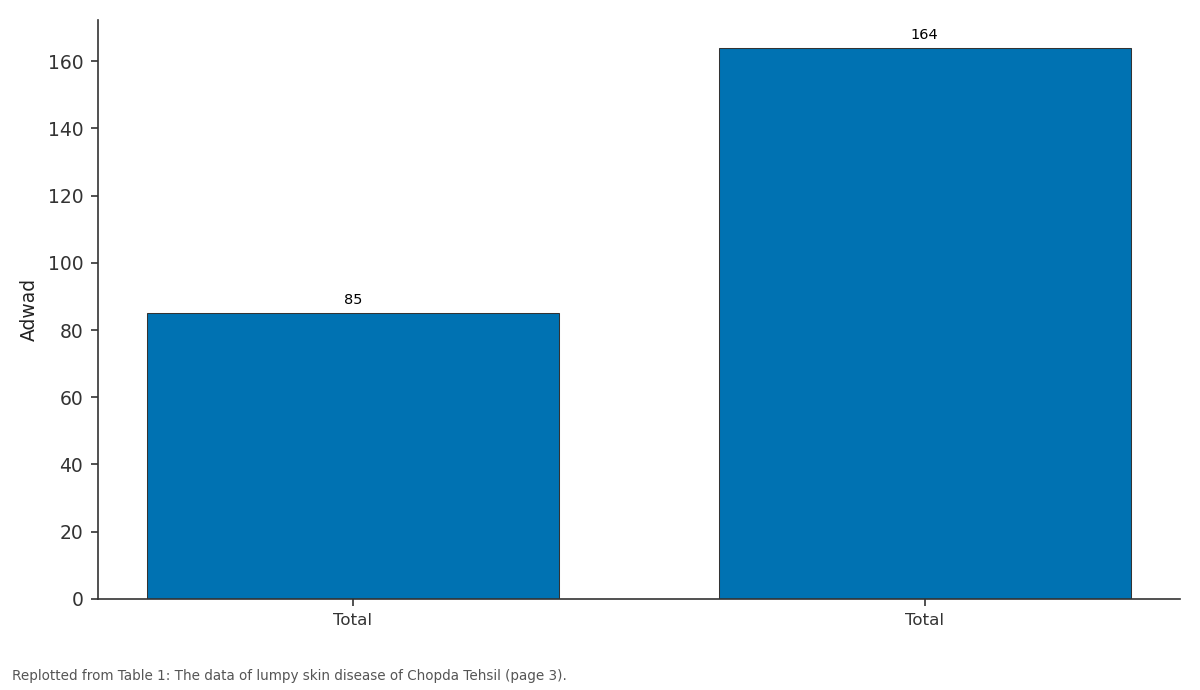
Adwad: Total vs Total
Replotted from Table 1 (page 3) of the original paper. Every bar is the paper's own table value.
View source evidence ↗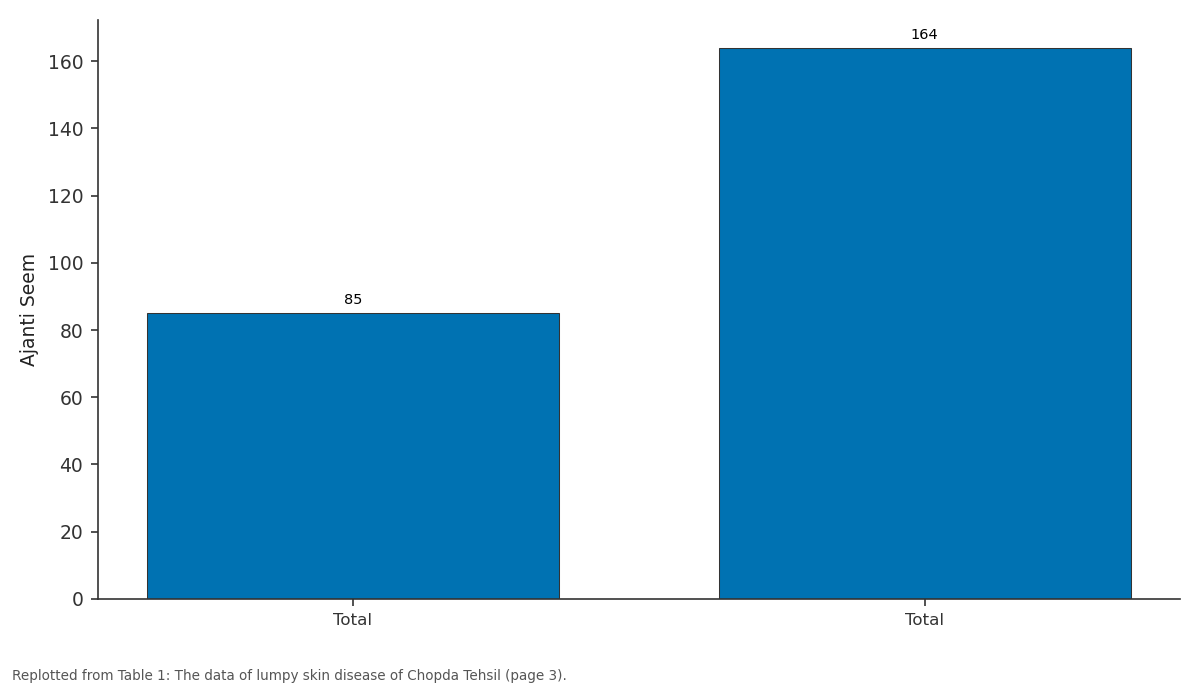
Ajanti Seem: Total vs Total
Replotted from Table 1 (page 3) of the original paper. Every bar is the paper's own table value.
View source evidence ↗Figures & tables
From the original paper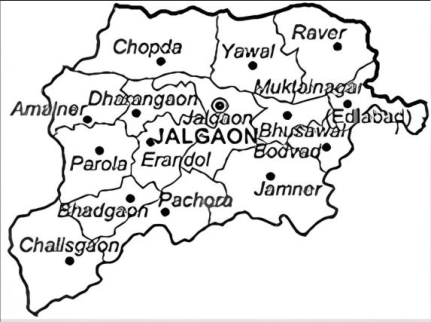 Figure 1
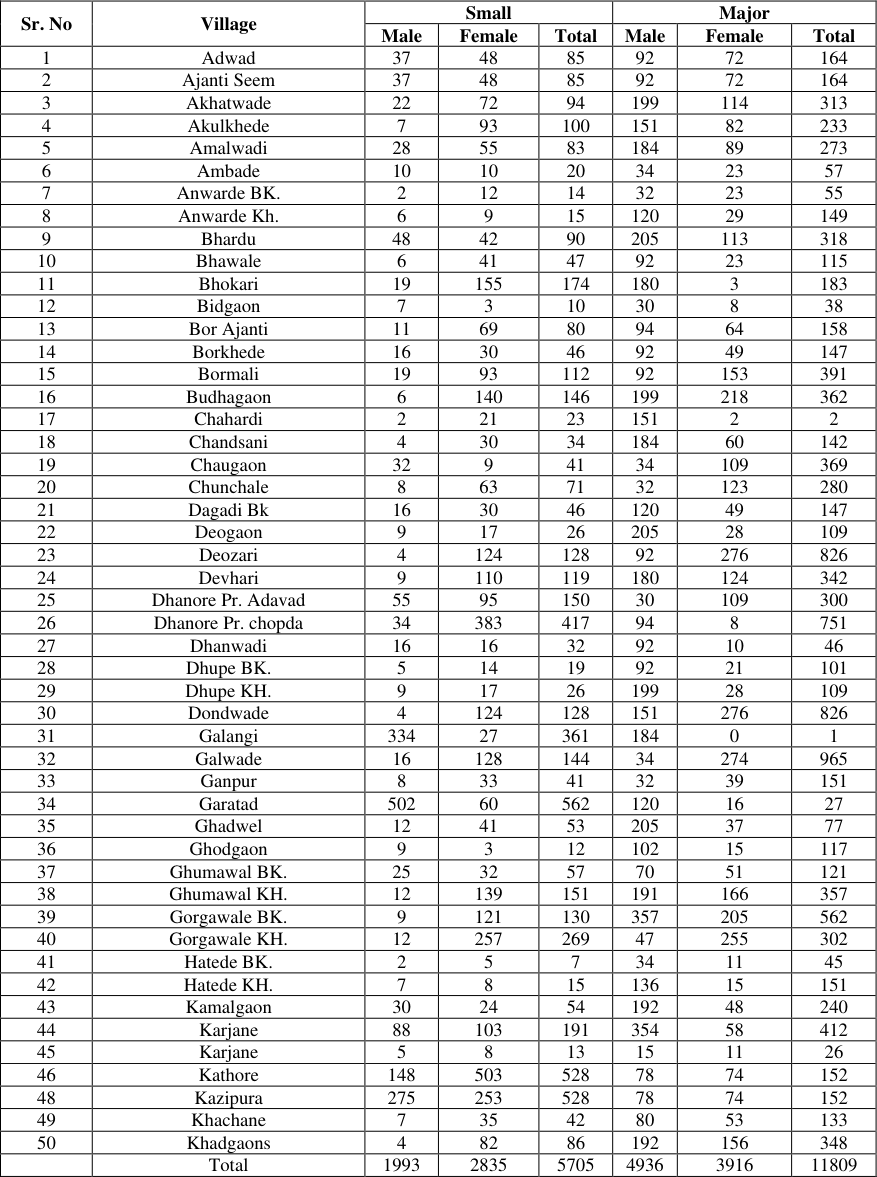 Table 1
Introduction
Lumpy skin disease is a vector-borne pox disease of domestic cattle and Asian water buffalo and is characterized by the appearance of skin nodules. Endemic across Africa and the Middle East, the disease has, since 2015, spread into the Balkans, the Caucasus and the southern Russian Federation. Outbreaks of LSD cause substantial economic losses in affected countries, but while all stakeholders in the cattle industry suffer income losses, poor, small-scale, and backyard farmers are hit hardest. The disease impacts heavily on cattle production, milk yields, and animal body condition. It causes damage to hides, abortion, and infertility. Total or partial stamping-out costs add to direct losses. Indirect losses stem from restrictions on cattle movements and trade. In addition to vectors, transmission may occur through consumption of contaminated feed or water, direct contact, natural mating or artificial insemination. Large-scale vaccination is the most effective way of limiting the spread of the disease. Effective vaccines against LSD exist and the sooner they are used the less severe the economic impact of an outbreak is likely to be.
Objectives
In this Research Paper there are three main objectives 1. To getting knowledge about the lumpy vires and the origin of it. 2. It impact on bovine animals of Jalgaon District with the spatial reference To Chopda.
To calculate the Secondary date of Lumpy disease Of Chopda Tahesil And Find The Major Impact On it
To calculate the Secondary date of Lumpy disease Of Chopda Tahesil And Find The Major Impact On it
Methodology
To analyze the impact of lumpy we are using simple analytical methodology to calculate the data ex the total number of the cows and the major one the data for the calculation the Mortality Rate we use a secondary data which are collect from the Panchayat samiti, Chopda and visit the veterinary hospitals in the Chopda tehsil itself.
Hypotheses: "There is the major impact of lumpy skin disease on the bovine animal"
Significant of Research
Lumpy skin disease (LSD) is an infectious disease in cattle caused by a virus of the family Poxviridae, also known as Nettling virus. The disease is characterized by large fever, enlarged superficial lymph nodes and multiple nodules (Measuring 2-5 centimetres (1-2 in) in diameter) on the skin and mucous membranes (including those of the respiratory and gastrointestinal tracts). Infected cattle also may develop oedematous swelling in their limbs and exhibit lameness. The virus has important economic implications since affected animals tend to have permanent damage to their skin, lowering the commercial value of their hide. Additionally, the disease often results in chronic debility, reduced milk production, poor growth, infertility, abortion, and sometimes death. Onset of fever occurs almost one week after infection by the virus. This initial fever may exceed 41 °C (106 °F) and persist for one week. At this time, all of the superficial lymph nodes become enlarged. The nodules, in which the disease is characterized by, appear seven to nineteen days after virus inoculation.
Coinciding with the appearance of the nodules, discharge from the eyes and nose becomes Mucopurulent.
Research Area
Jalgaon District is located in the north-west region of the state of Maharashtra. It is bounded by Satpuda mountain ranges in the north, Ajanta mountain ranges in the south. Jalgaon is rich in volcanic soil which is well suited for cotton production. It is a major business center for tea, gold, pulses, cotton and bananas. Languages spoken are Marathi, Ahirani, Hindi, and English. Jalgaon District receives an average rainfall of about 690 mm and the temperature varies from 10 to 48 degree Celsius. Jalgaon has got pretty diverse climate. It is exceptionally hot and dry during summer with temperature reaching as high as 45 degrees Celsius. Jalgaon receives about 700 mm rainfall during monsoons, which is followed by pleasant temperature in winter.
Impact of lumpy virus on animal husbandry
The spread of the disease can lead to "substantial" and "severe" economic losses according to FAO and the World Organisation for Animal Health (WOAH). The disease leads to reduced milk production as the animal becomes weak and also loses appetite due to mouth ulceration. The income losses can also be due to poor growth, reduced draught power capacity and reproductive problems associated with abortions, infertility and lack of semen for artificial insemination. Movement and trade bans after infection also put an economic strain on the whole value chain. A risk assessment study conducted by the FAO based on information available from 2019 to October 2020 revealed that the economic impact of LSD for South, East and Southeast Asian countries "was estimated to be up to $ Bovine Animal in Chopda Tehsil. The disease's economic impact was mostly due to its high morbidity rate rather than its mortality rate. Lumpy diseased animals should be segregated and infected and healthy animals should not be fed together. Transport of animals from affected areas should be stopped, flies, mosquitoes and cockroaches should be eradicated for disease control. Spray the insecticidal medicine on the body of the animal and in the cowshed. Based on the above information, you can see that Lumpy disease is more common in young cows and the highest mortality rate is seen in young cows. In contrast we can see that in older cows and heifers we see less of these effects because farmers have focused on the breed of milking animals. Thus the above hypothesis is correct and we accept it based on the above information.
Figures and tables from the paper
| Sr. No | Village | Small | — | — | Major | — | — |
|---|---|---|---|---|---|---|---|
| Male | Female | Total | Male | Female | Total | ||
| 1 | Adwad | 37 | 48 | 85 | 92 | 72 | 164 |
| 2 | Ajanti Seem | 37 | 48 | 85 | 92 | 72 | 164 |
| 3 | Akhatwade | 22 | 72 | 94 | 199 | 114 | 313 |
| 4 | Akulkhede | 7 | 93 | 100 | 151 | 82 | 233 |
| 5 | Amalwadi | 28 | 55 | 83 | 184 | 89 | 273 |
| 6 | Ambade | 10 | 10 | 20 | 34 | 23 | 57 |
| 7 | Anwarde BK. | 2 | 12 | 14 | 32 | 23 | 55 |
| 8 | Anwarde Kh. | 6 | 9 | 15 | 120 | 29 | 149 |
| 9 | Bhardu | 48 | 42 | 90 | 205 | 113 | 318 |
| 10 | Bhawale | 6 | 41 | 47 | 92 | 23 | 115 |
| 11 | Bhokari | 19 | 155 | 174 | 180 | 3 | 183 |
| 12 | Bidgaon | 7 | 3 | 10 | 30 | 8 | 38 |
| 13 | Bor Ajanti | 11 | 69 | 80 | 94 | 64 | 158 |
| 14 | Borkhede | 16 | 30 | 46 | 92 | 49 | 147 |
| 15 | Bormali | 19 | 93 | 112 | 92 | 153 | 391 |
| 16 | Budhagaon | 6 | 140 | 146 | 199 | 218 | 362 |
| 17 | Chahardi | 2 | 21 | 23 | 151 | 2 | 2 |
| 18 | Chandsani | 4 | 30 | 34 | 184 | 60 | 142 |
| 19 | Chaugaon | 32 | 9 | 41 | 34 | 109 | 369 |
| 20 | Chunchale | 8 | 63 | 71 | 32 | 123 | 280 |
| 21 | Dagadi Bk | 16 | 30 | 46 | 120 | 49 | 147 |
| 22 | Deogaon | 9 | 17 | 26 | 205 | 28 | 109 |
| 23 | Deozari | 4 | 124 | 128 | 92 | 276 | 826 |
| 24 | Devhari | 9 | 110 | 119 | 180 | 124 | 342 |
| 25 | Dhanore Pr. Adavad | 55 | 95 | 150 | 30 | 109 | 300 |
| 26 | Dhanore Pr. chopda | 34 | 383 | 417 | 94 | 8 | 751 |
| 27 | Dhanwadi | 16 | 16 | 32 | 92 | 10 | 46 |
| 28 | Dhupe BK. | 5 | 14 | 19 | 92 | 21 | 101 |
| 29 | Dhupe KH. | 9 | 17 | 26 | 199 | 28 | 109 |
| 30 | Dondwade | 4 | 124 | 128 | 151 | 276 | 826 |
| 31 | Galangi | 334 | 27 | 361 | 184 | 0 | 1 |
| 32 | Galwade | 16 | 128 | 144 | 34 | 274 | 965 |
| 33 | Ganpur | 8 | 33 | 41 | 32 | 39 | 151 |
| 34 | Garatad | 502 | 60 | 562 | 120 | 16 | 27 |
| 35 | Ghadwel | 12 | 41 | 53 | 205 | 37 | 77 |
| 36 | Ghodgaon | 9 | 3 | 12 | 102 | 15 | 117 |
| 37 | Ghumawal BK. | 25 | 32 | 57 | 70 | 51 | 121 |
| 38 | Ghumawal KH. | 12 | 139 | 151 | 191 | 166 | 357 |
| 39 | Gorgawale BK. | 9 | 121 | 130 | 357 | 205 | 562 |
| 40 | Gorgawale KH. | 12 | 257 | 269 | 47 | 255 | 302 |
| 41 | Hatede BK. | 2 | 5 | 7 | 34 | 11 | 45 |
| 42 | Hatede KH. | 7 | 8 | 15 | 136 | 15 | 151 |
| 43 | Kamalgaon | 30 | 24 | 54 | 192 | 48 | 240 |
| 44 | Karjane | 88 | 103 | 191 | 354 | 58 | 412 |
| 45 | Karjane | 5 | 8 | 13 | 15 | 11 | 26 |
| 46 | Kathore | 148 | 503 | 528 | 78 | 74 | 152 |
| 48 | Kazipura | 275 | 253 | 528 | 78 | 74 | 152 |
| 49 | Khachane | 7 | 35 | 42 | 80 | 53 | 133 |
| 50 | Khadgaons | 4 | 82 | 86 | 192 | 156 | 348 |
| Total | 1993 | 2835 | 5705 | 4936 | 3916 | 11809 |
Table text extracted from the original PDF; superscript letters are shown inline. The original table image is below.
View original table image
References
8 in the original paper- Bhosale TR, Gaikwad US, Chavan MK, Kamble DK, Mandakmale SD. The Rise of Lumpy Skin Disease in India. Scientist. 2022;1(3):5129-5139.
- Patil PD. Availability patterns of nutrients obtained from food crops in rural areas of Jalgaon district. IJAR. 2016;2(7):264-267.
- Elhaig MM, Selim A, Mahmoud M. Lumpy skin disease in cattle: Frequency of occurrence in a dairy farm and a preliminary assessment of its possible impact on Egyptian buffaloes. Onderstepoort Journal of Veterinary Research. 2017;84(1):1-6.
- Namazi F, Khodakaram Tafti A. Lumpy skin disease, an emerging transboundary viral disease: A review. Veterinary Medicine and Science. 2021;7(3):888-896.
- Whittle L, Chapman R, Williamson AL. Lumpy skin disease-An emerging cattle disease in Europe and Asia. Vaccines. 2023;11(3):578.
- Suwankitwat N, Bhakha K, Molee L, Songkasupa T, Puangjinda K, Chamchoy T. Long-term monitoring of immune response to recombinant lumpy skin disease virus in dairy cattle from small-household farms in western Thailand. Comparative Immunology, Microbiology and Infectious Diseases. 2023;99:102008.
- Möller J, Moritz T, Schlottau K, Krstevski K, Hoffmann D, Beer M. Experimental lumpy skin disease virus infection of cattle: Comparison of a field strain and a vaccine strain. Archives of virology. 2019;164(12):2931-2941.
- Kononov A, Prutnikov P, Shumilova I, Kononova S, Nesterov A, Byadovskaya O. Determination of lumpy skin disease virus in bovine meat and offal products following experimental infection. Transboundary and emerging diseases. 2019;66(3):1332-1340.