
Research article · 2024 · Full text
International Journal of Geography Geology and EnvironmentRole of the Loknete Marutrao Ghule Patil Dnyaneshwar co-operative sugar factory in sugarcane cultivation
Volume 6(1) · Pages 192–195 · DOI: 10.22271/27067483.2024.v6.i1c.221 ↗
Research areasAgricultural Economics and PracticesSugarcane Cultivation and Processing
Abstract
Author-writtenAgriculture is an important occupation in India. Sugar cane is the primary cash crop that is cultivated in India. Agriculture industry is one of the important sources of income in India. Industrialization is based on the raw materials produced from agriculture their fore emphasis is laid on taking maximum commercial crops from agriculture. The most important component of the sugar industry is the close relationship that exists between the factory and the local sugarcane producers whose welfare is closely correlated with the growth and development of that particular factory. Ahmednagar district is a birth place of development of cooperative sugar industry in India. Co-operative Sugar Factories have not only focused on sugar cane production but also on the development of rural and surrounding area cooperative sugar industry provides basic facilities like educational, transportation and communication, health, etc. As a result, agriculture & rural life has completely change after establishment of Loknete Marutrao Ghule Patil Co-operative sugar factory in its command area.
Summary
Source-checkedPlain-language reading of the full paper, prepared with AI and checked against the text. Each point links to the authors' own words.
Why it matters
- Agriculture is a vital occupation in India, with sugarcane serving as the primary cash crop. View evidence ↗
- The sugar industry relies on a close relationship between factories and local producers, where the producers' welfare is tied to the factory's growth. View evidence ↗
- Cooperative sugar factories contribute to rural development by providing essential services such as health, education, transportation, and communication. View evidence ↗
The question
- The study aims to evaluate the operational progress of the Loknete Marutrao Ghule Patil Dnyaneshwar co-operative sugar factory (LMGPDSSK) and its role in the agricultural development of sugarcane. View evidence ↗
What they did
- The study focuses on the LMGPDSSK factory located in Bhende, Newasa taluka, Ahmednagar district, covering the Newasa and Shevgaon Talukas. View evidence ↗
- Primary data was collected via questionnaires from 100 randomly selected sugarcane farmers across four groups: Bhende (25), Wadala (25), Kukana (30), and Tarwadi (20). View evidence ↗
- Secondary data was sourced from journals, magazines, and the factory's annual reports. View evidence ↗
What they found
- Sugar production fell from 1,347,550 quintals in 2011-12 to 837,800 quintals in 2015-16. View evidence ↗
- Despite the drop in production, the area dedicated to sugarcane cultivation increased from 23,530 to 24,838 hectares between 2011 and 2015. View evidence ↗
- The production decrease in 2015-16 was partly attributed to 2,585 hectares of sugarcane being diverted for jaggery or Khand sari production. View evidence ↗
- To support farmers and improve soil properties, the factory provides organic manure at a rate of Rs. 400 per tonne. View evidence ↗
- Survey results show that 85% of farmers view the factory as a motivation to increase cultivation area, and 76% believe they benefit from sugarcane production through the factory. View evidence ↗
- More than 80% of farmers receive timely payment for their products, and 78% are satisfied with the factory's overall working process. View evidence ↗
What it means
- The authors conclude that the factory supports the increase of sugarcane cultivation by providing modern seeds and fertilizers. View evidence ↗
Visual summary
3 visualsIllustrations explain the paper; charts are replotted from the paper's own table values.
Factory-Farmer Support Cycle
AI-generated conceptual illustration (Sugarcane plants and a sugar processing factory). It explains the idea and does not show study data.
View source evidence ↗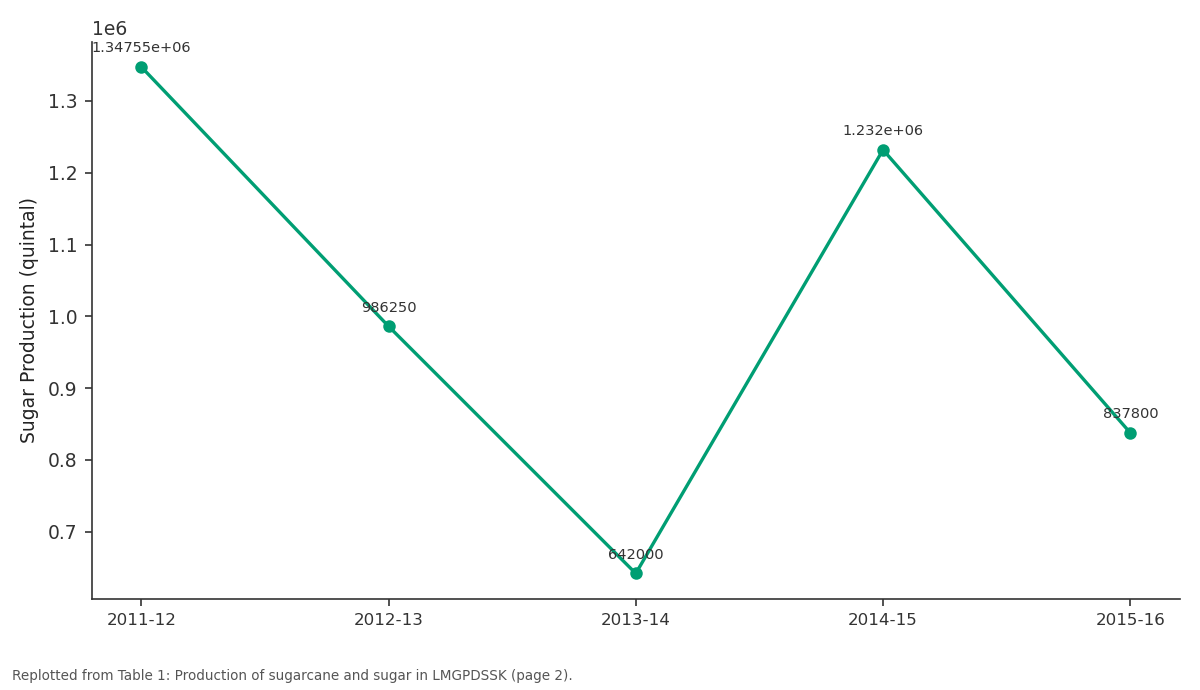
Sugar Production (quintal): 2011-12 vs 2012-13 vs 2013-14 vs 2014-15 vs 2015-16
Replotted from Table 1 (page 2) of the original paper. Every bar is the paper's own table value.
View source evidence ↗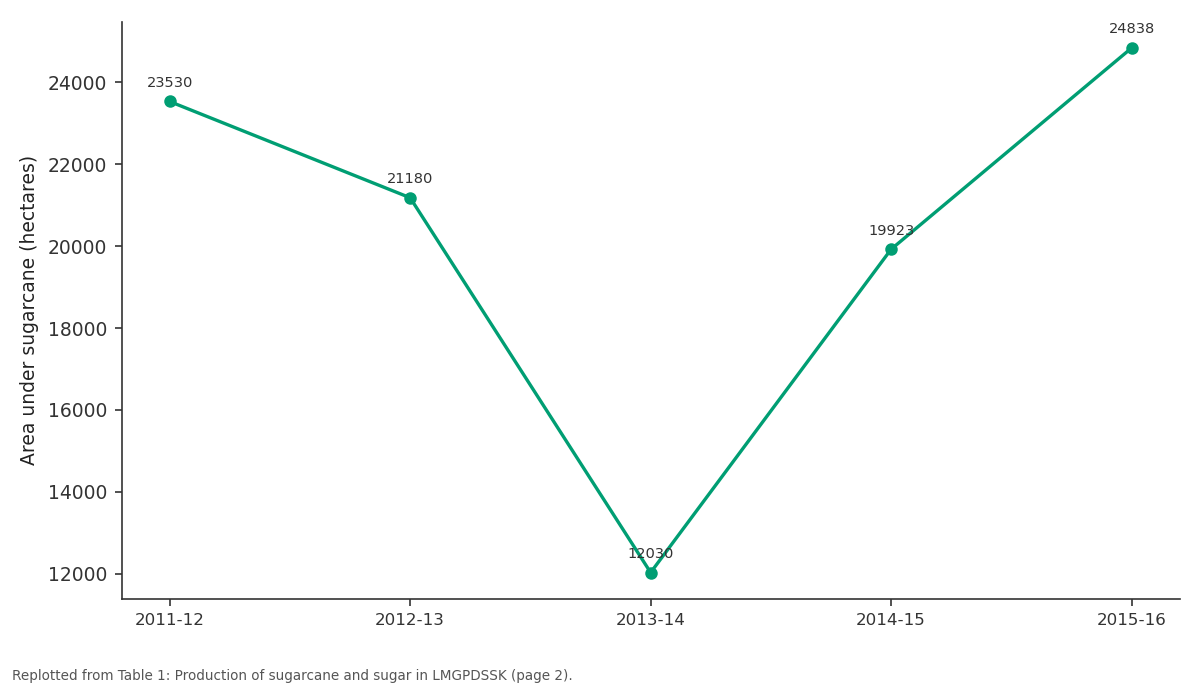
Area under sugarcane (hectares): 2011-12 vs 2012-13 vs 2013-14 vs 2014-15 vs 2015-16
Replotted from Table 1 (page 2) of the original paper. Every bar is the paper's own table value.
View source evidence ↗Figures & tables
From the original paper Table 1
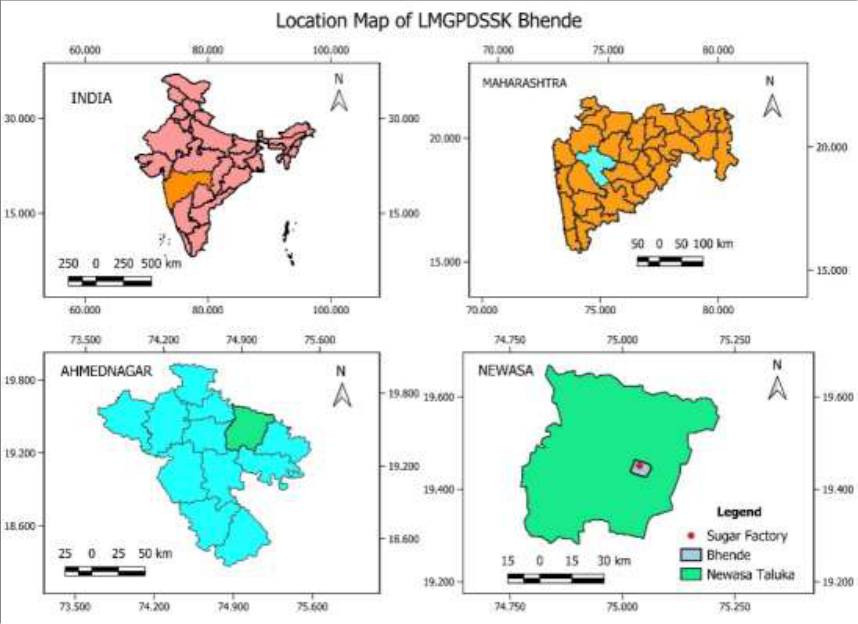 Figure 1
Introduction
Sugar cane is the primary cash crop that is cultivated in many parts of India. India's second- largest industry is the textile sector followed by the sugar industry. The sugar industry contributes to the expansion of both industrial and agricultural activities. Sugarcane industry has contributed to the creation of jobs for a number of people.
The most important component of the sugar industry is the close relationship that exists between the factory and the local sugarcane producers, whose welfare is closely correlated with the growth and development of that particular factory. It goes without saying that this sector plays a significant role in introducing innovative ideas to rural areas. The co-operative movement has made an important contribution to rural economic transformation compatible with democratic structures. Sugar Factories have not only focused on sugar cane production but also on the development of rural and surrounding area.
In this way the regions with cooperative sugar industry become centrally important growth places in rural area & hence the socio-economic development of the surrounding region taken place. It was the birthplace of the cooperative movement. There are a total of 23 sugar factories in the district. Among them factories are Private.
After the establishment of Loknete Marutrao Ghule Patil Co-operative sugar factory, there have been positive socio-economic changes among the sugarcane farmers and rural life in the command area. Objectives of the study 1. To study the working progress of LMGPDSSK. Ltd. 2.
To Study the role of sugar factories in agricultural development concern to sugarcane crop. Study Area Loknete Marutrao Ghule Patil Dnyaneshwar Co-operative Sugar Factory, Bhende is situated in Newasa taluka of Ahmednagar district. This sugar factory working area includes Newasa and Shevgaon Taluka. https://www.geojournal.net IJGGE 2024; 6(1): 192-195 KS Gaikwad Assistant Professor, Kisan Arts, Commerce and Science, College, Parola, Jalgaon College, Parola, Jalgaon, Maharashtra, India Dr. PD Patil Associate Professor, Kisan Arts, Commerce and Science, College, Parola, Jalgaon College, Parola, Jalgaon, Maharashtra, India KS Gaikwad Assistant Professor, Kisan Arts, Commerce and Science, College, Parola, Jalgaon College, Parola, Jalgaon, Maharashtra, India https://www.geojournal.net/ This research-related data has been collected of Bhende, Wadala, Kukana, and Tarwadi Gats (Groups) of sugar factory working areas.
The Bhende village of Newasataluka is located at 190.45' North Latitude and 75°.04 East Longitude. Fig 1: Location map of LMGPDSSK Bhende Database and Research Methodology The study of concern is mainly based on Primary and secondary data. This research-related primary data has been collected through a questionnaire for sugarcane producer farmers of four Gats (Groups) of sugar factory working areas. Sugarcane farmers in four gats selected randomly of which 25 from Bhende, 25 from Wadala, 30 from Kukana, and 20 from Tarwadi Gats (Groups).
Total 100 sugarcane producer farmers select for this study. Secondary statistical information has been collected through Journals, magazines, and annual report of the Loknete Marutrao Ghule Patil cooperative sugar factory. Statistical methods and tools will be used to analyse and interpretation data like graphs percentages etc Working Progress of LMGPDSSK. Ltd The founder of Dnyaneshwar industrial group Loknete Marutrao Ghule Patil Saheb was leading leader in the field of cooperation, social and political.
He dedicated his whole life for the overall development of the common farmers. He has done invaluable work in the fields of social, political educational, cooperative, etc. for the upliftment of member farmers and common people. The first cooperative sugar factory in the Ahmednagar district was established in 1948 at Pravarnagar. After this successful industry, the Loknete Marutrao Ghule Patil Dnyaneshwar cooperative sugar factory was established on 17th May 1975 at the Newasa taluka of Ahmednagar District.
Sugarcane is supplied to Loknete Marutrao Ghule Patil Dnyaneshwar cooperative sugar factory from Newasa and Shevgaon Taluka. The prices (FRP) of sugarcane are fixed on central government and the state governments. The production of sugarcane and sugar has experienced significant changes from year to year. These variations are caused by changes in the area planted with sugarcane.
Sugarcane production is primarily influenced by rainfall patterns, the prevalence of pests and diseases among crops, the availability of seeds, irrigation systems, and fertiliser as recommended, as well as by climatic conditions, the availability of water during the crop's growth period and most importantly, government pricing policies, and the prompt payment of cane prices to sugarcane growers. Table 1: Production of sugarcane and sugar in LMGPDSSK Year Area under sugarcane (hectares) Sugarcane crushed (M.T) Sugar Production (quintal) Sugar Recovery (Percentage) 2011-12 23530 1217114 1347550 10.94 2012-13 21180 896487 986250 10.88 2013-14 12030 660381 642000 9.60 2014-15 19923 1141287 1232000 10.68 2015-16 24838 806724 837800 10.23 Source: Annual Report of LMGPDSSK. Ltd. https://www.geojournal.net/ Graph 1: Production of sugarcane and sugar in LMGPDSSK of farmers by conducting training and camps from time to time and guiding the farmers. 3. Saag and Dhandha seeds are being supplied to the farmers as per the policy for green manure.
| Year | Area under sugarcane (hectares) | Sugarcane crushed (M.T) | Sugar Production (quintal) | Sugar Recovery (Percentage) |
|---|---|---|---|---|
| 2011-12 | 23530 | 1217114 | 1347550 | 10.94 |
| 2012-13 | 21180 | 896487 | 986250 | 10.88 |
| 2013-14 | 12030 | 660381 | 642000 | 9.60 |
| 2014-15 | 19923 | 1141287 | 1232000 | 10.68 |
| 2015-16 | 24838 | 806724 | 837800 | 10.23 |
Table text extracted from the original PDF; superscript letters are shown inline. The original table image is below.
View original table image
A balanced use of biological, chemical, and organic fertilizers is necessary to produce 100 MT per acre. For this, an abundant supply of organic and biological fertilizer to the farmers is being continuously tried through the factory. 4. For the smooth transportation of sugarcane factories have been repaired roads by putting Murum and road crossings have been made using cement pipes. 5. The sugarcane cultivation scheme has been implemented every year through the sugarcane development department of the factory.
In planting season 2015-2016, farmers' field Ko-86032, Ko VSI 03102, pre-transmitted V. S. I. 8005 and M.S. 10001 of sugarcane cultivate. 6. Hon.
Sugarcane Research Centre Padegaon, Mahatma Above Graph shows that production of sugar and productivity of Sugarcane in LMGPDSSK during the year 2011-12 and 2015-16. The sugarcane production has decreased from 1217114 metric tonnes to 806724 metric tonnes in the last five years. Sugar production was also decreased from 1347550 quintals in 2011-12 and 837800 quintals in 2015-16. The area under sugarcane increased from 23530 to 24838 hectares during the years 2011-2015.
In the year 2015-16, area under sugarcane was 24838 hectares but production decreased to the present year because this year 2585 hectares sugarcane were used for jaggary or Khand sari purposes. The amount of sugarcane was crushed over different seasons varied because rainfall and the availability of water supplies are impact to sugarcane cultivation. Observation and Discussions As a result of the co-operative sugar factory's establishment in a rural area it has contributed to the development of several benefits of surrounding farmers and other rural residents. The sugar factory contributes to the increased area under sugarcane cultivation in its command area. 1.
In view of the lack of organic fertilizers the increasing cost of chemical fertilizer and imbalanced use of fertilizer, organic manure has been made available through the factory at a rate of Rs. 400/- per tonne so that the farmers can use organic fertilizer in their fields. As the manure helps to improv the bio-physical and chemical properties of the soil along with increasing sugarcane production. 2. Krishi Vigyan Kendra Dahigaon through regular efforts Phule Agricultural University Rahuri, and Vasantdada Sugar Institute are under the sugarcane development program from Newasa taluka Agriculture Officer. By making available the basic sugarcane of the recommended variety from them, sugarcane plantations are created on the farm plots in the factory plantations and on the farmers' fields.
After discussing with 100 sugarcane farmers from four Gats selected for research study and analysing the information collected with the help of questionnaires the LMGPDSSK has benefited the sugarcane farmers as follows: is increasing the productivity, production, and quality https://www.geojournal.net/ Graph 2: Parameter indicators of analysis
Conclusion
The Loknete Marutrao Ghule Patil Cooperative Sugar factory supplies modern seeds and fertilizers to the farmers to increase sugarcane cultivation in its area of operation. Grants are given by the factory for irrigation facilities development. The factory is also organised every year sugarcane cultivation awareness programme and workshops for agricultural guidance. By observation and analysis of the above graph, it is clear that 85% of sugarcane farmers agree with the sugar factory as a motivation for increasing the area of sugarcane crops and 76% of sugarcane farmers agree with the sugar factory as benefiting from sugarcane production.
Over 80% sugarcane producer farmers in the four gats under LMGPDSSK working areas are receiving the cost of their product timely from the cooperative sugar factory and 78% of the sugarcane producers are satisfied with the working process of the Loknete Marutrao Ghule Patil Dnyaneshwar cooperative sugar factory.
References
9 in the original paper- Godbole M. Cooperative sugar factories in Maharashtra: Case for a fresh look. Economic and Political Weekly. 2000;35(6):420-424.
- Todakar GV. Role of cooperative sugar factories in rural development: A case study of Damaji sugar factory. Managalweda, International Journal of Agriculture Sciences. 2010;4(1):168-171.
- Upreti P, Singh A. An economic analysis of sugarcane cultivation and its productivity in major sugar- producing states of U.P and Maharashtra. Economic Affairs; c2017. p.
- Dangat NR. Problems of sugar cooperatives in India. International Journal of Commerce and Management. 2013;1:55.
- Singh R. Production and growth of the sugar industry in UP. International Research of Engineering Research and Management Technology. 2015;2:1.
- Singh D, Singh HP. A study of Danteshwari Maiya Cooperative Sugar Factory Limited. International Journal of Management Studies; c2018; ISSN: 2249- 0302.
- Shinde DP. Growth and productivity of co-operative sugar factory in Maharashtra. International Journal of Applied Research. 2016;2(7):727-30.
- VSI 42nd Annual Report; c2017-18. p. 21-22.
- LMGPDSSK Annual Report; c2015-16. p. 14-16.