
Research article · 2024 · Full text
International Journal of Agriculture and NutritionFirst record of the species Criconemoides informis (Micoletzky, 1922) taylor, 1936 (Nematoda: Criconematoidae) in Iraq
Volume 6(1) · Pages 48–51 · DOI: 10.33545/26646064.2024.v6.i1a.139 ↗
Research areasNematode management and characterization studiesDate Palm Research Studies
Abstract
Author-writtenKnown species of plant-parasitic nematodes belonging to the family Criconematidae were identified for the first time during a survey in Misan Province, located in southern Iraq. This study examines and illustrates the morphometric and morphological traits of Iraqi populations of the rediscovered species. It is based on morphological and morphometric data, as well as essential qualities that can aid in taxonomic classification. The Iraqi population of Criconematoides informis is characterized by having a R value of 77-79, Rst value of 10-12, VL/VB ratio of 1-1.3, a value of 9.4-10.6, body length ranging from 495.8-560.2 μm, stylet length ranging from 72.2-80.2 μm, labial disc slightly elevated and directed anteriorly, vulval lips bulging but not protruding above the body contour. The morphometric and morphological characteristics of the species match those found in the original descriptions.
Summary
Source-checkedPlain-language reading of the full paper, prepared with AI and checked against the text. Each point links to the authors' own words.
Why it matters
- Jujube trees (Ziziphus spina-christi) are economically important plants in Asia and specifically in Iraq. View evidence ↗
- Nematodes of the Criconematidae family, including the genus Criconemoides, act as external parasites on plant roots. View evidence ↗
The question
- The study aims to examine and illustrate the morphological and morphometric traits of Criconemoides informis populations found in Iraq. View evidence ↗
What they did
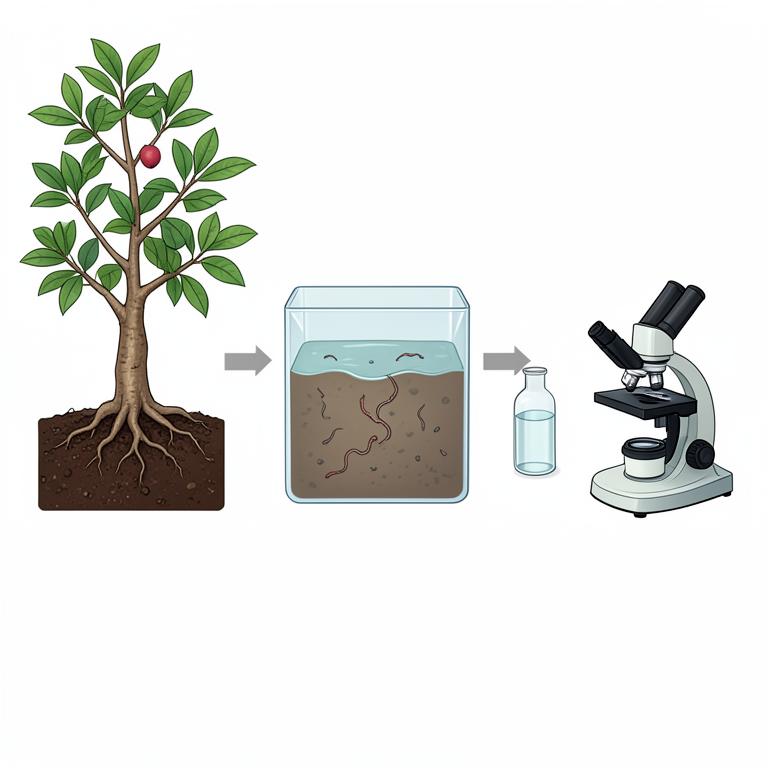
- Soil samples were collected from the rhizosphere of jujube plants at an agricultural research station in Misan province, Southeastern Iraq, between 2023 and 2024. View evidence ↗
- Nematodes were extracted from the collected soil samples using the tray method. View evidence ↗
- Specimens were fixed with 4% formaldehyde, stored in anhydrous glycerin, and measured using an Optika-LUX optical microscope. View evidence ↗
What they found
- Criconematoides informis was detected in 7.26% of the soil samples, with a total of 6 females and 2 juveniles identified. View evidence ↗
- The Iraqi population of C. informis exhibited a body length of 495.8-560.2 μm, stylet length of 72.2-80.2 μm, R value of 77-79, Rst value of 10-12, and a VL/VB ratio of 1-1.3. View evidence ↗
- This research represents the first record of C. informis in Iraq and the first global documentation of the species isolated from jujube trees. View evidence ↗
- The morphological and morphometric characteristics of the Iraqi population were found to be similar to those of the same species from other countries. View evidence ↗
- C. informis is distinguished from C. amorphous by its tapered tail with a narrow tip and two or three irregular indistinct lobes. View evidence ↗
What it means
- The authors conclude that the study expands the known geographic distribution of C. informis and provides detailed data on the Iraqi population's traits. View evidence ↗
- The authors state that this work provides a basis for future research into the ecological impacts and management of these nematodes to support sustainable agriculture. View evidence ↗
Visual summary
1 visualsIllustrations explain the paper; they do not show study data.
Sampling Workflow
AI-generated conceptual illustration (jujube tree roots and Criconemoides informis nematodes). It explains the idea and does not show study data.
View source evidence ↗Figures & tables
From the original paper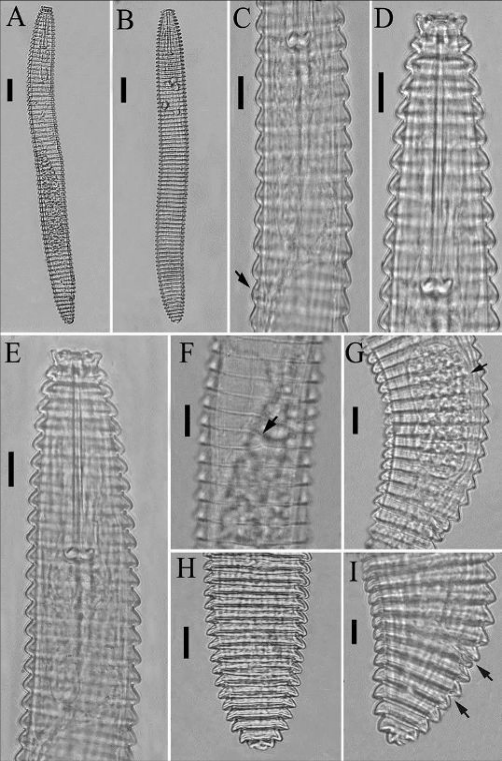 Figure 1
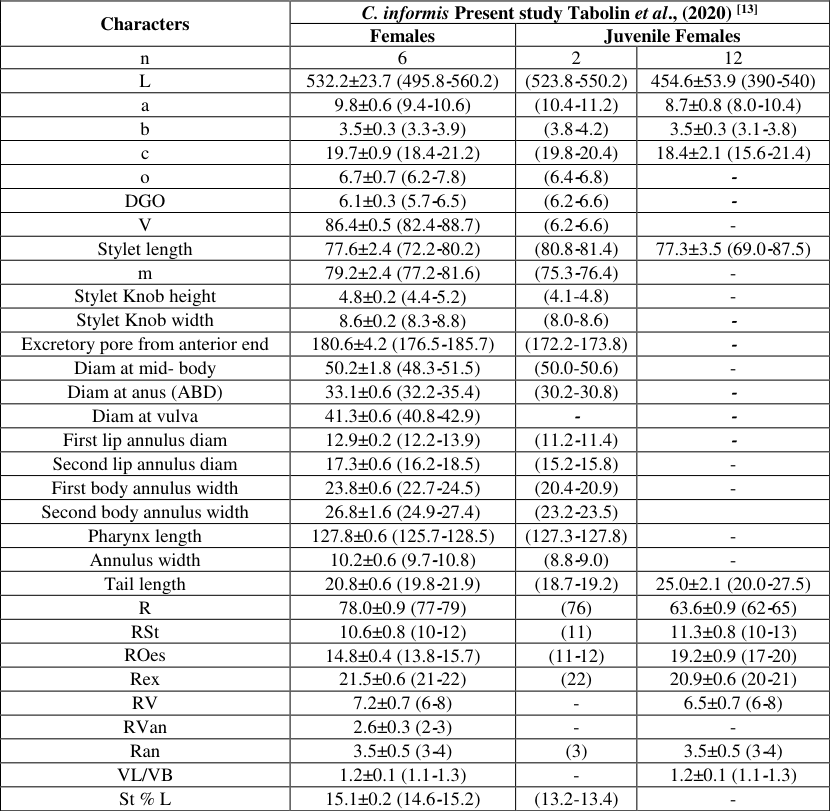 Table 1
Introduction
Ziziphus spina-christi (L.) jujube trees belong to the buckthorn family (Rhamnaceae), which includes about 58 genera, including three important genera, the most important of which is the buckthorn genus. This plant is considered one of the important plants in Asia and Iraq in particular, where there are many species in different regions, and it has an important economic value in some regions of Iraq. Its fruits are edible and it also has other benefits, including using the leaves as fodder, the branches for fencing, and the wood as fuel, for construction and furniture making, and in folk medicine as well (Saied et al., 2007) [12] . Plant-parastic nematodes about 15% of nematodes are plant parasites that can feed on different plant organs, only less than 0.01 of the species diversity of these organisms has been described (Abebe et al., 2011) [1] . The average annual damage caused by plant parasitic nematodes is estimated at around 12% (Oliveira and Neilson, 2006) [14] . The genus Criconemoides belongs to the Criconematidae family, nematodes of this family are external parasites of plant roots. Criconemoides informis species have been reported with a wide range of host plants, including cultivated plants, forests, and pastures (Geraert, 2010) [5] .
Materials and Methods
Soil samples were collected near the roots of the jujube plant, which is widespread in the agricultural research station affiliated with the College of Agriculture in Misan province. Southeastern Iraq during the year 2023-2024. Where nematodes were extracted from the soil after collecting samples to extract nematodes from the soil, using the tray method (Whitehead and Hemming, 1965) [15] . After nematode extraction, the collected samples were killed with a hot 4% formaldehyde solution, and transferred to anhydrous glycerin according to De Grisse (1967) [3] Method. The nematodes were then attached to one very small drop of glycerin on permanently Slides. Observations and measurements were taken this was done using an Optika-LUX optical microscope equipped with a drawing tube. The good samples containing the preserved nematode specimens were photographed using an Olympus CX21 digital microscope connected to a specialized camera.
By using important features such as the shape of the head and its position in relation to the body, the shape of the stylet and its knots and other features, as well as the most important morphometric and morphometric indices used to identify nematodes at the species level (Geraert, 2010) [5] .
Results and Discussion
Results and Discussion
Criconematoides informis (Micoletzky, 1922) Taylor, 1936 (Figs 1)
Measurements see (Table 1) Description female: After stabilization, the body bends slightly towards the stomach. The cuticular annuli retrorse with rounded edges, ranging in thickness from 6-10 µm. The females head is round has two rings, be most Anterior loop variant, often directed laterally, the submedian lobes are relatively distinct large and the angle of the labial disc is slightly elevated above the lobes and often absent. Lip region of anteriorly flattened and comprised often of two annuli and second labial annulus larger than the first one. First annulus (22.7-24.5) µm, second annulus (24.9-27.5) µm in diam. The stylet strong and knobs thick, anteriorly concave, also with marginal processes directed anteriorly ,its conical part covers more than three-fourths of the total stylet length. The primary esophageal tube is fused with the midesophageal bubble, the middle bubble with a distinct valve, the secondary tube is short, and the terminal bubble is small. Excretory pore 1-2 annuli posterior to pharyngeal bulb base.
| Characters | C. informis Present study Tabolin et al., (2020) [13] | — | — |
|---|---|---|---|
| Females | Juvenile Females | ||
| n | 6 | 2 | 12 |
| L | 532.2±23.7 (495.8-560.2) | (523.8-550.2) | 454.6±53.9 (390-540) |
| a | 9.8±0.6 (9.4-10.6) | (10.4-11.2) | 8.7±0.8 (8.0-10.4) |
| b | 3.5±0.3 (3.3-3.9) | (3.8-4.2) | 3.5±0.3 (3.1-3.8) |
| c | 19.7±0.9 (18.4-21.2) | (19.8-20.4) | 18.4±2.1 (15.6-21.4) |
| o | 6.7±0.7 (6.2-7.8) | (6.4-6.8) | - |
| DGO | 6.1±0.3 (5.7-6.5) | (6.2-6.6) | - |
| V | 86.4±0.5 (82.4-88.7) | (6.2-6.6) | - |
| Stylet length | 77.6±2.4 (72.2-80.2) | (80.8-81.4) | 77.3±3.5 (69.0-87.5) |
| m | 79.2±2.4 (77.2-81.6) | (75.3-76.4) | - |
| Stylet Knob height | 4.8±0.2 (4.4-5.2) | (4.1-4.8) | - |
| Stylet Knob width | 8.6±0.2 (8.3-8.8) | (8.0-8.6) | - |
| Excretory pore from anterior end | 180.6±4.2 (176.5-185.7) | (172.2-173.8) | - |
| Diam at mid- body | 50.2±1.8 (48.3-51.5) | (50.0-50.6) | - |
| Diam at anus (ABD) | 33.1±0.6 (32.2-35.4) | (30.2-30.8) | - |
| Diam at vulva | 41.3±0.6 (40.8-42.9) | - | - |
| First lip annulus diam | 12.9±0.2 (12.2-13.9) | (11.2-11.4) | - |
| Second lip annulus diam | 17.3±0.6 (16.2-18.5) | (15.2-15.8) | - |
| First body annulus width | 23.8±0.6 (22.7-24.5) | (20.4-20.9) | - |
| Second body annulus width | 26.8±1.6 (24.9-27.4) | (23.2-23.5) | |
| Pharynx length | 127.8±0.6 (125.7-128.5) | (127.3-127.8) | - |
| Annulus width | 10.2±0.6 (9.7-10.8) | (8.8-9.0) | - |
| Tail length | 20.8±0.6 (19.8-21.9) | (18.7-19.2) | 25.0±2.1 (20.0-27.5) |
| R | 78.0±0.9 (77-79) | (76) | 63.6±0.9 (62-65) |
| RSt | 10.6±0.8 (10-12) | (11) | 11.3±0.8 (10-13) |
| ROes | 14.8±0.4 (13.8-15.7) | (11-12) | 19.2±0.9 (17-20) |
| Rex | 21.5±0.6 (21-22) | (22) | 20.9±0.6 (20-21) |
| RV | 7.2±0.7 (6-8) | - | 6.5±0.7 (6-8) |
| RVan | 2.6±0.3 (2-3) | - | - |
| Ran | 3.5±0.5 (3-4) | (3) | 3.5±0.5 (3-4) |
| VL/VB | 1.2±0.1 (1.1-1.3) | - | 1.2±0.1 (1.1-1.3) |
| St % L | 15.1±0.2 (14.6-15.2) | (13.2-13.4) | - |
Table text extracted from the original PDF; superscript letters are shown inline. The original table image is below.
View original table image
The reproductive system has an ovary that extends towards the front of the body, the end of the ovary does not reach the esophagus, the genital opening is closed, the direct vagina is an empty sperm storage bag. Tail tapering to a narrow tip and with two or three irregular indistinct lobes.
Juvenile: Two juveniles found good for measuring. The body of the larva is similar to that of the female. The cuticular annuli has large rings, their surface is slightly convex and not completely smooth. Micoletzky (1922) described Criconematoides informis from the soil around the roots of aspen (Populus tremuloides Michx.) at Idaho Springs, Clear Creek, and Colorado. Various authors have frequently reported the species across North America, Europe, and Asia. Hosseinvand et al., (2023) [7] identified different species within the Criconemoides informis group: C. informis, C. amorphous De Grisse, 1967 [3] ; C. neoformans Munawar et al., 2020 [10] ; C. neoformans Hosseinvand et al., 2023, and C. geraerti Munawar et al., 2020 [10] . The morphological and morphometric characteristics of the rediscovered species Criconematoides informis (Micoletzky, 1922) Taylor, 1936, match those of the original description. The morphological and morphometric traits of the examined population were analyzed using the identification key for species of the genus Criconemoides sp. provided by Geraert in 2010 [5] . The population of iraqin is identified by a round head with two rings. The head is mostly anteriorly rounded with variable annuli. The female has a stylet length of 69.3-76.2 μm, while juveniles have a length of 76.4-78.3 μm. The height of the stylet knob is 4.4-5.1 μm with a width of 8.3-8.9 μm in females, and 4.1-4.8 μm in height and 8.0-8.6 μm in width for juveniles. When comparing the Iraqi population of Criconematoides informis with the same species from other countries, similarities were observed in characteristics and measurements. It can be differentiated from C. amorphous De Grisse, 1967 [3] by the tapered shape of the tail, which has a narrow tip and two or three irregular indistinct lobes, as opposed to a unilobed or multi-lobed terminus. Describe C. amorphous De Grisse, 1967 [3] based on the R ratio (77-97 vs 55-76) and the range of Rex ratio (23-24 vs 17-22). Additionally, Munawar et al., (2020) [10] noted differences between C. geraerti specimens with juveniles present versus absent, including variations in pharynx length ratio (125-127 vs 100-109) and stylet length (69.3-76.2 vs 57.0-62.7). The species Criconematoides informis was found in 7.26% of soil samples taken from the rhizosphere of Ziziphus spina-christi (L.) jujube trees, consisting of 6 females and 2 juveniles. The species under investigation was obtained from an agricultural research station associated with the College of Agriculture in Misan province, Southeastern Iraq. The GPS coordinates are 31.8088306°N, 47.2393417°E. This study is the first to reveal the presence of the species Criconematoides informis in Iraq. Additionally, it is the first documented case of this species being isolated from jujube trees worldwide.
Remarks
Remarks
Conclusion
The discovery and subsequent study of plant-parasitic nematodes from the family Criconematidae in Misan Province, southern Iraq, mark a significant milestone in the field of nematology and biodiversity. This research not only expands our knowledge on the geographic distribution of Criconematoides informis but also provides a detailed account of its morphometric and morphological features specific to the Iraqi populations. By comparing these characteristics with those outlined in the original species descriptions, this study reaffirms the taxonomic placement of C. informis and highlights the consistency of its defining traits across different geographical regions. The identification of such species within Iraq not only contributes to the global catalog of biodiversity but also emphasizes the importance of regional studies in understanding the complex interactions between parasitic nematodes and their plant hosts. This work lays the groundwork for future research on the ecological impacts and management strategies of plant-parasitic nematodes, thereby aiding in the development of more sustainable agricultural practices.
Figures and tables from the paper
References
14 in the original paper- Abebe E, Mekete T, Thomas WK. A critique of current methods in nematode taxonomy. African Journal of Biotechnology. 2011;10(3):312-323.
- Choi YE, Brzeski MW, Kim JL. Observations of some species of Criconemoides Taylor, 1936 (Nematoda: Criconematidae) with proposals of new synonyms. Nematology. 2000;2(3):273-284.
- Grisse AD, Loof PA. Intraspecific variation in some Criconematidae (Nematoda). Mededelingen van de Faculteit Landbouwwetenschappen, Rijksuniversiteit Gent. 1970;35(1):41-63.
- Eskandari A, Karegar A, Pourjam E, Van Den Berg E, Tiedt LR. Additional data on some poorly known species of Criconemoides taylor, 1936 (Nematoda: Criconematidae). Nematology. 2010;12:505-518.
- Criconematidae Taylor, 1936 en la sierra de cazorla. Rev Ibér Parasitol. 1989;49:241-255.
- Hosseinvand M, Eskandari A, Ghaderi R. Morphological and molecular characterisation of three known species of Criconematoidea from Iran. Nematology. 2023;22(7):745-758.
- Loof PAA. Zur taxonomie von Criconemoides rusticus (Micoletzky) und informis (Micoletzky). Mitteilungen International Journal of Agriculture and Nutrition https://www.agriculturejournal.net aus dem Zoologischen Museum in Berlin. 1965;41(2):183-192.
- Marais M. Some species of Helicotylenchus Steiner, 1945 from South Africa (Nematoda: Hoplolaimidae). Fundamental and applied Nematology. 1998 Jul 1;21(4):327-352.
- Munawar M, Miao W, Cai R, Tian Z, Castillo P, Zheng J et al. Species diversity of ring nematodes of the genus Criconemoides (Nematoda: Criconematidae) based on three new species from China, using integrative taxonomy. European Journal of Plant Pathology. 2020;157:119-139.
- Micoletzky H. Die freilebenden erd nematoden mit besonderer berücksichtigung der steiermark und der bukowina, zugleich mit einer revision sämtliger, nicht mariner, freilebender nematoden in form von genusbeschreibungun und bestimmingsschlüsseln. Arch Naturgesch, Abt A. 1921;87:1-650.
- Saied AS, Gebauer J, Hammer K, Buerkert A. Ziziphus spina-christi (L.) Willd a multipurpose fruit tree. 2007;55:929-937.
- Tabolin SB, Migunova VD, Volkov YA, Volkova MV. Morphological and molecular characterisation of Criconemoides informis (Micoletzky, 1922) from Southern Russia. Russian Journal of Nematology. 2020;28(1):79-80.
- Oliveira CM, Ferraz LC, Neilson R. Xiphinema krugi, species complex or complex of cryptic species? Journal of Nematology. 2006;38(4):418.
- Whitehead AG, Hemming JR. A comparison of some quantitative methods of extracting small vermiform nematodes from soil. Annals of applied Biology. 1965;55(1):25-38.
Cited by 1
From OpenAlex, OpenCitations and reference lists read by Scinovex
- Description and Molecular Characterization of Criconemoides iraqicus n. sp. (Rhabditida: Criconematidae) From Iraq ↗
Ahmed Malik Jumaah, Sedighe Azimi · Journal of Nematology · 2025
Abstract Criconemoides iraqicus n. sp. recovered from the rhizospheric soil of pomegranate in Misan province, Iraq, is described based on morphological and molecular data. The new species is characterized by its lip region comprised of two annuli, true submedian lobes absent, pseudolips present, body annuli smooth and with few anastomoses ( R = 76–79), stylet 64.6–75.3 μm long, with anchor-shaped…
❝ 0PDF