
Research article · 2024 · Full text
International Journal of Agriculture and NutritionProximate analysis and anti-nutritional factors in three varieties of groundnut (Arachis hypogaea)
Volume 6(1) · Pages 13–18 · DOI: 10.33545/26646064.2024.v6.i1a.134 ↗
Research areasPeanut Plant Research Studies
Abstract
Author-writtenThis study evaluated the nutritional qualities in seeds of three varieties of groundnut (SAMNUT-23, SAMNUT-24, and SAMNUT-26) as part of breeding lines undergoing genetic improvement at the Joseph Sarwuan Tarka University, Makurdi, Nigeria. From the result, the grand mean nutritional composition in groundnut seeds showed that lipid was the highest class of food (48.5%) followed by protein (22.7%). Others are carbohydrate (11.7%), moisture (8.6%) and ash (6.2%) while fibre content was the lowest (2.3%). Result indicated that SAMNUT-26 had the highest lipid (49.67%) and ash content (7.44%). SAMNUT-23 had the highest protein (24.45%) and SAMNUT-24 had the highest carbohydrate (15.94%) and moisture (8.73%), there was no significant difference among the varieties (P>0.05). Cyanide was not present in the three varieties studied while phytic acid was present as anti-nutrient but in small quantity with insignificant varietal differences (P>0.05). Oxalate content was the highest anti-nutrient obtained and it did not differ significantly among the varieties (p
Summary
Source-checkedPlain-language reading of the full paper, prepared with AI and checked against the text. Each point links to the authors' own words.
Why it matters
- Groundnuts are highly valued for their ability to produce oil and serve as a rich source of vegetable protein, vitamins, and calories. View evidence ↗
- Understanding the nutritional content of different groundnut varieties is considered necessary to address food insecurity and malnutrition in Nigeria. View evidence ↗
The question
- The study aimed to evaluate the proximate composition and identify anti-nutritional factors, specifically phytic acid, oxalate, and cyanide, in three groundnut varieties. View evidence ↗
What they did
- The researchers analyzed seeds from three breeding lines, SAMNUT-23, SAMNUT-24, and SAMNUT-26, at Joseph Sarwuan Tarka University in Nigeria. View evidence ↗
- The experimental work was carried out in the Biochemistry Laboratory at the College of Biological Sciences, Joseph Sarwuan Tarka University. View evidence ↗
- Nutritional analysis included solvent extraction for fat, furnace incineration for ash, and the micro-Kjeldahl method for crude protein. View evidence ↗
- Statistical analysis was performed using Minitab 16.0, employing one-way ANOVA, Chi Square tests, and Pearson's correlation. View evidence ↗
What they found
- Across all varieties, the average nutritional composition was dominated by lipids (48.5%) and protein (22.7%), with fiber being the lowest at 2.3%. View evidence ↗
- Among the varieties, SAMNUT-26 had the most lipid (49.67%) and ash (7.44%), SAMNUT-23 had the most protein (24.45%), and SAMNUT-24 had the most carbohydrate (15.94%) and moisture (8.73%). View evidence ↗
- There were no statistically significant differences in nutrient levels between the three groundnut varieties (p > 0.05). View evidence ↗
- Cyanide was not detected in any of the three groundnut varieties studied. View evidence ↗
- Oxalate was the most prevalent anti-nutrient, ranging from 14.7 mg/100 g in SAMNUT-26 to 15.0 mg/100 g in SAMNUT-23, with no significant difference between varieties. View evidence ↗
- Phytic acid levels were low, between 3.67 and 5.33 mg/100 g, with SAMNUT-23 showing the highest amount. View evidence ↗
- A negative correlation was found between lipid content and both oxalate (-0.528) and phytic acid (-0.706), suggesting that higher lipid levels are associated with lower anti-nutrient levels. View evidence ↗
What it means
- The authors concluded that SAMNUT-26 is the superior variety due to its high lipid content and relatively lower levels of oxalate and phytic acid. View evidence ↗
- The authors recommend increasing the oil content in other varieties as a means to drastically reduce anti-nutritional factors. View evidence ↗
Visual summary
3 visualsIllustrations explain the paper; charts are replotted from the paper's own table values.
Lipid vs Anti-Nutrient Correlation
AI-generated conceptual illustration (groundnut seeds (Arachis hypogaea)). It explains the idea and does not show study data.
View source evidence ↗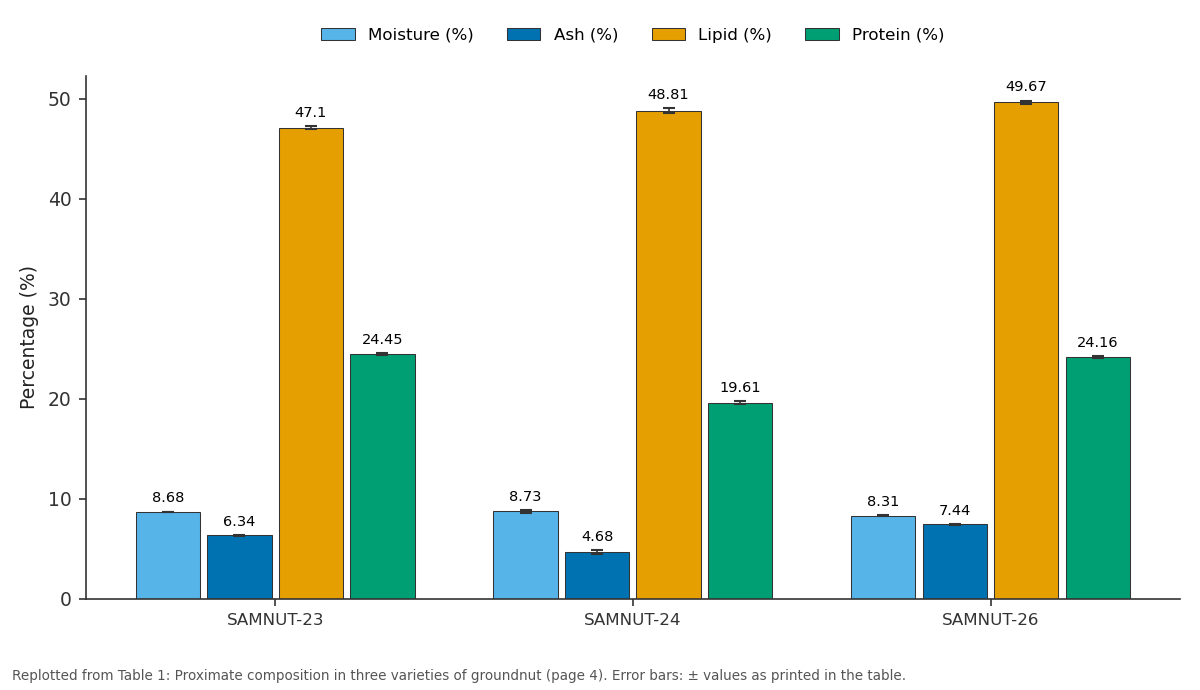
Moisture (%) and Ash (%) and more: SAMNUT-23 vs SAMNUT-24 vs SAMNUT-26
Replotted from Table 1 (page 4) of the original paper. Every bar is the paper's own table value.
View source evidence ↗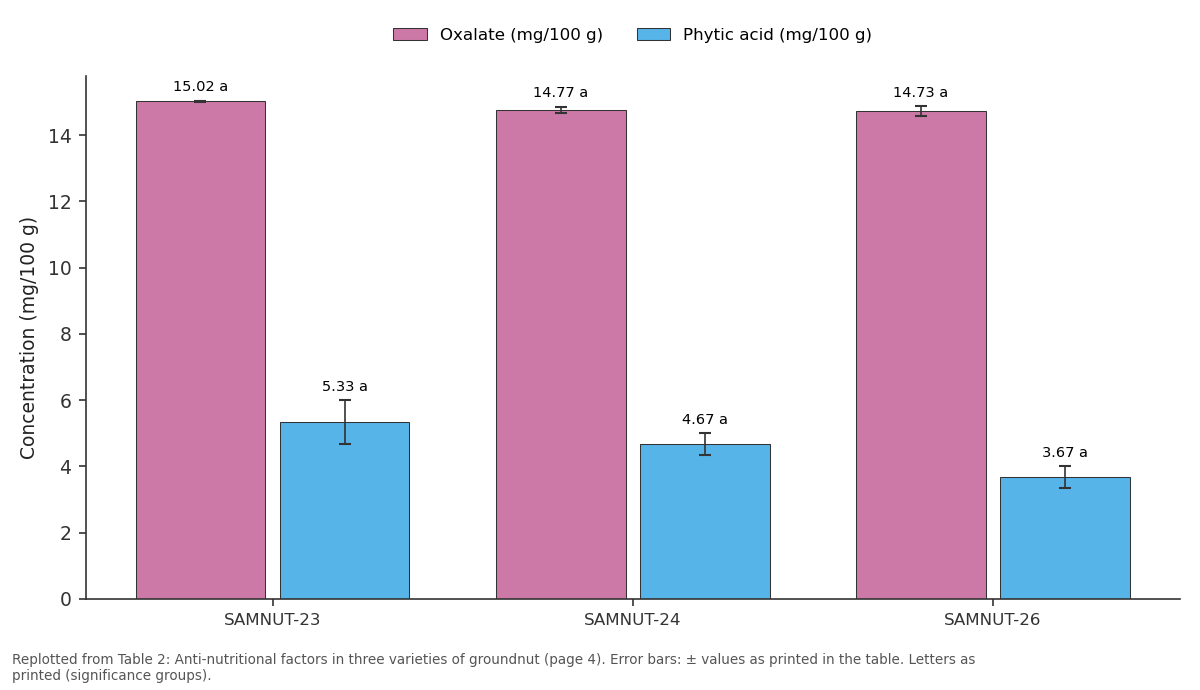
Oxalate (mg/100 g) and Phytic acid (mg/100 g): SAMNUT-23 vs SAMNUT-24 vs SAMNUT-26
Replotted from Table 2 (page 4) of the original paper. Every bar is the paper's own table value.
View source evidence ↗Figures & tables
From the original paper Table 1
 Table 2
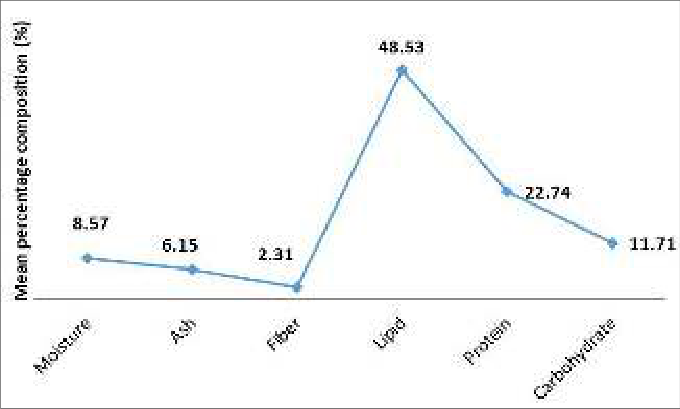 Figure 1
 Table 3
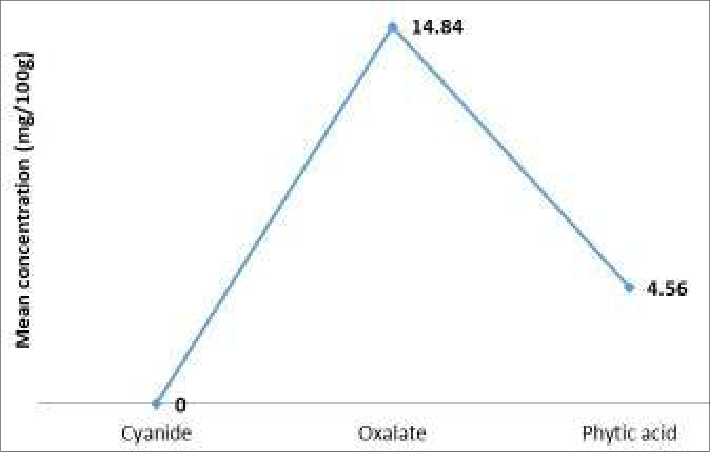 Figure 2
Introduction
The groundnut belongs to the family called Fabaceae (Leguminosae), they are also known as the legumes, bean, or pea family. Legumes host symbiotic nitrogen fixing bacteria in their root nodules. They require less fertilizer because of their ability to fix nitrogen thereby enriching the soil, making them available for crop rotation (McDonald et al., 2016) [20] . Groundnut is grown with a component of a variety of crop mixtures including maize, millet, sorghum, and cowpea (Misari et al., 2022) [21] . The main use of groundnut, is to produce oil (Cummings, 2012; Elegbede, 2021) [10,12] . Groundnut contain fatty acids, Palmitic acid which is the third most abundant fatty acid, and linolenic acid (omega-3) is present at a small amount (Onwuka, 2015) [27] . The by-products of ground nut contain enormous functional compounds like antioxidants, protein, minerals, vitamins, fibres and polyphenols that are mixed with processed foods as an active ingredient (Wu et al., 2009; Zhao et al., 2012) [34,35] . Groundnut seed contains essential nutrient such as protein, oil magnesium, niacin, fibre, vitamin, phosphorus and manganese. Groundnut seed is a good source of vegetable protein, together with vitamins and high calories 100 per gram (Atasie et al., 2009) [7] . The importance of groundnut protein as food and feed sources has gone up, mostly in developing countries. According to Ogbe, 2021 [37] , glutamic acid is said to be the most abundant amino acid in groundnut, which points to its potential to be isolated for use as a flavouring agent. The recent discoveries revealed that peanuts are good source of compounds such as phytostroels, phenolic acids, flavonoids and resveratrol which hinders cholesterol absorption from the diet (Limmongkon et al., 2017; Sebei et al., 2013) [19,30] . Groundnut seed can be processed and used in making soups, stew, peanut butter, oil and so many other products, the cake from groundnut can be used in feed and infant food formulations (Dhamsaniya et al., 2012; Timbabadiya et al., 2017) [11,33] . Groundnut is also used in industries for making textiles materials, mixed nuts, make up, medicines, sauces pudding, solvents (Onyenuga, 2000) [28] . Groundnut is a valuable crop in terms of nutrition and wealth creation. There is need to know the nutritional contents of the three varieties of groundnut, this is necessary in order to solve the malnutrition and food insecurity in Nigeria. This work seeks to evaluate the proximate composition and determine the anti-nutritional factors (phytic acid, oxalate and cyanide) in the three varieties of groundnut. Specific objectives were to determine the amount of carbohydrate, protein, lipids, moisture, fiber, ash, cyanide, oxalate, and phytic acid content present in three varieties of groundnuts studied (SAMNUT 23, SAMNUT 24 and SAMNUT 26) and also to determine the relationship among the nutrients and anti-nutrient
Materials and Methods
The study area: This study was conducted in the Biochemistry Laboratory, College of Biological Sciences, Joseph Sarwuan Tarka University Makurdi, and Benue State.
Sample collection, identification and preparation:
Seeds of the three varieties were collected from the Department of Plant Breeding and Seed Science, College of Agronomy, Joseph Sarwuan Tarka University, Makurdi (JOSTUM). The varieties were part of the genetic resources of the ongoing molecular breeding work. They were approved and released by the Management of Molecular Biology Laboratory of the same department.
Proximate analysis
Moisture determination: Moisture content was determined using the conventional method by (AOAC, 2021) [6] . Exactly 5g of each sample was put in each of the moisture cans, placed in the oven and dried at 105%C for 2 hours it was removed and placed in a desiccator to cool before weighing. The cycle of heating, cooling and weighing was repeated until constant weight was obtained. The moisture content was calculated using the formula; % Moisture
Crude protein determination:
The micro-kjeldahl method was used as described by (AOAC, 2000) [6] , in which samples were mixed with 10 ml of concentrated tetraoxosulphate (VI) acid in a kjeldahl digestion flask. Titration was done from the initial green color to a deep red or pink end point. The distillate obtained will be titrated again 0.02N tetraoxosulphate VI acid (H2SO4) solution. Titration will be done from the initial green color to a deep red or pink end point. The total nitrogen was calculated and multiplied with the factor, 6.25 to obtain the crude protein content. Fat determination: Fat content of the samples was determined by the solvent extraction method using a soxlet apparatus. Five grams (5 g) of each samples will be wrapped in porous paper (Whatman number one filter paper), the wrapped sample will be put in a soxlet flask of the reflux connected to a condenser by heating the solvent in a flask through electro thermal heater, it will be vaporized and condensed into the reflux flask. The weight of the fat (oil) extracted as percentage of the sample weight (AOAC, 2000) [6] .
%
%
Formula for the calculation
Where, W = Weight of the sample W1 Weight of empty extraction flask W2 = Weight of flask and oil extract
Ash determination
The furnace incineration gravimetric method recommendation (AOAC, 2000) [6] , was used in the determination of the ash content. The crucibles were dried in an oven and cooled in the desiccators before weighing. Approximately 5 g of the sample was weighed and put into the crucible, covered and placed in a muffle furnace at a temperature of 70 °C. The crucibles containing the samples was weighed and the percentage ash content was determined Ash content was calculated using the formula:
W1 = weight of the crucible W2 = weight of sample crucible W3 = weight of crucible + ash
Determination of crude fibre
This was determined by the Weende method as described by (Mubarak et al., 2015) [36] . The defatted sample was treated with 200 ml of 1.2% H2SO4 and boiled under reflux for 30 minutes. The resultant mixture was filtered by washing with several portions of hot water using a two-fold muslin cloth to trap the particles.
The crude fibre content was calculated using the formula
Determination of anti-nutritional factors in mung bean
The oxalate content was calculated by taking 1 ML of 0.05 M KMnO4 as equivalent to 2.2 mg oxalate. Alkaline picrate color method was used in Cyanide determination where the absorbance was read at 450 nm against blank, after color development (reddish brown color). Phytic phosphorus was determined by the method by (Ola and Oboh, 2000) [26] and the phytic acid content was calculated by multiplying the value of pp by 3.55. Each mg of iron equal 1.19 mg of pp. Fe equivalent=1.15 x titer value Pp= titer value x 1.19 x 1.95 Therefore, phytic acid =1.95 x 1.19 x 3.55 x titre value. Data analysis: Data was analyzed on the Minitab 16.0 software using the following statistical tools: Chi Square test of dependency, one-way ANOVA (p≤0.05) and Pearson's correlation. Mean separation was done using Turkey's method at 95% confident limit (p-value=0.05 limit). Level of significant was determined at p =^0.5.
Results and Discussion
Table 1 shows the proximate composition of three varieties of groundnut: SAMNUT-23, SAMNUT-24, and SAMNUT-26. SAMNUT-26 had the highest lipid (49.67%) and ash content (7.44%). SAMNUT-23 had the highest protein (24.45%) and SAMNUT-24 had the highest carbohydrate (15.94%) and moisture (8.73%). The differences in nutrient did not vary significantly among the varieties (p>0.05). Grand mean nutritional composition in groundnut seeds showed that lipid was the highest class of food (48.5%) followed by protein (22.7%). Others are carbohydrate (11.7%), moisture (8.6%) and ash (6.2%) while fibre content was the lowest (2.3%) (Figure 1). The lipid content (48.5%) in this work was a little higher than the value (47.00%) obtained by Atasie et al., (2009) [7] and Amom, (2009) [4] . However, Shashikant, (2019) [31] reported a range of 39.45-41.48% while (Khalid et al., 2017) [17] had a range of 31.50% to 45.75%. These contrasting reports show that there is an improvement in groundnut varieties. The high lipid content shows that oils from this plant can be extracted and imported into food or feed formulations that requires high levels of fat, this oil can be used in the processing of cosmetics and biofuel (Khalid et al., 2017) [17] . The protein content in this research was high (22.7%) which agrees with the range obtained by Khalid et al., (2017) [17] 20.71-25.34% but lower than the value (38.61), obtained by Atasie et al., (2009) [7] , Musa et al., (2010) [22] of (31.3%), and the range of 28.75 to 30.63 reported by Shashikant, (2019) [31] . This could be as a result of the improvement on their own varieties, suggesting an improvement in the seeds of groundnut to increase protein content. Khalid et al., (2017) [17] reported that high protein content is pertinent because some functional properties have long been associated with the activities of proteins (Khalid et al., 2017) [17] . The high protein content obtained in this work indicates that groundnut is a good source of protein. The moisture content (8.6%) obtained in this report is lower than the safe level required for proper storage reported this report agrees with the findings of Musa et al., (2010) [22] , who reported the same value of (8.6%). Although it disagrees with the report of Atasie et al., (2009) [7] , who had (5.80%). The differences in the various report could be attributed to the environment where the seeds were planted or the seeds itself. The higher the moisture content, the higher the attacks from microorganisms on the seeds (Ijarotimi and Keshinro, 2020) [14] . However, seeds with low moisture content will last longer than those with high moisture content. The fibre content in this study was (2.3%), which was within the range (2.31 to 2.80%) obtained by (Ameha and Leta, 2020) [3] , but lower than what has been reported (3.8%) by (Atasie et al., 2009) [7] . According to Shashikant, (2019) [31] , the crude fiber shows the ability groundnut to maintain internal distention for a normal peristaltic movement of the intestinal tract, a physiological role that crude fiber plays. According to Amom, (2009) [4] , diets that are low in crude fiber is undesirable because it can lead to constipation and such diets have link with diseases of colon like piles, appendicitis and cancer. The carbohydrate content in this study was (11.7%) which was higher than the range (4.22-7.21%). The low content of carbohydrate indicates that groundnut is more of a body building food than energy food (Amom, 2009) [4] . Table 2 presents the anti-nutritional factors (Cyanide, oxalate, and phytic acid) content in three varieties of groundnut seeds. Cyanide was completely absent in this report. Phytic acid content was low ranging from (3.67-5.33 mg/100 g) where SAMNUT-23 had the highest value with no significant difference among the varieties (p>0.05). Oxalate content was the highest anti-nutrient observed but did not differ significantly among the varieties (p>0.05). It was highest in SAMNUT-23 (15.0 mg/100 g) while the lowest amount was found in SAMNUT-26 (14.7 mg/100 g). Figure 2 shows that the overall mean Oxalate of 14.8 mg/100 g was 3.3 higher than phytic acid. The anti-nutritional contents in these varieties are below the lethal level and permissible limit by WHO/FAO and are completely safe for consumption. Cyanide was completely absence in the groundnut seeds and phytic acid was relatively low in all the varieties measured. The lethal level for these anti-nutrients is 50-60 rng/kg for cyanogenic glycoside and 2-5 g/kg for oxalate and trypsin inhibitor (Onwuka, 2005) [27] . Phytic acid is generally a negativelycharged structure, which binds with positively-charged metal ions such as zinc, iron, magnesium and calcium to make complexes and reduce the presence of these ions by lowering their absorption rates. (Grases et al., 2017; Bora, 2014) [13] . According to Kies et al., (2006) [18] , phytic acid frustrates the activity of enzymes, which are needed for protein degradation in the small intestine and stomach. Phytic acids affect the presence of minerals and also affect strongly the infants, pregnant and lactating women when they consume large portions of cereal-based foods (Chan et al., 2007; Al Hasan et al., 2016) [9,2] . Sinha and Khare, (2017) [32] reported that in diacotyledons like oilseed, nuts, and legumes, phytates are found in close interraction with proteins, which makes it difficult to be separated by a simple processing method like milling. Sarkiyayi and Kanu, (2019) [29] in their work on the Chemical Composition of Two Varieties of Arachis hypogaea, reported that both samples have high levels of phytate and oxalate then traces of Cyanogenic Glycoside. While Abdulrazaki et al., (2014) [1] , in their work on the proximate analysis and antinutritional factors of groundnut and melon husk revealed that groundnut shells have a higher oxalate and phytate content than the melon shell while the melon shells have a higher cyanogenic glycoside and trypsin inhibitor content than the groundnut shells. The phytic acid in this study was extremely low, indicating an improvement in phytic acid reduction in this new bred. The most important anti-nutrient studied was the Oxalate, being the highest examined (about 3.3 higher than phytic acid in groundnut seeds) although it is below the limit of risk. Anti-nutrients in nuts, legumes grains and vegetables, calls for a concern only when a person's diet is composed entirely of uncooked plant foods.
| Varieties | Cyanide (mg/100 g) | Oxalate (mg/100 g) | Phytic acid (mg/100 g) |
|---|---|---|---|
| SAMNUT-23 | 0.00±0.00 | 15.02±0.02a | 5.33±0.67a |
| SAMNUT-24 | 0.00±0.00 | 14.77±0.09a | 4.67±0.33a |
| SAMNUT-26 | 0.00±0.00 | 14.73±0.15a | 3.67±0.33a |
| FAO/WHO limit |
Table text extracted from the original PDF; superscript letters are shown inline. The original table image is below.
View original table image
| Varieties | Moisture (%) | Ash (%) | Fibre (%) | Lipid (%) | Protein (%) | Carbohydrate (%) |
|---|---|---|---|---|---|---|
| SAMNUT-23 | 8.68±0.03 | 6.34±0.06 | 2.34±0.06 | 47.10±0.14 | 24.45±0.12 | 11.09±0.29 |
| SAMNUT-24 | 8.73±0.12 | 4.68±0.16 | 2.23±0.06 | 48.81±0.28 | 19.61±0.17 | 15.94±0.52 |
| SAMNUT-26 | 8.31±0.02 | 7.44±0.06 | 2.34±0.06 | 49.67±0.15 | 24.16±0.09 | 8.09±0.22 |
| Grand mean | 8.57±0.13 | 6.15±0.80 | 2.30±0.04 | 48.53±0.76 | 22.74±1.57 | 11.71±2.29 |
Table text extracted from the original PDF; superscript letters are shown inline. The original table image is below.
View original table image
Oxalate, for instance, prevents the absorption of calcium in the body by binding with it (Jiru and Urga, 1995) [16] . In sensitive people, even small amounts of oxalates can result in burning in the ears, throat, mouth and eyes; large amounts may lead to nausea, diarrhea, muscle weakness and abdominal pain, (Natesh and SK, 2018) [23] . The oxalate content obtained in this work was 15.0 mg/100 g which is higher than the value 8.0mg/100g obtained by (Aneta and Dasha, 2019) [5] , which suggests that groundnut seeds need to be improved upon in order to reduce the oxalate content so as to ensures that the right nutrients are absorbed. Moisture had negative correlation with almost all the variables except carbohydrate (0.672*), oxalate (0.444*) and phytic acid (0.378*). Ash had a positive correlation with protein (0.893*). Lipid had a negative correlation with oxalate (-0.528*) and phytic acid (-0.706*), which indicates that lipid content suppresses oxalate and phytic acid contents drastically. SAMNUT-26 variety had the highest lipid but least in oxalate content and phytic acid content respectfully. The higher the lipid content the lower the oxalate and phytic acid contents. The lipid content should be increased in order to reduce the oxalate content in groundnut seeds.
Conclusion
Groundnut seeds are rich in oil and other nutrients and are of high economic importance. The three varieties have good nutritional values, SAMNUT-26 variety appears to be the best variety because it had the highest lipid content and other nutrients but had a minimal amount of oxalate and phytic acid. It is pertinent to improve the oil contents of the other varieties in order to reduce oxalate and phytic acid drastically. This information is important to farmers and consumers of groundnut.
Figures and tables from the paper
| — | Moisture | Ash | Fiber | Lipid | Protein | Carbohydrate | Oxalate | Phytic acid |
|---|---|---|---|---|---|---|---|---|
| Moisture | 1 | |||||||
| Ash | -0.712 | 1 | ||||||
| Fiber | -0.305 | 0.418 | 1 | |||||
| Lipid | -0.526 | 0.202 | -0.109 | 1 | ||||
| Protein | -0.445 | 0.893 | 0.474 | -0.224 | 1 | |||
| Carbohydrate | 0.672 | -0.990 | -0.442 | -0.218 | -0.901 | 1 | ||
| Oxalate | 0.444 | -0.006 | 0.045 | -0.528 | 0.313 | -0.063 | 1 | |
| Phytic acid | 0.378 | -0.387 | 0.213 | -0.706 | -0.059 | 0.382 | 0.553 | 1 |
Table text extracted from the original PDF; superscript letters are shown inline. The original table image is below.
View original table image
References
31 in the original paper- Abdulrazaki S, Otie D, Oniwapele YA. Proximate Analysis and Anti-Nutritional Factors of Groundnut and melon husk. Online Journal of Animal and Feed Research. 2014;4(2):25-28.
- Al Hasan SM, Hassan M, Saha S, Islam M, Billah M, Islam S, et al. Dietary phytate intake inhibits the bioavailability of iron and calcium in the diets of pregnant women in rural Bangladesh: A cross-sectional study. BMC Nutrition. 2016;2(1):24-30.
- Ameta B, Leta DB. Proximate and mineral composition of Raw and Roasted groundnut (Arachis hypogaea L.) obtained from East Hararghe Zone, Ethiopia. International Journal of Sustainable Development and Planning. 2020;8(1):26-38.
- Atasie VN, Akinhanmi TF, Ojiodu CC. Proximate analysis and physico-chemical properties of groundnut (Arachis hypogaea L.). Pakistan Journal of Nutrition. 2009 Oct 28;8(2):194-197.
- Aneta P, Dasha M. Anti-nutrients in plant-based foods: A Review. The Open Biotechnology Journal. 2019;13(1):68-76.
- Atasie VN, Akinhanmi TF, Ojiodu CC. proximate analysis and physico-chemical properties of groundnut (Arachis hypogaea L.). Pakistan Journal of Nutrition. 2009;8(2):194-197.
- Bora P. Anti-nutritional factors in foods and their effects. Pakistan Journal of Nutrition. 2014;3(6):285290.
- Chan SS, Ferguson EL, Bailey K, Fahmida U, Harper TB, Gibson RS, et al. The concentrations of iron, calcium, zinc and phytate in cereals and legumes habitually consumed by infants living in East Lombok, Indonesia. Journal of Food Composition and Analysis. 2007;20(7):609-617.
- Cummings N, Majumder CB, Mondal P, Dwivedi S. Biological treatment of cyanide containing waste water. Research Journal of Chemical Sciences. 2012;1(7):1521.
- Dhamsaniya NK, Patel NC, Dabhi MN. Selection of groundnut variety for making a good quality peanut International Journal of Agriculture and Nutrition https://www.agriculturejournal.net butter. Journal of Food Science and Technology. 2012;49(1):115-118.
- Elegbede MO, Farade OS, Adewusi SRA, Olawore NO. Studies of some lesser known Nigerian Fruits. African Journal of Biotechnology. 2021;7(1):3972-3979.
- Ijarotimi OS, Keshinro OO. Formulation and nutritional quality of infant formula produced from germinated popcorn, Bambara groundnut and African locust bean flour. Journal of Microbiology, Biotechnology and Food Sciences. 2020;9(4):1358-1388.
- Jekeyinfa S, Omisakin O. The energy potentials of some agricultural wastes as local fuel materials in Nigeria, 2005, 7.
- Jiru K, Urga K. Ethiop. Forms and contents of oxalate and calcium in some vegetables in Ethiopia. Journal Health Development. 1995;9(1):13-18.
- Khalid A, Jacob KA, James YA, Gilbert OS. Proximate composition and functional properties of some new groundnut accessions. Journal Food Sciences. 2017;5(1):9-12.
- Kies AK, De Jonge LH, Kemme PA, Jongbloed AW. Interaction between protein, phytate, and microbial phytase. In vitro studies. Journal of Agricultural and Food Chemistry. 2006;54(5):1753-1758.
- Limmongkon A, Janhom P, Amthong A, Kawpanuk M, Nopprang P, Poohadsuan J, et al. Antioxidant activity, total phenolic, and resveratrol content in five cultivars of peanut sprouts. Asian Pacific Journal of Tropical Biomedicine. 2017;7(4):332-338.
- Misari OA, Adeleke RO. Comparative studies on nutritional composition of four melon seeds varieties. Pakistan Journal of Nutrition. 2022;9(9):905-908.
- Musa AK, Kalejaiye DD, Ismaila LE, Oyerinde AA. Proximate composition of selected groundnut varieties and their susceptibility to Trogoderma granarium Everts attack. Journal of Stored Products and Postharvest Research. 2010;1(2):13-17.
- Natesh NH, SK ALA. An overview of nutritional and anti-nutritional factors in green leafy vegetables. Horticulture International Journal. 2018;1(2):58-65.
- Ogbe AO, George GAL. Nutritional and anti-nutrient composition of melon husks: Potential as feed ingredient in poultry diet. Research Journal of Chemical Sciences. 2012;2(2):35-39.
- Ola F, Oboh G. Food value of two Nigerian Edible Mushrooms. The Journal Technoscientific. 2000;4(4):13.
- Sarkiyayi S, Kanu VC. Chemical Composition of Two Varieties of Arachis hypogaea. Direct Research Journal of Agriculture and Food Science. 2019;7(7):173-180.
- Sebei K, Gnouma A, Herchi W, Sakouhi F, Boukhchina S. Lipids, proteins, phenolic composition, antioxidant and antibacterial activities of seeds of peanuts (Arachis hypogaea L) cultivated in Tunisia. Biological Research. 2013;46(3):257-263.
- Shashikant P. Assessment of proximate composition of groundnut seeds and characterisation of their extracted oils from different varieties grown in India. International Journal of Engineering & Technology. 2019;6(8):854-862.
- Sinha K, Khare V. Review on: Antinutritional factors in vegetable crops. The Pharma Innovation Journal. 2017 Nov;6(12):353-358.
- Timbabadiya PN, Bheda SB, Gajera HP, Patatel SV. Application of Peanut Butter to Improve the Nutritional Quality of Cookies. Current Research in Nutrition and Food Science. 2017;5(3):398-405.
- Wu H, Wang Q, Ma T, Ren J. Comparative studies on the functional properties of various protein concentrate preparations of peanut protein. Food Research International. 2009;42(3):343-348.
- Zhao X, Chen J, Du F. Potential use of peanut byproducts in food processing: A review. Journal of Food Science and Technology. 2012;49(5):521-529.
- Mubarak T, Sheikh FA, Bangroo SA. Role of Rice in Tackling Hidden Hunger: The Biofortification Approach. Research Journal of Agricultural Sciences. 2015;6(1):01-7.
- Ogbe A, Kronsteiner B, Skelly DT, Pace M, Brown A, Adland E, et al. T cell assays differentiate clinical and subclinical SARS-CoV-2 infections from cross-reactive antiviral responses. Nature communications. 2021 Apr 6;12(1):2055.
Cited by 3
From OpenAlex, OpenCitations and reference lists read by Scinovex
- Impact of soaking, thermal and pressure-assisted treatments on the yield and quality of groundnut oleosomes ↗
Keerthi Ravi, J. A. Moses, Venkatachalapathy Natarajan, R. Meenatchi, S. Shanmugasundaram · Journal of Food Engineering · 2026
❝ 0 - Prospects and challenges of neglected oilseed crop Niger [Guizotia abyssinica (L.f.) Cass] for nutrition, health and industry ↗
Suraj K. Padhi, Debabrata Panda · Oil Crop Science · 2026
Niger ( Guizotia abyssinica (L.f.) Cass.), an underutilized oilseed crop widely cultivated by tribal communities in India and Ethiopia. It represents a promising crop at the interface of nutrition, health and industry. Despite its nutritionally importance, it remains scientifically and commercially neglected compared with major oilseeds. This review synthesizes current knowledge on the nutritional composition, bioactive constituents, ethnomedicinal relevance and…
❝ 0PDF - Effect of chemical and hand weeding on groundnut productivity ↗
Abdulbaki Shehu Abdulbaki, Bolaji Umar Olayinka, Hameed Alsamadany, Yahya A Alzahrani, Hussaina Ummikhanni Mahmud, Monsurat Olaide Babatunde et al. · Advances in Weed Science · 2026
Background: Weed infestation significantly threatens groundnut productivity, particularly during the later stages of growth. productivity. Objectives: To address this, a field experiment was conducted at two distinct locations under rainfed conditions in Nigeria’s Southern Guinea Savanna to evaluate the effects of pre-emergence and post-emergence herbicides, combined with hand-weeding, on weed suppression, yield, and seed quality in two groundnut varieties. Methods:…
❝ 0PDF