
Research article · 2024 · Full text
International Journal of Agriculture Extension and Social DevelopmentUnveiling the correlates of university students attitude towards online education
Volume 7(2) · Pages 186–190 · DOI: 10.33545/26180723.2024.v7.i2c.328 ↗
Research areasEducation and Learning Interventions
Abstract
Author-writtenThe education landscape in India is undergoing massive transformation due to rapid advances in Information and Communication Technologies (ICTs) and its increasing integration in education sector in India. It has transformed the way education services are planned, structured and delivered to the masses. The Corona pandemic has, per force, accelerated the use of ICTs in education sector and brought to center stage the concepts such as online education or e-learning. The present study was carried out to find out the attitude of Undergraduate students towards online education and the factors affecting it at a premier Agriculture University in North India. Using exploratory research design, the study sample comprised of 185 respondents selected using stratified random sampling method, and the data was collected using a pre-tested questionnaire which was e-mailed to the selected respondents. The study findings revealed that a majority of the respondents displayed a ‘neutral to positive’ attitude towards online education. Further, age, academic performance, family education status, Annual family income, Family size, Technology readiness, and Application skills were found to be the major factors that affected attitude towards online education. The value of Coefficient of determination, i.e. R2 (0.5729) reiterated that all the independent variables contributed 57.29% variation in the dependent variable. Hence, concerted efforts have to be made by the policy makers, administrators, and academicians concerned to make the necessary improvements in planning, implementing and strengthening online education strategies.
Summary
Source-checkedPlain-language reading of the full paper, prepared with AI and checked against the text. Each point links to the authors' own words.
Why it matters
- The Indian education sector is experiencing a significant transformation driven by the rapid integration of Information and Communication Technologies (ICTs). View evidence ↗
- The COVID-19 pandemic acted as a catalyst, accelerating the adoption of e-learning and online education in India. View evidence ↗
- The sudden shift to online education in India faced various obstacles, most notably the divide between urban and rural areas. View evidence ↗
The question
- The study aimed to determine the attitudes of undergraduate students at a premier North Indian agriculture university toward online education and identify the factors influencing these attitudes. View evidence ↗
What they did
- The researchers used an exploratory design and stratified random sampling to select 185 students from a four-year undergraduate program. View evidence ↗
- Data was collected via a pre-tested structured interview schedule covering ICT device ownership, technology readiness, application skills, social media use, and academic performance. View evidence ↗
- The collected data were analyzed using descriptive and inferential statistics through SPSS version 20. View evidence ↗
What they found
- A large majority of students (75.14%) held a neutral attitude toward online education, while 11.89% were positive and 12.97% were negative. View evidence ↗
- There was a significant positive correlation (r = 0.172, p < 0.05) between a student's academic performance and their positive attitude toward online education. View evidence ↗
- Owning ICT devices showed a highly significant positive correlation (r = 0.286, p < 0.01) with positive attitudes toward online learning. View evidence ↗
- Strong ICT application skills were highly significantly linked to a positive attitude toward online education (r = 0.381, p < 0.01). View evidence ↗
- Multiple linear regression showed that the nine independent variables combined explained 57.29% of the variation in students' attitudes toward online education. View evidence ↗
- Family size, annual family income, and family education status were found to have no significant effect on students' attitudes toward online education. View evidence ↗
What it means
- The authors recommend that universities provide training for both faculty and students to improve ICT competencies and familiarity with learning management platforms. View evidence ↗
- The authors conclude that while students are generally neutral to positive, effective e-learning is still hindered by infrastructural constraints and network latency. View evidence ↗
Visual summary
1 visualsIllustrations explain the paper; charts are replotted from the paper's own table values.
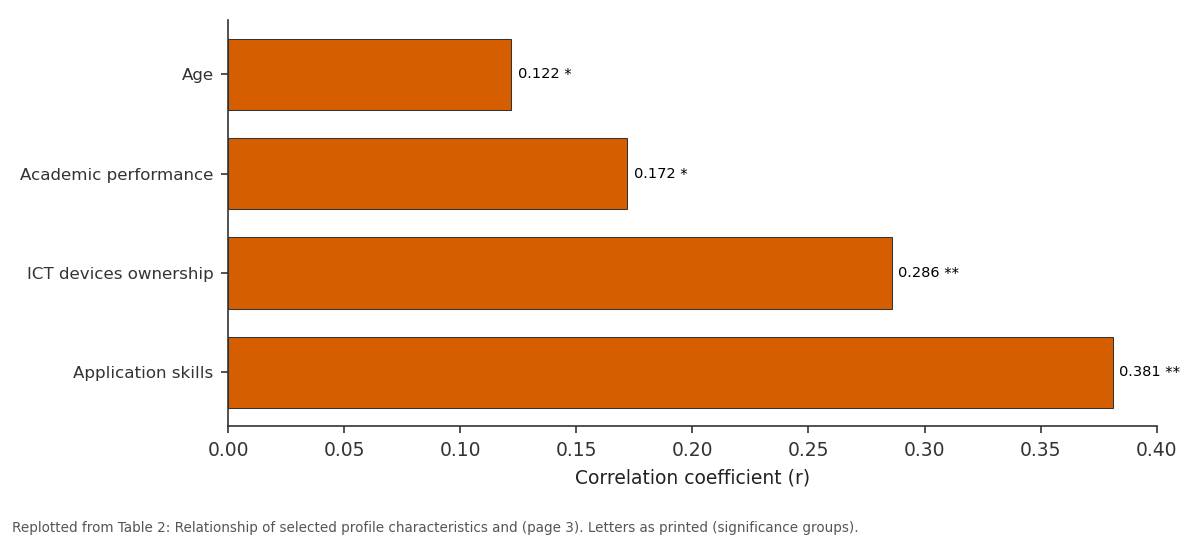
Correlation coefficient (r): Age vs Academic performance vs ICT devices ownership vs Application skills
Replotted from Table 2 (page 3) of the original paper. Every bar is the paper's own table value.
View source evidence ↗Figures & tables
From the original paper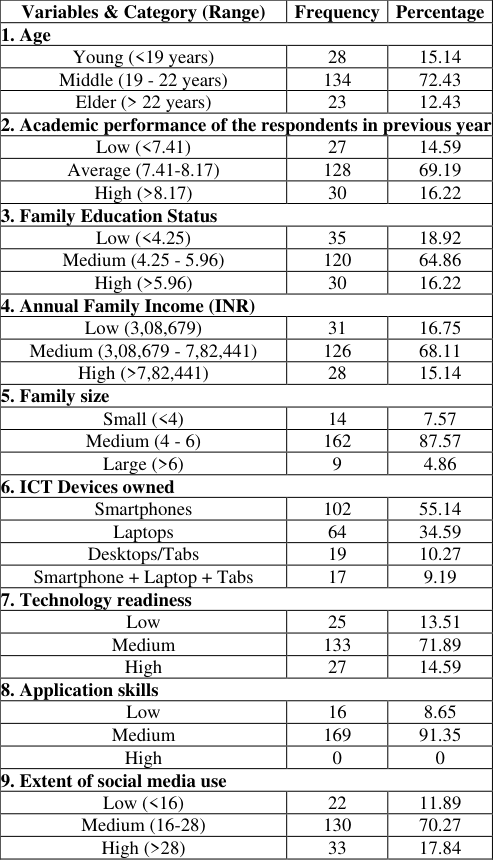 Table 1
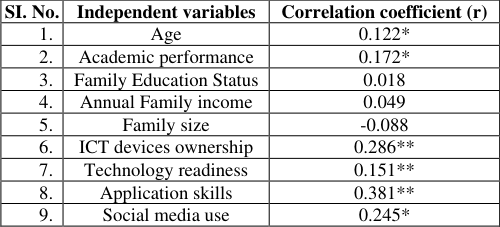 Table 2
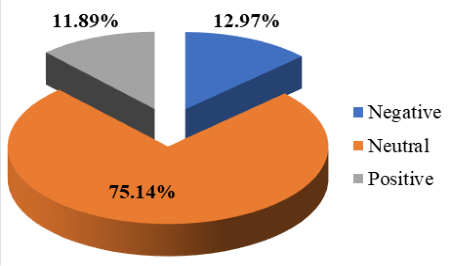 Figure 1
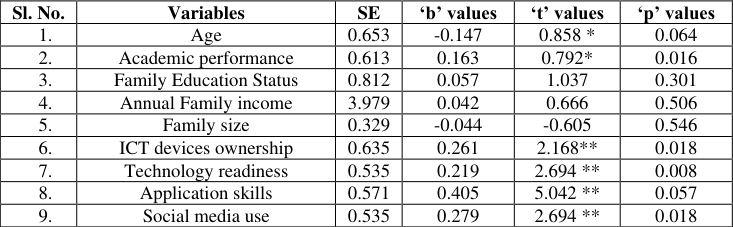 Table 3
Introduction
Driven by advancements in education and instructional technology, the higher education landscape is undergoing a profound shift catalyzed by digital transformation. This shift has prompted a reforming, restructuring and re-aligning of traditional face-to-face classroom instruction in favor of more efficient and cost-effective system utilising online educational delivery systems. The widespread application of Information and Communication Technologies (ICTs) has played a pivotal role in this transformation, leading to a shift from the traditional mode of learning to online or blended learning (Kukulska-Hume, 2012; Lee and McLoughlin, 2011; Upton, 2005) [14,15,24] . The progress and development of ICTs and its ever-increasing integration in education sector are acknowledged as positive elements of change in higher education, with internet and network technology platforms being extensively integrated into the education sector (Hawkins 2005, Jackson et al. 2004, Newpher 2006) [10, 11, 20] . The integration of e-learning into traditional learning approaches has become a priority for higher educational institutions, recognizing the potential for enhanced learning outcomes (Tamta and Ansari, 2015) [23] . Stakeholders, including students, teachers, and administrators, are acutely aware of the importance of this transition and the challenges it presents (Navani and Ansari, 2017) [19] . In this context, students' attitudes towards online learning emerge as a critical factor in the emerging learning environment, especially when supported by relevant and suitable learning tools. Kentnor (2015) [12] observed that the advent of the internet and online education systems has revolutionized educational delivery mechanisms globally. Over the past decade, there has been a resurgence of global interest in distance education and learning as a potentially useful strategy for addressing human development issues (Meera Shaik N et al., 2022) [17] . In India, the government played a pivotal role by providing broadcasting space through All India Radio and Doordarshan services, later utilized by prominent educational institutions such as the Indira Gandhi National Open University, the University Grants Commission, and the National Council of Educational Research and Training (Mazumdar, 2020) [16] . Consequently, India has reported the second-highest number of online course enrollments globally, with over 1,55,000 students from the country (Gaikwad and Randhir, 2015) [9] . The global COVID-19 pandemic further accelerated the shift to online education, with the sudden closure of institutions necessitating a rapid transition to online modes of teaching and learning. This unprecedented change compelled the enrolled students in various programs at different Universities to stay at home and engage in remote www.extensionjournal.com study (Muthuprasad et al., 2020) [18] . Despite India being in the early stages of online education, the abrupt implementation faced numerous challenges, particularly in the urban-rural divide (Bhati et al., 2020) [5] . Students encountered challenges related to telecommunication networks, limited internet access, expensive internet services, and a lack of familiarity with various e-learning platforms during the lockdown (Adnan and Anwar, 2020) [2] . The experiences of e-learning during this period varied among students besides fast-pacing the interest and extent of online education in India. Further, Chung et al (2022) [7] observed that academic performance in online learning is most strongly associated with motivation (including selfefficacy), and self-regulation. Further, they argued that learning environment and materials need to be designed specifically for online learners, rather than translating existing materials, and should be achieved by consulting relevant frameworks and evidence-based principles for best practice online learning design and delivery. Given the significance, challenges, and varied experiences associated with online education, the present study aimed to determine the attitudes of undergraduate students at Pantnagar University towards online education. The objective was to identify the factors influencing the uptake of online education, considering the unique context and challenges faced by students in the early stages of this transformative shift. The study is positioned to contribute valuable insights to the ongoing discourse on the integration of online education in the higher education landscape.
Materials and Methods
The study was conducted at a premier State Agriculture Universities, i.e. G. B. Pant University of Agriculture and Technology (GBPUA&T), Pantnagar, Uttarakhand, India, which was ranked first among 70+ SAUs in India and fourth overall among all Agriculture educational Institutes in India in 2021. The College of Agriculture, the largest and oldest academic unit of this University, was purposively chosen keeping in mind the accessibility, familiarity and convenience during data collection. This college offers a four-year Undergraduate Agriculture degree (B. Sc. Agriculture) along with various other UG, PG, and Ph.D. programs. The study, employing an exploratory research design and following Stratified Random Sampling, included 185 students from the four-year UG program. A structured interview schedule, focusing on academic performance, possession of ICT devices, technology readiness, application skills, and social media use, was prepared, vetted, and pretested, and then administered to the selected respondents. Descriptive and inferential statistics analysis using SPSS (V. 20) was applied to the collected data.
Results and Discussion
The results are presented in four sections namely profile characteristics, attitude towards online education, attitude of respondents towards online education, relationship between profile characteristics and attitude of respondents towards online education and Combined effect of independent variables on the dependent variable.
(a) Profile characteristics of the respondents:
The results obtained in respect of profile characteristics of the respondents are given in table-1 below. [1] reported that 76% of students utilized mobile phones for elearning, reflecting the evolving role of mobile technology in education.
Technology readiness, indicative of mental preparedness for online education, revealed that 71.89% exhibited a medium level, 15% high, and 13.51% low readiness. This suggests satisfactory levels of technology readiness among respondents. Further, technology application skills, referring to the ability to use ICT devices effectively, showed that www.extensionjournal.com 91.35% possessed medium skills, 8.65% low, and none high. The study concludes that respondents demonstrated good application skills, a positive indicator for online education uptake. Social media usage was also explored, with 70.27% reporting a medium and 17.84% a high extent of use. This indicates that students utilized online tools for various needs, benefiting their overall learning, reading, and writing abilities. Yamini and Pujara (2022) [21] found that 49.30% of respondents had a high level of social media addiction, possibly influenced by widespread smartphone use and daily posting habits.
In summary, the study reveals a favorable environment for adoption of online education, with students demonstrating adequate ownership of devices, technology readiness, application skills, and active engagement with social media.
(b) Students' attitude towards online education
The primary goal of online education for students is to acquire information and knowledge in their chosen field, ultimately leading to certification or a degree. This study focuses on individuals who experienced the transition from face-to-face to online education, aiming to understand how this shift impacted their attitudes. Students' attitudes were assessed using a modified scale by Al-Musawi (2014) [25] , consisting of fifty statements on the advantages and disadvantages of e-learning, students' experiences, and support at campus. The scoring system ranged from 5 for "Strongly Agree" to 1 for "Strongly Disagree." Scores for negative items were assigned in the opposite direction, with total scores categorized as Positive, Neutral, or Negative. The results, depicted in Fig. -1 above, reveals that a substantial majority (75.14%) of respondents held a Neutral attitude, with only 11.89% displaying a Positive attitude and 12.97% a Negative attitude. This suggests that while students possess the necessary devices and skills for online education, there is hesitancy in embracing this mode of education. Students may comprehend the courses online but harbor reservations about its utility and value. Interestingly, these findings differ from Doley and Das (2021) [8] , who reported a higher percentage of students with a positive attitude towards e-learning.
In conclusion, despite possessing the requisite tools, a considerable number of students in the study exhibit a neutral attitude towards online education, indicating a reluctance to fully embrace this mode of learning.
(c) Relationship between profile characteristics and attitude of students towards online education
An attempt was made to determine the relationship of selected profile characteristics with the attitude of the respondents towards online education. Karl Pearson's coefficient of correlation was computed and the results obtained are presented in Table 2. The study also explored various factors influencing students' attitudes towards online education, examining their correlation with demographic and technological variables. Social media use 0.245* *Significant at 0.05 level of probability; ** Significant at 0.01 level of probability 1. Age: While age showed a positive relationship with attitudes towards online education (r = 0.122), the correlation was non-significant. This implies that as age increases, there may be a tendency towards a more positive attitude, possibly due to increased responsibilities and seriousness. These findings align with previous studies by Edwards (2018) [26] and Suri and Sharma (2013) [27] . 2. Academic Performance: A significant positive correlation (r = 0.172, p<0.05) was found between academic performance and attitudes towards online education. Higher CGPA correlated with a more positive attitude, suggesting that students excelling academically were equally enthusiastic about online learning, consistent with Elnoor's (2016) [28] findings.
| SI. No. | Independent variables | Correlation coefficient (r) |
|---|---|---|
| 1. | Age | 0.122* |
| 2. | Academic performance | 0.172* |
| 3. | Family Education Status | 0.018 |
| 4. | Annual Family income | 0.049 |
| 5. | Family size | -0.088 |
| 6. | ICT devices ownership | 0.286** |
| 7. | Technology readiness | 0.151** |
| 8. | Application skills | 0.381** |
| 9. | Social media use | 0.245* |
Table text extracted from the original PDF; superscript letters are shown inline. The original table image is below.
View original table image
Family Education Status:
Although a positive correlation (r = 0.018) existed between family education status and attitudes, it was non-significant. This suggests that those with higher family education status tended to have a more positive attitude, possibly influenced by parental role modeling and motivation. 4. Family Size: A negative, non-significant correlation (r = -0.088) was observed between family size and attitudes towards online education. Larger family size correlated with lower attitude scores, possibly due to increased disturbances and interruptions during study hours, especially prevalent during the pandemic.
Family Income:
A positive, non-significant correlation (r = 0.049) indicated that higher family income was associated with a more positive attitude. This could be attributed to the financial capacity to bear additional costs related to online education. 6. ICT Devices Owned: Ownership of ICT devices (r = 0.286, p<0.01) displayed a highly significant positive correlation with attitudes towards online education.
Possessing devices like smartphones, laptops, or tablets www.extensionjournal.com proved immensely beneficial, emphasizing their crucial role in facilitating online education. 7. Technology Readiness: A positive and significant correlation (r = 0.151, p<0.05) indicated that higher technology readiness was associated with a more positive attitude. Prior knowledge of e-learning and the ability to handle technical difficulties contributed to a favorable attitude. 8. Application Skills: Highly significant positive correlation (r = 0.381, p < 0.01) revealed that good application skills were linked to a positive attitude. Proficiency in various ICT applications contributed to a more favorable stance towards online education. 9. Social Media Use: A significant positive correlation (r = 0.245) demonstrated that increased social media use was associated with a more positive attitude towards online education. Exposure to educational content and connection with teachers through social media contributed to enhanced motivation for learning.
In summary, the study elucidates the complex interplay of demographic and technological factors in shaping students' attitudes towards online education, providing valuable insights for educational practitioners and policymakers.
(d) Combined effect of all independent variables on dependent variable (attitude towards online education) To collectively understand the impact of selected independent variables on predicting attitudes towards online education, Multiple Linear Regression analysis was conducted. Results obtained are presented in Table -3 The computed coefficient of determination (R²) was 0.5729, indicating that the nine chosen independent variables explained approximately 57.29% of the variations in attitudes towards online education. Notably, variables such as Age, Academic Performance, ICT Devices Ownership, Technology Readiness, Application Skills, and Social Media Use demonstrated positive and significant contributions to attitude variations. The partial regression coefficients, presented in Table-3, confirmed the significance of these variables with their respective 't' values. Surprisingly, Family Education Status, Annual Family Income, and Family Size did not exhibit significant effects on attitudes toward online education. The overall 'F' value (7.320) was found to be statistically significant at the 0.01 level. The derived prediction equation for the dependent variable (Y= Attitude towards online education) is: Y = 15.374 --0.147 (X1) + 0.163 (X2) + 0.057 (X3) + 0.042 (X4) -0.044 (X5) +0.261 (X6) + 0.219 (X7) + 0.405 (X8) + 0.279 (X9) This equation offers a quantitative insight into the factors influencing attitudes towards online education among the surveyed population.
Conclusion
The evolving higher agriculture education landscape, driven by advancements in instructional technology, is witnessing a shift towards more efficient alternatives to traditional classroom instruction. This study found that students predominantly hold neutral to positive attitudes towards online education, besides appreciating its flexibility in time and place. However, challenges such as network latency, and technological & infrastructural constraints hinder effective e-learning experiences. The younger generation, being more tech-savvy, is expected to adapt better to ICTenabled education. To harness the benefits of this digital transformation, educational universities and institutes are urged to provide training to both students and faculty, fostering familiarity with new technologies, upscaling their ICT competencies and awareness of learning management platforms, thereby enhancing e-learning skills.
Acknowledgement
AcknowledgementsThe authors gratefully acknowledge the assistance of the students provided as respondents for the study during the field data collection.
Figures and tables from the paper
| Variables & Category (Range) | Frequency | Percentage |
|---|---|---|
| 1. Age | ||
| Young (<19 years) | 28 | 15.14 |
| Middle (19 - 22 years) | 134 | 72.43 |
| Elder (> 22 years) | 23 | 12.43 |
| 2. Academic performance of the respondents in previous year | ||
| Low (<7.41) | 27 | 14.59 |
| Average (7.41-8.17) | 128 | 69.19 |
| High (>8.17) | 30 | 16.22 |
| 3. Family Education Status | ||
| Low (<4.25) | 35 | 18.92 |
| Medium (4.25 - 5.96) | 120 | 64.86 |
| High (>5.96) | 30 | 16.22 |
| 4. Annual Family Income (INR) | ||
| Low (3,08,679) | 31 | 16.75 |
| Medium (3,08,679 - 7,82,441) | 126 | 68.11 |
| High (>7,82,441) | 28 | 15.14 |
| 5. Family size | ||
| Small (<4) | 14 | 7.57 |
| Medium (4 - 6) | 162 | 87.57 |
| Large (>6) | 9 | 4.86 |
| 6. ICT Devices owned | ||
| Smartphones | 102 | 55.14 |
| Laptops | 64 | 34.59 |
| Desktops/Tabs | 19 | 10.27 |
| Smartphone + Laptop + Tabs | 17 | 9.19 |
| 7. Technology readiness | ||
| Low | 25 | 13.51 |
| Medium | 133 | 71.89 |
| High | 27 | 14.59 |
| 8. Application skills | ||
| Low | 16 | 8.65 |
| Medium | 169 | 91.35 |
| High | 0 | 0 |
| 9. Extent of social media use | ||
| Low (<16) | 22 | 11.89 |
| Medium (16-28) | 130 | 70.27 |
| High (>28) | 33 | 17.84 |
Table text extracted from the original PDF; superscript letters are shown inline. The original table image is below.
View original table image
| Sl. No. | Variables | SE | ‘b’ values | ‘t’ values | ‘p’ values |
|---|---|---|---|---|---|
| 1. | Age | 0.653 | -0.147 | 0.858 * | 0.064 |
| 2. | Academic performance | 0.613 | 0.163 | 0.792* | 0.016 |
| 3. | Family Education Status | 0.812 | 0.057 | 1.037 | 0.301 |
| 4. | Annual Family income | 3.979 | 0.042 | 0.666 | 0.506 |
| 5. | Family size | 0.329 | -0.044 | -0.605 | 0.546 |
| 6. | ICT devices ownership | 0.635 | 0.261 | 2.168** | 0.018 |
| 7. | Technology readiness | 0.535 | 0.219 | 2.694 ** | 0.008 |
| 8. | Application skills | 0.571 | 0.405 | 5.042 ** | 0.057 |
| 9. | Social media use | 0.535 | 0.279 | 2.694 ** | 0.018 |
Table text extracted from the original PDF; superscript letters are shown inline. The original table image is below.
View original table image
References
27 in the original paper- Abbasi S, Ayub T, Malik A, Memon SI. Perceptions of students regarding E-learning during Covid-19 at a private medical college. Pakistan Journal of Medical Sciences. 2020;36:57-61. https://doi.org/10.12669/pjms.36.COVID19-S4.2766
- Adnan M, Anwar K. Online learning amid the COVIDwww.extensionjournal.com 19 pandemic: Students' perspectives. Journal of Pedagogical Sociology and Psychology. 2020;2(1):4551. https://doi.org/10.33902/JPSP.2020261309
- Almaiah MA. Acceptance and usage of a mobile information system services in University of Jordan. Education and Information Technology. 2018;23:18731895.
- Armstrong-Mensah E, Ramsey-White K, Yankey B, Self-Brown S. COVID-19 and Distance Learning: Effects on Georgia State University School of Public Health Students. Frontiers in Public Health. 2020;8:576227. https://doi.org/10.3389/fpubh.2020.576227
- Bhati S, Vatta L, Tiwari S. COVID 19-Response from Education System. Indian Journal of Extension Education. 2020;56(2):10-15. Retrieved from https://epubs.icar.org.in/index.php/IJEE/article/view/10 7300
- Chandra Y. Online education during COVID-19: perception of academic stress and emotional intelligence coping strategies among college students. Asian Education and Development Studies. 2021;10(2):229-238. https://doi.org/10.1108/AEDS-052020-0097
- Chung J, McKenzie S, Schweinsberg A, Mundy M. Correlates of Academic performance in Online higher education: A Systematic Review. Frontiers in Education. 2022;7:820567. Doi: 10.3389/feduc.2022.820567
- Doley PP, Das R. A Study on Attitude of Undergraduate Students towards E-learning. IOSR Journal of Humanities and Social Sciences. 2021;26(1):10-14.
- Gaikwad A, Randhir VS. E-Learning in India: Wheel of Change. International Journal of e-Education, eBusiness, e-Management and e-Learning. 2016;6(1):4045.
- Hawkins S. Beyond the digital divide: Issues of access and economics. Canadian Journal of Information and Library Sciences. 2015;29(2):171-189.
- Jackson L, von Eye A, Barbatsis G, Biocca F, Fitzerald H, Yong Z. The impact of internet use on the other side of the digital divide. Communications of the ACM. 2004;47(7):43-47.
- Kentnor HE. Distance Education and the Evolution of Online Learning in the United States. Curriculum and Teaching Dialogue. 2015;17(1 & 2):21-000.
- Konwar IH. A Study on Attitudes of College Students towards E-learning with Special Reference to North Lakhimpur of Lakhimpur District, Assam. International Journal of Information Science and Education. 2017;4(1):1-9.
- Kukulska-Hulme A. How should the higher education workforce adapt to advancements in technology for teaching and learning? The Internet and Higher Education. 2012;15(4):247-254.
- Mazumdar M. The history and usefulness of online teaching in India. The Readers' Blog. 2020.
- Meera Shaik N, Arun Kumar S, Amtul Waris V, Prasad C, Muthuraman P, Mangal Sain, et al. E-Learning in Extension Systems: Empirical Study in Agricultural Extension in India. Indian Journal of Extension Education. 2022;46(3&4):94-101. Retrieved from https://epubs.icar.org.in/index.php/IJEE/article/view/12 5686
- Muthuprasad T, Aiswarya S, Aditya KS, Girish KJ. Students' Perception and Preference for Online Education in India during COVID -19 Pandemic. Social Sciences & Humanities Open. 2020:1-38.
- Navani Yogita, Ansari MA. Assessing e-Learning Readiness of University Faculty in India. Advances in Computer Sciences and Information Technology. 2017;4(3):209-214.
- Newpher C. An IT evolution in the classroom. Techniques: Connecting Education and Careers. 2006;81(5):30-33.
- Yamini P, Pujara L. Effect of Social Media Addiction on Mental Health of Emerging Adults. Indian Journal of Extension Education. 2022;58(4):76-80. Retrieved online from https://epubs.icar.org.in/index.php/IJEE/article/view/12 8441
- Peytcheva-Forsyth R, Yovkova B, Aleksieva L. Factors affecting students' attitudes towards online learning - The case of Sofia University. In: Proceedings of 44th International Conference on Application of Mathematics in Engineering and Economics, Bulgaria, December 2018. AIP Conference Proceedings. 2018. Bulgaria, Sofia University. pp. 020025-1 -020025-8. https://doi.org/10.1063/1.5082043.
- Tamta P, Ansari MA. University students' perceptions towards e-Learning. International Journal of Extension Education. 2015;11(2):6-11.
- Upton D. Online learning in Nutrition and Dietetics: Student performance and attitudes. The Internet Journal of Allied Health Sciences and Practice. 2005;3(1):0108.
- Ma'mani L, Nikzad S, Kheiri-Manjili H, Al-Musawi S, Saeedi M, Askarlou S, et al. Curcumin-loaded guanidine functionalized PEGylated I3ad mesoporous silica nanoparticles KIT-6: Practical strategy for the breast cancer therapy. European journal of medicinal chemistry. 2014 Aug 18;83:646-54.
- Edwards F, Esposito MH, Lee H. Risk of policeinvolved death by race/ethnicity and place, United States, 2012-2018. American journal of public health. 2018 Sep;108(9):1241-1248.
- Suri G, Sharma S. The impact of gender on attitude towards computer technology and e-learning: An exploratory study of Punjab University, India. International Journal of Engineering Research. 2013;2(2):132-136.
- Elsafty MS, Hassanin AS, Laban M, Ibrahim AM, Ahmed WU, Elnoor AAA. Intravenous carbetocin shot is superior to oxytocin infusion for placental delivery in second trimester abortion: a pilot randomized controlled trial. The Journal of Maternal-Fetal & Neonatal Medicine. 2016 Mar 3;29(5):850-854.