
Research article · 2024 · Full text
International Journal of Advanced Biochemistry ResearchEvaluation of curcumin and other phytochemicals in turmeric processed with various processing methods
Volume 8(2) · Pages 185–189 · DOI: 10.33545/26174693.2024.v8.i2c.542 ↗
Research areasCurcumin's Biomedical ApplicationsHibiscus Plant Research StudiesNatural Antidiabetic Agents Studies
Abstract
Author-writtenCurcuma longa belonging to the family Zingiberaceae is a perennial plant cultivated in tropical regions. Its rhizomes are used for a variety of purposes owing to the presence of the component called curcumin. But, curcumin being light and heat sensitive, tends to lose its therapeutic properties during various processing methods the rhizomes are subjected to. Apart from curcumin, a lot of phytochemicals such as polyphenols, flavonoids, and tannins to name a few are also lost. Therefore, the present investigation was undertaken, to determine the losses of curcumin and other phytochemicals occurring during various processing techniques. Raw turmeric rhizomes were processed with three treatments, viz., boiling (40, 60 and 80 minutes), steaming (30, 50 and 70 minutes) and water blanching for 2 minutes along with a control batch in which no processing was done. Analysis of the processed turmeric powder for curcumin and phytochemicals showed that maximum losses occurred in boiling treatments followed by steaming and water blanching. Highest retention of these bioactive components was found in water blanching.
Summary
Source-checkedPlain-language reading of the full paper, prepared with AI and checked against the text. Each point links to the authors' own words.
Why it matters
- Turmeric (Curcuma longa) is a tropical perennial plant whose rhizomes are valued for their curcumin content. View evidence ↗
- Because curcumin and other phytochemicals like tannins, flavonoids, and polyphenols are sensitive to heat and light, they can be lost during the processing of turmeric rhizomes. View evidence ↗
- The flavonoids found in turmeric are noted for their antioxidant, anti-cancer, and heart-disease preventing properties. View evidence ↗
The question
- The study aimed to determine how different processing techniques affect the loss of curcumin and other phytochemicals in turmeric. View evidence ↗
What they did
- The researchers used the 'Rajendra sonia' variety of raw turmeric rhizomes. View evidence ↗
- Rhizomes were processed in 1 kg duplicates using seven treatments: boiling (40, 60, and 80 minutes), steaming (30, 50, and 80 minutes), and water blanching (2 minutes). View evidence ↗
- After processing, samples were dried in a hot air oven at 65 °C, powdered, and analyzed for curcumin, tannins, phenols, and flavonoids. View evidence ↗
- Curcumin content was measured using UV-visible spectroscopy at 420 nm. View evidence ↗
What they found
- Unprocessed fresh turmeric rhizomes contained the highest curcumin level at 5.58 gm/100 gm. View evidence ↗
- Boiling caused the most significant curcumin loss, with the lowest retention occurring at 80 minutes (2.87 gm/100 gm) and the highest among boiling treatments at 40 minutes (3.54 gm/100 gm). View evidence ↗
- Among steaming treatments, curcumin retention was highest at 30 minutes (4.15 gm/100 gm) and lowest at 70 minutes (3.67 gm/100 gm). View evidence ↗
- Raw turmeric rhizomes had the highest phytochemical levels: total polyphenols (6.89±0.089), total flavonoids (4.15±0.015), and total tannins (5.52±0.032). View evidence ↗
- Boiling led to the lowest phytochemical retention, with the 80-minute treatment showing the least amounts of TPC (4.46±0.049), TFC (2.029±0.05), and TTC (3.85±0.043). View evidence ↗
- Water blanching retained the most phytochemicals among all treatments, with TPC at 6.53±0.018, TFC at 3.807±0.240, and TTC at 5.31±0.008. View evidence ↗
What it means
- The authors recommend two-minute water blanching as the best processing method to maximize the retention of bioactive components. View evidence ↗
- Adopting water blanching is suggested to preserve the medicinal and health benefits of turmeric while improving the shelf life of the resulting powder. View evidence ↗
Visual summary
3 visualsIllustrations explain the paper; charts are replotted from the paper's own table values.
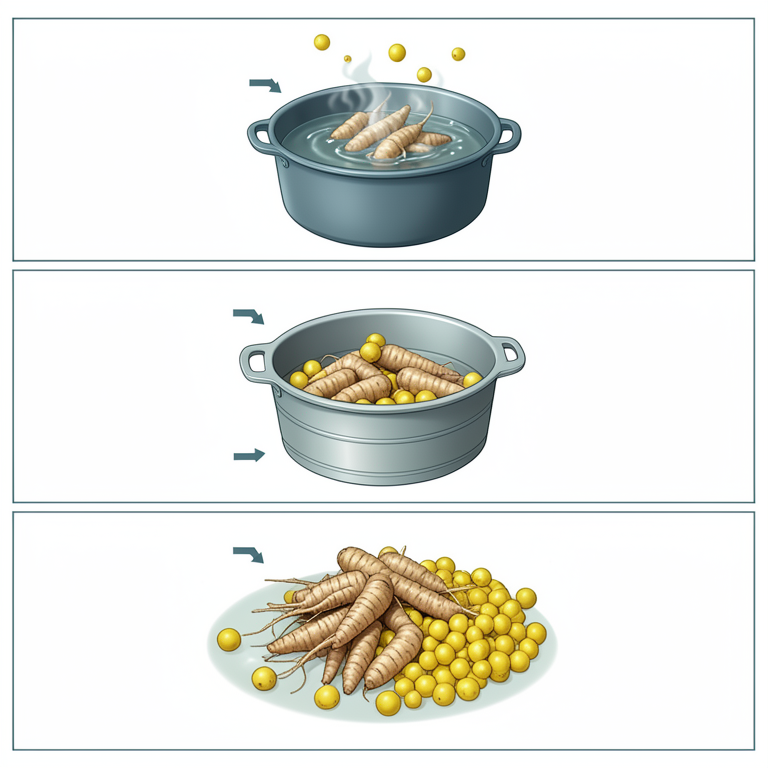
Comparison of Bioactive Retention
AI-generated conceptual illustration (turmeric rhizomes). It explains the idea and does not show study data.
View source evidence ↗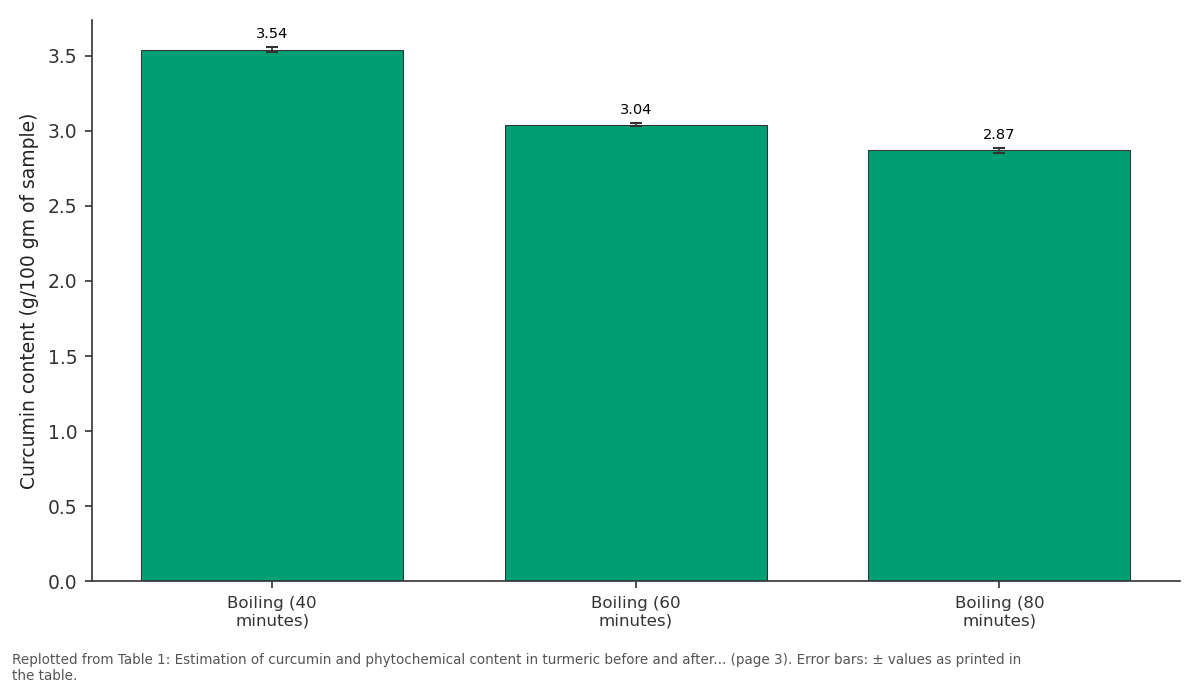
Curcumin content (g/100 gm of sample): Boiling (40 minutes) vs Boiling (60 minutes) vs Boiling (80 minutes)
Replotted from Table 1 (page 3) of the original paper. Every bar is the paper's own table value.
View source evidence ↗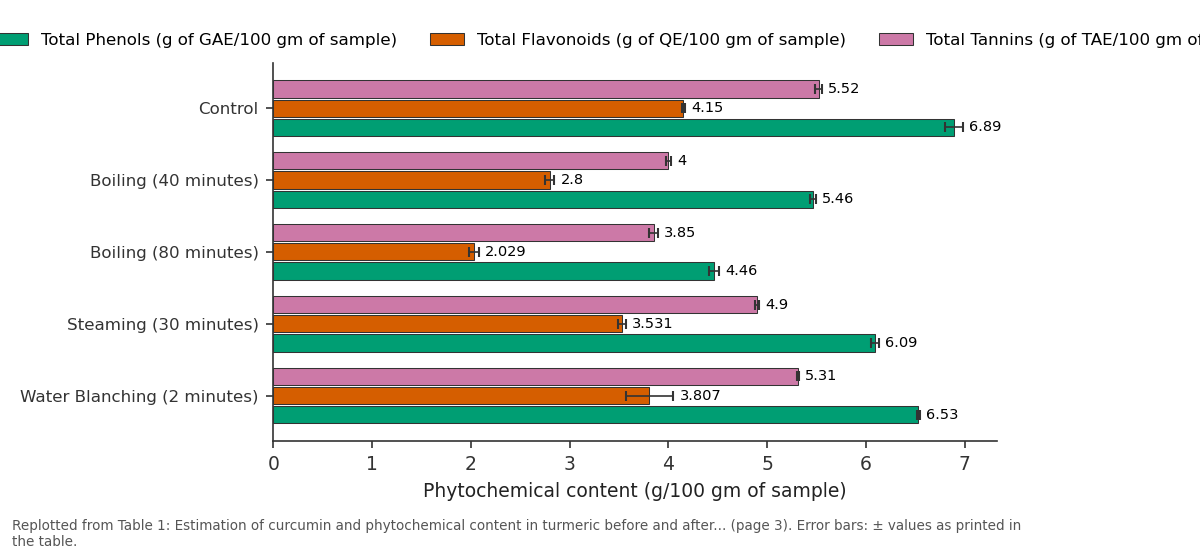
Total Phenols (g of GAE/100 gm of sample) and Total Flavonoids (g of QE/100 gm of sample) and more: Control vs Boiling (40 minutes) vs Boiling (80 minutes) vs Steaming (30 minutes) vs Water Blanching
Replotted from Table 1 (page 3) of the original paper. Every bar is the paper's own table value.
View source evidence ↗Figures & tables
From the original paper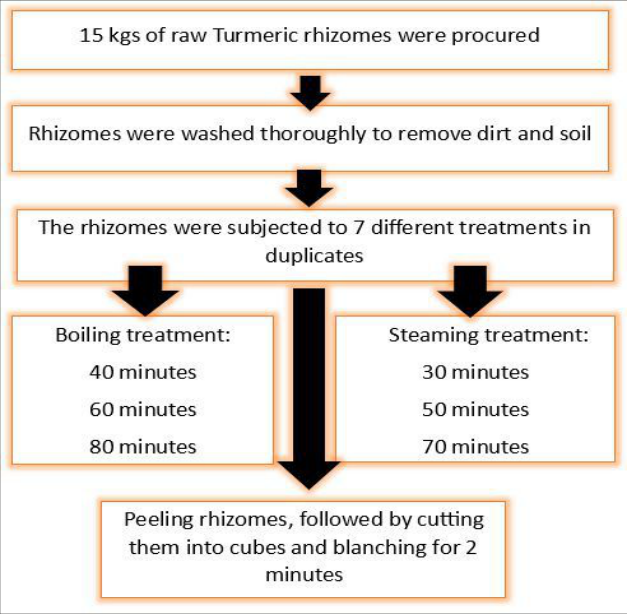 Figure 1
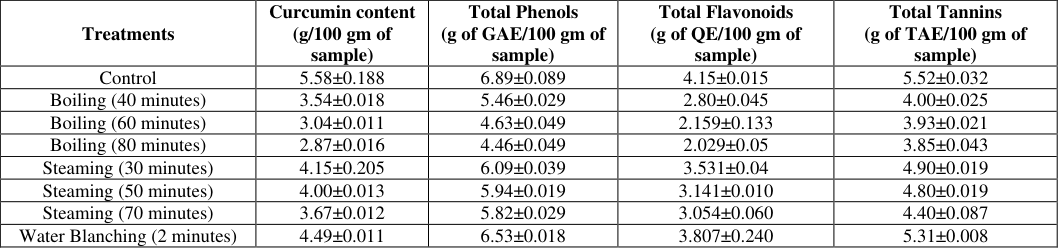 Table 1
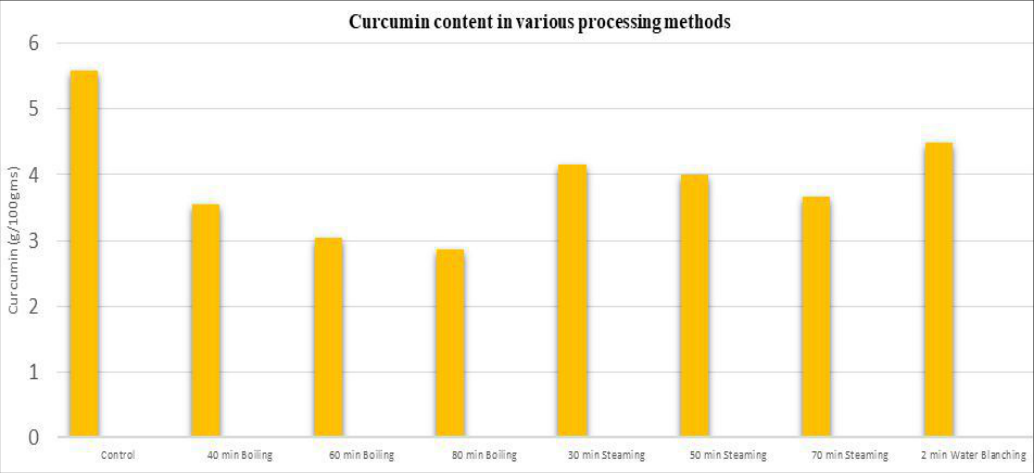 Figure 2
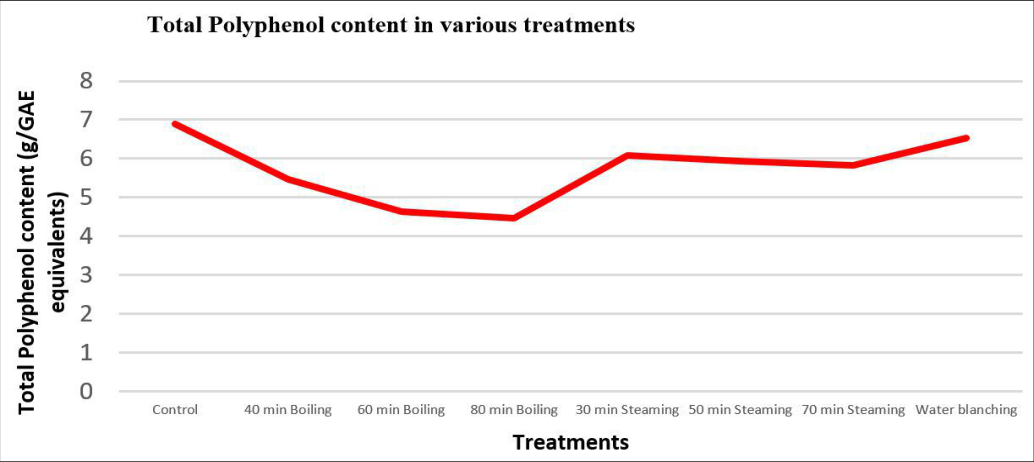 Figure 3
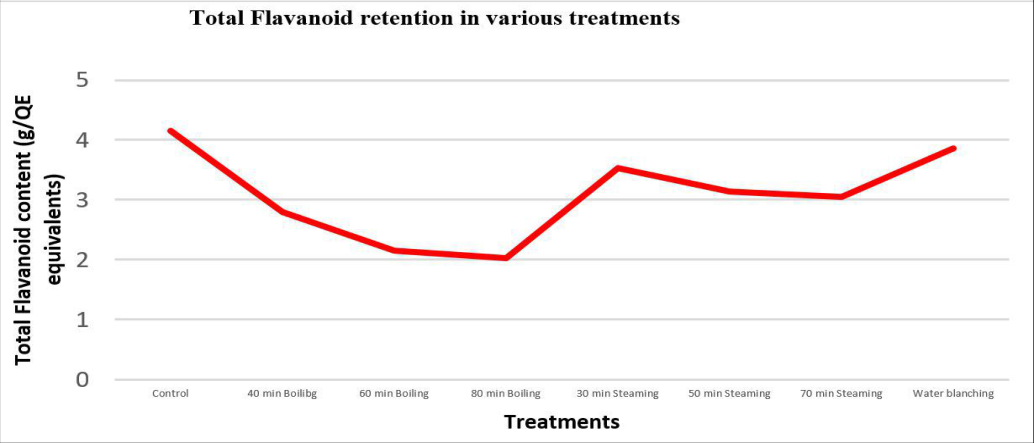 Figure 4
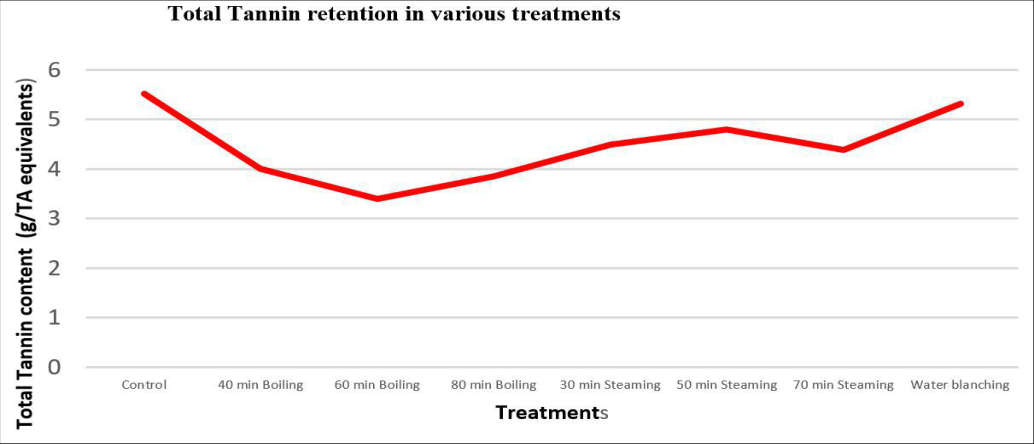 Figure 5
Introduction
The rhizomes of turmeric are not only used in Indian curries but also has varied pharmacological and therapeutic uses. The powder contains compounds with medicinal properties called curcuminoids, most important of which is curcumin. Reports suggest that curcumin content in turmeric is about 3 percent by weight (Reema et al. 2006) [2] . Various studies have been done by researchers for determining the phytochemical and nutritional composition of turmeric. According to Ikepama et al. (2014) [3] , turmeric contains 8.92 percent moisture, 2.85 percent ash, 9.42 percent crude protein, 4.60 percent crude fibre, and 6.85 percent fat. The phytochemical content was 0.45 percent saponin, 1.08 percent tannin, 0.40 percent flavonoid, 0.08 percent phenol and 0.03 percent sterol. Reports suggest that turmeric is a good source of natural flavonoids which has antioxidant activity, free radical scavenging activity, coronary heart diseases preventing activities and anti-cancer activities. It also has considerable amounts of phenols and flavonoids which are a potential antioxidant. To fight against the hazards of oxidative damage, the dietary consumption of phenolics and flavonoids has been considered quite effective. Despite all these extraordinary properties of turmeric, there is a concern for the bioavailability of curcumin, the main active ingredient in turmeric. Poor bioavailability of curcumin is due to poor absorption and rapid elimination that are attributed to its hydrophobic nature. Due to this, its use is limited as a health-promoting agent and dietary supplement (Sidney et al. 2020) [4] . The reasons attributed for these concerns are many one of them is the adoption of wrong processing methods for obtaining turmeric powder from raw turmeric rhizomes. Various studies have been done in to assess the loss of various quality parameters of turmeric during various processing methods. Effect of curing treatment on biochemical qualities of turmeric rhizome was studied in southwest Ethiopia by Biruk et al. (2020) [5] . The results revealed that, all the quality attributes were significantly affected by curing and drying methods. Raza et al. (2018) [6] investigated on the effect of different drying treatments on concentration of curcumin in raw Curcuma longa L. Different drying treatments were adopted viz. sun drying without boiling, shade drying without boiling, convection oven drying, hot air oven drying and solar tunnel drying. The results showed that boiling has also a significant effect on curcumin concentration followed by drying temperature. The highest concentration of curcumin was found during hot-air drying at 70 ℃ temperature and one hour boiling. Study on phytochemical analysis of methanolic extract of Curcuma longa rhizome was also done by Rajesh et al. (2013) [7] . For the study, fresh rhizome was procured from central market, Mangalore. Extraction was done using Soxhlet apparatus for 36 hours. The extract was concentrated using rotavapor and dried. Upon qualitative analysis the results showed the presence of tannins, saponins, glycosides, flavonoids, terpenoids and glycosides. Various tests like Wagner test, lead test, ferric chloride test, foam test, Salkowski's test etc were done to determine the presence of various phytochemicals in the methanolic extract.
Material and Methods Procurement and processing of turmeric
Processing of raw turmeric rhizomes was done by giving different treatments to check out the best process which has the maximum curcumin retention. For this, 'Rajendra sonia' variety of raw turmeric rhizomes were procured from Dholi campus, Muzaffarpur. The rhizomes were washed thoroughly in water to remove soil and dirt and were dried in sun so that the loose peels from rhizomes shed off. Then these rhizomes were divided into different lots for processing by 7 different treatments of boiling, steaming and blanching in duplicates of 1 kg per treatment, as illustrated in Fig 1 . Three treatments were done, in case of boiling viz, 40 minutes, 60 minutes and 80 minutes. Similarly, steaming was done for, 30 minutes, 50 minutes, and 80 minutes. Since, blanching is the method of enhancing the shelf life of produce and better retention of nutrients, raw turmeric rhizomes were peeled and cut into cubes and blanched for 2 minutes followed by drying. The drying after the treatments was done in the hot air oven at 65 ℃ and the drying time was noted. After proper drying, the turmeric slices were powdered and kept separately for the estimation of curcumin and phytochemicals viz. tannins, phenols and flavonoids.
Estimation of curcumin and other phytochemical content in processed turmeric before and after processing Determination of curcumin content
The curcumin content in the turmeric before and after different methods of processing were analysed by the methods given by Gitanjhali et al. (2016) [11] . The method was based on U.V. visible spectroscopy where the, UV spectral reading for the solution was recorded under 420nm. A UV spectrum was also recorded for standard curcumin. The obtained absorption of samples was compared with the standard value and the amount of curcumin in samples was calculated.
Determination of total Phenolic content
Total Phenolic content of the samples was estimated spectrophotometrically by Folin Ciocalteau method as given by Vador et al. 2012 [9] . Phenols react with phosphor molybdic acid in Folin Ciocalteau reagent in alkaline medium to produce a blue coloured complex called molybdenum blue. The absorbance was measured at 700 nm using a UV/Vis spectrophotometer. Total phenolics were quantified by calibration curve obtained from measuring the absorbance of a known concentration of gallic acid standard and the concentrations were expressed as milligrams of gallic acid equivalents (GAE) per 100 gm of sample.
Determination of total Flavonoid content
Total Phenolic content of the samples was estimated spectrophotometrically by Folin Ciocalteau method as given by Vador et al. 2012 [9] . The basic principle behind Aluminium Chloride colorimetric method is that aluminium chloride forms acid stable complexes with the C 4 keto group and either the C 3 or C 5 hydroxyl group of flavones and flavanols. The number of flavonoids were expressed as mg of QE per 100 gm of sample.
Determination of Tannin content
Total Tannins were estimated using Folin Ciocalteau method as given by Tanvir et al. 2017 [10] . The results were expressed as g of tannic acid equivalents (TE) per 100 mg of turmeric.
Results and Discussions Curcumin content
The highest amount of curcumin was found in fresh turmeric rhizomes in which no processing was done, the value being 5.58 gm/100 gm. The data is presented in Table 1 and illustrated in Fig 2 . Further, the amount of curcumin started declining as the time of processing increased in different treatments. Maximum losses were observed during boiling treatments, highest being in 80 minutes boiling where the retention of curcumin was (2.87 gm/100 gm), followed by 60 minutes boiling (3.04 gm/100 gm), and the maximum curcumin retention among boiling treatments was in 40 minutes boiling (3.54 gm/100 gm) as compared to the unprocessed turmeric. Next, the rhizomes were given steaming treatments where the curcumin losses were less to a great extent as compared to boiling treatments. Curcumin retention was close to the curcumin in raw turmeric rhizomes. Maximum retention was in 30 minutes steaming (4.15 gm/100 gm), followed by 50 minutes steaming (4.00 gm/100 gm), and the least retention among steaming treatments was in 70 minutes of steaming (3.67 gm/100 gm). Lastly the rhizomes were subjected to water blanching where they were cut into cubes and blanched for 2 minutes. In this treatment the retention of curcumin was maximum among all the 3 treatments given (4.49 gm/100 gm). Significant difference was observed when control was compared with all the 7 treatments, t values being T 0 *T 1 (27.90), T 0 *T 2 (35.82), T 0 *T 3 (41.79), T 0 *T 4 (18.67), T 0 *T 5 (21.82), T 0 *T 6 (28.30), T 0 *T 7 (15.46). The highest difference among t values was observed between T 0 *T 3 and the least difference was between T 0 *T 7 . Also, significant difference was observed when different treatments were compared each other.
| Treatments | Curcumin content (g/100 gm of sample) | Total Phenols (g of GAE/100 gm of sample) | Total Flavonoids (g of QE/100 gm of sample) | Total Tannins (g of TAE/100 gm of sample) |
|---|---|---|---|---|
| Control | 5.58±0.188 | 6.89±0.089 | 4.15±0.015 | 5.52±0.032 |
| Boiling (40 minutes) | 3.54±0.018 | 5.46±0.029 | 2.80±0.045 | 4.00±0.025 |
| Boiling (60 minutes) | 3.04±0.011 | 4.63±0.049 | 2.159±0.133 | 3.93±0.021 |
| Boiling (80 minutes) | 2.87±0.016 | 4.46±0.049 | 2.029±0.05 | 3.85±0.043 |
| Steaming (30 minutes) | 4.15±0.205 | 6.09±0.039 | 3.531±0.04 | 4.90±0.019 |
| Steaming (50 minutes) | 4.00±0.013 | 5.94±0.019 | 3.141±0.010 | 4.80±0.019 |
| Steaming (70 minutes) | 3.67±0.012 | 5.82±0.029 | 3.054±0.060 | 4.40±0.087 |
| Water Blanching (2 minutes) | 4.49±0.011 | 6.53±0.018 | 3.807±0.240 | 5.31±0.008 |
Table text extracted from the original PDF; superscript letters are shown inline. The original table image is below.
View original table image
Phytochemical content
Highest amount of phytochemicals were found in raw turmeric rhizomes, total polyphenolic content was 6.89±0.089, total flavonoid content was 4.15±0.015 and total tannin content was found to be 5.52±0.032. As the rhizomes were subjected to different processing treatments, the amount of all the phytochemicals was found to decrease. The data is presented in Table 1 and Maximum retention of all the phytochemicals was found to be in water blanching followed by steaming treatments. Minimum retention of phytochemicals was reported in boiling treatments, the amount being, 5.46±0.029, 2.82±0.045 and 4.00±0.025 TPC, TFC and TTC respectively in 40 minutes of boiling; 4.63±0.049, 2.15±0.05 and 3.39±0.021amount of TPC, TFC and TTC respectively in 60 minutes of boiling and the least amounts were found to be retained in 80 minutes boiling, the values being 4.46±0.049, 2.029±0.05 and 3.85±0.043 TPC, TFC and TTC respectively. Losses were less in steaming treatments as compared to boiling treatments. On comparing the individual steaming treatments, the losses were found to increase as the steaming time increased. Maximum retention was seen in 30 minutes of steaming, the values were 6.09±0.039, 3.531±0.04 and 4.90±0.019 amount of TPC, TFC and TTC respectively; followed by 50 minutes steaming, where the values were 5.94±0.019, 3.141±0.010 and 4.80±0.019 amount of TPC, TFC and TTC respectively. Maximum losses of phytochemicals among all the steaming treatments were observed in 70 minutes of steaming, the values being 5.82±, 3.054±0.060 and 4.40±0.087 amounts of TPC, TFC and TTC respectively. These losses were less than those of boiling treatments. On comparing the losses in water blanching, it was found that it retained the maximum amount of all the phytochemicals among all the treatments given to raw turmeric rhizomes. The values of TPC, TFC and TTC in water blanching were 6.53±0.018, 3.807±0.240 and 5.31±0.008 respectively. Statistical analysis of the values showed that the values were statistically significant at 1 percent level of probability.
Conclusion
From the present investigation, it can be concluded that, large amount of bioactive components viz, curcumin and phytochemicals viz., Polyphenols, Flavonoids and Tannins are lost from turmeric rhizomes during the processing techniques. Among the 7 treatments to which raw turmeric rhizomes were subjected to, minimum losses of curcumin and other phytochemicals were found in 2 minutes water blanching. The values being, 4.46±0.11 (g/100 gm of sample) curcumin, 6.53±0.18 (g of GAE/100 gm of sample) TPC, 3.807±0.240 (g of QE/100 gm of sample) TFC and 5.31±0.008 (g of TAE/100 gm of sample) TTC. Losses were less in steaming treatments as compared to boiling treatments. Among the steaming treatments, least losses were observed in 30 minutes of steaming followed by 50 minutes and 70 minutes. Among the three processing methods used for processing raw turmeric rhizomes, boiling treatments showed maximum losses of curcumin and other phytochemicals. In different boiling treatments, 80 minutes boiling had shown maximum losses of all the bioactive components of turmeric when compared to the values of unprocessed turmeric. Whereas least losses were observed in 40 minutes of boiling. Therefore, from the present analysis, the recommended method of processing turmeric is two minutes water blanching as it had the maximum retention of the bioactive components when compared to the control. Two minutes water blanching should be adopted to process raw turmeric rhizomes to harness maximum available therapeutic, medicinal and health benefits and to enhance the shelf life of the turmeric powder.
Acknowledgement
AcknowledgementAuthors thank Department of Food and Nutrition, College of Community Science, Dr. Rajendra Prasad Central Agricultural University, Pusa Samastipur, Bihar for providing facility for turmeric processing.
Figures and tables from the paper
References
11 in the original paper- Jayashree E, Zachariah T. Processing of turmeric by different curing methods and its effect on quality. Indian Journal of Agricultural Science. 2016;86(5):136138.
- Reema F, Dennis D, Wael K, Delaimy AL, Cherry L. Curcumin content of Turmeric and Curry powders. Journal of Nutrition and Cancer. 2006;55(2):126-136.
- Ikepama Ahamefula, Onwuka GI. Nutritional Composition of Turmeric and its Antimicrobial properties. International Journal of scientific and Engineering Research. 2014;5(10):1085-1089.
- Sidney Oliver J, Siddharth D, Henry G. Highly Bioavailable forms of curcumin. Molecules. 2020;25(6):1397.
- Biruk H, Abera S, Mitiku H. Effect of curing and drying methods on the biochemical quality of rhizomes grown in South-West Ethopia. Journal of Medicinal and Aromatic plants. 2020;9(5):85-92.
- Raza A, Ali MA, Yusof YA, Nasir A, Muneer S. Effect of different drying treatments on concentration of curcumin in raw Curcuma longa L. Food Research Journal. 2018;2(6):500-504.
- Rajesh H, Rao SN, Rani M, Shetty P, Rejeesh E. Phytochemical Analysis of Methanolic Extract of Curcuma longa Linn Rhizome. International Journal of Universal Pharmacy and Biosciences. 2013;2(2):39-45.
- Geethanjali A, Lalitha P, Firdhouse M. Analysis of curcumin content of turmeric samples from various states of India. International Journal of Pharma and Chemical Research. 2016;2(1):55-62.
- Vador N, Vador B, Hole R. Simple Spectroscopic methods for standardizing Ayurvedic Formulation. Indian Journal of Pharmaceutical Sciences. 2012;74(2):161-163.
- Tanvir E, Houssen S, Afroz R. Antioxidant properties of popular Turmeric (Curcuma longa) Varieties from Bangladesh. Journal of Food Quality. 2017;7(1):32-39.
- Nidanapu RP, Rajan S, Mahadevan S, Gitanjali B. Tablet splitting of antiepileptic drugs in pediatric epilepsy: potential effect on plasma drug concentrations. Pediatric Drugs. 2016 Dec;18:451-463.