
Research article · 2024 · Full text
International Journal of Agriculture Extension and Social DevelopmentDivulging the adoption & impact level of ‘vermicompost’ training programs on participant farmers: A post-training analysis in Bihar, India
Volume 7(2) · Pages 165–166 · DOI: 10.33545/26180723.2024.v7.i2c.320 ↗
Research areasAgricultural Innovations and Practices
Abstract
Author-writtenVermicompost is basically the heterogeneous mixture of degraded farm waste, food waste, worm castings etc. produce organically by suing the various species of the earthworms. This is a nutrient rich organic fertilizer which is getting high attention in the contemporary period of climate change and organic production. The farmers are notably advised to shift from using the inorganic synthetic fertilizers to the use of organic manures by the farm experts and this context demands for conducting the different training programs on vermicomposting to make the farmers aware about this beneficial innovation. This research study tried to explore the adoption behaviour of the farmers who already attended 3 recent trainings on vermicomposting as organised by the 3 Krishi Vigyan Kendras (KVKs) of Bihar province of India. This study also tries to divulge the impact of the training on the respondent farmers based on different degrees. This study was conducted in 3 districts of Bihar state viz. Samastipur, Muzaffarpur and Madhubani and the sample size considered for this study is 150. 2 blocks from each of these 3 districts were selected purposively for conducting the survey. Over 50% of the farmers indicated the moderate level of adoption of the vermicompost technology in Muzaffarpur and Madhubani district, but in Samastipur district over 60% of the farmers indicated the moderate level of adoption. Besides, most of the farmers (over 60%) pointed out the moderate level of impact on them in Muzaffarpur and Madhubani district but over 70% of the respondent farmers pointed out the moderate level of impact on them in Samastipur district. Data were analysed by using statistical tools in MS Excel for calculating index of the individual respondent farmer.
Summary
Source-checkedPlain-language reading of the full paper, prepared with AI and checked against the text. Each point links to the authors' own words.
Why it matters
- Vermicompost is a nutrient-rich organic fertilizer made from degraded farm and food waste using earthworms, which is increasingly important for organic production and addressing climate change. View evidence ↗
- The use of synthetic fertilizers can negatively impact crop production, soil quality, and the quality of farm produce. View evidence ↗
- Krishi Vigyan Kendras (KVKs), or Farm Science Centres, provide essential training to Indian farmers to facilitate farm affairs and generate rural employment. View evidence ↗
The question
- The study aimed to assess how much farmers in three districts of Bihar adopted vermicompost technology after attending KVK training programs. View evidence ↗
- The research also sought to estimate the impact of the technology on the farmers' socio-economic status and the local production scenario. View evidence ↗
What they did
- The study was conducted in the Samastipur, Muzaffarpur, and Madhubani districts of Bihar, with two blocks purposively selected from each district. View evidence ↗
- A total of 150 farmers who had attended at least one KVK training were interviewed face-to-face, with 25 participants from each selected block. View evidence ↗
- Adoption of the technology was measured using a 5-point continuum ranging from very low to very high. View evidence ↗
- The impact of the training was measured using a 3-point continuum, classifying results as low, moderate, or high. View evidence ↗
What they found
- In Samastipur, the majority of farmers (62%) showed a moderate level of adoption, while 8% were very low, 12% low, 14% high, and 4% very high. View evidence ↗
- In Muzaffarpur, 54% of farmers had moderate adoption, 18% very high, 12% very low, 10% high, and 6% low adoption. View evidence ↗
- In Madhubani, 56% of farmers showed moderate adoption, 16% very high, 14% low, 8% high, and 6% very low adoption. View evidence ↗
- Regarding training impact in Samastipur, 72% of farmers reported a moderate impact, 18% reported low impact, and 10% reported high impact. View evidence ↗
What it means
- The authors conclude that the KVK trainings were successful, with KVK Birauli being the most successful, showing over 70% impact on participants. View evidence ↗
- The authors recommend reducing existing constraints and providing further training and support to increase the adoption rate of vermicomposting. View evidence ↗
- The authors state that while an adoption gap exists, further analysis is needed to identify the specific constraints associated with the adoption of the technology. View evidence ↗
Visual summary
3 visualsIllustrations explain the paper; charts are replotted from the paper's own table values.
Training to Adoption Pipeline
AI-generated conceptual illustration (Earthworms in organic compost bins and vegetable crops). It explains the idea and does not show study data.
View source evidence ↗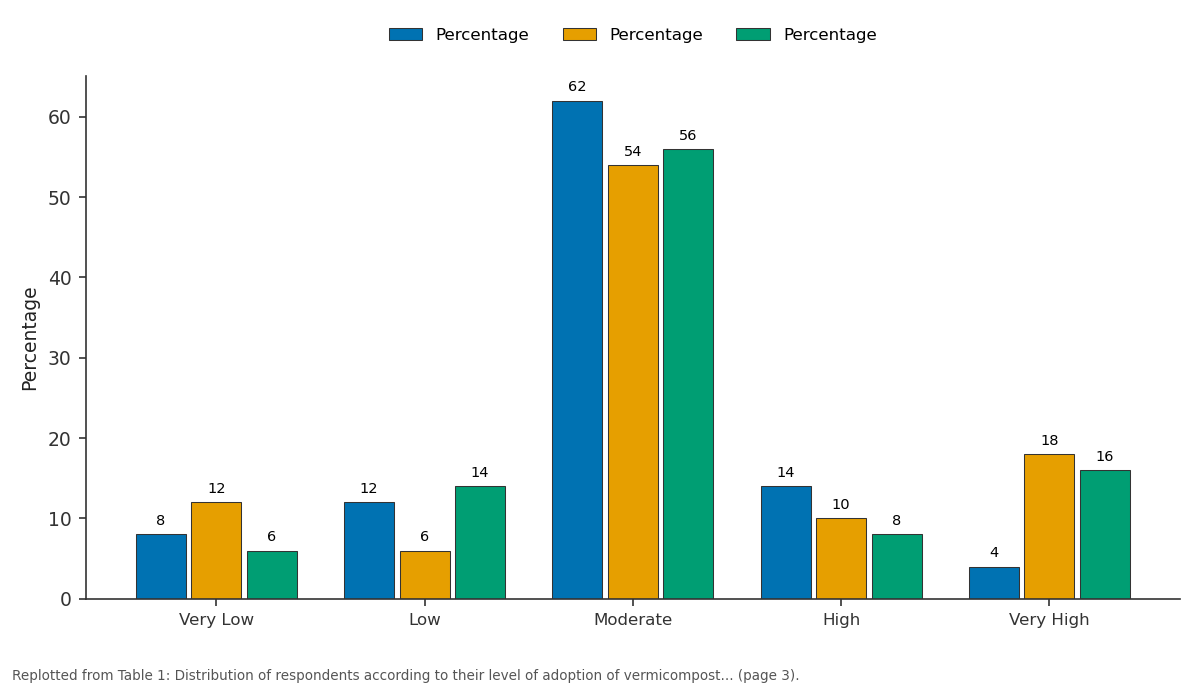
Percentage and Percentage and more: Very Low vs Low vs Moderate vs High vs Very High
Replotted from Table 1 (page 3) of the original paper. Every bar is the paper's own table value.
View source evidence ↗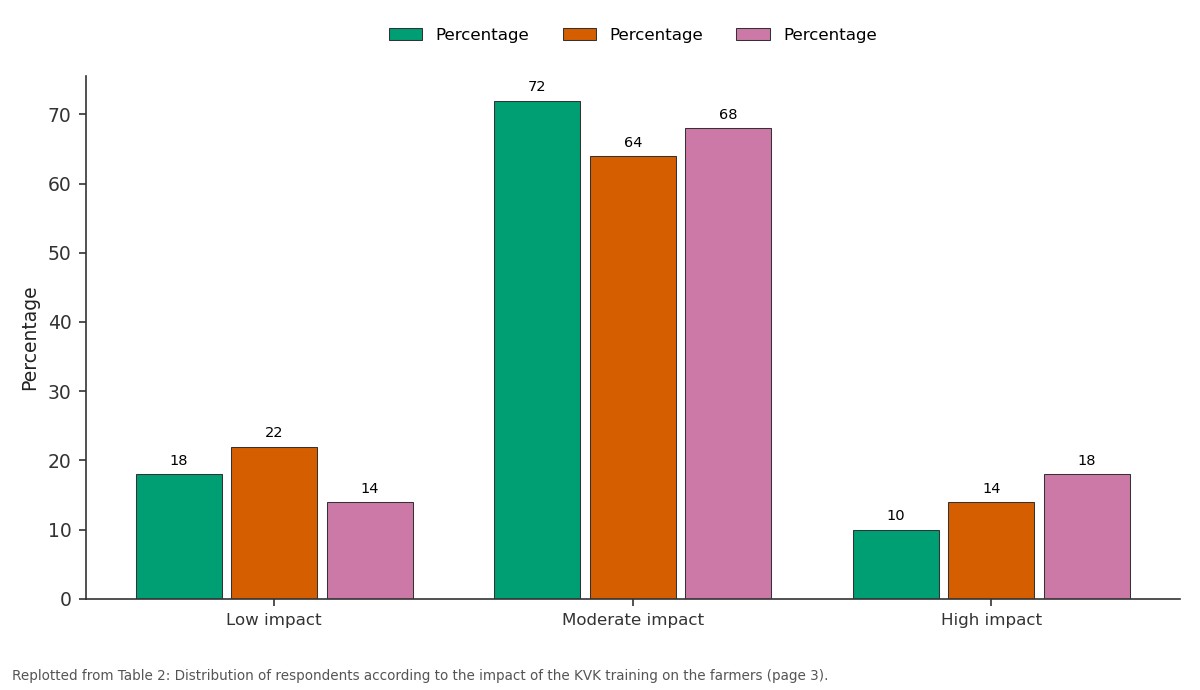
Percentage and Percentage and more: Low impact vs Moderate impact vs High impact
Replotted from Table 2 (page 3) of the original paper. Every bar is the paper's own table value.
View source evidence ↗Figures & tables
From the original paper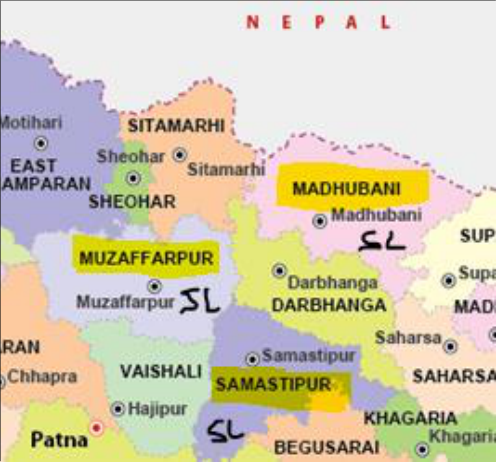 Figure 1
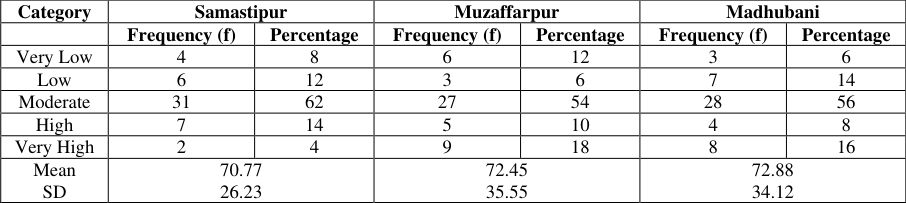 Table 1
 Table 2
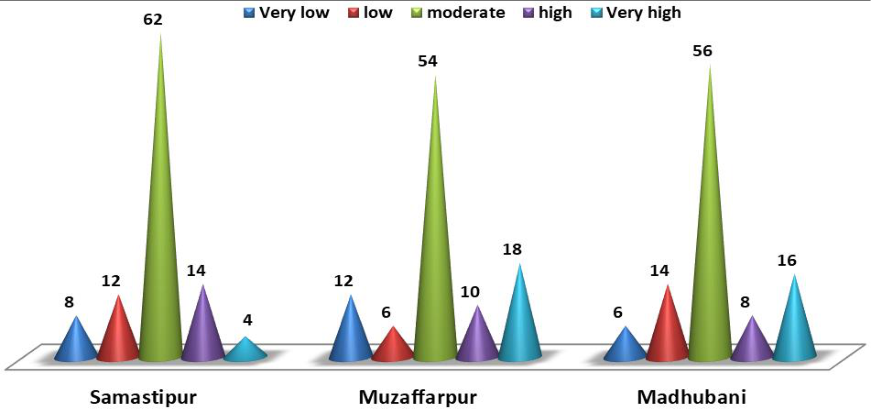 Figure 1
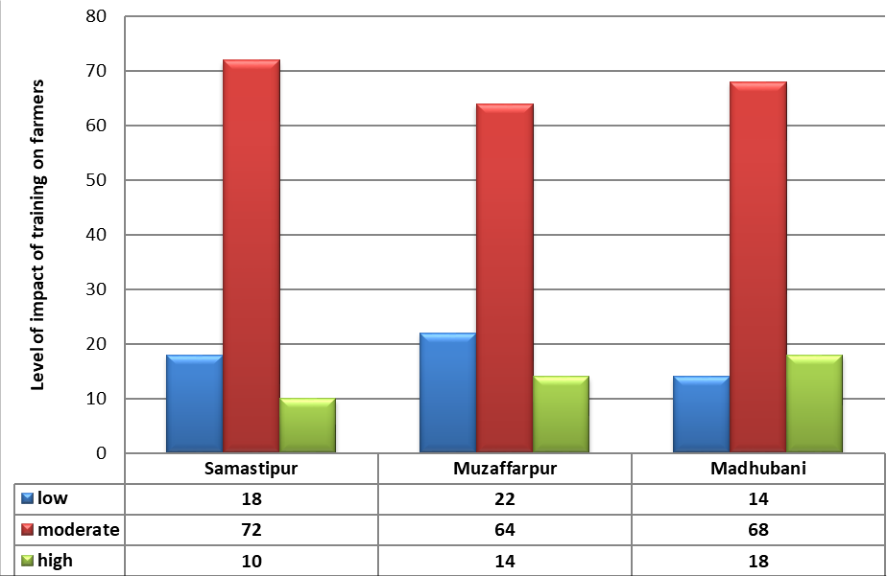 Figure 2
Introduction
The product of a special composting process using the various species of earthworm is known as vermicompost. The heterogeneous mixture of different organic matter like domestic waste, food waste, vegetable waste, the casting materials, bedding materials etc. follow the process of breakdown through composting and the ultimate product forms is known as vermicompost. This is popular as an organic fertilizer which is nutrient-rich and also acts as a soil conditioner (Sherman, 2003) [18] . Vermicomposting is basically the process of preparation of vermicompost (Ndegwa and Thompson, 2001) [12] . The method of production of the vermicompost is basically the biological degradation by the species of earthworm and microorganisms. Vermicompost has several positive beneficial effects on the crops as well as the soil, because it enhances the microbial activity in the soil and drives the mineralization process sufficiently. It can also be prepared in an easy manner and quite notably, there is no harmful effect of this vermicompost on the plant, soil and environment. It is quite noteworthy that the vermicomposting is economically viable, socially acceptable and environmentally sustainable process which every farmer can pursue in their home yards (Mahmud et al., 2016) [11] . Vermicompost contains the organic carbon which releases the nutrients in the soil slowly and allows the plants to absorb the nutrients effectively. This vermicompost provides some additional substances to the crops which cannot be obtained from the synthetic chemical fertilizer (Kale, 1998) [10] . The use of vermicompost in the farmlands are getting higher attention in today's world as this holds the demonstrable positive impact on the farming through detoxification and regeneration of the soil, management of the waste as well as the sustainable farming (Chauhan and Joshi, 2010) [5] . Waste management in the residential places can also be performed through vermicomposting as it allows minimising the amount of waste matters and the economic value of the vermicompost is higher as well than the other traditional composts (Chauhan et al., 2010) [6] . Thus, vermicompost is receiving a global attention these days, particularly in the context of ecological and www.extensionjournal.com sustainable farming. The thrust of ecological sustainable farming is prominent as well in South Asia, and Indian subcontinent is not an exception. But the small, marginal and large farmers are quite reluctant about the preparation and application of vermicompost in the crop fields. There are some instances where the growers do not possess sufficient knowledge regarding the existence of vermicompost. So, it should be the priority of the public as well as private stakeholders to promote the sustainable farming strategies and educate the peasants about the preparation as well as application of that in the crop fields. There are multiple extension strategies to make the farmers aware about the vermicompost production technique, and conducting training session at the village level is one of the most promising ways to strengthening farmers' ability. Training programs pushes the knowledge as well as skills of the farming community through learning by doing (Prakash et al., 2021) [14] . Krishi Vigyan Kendras (KVKs), as known as the Farm Science Centres are the lighthouse of the Indian farming, and these institutes are responsible to conduct various training programs for the local farmers to promote the employment generation for the rural youths and facilitate the various farm-related affairs. The KVK training provides an opportunity for the farmers to inculcate a transparent idea about the vermicomposting, particularly the preparation of vermicompost along with its application in the crop field (Prakash et al., 2021) [14] . This kind of training helps the peasants to find a way of self employment and it supports the way towards the issue of poverty eradication at a micro level. Vermicomposting thereby generates employment opportunities for the rural farmers and also acts as a catalyst to transform the financial status of the farmers (Gaikwad and Gunjal, 2000) [7] . Besides, this era has introduced a vicious facet of climate change and farming sector is such a domain which is suffering from the ill effects. Effect of synthetic fertilizers in the land is creating a bunch of intangible troubles not only in the crop production, but also in the soil quality as well as quality of the farm produce. Indian Council of Agriculture Research (ICAR) along with the state department of agriculture is acting in tandem towards that direction by providing thorough support to the stakeholders, so that the impacts of the environmental disaster could be lessened in farming scenario. Promoting the use of vermicompost or other organic fertilizers is one of the fundamental considerations in the ICAR's future workplan. Assessment of the impacts of a training program is a fundamental aspect of extension and it is necessary to estimate the effect of various training programs on the adoption level of a particular community. This study was designed with an objective to determine and assess the extent of adoption of the vermicompost technology by the respondent farmers who already participated in vermicompost training programs conducted by the KVKs in three districts of the state of Bihar. This study also did focus on estimating the consequential changes and impact of the vermicompost preparation technology over the socio-economic status of the stakeholder farmers as well as the production scenario of the study area.
Methodology
Research design and Sources of data: The data were collected from a specific group of farmers who took part in 3 training programs organised by 3 Krishi Vigyan Kendra (KVKs)/Farm Science Centres of the state Bihar viz. KVK Birauli, KVK Madhubani and KVK Saraiya located at Samastipur, Madhubani and Muzaffarpur district respectively. The study was conducted in 3 districts of Bihar state viz. Samastipur, Muzaffarpur and Madhubani. 2 blocks from each of these districts were selected purposively for conducting this study. Pusa and Tajpur bocks were selected from Samastipur, Saraiya and Marwan blocks were selected from Muzaffarpur and Madhwapur with Bisfi blocks were selected from Madhubani district. The particular villages under this very study were Morsand, Karmila, Thahra and Kothia in Samastipur district; Birpur, Anandpur, Dwarikapur Khaie, Bhagwatpur and Jhakhra Shekh in Muzaffarpur district; Basuki Bihari, Mahua, Pihwara, Sahar, Jagwan and Lohra in Madhubani district. The respondent farmers were asked to respond on different aspects of the vermicompost preparation technology and the responses were taken on a 5-point continuum i.e. very low, low, moderate, high and very high. The collected data were analysed using some quantitative statistical tools. The mean adoption score was calculated based on those obtained data and the farmers respondents were classified into 5 different categories based on their nature of adoption. The farmers were asked to respond on the level of farmers' training impact on various aspects and a 3-point continuum was used in this case. Finally, the respondents were classified into 3 different categories i.e. low, moderate and high based on the level of impact of those vermicompost trainings.
Results and Discussion Tech Adoption Analysis
It was found that 8% of the farmers in Samastipur district showed a very low level of adoption, followed by 12% low, 62% moderate, 14% high and 4% very high level of adoption. 12% of the respondent farmers in Muzaffarpur district showed very low level of adoption, followed by 6% low, 54% moderate and 10% high level of adoption of the vermicompost preparation technology. 18% of the farmers under study adopted the technology very highly in Muzaffarpur district. 6% of the farmers in Madhubani district showed the very low level of adoption of the vermicomposting technology followed by 14% low, 56% moderate, 8% high level of adoption of this technology. 16% of the respondent farmers indicated the very high level of adoption of this technology. The calculate arithmetic means for the sample of Samastipur, Muzaffarpur and Madhubani districts are 70.77, 72.45 and 72.88 respectively and the standard deviations are 26.23, 35.55 and 34.12 respectively.
Training Impact Analysis
It was observed in this study that 18% of the respondent farmers indicated low impact of the previously conducted vermicompost preparation training on their socio-economic status and also on the agricultural production scenario of the study area in Samastipur district. 72% of the farmers showed their preference to the moderate impact and 10% of them indicated their response towards the high impact level of the training. On the other hand, 22% of the respondent farmers in Muzaffarpur district mentioned that the impact of this vermicompost training was low, whereas 64% indicated the impact as moderate and 14% as high. In Madhubani district, 14% of the respondent farmers indicated that the impact of this KVK training was low, whereas 68% of the farmers mentioned as low and 18% showed the high level of impact. The calculated arithmetic mean for Samastipur, Muzaffarpur and Madhubani district are 71.56, 72.76 and 78.24 respectively whereas the calculated standard deviation for those 3 districts are 24.67, 23.24 and 23.76 respectively.
Conclusion
This study revealed that most of the farmers i.e. above 50% of the total respondent farmers in Samastipur, Muzaffarpur and Madhubani districts exhibited the moderate level of adoption of the vermicomposting technology. It contradicts with the findings of Shiduzzaman et al. who found that majority of their respondents (68.8%) had a low adoption of vermicompost technology. Besides, most of the farmers (above 60% of the respondent farmers) in these 3 districts indicated moderate level of impact on their farming as well as socio-economic status. It can be concluded from this research analysis that the trainings conducted at 3 different KVKs were successful and the training conducted at KVK Birauli was most successful as it demonstrated more than 70% impact on the participating farmers. The adoption of the vermicomposting technology will get enhanced with the thorough support and training of the farmers on vermicomposting. Previous researches indicated that the major constraint in successful adoption of vermicomposting is the lack of training and guidance by the experts, and this point needs to be addressed thoroughly by the extension agencies and professionals. This study reveals that there is still a prominent gap in the adoption of this beneficial and profitable technology, but the further analysis of the constraints associated with the adoption need to be performed. It is suggested to minimise the existing constraints and push the stakeholder farmers to adopt this technology through training & support which could possibly enhance the level of adoption by the farmers.
Figures and tables from the paper
| Category | Samastipur | — | Muzaffarpur | — | Madhubani | — |
|---|---|---|---|---|---|---|
| Frequency (f) | Percentage | Frequency (f) | Percentage | Frequency (f) | Percentage | |
| Very Low | 4 | 8 | 6 | 12 | 3 | 6 |
| Low | 6 | 12 | 3 | 6 | 7 | 14 |
| Moderate | 31 | 62 | 27 | 54 | 28 | 56 |
| High | 7 | 14 | 5 | 10 | 4 | 8 |
| Very High | 2 | 4 | 9 | 18 | 8 | 16 |
| Mean SD | 70.77 26.23 | 72.45 35.55 | 72.88 34.12 |
Table text extracted from the original PDF; superscript letters are shown inline. The original table image is below.
View original table image
| Category | Samastipur | — | Muzaffarpur | — | Madhubani | — |
|---|---|---|---|---|---|---|
| Frequency (f) | Percentage | Frequency (f) | Percentage | Frequency (f) | Percentage | |
| Low impact | 9 | 18 | 11 | 22 | 7 | 14 |
| Moderate impact | 36 | 72 | 32 | 64 | 34 | 68 |
| High impact | 5 | 10 | 7 | 14 | 9 | 18 |
| Mean SD | 71.56 24.67 | 72.76 23.24 | 78.24 23.76 |
Table text extracted from the original PDF; superscript letters are shown inline. The original table image is below.
View original table image
References
13 in the original paper- Aira M, Monroy F, Dominguez J. Eisenia fetida (Oligochaeta: Lumbricidae) Modifies the Structure and Physiological Capabilities of Microbial Communities Improving Carbon Mineralization during Vermicomposting of Pig Manure. Microb Ecol. 2007;54:662-671.
- Bhople RS, Borkar RD. Biofertilizer farmers' Attitude and Adoption. Agril Extn Rev. 2002;14:18-21.
- Chauhan A, Joshi PC. Composting of Some Dangerous and Toxic Weeds Using Eisenia foetida. J Am Sci. 2010;6:1-6.
- Chauhan A, Kumar S, Singh AP, Gupta M. Vermicomposting of Vegetable Wastes with Cowdung Using Three Earthworm Species Eisenia foetida, Eudrilus eugeniae and Perionyx excavatus. Nature Sci. 2010;8:34-42.
- Gaikwad BH, Gunjal SS. Constraints faced and suggestions made to improve activities of the Krishi Vigyan Kendra in Maharashtra. Indian Farming. 2000;49(2):34-35.
- Hasanuzzaman M, Ahamed KU, Rahmatullah NM, Akhter N, Rahman ML. Plant Growth Characters and Productivity of Wetland Rice (Oryza sativa L.) as Affected by Application of Different Manures. Emiratres J Food Agric. 2010;22:46-58.
- Joshi PC, Chauhan A. Composting of Some Organic Materials Using Eisenia foetida and Conventional www.extensionjournal.com Microbial Methods: A Comparative Study. Uttar Pradesh J Zool. 2006;26:212-125.
- Mahmud AJ, Shamsuddoha ATM, Issak M, Haque MN, Achazai AK. Effect of Vermicompost and Chemical Fertilizer on the Nutrient Content in Rice Grain, Straw and Post Harvest Soil. Middle-East J Sci Res. 2016;24:437-444.
- Ndegwa PM, Thompson SA. Integrating Composting and Vermicomposting in the Treatment and Bioconversion of Biosolids. Bioresour Technol. 2001;76:107-112.
- Ndegwa PM, Thompson SA, Das KC. Effects of Stocking Density and Feeding Rate on Vermicomposting of Biosolids. Bioresour Technol. 1998;71:5-12.
- Prakash S, Sikdar S, Singh AK. Level of farmers' knowledge & skills on vermicompost: a post-training behavioural exploration of farmers in Bihar state, India. Indian J Ext Educ. 2021;57(1):45-48. DOI: 10.5958/2454-552X.2021.00035.9.
- Ranganatha AD, Veerabhadriah V, Lalitha KC. Adoption of organic farming practices by small farmers. Agril Extn Rev. 2001;13:3-6.
- Shiduzzaman M, Ahmed MB, Islam MM, Islam MM. Extent of adoption of vermicompost by the farmers of Bathiaghata Upazila under Khulna district of Bangladesh. J Agroecol Nat Resour Manage. 2018;5(2):76-81.
Cited by 1
From OpenAlex, OpenCitations and reference lists read by Scinovex
- SOSIALISASI OPTIMALISASI LIMBAH ORGANIK RUMAH TANGGA MELALUI TEKNOLOGI VERMIKOMPOSTING DENGAN CACING EISENIA FETIDA DI DUSUN BARENG, KECAMATAN PULOSARI, KABUPATEN JOMBANG ↗
Puput Ade Wahyuningtyas, Marek Yohana Kurniabudhi, Eko Prasetyo Nugroho · DedikasiMU Journal of Community Service · 2026
Pengelolaan limbah organik rumah tangga pada tingkat sumber merupakan bagian penting dari upaya mengurangi beban sampah dan meningkatkan pemanfaatan bahan organik. Kegiatan pengabdian kepada masyarakat ini dilaksanakan pada 4 September 2026 di Dusun Bareng, Kecamatan Pulosari, Kabupaten Jombang, dengan peserta sebanyak 50 orang ibu yang tergabung dalam kelompok PKK. Kegiatan bertujuan meningkatkan pengetahuan dan keterampilan masyarakat dalam memilah serta mengolah…
❝ 0PDF