
Research article · 2024 · Full text
International Journal of Advanced Biochemistry ResearchExtension approach for an effective fisheries extension services by government and non-government organizations in Jharkhand
Volume 8(2S) · Pages 51–58 · DOI: 10.33545/26174693.2024.v8.i2sa.525 ↗
Research areasAgricultural Economics and PracticesFisheries and Aquaculture StudiesLivestock Management and Performance Improvement
Abstract
Author-writtenThe fishery sector is increasingly recognised as income generation enterprises. Present Jharkhand fish production was reported 257 MT at 2022 which increases from previous year number 238 MT for 2021. A cross sectional study was conducted on the extension approach of extension functionaries and fish farmers. The District Fisheries Officers, Fisheries Extension Officers, Fisheries Supervisors and Matsya Mitras (Para extension workers) were kept in 1st category including representatives of selected Government and Non-Government agencies. The second category of respondents was 5 fish farmers from each selected village. The cross-sectional study of selected two districts consists of 4 blocks and 16 villages. Altogether, there were 74 extension functionaries and 80 fish farmer respondents. Thus, the total sample size was 154 respondents. 19 Matsya Mitras belongs to selected areas in two blocks of Saraikela while the remaining 13 from two blocks of Ranchi district respectively. Matsya Mitras are cadres who establish linkages between farmers, NGOs and Department of Fisheries. Due to Matsya Mitra’s intervention, total 80 new potential women groups were motivated to get engaged in the selected areas of both districts to take up the fisheries activities in community ponds or on shared basis in individual ponds which were kept unused for long and long years. Role of non-government agency (Jharkhand State Livelihood Promotion Society, JSLPS) with support of Department of Fisheries found to be very effective in imparting trainings and motivating the women group to get involve in male dominated activities for sustainable livelihood. Input supports such as fingerlings (@ 6000/ acre), feeds, water testing equipment’s, Matsya Mitras Kits along with capacity building of pond management aspects were provided to women folk during 2018-19 in Saraikela and Ranchi district respectively. In one-year ie 2020, the popularity of fish farming increases among women Producer Groups which helped them to get actively involved in fish production irrespective to various constraints came acrossed. 2% horizontal area expansion has been observed. The poor and resource poor families were linked with government schemes after getting imparted with 3- and 5-days residential training programmes at Shalimar, Ranchi. This ongoing extension approach by non-government agencies with support of Department of Fisheries and Matsya Mitras helped to trap the derelict water areas, increase nutritional security, employment generation, gender mainstreaming in fish farming for sustainable aquaculture livelihood.
Summary
Source-checkedPlain-language reading of the full paper, prepared with AI and checked against the text. Each point links to the authors' own words.
Why it matters
- Fisheries are increasingly recognized as a means of generating income and improving nutritional security for the rural poor by providing a digestible source of protein and vitamins. View evidence ↗
- Fisheries progress in Jharkhand is hindered by illiteracy, a lack of scientific fish culture practices, and disorganized extension linkages. View evidence ↗
- Effective extension services are needed to shift fish farming from traditional methods toward semi-intensive and intensive systems. View evidence ↗
The question
- The study aims to comparatively analyze the fisheries development programs and extension approaches implemented by government and non-government agencies in Jharkhand. View evidence ↗
What they did
- A cross-sectional study was conducted across 16 villages in 4 blocks of two districts, involving a total sample of 154 respondents, consisting of 74 extension functionaries and 80 fish farmers. View evidence ↗
- The study used a 5-point Likert scale to measure the dependent variable: farmers' attitudes toward extension services provided by the Department of Fisheries and non-government agencies. View evidence ↗
What they found
- Fish production in Jharkhand increased from 238 MT in 2021 to 257 MT in 2022. View evidence ↗
- Interventions by Matsya Mitras motivated 80 new women's groups to utilize previously unused community or individual ponds for fisheries activities. View evidence ↗
- The study observed a 2% horizontal expansion of the area used for fish farming. View evidence ↗
- NGOs played a significant role in awareness and training, with 89.8% of farmer groups receiving training from the Fish Farmers Training Centre through NGO support. View evidence ↗
- The majority of fish farmers in the study area utilized small ponds (reported as 101%), while 13% used medium-sized ponds. View evidence ↗
- Approximately half of the respondents identified theft, shallow subject knowledge, and limited motivational capacity of extension functionaries as primary problems. View evidence ↗
What it means
- The authors conclude that a combined effort between the government sector and NGOs is essential to maintain the growth of fish production in Jharkhand. View evidence ↗
- The authors recommend strengthening the role of Matsya Mitras by providing regular incentives to ensure the extension system is deeply rooted. View evidence ↗
Visual summary
2 visualsIllustrations explain the paper; charts are replotted from the paper's own table values.
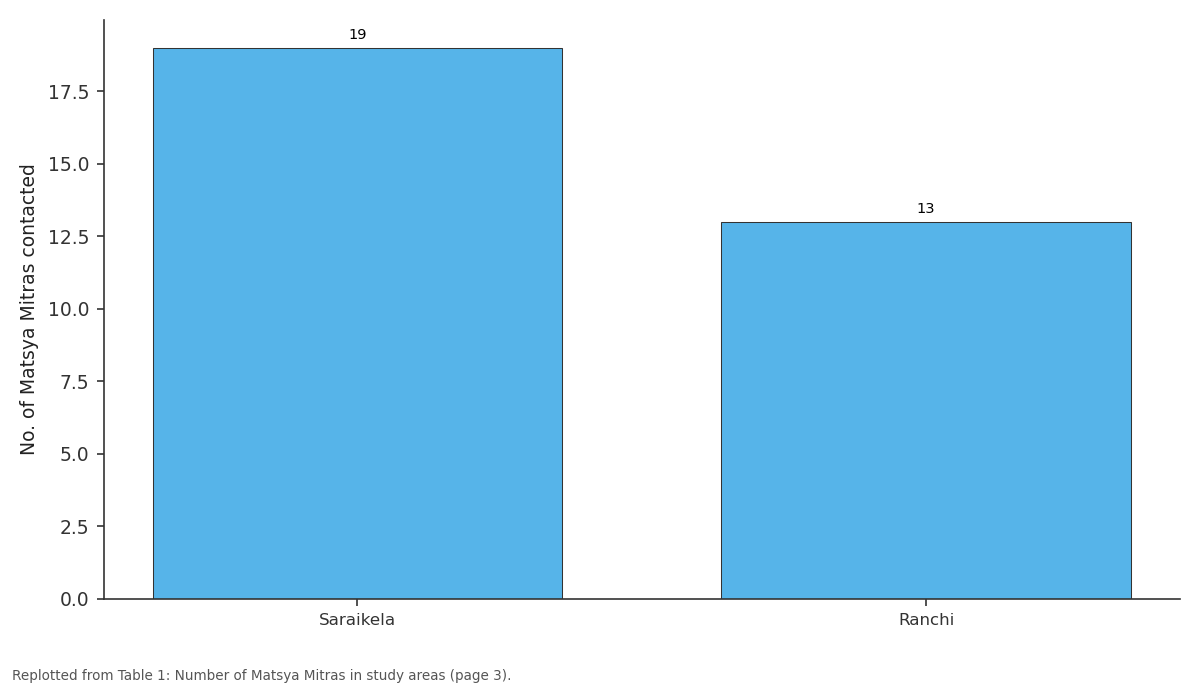
No. of Matsya Mitras contacted: Saraikela vs Ranchi
Replotted from Table 1 (page 3) of the original paper. Every bar is the paper's own table value.
View source evidence ↗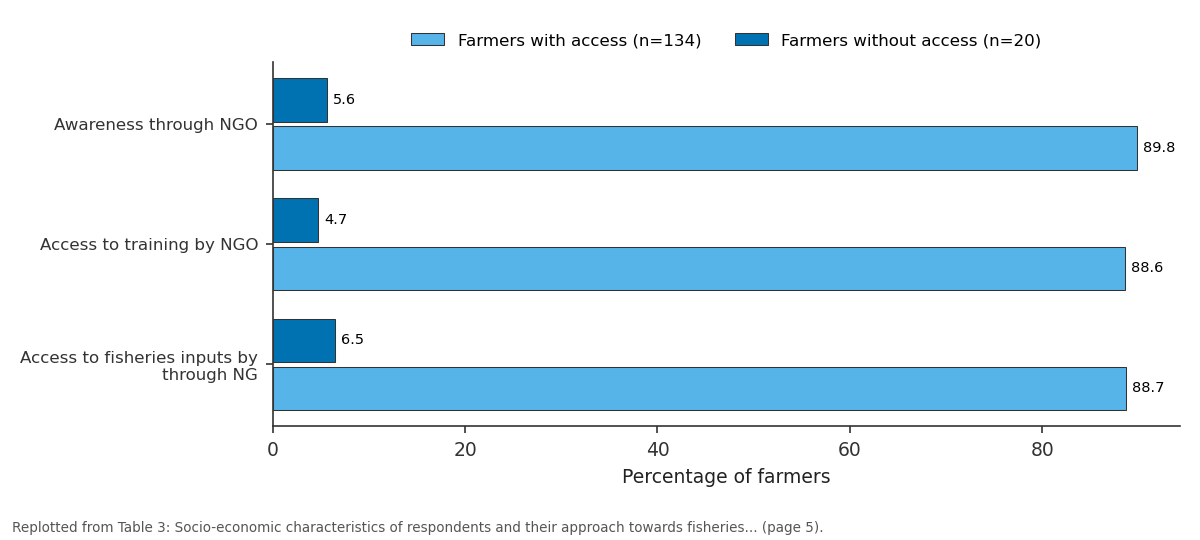
Farmers with access (n=134) and Farmers without access (n=20): Awareness through NGO vs Access to training by... vs Access to fisheries...
Replotted from Table 3 (page 5) of the original paper. Every bar is the paper's own table value.
View source evidence ↗Figures & tables
From the original paper Table 1
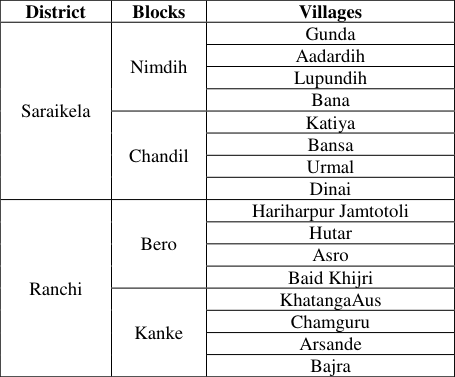 Table 2
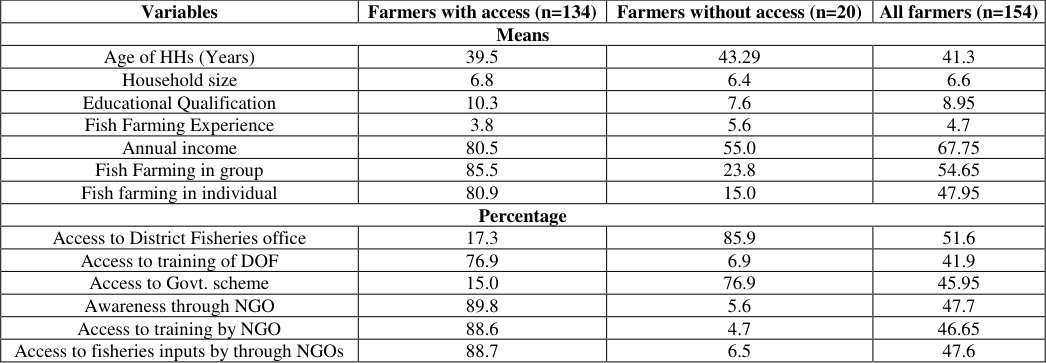 Table 3
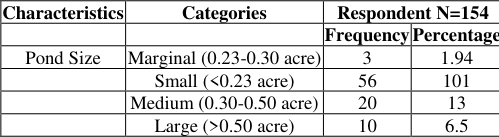 Table 4
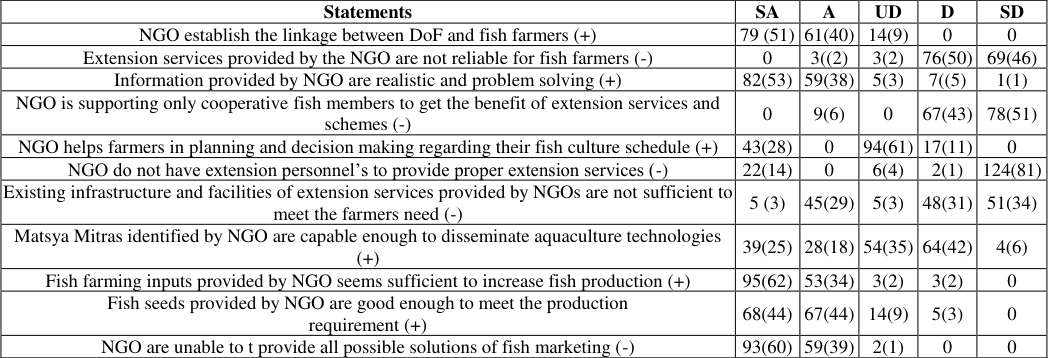 Table 5
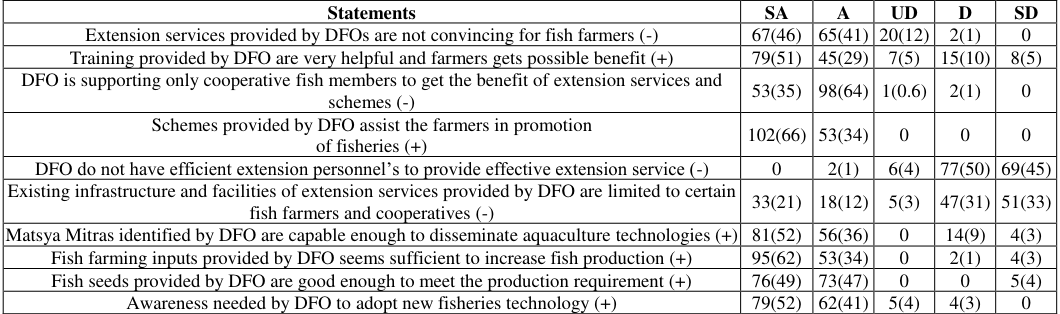 Table 6
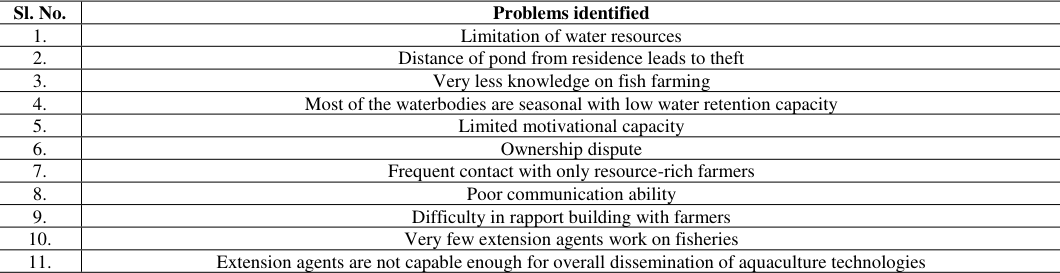 Table 7
Introduction
Presently aquaculture has become sustainable farming system. Now a days, fisheries getting popularisation in terms of employment, livelihood opportunities and preferably most income generating activity. The present fish production of the state comes from cage, PEN, semi intensive fish farming and traditional fish farming. This way, fisheries is becoming a sustainable enterprise. Therefore, combination of all fisheries activities is helpful for sustainable development in the state. In Jharkhand fisheries is one of the secondary activities in the agricultural sector. Fish as a nutritional supplement is enrich with protein, vitamin A and D. Jharkhand is enrich with different types of water resources such as reservoirs, rivers, lake, ponds, dobhas, which on whole provides an opportunities for fisheries development. Fishes has easily digestible protein with vitamin B and iodine. The liver of fish is good source of vitamin A and D. During the scheduled interview with farmers, it has been found that lack of fisheries knowhow and techniques reduces the production and productivity of the fishes in the village ponds. It has been felt that ineffective extension services and awareness in context to fisheries development is not upto the mark in comparison to other enterprises. Even in the present scenario the fish farming is still limited to few influential people in the villages. Most of the pond owners are still taking up fish culture in traditional method. The Department of Fisheries (DoF) as well as very few Non-Government Organizations are responsible for providing, inter alia, fisheries extension services in Jharkhand. To create awareness in broader way only few NGOs solely involved in fisheries extension services. Apart from these organisations (GO & NGOs), National Fisheries Development Board (NFDB) has also stepped forward through GO and outsourcing the experienced fish agencies to capacitate the farming communities. In Jharkhand, Department of Fisheries playing very important role in capacitating the fishery interested communities, its threeand five-days residential training programmes have gave a very good impact in the state. Likely, many Non-Government Organisations (NGOs) are engaged in capacity building programme of rural folk and liasioning the group members with government schemes as well to support them with certain inputs for promotion of fisheries development. Considering to improve nutritional security of rural poor fish may become a part of the diet which consist easily digestible and palatable source of protein as well as very good source of Vitamin B and iodine. As well as fish in plate provide vitamin A and D from its liver. Jharkhand facing the major impediments in fisheries progress due to lack in scientific fish culture, illiteracy and disorganized extension linkages among the fishers. Proper extension scope will involve in paradigm shift from traditional to semi intensive and finally to intensive fish farming. Jharkhand has set a target to produce 3.70 lakh metric ton in next two years ie; till 2025. During partition of Jharkhand from Bihar in 2000, fish production stood at 14,000 metric tones in the state, which has increased 20-fold with a record production of 2.57 MT in the year 2021. A vivid study was carried out through schedule questionnaires on the effect of extension approaches in reaching out various schemes, knowhow and other infrastructural facilities by government and non government organisations to estimate the impact of govt. schemes on the rising fish production at our target area. Another set of questionnaire dealt with socioeconomic status of farmers, their fisheries knowledge, constraints they faced and impact of extension approaches in their life. It is well known that the State Fisheries Department is encouraging farmers to opt fish farming to earn higher profits. In addition to public ponds, fish farming is being practised in privately-owned ponds and reservoirs as well. With the goal of making Jharkhand a leading producer of fish in the country, the state government and non government sectors are making efforts and helped to reach the fish production all time high of 257 Metric Ton in 2022. The Department of Fisheries has opted the strategies for expansion of fisheries area by introducing recent technologies and promotion of cage/PEN culture to increase fish production.
Objectives
In order to prepare a suitable strategy for promotion of fisheries in the State, a comparative role of different agencies are required to pave the way to augment the fish production. Government and Non Government Organisation play a key role in providing extension and training support to the farming community. The present study will attempt to make a comparative analysis of development programmes and approaches in fisheries sector carried by the Governmental and Non-governmental agencies. The objectives of the study are as follows:
• To study the existing fisheries extension approaches and programmes of Government and Non-government agencies in Jharkhand. • To analyse the effects of strategies and initiatives in fisheries extension adopted by Government and Nongovernment agencies in Jharkhand. • To assess the impact of fisheries extension programmes run by Government and Non-government agencies on productivity, income and employment opportunity among fish farmers. • To study the constraints faced by the fish farmers, fisheries extension personnel and other stakeholders
The study were conducted in Saraikela and Ranchi districts.
The present study will attempt to find that how the extension and training support provided to the farmers ought to bring improvements in fish production. The study will further look for more details about the important factors which influence to increase fish production. The study will also deal on the constraints being faced by different agencies in dissemination of fisheries technologies as well as constraints being faced by the fish farmers. The outcomes of the study will provide important points for designing effective strategies to get higher level of fish productivity and subsequent benefits. workshops to discuss the pro and cons of the farming system and get advisory services from the experts, supply of fish seeds on subsidy to the seed growers. Good quality fingerlings are sold to the fish rearers on subsidy. Marketing is the major component of the production system. Department is assisting the cooperative societies with pick up van to carry fishes and fish seeds. Fisheries stalls are also provided for efficient and hygienic marketing. Cooperative societies are benefitted with office cum fish sale centres. JHASCOFISH is helping farmers with subsided feeds.
Role of Matsya Mitra in fisheries Extension
In support to all these schemes Matsya Mitras are there to render their services for better production and productivity. In many cases dissatisfaction prevails over the services of the Matsya Mitras. It has been felt that their services are not upto the mark to help the rural poor fishers. As per the data available in 2016 the Department has trained 4660 Matsya Mitras to provide their services in deep root level. Many fisheries schemes have onboarded in the farmer's field which has multiplied the fish production two times since formation of Jharkhand state. It has been found that 180 to 300% of fish productivity has increased after introduction of all these schemes as well as annual income of fish farmers has increased upto 200 to 400% per acre of pond. Looking forward to the benefit of fish culture the individual pond owners whose ponds were remained derelict for longer time started practicing the fish farming inspite of low fish culture knowledge. Similarly, NGOs are actively involved in implementation these schemes by tagging farmers with Department of Fisheries as well as providing trainings and inputs of their own.
Review of Literature
Cole (1977) [9] has opined that fisheries extension services are mainly intended to achieve all-round development of the fishing sector. An increase in fish production depends upon many factors namely, expansion of the area under fisheries, diversification of culture technologies and cultivable fish species and a system of information transfer from the research and development centres to the farming households. The prime objective of fisheries/fisheries extension is to persuade and help fishery farmers and fishing communities to improve their socio-economic condition and quality of life through their farming practices for increased fish production and income (Kumar,1999) [16] . He further added that education and training of rural communities to improve their fisheries skills and capabilities is the core function of fisheries extension system which is expected to perform five major tasks, viz; dissemination of appropriate technology (education), convincing the farming community to adopt such technologies (motivation), collect the farmer's response (feedback), refinement of technology to suit the farming situation (assessment and refinement) and act as a link between the research and user system (liaison) noted that effective extension services have contributed to increased fisheries production. Extension today has to assume multiple roles of providing information about technologies, prices and market, policies; organizing farmers for exchange of information, facilitating learning from experiences; provide problem solving consultancy in order to serve the farming community. Further it could support the economic development and wellbeing of fisheries farmers. In India, though both the central and state governments formulate policy guidelines, the states have the major role in executing the extension programs at field levels through their respective Departments of Fisheries (DoFs). The Union government also provides financial support through its schemes to provide technical, financial and extension support to fisheries farmers. Kumaran et al., (2003) [17] have pointed out the need for a committed and properly structured fisheries extension system in order to propel the growth of the sector. The fisheries has witnessed an influx of private extension sponsored by companies. A well-coordinated public-private extension system can target specific areas and farmer groups and issues. Further, a strong public extension system is quintessential for service as an alternative source of reliable and verified information and services. The potential of the fisheries sector has not yet been utilised to the optimum level. The women folk are appropriate for implementing community and self-development programmes. Formation of fisherwomen SHGs among the fisherfolk is seen to yield encouraging results. Steps should, therefore, be taken to adopt a proper financial plan that would hold the key for empowerment of women. The approach needs a concerted effort by all the individuals concerned for optimal exploitation of fishery resources, which will lead to profitable employment. An important part of this effort is assistance from financial institutions. (Edward, 2005) [11] . To address the immediate challenges it is important to adapt an innovation system perspective inclusive of all the actors across the value chain. An innovation system can be defined as the network of organizations, enterprises, and individuals focused on bringing new products, new processes, and new forms of organization into economic use, together with the institutions and policies that affect the system's behaviour and performance (World Bank 2006) [32] . Research and advisory systems form its core. An innovation system platform like producer collective can facilitate the interaction of research and advisory systems with other actors of innovation system. Public sector extension agencies have the onus to play the key role in forging such a system. The local self-governance institutions can function as a key link element in such a system, which can address much of the governance issues. Farmers now need quality information about technological options in farming to produce and participate better in markets. They need to know not only market prices but also trends about market prices to plan cultivation. In order to address successfully the challenges of WTO, greater attention will have to be paid to information-based technologies. Strengthened means of dissemination will be needed to transmit this information to farmers. To make information transfer more effective, greater use will need to be made of modern information technology and communication among researchers, extensionists and farmers. In the era of information technology, wherein information play a vital and decisive role in strategic decision making, extension personnel will have to acquire latest knowledge as well as skills in use of various electronic devices including computers, multimedia and the internet. The day is not far off when tele/videoconferencing will be common means to interact with larger number of farmers to extend extension messages or sharing market information by extension personnel. In coming years, the area of management and communication skills must be the largest segment for competency building among agricultural extension personnel for supporting farming community. (De, et al. 2008) [14] In order to consolidate the gains and to mitigate the emerging challenges, a strong extension system should be there in place. Extension provides the information and services needed and demanded by farmers and other actors in rural settings through different activities to assist them in developing their own technical, organisational, and management skills and practices so as to improve their livelihoods and well-being. Fisheries extension envelops the fisheries development in action (Ananth, 2010) [2] . In India, there is enough scope for horizontal as well as vertical expansion of the fisheries as the average fisheries production can be increased from 3 to 6 t per ha and total area can be increased from 1.2 million ha to 2.5 million ha. Therefore, the fisheries provides a considerable opportunity for increasing income and employment to a large number of people. Considering the substantial contribution, fisheries supports socio-economic development in terms of income and employment through the use of unutilized and underutilized resources in several regions of the country. Environment friendly fisheries have been accepted as a vehicle for rural development including food and nutritional security for the rural masses. (Barik, et al, 2014) [5] . Presently there are four major organizational streams devoted to extension work for boosting inland fish production in the country; (i) The ICAR extension system, (ii) Extension system of the Ministry of Agriculture/State Fisheries Departments, (iii) Extension system of Rural Development set-up of the country and (iv) Development work by Non-Government Organizations. The scientists and extension personnel of these Institutions play first line extension role utilizing various extension methods on a limited scale but forceful enough to have catalytic effect on the extension system. (Bhaumik, 2016) [6] Though lots of planning has been done in fisheries sector by extension units of fish farmers, yet hunger and malnutrition remain amongst the most devastating problems faced by the poor and needy people throughout the world. Very few studies on problems of fish farming have been reported at the micro level. (Angral, 2017) [8] . Fresh water fisheries are divided into two categories: (a) The Pond Fisheries: There are no organised pond fisheries in India. A large number of village tanks and domestic ponds, particularly in West Bengal, Bihar and Orissa are stocked with mixed fry collected from rivers. Pond culture is also widespread in U.P., M.P., Andhra Pradesh and Tamil Nadu. The species generally stocked in ponds are catla, rohita, kalabasu, bata, mrigal, mullets, milkfish, pearlshot, carp, etc.(b) Riverine fisheries:About onethird of the total fish production in India comes from rivers. Fresh water fishing is very active during the winter season from October to March, in the large rivers when flood usually subside. West Bengal is the largest producer of fresh water fishes accounting for nearly 29 per cent of India's freshwater fish. The second and third positions are occupied by Bihar and Assam respectively. West Bengal, Bihar and Assam account for more than 72 per cent of the total freshwater. Mallick, R.K. (2019) [25] reported some of the concerns of fish seed growers which affect overall fish productivity. These include; water scarcity, shallow and small size ponds, non-availability of spawns in desired quantity, nonseriousness of the seed growers to pursue fishery as an activity after availing the spawn from fishery department and lack of proper extension and follow-up measures. The financial support given by the government is very nominal according to them considering the services rendered at their level. Due to less remuneration, they are also de-motivated to work. There is also demand for monthly remuneration for them. Due to lack of periodic training and exposure to other fish producing states like Andhra Pradesh, West Bengal and Coastal Orissa, the fish farmers are unable to know about different varieties of fishes, latest technology and practices on fish production on large scale, prevention of diseases to the fishes, fish processing, marketing, cost and benefit involved on various kind of fish production. Due to limited exposure they are unable to replicate successful cases of pisciculture in their own area. Inspite of the concerns and complaints of common people and fish farmers on quality of services rendered by Matsya Mitras, following benefits have been accrued to the fisherman community. There has been 180 to 300 percent increase in fish productivity in a year after introduction of the scheme. This also led to 200 to 400 per cent increase in annual income per fish farmer in a year from one acre of land. He further added that the private fish farmers who were not practicing fish farming due to lack of information and knowledge in the subject and also scared of loss, they turned to be fish farmers due to orientation by Matsya Mitras. Some poor people could supplement their income due to acting as Matsya Mitras in the villages and the unused ponds and tanks could be brought under fish farming.
Research Methodology Locale of the Study and Selection of Districts
The study was conducted in purposively selected State of Jharkhand in view of the Researcher's convenience. Two districts-one having higher fish productivity (Saraikela) and another with lower fish productivity (Ranchi) in comparision to Saraikela were selected randomly from among the two sets of the districts.
Selection of Blocks
Two blocks from each selected district were selected randomly.
Selection of Villages
Four villages from each selected block were selected randomly for selection of sample. The selection of villages was done on the basis of higher number of water-bodies available with at least 0.25 acre of water area.
Selection of Respondents
Two categories of respondents viz, extension functionaries (representatives of selected Government and Non-Government agencies) and fish farmers were constituted as the sample for data collection. Matsya Mitras (para extension workers) were constituted as the 1 st category. The second category of respondents included 5 fish farmers from each selected village. The selected two districts consist of 4 blocks and 16 villages. Thus, the total sample size will be of 154 respondents.
Results
Results
Data collection
Data were collected by the researchers from the selected fish farmers. The interviews were conducted with the respondents individually and in group. The researchers took all possible care to establish rapport with the respondents so that they would not feel any trouble while starting the interview. If the respondents felt any difficulty in understanding any question, the researcher took utmost care to explain and clarify the same properly. The researcher in collecting data faced no serious difficulty.
Measurement of variables
The selected characteristics of the fish farmers (i.e. age, educational qualification, household size, farm size, pond size, annual family income, training exposure on fish farming, fish farming experience, extension media contact, innovativeness and organizational participation) were treated as the independent variables of the study. The dependent variable of the study was farmers' attitude towards the extension services provided by Department of Fisheries and Non Government Agency. Measuring techniques of the independent variables of the study are shown in Table 3. Farmers' attitude towards extension service provided by NGO was the dependent variable of the study. This variable was measured through a 5-point Likert type scale. Likert developed the principle of measuring attitudes by asking people to respond to a series of statements about the topic. The Likert Scale is a five point scale which is used to allow the individual to express how much they agree or disagree with a particular statement. Each of the five responses would have a numerical value which would be used to measure the attitude under investigation. However, there were statements positive and negative on various aspects of extension services provided by NGO and DFO were asked to the farmers. The positive and negative statements were arranged randomly in the schedule in order to achieve the real responses regarding attitude of the fish farmers towards government and Non government agency and their services. There were five options to response against a statement, namely 'strongly agree', 'agree', 'undecided', 'disagree' and 'strongly disagree' with a corresponding score of 5, 4, 3, 2 and 1 respectively for the positive statements and the scoring was reverse for the negative statements. A respondent were asked to indicate his/her attitude regarding a statement by selecting the appropriate option. The attitude score of a respondent was computed by summing the scores for his responses to all the statements. The composite findings of the selected characteristics of fish farmers are presented in Table 3 and have been discussed in subsequent sections. Data presented in Table 3 shows that the observed age of the respondent farmers ranged from 39 to 44 years. The mean age of the respondent farmers was 41.3 years. It indicated that 98.6 percent of the respondents were young to middle-aged. Young and middle-aged farmers might have valuable opinions in receiving extension services from extension agents. The extension agent can make use of these views and opinions in designing their extension activities. Young people are generally receptive to new ideas and things. They would have a favourable attitude towards receiving extension services. The average educational qualification of the respondents are mostly non matric. Most of the respondents belonged to the middle age category. The average household size is more than 6.
| Variables | Farmers with access (n=134) | Farmers without access (n=20) | All farmers (n=154) |
|---|---|---|---|
| Means | |||
| Age of HHs (Years) | 39.5 | 43.29 | 41.3 |
| Household size | 6.8 | 6.4 | 6.6 |
| Educational Qualification | 10.3 | 7.6 | 8.95 |
| Fish Farming Experience | 3.8 | 5.6 | 4.7 |
| Annual income | 80.5 | 55.0 | 67.75 |
| Fish Farming in group | 85.5 | 23.8 | 54.65 |
| Fish farming in individual | 80.9 | 15.0 | 47.95 |
| Percentage | |||
| Access to District Fisheries office | 17.3 | 85.9 | 51.6 |
| Access to training of DOF | 76.9 | 6.9 | 41.9 |
| Access to Govt. scheme | 15.0 | 76.9 | 45.95 |
| Awareness through NGO | 89.8 | 5.6 | 47.7 |
| Access to training by NGO | 88.6 | 4.7 | 46.65 |
| Access to fisheries inputs by through NGOs | 88.7 | 6.5 | 47.6 |
Table text extracted from the original PDF; superscript letters are shown inline. The original table image is below.
View original table image
Respondents are not well educated. Majority of the respondents are women and are involved in the fisheries activities by forming the group. The groups are formed by the motivation of NGO (JSLPS) working in the area. 4 revealed that the highest majority (101 percent) of the fish farmers had small pond while 13.0 percent had medium size pond. However, small portion (1.94 percent) of the respondents have marginal size pond. On the contrary, it is noted from that in the study area respondent haveing 6.5 percent large size pond. 5 shows that NGO serves the link between DOF and fish farmers. Very few NGOs extension agents are solely for fisheries development programme. It came in the study that NGO is the key sector to help the poor farmers to avail the government schemes and other extension services. NGO provides an authentic information to the farmers which help them to sort out their problems. Result presented in the table shows that "Extension support provided by NGO assist the farmers to plan and move forward towards the entrepreneurship in short term of time. On the other hand, NGO is good enough to collect ground level data and information by field functionaries. Matsya Mitras are not well equipped to furnish the village level data efficiently. Jharkhand have huge fisheries potential water resources available but not properly used. Now a days, after the inception of extension approach the fisheries sector is flourishing day by day. The major problem identified in fish farming is the theft which mostly took place in the night hours. This especially disheartens the communities. Another major problem for most of farmers are that they are very much interested in fish farming but availability of water in the pond is for very short time ie, unable to opt the farming system. Ownership conflict of the pond also restricts the fish culture. Most of the farmers are involved in traditional fish farming which reflects the lack of knowledge of scientific fish farming. Therefore, intensive extension approach needed to upgrade the fisheries activities at grass root level. Fish farmers are facing number of problems in receiving extension services from the DFO. Similarly, the extension services received by the government are limited to few potential fish farmers and fish cooperative societies. The schedule interview were conducted with villagers of two districts revealed that extension services catered by the Government sector is very limited and confined. Problems faced by the fish farmers An attempt was made to explore problems confronted by the fish farmers which restrict the fast growth of fisheries sector in Jharkhand are mentioned in Table 7. An interactive meeting and discussion was held with the fish farmers and fisheries producer group. Eleven potential problems were identified. It was found that about half of the respondents felt their "Shallow knowledge on subject matter", "Theft" and "Limited motivational capacity of extension fuctionaires". These problems can be sorted out only through awareness generation of fisheries programme which will certainly come through proper extension approach. Limitation of water resources 2.
| Sl. No. | Problems identified |
|---|---|
| 1. | Limitation of water resources |
| 2. | Distance of pond from residence leads to theft |
| 3. | Very less knowledge on fish farming |
| 4. | Most of the waterbodies are seasonal with low water retention capacity |
| 5. | Limited motivational capacity |
| 6. | Ownership dispute |
| 7. | Frequent contact with only resource-rich farmers |
| 8. | Poor communication ability |
| 9. | Difficulty in rapport building with farmers |
| 10. | Very few extension agents work on fisheries |
| 11. | Extension agents are not capable enough for overall dissemination of aquaculture technologies |
Table text extracted from the original PDF; superscript letters are shown inline. The original table image is below.
View original table image
Distance of pond from residence leads to theft 3.
Very less knowledge on fish farming 4.
Most of the waterbodies are seasonal with low water retention capacity 5.
Limited motivational capacity 6.
Frequent contact with only resource-rich farmers 8.
Poor communication ability 9.
Difficulty in rapport building with farmers 10.
Very few extension agents work on fisheries 11.
Extension agents are not capable enough for overall dissemination of aquaculture technologies
Conclusion
Fisheries is the secondary occupation of the farmers of Jharkhand. Earlier it was confined to certain pocket of the population only. With the approach of effective extension services by Government and Non-Government Agencies fisheries has penetrated in the livelihood of the communities. Government is promoting the fisheries activities through on boarding various schemes such as pond development, hatchery management, seed production, biofloc, cage culture, riverine fish farming, fish mill etc. These units have attracted the farming communities to opt fisheries as an enterprise. Very few NGOs are working exclusively in fisheries sector but those working with an effective extension services are getting very good impact in comparison to other agricultural sector. Thus it reveals that motivation and awareness creation is very helpful for any kind of intervention. In the rural scenario of Jharkhand farmers are facing plenty of constraints which can be resolved only through extension services. Government sector in combination with NGO can achieve more success to keep momentum in growth of fish production in the state.
The study reveal that the fisheries extension services is comparatively weaker among all other agricultural sector extension service providers in the state. However, the role of Matsya Mitras should be strengthen by providing incentives on regular basis to intensify the extension system deep rooted. To address these challenges, adequate human resources, institution building, supported with adequate financial outlays are required.
Figures and tables from the paper
| District | No. of Matsya Mitras contacted |
|---|---|
| Saraikela | 19 |
| Ranchi | 13 |
Table text extracted from the original PDF; superscript letters are shown inline. The original table image is below.
View original table image
| District | Blocks | Villages |
|---|---|---|
| Saraikela | Nimdih | Gunda |
| Aadardih | ||
| Lupundih | ||
| Bana | ||
| Chandil | Katiya | |
| Bansa | ||
| Urmal | ||
| Dinai | ||
| Ranchi | Bero | Hariharpur Jamtotoli |
| Hutar | ||
| Asro | ||
| Baid Khijri | ||
| Kanke | KhatangaAus | |
| Chamguru | ||
| Arsande | ||
| Bajra |
Table text extracted from the original PDF; superscript letters are shown inline. The original table image is below.
View original table image
| Characteristics | Categories | Respondent N=154 | — |
|---|---|---|---|
| Frequency | Percentage | ||
| Pond Size | Marginal (0.23-0.30 acre) | 3 | 1.94 |
| Small (<0.23 acre) | 56 | 101 | |
| Medium (0.30-0.50 acre) | 20 | 13 | |
| Large (>0.50 acre) | 10 | 6.5 |
Table text extracted from the original PDF; superscript letters are shown inline. The original table image is below.
View original table image
| Statements | SA | A | UD | D | SD |
|---|---|---|---|---|---|
| NGO establish the linkage between DoF and fish farmers (+) | 79 (51) | 61(40) | 14(9) | 0 | 0 |
| Extension services provided by the NGO are not reliable for fish farmers (-) | 0 | 3((2) | 3(2) | 76(50) | 69(46) |
| Information provided by NGO are realistic and problem solving (+) | 82(53) | 59(38) | 5(3) | 7((5) | 1(1) |
| NGO is supporting only cooperative fish members to get the benefit of extension services and schemes (-) | 0 | 9(6) | 0 | 67(43) | 78(51) |
| NGO helps farmers in planning and decision making regarding their fish culture schedule (+) | 43(28) | 0 | 94(61) | 17(11) | 0 |
| NGO do not have extension personnel’s to provide proper extension services (-) | 22(14) | 0 | 6(4) | 2(1) | 124(81) |
| Existing infrastructure and facilities of extension services provided by NGOs are not sufficient to meet the farmers need (-) | 5 (3) | 45(29) | 5(3) | 48(31) | 51(34) |
| Matsya Mitras identified by NGO are capable enough to disseminate aquaculture technologies (+) | 39(25) | 28(18) | 54(35) | 64(42) | 4(6) |
| Fish farming inputs provided by NGO seems sufficient to increase fish production (+) | 95(62) | 53(34) | 3(2) | 3(2) | 0 |
| Fish seeds provided by NGO are good enough to meet the production requirement (+) | 68(44) | 67(44) | 14(9) | 5(3) | 0 |
| NGO are unable to t provide all possible solutions of fish marketing (-) | 93(60) | 59(39) | 2(1) | 0 | 0 |
Table text extracted from the original PDF; superscript letters are shown inline. The original table image is below.
View original table image
| Statements | SA | A | UD | D | SD |
|---|---|---|---|---|---|
| Extension services provided by DFOs are not convincing for fish farmers (-) | 67(46) | 65(41) | 20(12) | 2(1) | 0 |
| Training provided by DFO are very helpful and farmers gets possible benefit (+) | 79(51) | 45(29) | 7(5) | 15(10) | 8(5) |
| DFO is supporting only cooperative fish members to get the benefit of extension services and schemes (-) | 53(35) | 98(64) | 1(0.6) | 2(1) | 0 |
| Schemes provided by DFO assist the farmers in promotion of fisheries (+) | 102(66) | 53(34) | 0 | 0 | 0 |
| DFO do not have efficient extension personnel’s to provide effective extension service (-) | 0 | 2(1) | 6(4) | 77(50) | 69(45) |
| Existing infrastructure and facilities of extension services provided by DFO are limited to certain fish farmers and cooperatives (-) | 33(21) | 18(12) | 5(3) | 47(31) | 51(33) |
| Matsya Mitras identified by DFO are capable enough to disseminate aquaculture technologies (+) | 81(52) | 56(36) | 0 | 14(9) | 4(3) |
| Fish farming inputs provided by DFO seems sufficient to increase fish production (+) | 95(62) | 53(34) | 0 | 2(1) | 4(3) |
| Fish seeds provided by DFO are good enough to meet the production requirement (+) | 76(49) | 73(47) | 0 | 0 | 5(4) |
| Awareness needed by DFO to adopt new fisheries technology (+) | 79(52) | 62(41) | 5(4) | 4(3) | 0 |
Table text extracted from the original PDF; superscript letters are shown inline. The original table image is below.
View original table image
References
18 in the original paper- Ahmed Z, Sarker MA, Rahman MZ, Lei B, Mukta MZ. Fisheries extension in Bangladesh and local extension agent for fisheries: A micro level assessment of farmers' Attitude. International Journal of Fisheries and Aquatic Studies. 2018;6(4):92-103. E-ISSN: 23475129, P-ISSN: 2394-0506. IJFAS. 2018;6(4):92-103.
- Aswathy N, Hanmlogam TRS, Ashok KR. SupplyDemand Analysis of Fish in India. Journal of Fisheries Economics and Development. 2011;XI1(2):44-53.
- Ayyappan S, Diwan AD. Fisheries Research and Development in India. Fishing Chimes. 2006;26(1):1923.
- Angral C, Gupta K, Gupta SK, Kant K, Kumar D, Sharma M. Constraints Faced by Fish Farmers & Implementing Agencies of Jammu Provinces of J & K. J. Adv. Zool. 2017;38(1):98-108. ISSN-0253-7214.
- Cole RC. Fisheries extension services: Their role in rural development. Marine Policy. 1977;1(2):132-142.
- Edward LL. Fisherwomen's, Self Help Groups: Their Empowerment for Fisheries Development, A Case Study in Thoothukudi, Dist. of Tamil Nadu. Fishing Chimes. 2005;25(6):26-28.
- HK De, Saha GS, Srichandan R, Vipinkumar VP. New initiatives in fisheries extension. Fisheries Asia Magazine. 2008;July-September:16-19.
- Kumaran M, Chandrasekharan VS, Kalaimani N. Fisheries Extension: The Neglected Aspect in Fisheries Development. Fishing Chimes. 2003, 23(6).
- Kumar V, Singh B. Impact of the Agricultural Technology Information Centre of Central Marine Fisheries Research Institute: Success Cases. Indian Journal Extension Education. 2007;43(16-19).
- Mariam ATJ, Mapila J, Johann KF, Ferdinand HM. Agricultural Innovation System Interventions and Technology Use in Africa: The Case of Inorganic Fertilizers In Rural Malawi. Journal of Sustainable Development in Africa. 2010;12(5):37-50. ISSN: 15205509.
- Njera D, Chonde C, Kambewa D, Dzanja J, Kayambazinthu D, Kaunda E, et al. Implications of the Challenges Affecting Capacity of Fish. International Journal of Research in Business Studies and Management. 2016;3(9):14-19. ISSN 2394-5923 (Print) & ISSN 2394-5931 (Online).
- Prakash Jai, Singh RP. Growth Performance of Fish Production in Jharkhand. Agro Economist -An International Journal Citation. 2016;AE:3(2):75-77. DOI: 10.5958/2394-8159.2016.00015.3.
- Sarkar P. Verifying the statement of Gordon Scott 1954-The Fishermen remains poor in the context of coastal fishery in India. International Journal of Scientific & Engineering Research. 2012, 3(12).
- Thompson PN, Roos P, Sultana S, Thilsted SH. Changing significance of Inland Fisheries for Livelihoods and Nutrition in Bangladesh. J Crop Prod. 2002;6(1-2):249-317.
- Mallick RK, Dash SC. Socio-economic impact evaluation of fishery schemes in Saraikela and West Singhhum districts of Jharkhand, India-strengthening livelihood opportunity. International Journal of Fisheries and Aquatic Studies. 2019;7(6):364-373. EISSN: 2347-5129, P-ISSN: 2394-0506.
- Meeting Note-Problems and Prospects of Fishery Extension Services in Andhra Pradesh -Way Forward. 28 September 2018, Directorate of Extension, SVVU Tirupati, AP; c2019.
- Sajesh VK, Suresh A, Mohanty AK, Sajeev MV. Streamlining Fisheries Extension. Model Training Course on 'Pluralistic Extension for Upscaling Secondary Fisheries'. 2020;ICAR-CIFT, Kochi. p. 207217.
- Tietze U. Marine fisheries extension services: A training and visit system for southern Asia. Marine Policy. 1984;8(4):330-336.
Cited by 1
From OpenAlex, OpenCitations and reference lists read by Scinovex
- From Attitudes to Actions: Bridging Conservation Planning Framework, Theory of Planned Behaviour and Social Values to Protect Charismatic Freshwater Fishes, the Mahseer ↗
Prantik Das, Vilakkathala Vijayan Binoy · Journal of International Wildlife Law & Policy · 2026
Abstract Mahseers are a group of iconic freshwater fishes native to the waterbodies of South, East, and South-East Asia, with significant ecological, socio-cultural, and livelihood value. The complexity of the socio-ecological contexts in which the mahseer conservation occurs demand an approach integrating behavioural dimensions of the individuals and groups directly or indirectly involved in it and social and cultural values…
❝ 1PDF