
Research article · 2024 · Full text
International Journal of Advanced Biochemistry ResearchExploring thermoelastic phenomena: Insights from isotropic inhomogeneity in cylindrical geometries
Volume 8(2S) · Pages 201–205 · DOI: 10.33545/26174693.2024.v8.i2sc.538 ↗
Research areasComposite Material MechanicsElasticity and Material ModelingTopology Optimization in Engineering
Abstract
Author-writtenThis abstract of the research is isotropic inhomogeneity in a thermoelastic medium containing infinite space with cylindrical math. The proposed model of thermoelastic research is for a homogeneous isotropic cylinder exposed to various boundary conditions. The analytical model includes coupled and uncoupled arrangements with graphical representation using software like MATLAB 2023. To advance interdisciplinary collaboration and advance excellent research on boundary value problems. The research's significance lies in its practical applications in geophysics, optics, acoustics, geomagnetic overviews, and oil exploration. It investigates what time and inhomogeneity mean for the radial displacement, temperature, and stress parts. This research expands on existing information in the field of thermoelectricity gives valuable insights to experimental researchers and assists with bettering understanding of complex thermoelastic phenomena.
Summary
Source-checkedPlain-language reading of the full paper, prepared with AI and checked against the text. Each point links to the authors' own words.
Why it matters
- Thermoelectricity is a critical field for understanding how materials respond to mechanical loads and temperature changes. View evidence ↗
- Studying thermoelastic behavior is essential in engineering to ensure structural integrity and predict material responses. View evidence ↗
- Isotropic inhomogeneity refers to variations in material properties, which significantly affect how stress and heat are distributed. View evidence ↗
The question
- The study aims to investigate how isotropic inhomogeneity affects stress components, radial displacement, and temperature within a cylindrical environment. View evidence ↗
What they did
- The researchers began by formulating governing equations for thermoelectricity specifically for isotropic inhomogeneity. View evidence ↗
- Numerical solutions, both coupled and uncoupled, were developed using Mathematica and MATLAB. View evidence ↗
- The study used numerical simulations to discretize the cylindrical medium into a finite number of framework points to solve partial differential equations. View evidence ↗
- Sensitivity analyses and convergence tests were performed to ensure the accuracy and validity of the numerical solutions. View evidence ↗
What they found
- In coupled solutions, temperature and stress distributions are intrinsically linked, a relationship that is especially strong when isotropic inhomogeneity is present. View evidence ↗
- Isotropic inhomogeneity led to non-uniform temperature profiles and more pronounced temperature gradients in areas with significant material property variation, which subsequently affected stress. View evidence ↗
- Fixed boundary conditions or forced temperature/displacement caused sharp fluctuations in stress and temperature profiles near the edges of the cylinder. View evidence ↗
- The use of free boundary conditions, which account for stress relaxation and natural convection, resulted in smoother temperature and stress distributions. View evidence ↗
- The numerical solutions closely matched existing analytical outcomes for basic material properties and geometry, validating the computational models. View evidence ↗
What it means
- The authors conclude that accounting for material property gradients and coupling effects is vital for applications in oil exploration, geophysics, acoustics, optics, and geomagnetic research. View evidence ↗
Visual summary
1 visualsIllustrations explain the paper; they do not show study data.
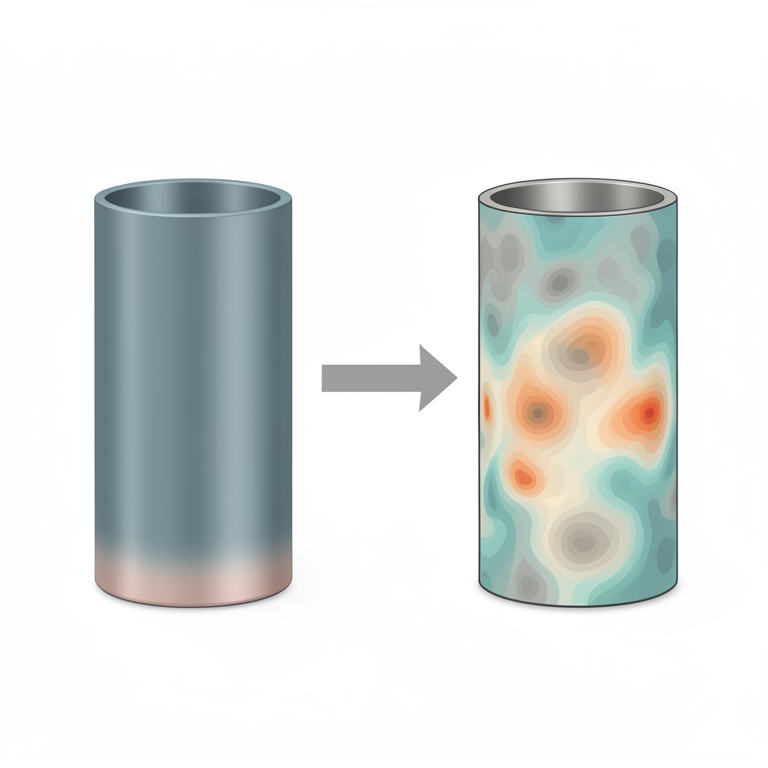
Impact of Isotropic Inhomogeneity
AI-generated conceptual illustration (a solid metal cylinder with a radial gradient of material density). It explains the idea and does not show study data.
View source evidence ↗Figures & tables
From the original paper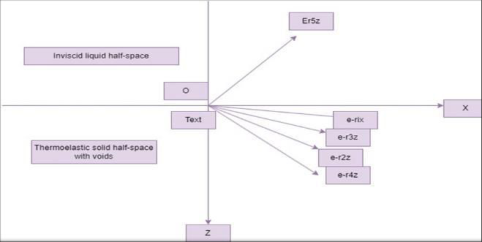 Figure 1
 Figure 2
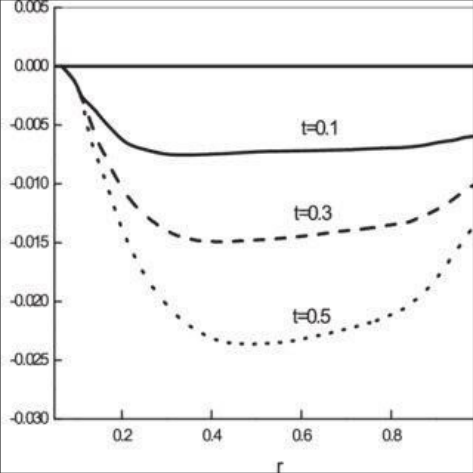 Figure 3
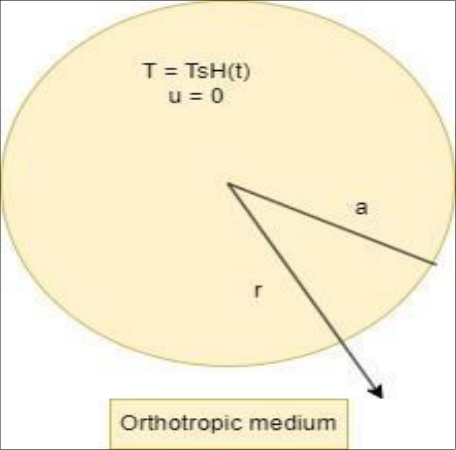 Figure 4
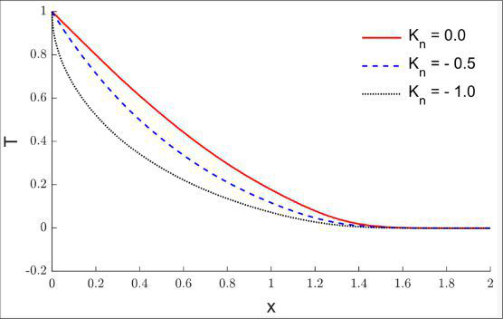 Figure 5
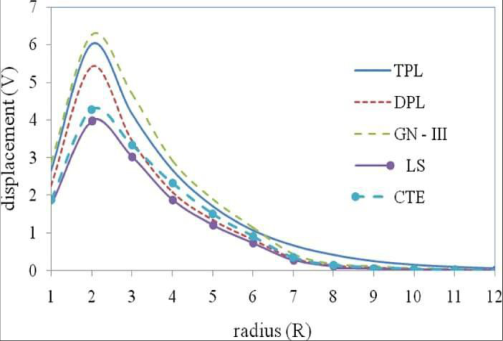 Figure 6
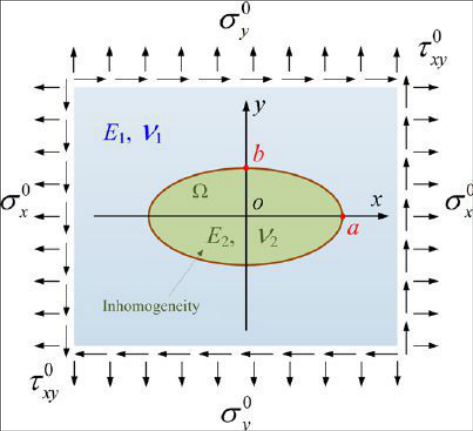 Figure 7
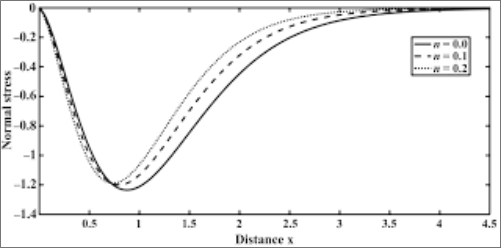 Figure 8
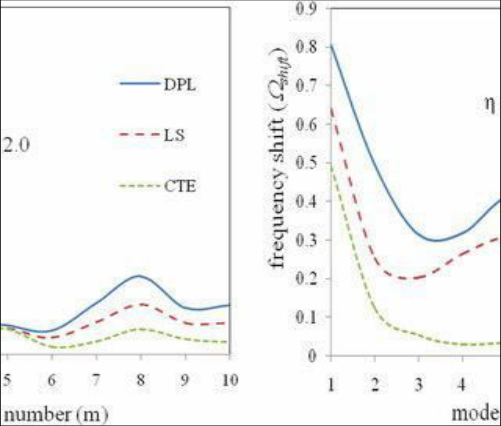 Figure 9
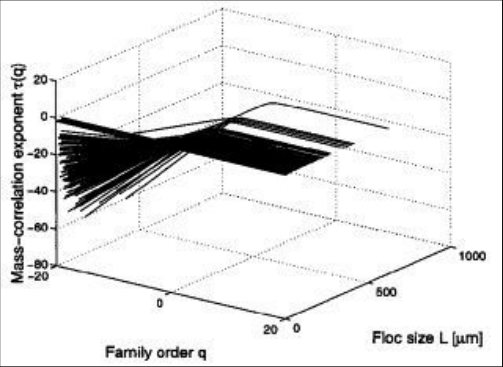 Figure 10
Introduction
Thermoelectricity, a field at the intersection of thermodynamics and elasticity, is crucial for understanding the behavior of materials affected by temperature changes and mechanical loads. In various logical and engineering applications, the study of thermoelastic behavior is essential to foresee material responses, guarantee structural integrity, and upgrade performance [1] . The problem of isotropic inhomogeneity in thermoelastic media containing infinite space with cylindrical math is a subject of considerable interest in the field. This research aims to investigate and foster solutions to this complex problem, providing valuable insights and practical applications [2] . Isotropic inhomogeneity alludes to contrasts in material properties in the environment, which can have profound impacts on heat and stress distribution. The utilization of cylindrical calculation further complicates the problem of the bent surface and its interaction with various boundary conditions [3] . Researchers have recently concentrated on thermoelectricity in various contexts, for example, orthotropic cavities, magneto thermoelastic stresses, and phase-lag generalized thermoelastic models. These examinations have given basic information, however, the special problem of isotropic inhomogeneity in cylindrical media remains to be completely addressed [4] . This study aims to fill this research gap by providing a detailed study of the impacts of isotropic inhomogeneity on temperature, radial displacement, and stress components in a cylindrical environment [5] . To achieve this, we utilize advanced programming tools, for example, MATLAB and Mathematica to create and visualize thermoelastic solutions [6] . The aftereffects of this research can be applied to many fields, including geophysics, optics, acoustics, geomagnetic overviews, and petrol exploration, contributing to the more extensive academic community and the understanding of thermoelastic phenomena and their practical implications [7] .
Proposed Method
The proposed for this research includes an extensive approach to solving the problem of isotropic inhomogeneity in a thermoelastic medium containing infinite space with a cylindrical calculation. To achieve our goals, we follow a systematic work process that includes the following key stages. To start with, we begin by formulating the governing equations of thermoelectricity in the context of isotropic inhomogeneity. These equations take into account the material properties and the boundary conditions intended for the cylindrical calculation. Then, we foster numerical solutions to the problem, both coupled and uncoupled, using advanced computational tools like MATLAB and Mathematica. These software packages facilitate the solution of complex differential equations and enable the simulation and visualization of the behavior of temperature, radial displacement, and stress components in a cylindrical environment. Numerical simulations are performed to discretize the problem domain, which is necessary to address the partial differential equations governing the thermoelastic behavior. The discretization cycle involves dividing the cylindrical medium into a finite number of components or framework points. Applying appropriate boundary conditions and initial conditions, we address the discretized equations iteratively to obtain the ideal thermoelastic solutions. This numerical approach makes it conceivable to study the influence of isotropic inhomogeneity, boundary conditions, and other parameters on the behavior of the framework. The utilization of both coupled and decoupled solutions is an important part of our strategy. Coupled solutions take into account the interdependence of temperature and stress in a thermoelastic framework, while decoupled solutions deal with these phenomena independently. This distinction allows us to study the impacts of coupling or decoupling on the outcomes and to gain an exhaustive understanding of the behavior of the framework. By comparing and contrasting coupled and decoupled solutions, we can assess the importance of coupling impacts within the sight of isotropic inhomogeneity and different boundary conditions. During the research cycle, we guarantee the validity and accuracy of the numerical solutions by performing convergence tests and sensitivity analyses. These tests assist with assessing the numerical stability and accuracy of our models and guarantee that the outcomes are reliable and consistent. In addition, we check the outcomes by comparing them with existing analytical solutions and experimental data, if available.
Definition of the issue
The most vital phase in taking care of this complex thermoelastic issue is to numerically plan it. The numerical model must precisely address the way of behaving of an isotropic inhomogeneous tube shaped medium affected by warm and mechanical burdens.
Administering conditions
The administering conditions of thermoelasticity incorporate protection of mass, force, and energy, as well as constitutive relations. In this unique circumstance, the intensity conduction condition depicting the temperature circulation is combined with the direct versatility conditions administering anxiety.
Mathematical Modeling Type the equations
Heat Conduction Equation: The heat conduction equation in the cylindrical coordinate system can be expressed as:
• ρ is the material density.
• c is the specific heat capacity.
• k is the thermal conductivity.
• Q represents heat sources or sinks within the medium.
Linear Elasticity Equations: For the tube-shaped calculation, the straight flexibility conditions can be communicated as:
• F represents external body forces.
• u is the displacement vector.
Constitutive Relations: The constitutive relations connecting anxiety for a thermoelastic material are urgent. On account of isotropic materials, Hooke's regulation is commonly applied. The general type of Hooke's regulation for isotropic materials is:
• σij represents stress components.
• λ and μ are the Lamé constants.
• δij is the Kronecker delta.
• εkk is the dilatation. The waves in thermoplastic should half-space containing voids with liquid loading is shown in Figure .1. In summary, the proposed technique combines mathematical modeling, numerical simulation, and advanced computational tools to tackle the problem of isotropic inhomogeneity in thermoelastic media of cylindrical calculation. By developing both coupled and uncoupled solutions and using software, for example, MATLAB 2023. we aim to give a complete analysis of the impacts of isotropic inhomogeneity and boundary conditions on the temperature, radial displacement, and stress components of a cylindrical medium. Through thorough validation and sensitivity analysis, our research contributes to a superior understanding of thermoelastic phenomena and gives insights into various fields of science and innovation.
• Εij represents strain components
• Εij represents strain components
Results and Discussion
In this section, results are introduced and discussed for solving the isotropic inhomogeneity problem in a thermoelastic medium containing infinite space with cylindrical math. The main focal point of the research was the development of thermoelastic solutions for a cylindrical medium, considering different boundary conditions, and the analysis of coupled and disconnected solutions using numerical strategies and PC tools like MATLAB 2023. Our study originally investigated both coupled and uncoupled solutions to the thermoelastic problem. Coupled solutions consider the interdependence of temperature and voltage in the framework, while uncoupled solutions treat these variables independently. Comparing these solutions allows us to assess the importance of coupling impacts within the sight of isotropic inhomogeneities and different boundary conditions. For coupled solutions, we observed that temperature and stress distributions are intrinsically coupled in thermoelastic frameworks (Adhe, A. and Ghadle, 2022). This interdependence is a fundamental property of thermoelectricity and turns out to be particularly strong in the case of isotropic inhomogeneity. Coupling impacts are visible in the temperature and voltage profiles, with changes in temperature affecting the voltage components as well as the other way around.
Impact of isotropic inhomogeneity
Introducing isotropic inhomogeneity into the thermoelastic medium strongly affected the outcomes. Isotropic inhomogeneity means that material properties, for example, thermal conductivity and modulus of elasticity vary with the environment. This variation creates spatial gradients and causes lopsided temperature and stress distribution. Within the sight of isotropic inhomogeneity, we observed that temperature gradients were more pronounced near regions where the material properties varied significantly. This brought about non-uniform temperature profiles, which in turn affected the stress components. The impact of isotropic inhomogeneity on the stress distribution was particularly clear near the boundary and in regions where the material properties changed unexpectedly. Figure .2. The impact of variable thermal conductivity and diffusivity in the temperature.
Boundary conditions
The decision of boundary conditions played an important job in shaping the thermoelastic behavior of the cylindrical medium. Different boundary conditions affect the temperature and stress distribution at the edges and surfaces of the cylinder. We examine different boundary conditions to evaluate their impact on the framework.
In cases where the boundary conditions were fixed and when temperature or displacement were forced on the boundaries, we noticed localized impacts near the boundary regions. There were sharp fluctuations in the temperature and stress profiles, especially at the edges exposed to the boundary conditions. These observations are consistent with known thermoelastic behavior under strong boundary conditions where stress concentrations are normal.
Comparison with existing analytics solutions
To validate the numerical outcomes, we compared them with existing analytical solutions and, where conceivable, with experimental data. Analytical solutions were obtained under worked-on conditions and acted as benchmarks for our numerical simulations. For basic math and material properties, our numerical solutions firmly matched the analytical outcomes. This consistency gave confidence in the accuracy and validity of our computational models. Be that as it may, in additional complex scenarios involving isotropic inhomogeneities and complex boundary conditions, direct analytical solutions are often unimaginable. In such cases, numerical simulations become the main tool for understanding thermoelastic behavior.
Sensitivity analysis and convergence tests
To guarantee the reliability of the numerical solutions, we performed sensitivity analyses and convergence tests. Sensitivity analyses included various input parameters, for example, material properties and boundary conditions to assess their impact on the outcomes. In convergence tests, numerical stability and accuracy were investigated by increasing the lattice density. Sensitivity analyses showed that variations in material properties and boundary conditions altogether affected temperature and stress distribution. These analyses gave insight into what various factors meant for the framework and behavior. Convergence tests showed that our numerical solutions converged to stable and consistent outcomes as the cross-section density increased. This indicates that our models gave accurate and reliable representations of the thermoelastic problem. In geophysics, for instance, the study and findings can help in analyzing the thermal and stress-related phenomena within the Earth and subsurface. In optics and acoustics, the knowledge of thermoelastic impacts can be essential for designing optical and acoustic gadgets (Varghese et al. 2021) [4] . In geomagnetic research, understanding the temperature and stress distributions can aid in modeling magnetic field behavior in various materials. Finally, in oil prospecting, accurate simulations of temperature and stress profiles are essential for predicting and mitigating the impacts of drilling and extraction on the geological formations.
Conclusion
In this study, we investigated the complex problem of isotropic inhomogeneity in a thermoelastic medium in cylindrical math. By developing coupled and uncoupled solutions and using advanced computational tools, we have gained an extensive understanding of the behavior of temperature, radial displacement, and stress components in such frameworks. The introduction of isotropic inhomogeneity and variable boundary conditions significantly affected the temperature and stress distributions. Our outcomes emphasize the importance of considering coupling impacts and the gradient of material properties in practical applications in various fields, including geophysics, optics, acoustics, geomagnetic overviews, and oil exploration. Numerical simulations confirmed by sensitivity analysis and convergence tests guarantee the reliability of our outcomes and contribute to a more profound understanding of complex thermoelastic phenomena, facilitating the development of science and innovation.
Figures and tables from the paper
References
7 in the original paper- Farhan AM, Abd-Alla AM, Khder MA. Solution of a problem of thermal stresses in a non-homogeneous thermoelastic infinite medium of isotropic material by finite difference method. J Ocean Eng Sci. 2019;4(3):256-262.
- Farhan AM, Abd-Alla AM, Khder MA. On problem of the stresses in a non-homogeneous composite of an infinite cylinder of orthotropic material. Results Appl Math. 2019;3:100014.
- Thakare S, Warbhe MS. Time fractional thermoelastic problem of a thick cylinder with non-homogeneous material properties. IOP Conf Ser: Mater Sci Eng. 2021;1033(1):012077.
- Varghese V, Bhoyar S, Khalsa L. Thermoelastic response of a nonhomogeneous elliptic plate in the framework of fractional order theory. Arch Appl Mech. 2021;91(7):3223-3246.
- Pasternak IM, Sulym H. Thermoelasticity of solids containing thread-like inhomogeneities. I. Nondeformable thread-like inclusions. Int J Solids Struct. 2021;232:111176.
- Adhe A, Ghadle K. Thermal Stress Analysis of Inhomogeneous Infinite Solid to 2D Elasticity of Thermoelastic Problems. In: Int Conf Math Comput. 2022:509-521. Singapore: Springer Nature Singapore.
- Yang W, Zhou Q, Wang J, Khoo BC, Phan-Thien N. Equivalent inclusion method for arbitrary cavities or cracks in an elastic infinite/semi-infinite space. Int J Mech Sci. 2021;195:106259.