
Research article · 2024 · Full text
International Journal of Advanced Biochemistry ResearchEffect of drying on Physico-chemical properties of protein fortified kesar mango leather
Volume 8(2) · Pages 101–107 · DOI: 10.33545/26174693.2024.v8.i2sb.515 ↗
Research areasNanocomposite Films for Food PackagingCollagen: Extraction and Characterization
Abstract
Author-writtenThe study was carried out to find out the effect of drying on Phyisco-chemical properties of protein fortified mango leather by using mechanical drying of tray drying. Protein fortified mango leather was prepared by tray drying technique using process variables viz. whey protein powder (4.92%), sugar (12.50%), citric acid (0.45%) and thickness of pulp (6 mm). The study was undertaken at 50, 55, 60, 65 and 70 °C drying temperatures in 4, 5 and 6 mm thickness of pulp and dependent variables like protein content, overall acceptability, ascorbic acid, color values, cutting force and stretchability were analyzed by statistical method of analysis using CRD factorial. Optimum value of overall acceptability (8.69), protein content (11.36g/100g) and ascorbic acid (56.65mg/100g) was found at drying temperature of 65 °C in 5 mm of thickness of pulp for production of tray dried protein fortified mango leather.
Summary
Source-checkedPlain-language reading of the full paper, prepared with AI and checked against the text. Each point links to the authors' own words.
Why it matters
- Fruit leathers are sweet, soft, and rubbery dried sheets of fruit pulp made from popular fruits such as mango, banana, papaya, and kiwi. View evidence ↗
- Traditional sun-drying of mango leather is often time-consuming, unhygienic, and causes undesirable color changes. View evidence ↗
- Whey protein, a byproduct of cheese production, is a high-quality protein complex linked to health benefits including immune system enhancement and cholesterol reduction. View evidence ↗
The question
- The study aimed to evaluate how drying affects the physico-chemical properties of whey-fortified mango leather to create a nutritious product with high consumer acceptance. View evidence ↗
What they did
- The protein-fortified mango leather was produced using a tray drying technique with a formulation of 4.92% whey protein powder, 12.50% sugar, and 0.45% citric acid. View evidence ↗
- The researchers used a two-factorial Central Randomized Design to test five drying temperature levels and three pulp thickness levels. View evidence ↗
- The study measured protein and Vitamin-C content, sensory attributes (aroma, taste, texture, color, and overall acceptability), and textural properties (cutting force and stretchability). View evidence ↗
What they found
- The highest protein content of 11.36 g/100 g was achieved at a drying temperature of 65 °C and a pulp thickness of 5 mm. View evidence ↗
- The maximum overall acceptability score of 8.69 was recorded for the combination of 65 °C drying temperature and 5 mm pulp thickness. View evidence ↗
- The highest concentration of ascorbic acid (56.65 mg/100g) was found at 65 °C and 5 mm thickness. View evidence ↗
- The pH value of the mango leather increased as the drying temperature increased. View evidence ↗
- The lightness color value (L*) decreased as pulp thickness increased, likely because longer drying times for thicker pulp result in a darker product. View evidence ↗
- Higher drying temperatures led to faster drying, which resulted in an increase in the cutting force required for the leather. View evidence ↗
- The stretchability of the mango leather increased with both higher drying temperatures and greater pulp thickness. View evidence ↗
What it means
- The authors concluded that the optimal parameters for producing protein-fortified mango leather with maximum quality retention are a drying temperature of 65 °C and a pulp thickness of 5 mm. View evidence ↗
Visual summary
3 visualsIllustrations explain the paper; charts are replotted from the paper's own table values.
Experimental Design Matrix
AI-generated conceptual illustration (Kesar mango leather sheets). It explains the idea and does not show study data.
View source evidence ↗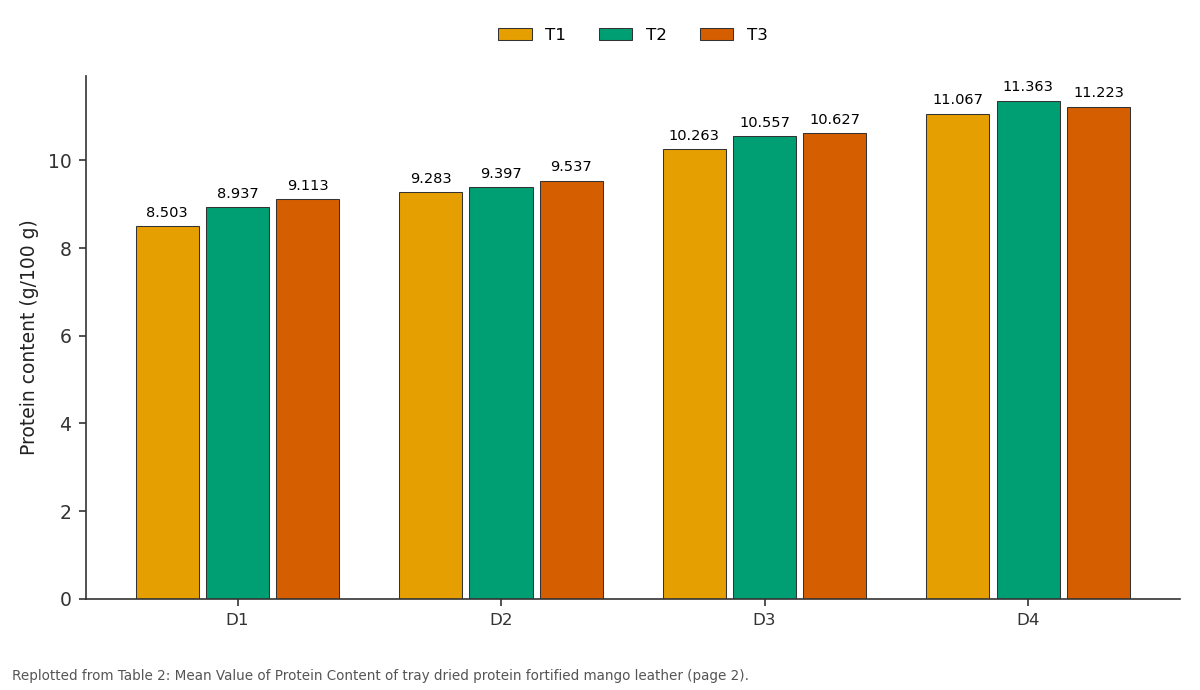
T1 and T2 and more: D1 vs D2 vs D3 vs D4
Replotted from Table 2 (page 2) of the original paper. Every bar is the paper's own table value.
View source evidence ↗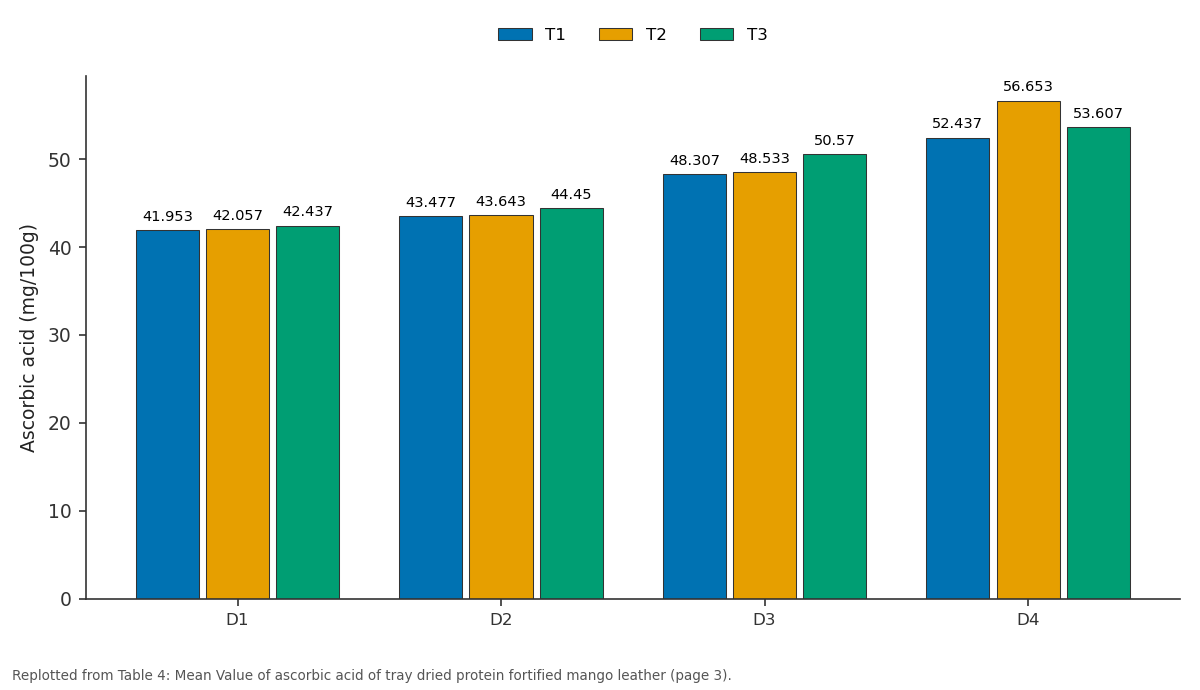
T1 and T2 and more: D1 vs D2 vs D3 vs D4
Replotted from Table 4 (page 3) of the original paper. Every bar is the paper's own table value.
View source evidence ↗Figures & tables
From the original paper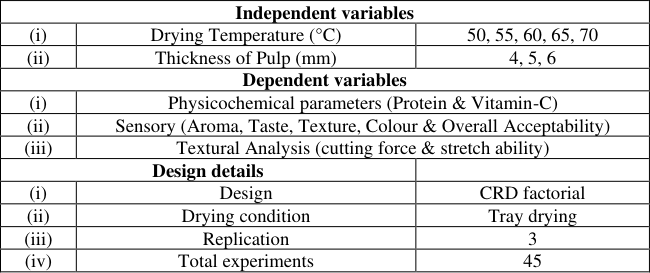 Table 1
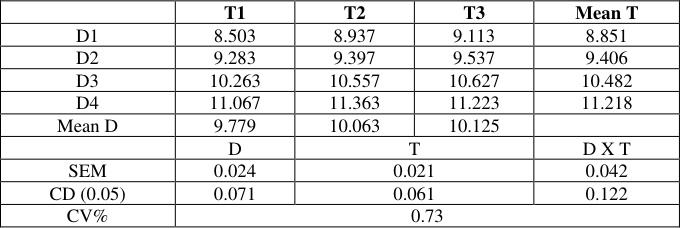 Table 2
 Table 3
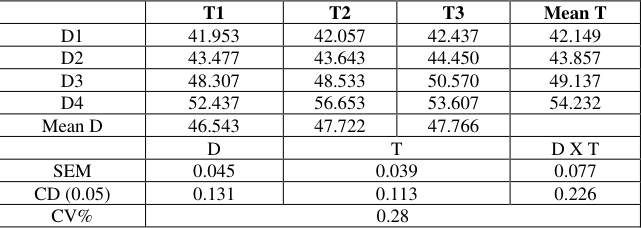 Table 4
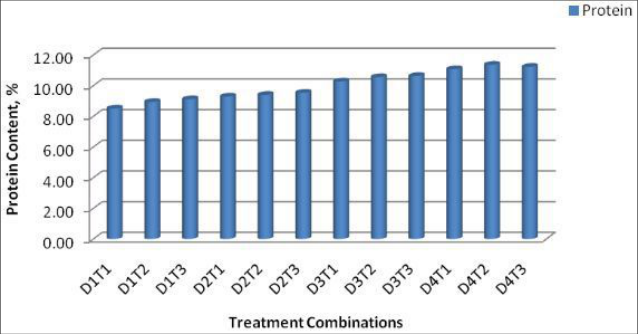 Figure 1
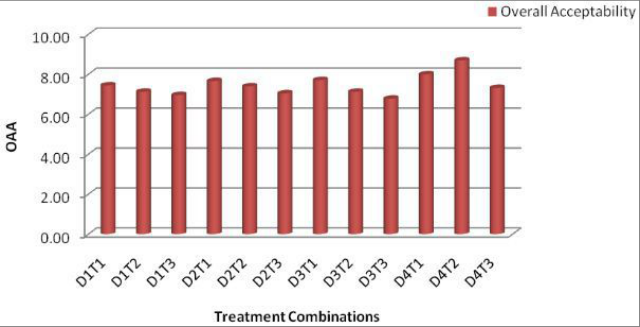 Figure 2
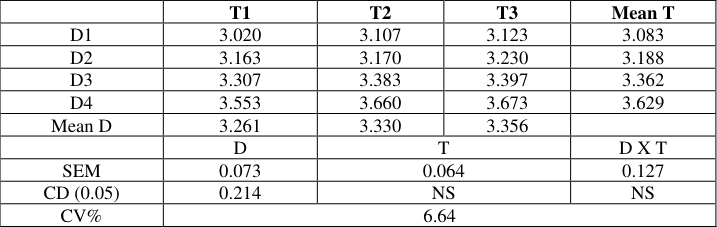 Table 5
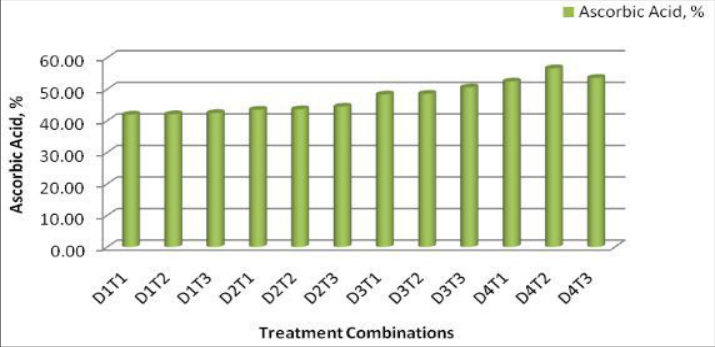 Figure 3
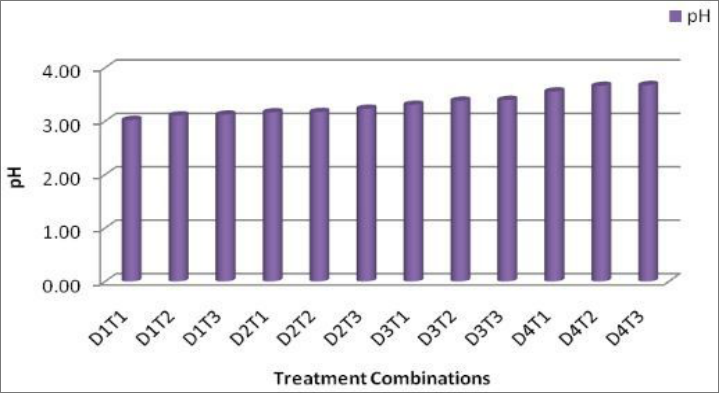 Figure 4
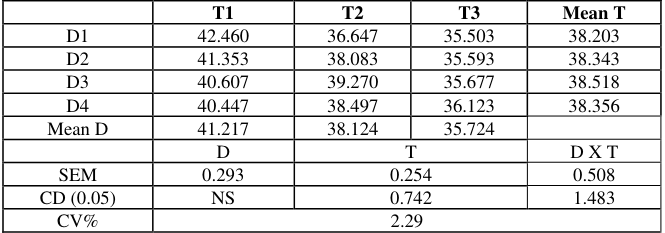 Table 6
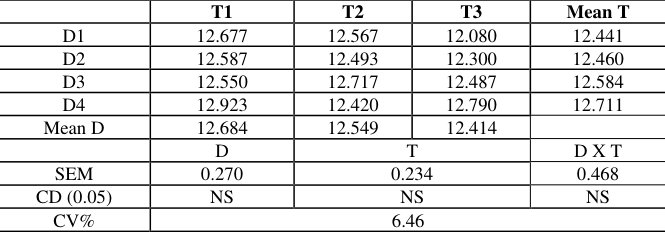 Table 7
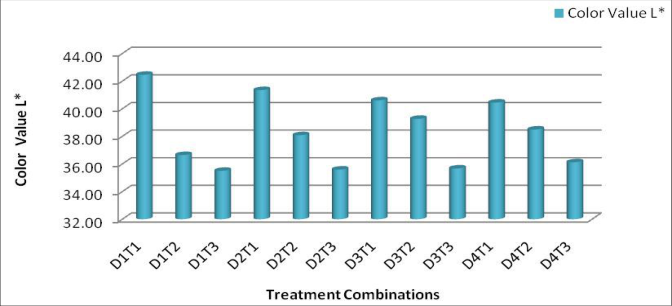 Figure 5
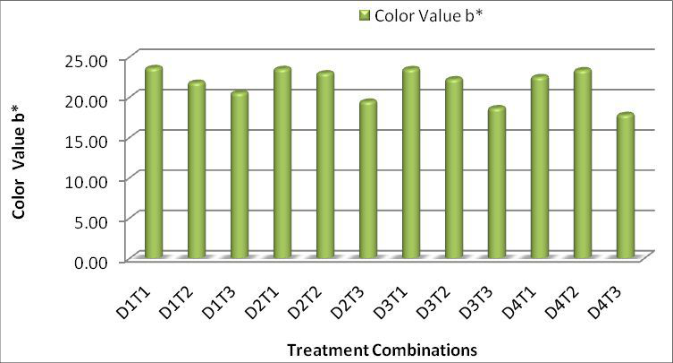 Figure 6
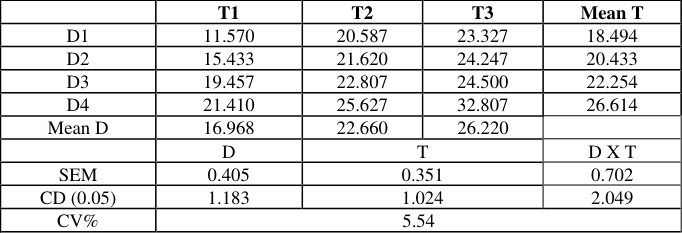 Table 8
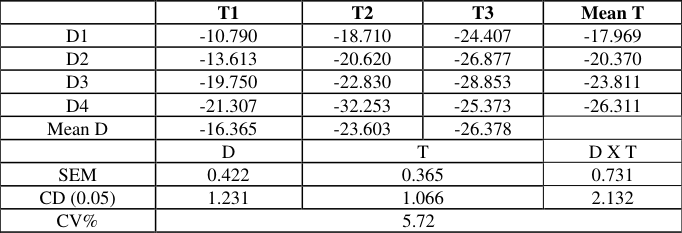 Table 9
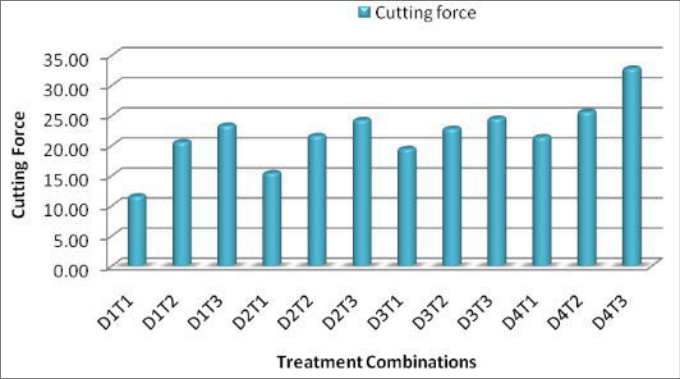 Figure 7
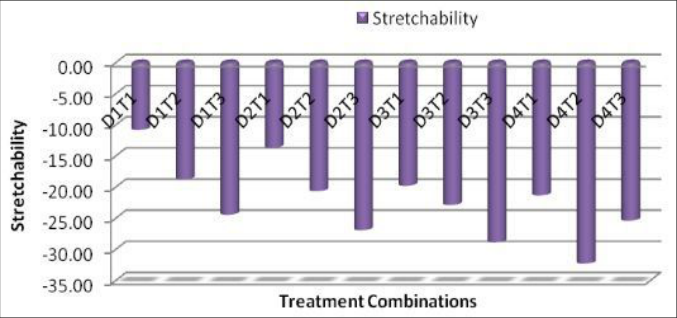 Figure 8
 Table 9
Introduction
Fruit leathers can be made from the most popular fruits like mango, banana, papaya and kiwi etc. They are dried sheets of fruit pulp which have a soft, rubbery texture and sweet taste. It may be consumed as snack foods as a healthy alternative to boiled sweets and also used in the manufacture of cookies, cakes and ice cream as an ingredient (Food Safety and Standards Regulations Act, 2011) [5] . The process of creating fruit leather using a range of fruits like apple, jackfruit and sapota has been documented in various sources. Traditionally, mango leather is prepared from ripe fruit pulp using sun drying. However, the conventional sundrying method leads to color changes and is considered unhygienic and time-consuming. Content of fruit leather rich in minerals and low in fat and protein (Pramanik and Sengupta, 1978) [9] . Whey, a natural and pure high-quality protein complex, is obtained from the process of cheese production. Recognized for its positive effects on health, whey protein is a functional ingredient associated with benefits such as immune system enhancement, prevention of dental plaques and tooth decay, cholesterol reduction and lowered blood pressure. Whey serves as an excellent dietary supplement for creating energy bars and fruit leather. Incorporating whey protein into sports and snack items provides beneficial nutrients that impact body composition positively (Burrington, 2012) [3] . The popularity of proteinfortified products is on the rise, heavily promoted as an ideal protein source (Bhutani, 2010) [2] . Protein-fortified mango leather presents significant advantages, including protein enrichment, simplicity, lower production costs, enhanced consumer appeal, and increased popularity among children. A dynamic marketing network can boost this product in India and abroad. Nutritionally, leather is low in protein. Enhancing and fortifying food represents the most economically viable and sustainable approach to combat malnutrition. Therefore, this study was carried out to study the effect of drying on phyisco-chemical properties of mango leather using whey to prepare nutritious leather from mango pulp with highest consumer acceptance.
Materials and Methods
The detailed experimental protocols, instruments and software etc. used in the study should be described here with their proper references. The details of the study area should also be provided. Raw Materials: Whey protein powder (WPC-80, sourced from Arla) was obtained from the Anand local market in Gujarat. Sugar (Madhur Brand, sulphur-free, pure, and hygienic), citric acid, and packaging materials were acquired from the local market in Godhra, Gujarat.
Mango Leather Formulation:
The protein fortified mango leathers were prepared as per the standard procedure mentioned in Fig. 1. Mango pulp having 17-20 o Brix was taken and sugar (10-15g) was added to adjust the TSS of pulp to 30°Brix. Citric acid at 0.5% level was mixed in pulp thoroughly. After that, heat treatment (80 ºC for 5 minutes) was given to mixture. Very thin layer of glycerin was applied to SS plates for easier removal of mango leather from the plate after drying. Mango pulp was spread in SS plates and dried in sun condition up to a product having moisture content of 17±2% (w.b.). Mango leathers were packed in different selected packaging materials and sealed. The mango leather was stored in ambient condition.
Optimization of drying parameters for preparation of mango leather by tray drying technique:
Mango leather was prepared based on standardized formulations obtained from earlier study of mango leather. The optimum values reported for formulation of whey protein, sugar, citric acid and pulp thickness were 4.92%, 12.50%, 0.45% and 6mm, respectively (Jethva et al., 2021) [7] . In this experiment two process variables like drying temperature with five levels and thickness of pulp with three levels, each were evaluated for various physico-chemical, sensory and textural properties (Table 1). Two factorial Central Randomized Design was used to optimize drying temperature and thickness by using tray drying technique based on sensory and various physico-chemical, textural properties. 2 that drying temperature and thickness had significant effect (p<0.5) on protein content. The highest mean protein content of 11.36 g/100 g was found at D4T2 combination (65 °C and 5 mm thickness), which is significantly higher than the other treatments (Fig. 1). Retention of protein at higher temperatures may be due to faster drying rate. At higher thickness, protein might have denatured due to more drying time. Similar types of findings were also reported for Papaya leather by Ahmad et al., (2005) [1] , fortified mango bars by Mir and Nath (1993) [8] and fortified mixed fruit bar using whey protein concentration by Chauhan (2013) [4] , sun dried mango leather by Jethva et al., (2021) [7] . 3 that drying temperature and thickness had significant effect (p<0.5) on overall acceptability. The highest mean overall acceptability of 8.69 was found at D4T2 combination (65 °C and 5mm thickness), which is significantly higher than all other treatments. Moreover, the interaction of drying temperature and thickness of pulp was also found significant. Increase in overall acceptability may be due to faster drying rate resulting in good taste & color to the product (Fig. 2). Similar types of findings for overall acceptability were found for papaya leather by Ahmad et al., (2005) [1] , fortified mango bars by Mir and Nath (1993) [8] and fortified mixed fruit bar using whey protein by Chauhan (2013) [4] .
| Independent variables | — | — |
|---|---|---|
| (i) | Drying Temperature (°C) | 50, 55, 60, 65, 70 |
| (ii) | Thickness of Pulp (mm) | 4, 5, 6 |
| Dependent variables | ||
| (i) | Physicochemical parameters (Protein & Vitamin-C) | |
| (ii) | Sensory (Aroma, Taste, Texture, Colour & Overall Acceptability) | |
| (iii) | Textural Analysis (cutting force & stretch ability) | |
| Design details | ||
| (i) | Design | CRD factorial |
| (ii) | Drying condition | Tray drying |
| (iii) | Replication | 3 |
| (iv) | Total experiments | 45 |
Table text extracted from the original PDF; superscript letters are shown inline. The original table image is below.
View original table image
Effect on Ascorbic Acid
It was observed from Table 4 that drying temperature and thickness had significant effect on ascorbic acid. Highest ascorbic acid of 56.65 mg/100g was found at D4T2 combination (65 °C and 5 mm thickness), which is significantly higher than all other treatments. Moreover, the interaction of drying temperature and thickness of pulp was also found significant. Similar effect was also found for ascorbic acid as described in protein content (Fig. 3).
| — | T1 | T2 | T3 | Mean T |
|---|---|---|---|---|
| D1 | 41.953 | 42.057 | 42.437 | 42.149 |
| D2 | 43.477 | 43.643 | 44.450 | 43.857 |
| D3 | 48.307 | 48.533 | 50.570 | 49.137 |
| D4 | 52.437 | 56.653 | 53.607 | 54.232 |
| Mean D | 46.543 | 47.722 | 47.766 | |
| D | T | D X T | ||
| SEM | 0.045 | 0.039 | 0.077 | |
| CD (0.05) | 0.131 | 0.113 | 0.226 | |
| CV% | 0.28 |
Table text extracted from the original PDF; superscript letters are shown inline. The original table image is below.
View original table image
Effect on pH
It was observed from Table 5 that pH values varied from 3.020 to 3.673. The drying temperature had significant, and thickness had non-significant effect on pH value of mango leather (Fig. 4). Moreover, the interaction of drying temperature and thickness of pulp was found nonsignificant. pH value increases with increase in temperature (Fig. 4). Similar findings regarding pH was found by Rajkumar et al. (2007) [10] for foam mat dried mango powder and Housalmal (2018) [6] for foam mat dried mango leather. drying temperature had non-significant effect and thickness of pulp had significant (p<0.05) effect on color value (L*). Moreover, the interaction of drying temperature and thickness of pulp was found to be significant. Color value (L*) decreased with increase in thickness. It may be due to the fact that at higher thickness more drying time is required and may lead to darker product. Lighter products may be highly accepted by consumers.
| — | T1 | T2 | T3 | Mean T |
|---|---|---|---|---|
| D1 | 3.020 | 3.107 | 3.123 | 3.083 |
| D2 | 3.163 | 3.170 | 3.230 | 3.188 |
| D3 | 3.307 | 3.383 | 3.397 | 3.362 |
| D4 | 3.553 | 3.660 | 3.673 | 3.629 |
| Mean D | 3.261 | 3.330 | 3.356 | |
| D | T | D X T | ||
| SEM | 0.073 | 0.064 | 0.127 | |
| CD (0.05) | 0.214 | NS | NS | |
| CV% | 6.64 |
Table text extracted from the original PDF; superscript letters are shown inline. The original table image is below.
View original table image
Effect on color value of Mango leather
Effect on color value of Mango leather
Effect on Color Value (a*):
Color value (a*) indicates degree of lightness from green to red. Positive color value (a*) value denotes redness and negative color values (a*) represents greenness. It was observed from Table 8 that color value (a*) of protein fortified mango leather varied from 12.080 to 12.923. It was observed from the table that drying temperature, thickness of pulp and their interaction had non-significant effect on color value (a*). 8 that drying temperature and thickness of pulp had significant effect (P<0.05) on cutting force. Moreover, interaction of drying temperature and thickness of pulp was also found significant. More cutting force was required for higher thickness of product. At higher temperature, product was dried faster resulted in more cutting force (Fig. 7). Similar findings for increase in cutting force at higher temperature were reported by Vijayanand et al., (2000) for guava and mango bars and Housalmal (2018) [6] for foam mat dried mango leather.
| — | T1 | T2 | T3 | Mean T |
|---|---|---|---|---|
| D1 | 11.570 | 20.587 | 23.327 | 18.494 |
| D2 | 15.433 | 21.620 | 24.247 | 20.433 |
| D3 | 19.457 | 22.807 | 24.500 | 22.254 |
| D4 | 21.410 | 25.627 | 32.807 | 26.614 |
| Mean D | 16.968 | 22.660 | 26.220 | |
| D | T | D X T | ||
| SEM | 0.405 | 0.351 | 0.702 | |
| CD (0.05) | 1.183 | 1.024 | 2.049 | |
| CV% | 5.54 |
Table text extracted from the original PDF; superscript letters are shown inline. The original table image is below.
View original table image
Stretchability: Stretchability of mango leather varied from -10.790 to -32.253 N. It was observed from Table 9 that drying temperature and thickness of pulp had significant effect (p<0.05) on stretchability. Moreover, the interaction of drying temperature and thickness of pulp was also found significant. Stretchability increases with increase in temperature and thickness (Fig. 8). More stretchability was found at higher temperature due to the spontaneous exudation of fluid from a gel (syneresis) caused by excess of acid and gelatinization of sugar (Srivastava and Sanjeev, 2006; Jethva et al., 2021) [7] for sun dried mango leather. Usually, consumers prefer more chewable product. Sensory score in term of overall acceptability is the main criteria for development of any new product. It was observed from the above Table 9 that highest value of overall acceptability 8.69 was found for D4T2 combination (65 ºC temperature and 5 mm thickness). Mango leather having highest protein content was selected for optimization which was found in D4T2 combination (11.36%).
| Combination | — | Based on highest overall l acceptability and protein content |
|---|---|---|
| Drying Parameters | Temperature (°C) | 65 |
| Thickness of pulp(mm) | 5 | |
| Responses | Overall acceptability | 8.69 |
| Protein content(g/100g) | 11.36 |
Table text extracted from the original PDF; superscript letters are shown inline. The original table image is below.
View original table image
| — | T1 | T2 | T3 | Mean T |
|---|---|---|---|---|
| D1 | -10.790 | -18.710 | -24.407 | -17.969 |
| D2 | -13.613 | -20.620 | -26.877 | -20.370 |
| D3 | -19.750 | -22.830 | -28.853 | -23.811 |
| D4 | -21.307 | -32.253 | -25.373 | -26.311 |
| Mean D | -16.365 | -23.603 | -26.378 | |
| D | T | D X T | ||
| SEM | 0.422 | 0.365 | 0.731 | |
| CD (0.05) | 1.231 | 1.066 | 2.132 | |
| CV% | 5.72 |
Table text extracted from the original PDF; superscript letters are shown inline. The original table image is below.
View original table image
Conclusion
Drying temperature and thickness had significant effect on protein content, overall acceptability and ascorbic acid of protein fortified mango leather. Optimum values of overall acceptability (8.69), protein content (11.36%) and ascorbic acid (56.65%) was found at drying temperature of 65 °C and 5 mm of thickness of pulp for production of tray dried protein fortified mango leather with maximum retention of physico-chemical qualities.
Figures and tables from the paper
| — | T1 | T2 | T3 | Mean T |
|---|---|---|---|---|
| D1 | 8.503 | 8.937 | 9.113 | 8.851 |
| D2 | 9.283 | 9.397 | 9.537 | 9.406 |
| D3 | 10.263 | 10.557 | 10.627 | 10.482 |
| D4 | 11.067 | 11.363 | 11.223 | 11.218 |
| Mean D | 9.779 | 10.063 | 10.125 | |
| D | T | D X T | ||
| SEM | 0.024 | 0.021 | 0.042 | |
| CD (0.05) | 0.071 | 0.061 | 0.122 | |
| CV% | 0.73 |
Table text extracted from the original PDF; superscript letters are shown inline. The original table image is below.
View original table image
| — | T1 | T2 | T3 | Mean T |
|---|---|---|---|---|
| D1 | 7.447 | 7.127 | 6.960 | 7.178 |
| D2 | 7.663 | 7.393 | 7.050 | 7.369 |
| D3 | 7.713 | 7.127 | 6.780 | 7.207 |
Table text extracted from the original PDF; superscript letters are shown inline. The original table image is below.
View original table image
| — | T1 | T2 | T3 | Mean T |
|---|---|---|---|---|
| D1 | 42.460 | 36.647 | 35.503 | 38.203 |
| D2 | 41.353 | 38.083 | 35.593 | 38.343 |
| D3 | 40.607 | 39.270 | 35.677 | 38.518 |
| D4 | 40.447 | 38.497 | 36.123 | 38.356 |
| Mean D | 41.217 | 38.124 | 35.724 | |
| D | T | D X T | ||
| SEM | 0.293 | 0.254 | 0.508 | |
| CD (0.05) | NS | 0.742 | 1.483 | |
| CV% | 2.29 |
Table text extracted from the original PDF; superscript letters are shown inline. The original table image is below.
View original table image
| — | T1 | T2 | T3 | Mean T |
|---|---|---|---|---|
| D1 | 12.677 | 12.567 | 12.080 | 12.441 |
| D2 | 12.587 | 12.493 | 12.300 | 12.460 |
| D3 | 12.550 | 12.717 | 12.487 | 12.584 |
| D4 | 12.923 | 12.420 | 12.790 | 12.711 |
| Mean D | 12.684 | 12.549 | 12.414 | |
| D | T | D X T | ||
| SEM | 0.270 | 0.234 | 0.468 | |
| CD (0.05) | NS | NS | NS | |
| CV% | 6.46 |
Table text extracted from the original PDF; superscript letters are shown inline. The original table image is below.
View original table image
References
11 in the original paper- Ahmad S, Vashney AK, Srivastava PK. Quality attributes of fruit bar made from papaya and tomato by incorporating hydrocolloids. Int. J Food Prop. 2005;8(1):89-99.
- Bhutani A. Whey protein-Nutritional powerhouse for sports persons. Indian Food Ind. 2010;29:46-47.
- Burrington K. Whey ingredients in nutrition bars and gels. U. S. Dairy Council. 2012:1-8.
- Chauhan N. Development of fortified mixed fruit bar using whey protein concentrate. [Master Thesis]. University of Anand Agricultural, Anand. Retrieved from krishikosh.egranth.ac.in/bitstream/1/5810002111/1/NIR ALI%20PDF-FINAL.pdf. 2013.
- Housalmal SS. Optimization of process for production of kesar mango leather using foam mat drying technique. [Doctorate Thesis]. Vasantrao Naik Marathwada Krishi Vidyapeeth, Parbhani. Retrieved from krishikosh.egranth.ac.in/handle/1/5810040954. 2018.
- Jethva KR, Sutar RF, Kumar N, Vyas DK. Effect of whey protein on sun dried protein-enriched kesar mango leather. J Pharmacogn Phytochem. 2021;10(2):824-830.
- Mir MA, Nath N. Storage changes in fortified mango bars. J Food Sci Technol. 1993;30:279-282.
- Pramanik WK, Sengupta JP. A preliminary study of composition of mango sheets. Inst Chemists. 1978;50:25-26.
- Rajkumar P, Kailappan R, Viswanathan R, Raghavan GSV, Ratti C. Foam mat drying of alphonso mango pulp. Drying Technol. 2007;25(2):357-365.
- Srivastava RP, Sanjeev K. Fruit & Vegetable Preservation, Principles and Practices. USA: Oxford and IBH Publishers. 2006.
- Vijayanand P, Yadav AR, Balasubramanyam N, Narasimham P. Storage stability of guava fruit bar prepared using a new process. LebensmittelWissenschaft & Technology. 2000;33:132-137.
Cited by 2
From OpenAlex, OpenCitations and reference lists read by Scinovex
- Production of Functional Fruit Snacks and Determination of Quality Characteristics ↗
Bertug Altug Arisut, Ebru Ormanli, Şebnem Tavman, Seher Kumcuoğlu · Food Science & Nutrition · 2025
ABSTRACT This study aimed to explore the incorporation of Jerusalem artichoke powder (0%, 10%, 15%, and 20%) in the production of functional fruit snacks, assess the quality attributes of the resulting products, and evaluate their changes during storage. The composition, moisture content, water activity, and color values of both Jerusalem artichoke tubers and their powder were analyzed. Increasing the proportion…
❝ 1PDF - Revizuirea tendințelor în dezvoltarea snackurilor din fructe structurate cu proprietăți funcționale ↗
Galina Sleagun, Larisa Iusan, Elena Zyreanova · Akademos · 2025
Structured fruit snacks (SFS) are an alternative to fresh fruit, offering a high nutritional value, which can significantly contribute to the sustainability of fresh fruit consumption, due to the possibility of using raw materials of different quality and long shelf life. They can be made from raw materials of different quality and have a long shelf life, making them a…
❝ 0PDF