
Research article · 2024 · Full text
International Journal of Agriculture Extension and Social DevelopmentSocio-demographic and agricultural challenges in maize production and credit facility: A study in Kavango East, Namibia
Volume 7(2) · Pages 01–06 · DOI: 10.33545/26180723.2024.v7.i2a.285 ↗
Research areasAgricultural Innovations and Practices
Abstract
Author-writtenThis study explores the socio-demographic and agricultural challenges affecting maize production in Namibia's Kavango East region, highlighting the importance of this issue for local food security and economic stability. The research gap identified centres on the need for in-depth analysis of these challenges to devise effective strategies for improvement. The paper aims to assess these challenges and suggest feasible interventions. Employing quantitative methods and an exploratory survey of small-scale maize farmers, the study finds that issues such as crop diseases, weed and insect problems, and the lack of quality inputs and technology are significant barriers. The most crucial result is the identification of strategies such as the use of certified seeds, high-quality fertilizers, and enhanced extension services that can potentially boost maize production. The takeaway message emphasizes the critical role of tailored policy and support systems in addressing the unique needs of farmers, promoting sustainable agriculture, and enhancing food security in the region.
Summary
Source-checkedPlain-language reading of the full paper, prepared with AI and checked against the text. Each point links to the authors' own words.
Why it matters
- Maize is a vital crop for food security and agriculture, particularly within Sub-Saharan Africa. View evidence ↗
- Agricultural productivity in Southern Africa is currently threatened by the effects of climate change. View evidence ↗
- In Namibia's Kavango East region, poor soil quality, marked by low nutrient levels and poor water retention, hinders successful maize production. View evidence ↗
The question
- The study aims to evaluate the socio-demographic and agricultural challenges facing maize production in Kavango East and propose practical interventions. View evidence ↗
What they did
- The researchers collected data from a sample of 52 small-scale maize farmers. View evidence ↗
- The study utilized a quantitative exploratory survey design focusing on small-scale farmers in the Kavango East region. View evidence ↗
- Data was gathered through face-to-face interviews using semi-structured questionnaires. View evidence ↗
- The researchers used SPSS software and coding techniques to analyze the collected data. View evidence ↗
What they found
- A high unemployment rate of 78.8% was observed among the surveyed farming population. View evidence ↗
- Half of the surveyed households earn less than N$ 1000.00 per month, indicating low profitability in the region's agriculture. View evidence ↗
- Most farmers face moderate levels of agricultural threats, with 67.3% reporting moderate disease, 57.7% moderate weeds, and 69.2% moderate pests. View evidence ↗
- The most significant production challenge is the lack of quality inputs, such as certified seeds and fertilizers, which affects 46.2% of farmers. View evidence ↗
- There is a heavy reliance on informal credit (67.3%), while only 13.5% of farmers use formal credit sources. View evidence ↗
- The main barriers to accessing loans are a lack of collateral (42.3%) and insufficient cash flow (28.8%). View evidence ↗
- A vast majority of farmers (88.5%) cannot secure all the financing they need from their current credit sources. View evidence ↗
Visual summary
3 visualsIllustrations explain the paper; charts are replotted from the paper's own table values.
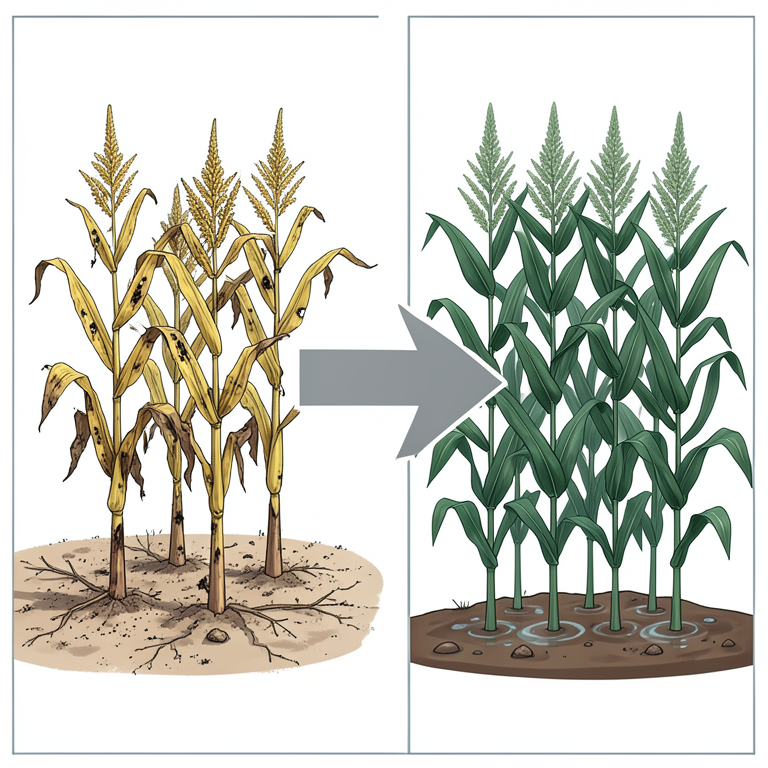
Barriers vs. Solutions for Maize Production
AI-generated conceptual illustration (maize plants in a field in Kavango East, Namibia). It explains the idea and does not show study data.
View source evidence ↗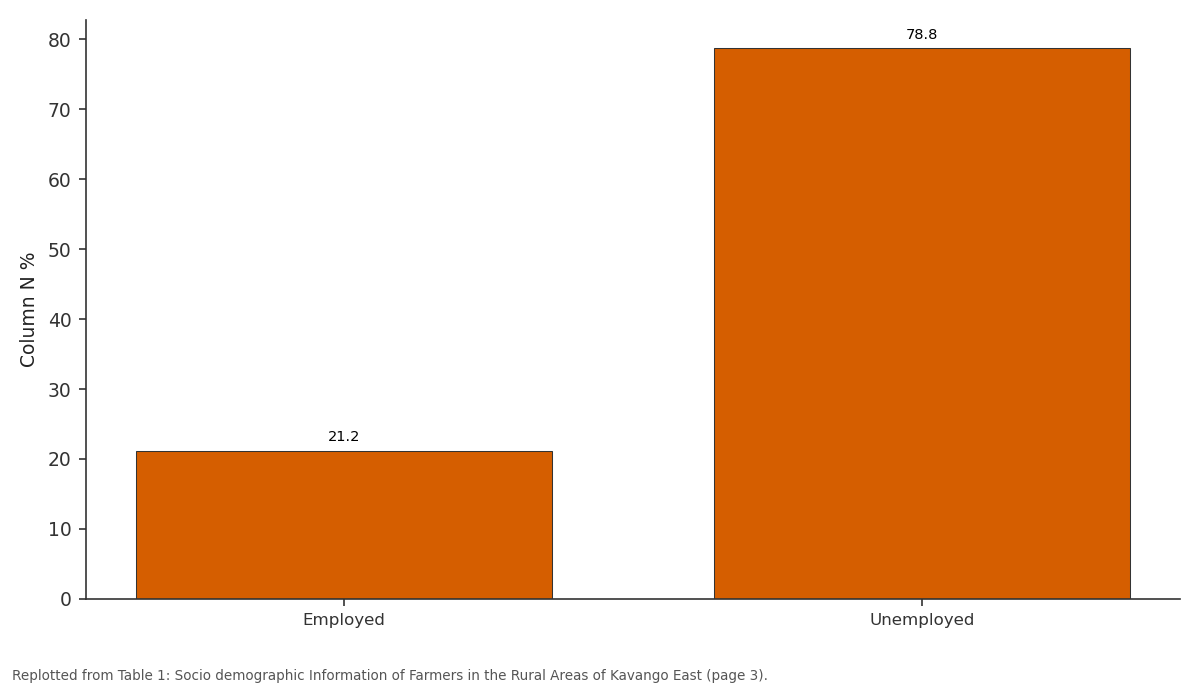
Column N %: Employed vs Unemployed
Replotted from Table 1 (page 3) of the original paper. Every bar is the paper's own table value.
View source evidence ↗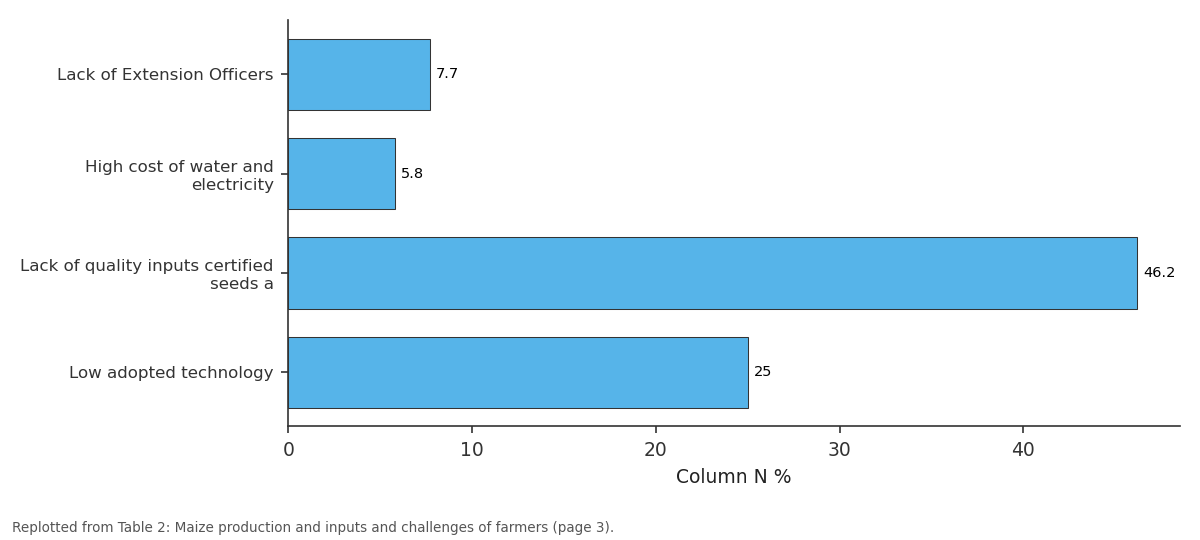
Column N %: Lack of Extension... vs High cost of water and... vs Lack of quality inputs... vs Low adopted technology
Replotted from Table 2 (page 3) of the original paper. Every bar is the paper's own table value.
View source evidence ↗Figures & tables
From the original paper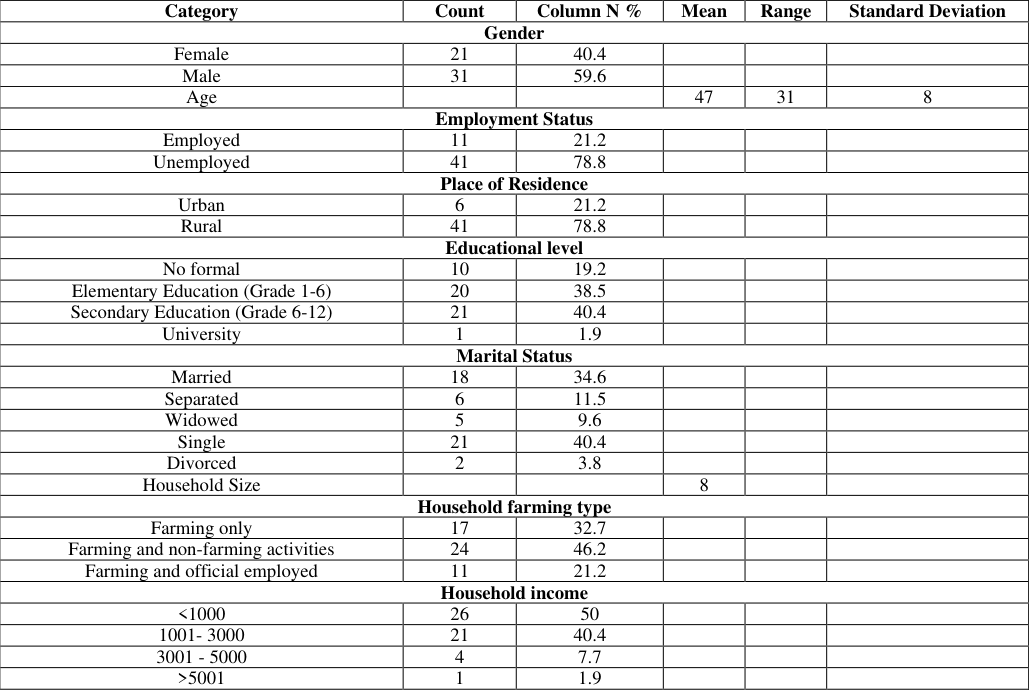 Table 1
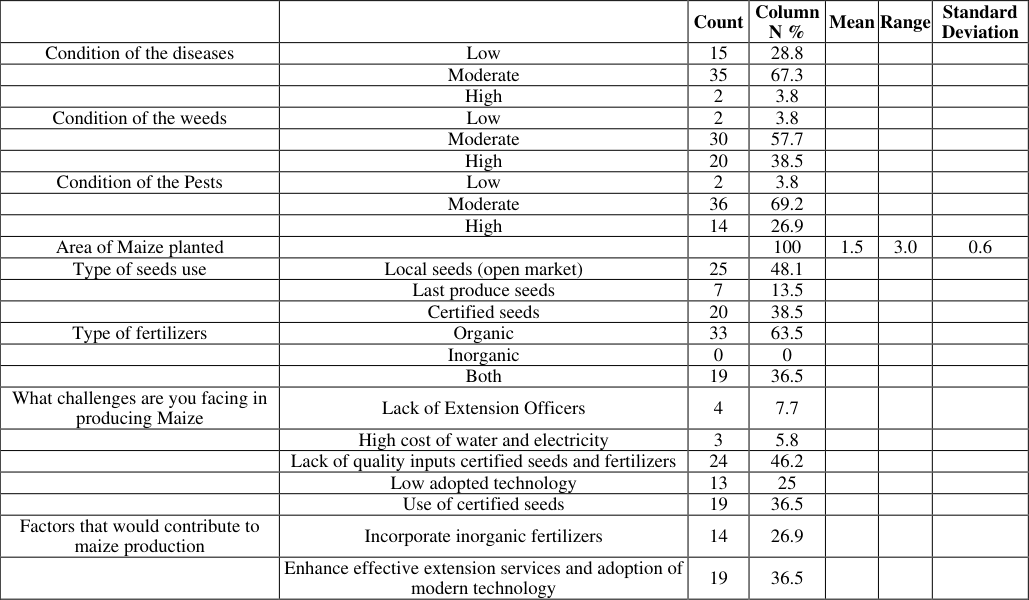 Table 2
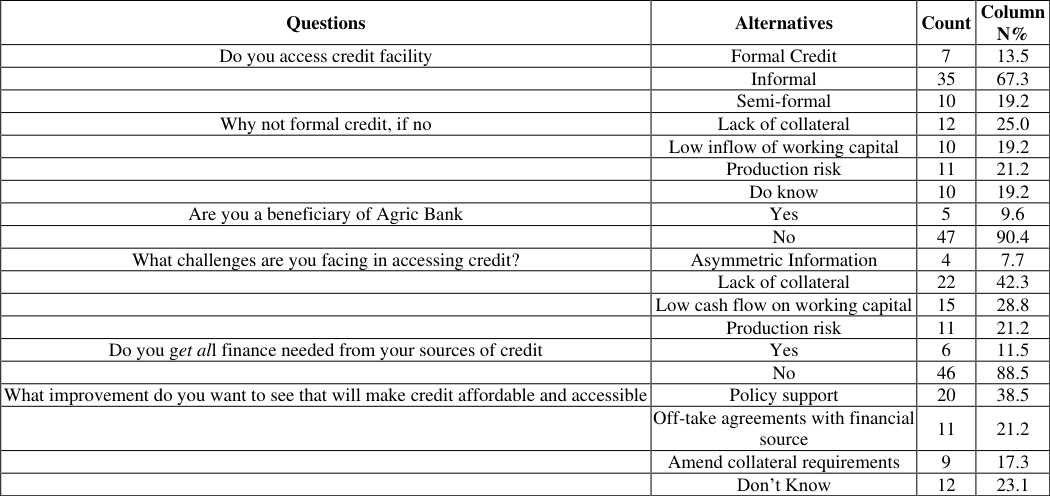 Table 3
Introduction
Maize is a crucial crop in agriculture and food security, especially in Sub-Saharan Africa (Adhikari et al., 2015) [1] . The cultivation of maize is intricately connected to the welfare of numerous African countries, with substantial ramifications for both nourishment and economic stability (Tesfaye et al., 2015) [15] . Maize agriculture has various complex obstacles that are driven by climatic change, sociodemographic factors, economic limitations, and the absence of finance facilities. Climate change, with its growingly erratic weather patterns, presents a significant peril to maize production in diverse places (Shiferaw et al., 2011) [18] . The region of Southern Africa is currently facing the challenging consequences of climate change on agricultural productivity (Thierfelder et al., 2018; Charnley et al., 2021) [19,5] . Namibia, situated in Southern Africa, serves as a prime example of how maize production is susceptible to the impacts of these climate changes. If climate adaptation measures are not swiftly adopted, projections indicate that maize yields in Namibia's Zambezi region will potentially decrease by up to 76% (Somses et al., 2020) [14] . Furthermore, Botswana and South Africa, which are neighbouring nations, have similar dry circumstances and heavily depend on large-scale commercial farming. This further worsens agricultural difficulties during drought periods (Thierfelder et al., 2018; Charnley et al., 2021) [19,5] . The vulnerability of African farmers, who depend on rainfed agriculture, highlights the urgent requirement for adaptive measures and sustainable farming methods, not only in Namibia, Botswana, and South Africa but also in various countries where maize plays a crucial role in ensuring food security (Agba et al., 2021) [2] . Creating maize cultivars that are highly adapted to regional climates, as highlighted by Keja-Kaereho and Tjizu (2019) [11] , is a crucial factor for achieving excellent crop yields in the context of climate change. Moreover, doing an in-depth examination focused on maize cultivation in Namibia's Kavango East region is essential due to its distinctive obstacles and possible remedies. This study is necessary to fill the current research void and aid in the creation of precise interventions (Cairns et al., 2021) [4] . The difficulties affecting maize production in the Kavango East region of Namibia are the result of a combination of socio-demographic issues, economic limitations, agronomic considerations, and a lack of easily obtainable finance facilities. Small-scale farmers in this region face a multitude of challenges, such as restricted availability of advanced farming technologies, financial services, agricultural inputs, insufficient training, and a lack of knowledge (Mukata & Swanepoel, 2019; Cairns et al., 2021) [13,4] . The presence of these hurdles greatly hinders the implementation of sustainable agricultural methods and technical advancements, which in turn undermines the production of maize. Furthermore, agronomic issues present significant barriers in addition to these socio-economic challenges. The soil quality in Kavango East, which is characterized by a scarcity of nutrients and a restricted ability to retain water, poses obstacles to successful production (Luchen et al., 2018) [12] . In addition, climate change exacerbates these difficulties by introducing increased fluctuations in weather www.extensionjournal.com patterns, erratic rainfall, and severe weather events that directly endanger maize harvests (Haindongo et al., 2020) [9] . Consequently, it is crucial to focus on enhancing soil fertility and developing climate resistance as essential factors for enhancing maize output in this area. To address these complex difficulties in an efficient manner, it is crucial to have collaborative initiatives that involve policymakers, research institutions, development organisations, and local communities (Mukata & Swanepoel, 2019) [13] . These collaborations can enhance the transfer of knowledge, offer financial and technical assistance, and establish favourable policies that encourage sustainable agriculture practices (Mukata & Swanepoel, 2019) [13] . Enhancing the capacity of small-scale maize growers in Kavango East to embrace sustainable practices and facilitating their access to financial facilities are crucial not just for increasing maize output but also for guaranteeing food security and bolstering resistance to climate change in the region.
Research methodology
The study was conducted in the Kavango East region of Namibia, situated in the northeastern part of the country, covering an area of 25,576 square kilometers and housing approximately 115,447 residents. This region experiences a tropical climate characterized by distinct dry and rainy seasons. The research adopted a quantitative approach through an exploratory survey, with a specific focus on small-scale maize farmers within the Kavango East region. Budget and time constraints influenced the choice of research design. To ensure a representative sample, random sampling was employed, providing equal chances for every individual in the population to be included in the study. Data collection involved face-to-face interviews using semi-structured questionnaires. The collected data underwent transcription and thematic analysis following the methods outlined by Braun and Clarke (2006) [20] , enabling the identification of significant patterns within the data. Data analysis was conducted through coding techniques, utilizing the SPSS analytical software package. Descriptive statistics were employed to summarize variables, and visual aids aided in data interpretation. Stringent ethical standards were upheld throughout the research, including obtaining informed consent from participants and ensuring their anonymity, following Flick's (2018) guidelines. To enhance the reliability and accuracy of the findings, triangulation was employed, validating data from multiple sources in accordance with Denzin's recommendations (1978). Member verification was also conducted to authenticate participant responses, following the methods advocated by Harper and Cole (2012) [21] .
The research objectives encompassed Investigating the demographic profile of maize farmers in Kavango East, including age, gender, education level, and employment status. Assessing maize production inputs and challenges, including pest and disease management, as well as seed and fertilizer utilization. Examining credit access and the associated challenges faced by farmers.
Results and Discussions Socio-Demographic characteristic of farmers
Table 1 shows the socioeconomic demographic information of farmers in Kavango East. The data for this study was collected from the 52 small scale farmers. Table 1 shows a picture of the sociodemographic traits that are present within an agricultural community is shown in the table that has been supplied. It has a gender distribution that is virtually balanced, with 40.4% females and 59.6% males, which is relatively rare given that agriculture is typically dominated by men. Bachwe (2009) asserts that the gender of the farmer plays a crucial role in identifying the underlying reasons for inefficiency among farmers. Female farmers may exhibit lower efficiency compared to male farmers due to the generally superior physical strength of male farmers. This enables males to manage agricultural tasks with more ease compared to females. The average age of the participants is 47 years old, and the standard deviation is eight years, which indicates that the cohort is of a middle-aged age, which is typical of farming populations. The unemployment rate is far higher than the employment statistics that are normally reported in rural areas where agriculture is a prominent occupation. The unemployment rate is 78.8%, which represents a considerable share of the population. When it comes to areas of residence, most people live in rural areas, which is to be expected for a study that concerns agriculture. Higher levels of education are not as prevalent in rural farming communities, as seen by the fact that just 1.9% of the population has a university degree. This reflects the tendency that higher education is less prevalent in these areas. Although there is a wide range of marital statuses among the participants, significantly more than forty-four percent of them are single. This is a departure from the typical pattern of greater marriage rates in traditional farming communities. In many cultures, extended family living arrangements are common, and the typical household size is relatively large, with eight members. This suggests that extended family living conditions are prevalent. There are many different sources of income, with a sizeable percentage of people dependent completely on farming (32.7%), while others combine farming with activities that are not related to farming or other official work. The distribution of income is such that 50% of the households make less than N$ 1000.00 per month. The result of this study is consistent with the patterns that are observed in emerging regions, where agriculture is frequently not very lucrative. When these data are compared to those of other research, it becomes abundantly evident that although there are similarities in the sociodemographic characteristics of agricultural communities, such as the distribution of ages and the number of people living in rural areas, there are also significant disparities, particularly in terms of employment rates and marital status. These variations can be attributable to a variety of variables, including differences in geography, economics, and culture, all of which have an impact on the structure and dynamics of agricultural communities (Jona, 2016) [10] . www.extensionjournal.com Maize challenges and factors that will enhance production Table 2 presents an analysis of the factors involved in maize cultivation, highlighting the difficulties encountered by non-scheme farmers. It covers environmental influences on crop yield, the selection of seeds and fertilizers, as well as obstacles and opportunities for enhancing maize production. Starting with the conditions of diseases, weeds and pests, it's evident that most farmers deal with moderate levels of these issues. Specifically, 67.3% of farmers report moderate disease conditions, 57.7% moderate weed conditions, and 69.2% moderate pest conditions. This suggests that while these issues are prevalent, they may not be at critically high levels for most farmers. When it comes to the area of maize planted, the average is 1.5 hectares, with a range of 3 hectares and a standard deviation of 0.6 hectares. This indicates a modest variability in the size of maize farms among the respondents.
| — | — | Count | Column N % | Mean | Range | Standard Deviation |
|---|---|---|---|---|---|---|
| Condition of the diseases | Low | 15 | 28.8 | |||
| Moderate | 35 | 67.3 | ||||
| High | 2 | 3.8 | ||||
| Condition of the weeds | Low | 2 | 3.8 | |||
| Moderate | 30 | 57.7 | ||||
| High | 20 | 38.5 | ||||
| Condition of the Pests | Low | 2 | 3.8 | |||
| Moderate | 36 | 69.2 | ||||
| High | 14 | 26.9 | ||||
| Area of Maize planted | 100 | 1.5 | 3.0 | 0.6 | ||
| Type of seeds use | Local seeds (open market) | 25 | 48.1 | |||
| Last produce seeds | 7 | 13.5 | ||||
| Certified seeds | 20 | 38.5 | ||||
| Type of fertilizers | Organic | 33 | 63.5 | |||
| Inorganic | 0 | 0 | ||||
| Both | 19 | 36.5 | ||||
| What challenges are you facing in producing Maize | Lack of Extension Officers | 4 | 7.7 | |||
| High cost of water and electricity | 3 | 5.8 | ||||
| Lack of quality inputs certified seeds and fertilizers | 24 | 46.2 | ||||
| Low adopted technology | 13 | 25 | ||||
| Use of certified seeds | 19 | 36.5 | ||||
| Factors that would contribute to maize production | Incorporate inorganic fertilizers | 14 | 26.9 | |||
| Enhance effective extension services and adoption of modern technology | 19 | 36.5 |
Table text extracted from the original PDF; superscript letters are shown inline. The original table image is below.
View original table image
Regarding seed types, a diverse range is used, almost half of the farmers (48.1%) use local seeds from the open market, a significant portion (38.5%) use certified seeds, and a smaller group (13.5%) relies on seeds from their last produce. This variety in seed selection could reflect differences in farmers' access to resources, preferences, or perceptions of seed quality.
In terms of fertilizer, there's a notable preference for organic over inorganic, with 63.5% of farmers using organic fertilizers. Surprisingly, none of the farmers reported using inorganic fertilizers exclusively, but 36.5% use both types. This might point to an inclination towards organic farming practices or possibly constraints and cost of associated with inorganic fertilizers. The challenges faced in maize production are diverse, with the lack of quality production inputs like certified seeds and fertilizers being the most significant, affecting nearly half of the farmers (46.2%). Other notable challenges include high incidences of insects and diseases, low adoption of technology, and a lack of extension services. These challenges highlight areas where intervention could significantly impact production efficiency and output. extend this section.
Factors that could contribute to better maize production include the use of certified seeds and the incorporation of good quality fertilizers, notably inorganic, as well as enhancing extension services and adopting modern technology. These factors are recognized by a substantial portion of farmers as key to improving maize production. Farmers confront several obstacles, with 46.2% suffering severe consequences. Optimizing pest and disease control through precision agriculture is crucial due to increasing rates of insects and diseases. Low technology adoption and a lack of extension services that give farmers the expertise and resources to enhance their practices worsen these difficulties. Research indicates that on-farm seed priming improves crop production in underdeveloped nations, highlighting the possibility for innovative agronomic solutions to address issues. These findings show where initiatives and support are needed to solve agriculture's problems.
Credit accessibility in the agricultural industry
Table 3 provides numerous significant insights into credit accessibility in the agricultural industry. Concerning the Agricultural Bank, a mere 9.6% of respondents are beneficiaries, suggesting a restricted scope or availability of its services. The primary obstacles to obtaining loans are the absence of collateral (42.3%) and insufficient cash flow (28.8%). In addition, 21.2% of individuals cited the inherent risk associated with agricultural production, while 7.7% grapple with the challenge of asymmetric information. www.extensionjournal.com
| Questions | Alternatives | Count | Column N% |
|---|---|---|---|
| Do you access credit facility | Formal Credit | 7 | 13.5 |
| Informal | 35 | 67.3 | |
| Semi-formal | 10 | 19.2 | |
| Why not formal credit, if no | Lack of collateral | 12 | 25.0 |
| Low inflow of working capital | 10 | 19.2 | |
| Production risk | 11 | 21.2 | |
| Do know | 10 | 19.2 | |
| Are you a beneficiary of Agric Bank | Yes | 5 | 9.6 |
| No | 47 | 90.4 | |
| What challenges are you facing in accessing credit? | Asymmetric Information | 4 | 7.7 |
| Lack of collateral | 22 | 42.3 | |
| Low cash flow on working capital | 15 | 28.8 | |
| Production risk | 11 | 21.2 | |
| Do you get all finance needed from your sources of credit | Yes | 6 | 11.5 |
| No | 46 | 88.5 | |
| What improvement do you want to see that will make credit affordable and accessible | Policy support | 20 | 38.5 |
| Off-take agreements with financial source | 11 | 21.2 | |
| Amend collateral requirements | 9 | 17.3 | |
| Don’t Know | 12 | 23.1 |
Table text extracted from the original PDF; superscript letters are shown inline. The original table image is below.
View original table image
The survey also reveals a disparity between the amount of credit available and the financial requirements of the participants, as 88.5% are unable to obtain all the necessary financing from their credit sources. Regarding enhancements, survey participants expressed a desire for policy assistance (38.5%), agreements with financial providers for purchasing goods or services (21.2%), and modifications to the conditions for providing collateral (17.3%), while 23.1% are uncertain. Collectively, the data emphasizes the dependence on informal loan sources in the field of agriculture, the obstacles presented by conventional financial services, and the necessity for more adaptable and inventive credit solutions, which may require state involvement.
Main findings of the study 1. Socio-Demographic Characteristics: The study revealed a population of middle-aged, well-educated male farmers who face significant unemployment levels. This demographic context is crucial for understanding the human resource capabilities and limitations within the farming community in Kavango East.
Agricultural Difficulties: Farmers in the region
confront moderate levels of crop diseases, weed, and insect issues. These challenges are compounded by diverse practices in seed and fertilizer use, indicating a need for standardized and improved agricultural practices.
Barriers to Production:
The study identified substantial barriers related to the insufficient quality of production inputs and limited integration of technology. These factors hinder the efficiency and productivity of maize farming in the region. 4. Strategies for Improvement: Key strategies to enhance maize production were identified, including the utilization of certified seeds, integration of highquality inorganic fertilizers, and strengthening of extension services and technology. These interventions are aimed at addressing the specific challenges faced by farmers and could lead to significant improvements in maize production.
Policy and Support Systems:
The findings emphasize the importance of developing customized policies and support systems tailored to the unique needs of urban non-subsidized maize producers. Such policies should aim to promote sustainable agricultural progress and enhance food security in the region.
Conclusion
The conclusion of the study on socio-demographic and agricultural challenges in maize production in Kavango East, Namibia, emphasizes that farmers in the region encounter a range of complex challenges. These challenges are primarily rooted in socio-demographic factors and agricultural obstacles. Key issues identified include a predominant reliance on traditional farming methods, a general lack of formal education among farmers, and substantial difficulties related to disease and pest management, as well as accessing quality inputs for farming. These findings highlight the need for targeted interventions and support to address these multifaceted challenges and improve maize production in the region.
Recommendations
1. Develop targeted support programs for non-farmers in Kavango East, focusing on skill development and income generation opportunities. 2. Provide farmers in the region with access to quality inputs such as certified seeds and fertilizers to improve maize production. 3. Strengthen extension services and promote the adoption of modern agricultural technologies to enhance maize production. 4. Address the challenges related to credit access by implementing policies that mitigate information asymmetry, reduce collateral requirements, and enhance cash flow for working capital. 5. Establish off-take agreements with financial institutions to facilitate credit access for farmers in rural Kavango East.
References
19 in the original paper- Adhikari U, Nejadhashemi A, Woznicki S. Climate change and eastern Africa: A review of impact on major crops. Food and Energy Security. 2015;4(2):110132.
- Agba A, Akpanudoedehe J, Ojong F, Agba M. Climate change, adaptation, and global jobs: Lessons and urgent policy options for Africa. Quantitative Economics and Management Studies. 2021;2(3):163-181.
- Cairns JE, Hellin J, Sonder K, Araus JL, MacRobert JF, Thierfelder C, et al. Adapting maize production to climate change in sub-Saharan Africa. Food Security. 2021;13(2):169-189.
- Charnley G, Kelman I, Murray K. Drought-related cholera outbreaks in Africa and the implications for climate change: A narrative review. Pathogens and Global Health. 2021;116(1):3-12.
- Dabrowski J, Masekoameng E, Ashton P. Analysis of virtual water flows associated with the trade of maize in the SADC region: Importance of scale. Hydrology and Earth System Sciences. 2009;13(10):1967-1977.
- Diko A, Wang J. Influencing factors of maize production in South Africa: The case of Mpumalanga, Free State, and North West provinces. Asian Journal of Advances in Agricultural Research. 2020:14(1):25-34.
- Fru F, Yah C, Motaung L, Sekhejane P, Njobeh P. A scoping review of mycotoxin contamination of maize and other grains in South Africa. Shiraz E-Medical Journal. 2021;22(11):01-10
- Haindongo E, Lyimo JG, Temu AE. Climate change impact on maize production in Zambezi region, Namibia. The Egyptian Journal of Remote Sensing and Space Science. 2020;23(1):75-84.
- Keja-Kaereho C, Tjizu B. Climate change and global warming in Namibia: Environmental disasters vs. human life and the economy. Management and Economics Research Journal. 2019;5(1):1.
- Luchen W, Ortmann GF, Henseler M, du Preez CC, Mbeeli TP. Adoption of bio-inoculants for sustainable maize production in Kavango East region, Namibia. Agrekon. 2018;57(1):45-67.
- Mukata A, Swanepoel F. Factors influencing smallscale farmers' access to finance in Zambia: A case study of selected maize producers in Lusaka Province. Journal of Agricultural Extension. 2019;23(3):34-49.
- Somses S, Bopape M, Ndarana T, Fridlind A, Matsui T, Phaduli E, et al. Convection parametrization and multinesting dependence of a heavy rainfall event over Namibia with Weather Research and Forecasting (WRF) model. Climate. 2020;8(10):112.
- Tesfaye K, Gbegbelegbe S, Cairns J, Prasanna B. Maize yield gains in eastern and southern Africa: II. Longterm trend and outlook for regional maize supply. Global Food Security. 2015;20:35-47.
- Thierfelder C, Matemba-Mutasa R, Rusinamhodzi L, Ngwira A, Mupangwa W. Managing crop residue for soil carbon and other ecosystem services in conservation agriculture in southern Africa. Soil and Tillage Research. 2020;198:104554.
- Tomé H, Filho W, Fudjumdjum H. Food security in Central Africa: A review of climate change impacts on maize and rice production. Sustainable Food Systems. 2021;5(3):344-358.
- Shiferaw B, Prasanna BM, Hellin J, Bänziger M. Crops that feed the world 6. Past successes and future challenges to the role played by maize in global food security. Food security. 2011 Sep;3:307-27.
- Thierfelder C, Baudron F, Setimela P, Nyagumbo I, Mupangwa W, Mhlanga B, et al. Complementary practices supporting conservation agriculture in southern Africa. A review. Agronomy for Sustainable Development. 2018 Apr;38:1-22.
- Braun V, Clarke V. Using thematic analysis in psychology. Qualitative research in psychology. 2006 Jan 1;3(2):77-101.
- Harper M, Cole P. Member checking: Can benefits be gained similar to group therapy. The qualitative report. 2012 Mar 1;17(2):510-517.