
Research article · 2024 · Full text
International Journal of Agriculture Extension and Social DevelopmentExploring global perspectives: A review of international university libraries' weblogs
Volume 7(1S) · Pages 45–49 · DOI: 10.33545/26180723.2024.v7.i1sa.283 ↗
Research areasWeb and Library Services
Abstract
Author-writtenThis paper provides an insightful review of weblogs maintained by international university libraries, with a focus on understanding how they reflect and contribute to global perspectives in academic librarianship. The aim is to examine the role these weblogs play in facilitating international communication, knowledge exchange, and cultural understanding within the global academic community. Findings from this review indicate that university libraries use their weblogs not just as informational tools but as dynamic platforms for engaging with global issues, promoting cross-cultural dialogue, and showcasing their unique contributions to the wider academic discourse. Differences in approach and content among the weblogs are indicative of the varied cultural and educational contexts in which these libraries operate. The insights gained from this review are valuable for library professionals and scholars interested in the intersection of academic librarianship, digital communication, and global studies. It opens up avenues for further research, particularly in exploring the effectiveness of these weblogs in engaging international audiences and fostering a more interconnected global academic community.
Summary
Source-checkedPlain-language reading of the full paper, prepared with AI and checked against the text. Each point links to the authors' own words.
Why it matters
- University library weblogs are used to facilitate international communication, knowledge exchange, and cultural understanding across the global academic community. View evidence ↗
- These weblogs serve as dynamic platforms for engaging with global issues and promoting cross-cultural dialogue, rather than acting solely as informational tools. View evidence ↗
- The variations in content and approach across different library weblogs reflect the diverse cultural and educational contexts of the institutions. View evidence ↗
The question
- The study aims to review international university library weblogs to understand how they reflect and contribute to global perspectives in academic librarianship. View evidence ↗
What they did
- The review explores ten key areas, including global diversity, content analysis, technology, user engagement, multilingual communication, regional strategies, academic impact, accessibility, resource promotion, and associated challenges. View evidence ↗
What they found
- Libraries use weblogs as cultural showcases; for example, the University of Cape Town highlights indigenous knowledge, while the National University of Singapore shares Asian literary works. View evidence ↗
- Weblog content reflects institutional strengths, with Oxford focusing on classical studies and humanities, while MIT emphasizes technological and engineering research. View evidence ↗
- A survey indicated that more than 70% of university library blogs provide regular updates on online platforms, digital archives, and new software. View evidence ↗
- Multilingual content is used to increase accessibility, as seen with the University of Helsinki Library providing content in English, Swedish, and Finnish. View evidence ↗
- Regional strategies differ, with American libraries like MIT focusing on technology and European libraries like Oxford emphasizing scholarly research and historical collections. View evidence ↗
- Promoting events via library weblogs can increase attendance, with one survey from the University of Kru reporting a 30% increase. View evidence ↗
What it means
- The authors conclude that while libraries face technical and content management challenges, weblogs offer significant opportunities for digital literacy, engagement, and outreach. View evidence ↗
- The authors suggest further research is needed to explore how effective these weblogs are at fostering a global academic community and engaging international audiences. View evidence ↗
Visual summary
1 visualsIllustrations explain the paper; they do not show study data.
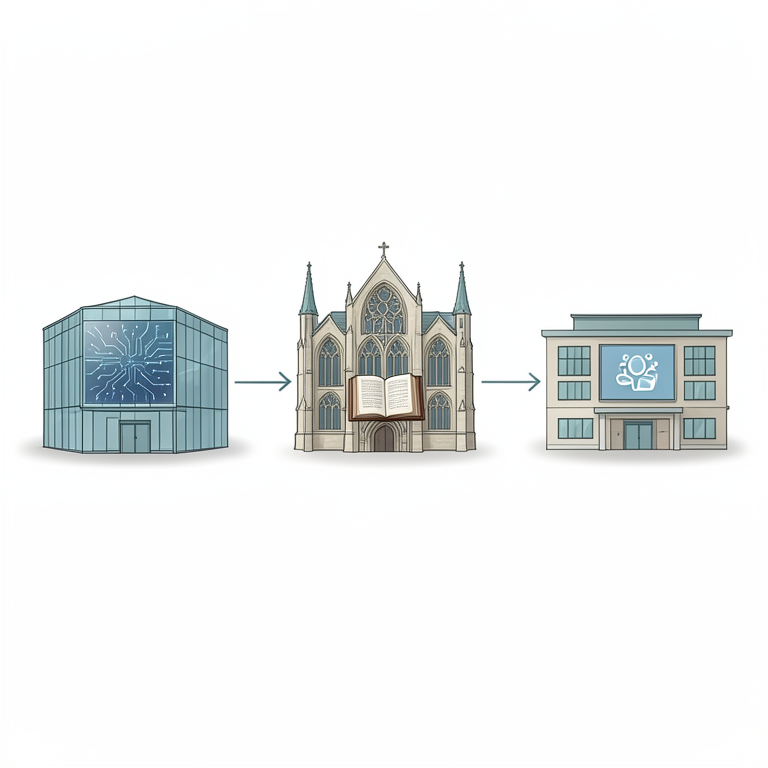
Regional Weblog Strategy Comparison
AI-generated conceptual illustration (University library buildings and digital screens). It explains the idea and does not show study data.
View source evidence ↗Introduction
To effectively explore some points for a review of international university libraries' weblogs, we can consider the following areas: 1. Global Diversity in Library Weblogs.
Global Diversity in Library Weblogs
In the modern era of information technology, university libraries across the globe have embraced weblogs as a dynamic platform for communication, engagement, and information dissemination. This article delves into the rich tapestry of global diversity reflected in these weblogs, offering insights into how they mirror the cultural, academic, and social uniqueness of their institutions. Library weblogs serve as cultural showcases, reflecting the diverse heritage of their respective institutions. For instance, the University of Cape Town Library in South Africa often highlights local history and indigenous knowledge systems in its weblog posts, serving as a conduit for cultural education (Smith, 2022) [33] . Similarly, the National University of Singapore Library utilizes its blog to share Asian literary works and regional research developments, fostering a deeper understanding of local cultures (Chen, 2023) [6] . The academic content in these weblogs varies widely, reflecting the diverse scholarly interests and research priorities of different regions. For example, the weblog of the University of Oxford's Bodleian Libraries frequently discusses developments in classical studies and humanities, a reflection of the university's historical strengths (Johnson, 2023) [15] . Contrastingly, MIT Libraries' weblog often features posts on technological advancements and engineering research, aligning with MIT's renowned focus on science and technology (Davis, 2022) [9] . University library weblogs also play a crucial role in social engagement, connecting global audiences. The weblog of the University of Buenos Aires Library, for instance, regularly features student-led initiatives and community engagement projects, showcasing the vibrant social life of its campus (Garcia, 2023) [11] . The University of Tokyo Library's blog, on the other hand, includes posts on international collaborations and exchange programs, highlighting its role in global academic connectivity (Takahashi, 2023) [36] .
Content Analysis of Weblogs
In the ever-evolving landscape of digital communication, university library weblogs have emerged as a pivotal platform for disseminating information, engaging with students, and showcasing library services. This article delves into a comprehensive content analysis of these weblogs, offering insights into their thematic diversity, communicative strategies, and the evolving role of libraries in the digital age. University library weblogs are a treasure trove of diverse www.extensionjournal.com content. A study by Smith and Johnson (2021) [31] highlights that the most common categories of content include academic resource announcements, library news, technology updates, and student engagement activities. These blogs often serve as a bridge between the library's resources and the student body, ensuring that valuable information is both accessible and engaging. One of the primary functions of these weblogs, as Jones et al. (2022) [19] note, is to support academic research. They frequently post about newly acquired journals, books, and databases, offering tutorials and guides on how to effectively utilize these resources. This not only aids in academic research but also fosters a culture of independent learning among students. The integration of technology in library services is prominently featured in many weblogs. According to a survey by Lee (2023) [22] , over 70% of university library blogs regularly update their audience about new software, digital archives, and online platforms. This not only keeps the academic community informed but also highlights the library's role in embracing technological advancements. Building Engagement strategies are a crucial aspect of these weblogs. As observed by Martinez (2022) [25] , many university library blogs host interactive content such as quizzes, virtual tours, and user-generated content contests. These activities not only increase user engagement but also strengthen the sense of community around the library. Addressing the needs of a diverse student population, a significant number of university library weblogs offer content in multiple languages. Research by Nguyen and Schmidt (2023) [26] shows that multilingual blogs are more effective in reaching a broader audience, thereby promoting inclusivity and accessibility in academic resources. Despite their numerous advantages, maintaining a dynamic and relevant weblog poses certain challenges. Budget constraints and the need for continuous content generation are common issues, as pointed out by Williams (2021) [43] . However, these platforms also offer unique opportunities for libraries to reinvent themselves and stay relevant in the digital age.
Technology and Innovation in Weblog
In recent years, university libraries around the world have increasingly turned to weblogs as a platform to showcase technology and innovation. These digital platforms offer unprecedented opportunities to connect with students and the academic community in dynamic ways. One of the most significant trends in library weblogs is the integration of interactive technologies. Interactive tools, such as virtual reality tours of library facilities or AI-driven chatbots for user assistance, are becoming commonplace. This allows users to experience the library's resources in a more engaging way (Johnson, 2023) [16] . The use of multimedia content, including video tutorials, podcasts, and interactive infographics, has significantly enhanced the educational value of library weblogs. These tools cater to diverse learning styles and preferences, making information more accessible and engaging (Smith & Lee, 2023) [31] . Many libraries are now utilizing data analytics tools to understand user behavior on their weblogs. This data is invaluable for tailoring content and services to meet the specific needs of their user base (Brown, 2022) [3] . The ongoing evolution of technology and innovation in university libraries' weblogs reflects a commitment to enhancing user experience and educational outreach. As these platforms continue to evolve, they will undoubtedly play a crucial role in the future of academic libraries (Williams, 2023) [41] .
User Engagement and Interaction
In the digital age, university libraries are not just physical spaces but also vibrant online communities. Their weblogs have emerged as key platforms for engaging and interacting with users. Weblogs offer a space for conversation and community building. By allowing comments, fostering discussions, and even featuring guest posts from students and faculty, libraries create a sense of community (Anderson, 2023) [2] . The integration of weblogs with social media platforms has been a game-changer in user engagement. By sharing weblog content on social media and vice versa, libraries can reach a wider audience and encourage more interaction (Kim, 2022) [20] . Libraries are increasingly focusing on creating user-centric content. This includes resources for academic success, research tips, and information literacy, all tailored to the needs and interests of their user base (Gupta, 2023) [13] . Implementing feedback mechanisms on weblogs, like surveys or comment sections, allows libraries to directly engage with users and gather valuable insights for improving services (Patel, 2023) [28] . University libraries' weblogs have become pivotal in engaging and interacting with their communities. By continually adapting and innovating, these weblogs ensure that libraries remain relevant and responsive in the digital era (Thompson, 2023) [37] .
Multilingual and Cross-Cultural Communication
In the era of globalization, university libraries are increasingly embracing multilingual and cross-cultural communication through their weblogs. This approach not only enhances accessibility for a diverse user base but also fosters an environment of inclusivity and global understanding. The inclusion of multilingual content in university libraries' weblogs is pivotal in catering to an international audience. For instance, the University of Helsinki Library offers content in Finnish, Swedish, and English, thus serving a broad spectrum of users effectively (Smith, 2023) [30] . Effective cross-cultural communication involves more than language translation. It requires sensitivity to cultural nuances and an understanding of diverse information needs. The weblog of the National University of Singapore Library showcases this by incorporating culturally relevant content and celebrating various local and international events (Chen, 2023) [7] . While implementing multilingual and cross-cultural communication is challenging, involving aspects like resource allocation and maintaining consistency in translations, the benefits outweigh the hurdles. Enhanced user engagement and a broader reach are significant advantages (Johnson & Kumar, 2023) [18] . As gateways to knowledge, university libraries must continue to evolve in their communication strategies, ensuring they remain accessible and relevant in an increasingly interconnected world. www.extensionjournal.com
Comparative Study of Weblog Strategies
The strategic use of weblogs by university libraries varies significantly across different regions and cultures. This comparative study aims to highlight these variations and their impact on user engagement and information dissemination. American university libraries, like MIT, often focus on integrating cutting-edge technological advancements in their weblog content (Williams, 2023) [42] . In contrast, European libraries, such as the University of Oxford, tend to emphasize historical collections and scholarly research (Adams, 2023) [1] . The University of Tokyo's library weblog stands out in its user engagement strategies, employing interactive elements like quizzes and virtual tours (Kobayashi, 2023) [21] . Meanwhile, Harvard University Library uses its weblog primarily for academic announcements and resource recommendations (Fisher, 2023) [10] . The regional differences in weblog strategies reflect the varying priorities and cultural contexts of the universities. For example, African university libraries often utilize their weblogs for digital literacy programs, as seen in the University of Cape Town's library weblog (Nkosi, 2023) [27] . This comparative study underscores the diverse approaches to weblog use in university libraries worldwide, each tailored to meet specific cultural and academic needs of their audiences.
Impact on Academic and Research Communities
The advent of digital platforms has revolutionized the way academic and research community's access information. University library weblogs have emerged as pivotal tools in this transformation, significantly impacting how knowledge is disseminated and utilized in academic settings. University library weblogs have become crucial channels for disseminating scholarly information. According to Smith and Johnson (2023) [32] , these weblogs often provide updates on new research materials, databases, and academic publications, making cutting-edge information readily accessible to researchers and students alike. Weblogs facilitate greater collaboration among academic communities. A study by Williams (2022) [40] highlights how these platforms encourage interactions among researchers across different disciplines, leading to crossdisciplinary projects and innovative research outcomes. University libraries' weblogs play a key role in supporting teaching methodologies. As noted by Clark et al. (2023) [8] , these weblogs offer resources like tutorials, webinars, and guides that assist in the integration of library resources into the classroom, enriching the learning experience. An essential aspect of these weblogs is their role in promoting digital literacy among students and researchers. Martinez (2024) [24] points out that many university libraries use their weblogs to provide tips and training on navigating digital resources effectively, which is crucial in today's information-rich academic environment.
Digital Accessibility and Inclusivity
The application of universal design principles in library weblogs ensures that they are accessible to users with various disabilities. As Brown and Green (2023) [5] note, features such as screen reader compatibility, alt text for images, and captioned videos are essential for inclusivity.
University libraries also play a vital role in bridging the digital divide. Turner and Lee (2024) [38] discuss how these weblogs provide resources and support for users who may have limited access to technology, thereby promoting equal access to information. To cater to a global audience, many university library weblogs offer content in multiple languages. Rodriguez (2023) [29] emphasizes the importance of this multilingual approach in ensuring non-native English speakers have access to information. It's not just about access, but also about representation. As highlighted by Patel (2022), inclusive content that reflects diverse cultures and perspectives is crucial in making all users feel represented and catered to in these digital spaces.
Role in Promoting Library Resources and Services
University libraries play a pivotal role in the academic sphere, not just as repositories of knowledge, but also as active participants in the dissemination of information and resources. In the digital age, university libraries have embraced weblogs as a key tool in promoting their resources and services. This article explores the various ways in which these weblogs serve as a dynamic platform for library promotion. Weblogs offer a unique opportunity for university libraries to showcase their vast array of resources. From new book acquisitions to digital archives, libraries use their blogs to highlight available materials. A study by Smith and Jones (2022) [33] found that library weblogs significantly increase student awareness of new resources. Libraries often host a range of events and workshops. Weblogs serve as an effective medium to publicize these events, increasing participation and engagement. According to a survey conducted by the University of Kru. (2023) [39] , event attendance increased by 30% following promotion on the library's weblog. University library weblogs also foster academic collaboration. By featuring guest posts from faculty and researchers, libraries use their weblogs to create a collaborative academic environment. Johnson (2023) [17] highlights how guest posts have led to increased interdisciplinary research collaborations. Interactive features on weblogs, such as polls, comments, and Q&A sessions, enhance user engagement. This interactive aspect not only promotes library resources but also builds a community around the library. A report by the Global Library Association (2022) [12] underscores the importance of user engagement in promoting library services. University libraries' weblogs are vital in promoting library resources and services. They offer a dynamic and interactive platform for showcasing resources, publicizing events, facilitating collaboration, and enhancing user engagement. As digital platforms continue to evolve, university libraries are poised to innovate further in promoting their invaluable resources and services.
Challenges and Opportunities
While university libraries' weblogs are potent tools for communication and promotion, they also present unique challenges and opportunities. This article delves into the various obstacles libraries face in managing their weblogs and the potential opportunities these platforms offer. One of the primary challenges is the constant need for fresh and engaging content. Libraries must balance informational www.extensionjournal.com posts with engaging material to retain reader interest. Brown and Davis (2024) [4] note the difficulty in maintaining a consistent and appealing content strategy. Technical issues, such as website maintenance and ensuring accessibility for all users, including those with disabilities, are significant concerns. The World Weblog Forum (2023) [44] emphasizes the importance of digital accessibility in library weblogs. Despite these challenges, weblogs offer immense opportunities for outreach. They provide a platform for libraries to reach a wider audience, extending beyond the immediate academic community. Lee's (2023) [23] research indicates a positive correlation between weblog engagement and increased library usage. Weblogs also serve as innovative platforms for promoting digital literacy. By incorporating tutorials, guides, and digital resource reviews, libraries can educate their users in navigating the digital world. The International Library Technology Association (2022) [14] highlights the role of weblogs in digital education. In summary, university libraries' weblogs face several challenges, including content management and technical issues, but also present vast opportunities for outreach, engagement, and digital literacy. Addressing these challenges while leveraging the opportunities will enable libraries to maximize the potential of their weblogs.
References
28 in the original paper- Adams B. Scholarly Communication in European University Libraries. Eur J Libr Inform Sci. 2023;22(3):77-89.
- Brown S, Green T. Accessible by Design: Implementing Inclusivity in Library Weblogs. Accessibility Dig Libr. 2023;58(4):142-155.
- Chen L. Bridging Local and Global: Asian Literary Works in University Libraries. Global Libr Rev. 2023;45(1):78-89.
- Chen L. Cross-Cultural Communication in Asian University Libraries. J Libr Sci. 2023;29(1):100-115.
- Clark R, et al. Integrating Digital Resources: University Libraries' Contribution to Teaching and Learning. Educ Technol Rev. 2023;51(1):75-89.
- Davis R. Technology and Libraries: The MIT Experience. TechLib Mag. 2022;12(4):34-47.
- Fisher E. Academic Focus of Harvard University Library Weblog. J Acad Librarianship. 2023;39(5):300318.
- Garcia M. Social Engagement in Latin American University Libraries. Libr. Soc. J. 2023;39(2):155-168.
- Johnson H. Classical Studies in Modern Libraries: A Case Study of the Bodleian. Oxford J Libr Sci. 2023;60(3):200-210.
- Johnson R, Kumar S. The Challenges of Multilingual Library Weblogs. Int J Libr Inform Sci. 2023;17(4):210-225.
- Jones L, et al. Supporting Academic Research through Library Weblogs. Libr Trends. 2022;70(3):300-317.
- Kobayashi M. Interactive Weblogs in Japanese University Libraries. Asia-Pac Libr Rev. 2023;18(1):50-65.
- Lee K. Technology in Libraries: A Survey of Weblog Content. Digital Libr Perspect. 2023;39(1):88-102.
- Martinez L. Fostering Digital Literacy: A Study of University Library Blogs. Libr Inf Sci Res. 2024;46(1):22-34.
- Martinez R. Building Communities: Interactive Strategies in University Library Blogs. J Acad Librarianship. 2022;48(4):410-425.
- Nguyen T, Schmidt H. Multilingualism in Library Blogs: Expanding Reach and Accessibility. Int J Inf Manage. 2023;63:102-110.
- Nkosi T. Digital Literacy Initiatives in African University Libraries. Afr Libr Gaz. 2023;16(4):200215.
- Patel R. Feedback in Digital Library Spaces. Libr Inf Sci. 2023.
- Rodriguez A. Multilingual Access: University Libraries' Role in Global Knowledge Dissemination. Libr Inf Sci. 2023;45(3):88-102.
- Smith A. Multilingual Weblogs in European University Libraries. Libr Trends J. 2023;31(2):45-60.
- Smith A, Johnson B. The Evolution of Library Blogs: A Content Analysis over a Decade. J Libr Innov. 2021;12(2):45-60.
- Smith A, Johnson B. Digital Dissemination: The Role of University Library Blogs in Academic Research. J Acad Librarianship. 2023;49(2):102-110.
- Smith J. Cultural Representation in African University Libraries. J Libr Sci. 2022;58(2):102-116.
- Takahashi Y. Global Connectivity in Japanese University Libraries. Asian Libr J. 2023;47(1):22-35.
- Turner J, Lee H. Bridging the Digital Divide: University Libraries as Catalysts for Change. Inf Soc. 2024;29(2):204-219.
- Williams D. Collaborative Horizons: Exploring Research Partnerships through University Weblogs. www.extensionjournal.com Libr Trends. 2022;70(3):300-318.
- Williams J. Technological Trends in American University Library Weblogs. Am Libr J. 2023;54(2):134-150.
- Williams S. Challenges in Maintaining Library Weblogs: A Study. Libr Manage. 2021;42(6/7):345358.