
Research article · 2024 · Full text
International Journal of Veterinary Sciences and Animal HusbandryIdentification of microbiome in genital tract of geriatric Kintamani bitch
Volume 9(1S) · Pages 469–472 · DOI: 10.22271/veterinary.2024.v9.i1sg.1045 ↗
Research areasGut microbiota and health
Abstract
Author-writtenAging in Kintamani dogs affects their normal physiology, making it easier for disorders to occur in various organs. This study aims to identify the microbiota in the genital tract of geriatric Kintamani dogs. A total of 20 geriatric Kintamani dogs with no history of reproductive disorders were evaluated clinically and vaginal swab samples were taken. The clinical examination results did not show any significant changes in the physical integumentary system of geriatric Kintamani dogs. Examination of the tooth structure revealed wear on the incisors and canines, calculus in premolars and molars, and an incomplete number of permanent teeth. Vaginal cytology results showed that the sample dog was in the proestrus and diestrus phases. The isolated microbiota included Bacillus sp., Escherichia coli, Staphylococcus sp., and Proteus sp. and fungal Aspergillus sp. is a normal flora in the genital tract of dogs. Geriatric age in Kintamani dogs does not affect the abnormal microbiome in the genital tract.
Summary
Source-checkedPlain-language reading of the full paper, prepared with AI and checked against the text. Each point links to the authors' own words.
Why it matters
- Inflammatory diseases of the reproductive tract are common in female dogs and can lead to serious health issues. View evidence ↗
- Age is considered a primary factor that can significantly alter the diversity of microbes in an organism. View evidence ↗
- The Kintamani dog is an ancient local mountain breed from the Kintamani area. View evidence ↗
The question
- The study aimed to identify the microbiota present in the genital tract of geriatric Kintamani dogs. View evidence ↗
What they did
- The study included 20 female Kintamani dogs aged at least eight years with no history of reproductive disorders and normal clinical status. View evidence ↗
- Vaginal swabs were collected using sterile cotton buds from a location approximately 5 cm from the vulva. View evidence ↗
- Bacterial identification was performed using Gram staining after planting specimens on blood agar media. View evidence ↗
- Fungal identification was conducted by planting specimens on Sabouraud dextrose agar media. View evidence ↗
What they found
- Vaginal cytology revealed that 11 dogs were in the pro-estrus phase and 9 were in the diestrus phase. View evidence ↗
- Aspergillus sp. was identified in 4 out of 20 samples (20%). View evidence ↗
- Clinical examination showed wear on the incisors and canines and an incomplete number of permanent incisors in the sample dogs. View evidence ↗
- The hair of the geriatric dogs appeared more brownish yellow compared to dogs of productive age. View evidence ↗
What it means
- The authors concluded that the microbiome isolated from the vulvovaginal tract of geriatric Kintamani dogs is normal. View evidence ↗
- The authors state that geriatric age in Kintamani dogs does not lead to an abnormal microbiome in the genital tract. View evidence ↗
Visual summary
1 visualsIllustrations explain the paper; they do not show study data.
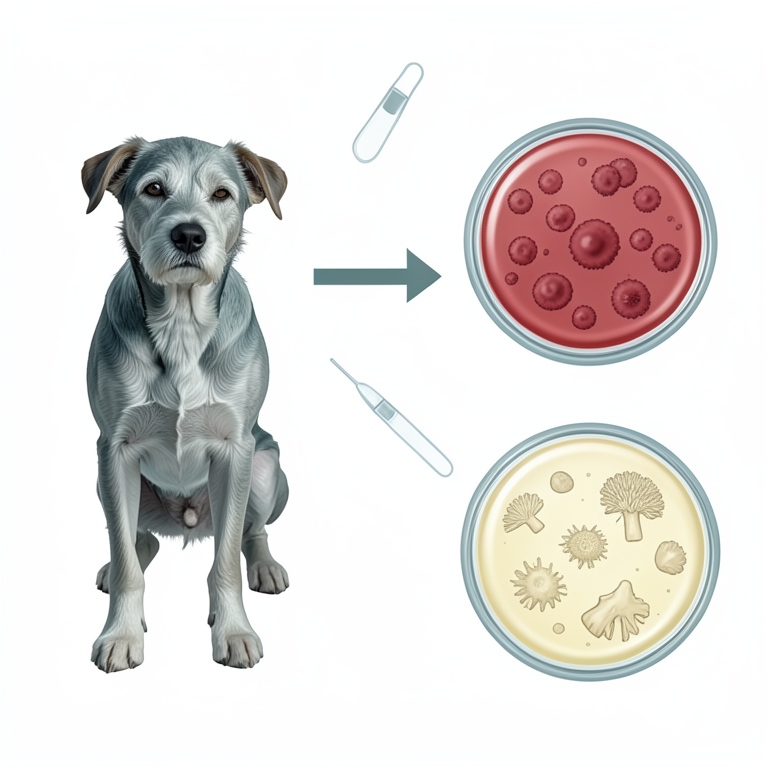
Microbiome Identification Process
AI-generated conceptual illustration (geriatric Kintamani dog). It explains the idea and does not show study data.
View source evidence ↗Figures & tables
From the original paper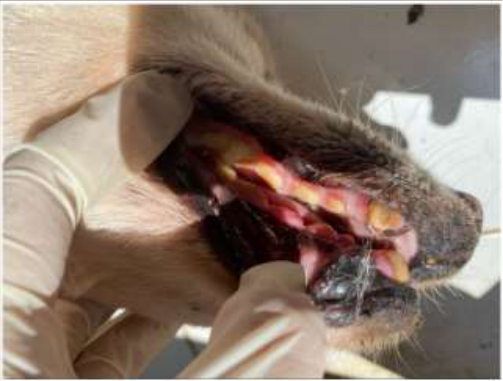 Figure 1
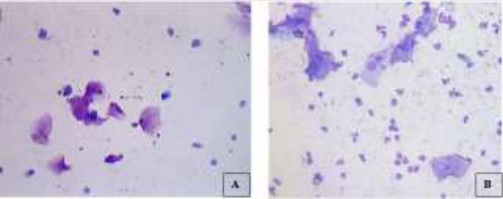 Figure 2
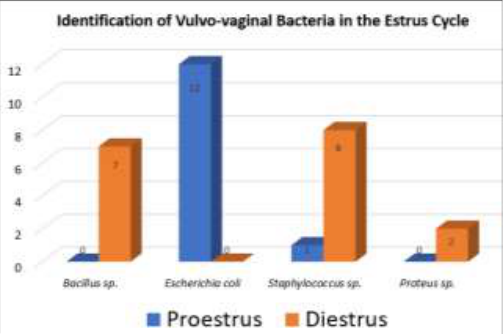 Figure 3
Introduction
Inflammatory diseases of the reproductive tract in bitch are a common problem in veterinary practice. This inflammation can cause serious health problems in dogs. This inflammation is most commonly caused by bacteria. The total number of bacteria was almost the same in healthy and infected dogs and between cycle stages (Golińska et al., 2021) [8] . The endometrium and vagina are places rich in microbes. The number of microbes in the vagina will follow the reproductive cycle (Lyman et al., 2019) [15] . More than 400 dog breeds show greater intraspecific phenotypic diversity than any other mammal. Genetic modification over time results in unique phenotypic diversity that influences the shape of the dog's body and head, lifespan, and intelligence. In addition, some forms of racial characteristics that have a genetic basis can also contribute to health and welfare problems (Farrell et al., 2015) [6] . Since dogs are a part of many people's lives, the development of research related to health and length of life has become a widely researched topic (You et al., 2021) [34] . The Kintamani dog is a local mountain dog that lives around the Kintamani area and is categorized as an ancient dog (Puja et al., 2018) [25] . This dog is also known as the Gembrong dog because it has long, thick fur. In 2019, the Balinese Kintamani dog was recognized as a world dog breed (Sawitri et al, 2021) [28] . Nowadays, there is a rapid increase in the business of keeping Kintamani dogs because they are easy to train as houseguards and have good reproduction (Gunawan et al., 2012; Utomo et al., 2023) [5,32] . The increasing demand for Kintamani dogs has caused the people of Sukawana Village to breed Kintamani dogs independently with a relatively traditional rearing pattern (Maheswari et al., 2023) [17] . Age is one of the main factors that causes significant changes in microbial diversity (Bosco & Noti, 2021) [2] . As the dog develops, it will age. Dog age can be classified into three (3) groups, namely young dogs (dogs aged 0 to 2 years), adult dogs (dogs aged 2 to 6 years), and senior dogs (dogs aged six years and over) (Mazurek et al. al., 2022) [19] . Geriatric age is the most crucial stage and requires special attention from the owner (Lee et al., 2020) [13] .
Aging in animals occurs when the animal has reached physical and sexual maturity. Although not a disease, aging in dogs will cause an increased susceptibility to disease and death. Disorders in geriatric animals impact their welfare and cause a loss of the ability to maintain the body's normal physiology (LoGiudice and Star, 2018; McKenzie et al., 2022) [14,20] . There is no available information regarding the microflora in the vaginal canal of Kintamani Bali dogs, whether it is related to the reproductive cycle or related to age differences. This research aimed to determine the microflora in the vagina of healthy old Kintamani dogs. This research will contribute to understanding the possibility of health care for older Kintamani dogs for their well-being.
Materials and Methods
Materials and Methods
Ethical Approval
This study was approved by Animal Ethic Committee Faculty of Veterinary Medicine Udayana University with approval number: B/272/UN14.2.9/PT.01.04/2023
Samples
This experimental study used 20 Kintamani bitch with no history of reproductive disorders, aged at least eight years, with normal clinical status confirmed by anamnesis and clinical examination results.
Tools and materials
The materials used in this research were physiological NaCl solution, blood agar media, Sabouraud dextrose agar media, and diff-quick solution. The equipment used in this research was a sterile cotton bud size S, object glass, cover glass, petri dish and speculum.
Clinical Examination
Clinical examinations were carried out to examine the arrangement of the teeth and the condition of the hair as indicators for determining the age of the sample dogs, as well as examination of the genital organs. A thorough inspection of the tooth structure is carried out to evaluate the wear and eruption of the incisors, canines, premolars and molars. Examination of hair condition includes evaluating hair color and strength and the presence of secondary lesions on the skin. Examination of the genital organs is carried out by inspection and palpation. Observations include mucosal color, slipperiness, and wetness of the vulva and vagina.
Cytology Examination
Vaginal swab samples were collected at a location approximately 5 cm from the vulva using a sterile cotton bud. The swab results are smeared on the object glass. The smear preparations were stained using the diff-quick method and continued with microscopic examination.
Bacterial Examination
The collected specimens were planted on blood agar media. Bacterial identification was carried out using Gram staining.
Fungal Examination
Specimen planting was carried out on Sabouraud dextrose agar media using sticks. The observed fungal colonies are then isolated and identified.
Data analysis
Clinical examination, vaginal cytology, bacterial and fungal data were tabulated and analyzed descriptively.
Results and Discussion
Geriatric age is a crucial life stage in animals because it can cause the loss of the ability to maintain the body's normal physiological state. In this study, the Kintamani dogs were over eight years old. The result shows that the Kintamani dogs used as samples belong to the geriatric category. In general, the results of observations showed that the dogs used as samples showed a normal condition. Early recognition of disorders and diseases can help improve the quality of life of animals (Metzger and Rebar, 2012) [21] . McKanzie et al. (2022) [20] state that the diagnosis of geriatric syndrome in dogs is determined by conducting a clinical assessment that combines observations of the animal's physical function, behavior, metabolic health and quality of life. The results of the clinical examination of the genital organs showed that the Kintamani dog samples that had been examined had normal genital organs with results including a reddish pink color of the vulva-vaginal mucosa, the surface of the vulva-vaginal walls was flat without any additional masses with an evenly warm temperature, the surface The vulva-vagina is smooth without any abnormal discharge being observed, and the examiner's fingers can observe the condition of the vulva-vagina easily without any difficulty when penetrating the vagina. Widodo et al. (2011) [33] stated that a healthy vulva and vagina show pink rose-colored mucosa, wet, with a smooth, shiny surface and evenly warm temperature. Examination of the tooth structure revealed wear on the incisors and canines on both the maxilla and mandible. An incomplete number of permanent teeth was observed in both maxillary and mandibular incisors. Khazaeel et al. (2021) [11] stated that the wear of the incisor and canine teeth is the most practical parameter for determining a dog's age estimate. Edentulousness of the incisor teeth was observed in several dogs, resulting in a change in the number of permanent teeth the sample dogs had. Dogs of reproductive age have 42 permanent teeth (Freeman and Lemen, 2007) [7] . In addition, the presence of calculus was observed in the sample dogs' incisor, premolar, and molar teeth. Other clinical observations related to Kintamani dogs include appearance (posture), changes in hair color, and changes in the senses of sight and hearing, which were also observed during clinical examination. The results of examinations on a sample of Kintamani dogs showed a decline in appearance, which was characterized by a standing posture that was not as straight as that of Kintamani dogs of productive age. This is in accordance with LoGiudice and Star's (2018) [14] statement that increasing age in animals is related to changes in physiological and musculoskeletal conditions. However, there were no incontinence or neuromuscular problems in geriatric Kintamani dogs. Observations of the hair quality showed no significant change in the strength of the sample dog's hair, which was indicated by the amount of hair that fell out only a little when manual plucking was carried out. However, a change in hair color was observed, where the hair color of the sample dogs became more brownish yellow compared to Kintamani dogs of productive age. In some dogs, the samples showed dull hair, with the surface being smooth (not dry). This is because primary hair dominates more than secondary hair, where the proportion of primary hair is directly proportional to the increase in the dog's age. Hair dullness is caused by a decrease in the quantity of sebum (Cohen, 2017) [3] . This is in accordance with the statement of Pati et al. (2015) [23] , who stated that geriatric dogs show changes in external body parameters that can be observed in the hair, including changes in hair color and a dull appearance. The responses to the senses of sight and hearing were still normal, as indicated by good responses in the sample dogs when maneuvered during field observations. However, a decrease in elasticity in the sample dogs' upper and lower eyelids was observed. The results of vaginal swab cytology showed that an average of 11 Kintamani dogs were in the pro-estrus phase and 9 in the diestrus phase, which was characterized by the presence of intermediate, parabasal, superficial and neutrophil cells on microscopic examination (Figure 2). Ajadi et al. (2019) [1] stated that the cell types found in vaginal cytology results change during the estrous cycle due to changes in steroid hormone levels. In the pro-estrus phase, superficial cells were found to be dominant, while intermediate cells were found to be dominant in the diestrus phase. In the pro-estrous phase, cornification of stratified epithelial cells occurs and allows erythrocytes to be observed in cytology results (Ajadi et al., 2019) [1] . Neutrophils can be observed in vaginal cytology results during the proestrus phase but are not found in the estrus phase because the keratinized epithelial cells are impermeable (Groppetti, 2017; Singh et al., 2019) [9,31] . Sharma and Sharma (2016) [29] stated that neutrophils are the dominant cells found in the diestrus phase and can also be observed in small numbers in the pro-estrus and anestrus phases. (2/20) (Figure 3). This contradicts Maksimovic et al.'s (2016) [18] statement that the most dominant bacteria found was Streptococcus sp. in pure culture. Microorganisms found in the inferior urogenital system are Staphylococcus spp., streptococcus spp., Escherichia coli, Proteus spp., pseudomonas aeruginosa, Pasteurella (Sant' Anna et al., 2012) [27] , and Klebsiella (Hutchins et al., 2014) [10] . The bacteria cultured on the vaginal swabs of geriatric Kintamani dogs are normal microflora which is also found in dogs without disorders of the genital system. Escherichia coli bacteria were found in isolation in the proestrus phase. This is in accordance with the statement of Maksimovic et al. (2016) [18] , who stated that bacteria were more often isolated in pure cultures during the proestrus phase, while mixed bacterial cultures were found during the estrus and diestrus phases. This confirms that the isolation of bacterial culture from the vaginal swab of geriatric Kintamani dogs does not necessarily indicate the presence of infection in the genital tract. Fungal culture results showed positive findings for Aspergillus sp. in 4 of 20 samples (20%). Aspergillus is a saprophytic fungal often found in the environment, with soil being the primary habitat for this type of fungal (Nji et al., 2023) [22] . This fungal species is found in many organic materials and often acts as a secondary opportunistic pathogen (Siemieniuch et al., 2009) [30] . The finding of Aspergillus in 4 dogs was probably due to the place where they were kept in the wild in a yard with mounds of earth. Besides that, Renschler (2017) [26] stated that Aspergillus sp. can be isolated from animal urine. The vulvovaginal tract is directly involved as an organ of urine excretion, part of the urogenital system. Therefore, the fungal findings of Aspergillus sp. on vaginal swab culture can be called normal findings.
Conclusion
The microbiome findings isolated from the vulvovaginal tract of geriatric Kintamani dogs are normal. This is supported by the results of clinical examinations on all sample dogs, which did not show any abnormalities during inspection or palpation, as well as no confirmed history of genital disorders from the dog owners. Geriatric age in Kintamani dogs does not affect the abnormal microbiome in the genital tract.
Acknowledgments
The author would like to thank the Institute for Research and Community Service and the Faculty of Veterinary Medicine Udayana University for research funding grant no:
Figures and tables from the paper
References
28 in the original paper- Bosco N, Noti M. The aging gut microbiome and its impact on host immunity. Genes & Immunity. 2021;22(56):289-303.
- Erdoğan G. The gynecological controls in the elderly female dogs. Journal of the Hellenic Veterinary Medical Society. 2022;73(1):3583-3588.
- Gunawan IWNF, Sukada IM, Puja IK. Perilaku bermasalah pada anjing kintamani. Buletin Veteriner Udayana. 2012;4(2):95-100.
- Farrell LL, Schoenebeck JJ, Wiener P, Clements DN, Summers KM. The challenges of pedigree dog health: approaches to combating inherited disease. Canine genetics and epidemiology. 2015;2(1):1-14.
- Freeman PW, Lemen C. An experimental approach to modeling the strength of canine teeth. Journal of Zoology. 2007;271(2):162-169.
- Golińska E, Sowińska N, Tomusiak-Plebanek A, Szydło M, Witka N, Lenarczyk J, et al. The vaginal microflora changes in various stages of the estrous cycle of healthy female dogs and the ones with genital tract infections. BMC Veterinary Research. 2021;17:1-8.
- Groppetti D, Pecile A, Barbero C, Martino PA. Vaginal bacterial flora and cytology in proestrous bitches: Role on fertility. Theriogenology. 2012;77(8):1549-1556.
- Hutchins RG, Vaden SL, Jacob ME, Harris TL, Bowles KD, Wood MW, et al. Vaginal microbiome of spayed dogs with or without recurrent urinary tract infections. Journal of Veterinary Internal Medicine. 2014;28(2):300304.
- Khazaeel K, Mohandespour F, Mosallanejad B, Pourmahdi Borujeni M. Evaluation of age-related changes in dentition of terrier dogs. Iranian Veterinary Journal. 2021;17(1):46-58.
- Kusumawati N, Widyastuti SK, Utama IH. Karakteristik Karang Gigi pada Anjing di Denpasar Bali. Indonesia Medicus Veterinus. 2014;3(3):223-229.
- LoGiudice RJ, Starr L. Rehabilitation for Geriatric Patients. In: Canine Sports Medicine and Rehabilitation. 2018:454-478.
- Lyman CC, Holyoak GR, Meinkoth K, Wieneke X, Chillemi KA, DeSilva U. Canine endometrial and vaginal microbiomes reveal distinct and complex ecosystems. PLoS One. 2019;14(1):e0210157.
- Lynch SA, Helbig KJ. The complex diseases of Staphylococcus pseudintermedius in canines: where to next? Veterinary Sciences. 2021;8(1):11.
- Maheswari LGW, Dwinata IM, Oka IBM. Prevalensi Infeksi Koksidia pada Anjing Kintamani Bali. Buletin Veteriner Udayana. 2023;15(2):312-319.
- Maksimovic A, Maksimovic Z, Filipovic S, Besirovic H, Rifatbegovic M. Vaginal and uterine bacteria of healthy bitches during different stages of their reproductive cycle. Vet Rec. 2016;171(15):375.
- Mazurek S, Wielgosz M, Caputa J, Frączek R, Karwatowski M, Grzeszczyk J, et al. Canine age classification using Deep Learning as a step toward preventive medicine in animals. In: 2022 17th Conference on Computer Science and Intelligence Systems (FedCSIS). IEEE; c2022. p. 169-172.
- Metzger FL, Rebar AH. Clinical pathology interpretation in geriatric veterinary patients. Veterinary Clinics: Small Animal Practice. 2012;42(4):615-629.
- Nji QN, Babalola OO, Mwanza M. Soil Aspergillus Species, Pathogenicity and Control Perspectives. Journal of Fungi. 2023;9(7):766.
- Pati S, Panda SK, Acharya AP, Senapati S, Behera M, Behera SS. Evaluation of geriatric changes in dogs. Veterinary World. 2015;8(3):273.
- Puja IK, Irion DN, Schaffer AL, Pedersen NC. The Kintamani dog: Genetic profile of an emerging breed from Bali, Indonesia. Journal of Heredity. 2005;96(7):854-859.
- Puja IK, Sawitri NM, Maharani N, Gunawan IWNF, Heryani LGS. A comparative study on the effects of coconut water-based extenders on the quality of kintamani dog semen preserved at 4OC. Adv Anim Vet Sci. 2018;6(5):192-196.
- Sant'Anna MC, Fabretti AK, Martins MIM. Clinical approach to canine vaginitis. Semina: Ciências Agrárias. 2012;33(4):1543-1553.
- Sawitri NM, Gunawan IWNF, Puja IK. Birth weight, neonatal mortality and transition period in Kintamani puppy dog development. International Journal of Veterinary Science. 2021;10(1):43-46.
- Sharma M, Sharma N. Vaginal cytology: an historical perspective on its diagnostic use. Adv. Anim. Vet. Sci. 2016;4(6):283-288.
- Siemeniuch MJ, Skarzynski DJ, Kozdrowski R. Aspergillosis of a dog genital tract-Case report. Animal reproduction science. 2009;112(1-2):164-171.
- Gyan S, Ravi D, Sadeep K, Sonu K, Chandolia RK. Gynaecological problems in she dogs. Haryana Vet. 2019;58:8-15.
- Utomo BGR, Puja IK, Gunawan IWNF. International Journal of Veterinary Science. 2023;12(3):242-247.
- You I, Kim MJ. Comparison of gut microbiome of 96 healthy dogs by individual traits: Breed, age, and body condition score. Animals. 2021;11(8):2432.
Cited by 1
From OpenAlex, OpenCitations and reference lists read by Scinovex
- Macroscopic Features of the Intugementary System of Geriatric Kintamani Dogs ↗
Ni Putu Anggita Indrayani, I Nengah Wandia, I Wayan Nico Fajar Gunawan, Putu Devi Jayanti · Media Kedokteran Hewan · 2025
Observing the health of Kintamani dogs, especially at geriatric age, is important as an effort to preserve their lives. Observations of the integumentary system can provide information related to clinical animal health. This study aims to determine the integumentary condition of Kintamani dogs macroscopically at geriatric age. This study used 5 Kintamani dogs of geriatric age with a healthy clinical…
❝ 0PDF