
Research article · 2024 · Full text
International Journal of Advanced Biochemistry ResearchComposting with additives to improve organic amendments: A review
Volume 8(1) · Pages 438–442 · DOI: 10.33545/26174693.2024.v8.i1f.494 ↗
Research areasComposting and Vermicomposting Techniques
Abstract
Author-writtenBackground: Composting is a sustainable process to transform organic wastes into organic amendments, valuable as potting media or soil conditioner. Its immense benefits in organic farming have been acknowledged worldwide; but still it is not free of certain challenges. The main negative aspects of composting are emission of greenhouse gases and odorous molecules and the final product might contain toxic compounds, etc. Methods: The different stages of composting are mainly initial phase, thermophilic stage and maturity/mesophilic stage. The initial stage last for 1-3 days during which simple organic sugars are mineralised by various microbes to form NH4, heat, CO2 etc. within a temperature range of 22-45 °C. During the thermophilic stage, the temperature reaches maximum (45-70 °C). This rice in temperature accelerates the breakdown of complex compounds like proteins, cellulose, hemicellulose, lignin, pectin etc. Lastly, during the mesophilic stage, the temperature slowly decreases due to reduced microbial activity, resulting from reduced availability of degradable matter. Conclusion: It can be seen that different additives respond differently when added to composts. Higher dose of Biochar additives can increase pH of sewage sludge & facilitate better composting. Also, it can reduce green-house gases (GHG) emissions & consequently reduce N loss. Fly ash amended with additives like press mud and cow dung in 1:1:1 ratio has best effect on reproduction of E. eugeniae for vermicompost production. Additives like Zeolite can lower the bioavailability of heavy metals (Cu & Zn) by nutrient immobilization. Cellulose Decomposing bacteria can enhance storage quality, colour & reduce odor of finished compost. Poultry Manure & Vermicompost increases Soil Organic C & Aggregate Stability, Porosity to improve degraded Soil. Maize straw & Willow Biochar improves physical properties of Sandy Soil.Application of enriched bio-compost with reduced rates of inorganic N and P fertilisers increases bioavailability of soil nutrients (N, P and K). Also, it improves Soil Organic C & Soil Quality index. Acidified sawdust along with phosphate solubilizing rhizobacteria can improve C dynamics, root parameters & enhance grain yield, grain & root P in maize grown Soil.
Summary
Source-checkedPlain-language reading of the full paper, prepared with AI and checked against the text. Each point links to the authors' own words.
Why it matters
- Composting is a sustainable method used to convert organic waste into soil conditioners or potting media. View evidence ↗
- Despite its benefits, composting faces challenges such as the emission of odorous molecules, greenhouse gases, and the potential presence of toxic compounds in the final product. View evidence ↗
- The composting process is often characterized as being labor-intensive and time-consuming. View evidence ↗
The question
- The review examines the use of additives as a potential solution to composting challenges and a means to improve the overall process. View evidence ↗
What they did
- The composting process typically progresses through three main stages: the initial phase, the thermophilic stage, and the maturity/mesophilic stage. View evidence ↗
- Additives used in composting include mineral nutrients, microorganisms, enzymes, pH-balancing compounds, and readily available carbon sources to enhance microbial activity. View evidence ↗
What they found
- The addition of jaggery (JAG) as an additive led to the highest temperature rise during composting, reaching 53 °C. View evidence ↗
- By the 69th day, a 1:1:1 mixture of fly ash, press-mud, and cow dung showed the best effect on E. Eugeniae reproduction, while fly ash alone caused 100% mortality. View evidence ↗
- On the 56th day, the use of 30% zeolite resulted in the lowest bioavailability of heavy metals, specifically copper (Cu) and zinc (Zn). View evidence ↗
- In maize, the combination of phosphate solubilizing rhizobacteria (PSR) and acidified sawdust (APC) increased root length by 30%, root fresh weight by 27%, root dry weight by 26%, and lateral root number by 21%. View evidence ↗
- The interaction of PSR and APC increased grain yield by 16%, shoot phosphorus (P) content by 17%, and grain P content by 10%. View evidence ↗
- Soils amended with organic materials showed consistently higher total porosity compared to unamended control soils. View evidence ↗
What it means
- The authors conclude that additives can improve the quality of compost as an organic amendment by mitigating common composting problems. View evidence ↗
- The authors recommend against using lime during composting because it causes a rapid pH increase that disrupts the microbial community and the overall process. View evidence ↗
- The authors state that a full economic analysis of composting projects using additives is still required. View evidence ↗
Visual summary
1 visualsIllustrations explain the paper; they do not show study data.
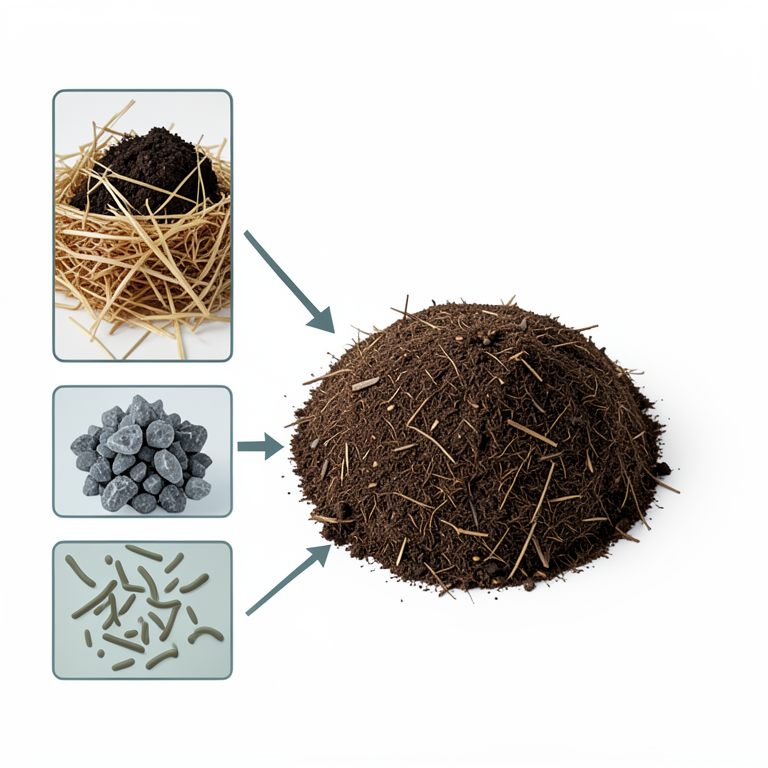
Types of Composting Additives
AI-generated conceptual illustration (compost pile with organic, inorganic, and biological additives). It explains the idea and does not show study data.
View source evidence ↗Figures & tables
From the original paper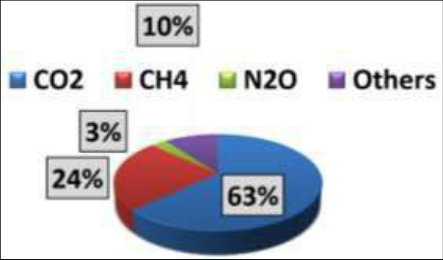 Figure 1
Introduction
Composting is considered a sustainable option to treat organic wastes and reuse them as a soil amendment and fertilizer. In this way, composting can contribute to the goals of circular economy in both developed and developing countries. It is largely a biological process in which different microorganisms decomposes organic matter which lower the C:N ratio of the refuse. In about 3 -6 months, an amorphous (formless), brown to dark brown humified material is found which is nothing but compost. Now, we always discuss only about the benefits of composting in organic farming. But there are some problems and challenges of composting. The most important being the emission of green-house gases (GHG) like CO 2 , N 2 O, CH 4 etc. and the problem is that, these GHG contributes to global warming. Some other challenges are emission of odorous molecules, loss of C and N etc. Besides these, composting is a time-consuming process, also labour intensive. If the compost is not decomposed properly, its application may hamper seed germination and seedling growth. So, what can be the potential solution to these problems? Literatures suggest that scientist all over the world are using some substances called additives as a potential solution and also to improve the overall composting process.
Additives: Additives are mixtures of different amounts of various micro-organisms, mineral nutrients, or readily available forms of C, enzymes and pH-balancing compounds that are meant to enhance microbial activity when in contact with the waste material. Some of the sourcesof additives are:
1. Organic Sources: Some of the organic sources of additives are residual Straws, mature composts, grass clippings, crushed hardwood materials, biochar, crushed wood pallets, bark, cornstalks etc.
2.
Inorganic or Mineral Sources: Some of the inorganic sources of additives are lime, clays, red mud, fly ash, zeolite, Ca-bentonite etc. The main advantages of inorganic sources are they are cheap and easily available.
3. Biological Sources: They are mainly the microbiological additives. Commercial microbes used as additives are Alcaligenes, Bacillus, Clostridium, Enterococcus, Pseudomonas & Lactobacillus micro-organisms. These additives mainly help in the degradation process during composting (Barthod et al., 2018) [6] . Now the outcome of use of additives can be in two ways. Firstly, the effect of additives on the composting process including both aspects i.e. maturity indices (temperature, pH, moisture, aeration, microbial activity, GHG emission, nutrient availability) and quality of finished product (odour emission, storage quality, compost colour etc). Secondly, when additive based compost is used as soil amendments, how it effects soil properties and plant parameters. Some studies related to these outcomes are sited below:
Effect of additives on aeration during composting
Maintenance of optimum aeration is very important during composting. Low aeration rate results in anaerobic conditions; while high aeration rates result in excessive cooling (preventing thermophilic conditions and thus preventing proper decomposition). Common way to enhance aeration may be like, mechanically turning the composted materials. But it is a labour-intensive process. Another method which can be followed is forced aeration through pipes. But both these methods are non-economic. So, alternatively, we can go for use of bulking agents, such as biochar, residual straws, woodchips or sawdust and crushed branches. These additives increase the porosity and facilitate natural aeration (Gabhane et al., 2012) [7] .
Effect of additives on temperature profile
Temperature profile is a good indicator of microbial activity during composting. It is said that mineral additives can stimulate microbial activity. Considering the composting of green waste i.e. vegetable waste and garden biomass in the ration of 1:1 with different mineral and polymer additives like flyash (FLY), phosphogypsum (PGY), jiggery (JAG), lime (LME) and polyethylene glycol (PEG). Due to the addition of these additives, the temperature rises and the highest rise in temperature can be seen in case of JAG treatment i.e. 53 °C. An early start and extended duration of thermophilic phase in JAG and PEG takes place which is due to the instant supply of sugars by JAG to the composting matrix; which swiftly boosts the growth of microbes leading to an increase in microbial metabolism & consequent metabolic heat. Again, PEG is also already source of C which boost microbial metabolism. No stimulatory or inhibitory effect of the additives occurs in the temperature profile. Thus, additives like jaggary & polyethylene glycol promotes rise in temperature indicating better microbial activity, increase essential nutrients, improve particle size & compost quality (Gabhane et al., 2012) [7] .
Effect of additives on the load of Beneficial Microbes during composting
During the process of composting a succession of aerobic microbes' breakdown and transform organic matter into complex organic substances. These micro-organisms use organic matter as food sources and then produce heat, CO 2 , water vapour, and organic compounds. After enrichment, with microbial consortia, presence of beneficial microbes like Azotobacter, Pseudomonas and PSBdue to effect of additives on municipal solid waste compost can be seen. The treatments which received microbial inoculants and spent wash were found to have maximum population of beneficial microbes, as they could have access to all the nutrients and energy from the enriched substrates (Kavitha et al., 2007) [9] .
Effect of additives on the Soil enzymatic activities during composting
Dehydrogenase activity (mg TPF g -1 24 h -1 ) is a measure of overall heterotrophic microbes in compost. Generally, the dehydrogenase activity was at its height during the initial phase and declined towards the 6 th day and rapidly decreased from the 18 th day during composting of green wastes (with additives like flyash, phosphogypsum and jaggery). Decreasing number of heterotrophic microbial population occurs during the phases, which indicates the succession of cellulolytic ones and subsequent degradation of plant compounds like cellulose, hemicellulose etc. Now, the cellulose degradation occurs due to cellulase activity of micro-organisms. So, it is seen that addition of Jaggery (JAG) significantly increased cellulase activity of green waste composts. This could be due to supply of C, N to cellulolytic microbes by JAG. Again, increased cellulase activity occurs in case of incorporation of Polyethylene glycol (PEG) additive; which is due to stimulatory effect of PEG on cellulase production. When cellulose is degraded, gradually cellulase activity also decreases (Gabhane et al., 2012) [7] .
Importance of an optimum C:N ratio during Composting
The fastest way to produce fertile, odour compost is to maintain a C:N ratio around 25 to 30 parts C to 1-part N, or 25-30:1. If the C:N ratio is too high (excess carbon), decomposition slows down. When choosing organic additives, attention must be paid to the C/N ratio of the initial mixtures to ensure organic matter degradation and prevent N leaching during composting.
Effect of additives on the major nutrients during composting
In the study conducted by Kavitha and her associates (Table 3), on solid waste composting Total N greatly increases till the 20 th day in the treatments where microbial consortia is added up to 36% (Municipal Solid Waste Compost + 10% Composted poultry litter + 0.55 Microbial consortia + 0.5% Rock phosphate + 10% Spent wash)compared to solelyMunicipal Solid Waste Compost (MSWC). Phosphorus (P) content increase conspicuously with addition of additives like poultry litter, rock phosphate & microbial inoculants in solid waste composting (Kavitha et al., 2007) [9] .
Gaseous emissions during composting with different feed stocks associated with additives
The major GHG are CO 2 , CH 4 , N 2 O etc. CO 2 occupies the highest amount of greenhouse gas emitted (63%) followed by CH 4 (24%), N 2 O (3%) and others (Fig 1). But CO 2 have less warming potential as compared to other greenhouse gases. CH 4 and N 2 O emission have a high warming potential, 30 and 210 times higher than CO 2 (IPCC, 2007).But why does GHG emission actually occur during Composting? N 2 O emission occurs due to incomplete nitrification and denitrification. CH 4 emission occurs due to methane production by methanogenic bacteria during composting; while reducing CO 2 emission during composting is a bit difficult due to continuous organic matter decomposition and microbial respiration (Barthod et al., 2018) [6] . Addition of biocharas additive to the base compost in the ratio of 3:1 results in lower emission of GHG compared to additives like cereal straw, sawdust, cotton wastes etc (Barthod et al., 2018) [6] . Again, if the evaluation of CH 4 emission pattern during composting of Sewage Sludge using different levels of Wheat Straw biochar is considered, it is seen that higher dose of biochar (HDB), (8%, 12% and 18%) has significantly lower emission of CH 4 as compared to control and also with the lower doses of biochar (2,4, and 6%). This is mainly because HDB provides favourable condition (extra porosity and water holding capacity) for rapid mineralization of organic matter, and subsequent reduction in CH 4 emission (Awasthi et al., 2018) [4] . Again, at the end of the composting, application of higher dose of Wheat Straw Biochar additives can reduce N loss by reducing the GHG during Sewage Sludge Composting (Awasthi et al., 2018) [4] .
Effect of additives on the population of earthworms during vermicomposting
To be a good vermicompost, it should maintain a good population of earthworms which is possible only through adequate reproduction. Considering the capacity of fly ash and organic additives to support adequate earthworm reproduction to improve vermicomposting, at 69 th day, it was seen that Fly ash amended with press-mud and cow dung in 1:1:1 ratio had best effect on reproduction of E. Eugeniae for vermicompost production; whereas application of fly ash alone resulted in 100 % mortality. (Anbalagan et al., 2012) [2] .
Effect of Compost Additives on quality of the finished compost
In case of composing of green wastes, additives like Jaggary (JAG) and Polyethylene (PEG) treatments gives good results, i.e. highest amount of percent Organic matter (67.34% and 73.19% in case of PEG and JAG respectively). The C/N ratio is 12.64 and 11.66 in case of PEG and JAG respectively. Total Nitrogen, Phosphorus, Potassium in case of PEG are 3.09 %, 227 ml/l and 2790 ml/l respectively. Again, Total Nitrogen, Phosphorus, Potassium in case of addition of JAG are 3.69 %, 487 ml/l and 2830 ml/l respectively. Essential nutrients increase owing to addition of in JAG & PEG due to increased rate of org. matter degradation. Again, additives like Phosphogypsum (PGY) may also give good result due to their bulking effect (Gabhane et al., 2012) [7] .
Effect of additives on the bulk density of finished Green Waste Compost
At the end of Green Waste Compost composting process, bulk density of the finished compost increases in the range between 0.76 and 0.82 (units) in due to addition of different mineral and polymer additives which enhance their bulking effect (Gabhane et al., 2012) [7] .
Effect of additives on the particle size distribution of finished Green Waste Compost
If the effect of additives on the particle size distribution of finished Green Waste Compost is done by gradation test, then according to the test, best compost should have 90% cumulative passing through 12.6 mm sieve. Again, if the compost particles need greater than 15mm sieve size, it is not a good compost. For example, JAG and PEG additives are considered to be showing good results (Gabhane et al., 2012) [7] .
Changes in total and DTPA extractable Cu and Zn content before composting and in end product of Biosolid Compost
Considering various additives and different doses of zeolite (10, 15 & 30%)before composting and in end product of Biosolid Compost, it was seen in as study that at the end, 56 th day the treatment with 30% zeolite had the lowest bioavailability of heavy metals (total and DTPA extractable Cu and Zn content), this is due to nutrient immobilization by zeolite. But considering the economic aspects, 10% zeolite has been recommended for use (Awasthi et al., 2018) [4] . Again, Micronutrient and heavy metal content of finished Green Waste Compostis not present in an alarming and remains within the permissible limits according to the US composting council (1997) (Gabhane et al., 2012) [7] .
Effects of Bacterial Additives on moisture content of Finished Rice Straw Compost
For proper composting an optimum moisture content is required. If it is less than 30% there will be reduction in microbial activity. But more than 60% also leads to anaerobic conditions. For good storage quality of compost an optimum moisture content of less than 35% is to be maintained; which was observed in case of additive combinations like 1. Rice straw + cattle dung + 5 kg from feldspar ore powder + Mixture of isolates 1-1v and 7-1v (1:1); 2. Rice straw + cattle dung + Mixture of isolates 1-1v and 7-1v (1:1), where a mixture of isolates of cellulose decomposing bacteria ( c Isolate 1-1v, Bacillus licheniformis1-1v; d Isolate 7-1v, Bacillus sonorensis7-1v) with and without feldspar (Rahman et al., 2016) [11] .
Effect of Colour &Odour of Rice Straw Compost due to addition of Cellulose-Decomposing Bacteria
Now, the maturity of compost can be assessed by some physical parameters like colour, odour of the compost. In cases where the mixture of the two isolates of cellulose decomposing bacteria (Isolate 1-1v, Bacillus licheniformis1-1v and Isolate 7-1v, Bacillus sonorensis7-1v) with and without feldspar are applied in Rice Straw Compost, there occurs a gradual darkening of colour from day 1 to day 117 in both the treatments. At the end of the composting, after sufficient period of time, the colour of both the treated compost were dark in colour. The foul smell was also reported to be eliminated and the smell of the compost resembled to that of the earth, which is due to production of secondary metabolite called geosmin by microbes (Rahman et al., 2016) [11] .
Influence of Compost Additives on Soil Properties
When the effect of additives, like composted &noncomposted poultry manure & biochar on soil particle size distribution & bulk density of degraded soilis taken into account, it is seen that,there is no change in soil texture irrespective of management practices or use of different sources of additives. Again, bulk density (BD) of the soil decreases due to application of different organic materials, which is a good indication for degraded soil (Are et al., 2017) [3] . Further, it is seen that the application of organic matter increased the soil organic carbon if compost additives are used. This is mainly due to the presence of leaves in vermicompost, which was filtered in case of poultry tea. The strength and size of the aggregates are shown by water stable aggregates (WSA) and mean weight diameter (MWD). It was seen that addition of organic matter improved the aggregate stability and the vermicompost used as additives has been reported to be best in this case. This indicates that if we do not apply organic matter to degraded soil, it will be degraded further. The soil total porosity followed inverse trends in the BD & varied with amendments. Although there were no significant differences among the treatments, the total porosities of amended soils were consistently higher than the unamended control (Are et al., 2017) [3] . Taking into consideration, the pore size distribution of the degraded soil as affected by different forms of poultry manure additives, it is seen that application of vermicompost, poultry tea and poultry manure increases the amount of transmission pores. Storage pores accounts to increase in case of poultry biochar treatment which might be due to deposition of poultry ash due to better aggregate stability. The bulk density of finished compost decreases and total porosity increases, due to application of different additives, which is a good indication in case of effects of Co-composted Maize, Sewage Sludge, & Willow Biochar Mixtures on Physical Qualities of Sandy Soil (Głąb et al., 2018) [8] . The field capacity (FC) increases due to application of the additives; directly proportional to the increasing dose of amendments. Similar results were seen in case of permanent wilting point (PWP). The changes in field capacity (FC) and permanent wilting point (PWP) were observed in the available water content (AWC) which was highest in the last treatment with highest dose of the amendment.
Effect of Different Growing Media on Soil Enzyme Activities & Microbial Biomass Carbon
The soil enzymesenzymesi. e. Phosphomonoesterage, Flourescent Diacetate (FDA), Dehydrogenase activity and Microbial biomass carbon (MBC) values are seen to be better in the cases where enriched compost was used compared to partially decomposed rice husk, vermicompost and soil based biofertilizers in gerbera grown soils. The significant increase in FDA is due to the increased microbial biomass due to continuous enrichment. Phosphomonoesterage is highest in the same treatment due to release of more organically bound Phosphate by the enrichment. Dehydrogenase activity increased due to increase in population of heterotrophic bacteria (Saikia et al., 2015) [12] .
Effect of Acidified sawdust along with phosphate solubilizing rhizobacteria on Carbon Dynamics of maize grown soil, Root Growth of Maize and Grain Yield, P accumulation in shoots & grain Phosphorous (P) has a unique characteristics i.e. slow diffusion and high fixation. This problem can be reduced to some extent by the effect of phosphate solubilizing rhizobacteria (PSR) by its phosphate solubilizing and mineralizing abilities. Again, sawdust is widely used as an additive during composting. But it has a neutral range of pH, so does not influence the pH of the feedstock. Especially, this is a disadvantage in calcareous soils where there is a problem of P availability. So, considering acidified sawdust (APC) with or without PSR on carbon dynamics in maize grown soil, it is seen that the raw sawdust treatment has better carbon dynamics. Again, with combination of PSR and ACP resulted in better availability of active form of carbon (Dissolved Organic Carbon (DOC) and MBC). However, in case of soil organic carbon (SOC) inclusion of PSR results in its decrease, compared to the active forms of carbon. This suggest that active forms are better habitat for microbial survival and functioning (Shahzad et al., 2017) [13] . Again, it was seen that, raw sawdust (RPC) had good root parameters. Yet again, acidified sawdust (APC) had better root parameters than RPC.PSR inoculation with APC showed significant increase in root fresh weight (27%), root dry weight (26%), root length (30%) and number of lateral roots (21%) over non application. The root growth of maize was higher in APC treatment both with and without PSR inoculation. This may be due to production of some growth hormones like auxin etc. by PSR which improve root length, surface area, production of adventitious roots etc (Shahzad et al., 2017) [13] . The above ground data of the maize crop also shows similar results like the root parameters. PSR inoculation with RPC significantly improved grain yield, shoot and grain P content by 9, 8 and 4%, respectively. Whilst the interactive effect of PSR with APC was more pronounced and increased, grain yield, shoot and grain P content by, 16, 17 and 10%. The increase in the parameters may be related to higher porosity, higher CEC, surface area, better biochemical reactions etc. of the sawdust application and subsequent release of P from compost to soil.
Economic & Practical aspects of Composting with Additives
The Economic & Practical aspects of Composting with Additives are as follows:
Compost additives can shorten composting duration & reduce the costs
Composting is a time-consuming process. It is seen that use of additives can shorten the compost duration and hence reduce the labour cost. Use of jaggery and polyethylene glycol additives can result in early start and extended duration of thermophilic phase, where much of the decomposition process takes place. This can shorten the overall duration of composting
Economic & Practical aspects of Composting with Additives
The additives must thus be cheap and efficient for producing a high-quality end product Jaggery and polyethylene glycol are expensive, so instead Na-bentonite or allophane can be used which are also easily available.
A full economic analysis is needed Vermicomposting does not require manual turning like traditional composting, so requires less labour cost. Still, requires more space for the treatment of the waste compared to traditional composting. So, a full economic analysis of the whole project is required (Barthod et al., 2018) [6] .
Conclusion
So, it can be concluded that composting with additives can enhance the quality of compost as an organic amendment by reduction of the problems related to composting. By comparison of additives, it can be said that organic additives have a wider range of application than inorganic or mineral additives, followed by biological additives. Choosing the Right Additives is very important. For example, biochar has many benefits, but Vermicompost works better in some cases. Again, use of lime is not recommended during composting as it results in sudden rapid increase in pH, disturbing the microbial community, subsequently disturbing the composting process.
References
13 in the original paper- Aboukila EF, Nassar IN, Rashad M, Hafez M, Norton JB. Reclamation of calcareous soil and improvement of squash growth using brewers' spent grain and compost Journal of the Saudi Society of Agricultural Sciences. 2016;5:17-23.
- Anbalagan M, Manivannan S. Capacity of fly ash and organic additives to support adequate earthworm biomass for large scale vermicompost production Journal of Research in Ecology. 2012;1(1):001-005.
- Are KS, Adelana AO, Fademi IOO, Ainab OA. Improving physical properties of degraded soil: Potential of poultry manure and biochar. Agriculture and Natural Resources. 2017;51:454-462.
- Awasthi MK, Wanga Q, Chena H, Awasthia SK, Wanga M, Rena X, et al. Beneficial effect of mixture of additives amendment on enzymatic activities, organic matter degradation and humification during biosolids co-composting. Bioresource Technology. 2018;247:138-146.
- Awasthi MK, Wang M, Chen H, Wang Q, Zhao J, Ren X, et al. Heterogeneity of biochar amendment to improve the carbon and nitrogen sequestration through reduce the greenhouse gases emissions during sewage sludge composting Bioresource Technology. 2017;224:428-438.
- Barthod J, Rumpel C, Dignac MF. Composting with additives to improve organic amendments. A review Agronomy for Sustainable Development. 2018;38:1732.
- Gabhane J, William P, Bidyadhar R, Bhilawe P, Anand D, Vaidya AN, et al. Additives aided composting of green waste: Effects on organic matter degradation, compost maturity, and quality of the finished compost. Bioresource Technology. 2012;114:382-388.
- Głąb T, Żabiński A, Sadowska U, Gondekb K, Kopećb M, Hersztek MM, et al. Effects of co-composted maize, sewage sludge, and biochar mixtures on hydrological and physical qualities of sandy soil Geoderma. 2018;315:27-35.
- Kavitha R. Bioactive Compost -a value added compost with multiple benefits. Journal of Applied Sciences. 2007;7(17):2514-2518.
- Mao H, Zhiyuan L, Sun ZH, Li R, Zhai B, Wang Z, et al. Improvement of biochar and bacterial powder addition on gaseous emission and bacterial community in pig manure compost Bioresource Technology. 2017;258:195-202.
- Rahman MAA, El-Din MN, Refaat BM, Abdel-Shakour EH, Ewais EE, Alrefaey HMA. Biotechnological Application of Thermotolerant Cellulose-Decomposing Bacteria in Composting of Rice Straw. Annals of Agricultural Science. 2016;61(1):135-143.
- Saikia S, Talukdar MC, Nath DJ. Effect of organic manure application on soil microbial and biochemical properties on gerbera (Gerbera jamesonii Bolus.) varieties under naturally ventilated greenhouse Research on Crops. 2015;16(3):551-554.
- Shahzad SM, Arif MS, Riaz M, Ashraf M, Yasmeen T, Zaheer A, et al. Interaction of compost additives with phosphate solubilizing rhizobacteria improved maize production and soil biochemical properties under dryland agriculture and Natural Resources. 2017;51:454-462.
Cited by 2
From OpenAlex, OpenCitations and reference lists read by Scinovex
- Application of biochar in composting ↗
Kamalya Karamova, Polina Galitskaya, Svetlana Yu. Selivanovskaya · Učënye zapiski Kazanskogo universiteta. Seriâ Estestvennye nauki/Učënye zapiski Kazanskogo universiteta. Seriâ Estestvennye nauki/Učenye zapiski Kazanskogo gosudarstvennogo universiteta. Seriâ Estestvennye nauki · 2026
This article outlines a new and rapidly developing method of managing organic waste by using biochar as an additive in composting. Biochar, produced through pyrolysis of organic biomass, has a highly porous structure, a large specific surface area, and a high cation exchange capacity. These properties make it effective for improving compost structure and maintaining stable physicochemical parameters during composting.…
❝ 0PDF - Bioremediation Strategies for Soil Contamination: Bibliometric Analysis and State-of-the-Art Review ↗
Ahmed M. Saqr · Springer eBooks · 2026
❝ 0