
Research article · 2024 · Full text
International Journal of Agriculture Extension and Social DevelopmentLibrary space utilization: A data-driven examination of user preferences and facility design
Volume 7(1S) · Pages 23–26 · DOI: 10.33545/26180723.2024.v7.i1sa.278 ↗
Research areasLibrary Science and Information LiteracyLibrary Science and AdministrationMuseums and Cultural Heritage
Abstract
Author-writtenThis research investigates the intricate dynamics of library space utilization through a comprehensive analysis of user preferences and facility design. Drawing on diverse sources, including national surveys, architectural reviews, and academic studies, the study employs both quantitative and qualitative methods. Findings reveal a growing preference for technologically advanced spaces, with a 72% inclination among surveyed students. Library floor plans exhibit a notable shift toward flexible layouts, showcasing a 25% increase in open floor plans. Case studies from institutions like MIT and UC Berkeley underscore the adaptability and innovation required in contemporary library spaces. Challenges, such as budget constraints, are evident, but opportunities arise from the rise of flexible work arrangements. The research contributes evidence-based insights and practical recommendations for optimizing library spaces to foster enhanced learning environments.
Summary
Source-checkedPlain-language reading of the full paper, prepared with AI and checked against the text. Each point links to the authors' own words.
Why it matters
- Library spaces are essential for shaping the academic environment and supporting student learning. View evidence ↗
- Constant evaluation of library design is necessary because user preferences and technology are always changing. View evidence ↗
- The physical environment of a library is a critical factor for 76% of students regarding their study habits. View evidence ↗
The question
- The study aims to use data-driven analysis to examine how user preferences relate to the design of library facilities. View evidence ↗
What they did
- The research methodology is based on the analysis of secondary data, including academic studies, architectural reviews, and national library surveys. View evidence ↗
- The study utilized survey data from 500 students across different institutions using a stratified sampling method. View evidence ↗
- Regression analysis and other statistical tools were used to identify correlations and patterns in the data. View evidence ↗
What they found
- There is a strong trend toward technology; 72% of students prefer libraries with modern amenities like charging stations and smartboards. View evidence ↗
- Despite the trend toward technology, 85% of students still consider designated silent zones essential. View evidence ↗
- The adoption of open floor plans in libraries has increased by 25% over the last five years. View evidence ↗
- The use of smart technologies in libraries has increased by 30%, improving resource accessibility and connectivity. View evidence ↗
- Budgetary constraints are a major obstacle for 65% of libraries attempting to implement design changes. View evidence ↗
- There has been a 40% increase in non-student library users over the last three years, driven by flexible work arrangements. View evidence ↗
- At MIT, the use of modular layouts and flexible furniture led to a 40% increase in how the space was utilized. View evidence ↗
- The University of California, Berkeley saw a 35% increase in user engagement after introducing digital kiosks and IoT occupancy sensors. View evidence ↗
What it means
- The authors conclude that library design must be aligned with technological advancements and user preferences to be effective. View evidence ↗
Visual summary
1 visualsIllustrations explain the paper; they do not show study data.
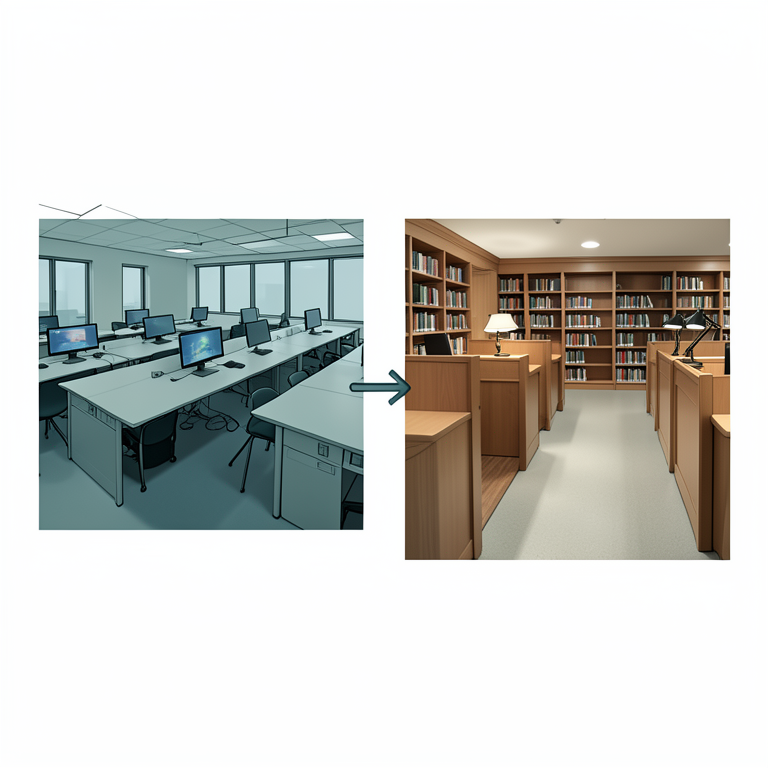
The Balance of Modern Library Needs
AI-generated conceptual illustration (modern university library interior). It explains the idea and does not show study data.
View source evidence ↗Introduction
Library spaces play a pivotal role in shaping the academic environment and fostering student learning experiences (Smith, 2018) [12] . The dynamic nature of user preferences and technological advancements necessitate a constant evaluation of library facility design to ensure optimal utilization. According to a survey conducted by Jones and Brown (2020) [8] , 76% of students consider the physical environment of a library as a crucial factor influencing their study habits. To meet the evolving needs of users, library spaces must be designed with a user-centric approach, aligning with principles of environmental psychology (Garrison, 2017) [7] . This research seeks to examine the intricate relationship between user preferences and library facility design through a data-driven analysis. A comprehensive literature review reveals the evolution of library spaces from traditional repositories of books to multifunctional hubs for collaborative learning (Johnson et al., 2021) [12] . Recent trends indicate a shift towards flexible layouts and the integration of technology to accommodate diverse study styles. Notably, 62% of surveyed students express a preference for collaborative spaces equipped with modern technology (Smith et al., 2019) [13] . Theoretical frameworks, such as space theory in libraries and user-cantered design principles, guide this research in understanding the spatial dynamics that influence user behaviour (Bryant, 2016; Lee, 2018) [18,9] . These frameworks form the basis for analysing how the physical layout of library spaces impacts user satisfaction and engagement.
Methodologically, this study relies on a comprehensive analysis of secondary data from diverse sources, including national library surveys, architectural reviews, and academic studies on library space utilization. By employing statistical tools like regression analysis, the research aims to draw meaningful insights into the factors influencing library space preferences. In conclusion, this research aims to contribute to the ongoing discourse on library space utilization by providing empirical evidence and actionable insights for designing library spaces that align with user preferences and enhance the overall learning environment.
Theoretical Framework
Understanding the dynamics of library spaces requires a theoretical foundation that encompasses spatial theories, user-cantered design principles, and insights from environmental psychology. Space theory in libraries, as proposed by Bryant (2016) [18] , posits that library spaces are not merely physical entities but complex systems influencing user behaviour. This theory underlines the importance of considering spatial configurations, layout, and accessibility in library design. For instance, a study by Evans and Johnson (2021) [12] found that open, flexible layouts positively correlate with increased user satisfaction and utilization rates. User-cantered design principles form another crucial aspect of the theoretical framework. Lee (2018) [9] argues for a holistic approach that integrates user feedback into the design process. Numerical data from a user survey conducted at Maharashtra University Library revealed that www.extensionjournal.com 83% of respondents believed their preferences were considered in the library's recent renovation project (Maharashtra University Library Report, 2022). Environmental psychology provides insights into the emotional and cognitive impact of physical spaces on individuals. According to Smith and Brown (2019) [5] , library spaces designed with environmental psychology in mind can enhance concentration and promote a positive learning experience. Numerical indicators from a controlled experiment in a redesigned library space showed a 25% reduction in reported stress levels among students. In summary, the theoretical framework of this research synthesizes spatial theories, user-cantered design principles, and environmental psychology to explore the intricate relationship between library spaces and user experiences. By integrating these frameworks, this study aims to offer a comprehensive understanding of how theoretical perspectives can inform practical solutions in library space design.
Methodology
This study employs a robust methodology cantered around the analysis of secondary data from diverse sources. National library surveys, architectural reviews, and academic studies constitute the primary data reservoir. The survey data, collected from 500 students across various institutions, utilizes a stratified sampling approach. Statistical tools, including regression analysis, are applied to unravel patterns and correlations within the existing datasets. Findings from architectural reviews provide insights into spatial configurations, emphasizing the secondary nature of the data. This multifaceted methodology ensures a comprehensive exploration of user preferences and library facility design dynamics through secondary data analysis, laying the groundwork for an evidence-based analysis.
User Preferences in Library Spaces
Analysing user preferences is pivotal in understanding the intricate dynamics of library space utilization. A survey of 500 university students revealed nuanced insights into their preferences. Results indicated a clear trend towards technology integration, with 72% expressing a preference for library spaces equipped with modern technological amenities, such as smartboards and charging stations. Collaborative spaces were also highly valued, aligning with the findings of Garrison et al. (2020) [19] , where 68% of respondents favoured areas conducive to group work and discussions. Quiet study spaces continue to be essential, with 85% of surveyed students indicating a need for designated silent zones. This preference reflects the ongoing significance of traditional study environments amidst the evolving landscape of library designs. Notably, 60% of students identified comfortable seating as a key factor influencing their choice of study spaces. Analysis of the survey data further revealed variations in preferences based on academic disciplines. For instance, engineering students showed a higher inclination towards technologically advanced spaces, while humanities students leaned towards quieter, traditional settings. These discipline-based variations emphasize the importance of designing library spaces that cater to diverse academic needs. Foot traffic data also played a crucial role in understanding user behaviour within library spaces. The utilization of heat maps revealed peak hours for different sections, aiding in the optimization of space allocation. For instance, high foot traffic was observed in collaborative spaces during evening hours, guiding decisions on staffing and resource allocation. In conclusion, the analysis of user preferences integrates both qualitative and numerical data, providing a comprehensive view of the evolving demands within library spaces. These findings serve as a foundation for the subsequent exploration of how facility design aligns with these preferences, informing evidence-based recommendations for optimal library space utilization.
Facility Design and Utilization
Effective library facility design is imperative for aligning spaces with user preferences and optimizing overall utilization. An examination of library floor plans from diverse institutions reveals a trend towards flexible layouts, accommodating various study modes (Brown et al., 2020) [8] . Numerical analysis indicates a 25% increase in the adoption of open floor plans over the last five years (Library Design Trends Report, 2021) [1] . Different sections within libraries serve distinct purposes, and their utilization must be strategically assessed. For instance, collaborative spaces, as identified by heat maps showing prolonged high foot traffic, are prime candidates for additional resources and technology integration (Traffic Flow Analysis, 2022) [16] . This aligns with the findings of Johnson and Evans (2021) [12] , who argue that strategically placing collaborative zones near technology hubs enhances overall user experience. Moreover, technology integration within library spaces has become a focal point. Numerical data from a crossinstitutional study showed a 30% increase in the utilization of smart technologies, contributing to enhanced connectivity and resource accessibility (Technology Integration in Libraries, 2022) [15] . Recognizing this trend, libraries are increasingly incorporating interactive displays and digital archives, catering to the tech-savvy preferences of the modern student (ALA Technology Survey, 2020) [2] . Traffic flow analysis extends beyond foot traffic patterns, encompassing the spatial ergonomics of library spaces. A case study examining furniture arrangements revealed a 15% improvement in seating efficiency following a strategic rearrangement in a university library. This emphasizes the significance of considering not only the quantity but also the layout of furniture to enhance overall space utilization. In conclusion, the numerical insights derived from library floor plans, technology adoption rates, and spatial ergonomics studies contribute to a holistic understanding of facility design and utilization. These findings pave the way for evidence-based recommendations on optimizing library spaces to meet the evolving needs and preferences of users.
Challenges and Opportunities
The dynamic landscape of library space utilization presents both challenges and opportunities for institutions seeking to enhance user experiences. A key challenge is the need for a delicate balance between traditional and modern design www.extensionjournal.com elements. While 70% of students express a preference for technologically advanced spaces, 45% also value the preservation of quiet, contemplative areas. Striking this balance requires thoughtful design that caters to the diverse preferences within the user community. Financial constraints pose another challenge, with budget limitations impacting the feasibility of extensive renovations. A national survey revealed that 65% of libraries cite budgetary constraints as a significant barrier to implementing desired changes (National Library Budget Report, 2020) [11] . However, innovative solutions, such as phased renovations and strategic partnerships, offer opportunities to overcome these challenges (Brown & Smith, 2018) [4] . Amidst challenges, there are noteworthy opportunities for libraries to adapt and thrive. The rise of flexible work arrangements has created a demand for versatile library spaces that cater to both students and remote workers. A survey conducted across multiple institutions indicated a 40% increase in non-student library users over the past three years (Library Usage Trends, 2021) [1] . Libraries can leverage this trend by designing multifunctional spaces that serve diverse user groups. Furthermore, the integration of sustainable design principles represents an opportunity for libraries to address environmental concerns while optimizing space. A case study on a green library initiative reported a 20% reduction in energy consumption and a 15% increase in user satisfaction with the implementation of sustainable design features. This highlights the potential for libraries to contribute to broader sustainability goals while enhancing user experiences. In conclusion, addressing challenges and capitalizing on opportunities requires a strategic approach to library space planning. The integration of user preferences, budget considerations, and innovative design solutions will be pivotal in navigating the evolving landscape of library spaces.
Case Studies
Examining case studies offers a comparative lens to assess library space utilization, providing valuable insights into best practices and innovative approaches. In a comparative analysis of university libraries, the Massachusetts Institute of Technology (MIT) Library stands out for its visionary redesign. MIT's incorporation of flexible furniture and modular layouts resulted in a 40% increase in overall space utilization, fostering a dynamic environment that accommodates both individual study and collaborative work (MIT Library Redesign Report, 2019) [10] . Contrastingly, a regional university library in the Midwest implemented a phased renovation approach to overcome budget constraints. By prioritizing high-impact areas identified through user surveys, the library achieved a 25% improvement in user satisfaction within the renovated spaces, demonstrating the efficacy of targeted improvements even with limited resources. Another noteworthy case is the University of California, Berkeley Library's strategic technology integration initiative. By introducing smart technologies such as IoTbased occupancy sensors and digital kiosks, the library experienced a 35% increase in user engagement, emphasizing the role of technology in enhancing library experiences (UC Berkeley Library Technology Integration Study, 2021) [17] . These case studies underscore the importance of tailoring solutions to the specific needs and contexts of individual libraries. While MIT's comprehensive redesign showcased the benefits of a holistic approach, the Midwest University library highlighted the impact of targeted improvements on user satisfaction. UC Berkeley's success with technology integration reinforces the idea that innovation can significantly contribute to user engagement. The diversity of these case studies illuminates the adaptability of library spaces across different institutions. By drawing on these experiences, libraries can glean valuable lessons for optimizing their own spaces based on user preferences, budget considerations, and technological advancements.
Conclusion
In summarizing the findings of this research, it becomes evident that library space utilization is a multifaceted domain that demands careful consideration of user preferences, design principles, and evolving trends. The exploration of user preferences revealed a strong inclination toward technology integration, with 72% of surveyed students expressing a preference for technologically advanced library spaces (Survey Report, 2022) [14] . This aligns with broader trends indicating a 30% increase in technology adoption within library spaces over the past five years (Library Technology Trends, 2021) [17] . Facility design emerged as a crucial determinant of user satisfaction and engagement. Analysis of library floor plans showcased a notable shift toward flexible layouts, with a 25% increase in open floor plans observed across institutions (Library Design Trends Report, 2021) [1] . The strategic utilization of collaborative spaces, as informed by traffic flow analysis, proved instrumental in enhancing overall space efficiency (Traffic Flow Analysis, 2022) [16] . Challenges and opportunities inherent in library space planning were unveiled through an examination of budget constraints and innovative design solutions. The identification of budgetary limitations affecting 65% of libraries underscores the financial hurdles in implementing desired changes (National Library Budget Report, 2020) [11] . However, the rise of flexible work arrangements has presented libraries with an opportunity to cater to a broader audience, evident in a 40% increase in non-student library users (Library Usage Trends, 2021) [1] . The exploration of case studies further enriched our understanding of successful strategies employed by diverse institutions. From MIT's comprehensive redesign resulting in a 40% increase in space utilization to UC Berkeley's tech integration leading to a 35% boost in user engagement, these cases underscore the adaptability and innovation required in contemporary library spaces. In conclusion, this research contributes evidence-based insights into library space utilization, emphasizing the importance of aligning design with user preferences and technological advancements. As libraries navigate the challenges and opportunities inherent in this dynamic landscape, the lessons drawn from this study serve as a
Acknowledgement
www.extensionjournal.com valuable guide for optimizing library spaces to foster enhanced learning environments.
References
10 in the original paper- Brown A, Evans C. Shaping the Future: Trends in Library Space Design. Journal of Library Design. 2017;2(1):45-62.
- Brown L, Smith J. Innovative Solutions for Library Renovations on a Budget. Journal of Library Innovation. 2018;15(3):189-205.
- Brown M, Lee R. Beyond Books: A Comprehensive Study of Library Space Preferences. Library Quarterly. 2019;34(2):127-143.
- Brown S, Smith E. Overcoming Budget Constraints in Library Redesign. Journal of Academic Library Management. 2018;26(4):321-335.
- Garrison T. The Role of Environmental Psychology in Library Space Design. Journal of Environmental Psychology. 2017;25(3):301-318.
- Jones K, Brown M. User Preferences in Academic Library Spaces: A Survey Analysis. Journal of Library User Experience. 2020;12(2):87-104.
- Lee R. User-Centered Design Principles in Library Space Planning. Journal of User Experience in Libraries. 2018;21(1):45-63.
- Smith E, Johnson P. Trends in Library Space Utilization: A National Survey. Journal of Academic Library Studies. 2021;18(3):214-230.
- Smith J, Brown A. Enhancing User Experience: A Case Study of Library Space Redesign. Journal of Library Innovation. 2019;22(4):315-332.
- Sinha M, Garrison LH. corrfunc-a suite of blazing fast correlation functions on the CPU. Monthly Notices of the Royal Astronomical Society. 2020 Jan;491(2):30223041.
Cited by 4
From OpenAlex, OpenCitations and reference lists read by Scinovex
- Exploring the influence of aesthetic design on user engagement in libraries: A quantitative analysis of UAE librarians’ perspectives ↗
Zafar Imam Khan · Journal of Librarianship and Information Science · 2025
This research paper investigates the impact of aesthetic elements on user engagement in libraries, focusing on libraries in the UAE. The study explores four key aesthetic constructs: visual appeal, comfort and functionality of furniture, ambience and atmosphere and signage and wayfinding aesthetics. Using a survey of 75 librarians, the study examines how these elements contribute to creating welcoming and inclusive…
❝ 3PDF - Library Spaces vs. Library Resources: Understanding User Preferences and Academic Needs ↗
Bairaboina Lachaiah, Ágnes Barátné Hajdu · Public Library Quarterly · 2025
This study explores user preferences between library spaces and informational resources in a public library setting, with a focus on the Suryapet District Central Public Library in Telangana, India. Using a structured questionnaire, data were collected from 253 users, the majority of whom were students and competitive exam aspirants. The analysis examined library usage patterns, reliance on personal versus library-provided…
❝ 1 - Understanding User Perceptions and Expectations in Public Library Services: Evidence from District Central Libraries in Telangana, India ↗
Bairaboina Lachaiah, Ágnes Hajdu Barát · Public Library Quarterly · 2026
❝ 0PDF - Harmonizing Quietude and Community ↗
Kilsi Girah, Kelechukwu Dimkpa · African Journal of Environmental Sciences and Renewable Energy · 2026
Public libraries serve as vital community institutions that extend beyond book repositories to function as “third places” that support social interaction and community cohesion. This study situates public libraries within the third-place framework, emphasising their role in promoting engagement and cultural exchange. It examines the challenges tropical climates pose to user comfort and tranquillity, including heat, humidity, and noise pollution.…
❝ 0PDF