
Research article · 2024 · Full text
International Journal of Advanced Biochemistry ResearchEffect of various pretreatments on quality of osmo-convectively dehydrated carrot shreds
Volume 8(1S) · Pages 895–898 · DOI: 10.33545/26174693.2024.v8.i1sl.472 ↗
Research areasFood Drying and Modeling
Abstract
Author-writtenCarrot is a very popular root crop grown all over the world for its delicious edible roots. Dehydration is most useful technique to prepare shelf stable products with longer shelf life. Osmotic dehydration is preferred over other drying methods due to its quality retention value in final product. Mass transfer phenomenon is affected due to different pre-treatments before osmosis. Therefore various pretreatments such as steam blanching, freezing and thawing were carried out before osmotic dehydration. Solid gain, water loss, texture and color were determined in order to evaluate effect of pretreatments on osmo-convectively dehydrated carrot shreds. Investigation of pretreatments on osmo-convectively dehydrated carrot shreds enhanced sugar gain and water loss before osmotic dehydration. Solid gain increased (34.34-40.66), while Water loss (20.30-27.39). Texture of osmo-convectively dehydrated shreds was found between 4.503 to 7.582 N. All sensory parameters were higher for steam blanching than other pre-treatment. Non-significant difference was observed for refrigerated and ambient thawing on the overall acceptability of carrot shreds.
Summary
Source-checkedPlain-language reading of the full paper, prepared with AI and checked against the text. Each point links to the authors' own words.
Why it matters
- Carrots are globally popular root crops valued for their nutritional content, specifically as a rich source of provitamin A due to high levels of α- and β-carotene. View evidence ↗
- The high moisture content of carrots makes them perishable with a short shelf life, which can lead to market gluts and financial losses for farmers. View evidence ↗
- Osmotic dehydration is a preferred preservation method because it retains the quality of fruit and vegetable products better than other drying techniques. View evidence ↗
The question
- The study aimed to evaluate how different pretreatments affect mass transfer parameters and quality attributes (color, texture, and sensory characteristics) of osmo-convectively dehydrated carrot shreds. View evidence ↗
What they did
- Samples were osmosed in a 50° Brix sugar solution at 50 °C for 4 hours with a 1:4 shred-to-solution ratio and manual stirring every 15 minutes. View evidence ↗
- Following osmotic dehydration, the carrot shreds were dried convectively at 60 °C until they reached a moisture content of 5±1%. View evidence ↗
What they found
- Ambient thawing for 8 hours (T5) produced the highest sugar gain (40.66%) and water loss (27.39%), while the control sample (T0) had the lowest sugar gain (34.34%) and water loss (20.30%). View evidence ↗
- Ambient thawing resulted in significantly higher solid gain and water loss compared to refrigerated thawing for both the 4-hour and 8-hour durations. View evidence ↗
- Hardness values ranged from 4.503 to 7.582 N, with the control sample (T0) being significantly harder than all pretreated samples. View evidence ↗
- The control sample had the highest L* value (51.88), whereas the 2-minute steam blanching treatment resulted in the lowest L* value (40.45). View evidence ↗
- Pretreated samples showed a* values between 28.32 and 34.14, with the control sample exhibiting the lowest a* value of 28.32. View evidence ↗
- Steam blanching for 2 minutes (T1) achieved the highest sensory score for color and appearance, while the control (T0) received the lowest score. View evidence ↗
- The highest sensory texture score was observed for the 2-minute steam blanched treatment (T1), while the control (T0) had the lowest score. View evidence ↗
- The overall acceptability score was highest for the 2-minute steam blanched samples and lowest for the control sample, which scored 6.37. View evidence ↗
What it means
- The authors conclude that all tested pretreatments, steam blanching, freezing, and thawing, significantly influence the mass transfer process during osmotic dehydration. View evidence ↗
Visual summary
1 visualsIllustrations explain the paper; they do not show study data.
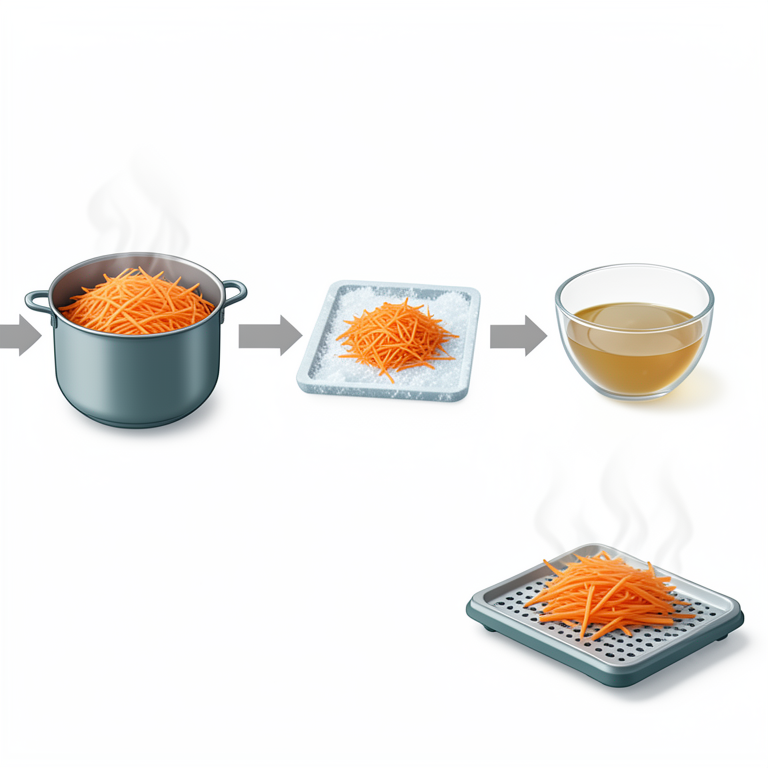
Processing Workflow
AI-generated conceptual illustration (carrot shreds). It explains the idea and does not show study data.
View source evidence ↗Figures & tables
From the original paper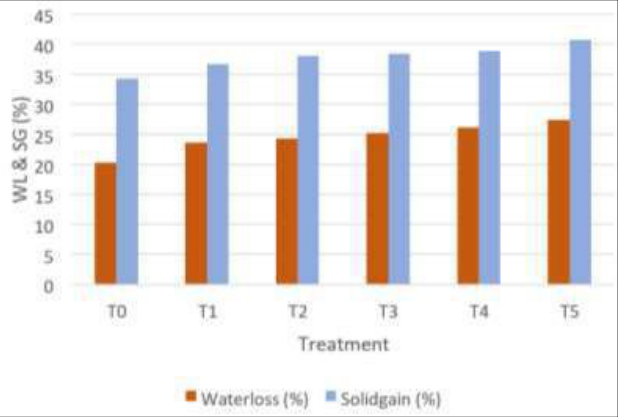 Figure 1
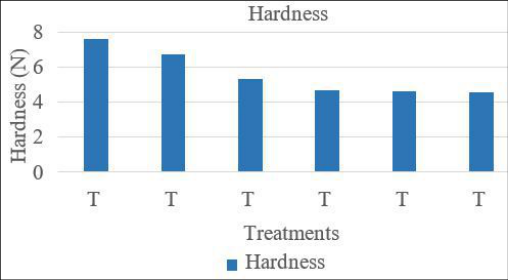 Figure 2
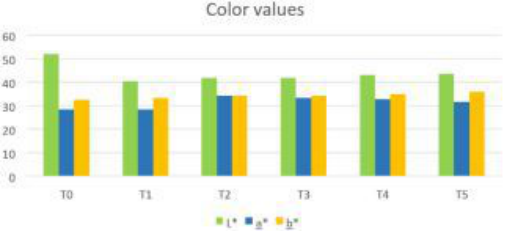 Figure 3
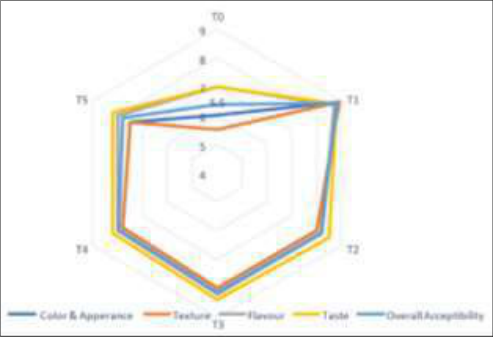 Figure 4
Introduction
India is the second largest fruits and vegetable producer in the world. Fruits and vegetables has important role in daily human diet due to its good source of vitamins and minerals. Carrots are widely grown all over the world for its highly nutritious edible roots. The widely used orange carrot is high in α-and β-carotene hence is a rich source of provitamin A. (Selvakumar and Tiwari, 2018) [12,13] . Being a perishable nature of carrot due to its high moisture content has very less shelf life. During the season there is glut in the market and prices falls down which results in monetary loss to farmers. Hence dehydration is most useful technique to prepare Ready-To-Eat and shelf stable products with longer shelf life. Osmotic dehydration is preferred over other drying methods due to its quality retention value in fruit and vegetable product. Osmatic dehydration of carrot shreds during the main growing season is one of the important alternatives for preservation. Osmotic dehydration is the phenomenon of removal of water from lower concentration of solute to higher concentration through semi permeable membrane results in the equilibrium condition in both sides of membrane (Tiwari 2005) [15] . Since osmotic dehydration results in quality improvement in terms of color, texture, flavor, product stability, nutrient retention and prevention from microbial spoilage. However, the quality of osmotically dehydrated product is affected by pretreatments like blanching, freezing and thawing. Therefore, the study aimed to assess the impact of various pretreatment on mass transfer parameters of the osmotically dehydrated carrot shreds. Additionally, quality attributes of the osmoconvectively dehydrated carrot shreds, focusing on other aspects such as color, texture, and sensory characteristics were also evaluated.
Control (Without any pre-treatment) and all pre-treated carrot shreds were osmosed in a sugar solution of 50° Brix concentration for a duration of four hours using shreds to solution ratio of 1:4 (More et al., 2020) [9] . During osmatic dehydration temperature of sugar solution was maintained as 50 °C and stirring was carried out manually at an interval of 15 minutes. Subsequently, all the osmosed samples were taken out from sugar solution and excess solution was wiped out with tissue paper. A small sample of carrot shreds after osmotic dehydration was taken out for moisture determination. Osmosed carrot shreds were subjected to convective drying at 60 °C until the moisture content reaches to 5±1%.
Quality assessment of osmo-convective dehydrated osmo-convectively dehydrated carrot shreds. Mass transfer:
The response variables water loss (WL) and solids gain (SG) were determined according to the following equations.
WL (%) = (w i X iw f X f ) x 100 / wi SG (%) = (w f (1-x f /100)wi (1-x i /100) x 100 / w i Where w i and w f are the initial and final weight (time t) of samples, respectively, (g); X i and X f are the initial and final moisture content (time t) of samples, respectively, (g water/100 g initial wet). Moisture content of carrot shreds after osmosis was determined by A.O.A.C. (1990). The textural property in term of hardness of osmo-convectively dehydrated carrot shreds were determined by measuring the force (Kg) needed to compress the osmo-convectively dehydrated carrot shreds using Texture Analzer (Model: TA-XT plus, Stable Micro System, UK) equipped with 50 kg load cell. The colour was evaluated using a Hunter Lab Colour Analyzer-Labscan-2 (Hunter Associates Laboratory, Inc. Virginia, USA) in terms of L*, a*, and b* values.
Result and Discussion
Water loss and solid gain of osmosed carrot shreds Mass transfer parameters of osmosed carrot shreds were evaluated in terms of sugar gain and water loss. The quality attributes of the dried osmotically dehydrated shreds were evaluated in terms of color (L*, a* and b* Value), texture (hardness), and sensory characteristics using standard procedure. WL & SG revealed the treatment T 5 , involving ambient thawing of pre-blanched and pre-frozen carrot shreds for 8 hours duration resulted in the highest sugar gain of 40.66% and the water loss of 27.39%. In contrast, the control sample (T o ) which consisted of osmo-convectively dehydrated carrot shreds prepared without any pretreatment, exhibited the lowest sugar gain as 34.34% and the lowest water loss as 20.30%. All the pretreated samples attained higher value of sugar gain and water loss compared to the (T o ) control sample. This trend aligns with similar observations made by (Taiwo et al., 2001) [14] in the context of osmotic dehydration of apple slices.
Also significantly higher solid gain (40.66) and water loss (27.39) was repoosmo-convectively dehydratedd for ambient thawing than refrigerated thawing condition for both 4 and 8 hour time duration. Similar higher rate of mass transfer was observed for room temperature thawing than refrigerated thawing by (More. 2021) [10] and (Kumavat., 2023) [16] for osmo-convectivetly dehydrated carrot slices. However non-significant difference was exhibited in solid gain and water loss for refrigerated thawing condition when thawing period increase from 4 to 8 hours. There was a significant difference in solid gain and water loss for ambient thawing condition when thawing period increase from 4 to 8 hours.
Hardness
The textural characteristics of osmo-convectively dehydrated carrot shreds were evaluated by measuring their hardness and presented in Fig. 2. The variation in the hardness values for the different treatments was ranged from 4.503 to 7.582 N. The control sample (T o ), exhibited significantly higher hardness compared to all osmoconvectively dehydrated carrot shreds prepared by subjecting to various pretreatments viz, blanching, freezing and thawing. This observation aligns with the findings of (Albertos et al., 2016) [1] , who reported that unfrozen carrot snacks were notably harder than frozen counterparts. The changes in a* value might be due to the variation in solid gain. Similar trend of decrease in a* value was observed in osmo-treated apple slices by (Chauhan et al., 2011) [4] . Similar trend was reported by (Holzwarth et al., 2012) [7] for strawberry as a result of increased freezing and thawing temperature. The experimented, b* values of osmoconvectively dehydrated carrot shreds ranged from 32.54 to 35.90 with a significantly lower b* value for control sample. Moreover, in general, higher b* value was observed for ambient thawing compared to refrigerated thawing. Furthermore, the data revealed that there was a less difference in b* value, when the thawing time was increases from 4 to 8 hour for refrigerated thawing
Sensory evaluation of osmo-convectively dehydrated carrot shreds
The sensory properties of osmo-convectively dehydrated carrot shreds, prepared as per treatments, were assessed in terms of color and appearance, flavor, texture, taste, and overall acceptability using a 9-point Hedonic scale. The color and appearance scores for osmo-convectively dehydrated carrot shreds ranged from 6.0 to 8.9 within the various treatments. However, the highest score for color and appearance was observed in treatment T 1 , in which the carrot shreds were steam-blanched for 2 minutes followed by osmotic and convective dehydration. Conversely, the lowest score was recorded for control treatment (T o ), which involved carrot shreds without any pre-treatment. Importantly, the data revealed that there was no significant difference in color and appearance scores when comparing thawing times of 4 hours and 8 hours for carrot shreds frozen for 3 hours. The highest mean score for flavour and taste was achieved for treatment T 1 instead of treatment T o , representing the control sample subjected to osmotic dehydration without any pre-treatment, received the lowest score of 7.0. However very less difference was observed for refrigerated thawing for 4 and 8 hour time duration. Texture of osmo-convectively dehydrated carrot shreds is ranged from 7.1 to 8.9. Notably, the highest texture score was obtained in treatment T 1 , where the carrot shreds were steam-blanched for 2 minutes and osmotically dehydrated for 4 hours in a 50 °Brix sugar syrup. In contrast, the lowest texture score was observed in treatment T o , representing the control sample without any freezing and thawing treatment. The overall acceptability score serves as a comprehensive evaluation, taking into account all sensory parameters, including color and appearance, texture, taste, and flavour. Overall acceptability score, the average of all the scores obtained for these sensory attributes determined. From the Fig. 4., depicted that highest score of the overall was obtain for osmo-convectively dehydrated carrot shreds in which raw carrot shreds were steam blanched for 2 min. before osmosis process while the control sample i.e without any pre-treatment score lowest value of 6.37 for overall acceptability. It was also noted that similar or nonsignificant score was observed for refrigerated thawing of pre-frozen carrot shreds for 4 and 8 hours. Similar trend of no-significant score was followed by ambient thawing condition.
Conclusions
It is concluded that all pre-treatments such as steam blanching, freezing and thawing had significant influence on the mass transfer phenomenon of carrot shreds during osmotic dehydration. Retention of colour was more prominent in 2 min. steam blanching pretreatment than freezing and thawing. Two min. steam blanching produced the osmo-convectively dehydrated carrot shreds with appealing texture and desirable overall acceptability.
Figures and tables from the paper
References
12 in the original paper- Albertos I, Martin-Diana AB, Sanz MA, Barat JM, Diez AM, Jaime I, et al. Effect of high pressure processing or freezing technologies as pretreatment in vacuum fried carrot snacks. Innovative Food Science and Emerging Technologies. 2016;33:115-122.
- Anoar El A, Patricia MA, Jose LB, Fernanda EX. Influence of the osmotic agent on the osmotic dehydration of papaya (Carica papaya L.) Journal of Food Engineering. 2006;75:267-274.
- Bachir B, Besbes S, Attia H, Blecker C. Osmotic dehydration of pomegranate seeds (Punica granatum L): Effect of freezing Pre-treatment. Journal of Food Process Engineering. 2011;35(3):335-354.
- Chauhan OP, Singh A, Singh A, Raju PS, Bawa AS. Effects of osmotic agents on colour, textural, structural, thermal and sensory properties of apple slices. International journal of food properties. 2011;14:10371048.
- Durrani AM, Srivastava PK, Verma S. Development and quality evaluation of honey based Carrot candy. Food Sci. Technol. 2011;48:502-505.
- Falade Kolawole O, Temilade Adelakun A. Effect of pre-freezing and solutes on mass transfer during osmotic dehydration and color of oven-dried African star apple during storage. International Journal of Food Science & Technology. 2007;42(4):394-402.
- Holzwarth M, Sabine K, Reinhold C, Dietmar RK. Evaluation of the effect of different freezing and thawing method on color, polyphenol and ascorbic acid retention in strawberries (fragaria × ananassaduch). Food Research International. 2012;48:242-248.
- More PG, Khodke SU. Effect of blanching time on quality parameter of blanched carrot slices, Department of Agricultural Process Engineering, CAET, VNMKV, Parbhani, Maharashtra, India, 2022.
- Pradeep Kumar, Thakur NS, Sharma KD, Hamid, Thakur A. Effect of different pre-treatments on quality of carrot, Roundels Journal of Pharmacognosy and Phytochemistry. 2018;7(3):3086-3092.
- Selvakumar R, Tiwari RB. Osmotic dehydration of temperate carrot (Daucus carota L.) Indian farmer. 2018 a;5(10):1253-1259.
- Selvakumar R, Tiwari RB. Effect of osmotic treatment on weight reduction, water loss, solid gain, moisture, total solids, yield and drying ratio of carrot (Daucus carota L.) slices. Chemical science review and letters. 2018;7(28):959-965.
- Taiwo KA, Alexander A, Beatrice IO, Ade-Omowaye, Dietrich K. Effects of Pretreatments on the Diffusion Kinetics and Some Quality Parameters of Osmotically Dehydrated Apple Slices. J Agric. Food Chem. 2001;49(6):2804-2811.
Cited by 3
From OpenAlex, OpenCitations and reference lists read by Scinovex
- Effect of size of Osmo-dehydrated carrot shreds on quality of Redimix of Gajarhalva
Amruta Kumbhar, Pramodini More, Mrunmayi Sontakke · International Journal of Advanced Biochemistry Research · 2026
Fruits and vegetable contribute a major source of nutrients and integral part of daily human diet. Consumption of carrot in daily diet is increasing day by day due to its high nutritional value and health awareness of people. Traditional method of preparation of Gajarhalva is time consuming. Hence, the Redimix was formulated using osmo-dehydrated carrot shreds, skim milk powder and coconut meal. The experiment was planned to assess the effect of size of shreds on overall acceptability of Redimix of Gajarhalva and also to evaluate quality of Redimix during ambient storage. Liner correlation was
- Comparative studies on osmo-convectively dehydrated carrot shreds prepared from pink and orange carrot
Shweta Nilvarn, Pramodini More, Veenika Singh, Narendra Jadhav · International Journal of Advanced Biochemistry Research · 2025
Carrots (Daucus carota L.) are a highly nutritious root vegetable widely consumed for its health benefits, vibrant color, and versatility in culinary applications. Being rich in carotenoids, vitamin A, dietary fibre, and antioxidants, carrots contribute significantly to a balanced diet. However, fresh carrots are susceptible to spoilage due to high moisture content. In order to extend shelf life and provide ease of convenience, experiment was planned to explore combo-processing techniques, specifically osmo-convective dehydration, on pink and orange carrot shreds. The carrot shreds were subjec
- Influence of size of shred on quality of osmo-convectively dehydrated carrot shreds
Manisha Arote, Pramodini More, Amruta Kumbhar · International Journal of Agriculture Extension and Social Development · 2025
Carrot (Daucus carota L.) is a major root vegetable grown all over the world for its delicious taste and significant nutritional value. Being rich in beta-carotene, carrots offer many health benefits. Carrots are seasonal and are perishable in nature due to high water content. Drying is one of most prominent preservation techniques to reduce the higher moisture from the fresh fruit and vegetable. Osmotic dehydration followed by convective drying helps in keeping the better quality of final dehydrated fruit and vegetable based product. Overall acceptability and mass transfer parameter during os