
Research article · 2024 · Full text
International Journal of Agriculture Extension and Social DevelopmentGinger value addition: A promising strategy for improving farmers’ income and livelihood
Volume 7(1) · Pages 646–651 · DOI: 10.33545/26180723.2024.v7.i1i.272 ↗
Research areasGinger and Zingiberaceae research
Abstract
Author-writtenThis paper delves into the potential benefits of processing ginger, an agricultural commodity known for its short shelf life, in order to enhance its value. Traditionally valued for its medicinal properties in addressing various ailments such as pain, nausea, and vomiting, ginger's year-round accessibility opens avenues for producers to establish small- or large-scale processing facilities. With the ability to be stored at room temperature for approximately ten days, ginger proves to be a versatile ingredient for creating processed goods with extended shelf life. By encouraging farmers to adopt food processing techniques, such as making pickles, squash, and ginger powders, rather than adhering to traditional practices of selling raw ginger, this study aims to demonstrate the potential revenue boost and risk reduction for producers. Crop processing not only enhances profits for farmers but also empowers both rural and urban women. The article underscores the advantages of processing agricultural products, highlighting the disparities between selling them before and after processing. This shift towards value addition through processing can be a transformative step for farmers, offering sustainable economic benefits and fostering innovation in the agricultural sector.
Summary
Source-checkedPlain-language reading of the full paper, prepared with AI and checked against the text. Each point links to the authors' own words.
Why it matters
- Ginger is an agricultural commodity that has a short shelf life, which creates a need for processing to enhance its value. View evidence ↗
- India's ginger production was projected to reach 2.43 million metric tons in the 2023 fiscal year. View evidence ↗
- Because ginger is available year-round and has medicinal properties for treating nausea, vomiting, and pain, it is suitable for small- or large-scale processing. View evidence ↗
The question
- The study aims to show how adopting food processing techniques for ginger (such as powders, squash, and pickles) can increase revenue and reduce risks compared to selling raw ginger. View evidence ↗
What they did
- In November 2022, twenty ginger farmers from the Tenkasi district in Tamil Nadu were trained in value-added product manufacturing at the JP College of Engineering. View evidence ↗
- The research methodology included hands-on production demonstrations, sensory evaluations, and assessments of the products' shelf life. View evidence ↗
- Economic viability was measured by calculating the gross income, gross cost, and net income for each processed product. View evidence ↗
- Sensory attributes were evaluated by twenty-five semi-trained panelists using a five-point hedonic scale. View evidence ↗
What they found
- Ginger pickle had the highest benefit-cost ratio (BCR) of 4.2, with a net income of Rs. 11,400 for 50 kg of production. View evidence ↗
- Ginger candy provided the highest net income of Rs. 24,800 for 50 kg, with a BCR of 3.4. View evidence ↗
- Ginger squash had the longest shelf life of 240 days, with a BCR of 3.1. View evidence ↗
- Ginger powder had a BCR of 3.2 and a shelf life of 90 days. View evidence ↗
- Sensory evaluation scores for processed ginger products remained consistent for up to 270 days of storage. View evidence ↗
What it means
- The authors conclude that processing ginger into powders, squash, sweets, and pickles yields a higher market value than selling it fresh. View evidence ↗
- The authors recommend value-added technology to reduce losses during market downturns and increase earnings for female farmers and small-scale entrepreneurs. View evidence ↗
Visual summary
3 visualsIllustrations explain the paper; charts are replotted from the paper's own table values.
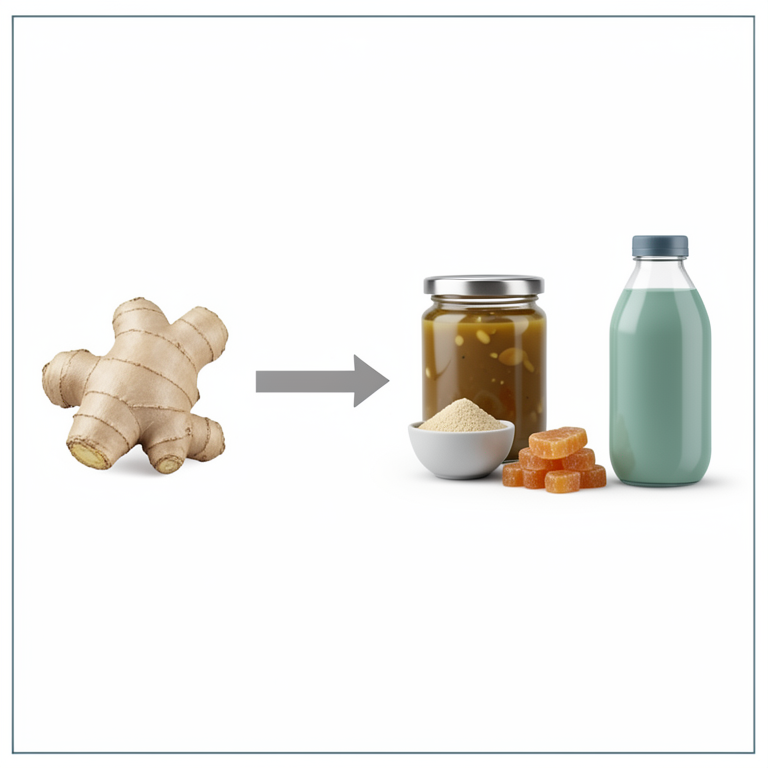
Economic Comparison of Raw vs Processed Ginger
AI-generated conceptual illustration (Ginger rhizomes and processed ginger products). It explains the idea and does not show study data.
View source evidence ↗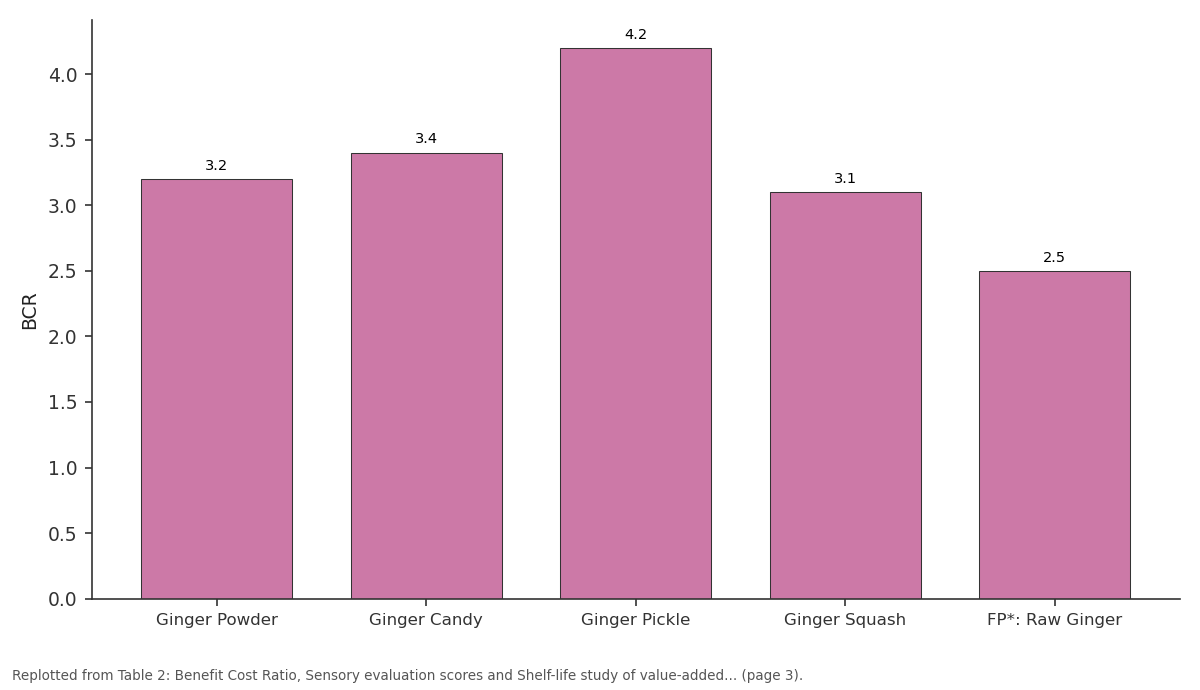
BCR: Ginger Powder vs Ginger Candy vs Ginger Pickle vs Ginger Squash vs FP*: Raw Ginger
Replotted from Table 2 (page 3) of the original paper. Every bar is the paper's own table value.
View source evidence ↗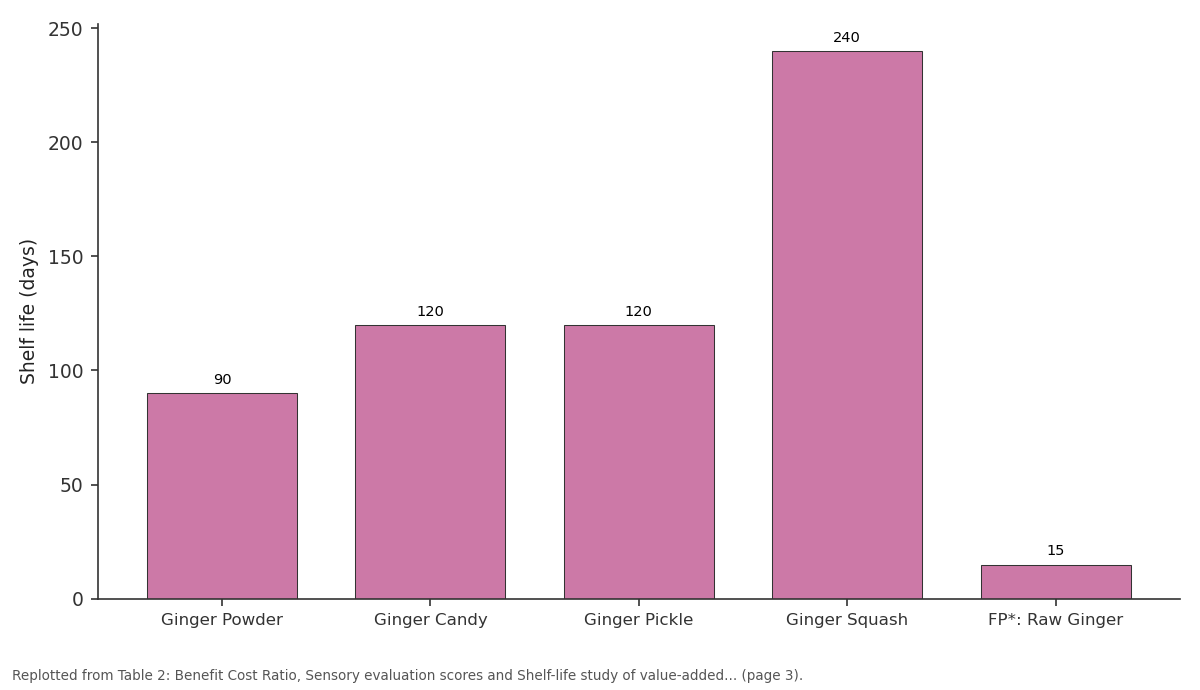
Shelf life (days): Ginger Powder vs Ginger Candy vs Ginger Pickle vs Ginger Squash vs FP*: Raw Ginger
Replotted from Table 2 (page 3) of the original paper. Every bar is the paper's own table value.
View source evidence ↗Figures & tables
From the original paper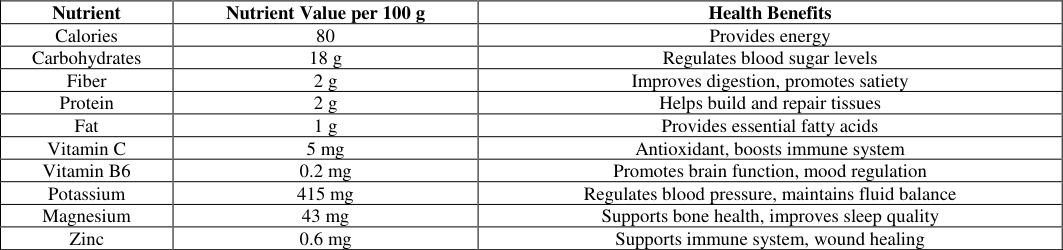 Table 1
 Table 2
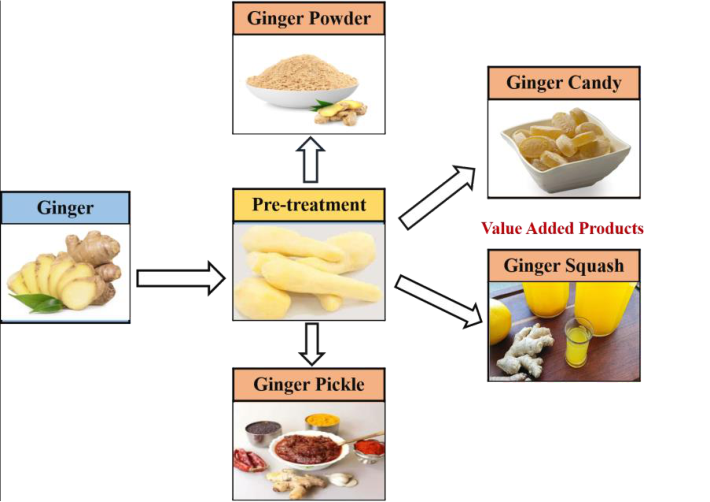 Figure 1
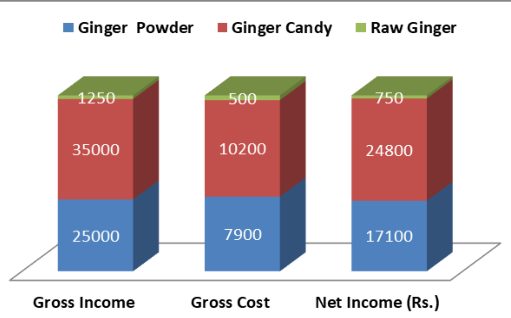 Figure 2
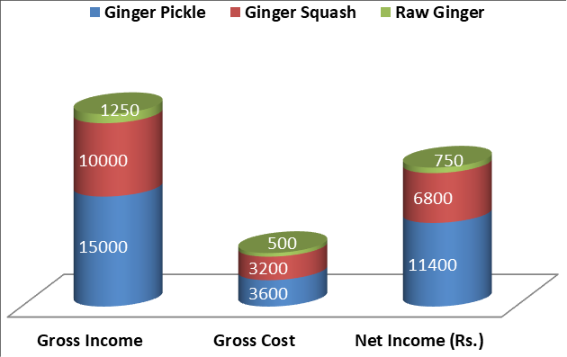 Figure 3
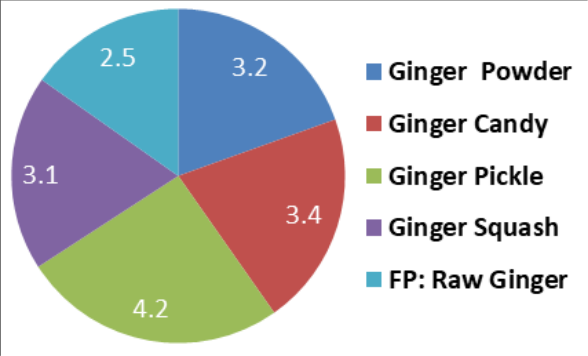 Figure 4
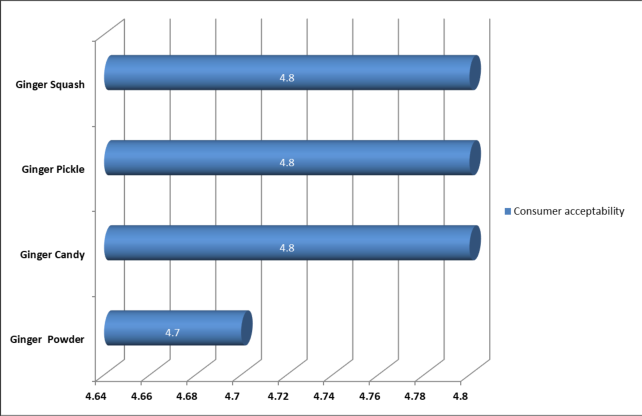 Figure 5
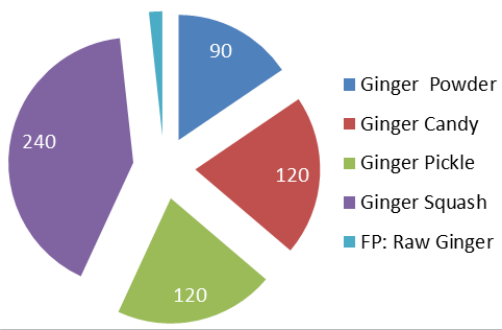 Figure 6
Introduction
In the fiscal year 2023, India anticipates a substantial increase in ginger production, projecting a yield of 2.43 million metric tons (Statista, 2023) [4] . Recognized for its numerous health benefits, ginger has been utilized for centuries as a natural remedy and flavor enhancer owing to its ability to alleviate pain, nausea, and vomiting. The efficacy of ginger in addressing various health concerns has been extensively investigated through randomized clinical trials, focusing particularly on its antiemetic properties in diverse situations (Li et al., 2019; Weimer et al., 2012; Ensiyeh et al., 2009) [5,13,2] . The chemical composition of ginger encompasses a spectrum of bioactive compounds, including terpenes, vitamins, and minerals (Sharifzadeh et al., 2018; Mohomoodally et al., 2021) [10,6] . Among these, gingerols emerge as primary constituents, showcasing a spectrum of biological actions such as antibacterial, antioxidant, and anti-neuroinflammatory effects (Kubra et al., 2012) [3] . [8,7,1] . A detailed analysis of the nutrients present in 100 grams of ginger reveals a rich nutritional profile, supporting various health benefits, is listed in Table 1. Beyond its well-known soothing properties, ginger's fiber content promotes digestion and induces a sense of satiety, while its carbohydrates contribute to blood sugar regulation. The lipids in ginger provide essential fatty acids, supporting tissue growth and repair, while the proteins aid in these processes as well. The presence of significant amounts of vitamin B6 enhances mood control and cognitive function, complemented by the antioxidant prowess of vitamin C, fortifying the immune system (Lee, 2013) [4] . Furthermore, the mineral composition of ginger, including magnesium for bone health and improved sleep quality, potassium for blood pressure regulation and fluid balance, and zinc for immunity and wound healing, underscores its holistic health benefits. The collective impact of these nutrients' positions ginger as a multifaceted contributor to health, encompassing anti-inflammatory effects, digestive enhancement, and alleviation of nausea and vomiting (United states Department of Agriculture., 2022).
| Nutrient | Nutrient Value per 100 g | Health Benefits |
|---|---|---|
| Calories | 80 | Provides energy |
| Carbohydrates | 18 g | Regulates blood sugar levels |
| Fiber | 2 g | Improves digestion, promotes satiety |
| Protein | 2 g | Helps build and repair tissues |
| Fat | 1 g | Provides essential fatty acids |
| Vitamin C | 5 mg | Antioxidant, boosts immune system |
| Vitamin B6 | 0.2 mg | Promotes brain function, mood regulation |
| Potassium | 415 mg | Regulates blood pressure, maintains fluid balance |
| Magnesium | 43 mg | Supports bone health, improves sleep quality |
| Zinc | 0.6 mg | Supports immune system, wound healing |
Table text extracted from the original PDF; superscript letters are shown inline. The original table image is below.
View original table image
Materials and Methods
In November 2022, a comprehensive study was undertaken at the JP College of Engineering, Tenkasi, aimed at enlightening ginger farmers on value-added product manufacturing. A selection of twenty ginger farmers from the Tenkasi district in Tamil Nadu participated in this training, where they gained practical insights into crafting pickles, candies, ginger powder, and squash. The training included hands-on sessions and demonstrations emphasizing correct and hygienic production methods. Additionally, the study incorporated shelf-life assessments and sensory evaluations. Rigorous scientific calculations were employed to determine the gross income, gross cost, and net income for each product, contributing to a holistic understanding of the economic aspects of value-added ginger products.
1) Raw materials
The procurement of fresh ginger roots took place at the Surandai local markets, a prominent vegetable cultivation hub in the Tenkasi district. Following the purchase, the ginger roots were transported to the JP College of Engineering in Tenkasi using suitable and efficient means of transportation.
2) Procedure for preparation
The initial stage involved pre-treatment procedures for the gingers, encompassing the removal of their outer skin and soaking in a 2 percent salt water solution for 20 minutes. Subsequently, the gingers underwent cleaning with a cloth and rinsing with potable water. The food was then appropriately shaped and sized through chopping. Blanching, a crucial pre-treatment step involving brief immersion in boiling water for five to seven minutes, was necessary for various processing stages. Following blanching, the gingers were rinsed with cold water and either dried or directed towards further processing, contributing to the creation of value-added products.
(A) Ginger Powder preparation method: Initially, the gingers were subjected to pre-treatment involving immersion in a 2 percent saltwater solution for 20 minutes, followed by washing and towel-drying. Post-skin removal, the gingers underwent blanching, draining, and were subsequently sliced into 3 mm thick pieces, arranged in trays. The sliced gingers then underwent an eight-hour drying process at 40 °C using a solar dryer. After complete drying, the ginger slices were sieved and crushed into powder form. This meticulous process ensured the transformation of fresh ginger into a versatile and convenient powder suitable for various culinary applications and value-added products.
(B) Ginger candy preparation method
Following the cleaning process, the ginger roots underwent slicing into uniform cubes, intended for the production of ginger candy. The cubes underwent blanching in a 2% saltwater solution as an initial treatment. Subsequently, a sugar syrup of 45° Brix was prepared and allowed to cool to room temperature. Post-blanching, the ginger cubes were immersed in the sugar syrup, supplemented with 1% citric acid for preservation, for a duration of 48 hours. After extraction from the sugar syrup, the ginger cubes underwent an eight-hour drying process at 40 °C using a solar dryer, completing the meticulous preparation for ginger candy production.
(C) Ginger Squash preparation method
Initiate the preparation by peeling and blanching the ginger, allowing it to cool. Subsequent steps involve mashing the ginger to form a sauce, combining it in a 2:1 ratio with sugar and ginger juice. Once sugar dissolution is achieved, introduce 2% cardamom powder, stirring until the mixture reaches 45° Brix. Conclude by incorporating 1% citric acid, stirring, and allowing the blend to cool. After filtration, transfer the mixture into an airtight container. This detailed process yields a flavourful ginger concoction, demonstrating the fusion of various ingredients to create a harmonious and palatable sauce.
(D) Ginger pickle preparation method:
Commencing the preparation, fresh gingers underwent a pre-treatment involving a 20-minute soak in a 2% saltwater solution before being delicately sliced into small pieces. In a pot, gingelly oil was heated, and the chopped ginger was cooked for ten minutes. Subsequently, cumin seeds, dried chilies, garlic, asafoetida, and salt were dry roasted and ground. A blend of these spices, in a 4:1 ratio with the cooked ginger, was combined, along with the addition of 1% citric acid. The resulting mixture was exposed to sunlight for two hours daily over three days, covered with a muslin cloth, allowing for the infusion of Flavors and aromatic richness. www.extensionjournal.com
Fig 1:
The entire process of value-added product preparation from fresh Ginger
Results and Discussion
Table 2 provides a comprehensive comparison between raw ginger and various processed ginger products, including ginger powder, candy, squash, and pickles, along with evaluations of sensory attributes and shelf-life analysis. Unprocessed ginger costs vary, starting from Rs. 25/kg at the farm gate, contingent upon the type. Notably, the production of 50 kg of ginger powder necessitates 500 kg of raw ginger. This detailed analysis encompasses cost dynamics, product variations, and the quantities involved in the processing of diverse ginger items, offering valuable insights into the economic aspects of ginger-based products. Presenting the outcomes of the sensory evaluation for processed ginger products, Figure 5 encapsulates the results of a study where twenty-five semi-trained panellists assessed items based on colour, appearance, aroma, taste, texture, and overall acceptability, utilizing a five-point hedonic scale. Notably, the processed items received remarkably high ratings, indicating strong positive perceptions across all sensory attributes. Furthermore, the data revealed that these favourable scores remained consistent even after 270 days of storage, with evaluations conducted at intervals of 0, 90, 180, and 270 days, affirming the sustained quality and sensory appeal of the processed ginger products over an extended storage period. www.extensionjournal.com Figure 6 illustrates the findings of the shelf-life analysis, contrasting processed ginger products with raw ginger. The investigation delves into the longevity and stability of these products over time. Ginger, a widely utilized spice in global cuisines, faces a significant challenge due to its brief shelf life of only 15 days at room temperature. This limitation poses financial hurdles for farmers, particularly during periods of fluctuating demand and pricing. However, by employing suitable processing technologies and adhering to product standardization, ginger can be transformed into high-value goods with an extended shelf life. This transformation not only addresses the economic challenges faced by farmers but also opens avenues for increased revenue, offering a sustainable solution to leverage the full potential of this versatile spice in the market. Leveraging value-added technology for ginger not only mitigates losses during price reductions but also elevates the living standards of rural residents. As noted by V. Saradha Ramadas (2011) [9] , the creation of value-added products from ginger has the potential to quadruple farmers' income, diminish marketing risks, eliminate ginger waste, and introduce novel items for off-season availability. This approach not only addresses economic challenges but also fosters sustainable rural development, providing farmers with diversified income sources and enhancing overall livelihoods. One of the primary advantages of transforming ginger into high-value products lies in the substantial financial gains it offers. As evidenced by the study, the benefit-cost ratio (BCR) of processed ginger products surpasses that of fresh ginger. Notably, ginger pickles exhibited the highest BCR at 4.2, followed by ginger candies (3.4), squash (3.1), and ginger powder (3.1). In contrast, fresh ginger recorded a BCR of 2.5. This compelling data underscores the potential for farmers to mitigate marketing risks and achieve a twofold increase in income by embracing the transformation of ginger into high-value items, showcasing the economic viability of such endeavours. In contrast to raw ginger, processed ginger products not only boast an extended shelf life but also hold the potential to amplify farmers' earnings. The conundrum faced by farmers, struggling with the burden of labour and transportation costs during peak seasons characterized by low ginger prices, can be alleviated through enhanced knowledge. Training initiatives covering the nutritional benefits of ginger, post-harvest handling, food processing, and value addition empower farmers to explore value-added opportunities. Consequently, the creation of value-added goods from ginger emerges as a promising avenue to uplift the living standards of rural communities and farmers, offering a sustainable solution to economic challenges. Finally, the transformation of ginger into high-quality products could potentially yield positive health outcomes. Ginger, renowned for its anti-inflammatory and antioxidant properties, offers a spectrum of health benefits. The conversion of ginger into diverse products not only enhances its accessibility but also broadens the population that can avail themselves of these health advantages, thereby contributing to the overall well-being of a larger community.
| Ginger value-added products | Production (Kg) | Gross Income | Gross Cost | Net Income (Rs.) | BCR | Consumer acceptability | Shelf life (days) |
|---|---|---|---|---|---|---|---|
| Ginger Powder | 50 (Rs.500/Kg) | 25000 | 7900 | 17100 | 3.2 | 4.7 | 90 |
| Ginger Candy | 50 (Rs.700/kg) | 35000 | 10200 | 24800 | 3.4 | 4.8 | 120 |
| Ginger Pickle | 50 (Rs.300/kg) | 15000 | 3600 | 11400 | 4.2 | 4.8 | 120 |
| Ginger Squash | 50 (Rs.200/kg) | 10000 | 3200 | 6800 | 3.1 | 4.8 | 240 |
| FP*: Raw Ginger | 50 (Rs.25/kg) | 1250 | 500 | 750 | 2.5 | 15 |
Table text extracted from the original PDF; superscript letters are shown inline. The original table image is below.
View original table image
Conclusion
This paper aims to underscore the economic advantages associated with transforming ginger into premium products. According to the research, the processing of ginger into items such as pickles, sweets, squash, and powders yields a higher market value compared to fresh ginger. Beyond commercial gains, this conversion process has the potential to generate positive impacts on the economy, society, and health. Beyond financial gains, the conversion of ginger into highvalue products holds the promise of yielding social benefits. The study suggests that implementing value-added technology for ginger can mitigate losses during market downturns, enhance earnings for female farmers, and serve as a catalyst for small-scale entrepreneurs in both rural and urban settings. These value-added ginger products also contribute to elevating living standards in rural areas, minimizing ginger waste, and fostering employment opportunities. The findings of this research highlight the far-reaching positive effects that converting ginger into premium products can have on the economy, society, and health. The study draws attention to the economic potential of ginger and its versatility in being transformed into a range of highvalue items. To optimize the value and sustainability of ginger production, stakeholders such as farmers, food processors, and policymakers can glean valuable insights from the study's findings.
Figures and tables from the paper
References
13 in the original paper- Crichton M, Marshall S, Marx W, McCarthy AL, Isenring E. Efficacy of ginger (Zingiber officinale) in ameliorating chemotherapy-induced nausea and vomiting and chemotherapy-related outcomes: A systematic review update and meta-analysis. J Acad Nutr Diet. 2019;119(12):2055-2068. https://www.jandonline.org/article/S22122672(18)31522-3/fulltext
- Ensiyeh J, Sakineh MAC. Comparing ginger and vitamin B6 for the treatment of nausea and vomiting in pregnancy: a randomised controlled trial. Midwifery. 2009;25(6):649-653. https://www.sciencedirect.com/science/article/abs/pii/S 0266613807001416?via%3Dihub
- Kubra IR, Rao LJM. An impression on current developments in the technology, chemistry, and www.extensionjournal.com biological activities of ginger (Zingiber officinale Roscoe). Crit Rev Food Sci Nutr. 2012;52(8):651-688. https://www.tandfonline.com/doi/abs/10.1080/1040839
- Lee J. Ginger as an antiemetic modality for chemotherapy-induced nausea and vomiting: a systematic review and meta-analysis. 2013;40(2):163170. Ginger as an Antiemetic Modality for Chemotherapy-Induced Nausea and Vomiting | ONS
- Li H, Liu Y, Luo D, Ma Y, Zhang J, Li M, Yang K. Ginger for health care: An overview of systematic reviews. Complement Ther Med. 2019;45:114-123. https://pubmed.ncbi.nlm.nih.gov/31331547/
- Mahomoodally MF, Aumeeruddy MZ, Rengasamy KR, Roshan S, Hammad S, Pandohee J, Zengin G. Ginger and its active compounds in cancer therapy: From folk uses to nano-therapeutic applications. Semin Cancer Biol. 2021;69:140-149. https://www.sciencedirect.com/science/article/abs/pii/S 1044579X19302135?via%3Dihub
- Mao QQ, Xu XY, Cao SY, Gan RY, Corke H, Beta T, Li HB. Bioactive compounds and bioactivities of ginger (Zingiber officinale Roscoe). Foods. 2019;8(6):185. https://www.mdpi.com/2304-8158/8/6/185
- Nile SH, Park SW. Chromatographic analysis, antioxidant, anti-inflammatory, and xanthine oxidase inhibitory activities of ginger extracts and its reference compounds. Ind Crops Prod. 2015;70:238-244. https://www.sciencedirect.com/science/article/abs/pii/S 0926669015002228
- SaradhaRamadas V, Thilagavathi T. Value added products of tomato and its quality characteristics. IJCRR. 2011;3(6):77-83. www.ijcrr.com
- Sharifzadeh F, Kashanian M, Koohpayehzadeh J, Rezaian F, Sheikhansari N, Eshraghi N. A comparison between the effects of ginger, pyridoxine (vitamin B6) and placebo for the treatment of the first trimester nausea and vomiting of pregnancy (NVP). J Matern Fetal Neonatal Med. 2018;31(19):2509-2514. https://www.tandfonline.com/doi/full/10.1080/1476705
- Statista. Production volume of ginger in India FY 20152023, published by Sandhya Keelery. 2023 August 24. https://www.google.com/search?q=ginger+production+ in+india
- United States Department of Agriculture, Agricultural Research Service. 2022 Food Data Central. https://fdc.nal.usda.gov/
- Weimer K, Schulte J, Maichle A, Muth ER, Scisco JL, Horing B, Klosterhalfen S. Effects of ginger and expectations on symptoms of nausea in a balanced placebo design. PLoS One. 2012;7(11):e49031. https://journals.plos.org/plosone/article?id=10.1371/jou rnal.pone.0049031
Cited by 1
From OpenAlex, OpenCitations and reference lists read by Scinovex
- Enhancing Income for Farmer Producer Organizations (FPOs) through Ginger Value Addition: Opportunities, Strategies and Market Insights ↗
Lh Changde Catherine, Kangjam Sonamani Singh, Rocky Thokchom, Khumlo Levish Chongloi, Asem Ameeta Devi · Journal of Scientific Research and Reports · 2024
Ginger (Zingiber officinale) is one of the most valuable spices globally, known for its culinary, medicinal, and industrial uses. As a primary cash crop in many regions, it offers substantial income opportunities for smallholder farmers. However, the traditional farming and marketing methods often limit the potential earnings of smallholder farmers. This review explores the concept of value addition in ginger,…
❝ 0PDF