
Research article · 2024 · Full text
International Journal of Agriculture Extension and Social DevelopmentAdvancements in agricultural automation: A comprehensive review of automatic seed sowing equipment
Volume 7(1) · Pages 616–620 · DOI: 10.33545/26180723.2024.v7.i1h.265 ↗
Research areasSoil Mechanics and Vehicle DynamicsAgricultural Engineering and MechanizationAgronomic Practices and Intercropping Systems
Abstract
Author-writtenThis review paper explores recent developments in automatic seed-sowing equipment, specifically addressing challenges in the agricultural sector, particularly within plant nurseries. With labor shortages, low productivity, and manual-intensive seed-feeding processes, researchers have focused on designing and implementing automatic seed-feeder mechanisms. These mechanisms, typically comprising a frame, hopper, belt drive, motor, and conveyor, aim to streamline the seed planting. This paper examines the broader context of agricultural mechanization, advocating for integrating seed- sowing machines to enable simultaneous operations, thereby reducing costs and saving time. The paper emphasizes the need for tailored and cost-effective solutions for small-scale farmers, proposing the development of multifunctional sowing machines capable of performing various operations concurrently, ultimately contributing to increased agricultural efficiency and productivity.
Summary
Source-checkedPlain-language reading of the full paper, prepared with AI and checked against the text. Each point links to the authors' own words.
Why it matters
- Agriculture is critical to the Indian economy, supporting the livelihoods of approximately 70% of the rural population. View evidence ↗
- Sowing is identified as a critical farming operation because it determines the overall production outcome. View evidence ↗
- Traditional manual sowing is inefficient, resulting in irregular seed distribution, inconsistent depth, and high labor demands. View evidence ↗
The question
- The paper aims to review recent developments in automatic seed-sowing equipment to address agricultural challenges, especially in plant nurseries. View evidence ↗
What they did
- The authors conducted a review of agricultural mechanization, focusing on how integrating seed-sowing machines can enable simultaneous operations to save time and cost. View evidence ↗
- The reviewed automatic seed feeder design utilizes a sturdy rectangular frame to ensure rigidity and strength. View evidence ↗
- The seed feeder's motor uses a pulley system to simultaneously drive a conveyor for transport and a roller for dispensing seeds. View evidence ↗
What they found
- One reviewed multi-seed sowing machine showed an 80% decrease in labor costs and a 50% reduction in fertilization time compared to ox and tractor-mounted machines. View evidence ↗
- A manually operated seeding attachment for animal-drawn cultivators achieved a field capacity of 0.282 ha/hr and a seed rate of 43.2 kg/hr. View evidence ↗
- A direct paddy seeder for two-wheel tractors demonstrated a field capacity of approximately 0.5 ha/hr at a speed of 0.81 m/s. View evidence ↗
- Jab planters provided similar field capacity and labor requirements to traditional methods but significantly reduced operator backache and fatigue. View evidence ↗
What it means
- Adopting automatic seed-sowing technologies is recommended to increase productivity and improve the well-being of the Indian farming community. View evidence ↗
Visual summary
1 visualsIllustrations explain the paper; they do not show study data.
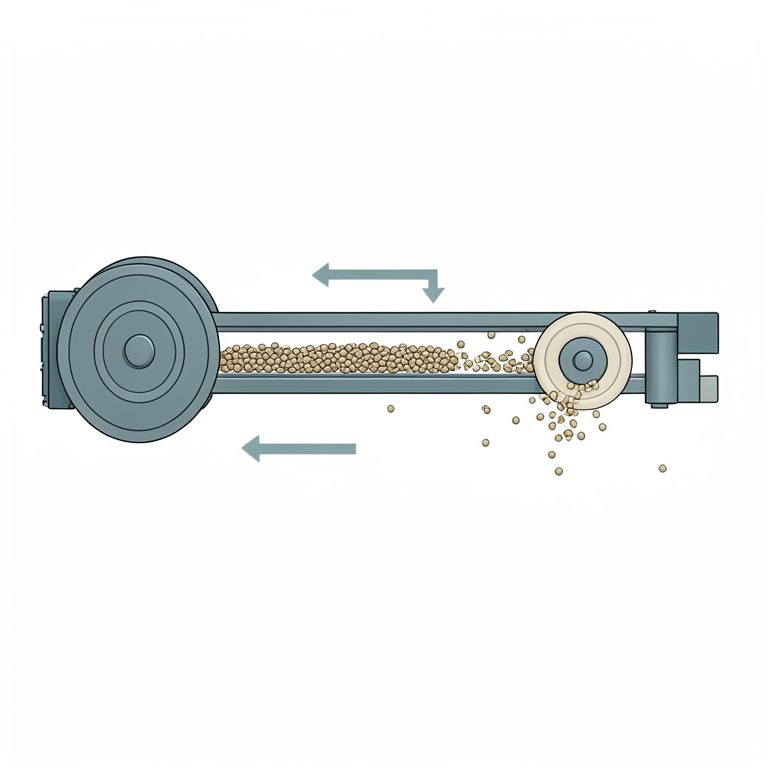
Automatic Seed Feeder Mechanism
AI-generated conceptual illustration (automatic seed sowing equipment). It explains the idea and does not show study data.
View source evidence ↗Figures & tables
From the original paper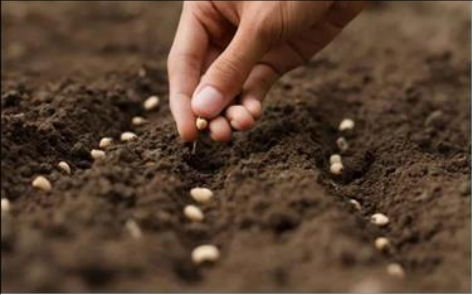 Figure 1
 Figure 2
Introduction
Agriculture, the backbone of the Indian economy, plays a pivotal role in sustaining rural livelihoods. Most of the country's villages are primarily occupied by agricultural activities, with approximately 70% of the rural population relying on agriculture for sustenance. However, manual labor in the fields presents numerous challenges, including physical strain, struggle, and fatigue, compounded by contemporary issues such as pollution and inadequate fuel sources. There is a pressing need to enhance agricultural equipment and harness maximum conventional energy sources to address these challenges. In the context of limited knowledge among workers and farmers about the mechanisms and operations of larger machinery, a shift towards automatic-operated machinery becomes imperative. Among all farming operations, sowing stands out as a crucial process determining the entire production outcome. Unfortunately, traditional manual sowing methods lead to suboptimal results: low seed placement, irregular seed distribution, non-uniform seed depth, and high labor requirements. Consequently, a substantial demand for mechanization in agriculture arises, prompting the development of automatic seed-sowing machines. These seed-sowing machines facilitate the precise placement of seeds in desired positions, offering farmers significant time and cost savings. By enabling the orderly arrangement of seeds in rows at the desired depth, maintaining seed-to-seed spacing, and covering seeds with soil while ensuring proper compaction, these machines contribute to the mechanization of the agriculture industry. The present situation of seed-sowing machines underscores the significance of addressing these challenges. Traditional seed-sowing techniques, including broadcasting, dibbling, sowing behind the plow, and drill sowing, have been prevalent for a long time. However, these methods exhibit limitations, such as random seed scattering, inconsistent seed depth, and labor-intensive practices. To overcome these challenges and move towards a more efficient and mechanized future in agriculture, there is a crucial need to explore and adopt advanced technologies in seed sowing. Integrating innovative techniques and machinery can revolutionize the agriculture sector, ensuring enhanced productivity, reduced labor dependence, and a sustainable future for Indian farmers.
Literature Review
Adalinge et al. (2017) [1] Present a research paper on a single-operator seed-sowing machine. This innovative equipment aims to sow seeds and apply fertilizer simultaneously, level the ground, sow multiple seeds, and maintain consistent seed spacing. The operational mechanism involves handle-initiated forward motion, translating into reciprocating motion through a chain drive www.extensionjournal.com and single slider crank chain mechanism. The machine features improved seedboxes, metering mechanisms, and a sturdy frame. Beyond enhancing agricultural efficiency, it ensures heightened safety, reduced human effort, and lower maintenance costs. This research represents a significant stride in modernizing agriculture, focusing on simplicity and sustainability. Kyada et al. (2014) [2] introduce a research paper on a manually operated seed planter machine. The machine's objectives include precise seed and fertilizer placement, seed-to-seed spacing, soil covering, and proper compaction. Affordability is highlighted, and the machine is powered by pushing it forward, rotating the power wheel, and transmitting power to the plunger via a chain and sprocket mechanism. The can, mounted on the sprocket shaft, facilitates downward plunger movement, and a flapper opens during the backward stroke for seed insertion into the soil. The planter, easily constructed with local components, provides flexibility for different seed plantation variations. Kanthivaran et al. (2019) present a research paper on a costeffective manually operated seed sowing machine. The design eliminates complexities by directly controlling the seed metering mechanism through the drive shaft, reducing costs and enhancing efficiency. The system utilizes manual push force for operation, achieving controlled seed sowing with a rotary motion provided by a sprocket or belt drive. The machine, beneficial for small-scale farmers due to its lightweight design, maintains row-to-row spacing, controls seed rate, and optimizes seed depth. This innovation saves time, reduces labor costs, and performs simultaneous operations, contributing to substantial energy savings. Renitha et al. (2018) [4] present an automatic seed-sowing and fertilizer-spraying machine designed for precision planting and small-scale ground leveling. Operated by a single user, the machine utilizes manual push force and is tractor-mounted. Seeds are sowed at intervals through a pipe connecting the seed hopper to the digger, followed by soil coverage and compaction. The sprayer, powered by a rechargeable battery, operates an electric pump. The design, created using CATIA V5 T20 software, incorporates a mixed cropping arrangement. This innovation ensures controlled seed and fertilizer rates, simultaneous operations, and significant labor, time, and cost savings, enhancing farmers' planting efficiency and crop reliability. Umale et al. (2018) [5] introduce a research paper on designing a multi-seed sowing machine focused on efficient planting with reduced time and labor. When an ox pulls the machine forward, seed rows are created at a depth of 5 to 6 inches. The rotating power is transmitted through a chain drive to the metering rotor, picking up seeds and fertilizers and depositing them through a funnel into flexible pipes for soil sowing. Compared to ox and tractor-mounted machines, this innovation demonstrated a 50% reduction in fertilization time and an 80% decrease in labor costs. With low capital costs, eco-friendliness, and easy troubleshooting, the machine offers distinct advantages over conventional methods. Marode et al. (2013) [6] present a research paper on designing and implementing a multi-seed sowing machine with objectives focused on metering seeds of different sizes and shapes, ensuring uniform distribution, placing seeds at the desired depth, and compacting soil for enhanced germination. The seed cum fertilizer assembly, created using PRO-Engineer software, incorporates features such as mixed cropping arrangement, depth control, and row spacing. Two peg wheels prevent slippage during operation, maintaining plant spacing and density control. Operated by a pair of bulls, the machine transmits motion to the fluted roller seed cup through a sprocket and chain, controlling seed and fertilizer amounts. The shovel-type furrow opener creates furrows, guiding seeds and fertilizers through pipes for proper placement. This innovation ensures precise row spacing, performs simultaneous operations, and significantly saves labor, time, and costs, making it affordable for farmers. Thorat et al. (2017) [7] introduced a cost-effective and userfriendly seed-sowing machine designed to be affordable for rural farmers. The simplified design, which connects the driveshaft to the metering mechanism, eliminates the need for pulleys and belt systems. A DC motor and a battery bank power the shaft, enabling robot movement and metering mechanism operation. The machine features a seed storage tank with a sensor for level sensing, guiding the robot and diverting its path in the presence of obstacles. This innovation ensures efficient sowing with minimal seed wastage and smooth operations, providing flexibility for different seeds. Deoghare et al. (2019) [8] present a solar-operated multigrain seed-sowing and fertilizing machine. Powered by PV panels, the equipment drives the front wheel via a motor connected to a battery. A chain and sprocket mechanism transmits motion to the rear wheels, ensuring a firm grip on the field surface. The main shaft, rotated by the teeth wheel, facilitates seed pouring from the hopper through a metering mechanism. The machine's manual seed adjustment accommodates various seed types. Ideal for remote areas with limited fuel access, this solar-powered solution reduces environmental pollution while enabling regular cultivation activities. Senthinathan et al. (2018) [9] introduce a research paper on the fabrication and automation of a seed-sowing machine using IoT. The machine features DC motors, hoppers, a seed distributor, a cultivator, and a belt and pulley drive system. Utilizing the ESP8266 Wi-Fi module, the machine connects to a mobile hotspot, acting as the controller. Commands from an Android phone trigger the motor, initiating motion through the front wheel belt and pulley mechanism. As the machine moves, the rear wheel drives the seed distributor, ensuring regular seed intervals from the hopper into the soil. This IoT-based solution minimizes human effort, automating the seed-sowing process with wireless connectivity for improved efficiency in farming practices. In constructing two experimental planters, detailed the assembly of one utilizing a smooth colter and another with a ripple-edged colter, followed by hoe openers. The performance of these drills proved satisfactory, particularly when seed placement occurred in sufficient soil moisture introduced a manually operated seeding attachment for an animal-drawn cultivator, boasting a seed rate of 43.2 kg/hr and a field capacity of 0.282 ha/hr. Wheat and barley exhibited minimal seed damage, showcasing efficient performance contributed to the field by developing a template row crop planter innovated a manually operated two-row Okra planter, achieving a field efficiency of www.extensionjournal.com 71.75%, a field capacity of 0.36 ha/hr, and a seed rate of 0.36 kg/hr, with minimal seed damage at 3.51%. In a separate effort, Gupta and Herwanto (1992) developed a direct paddy seeder tailored for a two-wheel tractor, showcasing a field capacity of approximately 0.5 ha/hr at a forward speed of 0.81 m/s. Remarkably, no damage was attributed to the metering mechanism for soaked seeds, though a 3% damage rate was recorded for pre-germinated seeds. Molin et al. (1996) pioneered a rolling planter designed for stony conditions, featuring 12 radially arranged spades with cam-activated doors and a plate seed meter. Their innovation significantly improved the planting operation, reducing human effort while achieving more precise stands and a notable increase in field capacity. Ladeinde et al. (1994) compared three Jab planter models and traditional planting methods, revealing similar field capacity and labor requirements. However, notable reductions in backache and fatigue were observed with the Jab planters. Additionally, hand-pushed and tractor-mounted row seeders, as highlighted in the Transnational Journal of Science and Technology (August 2012), typically demand a well-prepared, either ridged or flat seedbed. The University of Southern Mindanao Agricultural Research Center (USMARC) developed single and double-row planters capable of planting a hectare in 6-8 hours for single-row and half that time for double-row.
Challenges in Current Farm Seed Sowing Machine
Manual Seed Feeding a) Current Situation: Farm seed feeding relies heavily on manual labor. b) Challenges: The manual nature of seed feeding leads to inefficiencies, increased time consumption, and a slower rate of seed plantation. By addressing these challenges and embracing innovative technologies, farms can significantly improve seed-sowing practices' efficiency, precision, and overall success, contributing to enhanced agricultural productivity.
Lack of Controlled
Lack of Controlled
Methodology Traditional method of seed-sowing
Seeds are planted manually with the help of labor in the nursery. The sizes of seeds are very small. What exactly is being done in the farm to complete the plantation of seed that first, in the box, which has several holes near about 104? Half of the box is thoroughly filled with coco peat powder in all holes; after completion of about 9 to 10, all these boxes are put one over another and pressed so that all holes are filled to half the size. Afterward, the laborers put seeds one by one in these holes. After putting seeds in the holes of the box again, coco peat powder is put in the box, and an excess amount of powder that will remain in the box is removed. www.extensionjournal.com
The time required for this process is 3 to 4 minutes for 9 to 10 boxes. Then, after completing all the processes, the tray is kept in the proper environment, and water is fed when required. A sufficient height of plants in the tray will grow and then be supplied to customers.
Automatic seed feeder
The automatic seed feeder is constructed with a focus on robustness and efficiency. The entire assembly is securely mounted on a sturdy rectangular frame, ensuring rigidity and strength against external forces. Crucial components, such as the hopper for seed storage, are strategically located and securely attached to the frame using four welded strips.
The upper part of the frame accommodates the roller and bearing assembly, meticulously positioned with eight holes and firmly fixed using a nut and bolt mechanism. Preassembly equips the roller with bearings and a belt, facilitating seamless integration onto the frame. The lower section of the frame houses essential elements, including the conveyor, tray, and motor. The tray, pivotal for seed holding and transportation, is securely mounted on the conveyor, forming the lower part of the frame. Motor connectivity involves intricate connections through pulleys, allowing the motor to drive both the conveyor for seed transportation and the roller for controlled seed dispensing. Let's systematically explore the key components employed in automatic seed-sowing machines
Frame Structure ▪ Description: The entire assembly is securely mounted on a robust frame to ensure rigidity and strength against external forces. ▪ Frame Type: A rectangular structure forms the basis of the frame, providing a stable foundation for the entire seed feeder.
Hopper Mounting
▪ Location: The hopper, a crucial component for seed storage, is strategically mounted on the frame. ▪ Attachment Points: Four strips are welded onto the frame to provide stable and secure mounting for the hopper.
Roller and Bearing Assembly
▪ Assembly Points: Eight holes are meticulously positioned on the upper side of the frame to accommodate the roller and bearing assembly. ▪ Fixation: A nut and bolt mechanism is employed to firmly saddle the roller and bearing assembly to the frame, ensuring a reliable connection.
Bearing and Belt Configuration
▪ Pre-Assembly: Before attaching to the frame, the roller is equipped with both bearings and a belt for seamless operation. ▪ Integration: The roller, bearings, and belt are mounted onto the upper part of the frame to facilitate efficient seed feeding.
Lower Part of the Frame
▪ Components: The lower section of the frame comprises essential elements, including the conveyor, tray, and motor. ▪ Tray Mounting: The tray, pivotal for holding and transporting seeds, is securely mounted on the conveyor, which forms the lower part of the frame.
Motor Connectivity Pulley Connection:
The motor is intricately connected to the conveyor and the roller through a system of pulleys.
Operational Link: This interconnection allows the motor to drive the conveyor for seed transportation and the roller for controlled seed dispensing.
• • Conveyor System o Tray Placement:
The tray is positioned on the conveyor to efficiently move seeds from the hopper to the desired location.
Motor-Driven: The motor imparts motion to the conveyor system, enabling the systematic feeding of seeds.
Purpose of Construction
This meticulous construction aims to create a wellintegrated and sturdy automatic seed feeder that ensures reliability, strength, and precise seed dispensing. Each component is carefully positioned and connected to optimize overall functionality, contributing to the feeder's efficiency in agricultural applications. The focus on a robust frame, strategic mounting of components, and motor-driven systems underscores the commitment to creating a reliable and efficient solution for seed-sowing practices.
Conclusion
The literature review illuminates the transformative potential of innovative seed-sowing technologies in the context of Indian agriculture. The diverse array of solutions, from single-operator machines with multifunctional capabilities to manually operated planters and IoT-driven automation, signifies a paradigm shift towards precision agriculture. The identified challenges in current farm seedsowing practices, such as manual labor, environmental constraints, and limited technological adoption, underscore www.extensionjournal.com the urgency for mechanized and technologically driven solutions. With its robust frame, strategic hopper mounting, and motor-driven conveyor system, the reviewed automatic seed feeder exemplifies a well-engineered solution poised to revolutionize seed-sowing practices. As India seeks to enhance agricultural efficiency and sustainability, adopting these technologies becomes imperative, promising increased productivity, reduced environmental impact, and improved well-being for the farming community. The reviewed papers collectively contribute to the knowledge base, providing insights into the latest advancements that can shape a prosperous future for Indian agriculture.
Figures and tables from the paper
References
9 in the original paper- Adalinge NB, Ghune GP, Lavate GB, Mane RR. Design and manufacturing of seed sowing machine. Int J Adv Res Ideas Innov Technol. 2017;3(2):705-708.
- Kyada AR, Patel DB. Design and development of manually operated seed planter machine. In: All India Manufacturing Technology, Design and Research Conference, IIT Guwahati, Assam, India. 2014;2(728):1-7.
- Kanthiravan R, Balashanmugam P. Design and fabrication of manually operated seed sowing machine. Int Res J Eng Technol. 2019;6(6):3767-3774.
- Renitha P, Vignesh P, Karthick Sories MR, Ramalingam D. A study about the design and fabrication of automatic seed and fertilizer spraying machine. Int J Manag Technol Eng. 2018;8(4):695-703.
- Umale S, Tayade A, Deshmukh S, Deokar M, Umale P. Multi seed sowing machine. Int J Adv Eng Res Dev. 2018;5(6):1-8.
- Marode RV, Tayade GP, Agrawal SK. Design and implementation of multi seed sowing machine. Int J Mech Eng Robot Res. 2013;2(4):422-429.
- Thorat SV, Kasturi ML, Patil GV, Patil RN. Design and fabrication of seed sowing machine. Int Res J Eng Technol. 2017;4(9):704-707.
- Deoghare MN. Solar operated multigrain seed sowing and fertilizing machine. Int J Innov Res Sci Technol. 2019;6(3):1-3.
- Senthilnathan N, Gupta S, Pureha K, Verma S. Fabrication and automation of seed sowing machine using IoT. Int J Mech Eng Technol. 2018;9(4):903-912.
Cited by 1
From OpenAlex, OpenCitations and reference lists read by Scinovex
- Design and Development of an Automated Seed Planter for Precision Agriculture ↗
Dıckson Davıd Olodu, Dominic Omonzokpea Adiman, Confidence Ehijie Arikhan · Natural Sciences and Engineering Bulletin · 2026
The design and development of an automated seed planter for precision agriculture is presented in this study, with the objective of improving seed placement accuracy, depth uniformity, and operational efficiency while reducing dependence on manual labor. The planter integrates a mechanically driven seed metering system with a microcontroller-based control unit to synchronize seed release with ground wheel motion. The system…
❝ 0PDF