
Research article · 2024 · Full text
International Journal of Research in AgronomyStatus and prospects of organic crop management in Jammu and Kashmir
Volume 7(1S) · Pages 85–88 · DOI: 10.33545/2618060x.2024.v7.i1sb.241 ↗
Research areasAgricultural Economics and PracticesLivestock Management and Performance ImprovementAgricultural Systems and Practices
Abstract
Author-writtenCrop residues, manure, farm yard manure, vermicompost, biogas solution, green manure, poultry manure are the major components of organic agriculture. It is an integral part of organic agriculture that helps in activating the biological, physical and chemical properties of the soil. Organic agriculture/farming is not a new concept it has been followed in India as well as Jammu and Kashmir since prehistoric times and is one of the most effective methods of sustainable agriculture of all times. The last two decades have witnessed remarkable sensitivity in the global community towards ensuring food quality and environmental protection. Good promoters of organic agriculture believe that it can meet these demands and become a medium for overall development of rural areas. After nearly a century of neglect, organic agriculture is now making its way into the mainstream of development and is showing very good prospects from commercial, social and environmental perspectives. The founders' concerns for healthy food, healthy people, healthy soil, environmental sustainability and productivity are now at its core. In organic farming, natural methods are adopted for good crop production and without harming the fertility of the soil like integration of crops, mulching, crop rotation, inter-cropping, biological pest control, composting, use of local farm inputs and livestock etc.Therefore, it is necessary to promote organic farming throughout the world to maintain soil fertility as well as preserve the environment.
Summary
Source-checkedPlain-language reading of the full paper, prepared with AI and checked against the text. Each point links to the authors' own words.
Why it matters
- Chemical agriculture is associated with health risks and environmental damage, affecting humans, plants, animals, and water bodies. View evidence ↗
- While modern technology and chemical inputs increased agricultural production after the Green Revolution, they led to a decline in the quality of the produce. View evidence ↗
- Organic farming is particularly relevant for 74% of India's small and marginal farmers who cannot afford expensive chemical inputs and need to prevent soil erosion. View evidence ↗
The question
- The paper aims to examine the current status and future prospects of organic crop management within the region of Jammu and Kashmir. View evidence ↗
What they did
- The organic management approach described relies on natural methods such as crop rotation, mulching, biological pest control, and the use of local farm inputs. View evidence ↗
- Soil preparation involves tillage up to a depth of 30 cm to improve aeration and use sunlight to kill insect larvae and eggs. View evidence ↗
What they found
- In 2021-22, Jammu and Kashmir produced 38,640.64 MT from organic farms and 3,064.02 MT from wild areas, with exports of 539.55 MT valued at approximately Rs 8.92 crore. View evidence ↗
- Green manure crops aged 45-60 days can accumulate nitrogen in the range of 42-201 kg/ha. View evidence ↗
- Among common green manure legume crops, Senji (Melilotus alba) grown in the dry season provides a nitrogen contribution of 163 kg/ha. View evidence ↗
- Biological nitrogen fixation for Cowpea is estimated to be between 53 and 885 kg/ha/year. View evidence ↗
- Incorporating pulse residues into the soil is estimated to provide 50-70 kg N/ha as residual nitrogen for the following crop. View evidence ↗
- Only 50% of the manure potential from livestock is currently utilized, with the remaining 50% lost to fuel or non-agricultural land. View evidence ↗
What it means
- The authors conclude that organic farming should be emphasized in hilly areas to benefit the environment, consumers, and the farming community. View evidence ↗
- The authors suggest that developing supply chain mechanisms across Jammu and Kashmir towns would allow farmers to fetch higher prices, even for uncertified produce. View evidence ↗
- A limitation of organic farming is the requirement for higher labor levels, which typically results in product costs that are 10%-40% higher than conventional crops. View evidence ↗
Visual summary
2 visualsIllustrations explain the paper; charts are replotted from the paper's own table values.
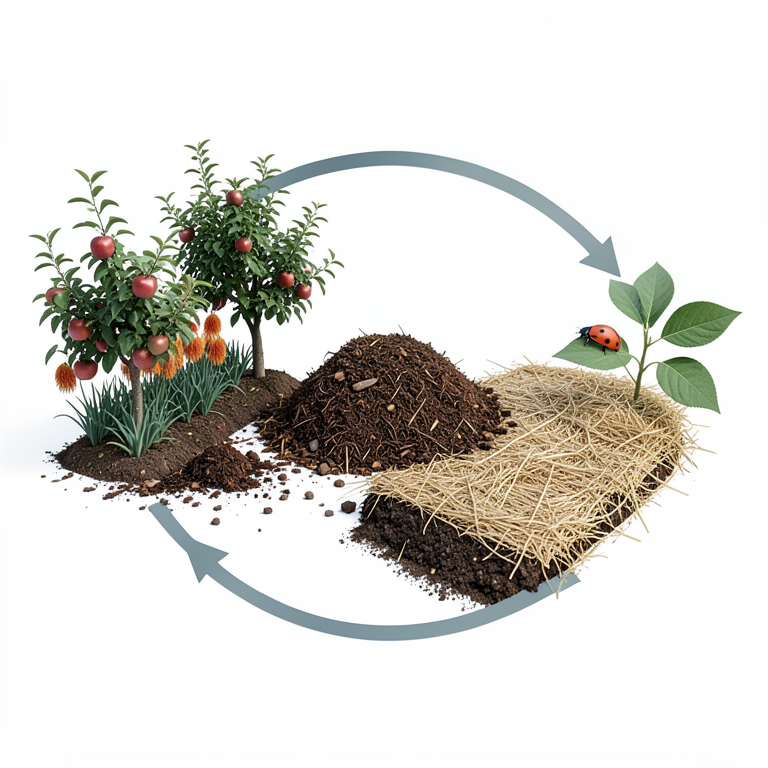
Organic Management Cycle
AI-generated conceptual illustration (Saffron and apple crops in a Himalayan valley landscape). It explains the idea and does not show study data.
View source evidence ↗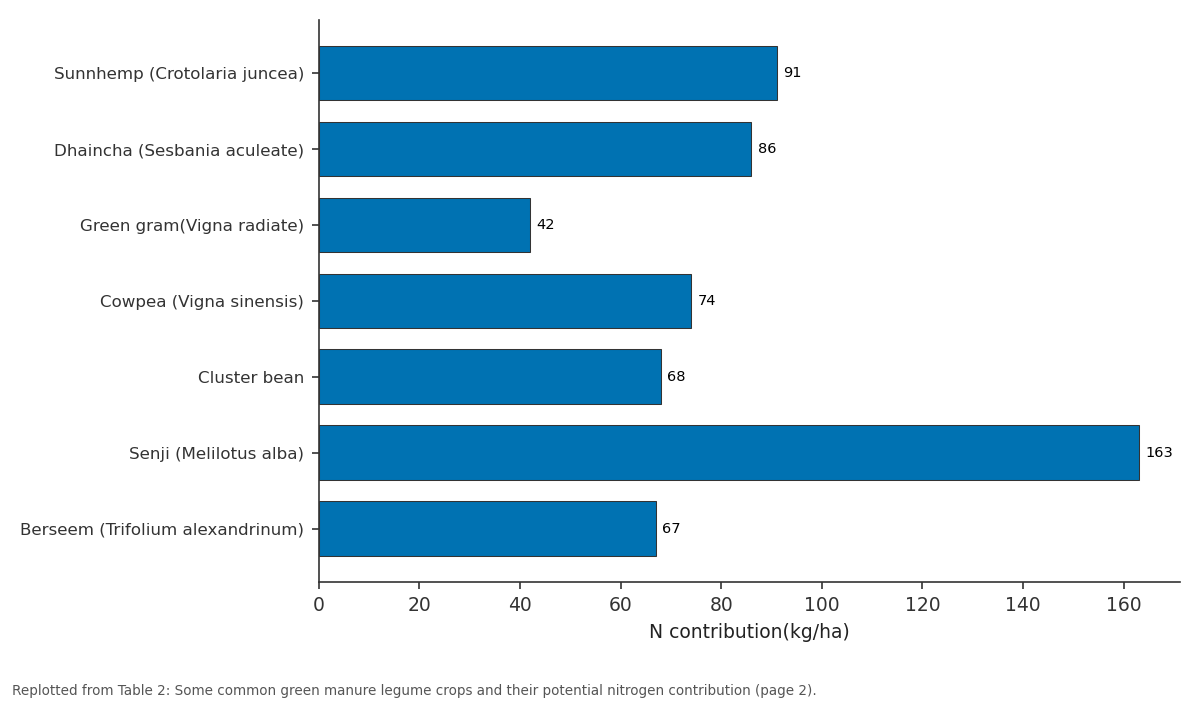
N contribution(kg/ha): Sunnhemp (Crotolaria... vs Dhaincha (Sesbania... vs Green gram(Vigna... vs Cowpea (Vigna sinensis) vs Cluster bean
Replotted from Table 2 (page 2) of the original paper. Every bar is the paper's own table value.
View source evidence ↗Figures & tables
From the original paper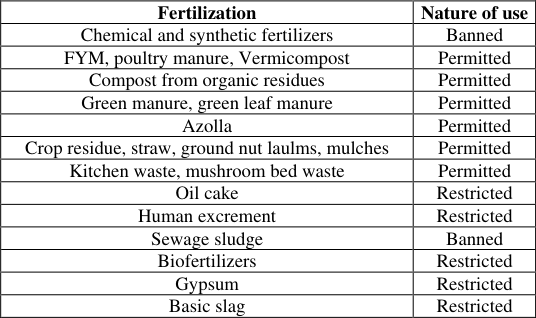 Table 1
 Table 2
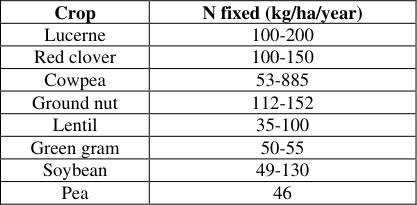 Table 3
Introduction
Organic farming is receiving more attention around the world recently due to increasing awareness of the health risks of chemical agriculture. Consumers are waking up and questioning the ethics of promoting poison in our food chain. They are also willing to pay for chemical-free, environmentally sensitive and safe food products. Agrochemicals like pesticides, herbicides, fertilizers, growth promoters etc. are affecting human health, plant health, soil health, animal health, water bodies and environment. Traces of these chemicals have been found in food products, milk-based products, and even breast milk. After the Green Revolution, our agricultural scenario has completely changed with the use of modern technology. The increased uses of chemical fertilizers as well as the use of plant protection measures and high yielding varieties have undoubtedly increased our production, but the quality of the produce has declined. (Raina 2019) [17] . Organic farming is most relevant for 74% of small and marginal farmers in India as they lack the resources to provide expensive inputs to increase yields and they also need to protect the land from erosion. In the organic farming system approach, a piece of land is used optimally and to its full potential to produce nutritious and healthy food as well as other essential commodities, thereby supporting a small family healthily. There is a need to maintain soil health and productivity through agricultural practices based on the principles of nature. Plant protection is also controlled and managed by selecting crop mixtures and using biological control measures (GoI 2016) [18] . Consumers are now turning to organic food because they believe it to be tastier, as well as healthier, both for themselves and environment (Alfoldi et al. 1998) [19] .
The Union Territory of Jammu and Kashmir consists mainly of two geographical regions, namely the Jammu and Kashmir region which lies in the north of the Indian Union and includes the extreme western part of the Himalayas. Jammu region is represents almost all the zones ranging from sub-tropical one to mid hills extending to high hills (high altitudes) thus constituting temperate zone. Rice, maize, wheat, pulses, fodder, oil seeds, potato and barley are the main crops of the region. Farmers in Jammu and Kashmir have been farming without the use of chemicals for a long time, but now with the increasing demand for organic products across the world, the state has started the practice on a large scale. The state is a natural place for organic farming, the state has immense potential to produce high value crops like black cumin, guchi, basmati rice, raj mash, wheat, pulses and other field crops.
Scope and Potential of Organic Farming
Organic farming has become of utmost importance even in dry land areas. The soil and climatic conditions of India's dry lands make them particularly suitable for organic agriculture. These are actually better suited to low-input farming systems that make adequate use of biodiversity (Sharma, 2000) [13] . The addition of organic matter, a cornerstone of organic farming practices, will not only improve the physical condition of these dryland soils, but also greatly improve their ability to supply balanced plant nutrients. In dry lands, natural resources are overexploited (Reddy, 2010) [11] mainly due to inappropriate production-enhancing technologies. Organic farming is done on about 50 thousand hectares of land in Jammu and Kashmir and this includes organic certified area of 18,441.82 hectares and 29150.00 hectares organic area under wild collection. During the year 2021-22, organic farm production in Jammu and Kashmir was 38,640.64 MT and organic production from wild area was 3,064.02 MT and 539.55 MT of organic products were exported and valued at about Rs 8.92 crore (Source: APEDA 2022-23). Abundant use of chemical fertilizers results in soil acidity/salinity, decrease in porosity thus poor soil health in Jammu and Kashmir. Apart from this free nitrate from nitrogenous fertilizers and pesticide residues result in water pollution. These fertilizers add lead and cadmium in the soil. Considering the above facts and factors, there is need for another revolution called organic revolution to ensure good soil health, food security, and reduced environmental pollution. Therefore there is need and that too urgent for rejuvenating the tired, over worked, degraded, polluted and malnutrition soil to make it potent for future food production.
Agronomic Manipulations
A) Soil preparations: Ploughing soil (tillage) up to depth of 30 cm help to expose soil for better aeration and sunlight will help in killing the eggs, larvae of many insects.
B) Crop selection:
To begin with, crops which require low nutrient should be selected.
C) Nutrient Management:
As we know organic farming systems the nutrient needs of crop plants are met through organic sources.
Green Manuring
Green manuring for improving productivity and soil fertility is an old age practice with the farmers. Green manure offers considerable potential as source of N and organic matter. The availability of P, K and secondary and trace elements in the soil is also increased. Sunhemp, dhaincha, cowpea are commonly grown green manure crops in India. The amount of N accumulated in 45-60 days old green manure crop range from 42-201 kg/ha. Its dark color contributes to the absorption of energy from the sun Soil erosion is checked. The organic components in humic substances can act as plant growth stimulants.
Crop residue/legume residue recycling
Crop residues affect the productivity of the soil and mulch on the surface is also quite appreciable. They are potential source of plant nutrients and their incorporation into the soil helps to return apart of nutrients drawn from the soil. Crop residue of annual grain legume such as green gram, black gram, and soybean can be recycled into soil after grain is removed. About 50-70 kg N /ha is estimated as residual N to the succeeding crop by pulse residue incorporation.
Legumes in rotation
The N content in leaves of tree legumes used for green leaf manure is usually high, ranging from 3.49 to 4.20%. The phosphorus content in green manure crops ranges from 0.20 to 3.34%. Green leaf manure has lower P content (0.2 to 0.24%) than legume green manure. The average N concentration in different legume crops ranges from 2.5 to 3.91% and the straw of food legumes have a comparatively low N content, ranging from 1.70% in cow pea residue to 2.21% in moong bean, because food legumes are harvested near maturity when straw N is translocated into grain.
Conclusion
Organic farming requires higher levels of labour, therefore creating more income-producing jobs per farm, the cost of an organic product is usually 10%-40% higher than similar conventional crops and it depends on both input and output factors of crop production. Tourism an important contributor of state economy could be further enhanced by broadening its scope as Organic Agro-Tourism. Organic foods have proven to be better in terms of health and safety. Only developing the supply chain mechanism across towns of J&K even though it is uncertified, farmers will fetch higher price. It is a general global experience that organic produce of local area is trusted and preferred more than farther away markets. It is concluded that there is wide consensus that in hilly areas, we should emphasize on organic farming for the benefit of the farming community, consumers and the environment.
Figures and tables from the paper
| Fertilization | Nature of use |
|---|---|
| Chemical and synthetic fertilizers | Banned |
| FYM, poultry manure, Vermicompost | Permitted |
| Compost from organic residues | Permitted |
| Green manure, green leaf manure | Permitted |
| Azolla | Permitted |
| Crop residue, straw, ground nut laulms, mulches | Permitted |
| Kitchen waste, mushroom bed waste | Permitted |
| Oil cake | Restricted |
| Human excrement | Restricted |
| Sewage sludge | Banned |
| Biofertilizers | Restricted |
| Gypsum | Restricted |
| Basic slag | Restricted |
Table text extracted from the original PDF; superscript letters are shown inline. The original table image is below.
View original table image
| Green manure crop | Growing season | Green manure(t/ha) | N contribution(kg/ha) |
|---|---|---|---|
| Sunnhemp (Crotolaria juncea) | wet | 21.2 | 91 |
| Dhaincha (Sesbania aculeate) | wet | 20.2 | 86 |
| Green gram(Vigna radiate) | wet | 8 | 42 |
| Cowpea (Vigna sinensis) | wet | 15 | 74 |
| Cluster bean | wet | 20 | 68 |
| Senji (Melilotus alba) | dry | 28.6 | 163 |
| Berseem (Trifolium alexandrinum) | dry | 15.5 | 67 |
Table text extracted from the original PDF; superscript letters are shown inline. The original table image is below.
View original table image
| Crop | N fixed (kg/ha/year) |
|---|---|
| Lucerne | 100-200 |
| Red clover | 100-150 |
| Cowpea | 53-885 |
| Ground nut | 112-152 |
| Lentil | 35-100 |
| Green gram | 50-55 |
| Soybean | 49-130 |
| Pea | 46 |
Table text extracted from the original PDF; superscript letters are shown inline. The original table image is below.
View original table image
References
12 in the original paper- Agriculture Census (2020-21) All India Report on Number and Area of Operational Holdings. Agriculture census division Department of Agriculture & Co-operation Ministry of Agriculture, Government of India; c2020-21.
- Aktar W, Sengupta D, Chowdhury. Impact of pesticides use in agriculture: their benefits and hazards. Interdisc Toxicol. 2009;2(1):1-12. DOI: 10.2478/v10102-009-0001-7.
- Bahr AA, Gomaa AM. The integrated system of bio and organic fertilization for improving growth and yield of triticale. Egypt. Appl. Sci. 2002;17(10):512-523.
- IPCC. "Summary for Policy Makers." In IPCC Fourth Assessment Report, "Working Group III Report: Mitigation of Climate Change". See specifically on agriculture, Chapter 8. Accessed February 12, 2009. http://www.ipcc.ch/pdf/assessment-report/ar4/wg3/ar4-wg3spm.pdf and http://www.ipcc.ch/ipccreports/ar4-wg3.htm
- Lal R. Soil Carbon sequestration impacts on global climate change and food security. Science. 2004;304:1623-27.
- Ministry of Agriculture and Farmer Welfare. Mission organic value chain development for North Eastern region A Sub-Mission under National Mission for Sustainable Agriculture (NMSA). Operational Guidelines. Accessed on 2017 September 14; c2016. http://agricoop.nic.in/sites/default/files/OPG1922016.pdf
- Reddy Suresh B. Organic Farming: Status, Issues and Prospects -A Review. Agricultural Economics Research Review. 2010;23:343-358.
- Sharma AK. Sustainability through simplicity: Rainwater conservation in the arid zone of India. Indian Water Resources Quarterly. 2000;48(1):5-10.
- Sharma AK, Goyal RK. Addition in tradition: Agro-forestry in the arid zone in India. LEISA India. 2000;2(3):19-20.
- Yepsen Jr. RB. Organic plant protection. Rodale Press. Emmaus, PA; c1976. p. 576. Wittwer and Haseman, 1945.
- Mayhew AJ, Amog K, Phillips S, Parise G, McNicholas PD, Souza DRJ, et al. The prevalence of sarcopenia in community-dwelling older adults, an exploration of differences between studies and within definitions: a systematic review and meta-analyses. Age and ageing. 2019 Jan 1;48(1):48-56.
- Jin Z, Teoh AB, Goi BM, Tay YH. Biometric cryptosystems: A new biometric key binding and its implementation for fingerprint minutiae-based representtation. Pattern Recognition. 2016 Aug 1;56:50-62.