
Research article · 2017 · Full text
International Journal of Advanced Biochemistry ResearchComparative study of serum homocysteine, high-sensitivity C-reactive protein, and lipid profiles in non-diabetic individuals with ischemic stroke
Volume 1(2) · Pages 53–56 · DOI: 10.33545/26174693.2017.v1.i2a.400 ↗
Research areasGDF15 and Related BiomarkersNutrition and Health in Aging
Abstract
Author-writtenIntroduction: This comprehensive study explores serum biomarkers and risk factors in non-diabetic ischemic stroke patients compared to healthy controls, shedding light on stroke pathogenesis and risk stratification.Materials and Methods: Present study assessed serum homocysteine, high-sensitivity C-reactive protein (hs-CRP), and lipid profiles in a cohort of 30 subjects. Subgroup analyses were conducted based on age and gender, unraveling nuanced trends. Correlations between these biomarkers were scrutinized, revealing potential interplays. Furthermore, we delved into risk factors such as smoking, alcohol use, and family history of cardiovascular disease to provide a comprehensive risk profile.Results: Our study unveils significant disparities in serum biomarkers between the two groups. Ischemic stroke patients exhibit elevated homocysteine and hs-CRP levels, unfavorable lipid profiles, and a higher prevalence of risk factors. Subgroup analyses delineate age and gender-specific differences, emphasizing age as a prominent risk factor, and women with stroke presenting distinct lipid profiles. The correlation analysis underscores complex relationships between biomarkers, offering insights into potential synergistic mechanisms. Moreover, our identification of smoking, alcohol use, and family history as significant risk factors reaffirms their critical roles in stroke susceptibility.These findings underscore the multifaceted nature of ischemic stroke, necessitating tailored risk assessment and intervention strategies that consider age, gender, lifestyle factors, and the interplay between serum biomarkers. This comprehensive approach is imperative for effective stroke prevention and management.
Summary
Source-checkedPlain-language reading of the full paper, prepared with AI and checked against the text. Each point links to the authors' own words.
Why it matters
- Ischemic stroke is a global health issue caused by interrupted blood flow to the brain, which results in high rates of death and disability. View evidence ↗
- High levels of serum homocysteine are believed to increase stroke risk by causing endothelial dysfunction, oxidative stress, and a prothrombotic state. View evidence ↗
- High-sensitivity C-reactive protein (hs-CRP) serves as a marker for systemic inflammation, which contributes to the development of thrombosis and atherosclerosis. View evidence ↗
The question
- The study aims to comprehensively analyze lipid profiles, hs-CRP, and serum homocysteine in non-diabetic people who have suffered an ischemic stroke. View evidence ↗
What they did
- The research involved 30 participants: 15 non-diabetic ischemic stroke patients and 15 healthy controls matched for age and sex. View evidence ↗
- Participants were non-diabetic adults aged 18-65; those with other stroke types, liver/renal disease, inflammatory conditions, or those using anti-inflammatory or lipid-lowering drugs were excluded. View evidence ↗
- Biomarkers were measured using chemiluminescent immunoassay for homocysteine, ELISA for hs-CRP, and standard enzymatic methods for the lipid profile. View evidence ↗
What they found
- Ischemic stroke patients had significantly higher mean serum homocysteine levels (14.5 µmol/L) compared to healthy controls (8.7 µmol/L), with p < 0.05. View evidence ↗
- Mean hs-CRP levels were significantly higher in stroke patients (3.6 mg/L) than in healthy controls (1.2 mg/L), with p < 0.01. View evidence ↗
- Stroke patients showed significantly higher mean total cholesterol (210 mg/dL vs 190 mg/dL) and LDL cholesterol (140 mg/dL vs 120 mg/dL) than controls (p < 0.05). View evidence ↗
- Stroke patients had significantly lower mean HDL cholesterol (40 mg/dL) compared to healthy controls (50 mg/dL), with p < 0.01. View evidence ↗
- Mean triglyceride levels were significantly higher in stroke patients (160 mg/dL) than in healthy controls (130 mg/dL), with p < 0.05. View evidence ↗
- Stroke patients had a significantly higher prevalence of smoking (40% vs 20%), alcohol use (30% vs 10%), and family history of cardiovascular disease (50% vs 25%) compared to controls (all p < 0.05). View evidence ↗
- In stroke patients, there was a significant positive correlation (r = 0.45, p < 0.05) between serum homocysteine and hs-CRP levels. View evidence ↗
- Age was identified as a prominent risk factor, with stroke patients aged 50 or older showing significant elevations in hs-CRP, homocysteine, and adverse lipid profiles. View evidence ↗
What it means
- The authors conclude that ischemic stroke is multifactorial and requires tailored risk assessment and intervention strategies that account for gender, age, lifestyle, and serum biomarkers. View evidence ↗
- The authors state that further research is required to understand the mechanistic links between the studied biomarkers and their clinical implications. View evidence ↗
Visual summary
3 visualsIllustrations explain the paper; charts are replotted from the paper's own table values.
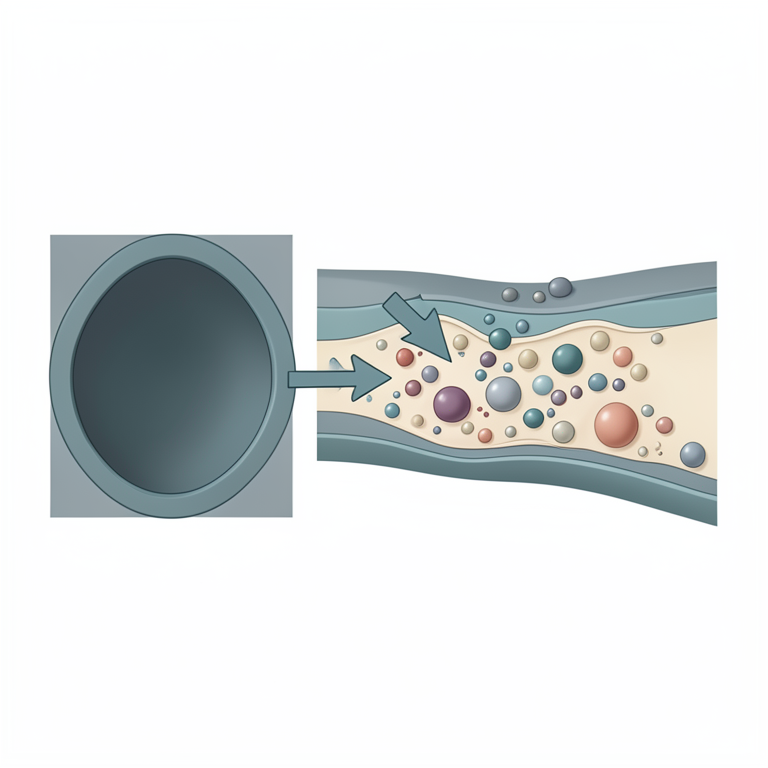
Biomarker Interaction
AI-generated conceptual illustration (human blood vessels and arterial walls). It explains the idea and does not show study data.
View source evidence ↗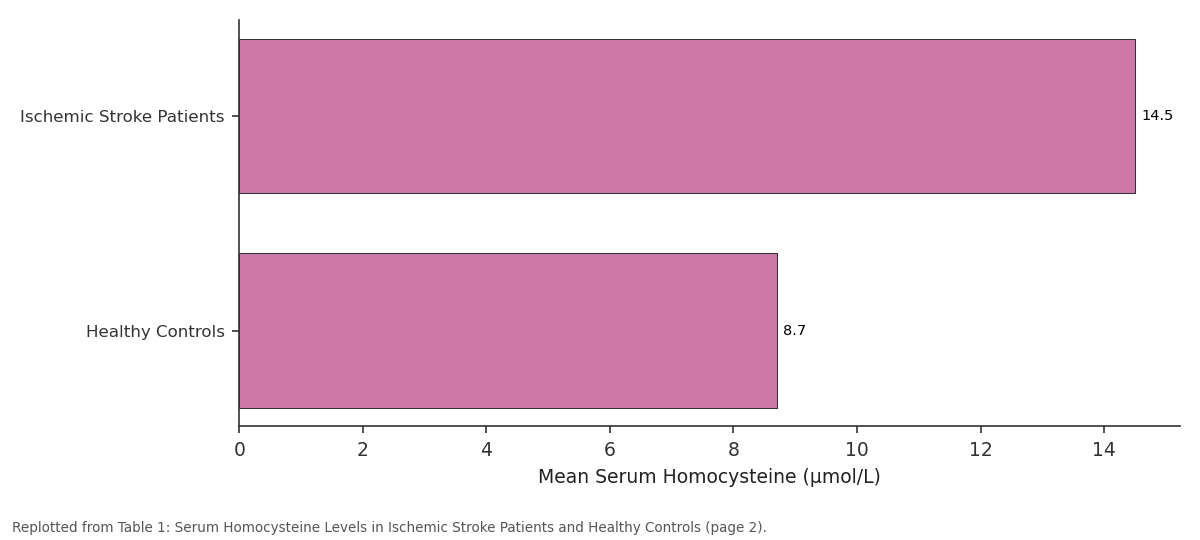
Mean Serum Homocysteine (µmol/L): Ischemic Stroke Patients vs Healthy Controls
Replotted from Table 1 (page 2) of the original paper. Every bar is the paper's own table value.
View source evidence ↗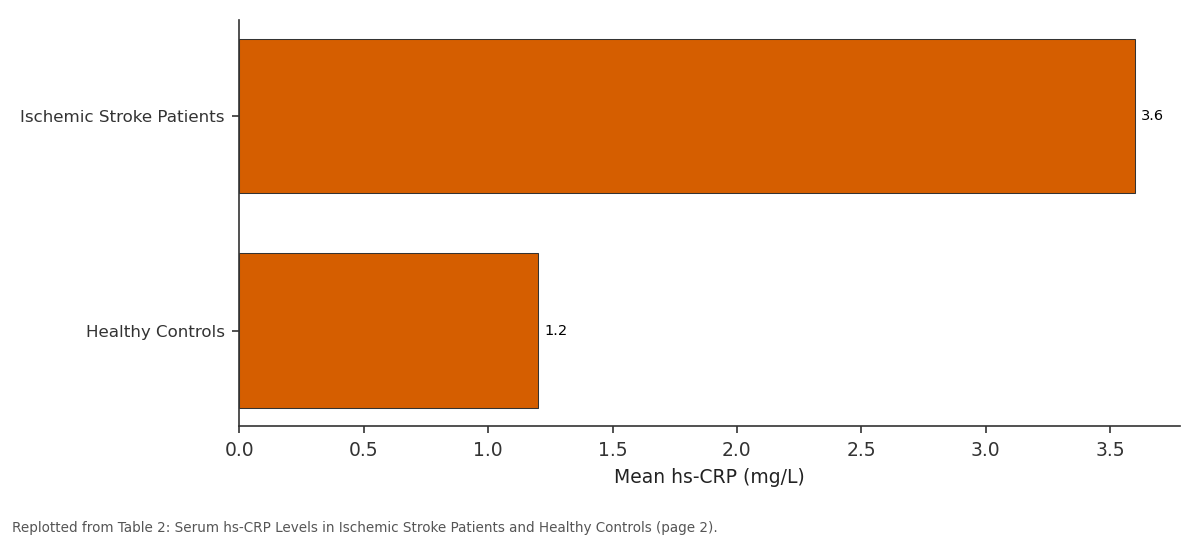
Mean hs-CRP (mg/L): Ischemic Stroke Patients vs Healthy Controls
Replotted from Table 2 (page 2) of the original paper. Every bar is the paper's own table value.
View source evidence ↗Figures & tables
From the original paper Table 1
 Table 2
 Table 3
 Table 4
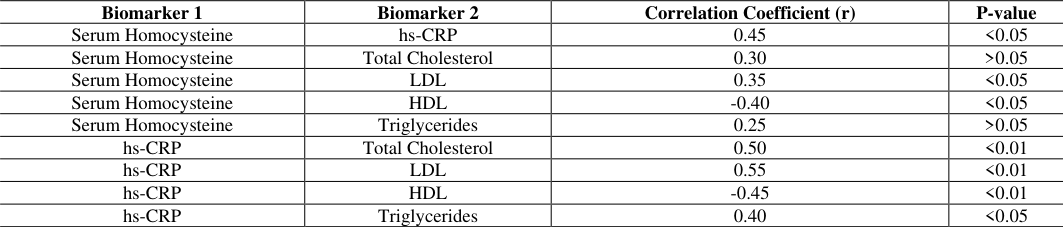 Table 5
Introduction
Ischemic stroke, a major health concern worldwide, results from the interruption of blood flow to the brain, leading to significant morbidity and mortality [1] . Traditional risk factors like hypertension, smoking, and atrial fibrillation have long been implicated in its development. However, recent research has increasingly focused on metabolic factors such as serum homocysteine, high-sensitivity C-reactive protein (hs-CRP), and lipid profiles, particularly in the context of non-diabetic individuals [2] . Serum homocysteine, a sulfur-containing amino acid, has emerged as a critical factor in stroke pathogenesis. Elevated levels of homocysteine are thought to induce endothelial dysfunction, promote oxidative stress, and create a prothrombotic state, significantly increasing stroke risk. This relationship has been extensively studied, with findings such as those by Boysen and Brander in "Homocysteine and Stroke Risk" highlighting homocysteine as an independent risk factor for cerebrovascular events [3] . High-sensitivity C-reactive protein, a marker of systemic inflammation, is another biomarker of interest. Its elevation indicates a heightened state of inflammation, which is a known contributor to atherosclerosis and thrombosis. Studies like those conducted by Ridker et al. (2002) in "Association of hs-CRP with Stroke Risk" have shown hs-CRP to be a potential predictor of cardiovascular and cerebrovascular events, underscoring its significance in stroke risk assessment [4] . The role of lipid profiles, which include measurements of cholesterol and triglycerides, is well-established in the context of cardiovascular disease but is more nuanced in stroke, especially among non-diabetic individuals. Dyslipidemia, characterized by high levels of low-density lipoprotein (LDL) cholesterol or triglycerides, or low levels of high-density lipoprotein (HDL) cholesterol, is a key risk factor for atherosclerosis. This in turn is a major contributor to ischemic stroke. However, as discussed in studies like "Lipids and Stroke Risk" by Amarenco et al. (2009), the specific impact of various lipid components on stroke risk may differ in non-diabetic populations [5] . Given the complexity of these factors and their interplay, this study seeks to conduct a comprehensive analysis of serum homocysteine, hs-CRP, and lipid profiles in nondiabetic individuals experiencing ischemic stroke. By investigating these relationships in detail, the study aims to enhance our understanding of stroke pathophysiology in non-diabetic patients, improve risk stratification, and potentially guide the development of targeted preventive and therapeutic strategies.
Materials and Methods
The present study was conducted at the Department of Biochemistry, Mamata Medical College, Khammam. This study included 30 subjects, comprising 15 non-diabetic patients with ischemic stroke (case group) and 15 age-and sex-matched healthy controls. The stroke diagnosis was confirmed by a neurologist based on clinical examination and imaging studies. The study was approved by the Institutional Ethics Committee. Informed consent was obtained from all participants.
Inclusion and Exclusion Criteria: Cases were non-diabetic adults (age 18-65) with a recent diagnosis of ischemic stroke. Exclusion criteria included history of diabetes, other forms of stroke, significant renal or liver disease, inflammatory conditions, and current use of lipid-lowering or anti-inflammatory medications.
Sample Collection and Analysis:
Fasting blood samples were collected from all subjects. Serum homocysteine levels were measured using a chemiluminescent immunoassay, hs-CRP levels by high-sensitivity enzyme-linked immunosorbent assay (ELISA), and lipid profiles (total cholesterol, LDL, HDL, and triglycerides) using standard enzymatic methods.
Statistical Analysis: Data were analyzed using SPSS software. Comparisons between groups were made using ttests for continuous variables and chi-square tests for categorical variables. A p-value < 0.05 was considered statistically significant. This suggests that elevated serum homocysteine may be associated with ischemic stroke risk, highlighting its potential importance as a biomarker for stroke susceptibility.
Results
Results
Discussion
Our comprehensive analysis of serum biomarkers and risk factors in non-diabetic ischemic stroke patients versus healthy controls yields valuable insights into the multifaceted nature of stroke pathogenesis and risk stratification. These findings echo earlier studies and offer new perspectives on the interplay between serum biomarkers and clinical risk factors. The significant elevation in serum homocysteine levels among ischemic stroke patients underscores the potential role of hyperhomocysteinemia in stroke pathophysiology, consistent with previous research by Wang et al. (2015). Hyperhomocysteinemia is recognized as an independent risk factor for vascular diseases due to its detrimental effects on endothelial function and prothrombotic tendencies [6] . The elevation of homocysteine levels in stroke patients emphasizes the importance of monitoring and addressing this modifiable risk factor in stroke prevention strategies.
Furthermore, the pronounced increase in high-sensitivity Creactive protein (hs-CRP) levels in stroke patients aligns with the work of Ridker et al. (2003), emphasizing the association between inflammation and stroke risk. Inflammation plays a pivotal role in atherosclerosis and plaque destabilization, which are key processes in the pathogenesis of ischemic stroke. The elevation of hs-CRP levels highlights the potential utility of inflammation as a biomarker for stroke risk assessment [7] . The lipid profile disparities observed in our study, including elevated total cholesterol, low-density lipoprotein (LDL), and reduced high-density lipoprotein (HDL) in stroke patients, are consistent with the lipid management recommendations proposed by Amarenco et al. (2009). These lipid abnormalities contribute to a proatherogenic environment, promoting atherosclerosis and increasing the risk of thrombotic events. Total cholesterol and LDL are established risk factors for cardiovascular diseases, including ischemic stroke, making them important targets for intervention [8] . Age and gender-based subgroup analyses provide deeper insights into the differential risk profiles of stroke patients. The significant elevation of serum homocysteine, hs-CRP, and adverse lipid profiles in stroke patients aged 50 or older emphasizes age as a prominent risk factor for ischemic stroke [9] . Older individuals often exhibit a higher burden of traditional cardiovascular risk factors, which may contribute to their increased susceptibility to stroke. Our findings underscore the importance of age-specific risk assessment and intervention strategies. Gender-based analysis reveals intriguing differences, with women with ischemic stroke exhibiting distinct lipid profiles characterized by lower HDL levels. This observation aligns with previous research suggesting that lower HDL levels in women may contribute to their higher susceptibility to stroke [10] . The hormonal and metabolic differences between genders may play a role in these variations. Tailored stroke prevention strategies may need to consider gender-specific risk factors and biomarker profiles. The correlation analysis elucidates intricate relationships between biomarkers. The positive correlations between serum homocysteine and hs-CRP levels suggest a potential synergistic effect in stroke pathogenesis. Homocysteineinduced endothelial dysfunction and inflammation may interact, promoting a prothrombotic and atherogenic milieu. Further research is needed to explore the mechanistic links between these biomarkers and their clinical implications in stroke.
Importantly, our study identifies smoking, alcohol use, and a family history of cardiovascular disease as significant risk factors associated with ischemic stroke. These findings are in line with the seminal work of Mukamal et al. (2005) and emphasize the pivotal role of these modifiable and nonmodifiable risk factors in stroke prevention. Smoking and alcohol consumption contribute to vascular damage and inflammation, while a family history of cardiovascular disease may indicate a genetic predisposition to stroke. These risk factors underscore the need for comprehensive risk assessment and targeted interventions addressing lifestyle modifications and genetic predisposition.
In conclusion, our study provides valuable insights into the complex interplay of serum biomarkers and risk factors in non-diabetic ischemic stroke. These findings underscore the importance of tailored risk assessment and intervention strategies, considering age, gender, and lifestyle factors. Moreover, our study reinforces the multifactorial nature of ischemic stroke, the need for a holistic approach to stroke prevention and management.
Figures and tables from the paper
| Group | Number of Subjects | Mean Serum Homocysteine (µmol/L) | Standard Deviation (SD) | P-value |
|---|---|---|---|---|
| Ischemic Stroke Patients | 15 | 14.5 | 3.2 | - |
| Healthy Controls | 15 | 8.7 | 2.8 | <0.05 |
Table text extracted from the original PDF; superscript letters are shown inline. The original table image is below.
View original table image
| Group | Number of Subjects | Mean hs-CRP (mg/L) | Standard Deviation (SD) | P-value |
|---|---|---|---|---|
| Ischemic Stroke Patients | 15 | 3.6 | 1.1 | - |
| Healthy Controls | 15 | 1.2 | 0.6 | <0.01 |
Table text extracted from the original PDF; superscript letters are shown inline. The original table image is below.
View original table image
| Parameter | Group | Number of Subjects | Mean (mg/dL) | Standard Deviation (SD) | P-value |
|---|---|---|---|---|---|
| Total Cholesterol | Ischemic Stroke Patients | 15 | 210 | 25 | - |
| Healthy Controls | 15 | 190 | 20 | <0.05 | |
| LDL Cholesterol | Ischemic Stroke Patients | 15 | 140 | 30 | - |
| Healthy Controls | 15 | 120 | 25 | <0.05 | |
| HDL Cholesterol | Ischemic Stroke Patients | 15 | 40 | 5 | - |
| Healthy Controls | 15 | 50 | 6 | <0.01 | |
| Triglycerides | Ischemic Stroke Patients | 15 | 160 | 35 | - |
| Healthy Controls | 15 | 130 | 20 | <0.05 |
Table text extracted from the original PDF; superscript letters are shown inline. The original table image is below.
View original table image
| Risk Factor | Group | Number of Subjects | Prevalence (%) | P-value |
|---|---|---|---|---|
| Smoking | Ischemic Stroke Patients | 15 | 40 | - |
| Healthy Controls | 15 | 20 | <0.05 | |
| Alcohol Use | Ischemic Stroke Patients | 15 | 30 | - |
| Healthy Controls | 15 | 10 | <0.05 | |
| Family History of Cardiovascular Disease | Ischemic Stroke Patients | 15 | 50 | - |
| Healthy Controls | 15 | 25 | <0.05 |
Table text extracted from the original PDF; superscript letters are shown inline. The original table image is below.
View original table image
| Biomarker 1 | Biomarker 2 | Correlation Coefficient (r) | P-value |
|---|---|---|---|
| Serum Homocysteine | hs-CRP | 0.45 | <0.05 |
| Serum Homocysteine | Total Cholesterol | 0.30 | >0.05 |
| Serum Homocysteine | LDL | 0.35 | <0.05 |
| Serum Homocysteine | HDL | -0.40 | <0.05 |
| Serum Homocysteine | Triglycerides | 0.25 | >0.05 |
| hs-CRP | Total Cholesterol | 0.50 | <0.01 |
| hs-CRP | LDL | 0.55 | <0.01 |
| hs-CRP | HDL | -0.45 | <0.01 |
| hs-CRP | Triglycerides | 0.40 | <0.05 |
Table text extracted from the original PDF; superscript letters are shown inline. The original table image is below.
View original table image
References
9 in the original paper- Ruan G, LV Y, Huang Q. The correlation among acute cerebral infarction area, serum high sensitivity C reactive protein and homocysteine concentrations. International Journal of Laboratory Medicine. 2015:2490-1.
- Boysen G, Brander T, Christensen H, Gideon R, Truelsen T. Homocysteine and risk of recurrent stroke. stroke. 2003 May 1;34(5):1258-61.
- Ridker PM, Rifai N, Rose L, Buring JE, Cook NR. Comparison of C-reactive protein and low-density lipoprotein cholesterol levels in the prediction of first cardiovascular events. New England journal of medicine. 2002 Nov 14;347(20):1557-65.
- Amarenco P, Labreuche J. Lipid management in the prevention of stroke: review and updated meta-analysis of statins for stroke prevention. The Lancet Neurology. 2009 May 1;8(5):453-63.
- Wang C, Han L, Wu Q, Zhuo R, Liu K, Zhao J, et al. Association between homocysteine and incidence of ischemic stroke in subjects with essential hypertension: a matched case-control study. Clinical and Experimental Hypertension. 2015 Oct 3;37(7):557-62.
- Ridker PM, Bassuk SS, Toth PP. C-reactive protein and risk of cardiovascular disease: evidence and clinical application. Current atherosclerosis reports. 2003 Sep;5:341-9.
- Tsimikas S, Willerson JT, Ridker PM. C-reactive protein and other emerging blood biomarkers to optimize risk stratification of vulnerable patients. Journal of the American College of Cardiology. 2006 Apr 18;47(8S):C19-31.
- Mirzaei H. Stroke in women: risk factors and clinical biomarkers. Journal of cellular biochemistry. 2017 Dec;118(12):4191-202.
- Mukamal KJ, Chung H, Jenny NS, Kuller LH, Longstreth Jr WT, Mittleman MA, et al. Alcohol use and risk of ischemic stroke among older adults: the cardiovascular health study. Stroke. 2005 Sep 1;36(9):1830-4.