
Research article · 2024 · Full text
International Journal of Agriculture Extension and Social DevelopmentEmpowering the farmers and the weavers: The economic and social role of pineapple leaf fibre
Volume 7(1) · Pages 342–345 · DOI: 10.33545/26180723.2024.v7.i1e.249 ↗
Research areasPineapple and bromelain studies
Abstract
Author-writtenIn India, the overgrowth population demands continuous resources in the form of food, clothing, shelter, and various other possessions. Solid waste disposal issues in the agriculture and clothing sectors. Many agro-wastes are available after harvesting, and tons of clothing waste fill landfills in our country. The waste from non-biodegradable clothing takes several decades to degrade in the land. Efforts are being made by people in the research field, academics, and industries to replace non-biodegradable products with bio-degradable products, and the production of natural-based biodegradable products from agro-waste is one of them. The use of agro-waste material in the clothing industry will be of great benefit to the environment, the farmers, the wearer, and the makers who make clothes. As a part of the effort to increase the use of agro-waste in sustainable textiles, this study on the use of pineapple leaves in textiles has been conducted. Extraction of fiber from the available pineapple leaf waste in local farms of Manipur, treatment of the extracted fiber, and experiment on spinning of yarn based on the characteristics of the existing yarn used in making the traditional textiles of the Meitei community of the state were involved. In addition, tests and analyses of the fiber and prepared yarn were performed to check the possibility of using it in the production of traditional textiles. SWOC analysis of the fibre in making the textiles was performed. Based on the obtained results, the fiber was found to be suitable for making traditional textiles of the Meitei community. Further study can be conducted on this fiber for different traditional textiles.
Summary
Source-checkedPlain-language reading of the full paper, prepared with AI and checked against the text. Each point links to the authors' own words.
Why it matters
- India faces significant waste disposal challenges in both the agricultural and clothing sectors, with large amounts of agro-waste and non-biodegradable clothing filling landfills. View evidence ↗
- Extracting plant fibers from agricultural waste can improve the livelihoods of poor rural populations and create new employment opportunities in rural and semi-urban areas. View evidence ↗
- Manipur is one of India's top 10 pineapple producers, resulting in an abundance of pineapple leaf waste after harvest. View evidence ↗
The question
- The study aims to determine if pineapple leaf fiber (PALF) can be used to create yarns for the traditional textiles of the Meitei community to support weavers and increase farmer income. View evidence ↗
What they did
- Fibers were extracted using hand scraping and a decorticator machine, then subjected to water retting for a period of 7 days. View evidence ↗
- The researchers compared traditional hand spinning with motorized hand spinning to find the most practical method for local adoption. View evidence ↗
- A union fabric was created using a plain weave with cotton for the warp and pineapple fiber for the weft to mimic traditional Meitei textiles. View evidence ↗
What they found
- The extracted pineapple fiber was very fine, averaging 7.57 denier, with filament-like lengths reaching up to 92 cm. View evidence ↗
- Raw fiber showed a tensile strength of 4.27/den (max load 126) at 500 mm/min, which decreased to 2.3 gf/den (max load 115.6) after chemical treatment. View evidence ↗
- The fiber's chemical composition, 77.7% cellulose, 1.3% lignin, and 2% hemicellulose, makes it suitable for yarn preparation. View evidence ↗
- The developed fabric exhibited a maximum load tensile strength of 9.9 kgf in the warp direction (22.11% strain) and 12.15 kg in the weft direction (7.50% strain). View evidence ↗
- The inherent stiffness of the pineapple fiber, even without finishing treatments, closely resembles that of existing traditional textiles, indicating high feasibility. View evidence ↗
What it means
- The authors conclude that using pineapple leaf fiber for yarn in Meitei traditional textiles is feasible and provides an eco-friendly, biodegradable alternative. View evidence ↗
- Hand extraction of the fiber is currently too time-consuming and expensive, necessitating the adoption of machine extraction for viability. View evidence ↗
- The widespread use of the fiber is limited by a lack of industrial mass production, insufficient marketing, and low consumer awareness. View evidence ↗
Visual summary
2 visualsIllustrations explain the paper; charts are replotted from the paper's own table values.
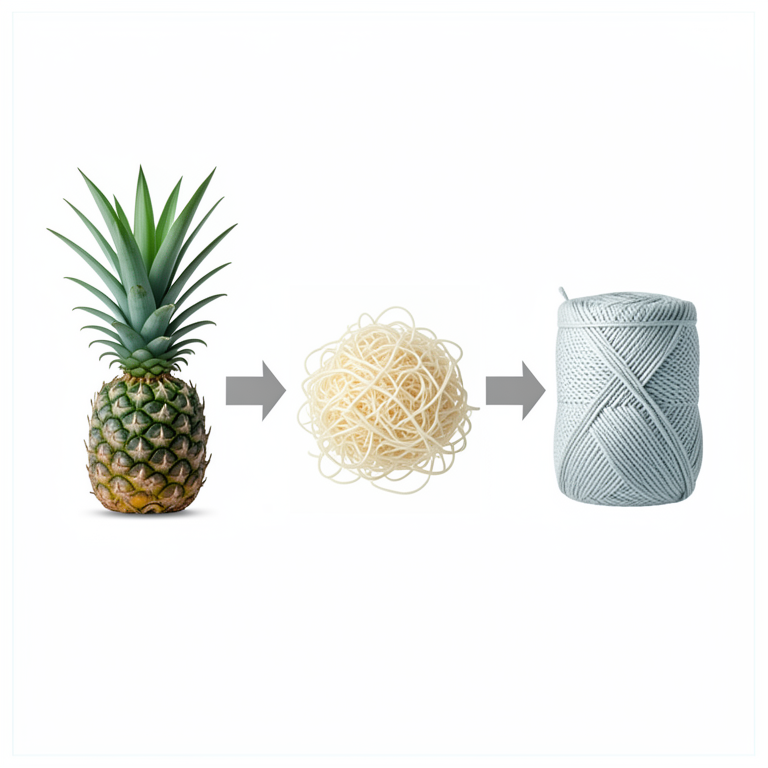
Sustainable Textile Cycle
AI-generated conceptual illustration (pineapple plants and traditional hand-woven textiles). It explains the idea and does not show study data.
View source evidence ↗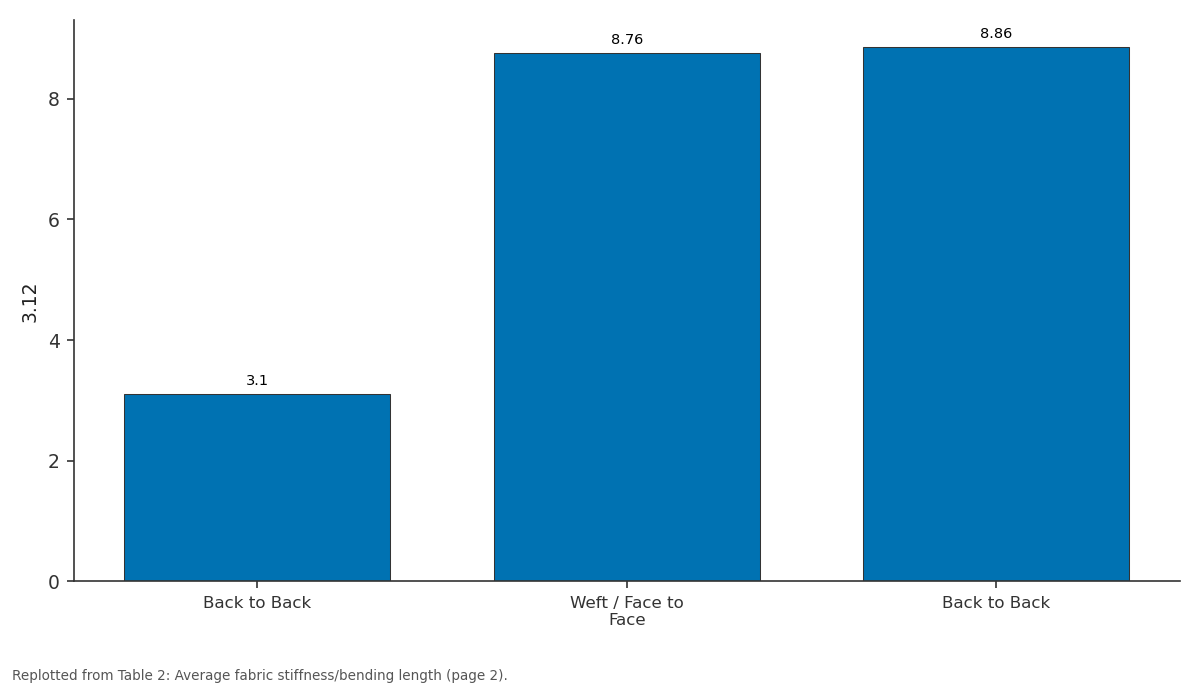
3.12: Back to Back vs Weft / Face to Face vs Back to Back
Replotted from Table 2 (page 2) of the original paper. Every bar is the paper's own table value.
View source evidence ↗Figures & tables
From the original paper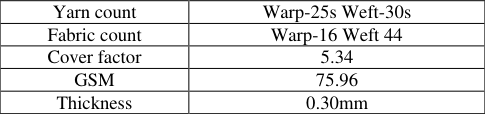 Table 1
 Table 2
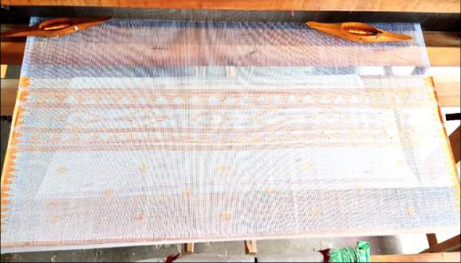 Figure 3
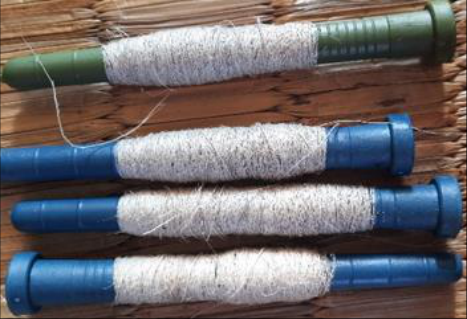 Figure 2
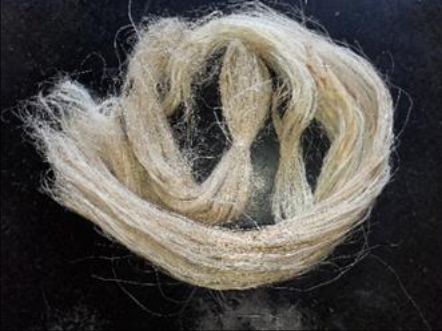 Figure 1
Introduction
The largest sector in India is agriculture, which plays a significant role in the Indian economy. It provides a livelihood for farmers and consumers. The majority of the Indian population is still in the agricultural sector. Cultivation of crops is the main source of income for rural areas. As the top sector of the country's economy, agricultural land waste is a predominant factor in the environment. Many research institutes, government organizations, and industries are working on the utilization of waste from agricultural output to overcome the issues of agricultural waste. Extraction of textile fibres from waste plants after harvesting is one of the ongoing efforts of many individuals and organizations. Cellulose fibres extracted from leaves, stalks or pseudo stems have a significant economic value and play a vital role in the lives and food security of many farmers and processors. The newly developed extractor can ensure the supply of extracted plant fibres throughout the year, thereby increasing the value added of textiles and diversifying its products. The extraction of plant fibres will also contribute to the improvement of poor rural people and the generation of employment in rural and semi-urban sectors [10] . India is a one of the pineapple producers. Regions with a high rainfall are optimal for the cultivation of this plant. The northeastern region has the right climatic conditions for the cultivation of pineapple, making it a major pineapple producer in the country. Manipur is part of the northeastern region and produces a great metric ton of pineapple fruit and has become one of the top 10 producers in the country. After the fruit has been harvested, waste leaves are abundantly available in the state in the form of agro-waste. Extraction of pineapple leaf fiber (PALF) from waste leaves has already been explored in the country. The use of this fiber has a great potential to fabricate various textile materials. Numerous studies have been conducted on the utilization of PALFs in the fiber stage. However, few studies have been conducted on the application of this fiber in yarn and fabric stages so far. In order to achieve long-term use, further extensive studies on the production of textiles using PALF need to be conducted. At present, the culture and tradition of handloom weaving seem to be reduced. Up gradation of technology should be closely linked to the conservation of traditional techniques. Efforts should be made in such a way as to sustain hand weaving with the help of technology in order to utilize waste as well as conserve traditional practices. The use of pineapple leaves as an agro-waste in traditional crafts would be a great choice for this. www.extensionjournal.com Pineapple leaf fiber has a physical appearance similar to that of silk, and silk is the main fiber used to weave traditional textiles of Meitei. Therefore, traditional textiles of this community are selected for this study. This study examines the feasibility of using pineapple leaf fiber to make yarns traditional textiles for the Meitei community by sustaining the skill of weavers and providing extra income to farmers.
Materials and Methods
Extraction of the fiber was performed by means of hand scraping and a decorticator machine, followed by water retting for 7 days. After extraction, fibers were combed to remove the green waxy residue on the fiber. Scouring was then performed to remove any residue from the fiber, followed by washing and drying. Chemical and enzyme treatment were done as a trial. The physical and chemical properties of the fiber were tested in order to understand the behavior of the fibers and identify whether it is suitable for making the proposed textiles. Fiber length, fiber fineness, moisture content and moisture regain, tensile strength, and chemical composition of the fiber were tested. Traditional hand spinning and motorized hand spinning were conducted to identify a suitable hand spinning method that can be adopted by the local people. Tests were performed on the prepared yarn to determine its count, denier, evenness, TPI (Twist Per Inch), and tensile strength. Weaving of a union fabriccotton/pineapple as the traditional textile was done.
Results and Discussion
1. Properties of the fibre: On the basis of their physical and chemical structure. A very fine fiber with an average of 7.57 denier was observed. The length of the fiber was found to be almost filament-like, reaching up to 92 cm. Moisture content and regain value were found to be similar to other cellulosic fiber. A good tensile strength of 4.27/den with a maximum load of 126 at a speed of 500 mm/min was obtained in the raw fiber, but a lower value of 2.3 gf/den with a maximum load of 115.6 at the same speed was obtained in the chemically treated fiber. In terms of chemical properties, the cellulose content of the fiber is 77.7%, which is a good value. Lignin and hemicellulose contents of 1.3% and 2%, respectively, ensured that the fiber was suitable for yarn preparation.
Preparation of yarn:
Hundred percent pineapple leaf fiber was found to be suitable for making the yarn of count 30s. Hand-spun yarn was achieved with all the techniques; however, a higher yield of yarn was produced in the case of the motorized charkha. This locally developed motorized charkha can be easily adopted by the local people and is cost effective. The twist per inch of the yarn was 85 with the tenacity of 2.13 g/d. The prepared yarn was found to be even which had the value of mean-0.0095g per 100 cm and the mean deviation was 5.3%.
SWOC Analysis
The utilization of pineapple leaves for textile production has advantages and disadvantages, making it a promising and sustainable option. Here are some strengths associated with using pineapple leaf fibers in textile production. The strengths of using pineapple leaf fibers in textile production lie in their abundant availability, biodegradability, eco-friendliness, breathability, fine yarn production capabilities, tensile strength, and versatility, making them a promising and sustainable choice for the development of consumer products. Utilizing pineapple leaf fibers for textile production include the time-consuming and expensive hand extraction process. Machine extraction is necessary to address this issue. Additionally, there is a lack of mass production and marketing at the industry level, and consumer awareness of this fiber needs improvement. Opportunities associated with pineapple leaf fibers in textile production include utilizing waste for manufacturing natural-based textiles. Pineapple can serve as an alternative to silk in traditional textile production, especially in regions like Manipur. The fine yarn produced from this fiber aligns with traditional weaving techniques. Selling waste leaves can provide additional income for farmers, complementing fruit sales. Furthermore, local weavers can preserve traditional weaving skills while incorporating the new raw material into the production of traditional textiles. Challenges associated with pineapple leaf fibers in textile production include the need for installing extraction machines for mass production. Limited availability in the market poses difficulty in competing with synthetic fibers on a large scale. Overcoming these challenges requires extensive research, increased awareness, and training to popularize the use of this fiber.
The SWOC (Strengths, Weaknesses, Opportunities, and Challenges) analysis highlights the promising potential of pineapple leaf fibers in textile production. While the fiber offers eco-friendly and breathable qualities, fine yarn production, and additional income opportunities for farmers, challenges such as the need for extraction machinery, market competition with synthetic fibers, and the necessity for research and awareness must be addressed. Recognizing and addressing these factors can pave the way for the sustainable and widespread adoption of pineapple leaf fibers in the textile industry, contributing to a more environmentally conscious and economically beneficial approach to textile manufacturing.
Conclusion
The study concluded that the feasibility of utilizing pineapple leaf fiber for yarn in traditional textiles of the Meitei community was achievable. This approach offered the potential to create biodegradable, eco-friendly, and natural-based products by utilizing waste pineapple leaves. The 100% PALF yarn, resembling silk, came out as a significant outcome. Local acceptance of the prepared yarn added to its importance. Beyond the specific traditional textiles of focus, there is potential to explore other traditional textiles using pineapple leaf fiber, with the flexibility to create various yarn counts. The good tensile strength of the fiber provides a solid foundation for further research and exploration in this promising direction.
References
References
Figures and tables from the paper
| Yarn count | Warp-25s Weft-30s |
|---|---|
| Fabric count | Warp-16 Weft 44 |
| Cover factor | 5.34 |
| GSM | 75.96 |
| Thickness | 0.30mm |
Table text extracted from the original PDF; superscript letters are shown inline. The original table image is below.
View original table image
| Warp | — | Weft | — |
|---|---|---|---|
| Face to Face | Back to Back | Face to Face | Back to Back |
| 3.12 | 3.1 | 8.76 | 8.86 |
Table text extracted from the original PDF; superscript letters are shown inline. The original table image is below.