
Research article · 2024 · Full text
International Journal of Research in AgronomyAuto-toxicity of sorghum (Sorghum bicolor L.) in seedling and vegetative growth
Volume 7(1) · Pages 270–276 · DOI: 10.33545/2618060x.2024.v7.i1d.227 ↗
Research areasAllelopathy and phytotoxic interactions
Abstract
Author-writtenSorghum (Sorghum bicolor L.) is a cereal plant that can support food in Indonesia because it contains sufficient nutrients. In addition, sorghum has potential as a vegetable herbicide because it has allelochemical compounds of phenolic groups such as cyanogenic (Dhurin) and sorgoleone, which can inhibit weed growth. This study aimed to obtain the optimum concentration of sorghum allelochemicals on sorghum's germination and vegetative growth inhibition and determine the Inhibitory Concentration (IC50). The research was carried out in the Agronomy Laboratory and the greenhouse of the Faculty of Agriculture, Bengkulu University, Indonesia. The design used in this study was a completely randomized design (CRD) with a single factor. The factors tested were the herbicide concentration of sorghum (C), namely C1 = 0%, C2 = 2.5%, C3 = 5%, C4 = 7.5%, and C5 = 10%. Each treatment was repeated five times so that 25 experimental units were obtained. Each experimental unit consists of two petrifies and two polybags. The data obtained were analyzed statistically using Analysis of Variance (ANOVA) at a significance level of F 5%. Variables that had a significant effect were further tested for Orthogonal Polynomials, and to determine the IC50, the data obtained were analyzed using regression analysis. The study's results showed sorghum bioherbicide inhibits seedling growth as evidenced by short primary roots, malformed sprouts, twisted plumules, swelling and short cotyledons, a small number of leaves, and stunting at concentrations ranging from 2.5% to 10%. The IC50 value of in vitro sorghum bioherbicide is 5.85 for the normal seedling percentage.
Summary
Source-checkedPlain-language reading of the full paper, prepared with AI and checked against the text. Each point links to the authors' own words.
Why it matters
- Sorghum is a nutrient-rich cereal plant that serves as a food source in Indonesia. View evidence ↗
- Sorghum contains phenolic allelochemicals, specifically sorgoleone and cyanogenic compounds like dhurin, which can inhibit the growth of weeds, giving it potential as a bioherbicide. View evidence ↗
- Hydrogen cyanide (HCN) released by sorghum can disrupt mitochondrial respiration and electron transfer, which negatively impacts photosynthesis, seed germination, and cell development. View evidence ↗
The question
- The study aimed to determine the Inhibitory Concentration (IC50) and the optimum concentration of sorghum allelochemicals that inhibit the germination and vegetative growth of sorghum itself. View evidence ↗
What they did
- The researchers used a Completely Randomized Design testing five concentrations of sorghum root bioherbicide: 0%, 2.5%, 5%, 7.5%, and 10%. View evidence ↗
- The experiment consisted of 25 units, with each treatment repeated five times across both in vitro (petri dishes) and in vivo (polybags) settings. View evidence ↗
- The bioherbicide was prepared by extracting 150 g of dried, powdered sorghum plant parts in 1,500 ml of distilled water, incubated for 24 hours at 100 RPM. View evidence ↗
What they found
- The percentage of normal seedlings dropped significantly from 96.8% in the control group to 16.8% when treated with a 10% bioherbicide concentration. View evidence ↗
- Abnormal seedling rates increased with concentration, rising from 3.2% in the control to 83.2% at the 10% concentration level. View evidence ↗
- Radicle length decreased as bioherbicide concentration increased, falling from 4.8 cm (0%) to 0.6 cm (7.5%), with a reduction of 1.4 cm for every 2.5% increase. View evidence ↗
- Plumule length was severely inhibited, decreasing from 4 cm in the control to 0.07 cm at 10% concentration, dropping by 1 cm for every 2.5% increase. View evidence ↗
- Radicle dry weight decreased from 17 mg (0%) to 0.6 mg (10%), with a 4 mg decrease for every 2.5% increase in concentration. View evidence ↗
- Plumule dry weight fell from 70 mg (0%) to 10 mg (7.5%), decreasing by 20 mg for every 2.5% increase in concentration. View evidence ↗
- In vivo plant height was significantly reduced by the bioherbicide, decreasing from 31 cm in the control to 7 cm at 10% concentration. View evidence ↗
- The Inhibitory Concentration (IC50) for the percentage of normal seedlings was determined to be 5.85%. View evidence ↗
What it means
- The authors conclude that sorghum bioherbicide is autotoxic, causing stunting and various malformations in seedlings at concentrations between 2.5% and 10%. View evidence ↗
Visual summary
3 visualsIllustrations explain the paper; charts are replotted from the paper's own table values.
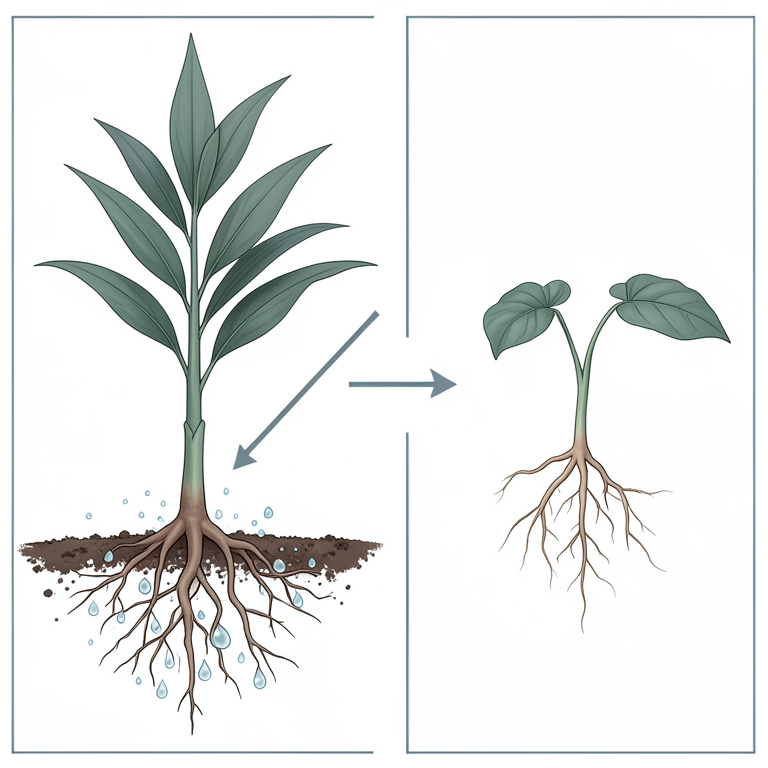
Sorghum Autotoxicity Cycle
AI-generated conceptual illustration (Sorghum bicolor plants). It explains the idea and does not show study data.
View source evidence ↗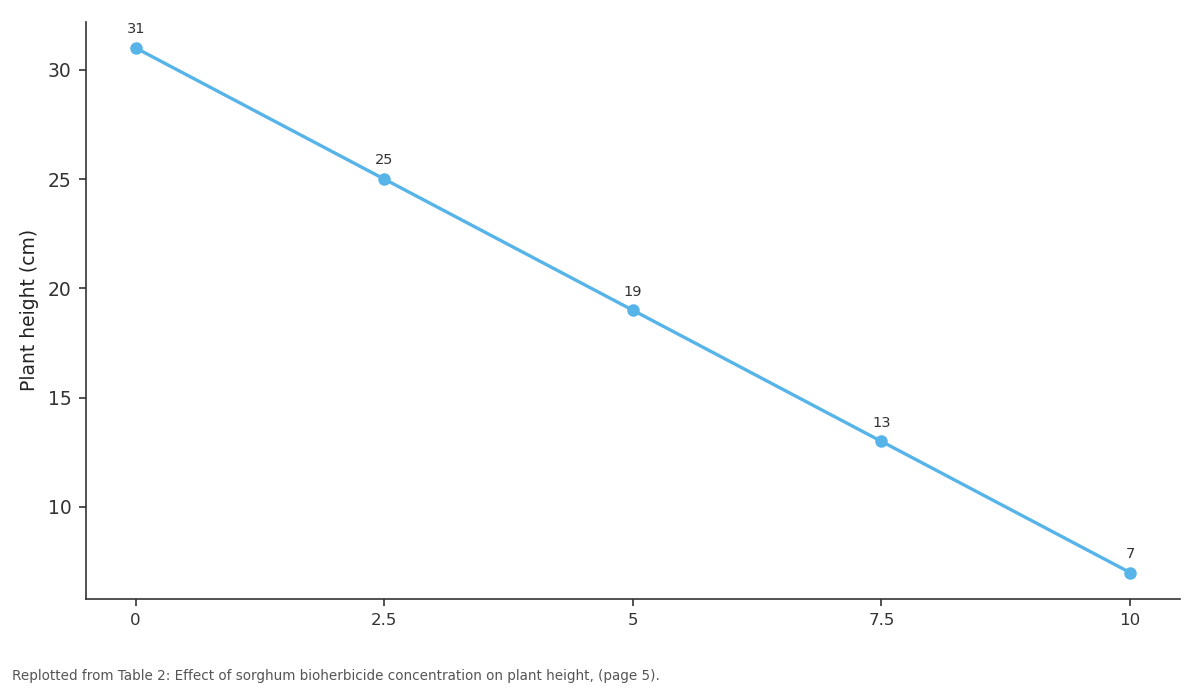
Plant height (cm): 0 vs 2.5 vs 5 vs 7.5 vs 10
Replotted from Table 2 (page 5) of the original paper. Every bar is the paper's own table value.
View source evidence ↗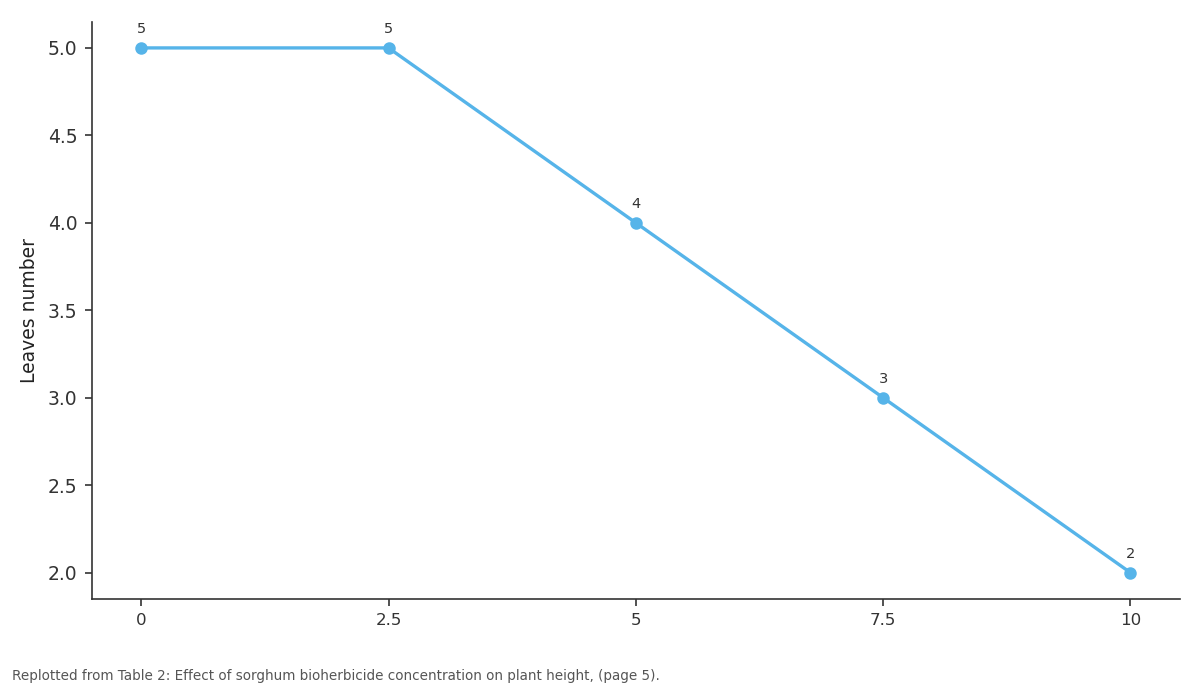
Leaves number: 0 vs 2.5 vs 5 vs 7.5 vs 10
Replotted from Table 2 (page 5) of the original paper. Every bar is the paper's own table value.
View source evidence ↗Figures & tables
From the original paper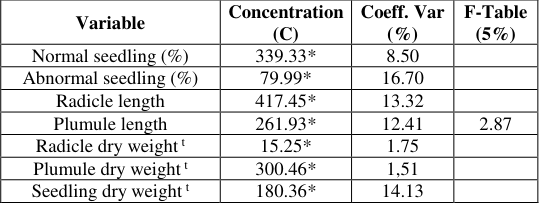 Table 1
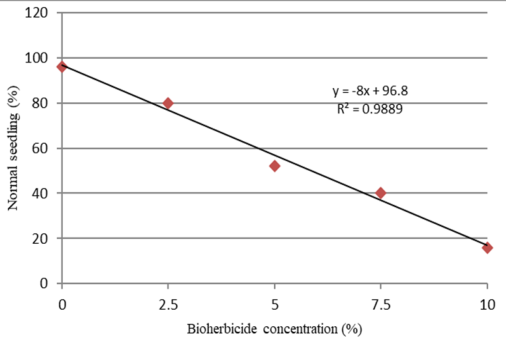 Figure 1
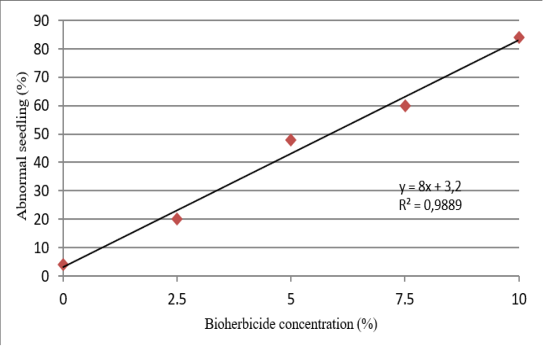 Figure 1
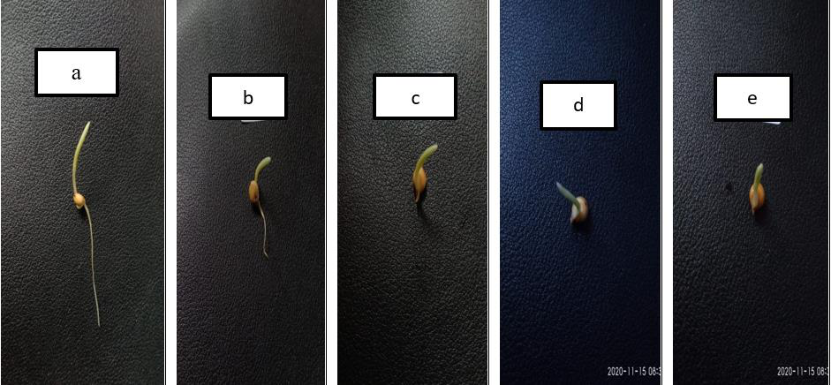 Figure 2
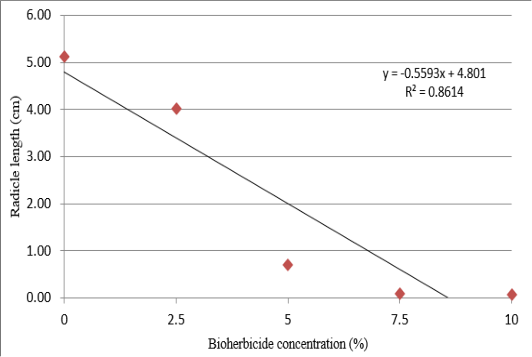 Figure 3
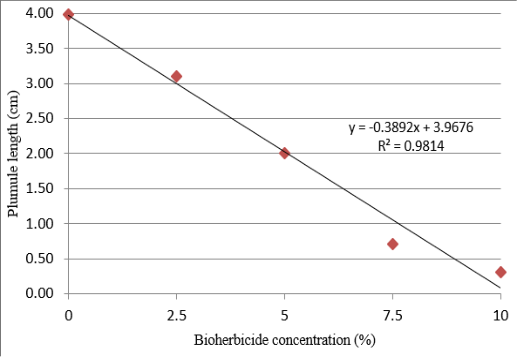 Figure 3
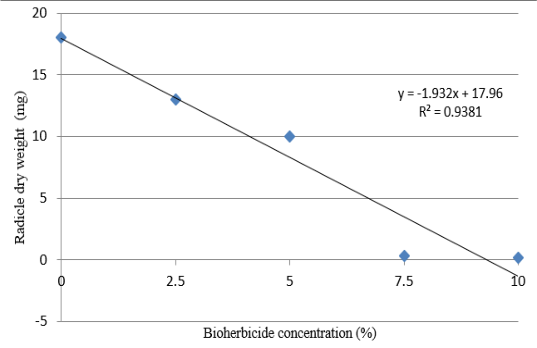 Figure 4
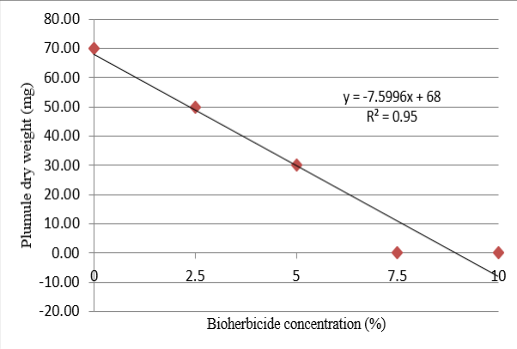 Figure 4
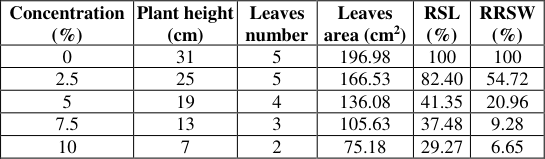 Table 2
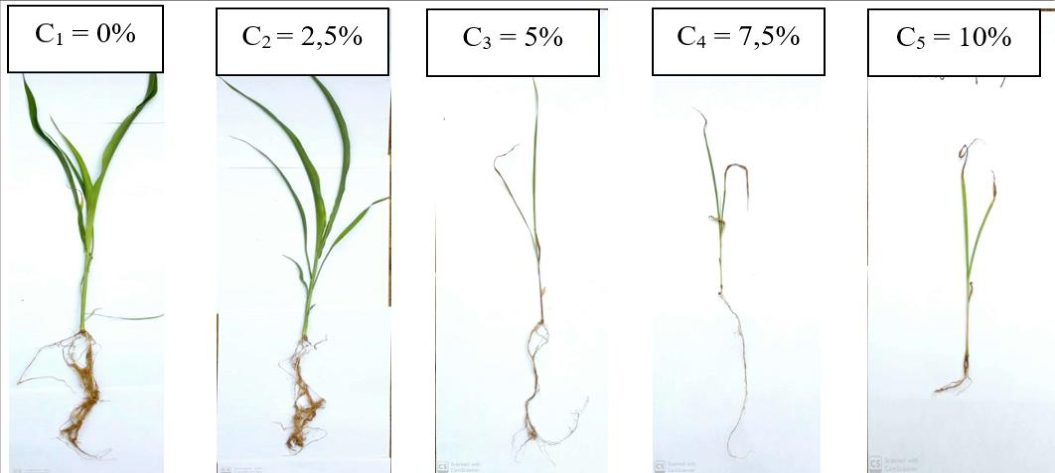 Figure 5
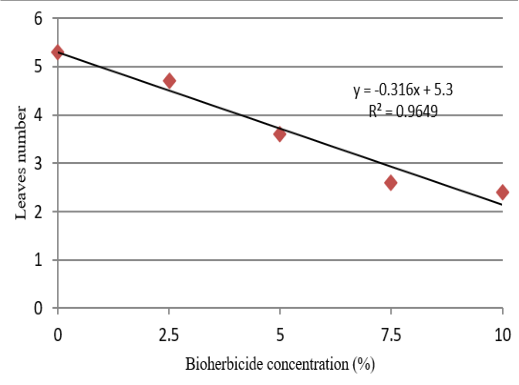 Figure 6
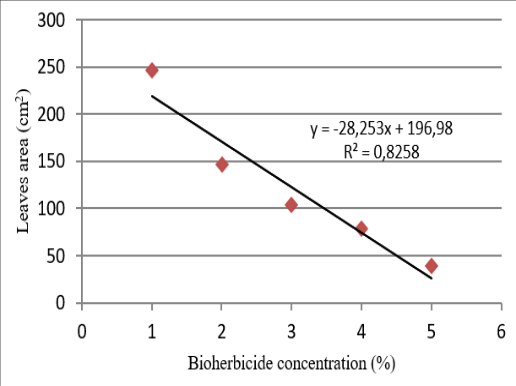 Figure 6
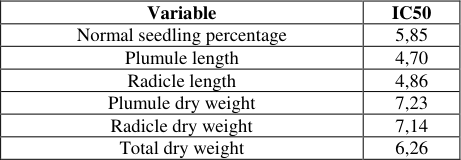 Table 3
Introduction
Sorghum (Sorghum bicolor L.) has the potential to be a bioherbicide in addition to being a food crop due to the presence of allelochemical phenolic chemicals such as cyanogenic (dhurin) and sorgoleone in shoots, roots, and root exudates (Susilo et [22][23][24][25][26]28] . Cyanogenic glycosides are one of the essential compounds that exist in young sorghum plants. Glycosides are produced and hydrolyzed to cyanide (HCN), glucose, and hydrophobic p-benzoquinone when plants are wounded or stressed. This chemical can prevent weed growth (Nicollier et al. 1983) [16] . Sorghum generates a chemical compound known as sorgoleone. Sorgoleone is a substance present in the root hairs of sorghum that inhibits weed growth, having no adverse effects on the primary crop (Dayan, 2006) [3] . Sorgoleone produced by seeds did not differ significantly from that produced by fresh and dried roots (Franco et al. 2011) [6] . Broadleaf weeds are susceptible to the herbicide activity of sorgoleone, which is used in the greenhouse and field pre-and post-emergently. Sorgoleone inhibits photosynthesis by interfering with solute and water molecule absorption and electron transport in chloroplasts and mitochondria. Sorgoleone herbicides are as effective as synthetic herbicides presently on the market (Jesudas et al. 2015) [11] . In addition to sorgoleone, sorghum contains dhurin and phenolic compounds, which dissolve in water. Plants are adverse to both dhurin and phenolic because they release hydrogen cyanide (HCN) through a mechanism generated by hydroxy nitrile lyase (HNL). HCN affects the activity of enzymes that influence mitochondrial respiration and electron transfer, affecting plant cell development, seed germination, and photosynthesis (Nielsen et al. 2016) [17] .
Herbicide concentration influences weed control efficacy (Herdiansyah et al. 2020) [10] . The higher the herbicide concentration, the greater the suppression of weed growth. Applying sorghum root bioherbicide to test plants at 2.5%, 5%, 7.5%, and 10% concentrations resulted in seedlings with short, abnormal primary roots, twisted plumules, and swollen cotyledons. In contrast, root and hypocotyl development in control plants (not treated with bioherbicides) was unaffected (Susilo et al. 2020; Susilo et al. 2021 c ) [21,23] . According to Sitanggang (2018) [20] , using a 5% concentration of sorghum extract resulted in the shortest plumula length. Randhawa et al. (2012) [19] also discovered that sorghum extract inhibited the growth of the Trianthema portulacadrtum radicle. Radicle growth is slowed by disturbance of food reserve breakdown and decreased root permeability caused by the entry of phenolic compounds, which alter the catalytic activity of germination enzymes, particularly those involved in carbohydrate breakdown. A disruption in the mitotic process in the embryo causes germination suppression. Seedling growth inhibition, on the other hand, is caused by disturbances in nutrient mobilization. The inhibited growth of the test plant can be obtained from the Inhibitory Concentration (IC50) value. IC50 is the concentration that can inhibit 50% germination and sprout growth with the equation y = ax+b. The IC50 value indicates the ability of a compound to inhibit the test plant. This research intended to explain the sorghum germination and vegetative growth response to various concentrations of bioherbicides derived from the sorghum base and determine the IC50 of sorghum extract in germination tests.
Materials and Methods
Materials and Methods
Location and Experimental Design:
The study was conducted at the Agronomy Laboratory and greenhouse of the Faculty of Agriculture, University of Bengkulu, Indonesia, from August to November 2020. The study was conducted in two stages, with the first assessing the efficacy of sorghum bioherbicide in vitro and the second in vivo. The study employed a Completely Randomized Design with a single factor, namely the concentration of sorghum root bioherbicide (C), with C1 = 0%, C2 = 2.5%, C3 = 5%, C4 = 7.5%, and C5 = 10%. Each treatment was repeated five times, resulting in a total of 25 experimental units. Each experimental unit was made up of two Petridishes in the lab and two polybags in the field.
Sorghum Bioherbiside Preparation: Bioherbicides' primary components were obtained from one-month-old sorghum plants. The sorghum leaves, stems, and roots were dried at 50oC until the weight was constant and ground into powder. In an Erlenmeyer flask, 150 g of sorghum powder was extracted with 1,500 ml of distilled water before being incubated for 24 hours on a shaker at 100 RPM. Following the incubation period, the solution was filtered using filter paper, granting a 10% concentration liquid referred to as sorghum extract.
Effectiveness of sorghum bioherbicide in vitro:
This study's petri dish was cleaned with 70% alcohol before being covered with Whatman No. 1 filter paper. Furthermore, each petri dish received 10 mL of sorghum root bioherbicide. Each petri dish included 25 sorghum seeds grown for seven days to determine germination.
Effectiveness of sorghum bioherbicide in the field: The research was conducted in the field using polybags. The planting media is a 1:1 (W:W) combination of soil and organic fertilizer. One kilogram of planting medium was placed in each polybag. The sorghum seeds were grown from in vitro seedlings that were seven days old. Each polybag included three sorghum seedlings. Throughout plant growth, fertilization, watering, weeding, and insect and plant disease control are all carried out. Nitrogen was applied at a rate of 100 kg/ha or 0.05 g/per polybag, phosphorus was applied at a rate of 50 kg/ha or 0.025 g/per polybag, and K2O was applied at a rate of 70 kg/ha or 0.035 g/per polybag. Watering was done to keep the soil moist, thinning at 1 WAP was done by removing the plants and leaving one in each polybag, and weeding was done at 2 WAP. Pest and disease control was done manually. Sorghum plants were harvested 30 days after planting. All plant parts, including roots, stems, and leaves, were taken for biomass employed as a bioherbicide base component.
Variable observed
In vitro experiment: On the seventh day, radicle length, plumula length, radicle dry weight, plumula dry weight, and total dry weight measurements were taken. Observations were also made on seedlings that developed normally and those that formed abnormally. Sorghum (monocot plants) abnormal seedlings have short (dwarf) primary roots that are shriveled and occasionally rot. The coleoptiles are bent and twisted, primary leaf growth is retarded, and the color is pale.
Field experiment:
Variables observed included plant height (cm), number of leaves, leaf length (cm), leaf width (cm), leaf area (cm 2 ), shoot dry weight (g), and root dry weight (g). Variable observations were conducted once weekly, beginning one week after planting (WAP) and continuing for six WAP.
Data analysis 1. The data were statistically analyzed with Analysis of
Variance (ANOVA) at the F(5%) significant level. If the difference was significant, an additional test with Orthogonal Polynomials was performed. 2. The Inhibition Concentration (IC50) bioherbicide was statistically analyzed by regression analysis.
Relative stem length (RSL) RSL =
x 100% (Asgharipour and Armin, 2010) [31] 4. Relative root and stem weight (RRSW) RRSW= x100
(Asgharipour and Armin, 2010) [31]
Results and Discussion
In vitro sorghum bioherbicide auto toxicity: The application of bioherbicides affects germination and inhibits seedling growth (autotoxic). The analysis of variance showed that the bioherbicide concentration had a significant effect on all variables measured. Table 1 shows a summary of the analysis of variance. Seedling growth: In order to determine the effect of bioherbicide on sorghum seed germination, the percentage of normal seedlings shall be observed. The normal seedling percentage was 96.8% at 0% concentration (without applying bioherbicides) and only 16.8% at 10% concentration. The percentage of abnormal seedlings in the control treatment was 3.2%, while at concentrations of 2.5%, 5%, 7.5%, and 10%, the percentages were 23.2%, 43.2%, 63.2%, and 83.2%, respectively. The percentage of normal seedlings decreased by 20% for every 2.5% increase in bioherbicide concentration, while abnormal seedlings increased by 20% (Figure 1). The higher the bioherbicide concentration, the more the seedling growth is stunted (Figure 1). Abnormal seedling growth results from disruption of the breakdown of food reserves and decreased root permeability caused by the entry of phenolic compounds, which interfere with the catalytic capabilities of germination enzymes. Cell division, mineral absorption, water balance, photosynthesis, chlorophyll, and phytohormones are all affected by phenol compounds. The higher the allelochemical concentration, the lesser the permeability of the roots, interfering with water and nutrient absorption (Einhellig, 1995) [4] . Disruptions in the mitotic process of the embryo induce disturbances in the germination process, whereas obstacles to nutrient mobilization caused by endosperm breakdown generate sprout abnormalities. As a result, the higher the concentration of bioherbicide, the more abnormal seedlings are produced. At a concentration of 0% (control), the seedling primary roots developed well, the hypocotyl developed regularly, and plumule growth was favorable with green leaves. Meanwhile, seedlings with short primary roots, deformed seedlings, twisted plumula, and swollen and short cotyledons were produced by bioherbicides at 2.5%, 5%, 7.5%, and 10% concentrations (Figure 2). Allelopathy inhibits cell division, elongation, and enlargement processes involved in cell and plant organ growth and size. Finally, allelopathy has an impact on seedling growth. When the water absorption process is disturbed, seed growth suffers. The diffusion process is hampered by the difference in water potential between the inside and the outside of the cell.
The amount of toxins increases as the concentration of bioherbicides increases, influencing the external osmotic potential and making germination harder (Haugland and Brandsaeter, 1996) [9] .
Radicle and Plumule Length:
The radicle serves as support and food for other plant parts, whereas the plumule is a potential stem that emerges during germination. The plumule is the part of the plant that grows upwards and develops stems and leaves. The results showed that the higher the bioherbicide concentration, the more radicles and plumules were repressed.
Radicle length was 4.8 cm at 0% concentration and 0.6 cm at 7.5% concentration. For every 2.5% increase in bioherbicide concentration, the radicle length decreased by 1.4 cm. Plumule length at 0% concentration = 4 cm, while at 10% concentration = 0.07 cm. The length of the plumula fell by 1 cm for every 2.5% increase in bioherbicide concentration.
Fig 3: Relationship between radicle and plumule length and bioherbicide concentration
Increasing the concentration of sorghum bioherbicide reduced the percentage of normal sprouts and inhibited root development in the plants tested. In this study, the disturbance of sorghum seed metabolism at each stage of the germination process was assumed to be responsible for the inhibition of plumula elongation. Sitanggang (2018) [20] reported that sorghum extract at 5% concentration could suppress plant germination. Sorghum extract was also found to inhibit the growth of the Trianthema portulacadtrum radicle (Randhawa et al., 2012) [19] .
Radicle and Plumule Dry Weights: Radicle dry weight indicates plants' ability to absorb water and nutrients. Plants with a high radicle dry weight have more roots, which allows them to absorb more water and nutrients than plants with a low radicle dry weight (Kurniasih and Wulandhany, 2009) [12] . The results of this experiment showed that bioherbicides had a significant effect on radicle dry weight (Table 1). Plumula dry weight, on the other hand, is often employed as an indicator of plant growth since it represents the quantity of photosynthesis needed for plant metabolic activities.
The study showed that bioherbicides significantly affected plumula dry weight (Tables 1 and4). The higher the concentration of bioherbicide, the smaller the dry weight of the radicle and plumule. Radicle dry weight at 0% concentration = 17 mg and 10% concentration = 0.6 mg. A decrease followed each increase in bioherbicide concentration of 2.5% in radicle dry weight of 4 mg. At a concentration of 0%, the dry weight of plumula was 70 mg, while at a concentration of 7.5%, it was 10 mg. A decrease followed each increase in concentration of 2.5% in plumule dry weight of 20 mg.
Fig 4: Relationship between radicle and plumule dry weight and bioherbicide concentration
The research showed that the dry weight of plumule and radicle decreased with increasing concentration of sorghum herbicide. Cheema et al. (2000) [1] stated that the application of sorgaab 42%, root number by 39%, and root length by 70% seven days after planting (Nurjanah et al., 2015) [18] . Blackbead peel and sorghum are plants that contain phenolics.
Ex vitro sorghum bioherbicide effectiveness:
The bioherbicide concentration treatment significantly affected plant height, number, length, and width, area of leaves, shoot dry weight, and root dry weight. The allelopathic chemicals in sorghum cause an effect on plant growth and development, or it is autotoxic. The effect of sorghum bioherbicide concentration on plant height, number and leaf area, relative stem length, and relative rootstem weight is presented in Table 2.
Plant Height: The findings of the experiments revealed that sorghum bioherbicide had a substantial effect on plant height. The higher the concentration of the bioherbicide, the shorter the plant. The plant height was 31 cm at 0% concentration and 7 cm at 10% concentration (Table 2). The presence of a cyanogenic glycoside component (dhurin), which is part of the phenolic compound in sorghum bioherbicide, is thought to be capable of inhibiting plant stem growth, resulting in stunted plants (Figure 5). Phenol compounds interfere with plant mitosis by damaging the spindle threads during metaphase and disrupting the hormone cytokinin activity (McCown and Wattimena, 1987) [14] . Gulzar et al. (2016) [8] stated that several allelochemical compounds, such as phenol, inhibit cell division, so plant height is hampered. Leaves number: The application of sorghum bioherbicide significantly affected the number of leaves. At a concentration of 0%, the number of leaves was 5, while at 10%, the number of leaves was only 2 (Table 10). Every 2.5% increase in concentration decreased the number of leaves, namely one leaf. The number of leaves on a plant is related to its height. Because the intercalary meristem produces the extension of the main leaf blade, interrupted plant height growth also interrupts the leaf development process. The internode's intercalary meristem increases stem length, and internodes lengthen as cell population and growth increase. Because gibberellin is involved in cell elongation, its activity is required for internode elongation. One of the allelopathic mechanisms in inhibiting plant growth is by inhibiting the activity of phytohormones (Cheng et al, 2016) [2] .
In line with the results of this study, El-Rokiek et al. (2010) [5] reported that allelopaths originating from mangoes were also toxic and could suppress the number of shoots, number of leaves, and leaf area. The net assimilation rate and leaf area influence the plant growth rate. Leaf area was measured to assess the rate of photosynthesis, and plant development is heavily influenced by leaf area. Plant growth can be accelerated by a high net assimilation rate and a large leaf area (Gardner et al., 2017) [7] . The application of bioherbicide significantly affected the leaf area. Leaf area at 0% concentration = 196.98 cm2, while at 10% concentration it was 75.18 cm2 (Table 2). Every 2.5% increase in concentration decreased leaf area by 30.45 cm2 (Figure 6). The ability of sorghum extract to inhibit sorghum leaf area shows that allelopathy in sorghum extract inhibits plant growth, cell size, and plant organs, as indicated by a decrease in plant height and leaf size. The results of a study by Kristanto et al.
(2003) [13] also showed that cogon grass (Imperata cylindrica, L.) allelopathy reduced plant height and leaf area of Poaceae and Fabaceae plants.
Relative Stem Length and Relative Root and Stem Weight:
The relative weight of plant roots and stems describes the final result of photosynthesis. The greater the relative root and stem weight (RRSW), the better the plant's growth. Sorghum bioherbicide application considerably affects relative stem length (RSL). Bioherbicide at 10% concentration produced the lowest RSL, 29.27%, while the control treatment (0% concentration) provided the highest RSL value (100%). The highest value of RRSW resulted from treatment with a concentration of 0% (100%) and the lowest at a concentration of 10% (6.65%). The higher the bioherbicide concentration, the higher the allelopathic content in the bioherbicide, thus increasing the inhibitory response to RSL and RRSW in sorghum. The phenolic chemical dhurin in sorghum can limit plant stem growth. As a result, plants treated with 10% sorghum bioherbicide had low RSL and RRSW. Mubeen et al. (2021) [15] reported that bioherbicides inhibited plant growth, resulting in low dry weight of Trianthema portulacastrum roots and stems. Allelopathic toxicity is influenced by the concentration and source of allelopathies, according to Valcheva et al. (2017) [29] .
Inhibitory Concentration (IC50) Sorghum Bioerbicide: The IC50 value from the regression equation on the variables percentage of normal seedling, plumule length, radicle length, plumule dry weight, radicle dry weight, and total dry weight is shown in Table 3. The IC50 value is determined to establish the test substance's toxicity threshold that may cause a 50% inhibition of the test plant. The regression equation results showed that the IC50 value of sorghum bioherbicide in vitro was 5.85% in the normal seedling percentage variable. The research showed that bioherbicides inhibited germination at concentrations of 2.5% to 10%. Incorporating bioherbicides containing secondary metabolites into the seeds, together with water, suppresses the induction of growth hormones such as gibberellins (GA) and indole acetic acid (IAA). The inhibition of gibberellin synthesis prevents the activity of the -amylase enzyme, resulting in a reduction in the starch hydrolysis process into glucose in the endosperm and cotyledons. As a result, less glucose is delivered to the growing point. Protein synthesis is inhibited when macromolecular components are reduced, inhibiting plasma protein production. As a result, the cell division and elongation process is impeded, affecting germination and plant growth (Urbanova and Leubner-Metzger, 2016) [27] . Plants can grow, but their growth is aberrant or distorted. The inhibition of radish growth, including root length and plant height, varied between stem and leaf extracts. In general, extracts of the stems showed stronger inhibitory than the leaves. The IC50 of sweet potato water extract was 623.5 ppm and 862.6 ppm for radish root length and plant height (Xuan et al. 2016) [30] . In this experiment, the radicles grow properly at 0% bioherbicide concentration to form roots, experience root elongation, and form root hairs. However, when sorghum bioherbicide is applied at a dose of 2.5% -10%, radicle growth is suppressed, and radicle formation is prevented. The IC50 value demonstrates that using sorghum bioherbicide in low doses inhibits the growth of green beans.
| Variable | IC50 |
|---|---|
| Normal seedling percentage | 5,85 |
| Plumule length | 4,70 |
| Radicle length | 4,86 |
| Plumule dry weight | 7,23 |
| Radicle dry weight | 7,14 |
| Total dry weight | 6,26 |
Table text extracted from the original PDF; superscript letters are shown inline. The original table image is below.
View original table image
Conclusions
1. Sorghum bioherbicide inhibits seedling growth as evidenced by short primary roots, malformed sprouts, twisted plumules, swelling and short cotyledons, a small number of leaves, and stunting at concentrations ranging from 2.5% to 10%. In contrast, the seedlings in the control treatment (0% concentration) showed substantial root and stem growth, normal hypocotyl development, favorable plumule growth, and green leaves. 2. The IC50 value of in vitro sorghum bioherbicide is 5.85 for the normal seedling percentage.
Figures and tables from the paper
References
23 in the original paper- Cheema ZA, Khaliq A. Use of sorghum allelopathic properties to control weeds in irrigated wheat in a semi-arid region of Punjab. Agriculture, Ecosystems & Environment. 2000;79(2-3):105-112.
- Cheng F, Cheng Z, Meng H, Tang X. The garlic allelochemical diallyl disulfide affects tomato root growth by influencing cell division, phytohormone balance and expansin gene expression. Frontiers in Plant Science. 2016;7:1199.
- Dayan. Factors modulating the levels of the allelochemical sorgoleone in Sorghum bicolor. Planta. 2006;224(2):339-46.
- Einhellig FA. Mechanism of Action of Allelochemicals in Allelopathy. In allelopathy Chapter 7. American Chemical Society; c1995. p. 96-116. DOI: 10.1021/bk-1995-0582.ch007.
- El-Rokiek KG, El-Masry RR, Messiha NK, Ahmed SA. The allelopathic effect of mango leaves on the growth and propagative capacity of purple nutsedge (Cyperus rotundus L.). Journal of American Science. 2010;6(9):151-159.
- Franco FHS, Machado Y, Takahashi JA, Karam D, Garcia QS. Quantification of sorgoleone in sorghum extracts and roots under different storage periods. Planta Daninha. 2011;29:953-962.
- Gulzar A, Siddiqui MB, Bi S. Phenolic acid allelochemicals induced morphological, ultrastructural, and cytological modification on Cassia sophera L. and Allium cepa L. Protoplasma. 2016;253:1211-1221.
- Haugland E, Brandsaeter LO. Experiments on bioassay sensitivity in the study of allelopathy. Journal of Chemical Ecology. 1996;22:1845-1859.
- Herdiansyah A, Mutakin J, Tauhid A. Efficacy and various concentrations of three types of herbicides on weeds at sweet corn plantations (Zea mays saccharata Sturt). Jurnal Agroteknologi dan Sains. 2020;3(2):110-121.
- Jesudas A, Kingsley J, Ignacimuthu. Sorgoleone from Sorghum bicolor as a potent bioherbicide. Research Journal of Recent Sciences. 2015;3:32-36.
- Kurniasih B, Wulandhany F. Penggulungan daun, pertumbuhan tajuk dan akar beberapa varietas padi gogo pada kondisi cekaman air yang berbeda. Agrivita. 2009;31(2):118-128. [In Indonesian]
- Kristanto BA, Sukamto B, Nuraini, Suyanti EY. Alelopati alang-alang (Imperata cylindrica L. Beauv.) dan teki (Cyperus rotundus L.) pada perkecambahan dan pertumbuhan berbagai tanaman Graminae dan legum. J. Pastura. 2003;7(2):48-54. [In Indonesian]
- Mubeen K, Shehzad M, Sarwar N, Rehman HU, Yasir TA, Wasaya A, et al. The impact of horse purslane (Trianthema portulacastrum L.) infestation on soybean [Glycine max (L.) Merrill] productivity in northern irrigated plains of Pakistan. Plos one. 2021;16(9):e0257083.
- Nicollier FG, Daniel TF, Alonzo. Biological activity of dhurrin and other compounds from Johnson grass (Sorghum halepense). Journal Agriculture Food Chemistry. 1983;31(4):744-748.
- Nielsen LJ, Stuart P, Picmanova M, Rasmussen S, Olsen CE, Harholt J, et al. Dhurrin metabolism in the developing grain of Sorghum bicolor (L) Moench investigated by metabolite profiling and novel clustering analyses of timeresolved transcriptomic data. BMC Genomics. 2016;17(1):10-21.
- Nurjanah U, Yudono P, Suyono AT. Growing of paddy weeds on various dosages of jiringa hulls [Pithecellobium jiringa (Jack) Prain Ex King] allelochemical. Akta Agrosia. 2015;18(2):63-71.
- Randhawa MA, Cheema ZA, Ali MA. Allelopathic effect sorghum water extract on the germination and seedling growth of Thianthema portulacastru. International Journal of Agriculture and Biological. 2012;4(3):384.
- Susilo E, Setyowati N, Nurjanah U, Riwandi, Muktamar Z. Sorghum germination inhibition using its water extract cultivated in swampland with different irrigation patterns. International e-Conference on Sustainable Agriculture and Farming System. IOP Conf. Series: Earth and Environmental Science 694 (2021 c ) 012027. https://iopscience.iop.org/article/10.1088/17551315/694/1/0 12027/meta
- Susilo E, Setyowati N, Nurjanah U, Pujiwati H, Riwandi. Potential water extract of sorgum (Sorghum bicolor L.) plants from the main crop, ratoon, and its organs which are produced in swampland as bioherbicide. Prosiding Seminar Nasional Pertanian Pesisir (SENATASI), Jurusan Budidaya Pertanian, Fakultas Pertanian Universitas Bengkulu Bengkulu. 2022;1(1):78-87.
- Susilo E, Setyowati N, Nurjanah U, Riwandi, Muktamar Z. Inhibition of seed germination under water extracts of sorghum (Sorghum bicolor L.) and its ratoon cultivated in swamp land. International Journal of Agricultural Technology. 2023;19(3):1337-1346.
- Urbanova T, Leubner-Metzger G. Gibberellins and seed germination. Annual Plant Reviews. Gibberellins. 2016;49:253-284.
- Weston LA, Alsaadawi IS, Baerson SR. Sorghum allelopathic from ecosystem to molecule. J. Chem Ecol. 2013; 39(2):142-153.
- Xuan TD, Minh TN, Trung KH, Khanh TD. Allelopathic potential of sweet potato varieties to control weeds: Imperata cylindrica, Bidens pilosa and Ageratum conyzoides. Allelopathy J. 2016;38:41-54.