
Research article · 2024 · Full text
International Journal of Advanced Chemistry ResearchAnalysis of challenges and applications of recent advances in drug discovery
Volume 6(1) · Pages 01–04 · DOI: 10.33545/26646781.2024.v6.i1a.161 ↗
Research areasComputational Drug Discovery Methods
Abstract
Author-writtenThis research article provides a comprehensive overview of the recent advances, challenges, and applications in drug discovery, emphasizing the integration of multidisciplinary approaches from target identification to clinical application. With a focus on emerging technologies, computational methods, and evolving paradigms, this article aims to shed light on the dynamic landscape of drug discovery and its potential to transform healthcare. Drug discovery is the process of identifying and characterizing molecules that can safely modulate disease. The goal is to bring medicines that can improve the lives of patients. Drug discovery and development are the most important translational science activities that advance human health and well-being. The main goal of Drug discovery campaigns is to identify new molecular entities that may be valuable in the treatment of diseases that meet unmet medical needs. It is a long and resource-intensive process that requires close collaboration between several disciplines. Optimising the Drug discovery process is of great interest to the pharmaceutical industry because the effective identification and selection of suitable drug candidates can dramatically impact the cost and profitability of new drugs, as well as factors affecting drug, pharmacodynamic and drug balance Pharmacokinetic properties. Drug discovery is a risky and rewarding business that requires a multidisciplinary approach. An optimal Drug discovery unit integrates the science of various functions, including chemistry, biology, clinical science and toxicology. Because computational approaches are an integral part of interdisciplinary drug development, it is important to understand the tools used and their potential and limitations. In the current scenario, researchers apply a wide range of computational approaches, with a special focus on medicinal chemistry and Drug discovery and their practical applications. Here, current trends in computational chemistry and computer-aided Drug discovery can accelerate the Drug discovery process.
Summary
Source-checkedPlain-language reading of the full paper, prepared with AI and checked against the text. Each point links to the authors' own words.
Why it matters
- Drug discovery aims to identify and characterize molecules that can safely modulate diseases to improve patient lives. View evidence ↗
- A primary objective of drug discovery campaigns is the identification of new molecular entities to treat diseases with unmet medical needs. View evidence ↗
- The pharmaceutical industry is highly interested in optimizing drug discovery because efficient candidate selection significantly impacts the cost and profitability of new medications. View evidence ↗
The question
- The article aims to examine the dynamic landscape of drug discovery and its potential to transform healthcare. View evidence ↗
- The study seeks to provide a comprehensive overview of recent advances, challenges, and applications in drug discovery, focusing on multidisciplinary integration. View evidence ↗
What they did
- The drug discovery process begins with target identification, which involves finding molecules or biological processes critical to disease progression. View evidence ↗
- Hit discovery is conducted using High-Throughput Screening (HTS) to test large compound libraries for activity against a target. View evidence ↗
- Clinical development involves three phases of human trials to determine the safety, efficacy, and optimal dosage of a compound. View evidence ↗
- Effective drug discovery requires an integrated approach combining chemistry, biology, clinical science, and toxicology. View evidence ↗
What they found
- The cost to develop a new drug is estimated to be approximately US $2.8 billion. View evidence ↗
- Artificial Intelligence and machine learning enhance drug discovery by using powerful computers and algorithms to integrate large data volumes for complex tasks. View evidence ↗
- AI is applied to drug repurposing by analyzing biomedical literature and databases to find new uses for existing drugs. View evidence ↗
- CRISPR/Cas9 gene editing technology is used to validate biological targets and study their role in diseases. View evidence ↗
- Pharmacogenomics enables personalized medicine by using individual genetic variations to predict drug responses. View evidence ↗
What it means
- The authors conclude that drug discovery is in a transformative phase driven by technological advancements, innovation, and collaboration. View evidence ↗
- The authors state that synergy between diverse disciplines is essential to bridge the gap between laboratory research and clinical application. View evidence ↗
- The authors identify high attrition rates, high costs, and poor translatability from preclinical to clinical studies as significant challenges. View evidence ↗
Visual summary
1 visualsIllustrations explain the paper; they do not show study data.
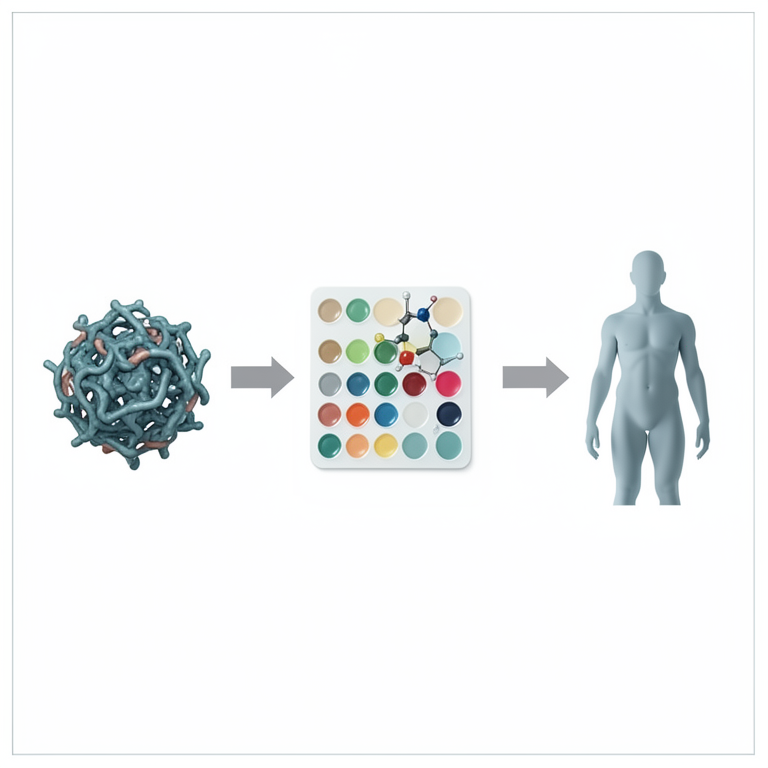
Drug Discovery Pipeline Flowchart
AI-generated conceptual illustration (human biological systems and chemical compounds). It explains the idea and does not show study data.
View source evidence ↗Introduction
This article reviews key developments that shape the landscape of drug discovery and explores their applications in translational medicine. Modern drug discovery research started to being performed around the early 1900s. The drug discovery process is a complex journey that begins with the identification of promising biological targets and culminates in the development of effective and safe therapeutic agents. It involves a series of systematic steps that span from target identification and validation to the development of marketable drugs. The process typically encompasses interdisciplinary collaboration among scientists, including chemists, biologists, pharmacologists, and clinicians. Recent years have witnessed remarkable progress in various facets of drug discovery, driven by advances in genomics, high-throughput screening, artificial intelligence, and our deeper understanding of molecular and cellular processes.
Aim of study
This research article provides a comprehensive overview of the recent advances, challenges, and applications in drug discovery, emphasizing the integration of multidisciplinary approaches from target identification to clinical application. With a focus on emerging technologies, computational methods, and evolving paradigms, this article aims to shed light on the dynamic landscape of drug discovery and its potential to transform healthcare. (Brogi and Calderone, 2021; Ruffolo et al., 2021; Jayatunga et al., 2022; Sadybekov and Katritch, 2023) [1,12,6,13] . Artificial Intelligence (AI or indeed, most of the time, machine learning) can contribute here as it involves the use of powerful computers and efficient program algorithms to integrate a large volume of data to train expert systems to perform a complex task According to (Lambert, 2010; Gupta et al., 2021; Paul et al., 2021; Kontoyianni, 2022; Vijayan, et al., 2022) [9,3,11,8,14] . During the early discovery phases, AI is used to rationalize processes and to assist in project management (e.g., definition of a target product profile that allows locating each compound with regard to the expected final drug specifications in a complex multidimensional space), to summarize information, to understand better complex biological systems (e.g., using, for instance, system biology and chemogenomics approaches), or to propose original compounds or biologics (e.g., small molecules, peptides) generated by the machine under various types of constraints (e.g., ADMET constraints or affinity to the target). (DiMasi, 2020) [2] . Reported that the cost to develop a new drug is very high, in part because failure is endemic in drug discovery, and success is rare. While various numbers have been reported, the latest formal assessment is around US $2.8 billion (DiMasi, 2020) [2] . Clinical studies in humans can then get started to establish the safety and efficacy of the drugs in patients with the highest benefit-to-risk ratio (Kandi and Vadakedath, 2023) [7] .
Literature Review
Literature Review
Methodology
Nowadays, the development of a new medicine usually starts when basic research, often performed in academia, identifies a macromolecule (i.e., a molecule with a large molecular weight like genes/proteins), or a dysfunctional signalling pathway or a molecular mechanism apparently linked to a disease condition (Pre-discovery stage). (Hefti, 2008; Hughes et al., 2011; Mohs and Greig, 2017; Villoutreix, 2021) [4,5,10,15] .
The key stages in the drug discovery process Target identification and validation 1. Target identification: This step involves identifying specific molecules or biological processes (targets) that play a crucial role in the development or progression of a disease. These targets can be proteins, nucleic acids, or other molecules.
Target validation:
Once a potential target is identified, it undergoes validation to ensure its relevance and importance in the disease. This often involves genetic and molecular techniques to confirm the target's role.
Hit discovery
High-Throughput Screening (HTS): Researchers screen large libraries of compounds to identify potential hits-molecules that show some activity against the chosen target. HTS allows for the rapid testing of thousands to millions of compounds. Virtual screening: Computational methods are employed to predict the likelihood of certain compounds binding to the target, reducing the number of compounds that need to be experimentally tested.
Hit-to-lead optimization Medicinal chemistry:
The hits are further developed into lead compounds through iterative cycles of chemical modification to enhance their potency, selectivity, and other pharmacological properties. ADME/Tox assessment: Absorption, Distribution, Metabolism, Excretion, and Toxicity (ADME/Tox) studies help evaluate how well a compound is absorbed, distributed, metabolized, and excreted, as well as its potential toxic effects.
Lead optimization Further optimization:
The most promising lead compounds undergo further optimization to improve their efficacy and safety profiles. This involves fine-tuning their chemical structures based on iterative testing and analysis.
Preclinical development
Animal studies: Lead compounds are tested in animal models to assess their safety, efficacy, and potential side effects before advancing to human clinical trials. Regulatory approval: Regulatory agencies review preclinical data to determine if the compound is safe for testing in humans.
Clinical development Clinical trials:
The compound undergoes three phases of clinical trials to evaluate its safety, efficacy, and optimal dosage in human subjects. These phases involve increasing numbers of participants and are conducted under strict regulatory oversight. Regulatory approval: Positive clinical trial results are submitted to regulatory agencies for approval to market the drug.
Post-market surveillance
Post-marketing studies: After a drug is approved, ongoing surveillance and studies monitor its long-term safety and effectiveness in larger patient populations.
Rising cost: From drug discovery to new treatments
The cost to develop a new drug is very high, in part because failure is endemic in drug discovery, and success is rare. While various numbers have been reported, the latest formal assessment is around US $2.8 billion (DiMasi, 2020) [2] . The drug discovery process is time-consuming, expensive, and often involves a high rate of attrition. Advances in technologies such as genomics, proteomics, and artificial intelligence have contributed to improving the efficiency and success rate of drug discovery efforts.
Results and Discussions
Drug discovery applications: Drug discovery applications span a wide range of scientific disciplines and technologies, each contributing to the overall process of identifying and developing new therapeutic compounds. Here are some key applications and technologies in drug discovery:
Computational biology and bioinformatics 1. Virtual screening: Computational methods are used to simulate the interaction between potential drug molecules and target proteins. This helps in predicting the likelihood of a compound binding to a target and guides experimental screening efforts.
Structural bioinformatics:
Understanding the threedimensional structures of biological molecules aids in rational drug design by identifying potential binding sites and optimizing ligand-receptor interactions.
High-Throughput Screening (HTS)
Automation: HTS involves the rapid testing of thousands to millions of compounds for their biological activity. Automated systems and robotics streamline this process, allowing for increased efficiency and throughput. Assay development: Designing and optimizing assays that accurately measure the activity of a compound against a specific target is crucial for successful HTS campaigns.
Medicinal chemistry Structure-Activity Relationship (SAR) studies:
Medicinal chemists analyze the relationship between the chemical structure of compounds and their biological activity. This information guides the optimization of lead compounds. Combinatorial chemistry: Techniques that generate large libraries of diverse chemical compounds enable the rapid synthesis and testing of a wide range of potential drug candidates.
Genomics and functional genomics
Target identification: Genomic data is used to identify potential drug targets by understanding the genetic basis of diseases. CRISPR/Cas9 technology: Gene editing tools like CRISPR allow researchers to selectively modify genes to validate targets and study their role in diseases. [1,12,6,13] .
Pharmacogenomics
Pharmacogenomics
Chemo informatics
Chemical database mining: Analyzing large chemical databases helps in identifying existing compounds with potential therapeutic effects. Chemical similarity searches: Identifying structurally similar compounds to known drugs can guide the discovery of new drug candidates.
These applications collectively contribute to the drug discovery pipeline, making the process more efficient, costeffective, and capable of addressing the complexities of various diseases. Interdisciplinary collaboration and the integration of these technologies are key to advancing drug discovery efforts.
Challenges and opportunities
Identification of challenges in drug discovery, including high attrition rates, cost considerations, and the need for improved translatability from preclinical to clinical studies. Opportunities for collaboration, open science initiatives, and public-private partnerships to address the complex challenges in drug development.
Conclusion
This review provides a snapshot of the diverse and dynamic landscape of drug discovery literature, emphasizing the integration of various disciplines and technologies to accelerate the development of innovative and effective therapeutic interventions. Drug discovery is undergoing a transformative phase, driven by innovation, collaboration, and technological advancements. This article has provided a glimpse into the recent progress, challenges, and future directions in drug discovery, highlighting its pivotal role in advancing medical science and improving patient outcomes.
As researchers continue to push the boundaries of knowledge, the synergy between diverse disciplines will be instrumental in bridging the gap from bench to bedside.
References
15 in the original paper- Brogi S, Calderone V. Artificial intelligence in translational medicine. International Journal of Translational Medicine. 2021;1(3):223-285.
- DiMasi JA. Research and development costs of new drugs. Journal of the American Medical Association. 2020;324(5):517.
- R, Srivastava D, Sahu M, Tiwari S, Ambasta R, Kumar P et al. Artificial intelligence to deep learning: Machine intelligence approach for drug discovery. Molecular Diversity. 2021;25:1315-1360.
- Hefti FF. Requirements for a lead compound to become a clinical candidate. BMC neuroscience. 2008;9(3):S7. International Journal of Advanced Chemistry Research https://www.chemistryjournals.net
- Hughes JP, Rees S, Kalindjian SB, Philpott KL. Principles of early drug discovery. British Journal of Pharmacology. 2011;162(6):1239-1249.
- Jayatunga MKP, Xie W, Ruder L, Schulze U, Meier C. AI in small-molecule drug discovery: A coming wave? Nature Reviews Drug Discovery. 2022;21(3):175-176.
- Kandi V, Vadakedath S. Clinical trials and clinical research: A comprehensive review. Cureus. 2023;15(2):e35077.
- Kontoyianni M. Library size in virtual screening: Is it truly a numbers game? Expert Opinion on Drug Discovery. 2022;17(11):1177-1179.
- Lambert W. Considerations in developing a target product profile for parenteral pharmaceutical products. AAPS Pharm SciTech. 2010;11(3):1476-1481.
- Mohs RC, Greig NH. Drug discovery and development: Role of basic biological research. Alzheimers Dement (NY). Translational Research & Clinical Interventions. 2017;3(4):651-657.
- Paul D, Sanap G, Shenoy S, Kalyane D, Kalia K, Tekade R et al. Artificial intelligence in drug discovery and development. Drug Discovery and Evaluation: Safety and Pharmacokinetic Assays. 2021;26:80-93.
- Ruffolo JA, Sulam J, Gray JJ. Antibody structure prediction using interpretable deep learning. Patterns (N Y). 2021;3(2):100406.
- Sadybekov AV, Katritch V. Computational approaches streamlining drug discovery. Nature. 2023;616(7958):673-685.
- Vijayan RSK, Kihlberg J, Cross JB, Poongavanam V. Enhancing preclinical drug discovery with artificial intelligence. Drug Discovery Today. 2022;27(4):967984.
- Villoutreix BO. Post-pandemic drug discovery and development: Facing present and future challenges. Frontiers in Drug Discovery. 2021;1:728469.