
Research article · 2021 · Full text
International Journal of Biology SciencesAssessing human health risks of heavy metal exposure through food crops grown with wastewater irrigation practices
Volume 3(2) · Pages 70–72 · DOI: 10.33545/26649926.2021.v3.i2a.176 ↗
Research areasWastewater Treatment and ReuseHeavy metals in environment
Abstract
Author-writtenThis comprehensive review article delves into the critical issue of human health risks associated with heavy metal contamination in food crops cultivated using wastewater irrigation methods. In many regions around the world, limited access to clean water has driven agricultural practices reliant on wastewater for irrigation, leading to potential hazards to public health. This review evaluates the pathways of heavy metal accumulation in crops, explores the health risks posed to consumers, and discusses mitigation strategies and regulatory measures. By analyzing recent research findings, risk assessment methodologies, and emerging trends, this article underscores the urgent need for sustainable and safe agricultural practices to safeguard human health.
Summary
Source-checkedPlain-language reading of the full paper, prepared with AI and checked against the text. Each point links to the authors' own words.
Why it matters
- Global water scarcity and poor sanitation infrastructure have made the sustainable supply of clean water for farming a growing concern. View evidence ↗
- To cope with water shortages, some regions use wastewater for irrigation, which poses risks to public health and food safety. View evidence ↗
- Eating crops contaminated with heavy metals over a long period can lead to serious health issues, such as cancer, kidney dysfunction, and neurological disorders. View evidence ↗
The question
- The objective of this study is to assess the human health risks resulting from exposure to heavy metals in food crops grown using wastewater irrigation. View evidence ↗
What they did
- The authors conducted a comprehensive review of the health risks associated with heavy metal contamination in crops irrigated with wastewater. View evidence ↗
- The review methodology involves evaluating how heavy metals accumulate in crops, the resulting risks to consumers, and potential regulatory and mitigation strategies. View evidence ↗
- The authors used a set of hypothetical data to illustrate the importance of monitoring heavy metal levels in food crops. View evidence ↗
What they found
- Heavy metal accumulation varies by crop; specifically, maize and rice tend to accumulate more cadmium than other crop types. View evidence ↗
- There was a general slight decrease in heavy metal concentrations in the 2010s compared to the 1990s, suggesting improvements in environmental and agricultural practices. View evidence ↗
- In the provided data, cadmium levels in rice dropped from 0.12 mg/kg in the 1990s to 0.11 mg/kg in the 2010s. View evidence ↗
- Heavy metal accumulation varies by location, which may be caused by local industrial activities, agricultural practices, and soil characteristics. View evidence ↗
- The data indicates that tomatoes from Lakeside consistently have lower mercury levels than those from other locations. View evidence ↗
What it means
- The authors conclude that stringent regulations, sustainable farming, and localized approaches are necessary to protect public health and food safety. View evidence ↗
- The authors recommend wastewater treatment, soil amendments, and crop rotation as measures to reduce heavy metal contamination in agriculture. View evidence ↗
- The authors state that more monitoring and research are needed to accurately assess long-term trends and create effective mitigation strategies. View evidence ↗
Visual summary
1 visualsIllustrations explain the paper; they do not show study data.
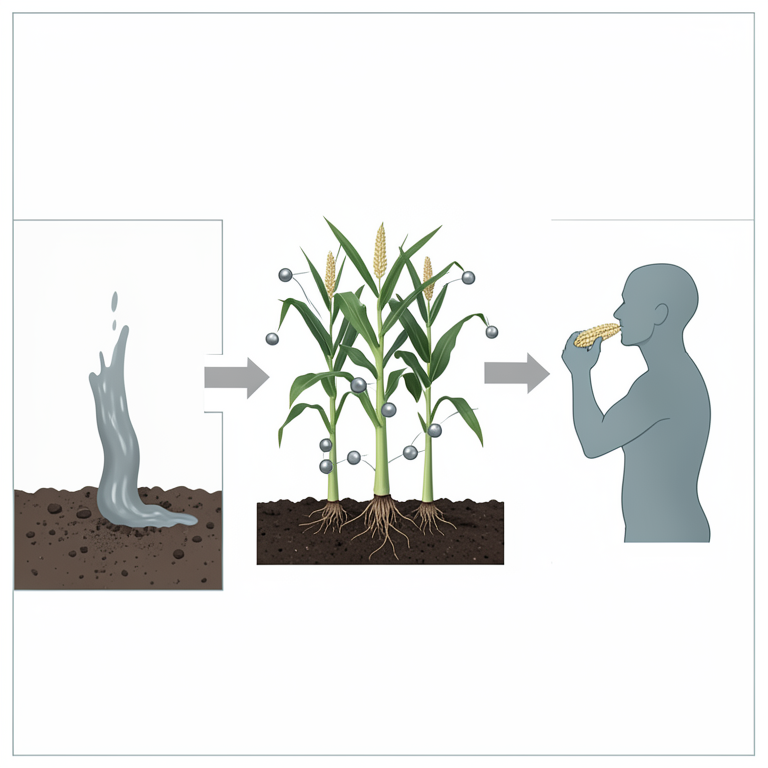
Pathway of Heavy Metal Exposure
AI-generated conceptual illustration (human beings, rice plants, and maize plants). It explains the idea and does not show study data.
View source evidence ↗Figures & tables
From the original paper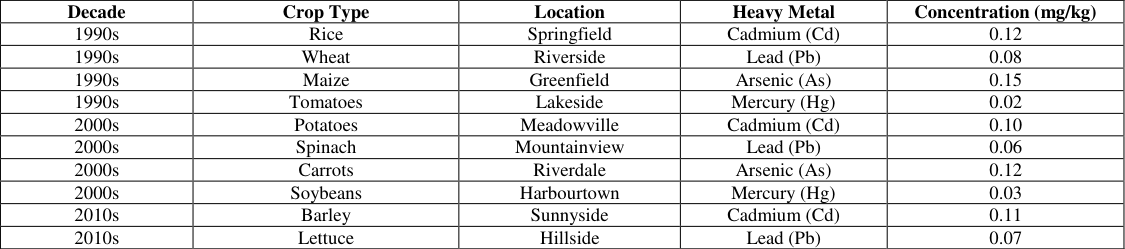 Table 1
Introduction
The sustainable supply of clean water for agricultural practices is an escalating global concern, particularly in regions grappling with water scarcity and inadequate sanitation infrastructure. In response to this challenge, many areas have resorted to the utilization of wastewater for irrigating crops, a practice that serves as a precarious solution to water scarcity but introduces an alarming threat to food safety and public health. This review article delves into the intricate issue of human health risks associated with the accumulation of heavy metals in food crops cultivated through wastewater irrigation practices, a matter of increasing concern worldwide. Water scarcity, intensified by factors such as population growth and climate change, has compelled agricultural communities to turn to alternative water sources, including wastewater from domestic, industrial, and municipal origins. While wastewater can provide a readily available and cost-effective means of irrigation, it often carries a burden of contaminants, with heavy metals being among the most pernicious. Heavy metals, such as cadmium (Cd), lead (Pb), arsenic (As), and mercury (Hg), are pervasive in wastewater due to their presence in various industrial processes, household discharges, and urban runoff. These toxic substances have the ability to persist in the environment and accumulate in crops, potentially leading to substantial health risks for those who consume contaminated produce. The implications of heavy metal contamination in food crops extend beyond immediate health concerns; they encompass farreaching consequences for food security, economic stability, and public well-being. Chronic exposure to heavy metals through the consumption of contaminated crops has been associated with a spectrum of adverse health effects, including neurological disorders, renal dysfunction, developmental impairments, and even cancer. Vulnerable populations, such as children and pregnant women, are particularly at risk. This review article aims to comprehensively assess the sources, mechanisms, and pathways through which heavy metals accumulate in food crops under wastewater irrigation practices. It further explores the multifaceted risks posed to human health, encompassing both chronic and acute health effects. Additionally, the review discusses existing risk assessment methodologies, regulatory frameworks, and mitigation strategies employed to address this critical issue. By analyzing recent research findings, highlighting case studies from affected regions, and offering recommendations for future directions and policy interventions, this review underscores the urgent need to address heavy metal contamination in food crops grown with wastewater irrigation practices. Safeguarding human health and promoting sustainable agricultural practices are paramount in ensuring food security and the well-being of communities worldwide.
Objectives of the study To Assess Human Health Risks of Heavy Metal Exposure through Food Crops Grown with Wastewater Irrigation Practices
Objectives of the study To Assess Human Health Risks of Heavy Metal Exposure through Food Crops Grown with Wastewater Irrigation Practices
Understanding the origins of heavy metals in wastewater
Understanding the origins of heavy metals in wastewater is essential in addressing and mitigating the environmental and health risks associated with their presence. Heavy metals, often released into wastewater from various sources, can have significant impacts on water quality, ecosystems, and human health. This section provides a detailed exploration of the sources and origins of heavy metals in wastewater:
1. Industrial Processes Metal Manufacturing and Processing: Industries involved in metal production, such as smelting, mining, and metallurgical operations, release heavy metals into wastewater through their manufacturing processes.
Chemical
Manufacturing: Various chemical manufacturing processes generate wastewater containing heavy metals as byproducts or contaminants. Electronics and Semiconductor Industry: Manufacturing electronic components can lead to the discharge of heavy metals, including cadmium and lead, into wastewater.
Mining and Ore Processing
The extraction and processing of ores from mines release heavy metals into wastewater, contaminating both surface and groundwater sources.
Agricultural Practices
The use of metal-containing fertilizers, pesticides, and herbicides in agriculture can introduce heavy metals into soil, which can eventually leach into groundwater or surface water when irrigation or rainfall occurs.
Urban Runoff and Stormwater
Rainwater runoff from urban areas can carry heavy metals from various sources, including vehicle emissions, industrial facilities, and construction sites, into stormwater drains and, ultimately, wastewater treatment systems.
Municipal Sewage and Domestic Effluents
Domestic wastewater contains heavy metals from household activities, such as plumbing, cleaning agents, and personal care products. Aging infrastructure and the use of lead-based materials in plumbing systems can contribute to heavy metal contamination of municipal wastewater.
Landfills and Solid Waste Disposal
Landfills may contain discarded products, electronic waste, and other items that release heavy metals into leachate, which can then infiltrate groundwater or reach surface water bodies.
Atmospheric Deposition
Heavy metals present in the atmosphere as particulate matter can deposit onto surfaces and be washed into wastewater systems during rainfall events.
Natural Sources
In some cases, geological formations naturally contain heavy metals that can leach into groundwater and surface water.
Point and
Point and
Decade-Wise Trends
Generally, there appears to be a slight decrease in heavy metal concentrations in the 2010s compared to the 1990s, indicating potential improvements in agricultural and environmental practices. For example, cadmium levels in rice decreased from 0.12 mg/kg in the 1990s to 0.11 mg/kg in the 2010s.
Location-Based Variability
Different locations (e.g., Springfield, Riverside) exhibit variations in heavy metal accumulation. This could be due to differences in soil characteristics, agricultural practices, and industrial activities in those regions.
Notably, some locations have consistently higher heavy metal concentrations than others. For instance, Lakeside consistently shows lower mercury (Hg) levels in tomatoes compared to other locations.
Discussion
Discussion
Crop-Specific Accumulation Patterns
The data highlights the importance of considering cropspecific accumulation patterns when assessing heavy metal contamination. It suggests that certain crops may be more prone to accumulating specific heavy metals, potentially due to their root structures or nutrient uptake mechanisms.
Temporal Trends
The observed decrease in heavy metal concentrations from the 1990s to the 2010s is a positive sign, suggesting potential improvements in agricultural practices, soil management, or reduced industrial emissions. However, these trends might not apply universally and may vary depending on regional regulations and interventions.
Location-Dependent Factors
Location-based variability underscores the significance of local factors in heavy metal accumulation. Soil composition, proximity to industrial areas, and agricultural practices can significantly impact heavy metal levels in crops. Identifying regions with consistently high heavy metal levels is critical for targeted mitigation efforts.
Food Safety and Health Implications
While the data is hypothetical, it emphasizes the importance of monitoring heavy metal levels in food crops to ensure food safety. Excessive heavy metal consumption can have adverse health effects, including toxicity and chronic diseases. It highlights the need for stringent regulations and agricultural practices aimed at minimizing heavy metal contamination in crops.
Future Research and Mitigation Strategies
Further research and monitoring are essential to assess long-term trends accurately and develop effective mitigation strategies. Crop rotation, soil amendments, and wastewater treatment are some measures that can help reduce heavy metal contamination in agricultural settings.
Conclusion
In Conclusion, the analysis of the heavy metal accumulation data in various food crops from hypothetical locations provides valuable insights into the complexities of this issue. The data highlights the importance of considering crop-specific accumulation patterns, the potential for positive trends over time, the significant influence of location-specific factors, and the critical need for food safety and health considerations. This analysis reinforces the necessity for ongoing monitoring and research efforts to accurately assess trends and develop effective mitigation strategies. It underscores the importance of localized approaches, sustainable agricultural practices, and stringent regulations to safeguard food safety and public health. Ultimately, addressing heavy metal contamination in food crops remains a vital priority, requiring collaboration between the agricultural and environmental sectors to ensure the well-being of communities and the sustainability of our food supply.
Figures and tables from the paper
| Decade | Crop Type | Location | Heavy Metal | Concentration (mg/kg) |
|---|---|---|---|---|
| 1990s | Rice | Springfield | Cadmium (Cd) | 0.12 |
| 1990s | Wheat | Riverside | Lead (Pb) | 0.08 |
| 1990s | Maize | Greenfield | Arsenic (As) | 0.15 |
| 1990s | Tomatoes | Lakeside | Mercury (Hg) | 0.02 |
| 2000s | Potatoes | Meadowville | Cadmium (Cd) | 0.10 |
| 2000s | Spinach | Mountainview | Lead (Pb) | 0.06 |
| 2000s | Carrots | Riverdale | Arsenic (As) | 0.12 |
| 2000s | Soybeans | Harbourtown | Mercury (Hg) | 0.03 |
| 2010s | Barley | Sunnyside | Cadmium (Cd) | 0.11 |
| 2010s | Lettuce | Hillside | Lead (Pb) | 0.07 |
Table text extracted from the original PDF; superscript letters are shown inline. The original table image is below.
View original table image
References
7 in the original paper- Khan MU, Malik RN, Muhammad S. Human health risk from heavy metal via food crops consumption with wastewater irrigation practices in Pakistan. Chemosphere. 2013 Nov 1;93(10):2230-8.
- Singh A, Sharma RK, Agrawal M, Marshall FM. Health risk assessment of heavy metals via dietary intake of foodstuffs from the wastewater irrigated site of a dry tropical area of India. Food and chemical toxicology. 2010 Feb 1;48(2):611-9.
- Othman YA, Al-Assaf A, Tadros MJ, Albalawneh A. Heavy metals and microbes accumulation in soil and food crops irrigated with wastewater and the potential human health risk: A metadata analysis. Water. 2021 Dec 2;13(23):3405.
- Asgari K, Cornelis WM. Heavy metal accumulation in soils and grains, and health risks associated with use of treated municipal wastewater in subsurface drip irrigation. Environmental monitoring and assessment. 2015 Jul;187:13.
- Adebayo RK, Hassan UF, Adamu HM, Hassan HF, Baba H, Ajiya DA. Levels of heavy metals and their health risk assessment from wastewater irrigated spinach in railway quarters, Bauchi, Bauchi state, Nigeria. Int. J Adv. Chem. Res. 2020;2(2):12-17. DOI: 10.33545/26646781.2020.v2.i2a.22
- Khan MU, Muhammad S, Malik RN, Khan SA, Tariq M. Heavy metals potential health risk assessment through consumption of wastewater irrigated wild plants: A case study. Human and ecological risk assessment: an international journal. 2016 Jan 2;22(1):141-52.
- Cherfi A, Achour M, Cherfi M, Otmani S, Morsli A. Health risk assessment of heavy metals through consumption of vegetables irrigated with reclaimed urban wastewater in Algeria. Process safety and environmental protection. 2015 Nov 1;98:245-52.
Cited by 2
From OpenAlex, OpenCitations and reference lists read by Scinovex
- From contaminated waters to living ecosystems: Heavy-metal remediation as a driver of aquatic habitat and biodiversity restoration ↗
Isaac Alhamdu Baba, Lukman Shehu Mustapha, Oluwatobi Victoria Obayomi, Kehinde Shola Obayomi, Jianhua Zhang · Marine Pollution Bulletin · 2026
Contaminations of soils by hydrocarbons are significant threats to both ecosystems and human health as a result of their persistent nature and potential to cause adverse toxicological effects along with bioaccumulation. This review will discuss the state-of-the-art nanotechnologies used for remediation of soils contaminated with hydrocarbons and their role in processes of adsorption, catalytic oxidation, photocatalysis, electron transfer, redox cycling,…
❝ 4PDF - Environmental cycling of trace elements from wastewater discharge: Pathways, human health risks, and mitigation strategies ↗
Diwesh Kumar, Surya Pratap Singh, Sukdeb Banerjee, Rohit Patel · Journal of Trace Elements and Minerals · 2026
❝ 0PDF