
Research article · 2024 · Full text
International Journal of Advanced Biochemistry ResearchUnveiling the Essence of Ajwain: A comprehensive exploration through principal component analysis
Volume 8(1S) · Pages 203–206 · DOI: 10.33545/26174693.2024.v8.i1sd.308 ↗
Research areasGenetic and Environmental Crop StudiesLivestock and Poultry ManagementGABA and Rice Research
Abstract
Author-writtenForty Ajwain genotypes were evaluated during Rabi 2019–20 at the Agronomy Instructional Farm of the Sardar Krushinagar Dantiwada Agricultural University in Dantiwada. Every attribute has a substantial impact on the mean sum of squares. In this work, the complexity of the dataset was reduced to a simplified structure by using Principal Component Analysis (PCA) to examine the subtleties of twelve important features in ajwain genotypes. Twelve components were found through analysis; of these, the first five (PC1 through PC5) accounted for more than 87.47% of the overall variability seen in the qualities under investigation. The most variable plant, PC1, had the largest variance (45.2%), with attributes including plant height, number of umbels per plant, and seed output among others. The ensuing PCs also showed strong correlations with certain characteristics, offering a thorough comprehension of their connections respectively. Highlighting unique trait profiles were the primary scores for each genotype in the five components. Several variables showed higher values for HAJ-07 and AA-02 genotypes, which were prominent in PC1. These results confirm previous studies and emphasise the study's practical relevance even more. The genotypes HAJ-07 and AA-02 were chosen based on the highest PC scores in PC1 and PC2, which emphasises the study's practical applications even more. These findings provide important new understandings of the genetic diversity and phenotypic connections among genotypes of Ajwain, laying the groundwork for further breeding and development initiatives.
Summary
Source-checkedPlain-language reading of the full paper, prepared with AI and checked against the text. Each point links to the authors' own words.
Why it matters
- Ajwain (Trachyspermum ammi L.) is an aromatic herbaceous plant valued for its medicinal properties and ability to address various health concerns. View evidence ↗
- The seeds of the Ajwain plant are characterized by a yellow-brownish color and contain between 2% and 4% volatile oil. View evidence ↗
The question
- The study aimed to use Principal Component Analysis (PCA) to simplify a complex dataset and examine twelve important features across different Ajwain genotypes. View evidence ↗
What they did
- The researchers cultivated 40 Ajwain genotypes using a randomized block design (RBD) with three replications. View evidence ↗
- The experiment was conducted during the 2019-20 rabi season at the Agronomy Instruction Farm of Sardarkrushinagar Dantiwada Agricultural University. View evidence ↗
- The Principal Component Analysis (PCA) was performed using the Opstate statistical program. View evidence ↗
What they found
- Out of twelve components, the first five (PC1 to PC5) accounted for 87.47% of the total variability among the studied traits. View evidence ↗
- The first principal component (PC1) showed the highest variance at 45.2%, followed by PC2 (16.1%), PC3 (12.3%), PC4 (7.3%), and PC5 (6.6%). View evidence ↗
- PC1 was strongly associated with several traits, including plant height, seed yield per plant, biological yield per plant, harvest index, test weight, and volatile oil percentage. View evidence ↗
- In PC1, the genotype HAJ-07 had the highest score (2.25), followed by AA-02 (1.90), JA 17-02 (1.53), and JA 16-06 (1.40). View evidence ↗
- For PC2, which relates to volatile oil percentage, NDAJ-11 had the highest score (1.87), followed by AA-01 (1.58) and JA 07-06 (1.44). View evidence ↗
- Genotypes NDAJ 6, JA 18-05, and JA 17-02 showed high values for biological yield per plant and number of branches per plant in the third component (PC3). View evidence ↗
- In the fourth component (PC4), genotypes LS 14-3, LS 14-08, and JA 07-06 were associated with high plant height and volatile oil percentage. View evidence ↗
- The fifth component (PC5) highlighted genotypes JA-190, JA 17-01, and MLT 60 as having high test weight and number of branches per plant. View evidence ↗
What it means
- The authors selected genotypes HAJ-07 and AA-02 for selective breeding based on their high scores in the first and second principal components. View evidence ↗
- The study concludes that PCA is a useful tool for understanding and improving Ajwain cultivars. View evidence ↗
Visual summary
3 visualsIllustrations explain the paper; charts are replotted from the paper's own table values.
Variance Distribution
AI-generated conceptual illustration (Ajwain seeds (Trachyspermum ammi)). It explains the idea and does not show study data.
View source evidence ↗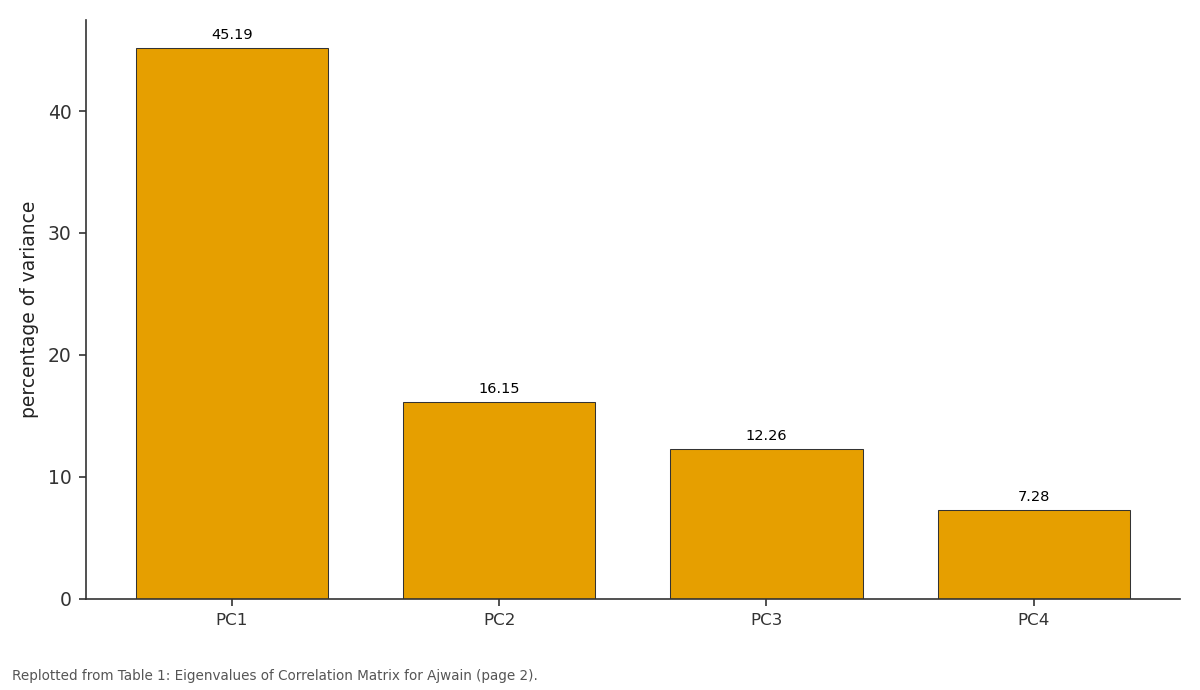
percentage of variance: PC1 vs PC2 vs PC3 vs PC4
Replotted from Table 1 (page 2) of the original paper. Every bar is the paper's own table value.
View source evidence ↗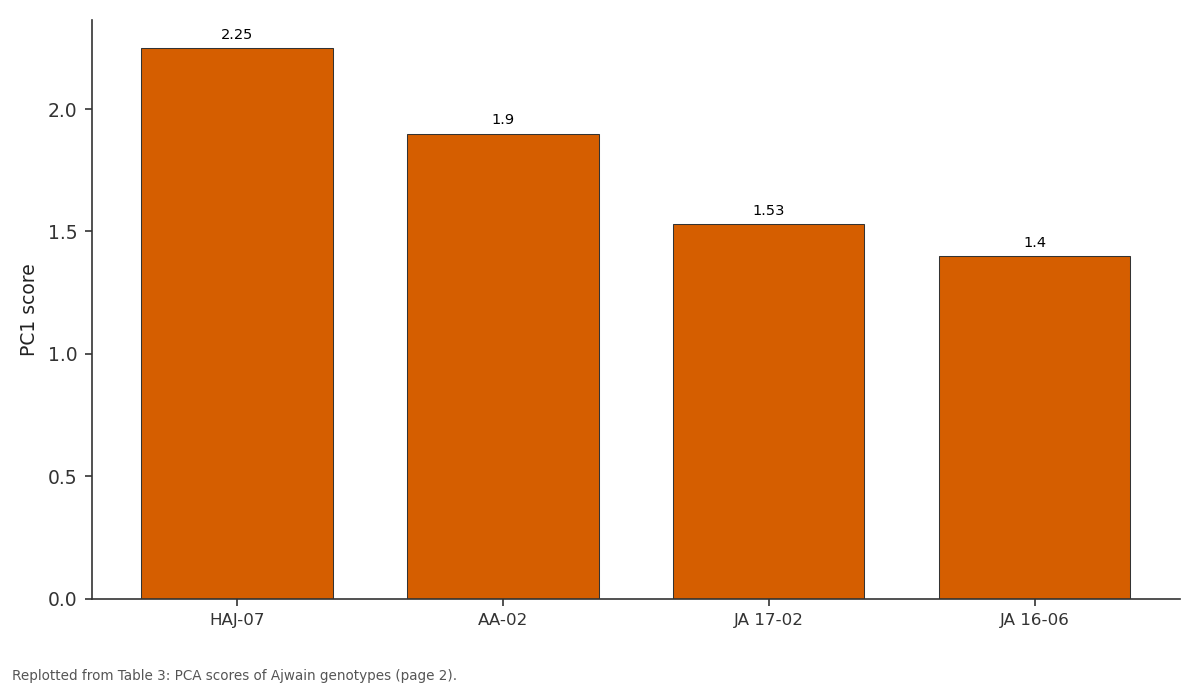
PC1: HAJ-07 vs AA-02 vs JA 17-02 vs JA 16-06
Replotted from Table 3 (page 2) of the original paper. Every bar is the paper's own table value.
View source evidence ↗Figures & tables
From the original paper Table 1
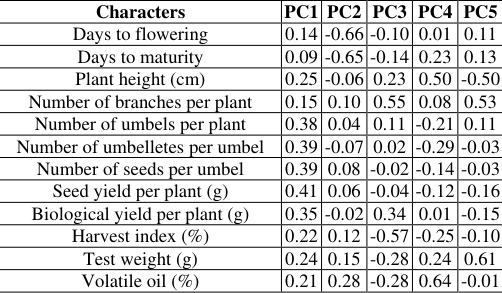 Table 2
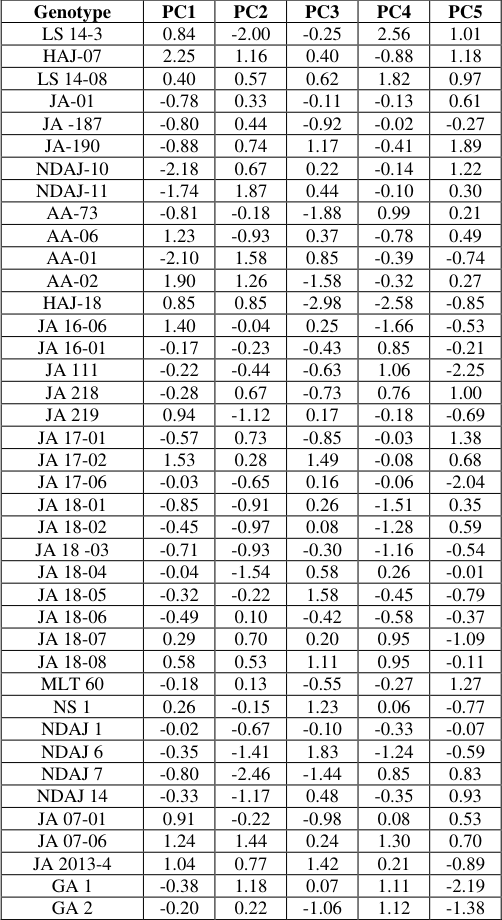 Table 3
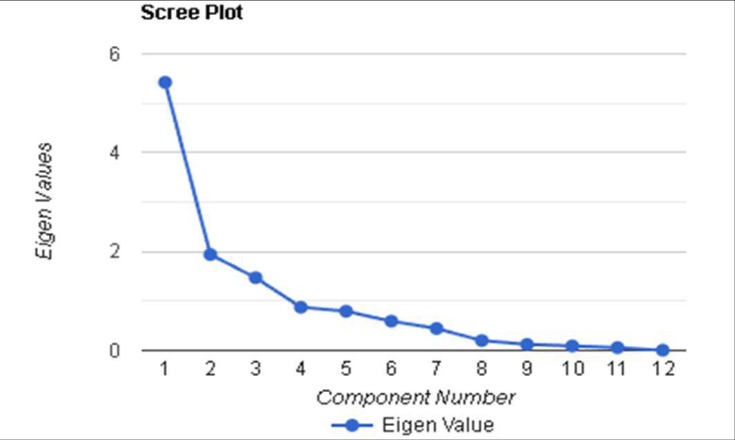 Figure 1
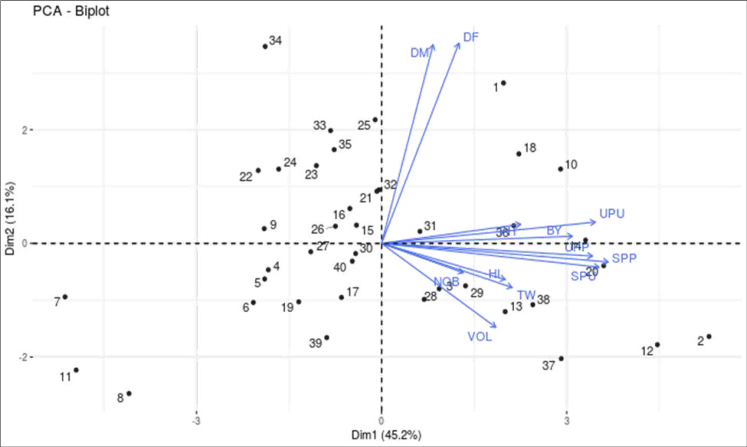 Figure 2
Introduction
"Exploring the botanical intricacies of Ajwain (Trachyspermum ammi L.), a member of the Apiaceae family with a diploid chromosome number of 18, reveals its annual, aromatic, and herbaceous nature. Originating in Egypt, this profusely branched plant, known as bishop's weed or Carum, captivates with its feather-like leaves and small ovoid fruits. Noteworthy for its medicinal properties, Ajwain addresses various health concerns, as documented by Bairwa et al. (2012) [2] . The seeds, containing 2 to 4 percent volatile oil, showcase a yellowbrownish hue. Cultivated in Iraq, Iran, Afghanistan, and India, with notable growth in Rajasthan, Gujarat, Madhya Pradesh, Bihar, Punjab, Andhra Pradesh, and Telangana. This captivating journey into Ajwain's realm intertwines ancient wisdom and contemporary cultivation practices, offering a comprehensive perspective (Malhotra and Vijay, 2004) [7] . Join us in unraveling the secrets of Ajwain, where its rich legacy meets modern scientific understanding."
Materials and Methods
The experimental setup involved cultivating 40 Ajwain genotypes in a randomized block design (RBD) with three replications. The planting occurred during the rabi season in 2019-20 at the Agronomy Instruction Farm, Sardarkrushinagar Dantiwada Agricultural University, Sardarkrushinagar. Each genotype was meticulously sown in a single-row plot, spanning 4.0 m in length, with a spacing of 45 cm between rows and 10 cm between plants. The genotypes were randomly allocated to the plots within each replication. Adhering to recommended agronomic practices and implementing essential plant protection measures in a timely manner ensured the successful cultivation of the crop. Observations were systematically recorded for key traits, including days to flowering, days to maturity, plant height (cm), number of branches per plant, number of umbels per plant, number of Umbellets per umbel, number of seeds per umbel, seed yield per plant (g), biological yield per plant (g), harvest index (%), test weight (g), and volatile oil (%). The assessment involved meticulous recording from five randomly selected plants in each line across all replications, ensuring a thorough evaluation of the diverse traits exhibited by the Ajwain genotypes under scrutiny. PCA was described by Karl pearson (1901) [9] . PCA was carried out using the statistical program Opstate.
Results and Discussion
Principal component analysis reduces the complexity of a data set into a simplified structure. In the present study PCA was conducted on twelve characters of ajwain genotypes. The PCA analysis have extracted twelve components from the total traits studied. PCA for the first five principle component are listed in (table 1,Fig 1). Only five principal component PC1 to PC5 out of the twelve components exhibit more than 87.47% variability among the traits studied. The highest variation was recorded by the first PC1 (45.2%) followed by PC2 (16.1%), third component PC3 (12.3%), fourth component PC4 (7.3%) and fifth component PC5 (6.6%). The total variation of the five principal component was accounted to be 87.47%. Related conclusions were concluded by Akbari et al., (2022) [1] and Elbaz et al., (2022) [4] . First principal component which showed the highest variability (45.2%) consisted of high positive component was related with Plant height (cm), Number of umbels per plant, Number of umbelletes per umbel, Number of seeds per umbel, Seed yield per plant (g), Biological yield per plant (g), Harvest index (%), Test weight (g), Volatile oil (%). In second PC Positive component was related with traits such as Volatile oil (%). In third PC positive component was associated along with traits such as Number of branches per plant and Biological yield per plant (g). In fourth PC the trait Plant height (cm) and Volatile oil (%) was more related. The fifth principal component was more related to Number of branches per plant and Test weight (g) (Table 2 andFig 2). Similar results were reported by Dalkani et al., (2012) [3] , Faravani et al., (2018) [5] and Akbari et al., (2022) [1] . The principal scores for all the twelve traits of the 40 genotypes were divided in the five principal components (Table 3 andFig 2). High values for the traits in a genotype can be indicated using the principal score scored by that genotype in a particular component. In the first principal component HAJ-07 (2.25) has the highest score followed by AA-02 (1.90), JA 17-02 (1.53) and JA 16-06 (1.40) indicating that they have high value for Plant height (cm), Number of umbels per plant, Number of umbelletes per umbel, Number of seeds per umbel, Seed yield per plant (g), Biological yield per plant (g), Harvest index (%), Test weight (g), Volatile oil (%). In the second principal component NDAJ-11 (1.87) has the highest score followed by AA-01 (1.58) and JA 07-06 (1.44) indicating that they have high value for Volatile oil (%). In third component NDAJ 6, JA 18-05 and JA 17-02 indicating that they have high value for Number of branches per plant and Biological yield per plant (g). In fourth component LS 14-3, LS 14-08 and JA 07-06 indicating that they have high value for Plant height (cm) and Volatile oil (%). In fifth component JA-190, JA 17-01 and MLT 60 indicating that they have high value for Number of branches per plant and Test weight (g). Based on the top PC scores in principal component 1 and principal component 2, two genotypes HAJ-07 and AA-02 are selected. These results are in relevance with the results quoted by Kalleli et al., (2019) [6] , YALDIZ et al., (2020) [10] and Modareskia et al., (2022) [8] .
| Genotype | PC1 | PC2 | PC3 | PC4 | PC5 |
|---|---|---|---|---|---|
| LS 14-3 | 0.84 | -2.00 | -0.25 | 2.56 | 1.01 |
| HAJ-07 | 2.25 | 1.16 | 0.40 | -0.88 | 1.18 |
| LS 14-08 | 0.40 | 0.57 | 0.62 | 1.82 | 0.97 |
| JA-01 | -0.78 | 0.33 | -0.11 | -0.13 | 0.61 |
| JA -187 | -0.80 | 0.44 | -0.92 | -0.02 | -0.27 |
| JA-190 | -0.88 | 0.74 | 1.17 | -0.41 | 1.89 |
| NDAJ-10 | -2.18 | 0.67 | 0.22 | -0.14 | 1.22 |
| NDAJ-11 | -1.74 | 1.87 | 0.44 | -0.10 | 0.30 |
| AA-73 | -0.81 | -0.18 | -1.88 | 0.99 | 0.21 |
| AA-06 | 1.23 | -0.93 | 0.37 | -0.78 | 0.49 |
| AA-01 | -2.10 | 1.58 | 0.85 | -0.39 | -0.74 |
| AA-02 | 1.90 | 1.26 | -1.58 | -0.32 | 0.27 |
| HAJ-18 | 0.85 | 0.85 | -2.98 | -2.58 | -0.85 |
| JA 16-06 | 1.40 | -0.04 | 0.25 | -1.66 | -0.53 |
| JA 16-01 | -0.17 | -0.23 | -0.43 | 0.85 | -0.21 |
| JA 111 | -0.22 | -0.44 | -0.63 | 1.06 | -2.25 |
| JA 218 | -0.28 | 0.67 | -0.73 | 0.76 | 1.00 |
| JA 219 | 0.94 | -1.12 | 0.17 | -0.18 | -0.69 |
| JA 17-01 | -0.57 | 0.73 | -0.85 | -0.03 | 1.38 |
| JA 17-02 | 1.53 | 0.28 | 1.49 | -0.08 | 0.68 |
| JA 17-06 | -0.03 | -0.65 | 0.16 | -0.06 | -2.04 |
| JA 18-01 | -0.85 | -0.91 | 0.26 | -1.51 | 0.35 |
| JA 18-02 | -0.45 | -0.97 | 0.08 | -1.28 | 0.59 |
| JA 18 -03 | -0.71 | -0.93 | -0.30 | -1.16 | -0.54 |
| JA 18-04 | -0.04 | -1.54 | 0.58 | 0.26 | -0.01 |
| JA 18-05 | -0.32 | -0.22 | 1.58 | -0.45 | -0.79 |
| JA 18-06 | -0.49 | 0.10 | -0.42 | -0.58 | -0.37 |
| JA 18-07 | 0.29 | 0.70 | 0.20 | 0.95 | -1.09 |
| JA 18-08 | 0.58 | 0.53 | 1.11 | 0.95 | -0.11 |
| MLT 60 | -0.18 | 0.13 | -0.55 | -0.27 | 1.27 |
| NS 1 | 0.26 | -0.15 | 1.23 | 0.06 | -0.77 |
| NDAJ 1 | -0.02 | -0.67 | -0.10 | -0.33 | -0.07 |
| NDAJ 6 | -0.35 | -1.41 | 1.83 | -1.24 | -0.59 |
| NDAJ 7 | -0.80 | -2.46 | -1.44 | 0.85 | 0.83 |
| NDAJ 14 | -0.33 | -1.17 | 0.48 | -0.35 | 0.93 |
| JA 07-01 | 0.91 | -0.22 | -0.98 | 0.08 | 0.53 |
| JA 07-06 | 1.24 | 1.44 | 0.24 | 1.30 | 0.70 |
| JA 2013-4 | 1.04 | 0.77 | 1.42 | 0.21 | -0.89 |
| GA 1 | -0.38 | 1.18 | 0.07 | 1.11 | -2.19 |
| GA 2 | -0.20 | 0.22 | -1.06 | 1.12 | -1.38 |
Table text extracted from the original PDF; superscript letters are shown inline. The original table image is below.
View original table image
| Characters | PC1 | PC2 | PC3 | PC4 | PC5 |
|---|---|---|---|---|---|
| Days to flowering | 0.14 | -0.66 | -0.10 | 0.01 | 0.11 |
| Days to maturity | 0.09 | -0.65 | -0.14 | 0.23 | 0.13 |
| Plant height (cm) | 0.25 | -0.06 | 0.23 | 0.50 | -0.50 |
| Number of branches per plant | 0.15 | 0.10 | 0.55 | 0.08 | 0.53 |
| Number of umbels per plant | 0.38 | 0.04 | 0.11 | -0.21 | 0.11 |
| Number of umbelletes per umbel | 0.39 | -0.07 | 0.02 | -0.29 | -0.03 |
| Number of seeds per umbel | 0.39 | 0.08 | -0.02 | -0.14 | -0.03 |
| Seed yield per plant (g) | 0.41 | 0.06 | -0.04 | -0.12 | -0.16 |
| Biological yield per plant (g) | 0.35 | -0.02 | 0.34 | 0.01 | -0.15 |
| Harvest index (%) | 0.22 | 0.12 | -0.57 | -0.25 | -0.10 |
| Test weight (g) | 0.24 | 0.15 | -0.28 | 0.24 | 0.61 |
| Volatile oil (%) | 0.21 | 0.28 | -0.28 | 0.64 | -0.01 |
Table text extracted from the original PDF; superscript letters are shown inline. The original table image is below.
View original table image
| Principal component | PC1 | PC2 | PC3 | PC4 | PC5 |
|---|---|---|---|---|---|
| Eigen value | 5.42 | 1.94 | 1.47 | 0.87 | 0.79 |
| percentage of variance | 45.19 | 16.15 | 12.26 | 7.28 | 6.60 |
| cumulative percentage of variance | 45.19 | 61.34 | 73.59 | 80.87 | 87.47 |
Table text extracted from the original PDF; superscript letters are shown inline. The original table image is below.
View original table image
Conclusion
Ajwain genotype trait correlations were revealed using Principal Component Analysis, wherein the top five components accounted for 87.47% of the variability. AA-02 and HAJ-07 were notable genotypes that offered promise for selective breeding. These results, which are consistent with other studies, highlight the usefulness of PCA in comprehending and enhancing Ajwain cultivars.
Figures and tables from the paper
References
9 in the original paper- Akbari A, Izadi-Darbandi A, Ramshini H, Ebrahimi M. Evaluation of Heterosis and Heritability of Quantitative Traits and Grouping of New Cultivars and Genotypes of Fennel (Foeniculum vulgare. Mill). Iranian Journal of Field Crops Research. 2023;21(2).
- Bairwa R, Sodha RS, Rajawat BS. Trachyspermum ammi. Pharmacognosy reviews. 2012;6(11):56.
- Dalkani M, Hassani A, Darvishzadeh R. Determination of the genetic variation in Ajowan (Carum copticum L.) populations using multivariate statistical techniques. Revista Ciência Agronômica. 2012;43:698-705.
- Elbaz M, Abdesslem SB, Moussa OB, Boulares M, Timoumi M, Hassouna M. Value-adding search among a selection of Tunisian fennel (Foeniculum vulgare Mill.) cultivars: Diversity assessment and selection among a local fennel germplasm. Journal Of Oasis Agriculture And Sustainable Development. 2022;4(2):93-103.
- Faravani M, Jafari A, Ranjbar M, Negari AK, Azizi N. Correlation and Path Coefficient Analysis of Phenological, Agronomic and Morphological Traits of Cumin and Ajwain Populations in Iran. Selcuk Journal of Agriculture and Food Sciences. 2018;32(3):482-495.
- Kalleli F, Rebey B, Razgallah N, Tounsi MS, Hamdi M. Comparative analysis of morphological and chemical variability in different fennel (Foeniculum Vulgare Mill.) Cultivars. International Journal of Agriculture, Environment and Bioresearch. 2019;4(4):2456-8643.
- Modareskia M, Fattahi M, Mirjalili MH. Thymol. Screening, phenolic contents, antioxidant and antibacterial activities of Iranian populations of Trachyspermum ammi (L.) Sprague Sci. Rep. 2022;12:15645.
- Pearson K. LIII. On lines and planes of closest fit to systems of points in space. The London, Edinburgh, and Dublin philosophical magazine and journal of science. 1901;2(11):559-572.
- Yaldiz G, Camlica M. Yield, yield components and some quality properties of fenugreek cultivar and lines. Banat's Journal of Biotechnology. 2020;11(22).