
Research article · 2024 · Full text
International Journal of Agriculture Extension and Social DevelopmentSurvival of young agropreneur business sales towards post pandemic: Selangor state experience
Volume 7(1) · Pages 11–15 · DOI: 10.33545/26180723.2024.v7.i1a.211 ↗
Research areasSMEs Development and Digital Marketing
Abstract
Author-writtenThe purpose of the study is to evaluate the business sales trends of young agropreneurs in Selangor State towards the post-pandemic period of 2019 to 2021. The study was conducted with deep interviews with respondents about their company efforts based on the needed parameters of business clusters, yearly earnings, marketing sources, and expanding at the business level through a survey utilising survey questionnaires. This study employed quantitative research methodologies, conducting physical and in-person interviews with eight agropreneurs in Selangor State. Business clusters, gender, yearly earnings, marketing sources, and business income increase were the parameters gathered. Through the analysis, the female entrepreneur was dominant with 62.5%. Paste and sauce was the most profitable product from respondent 6, with positive sales survival annually of RM 420,000.00, RM 444,000.00, and RM 517,000.00 for the years 2019, 2020, and 2021. The respondents with the highest annual percentage of annual sales during the pandemic years 2019-2020 and 2020-2021 are respondents 2 and 1, with 100% and 87.5%, respectively. Extended research is required to gain data on sales and business status for non-food agropreneurs to get updated research findings.
Summary
Source-checkedPlain-language reading of the full paper, prepared with AI and checked against the text. Each point links to the authors' own words.
Why it matters
- The COVID-19 pandemic significantly disrupted small enterprises globally, creating various challenges for small and medium-sized firms. View evidence ↗
The question
- The study aimed to evaluate the business sales trends of young agropreneurs in Selangor State from 2019 to 2021 to understand their survival in the post-pandemic period. View evidence ↗
What they did
- The researchers used a quantitative approach, collecting primary data through interviews with 8 out of 22 monitored young entrepreneurs in Selangor. View evidence ↗
- Data collection focused on specific parameters including business clusters, yearly earnings, marketing sources, and business expansion. View evidence ↗
What they found
- Female entrepreneurs were the dominant group among the respondents, making up 62.5% of the sample. View evidence ↗
- The most common marketing approach was offline-only methods, such as direct delivery and walk-in clients, used by 62.5% of respondents. View evidence ↗
- One respondent specializing in paste and sauce (Karl Azman Enterprise) showed positive sales growth, increasing from RM 420,000.00 in 2019 to RM 517,000.00 in 2021. View evidence ↗
- The highest sales survival rates during the pandemic periods (2019-2020 and 2020-2021) were observed for respondents 2 and 1, at 100% and 87.5% respectively. View evidence ↗
- Respondent 4 (Dinda Delights Enterprise) suffered a significant sales drop of -90.92% during the early pandemic phase from 2019 to 2020. View evidence ↗
- Company resilience was positively influenced by factors such as marketing strategy, business communication, business plan preparation, and supporting policies. View evidence ↗
What it means
- The authors conclude that food-based product trends significantly impacted business outcomes in post-pandemic conditions. View evidence ↗
- The authors recommend further research into how government aid programs affect entrepreneur sales growth to support community-based economic development. View evidence ↗
- The study is limited by its focus on food-based agropreneurs; the authors state that more research is needed for non-food agropreneurs to update the findings. View evidence ↗
Visual summary
2 visualsIllustrations explain the paper; charts are replotted from the paper's own table values.

Factors of Agropreneur Resilience
AI-generated conceptual illustration (Young agropreneur vegetable farms in Selangor). It explains the idea and does not show study data.
View source evidence ↗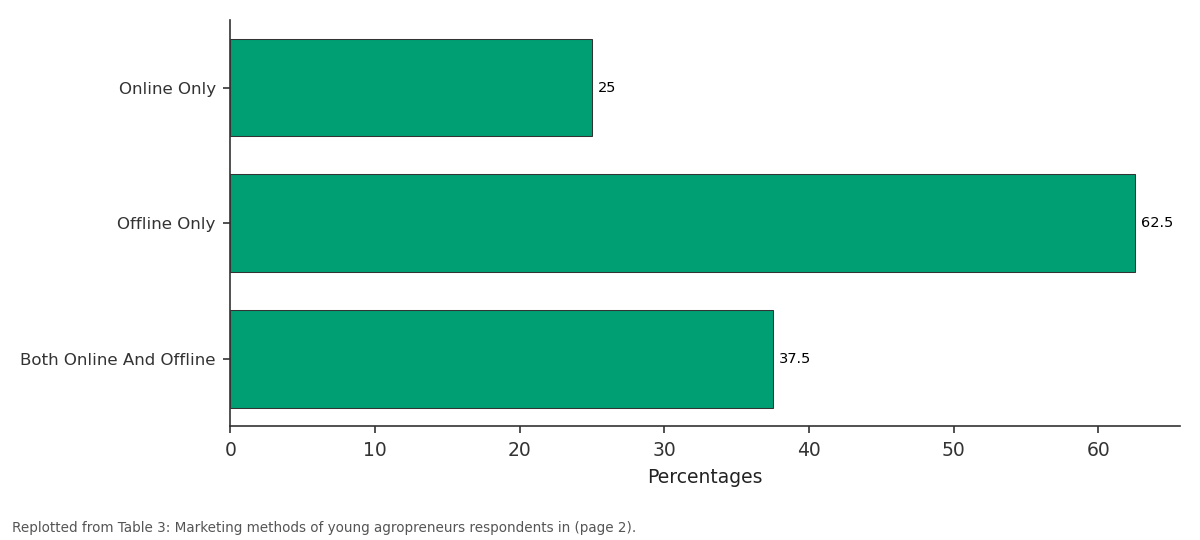
Percentages: Online Only vs Offline Only vs Both Online And Offline
Replotted from Table 3 (page 2) of the original paper. Every bar is the paper's own table value.
View source evidence ↗Figures & tables
From the original paper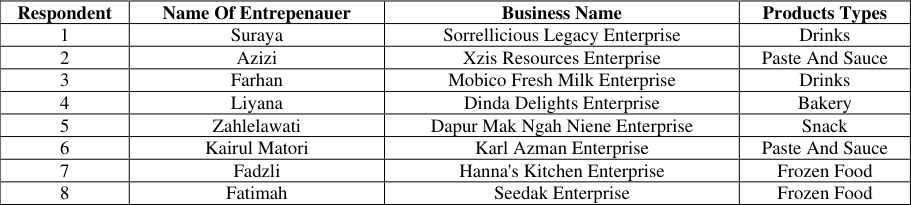 Table1
 Table 3
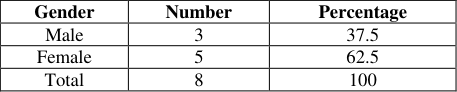 Table 2
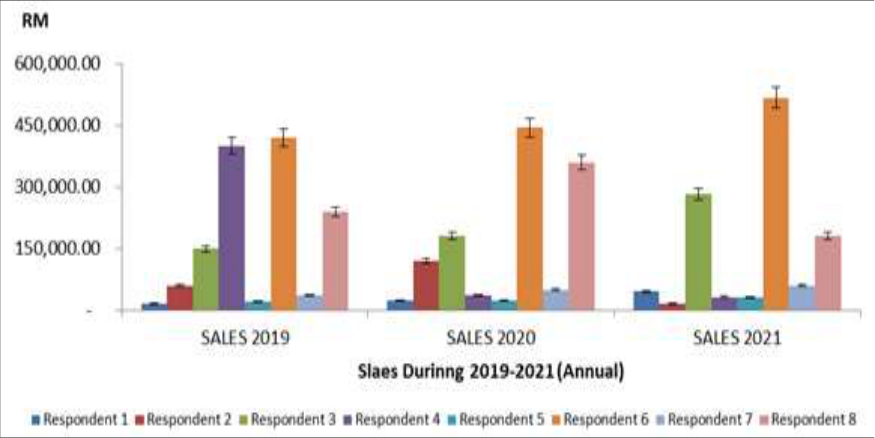 Figure 1
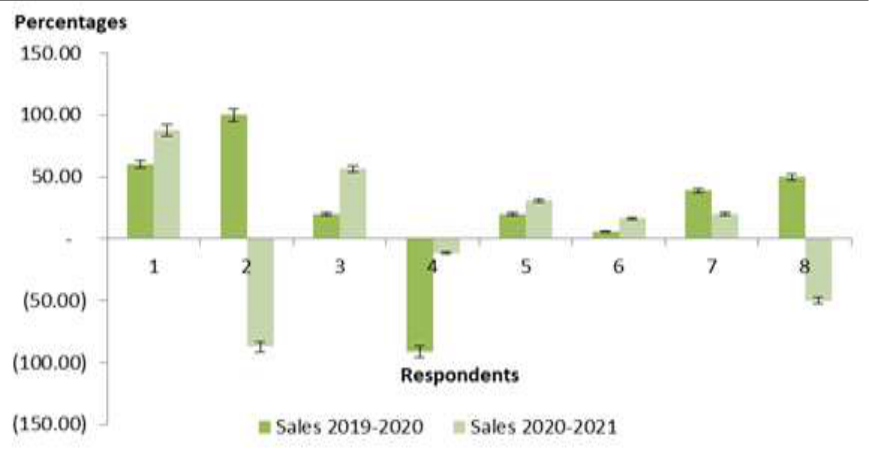 Figure 2
Introduction
The Corona Virus Disease Pandemic (COVID-19) rocked the world in early 2020, infecting practically everyone on the earth (Al-Balas et al., 2020; Nasution et al., 2020) [1,15] . The COVID-19 pandemic helps Malaysia's economy as well as the health sector. The Malaysian Agriculture Research and Development Institute (MARDI) was in charge of Young Agropreneur (YA) development activities at the state level via the Selangor Technology Transfer and Entrepreneur Development Centre (TE). By December 2022, there will be 22 Selangor MARDI Young Agropreneurs. MARDI Selangor YA is comprised of a diverse range of firms and clusters, including food-based industry (IAT) and agricultural agriculture. The COVID-19 outbreak has primarily impacted and startled small enterprises. The post-COVID-19 outbreak presents a variety of issues for small and medium-sized firms and cooperative practitioners (Ramdani, I. 2020) [18] . According to the findings of the study (Miyakawa et al., 2020) [14] , the rise in business departures during the COVID-19 epidemic is mostly attributable to a fall in predicted sales growth rate rather than an increase in uncertainty. A national communicative intervention campaign was designed to prevent the COVID-19 outbreak by diagnosing the situation, planning, organising expert teams, producing appropriate information, and disseminating it through social networks, mass media, and interpersonal communications. This information was received and exchanged by extension personnel, several important institutions, the majority of key rural informants, local leaders, facilitators, farmers, and nomads. Furthermore, this study shows that salesperson bricolage is positively related to sales performance under conditions shaped by the COVID-19 disruption, with salesperson bricolage becoming more strongly related to sales performance when sales environments are more severely disrupted by the pandemic (Epler & Leach, 2021) [3] . As a result, the study was carried out to assess the business sales patterns of young agropreneurs (YA) in Selangor State from the post-pandemic era of 2019 to 2021.
Methodology
As of December 2022, there are a total 22 Selangor MARDI young entrepreneur was monitored. This is a quantitative study based on primary data collected from 8 out of 22 entrepreneur that positively response during the interview (Table 1 This technique was created to offer a thorough description and visualisation of how the Post-COVID pandemic in 2022 influenced small firms' revenue growth. Respondents were interviewed in-depth about their firm activities based on the required factors of business clusters, yearly earnings, marketing sources, and business expansion. This study both informs and inspires the reader. This study employed primary data gathered through an interview, and the data was structured in a variety of forms depending on the information source. The data was then reviewed and described in narrative writing.
| Respondent | Name Of Entrepenauer | Business Name | Products Types |
|---|---|---|---|
| 1 | Suraya | Sorrellicious Legacy Enterprise | Drinks |
| 2 | Azizi | Xzis Resources Enterprise | Paste And Sauce |
| 3 | Farhan | Mobico Fresh Milk Enterprise | Drinks |
| 4 | Liyana | Dinda Delights Enterprise | Bakery |
| 5 | Zahlelawati | Dapur Mak Ngah Niene Enterprise | Snack |
| 6 | Kairul Matori | Karl Azman Enterprise | Paste And Sauce |
| 7 | Fadzli | Hanna's Kitchen Enterprise | Frozen Food |
| 8 | Fatimah | Seedak Enterprise | Frozen Food |
Table text extracted from the original PDF; superscript letters are shown inline. The original table image is below.
View original table image
Results and Discussion
Table 2 displays the gender distribution of YA respondents in Selangor. Female entrepreneurs took the lead with 62.5%, followed by men entrepreneurs with 37.5%. Gender variations in competition and risk-taking appear to contribute considerably to the gender gap in latent and embryonic entrepreneurship (Bönte W, & Piegeler M, 2013) [2] . Gender status views may be viewed as an essential "Demand-Side" mechanism contributing to gender discrepancy in aggregate entrepreneurship rates, as well as a micro-level factor influencing the possibility of a new and unique organisation emerging and surviving (Thébaud., 2015) [20] . Women entrepreneurs in the region's food processing industry use a variety of cross-cutting techniques, such as the formation of economic organisations and entrepreneurship clubs, to address and mitigate sociocultural problems (Kapinga & Montero, 2017) [7] . Upscaling small-scale fermented food processing activities while improving functional food properties and fostering women's entrepreneurship contributes to food loss prevention, nutrition and health promotion, and entrepreneurial opportunities for current processors (Materia V, et al., 2021) [13] . Understanding the factors that influence the development of female entrepreneurial activities and exploring their potential variability across stages of economic development, according to Kobeissi (2010) [9] , could be useful for policymakers exploring effective incentive structures to promote gender entrepreneurship in their respective countries. The following factors influenced the business resilience of rural entrepreneur women: external resources, internal resources, creativity, opportunity and adaptability, risk management, and family support. Table 3 displays the respondents' marketing approaches. Direct delivery, walk-in clients, and store displays have the highest percentage (62.5%), followed by a mix of online and offline (37.5%) and offline methods (25%). An examination of the most typical offline marketing strategies reveals that even forward-thinking organisations in the information and communication technology industry frequently employ such tools. The research findings imply that, while classic marketing principles are still applicable in Taiwan's cyber environment, Internet-based small businesses must employ new marketing approaches to adapt to and compete in the ever-changing Internet business environment (Siu. W, 2002) [19] . In the midst of the pandemic, the government has issued a policy to empower small and medium-sized businesses, such as (a) providing monetary assistance to vulnerable small and medium-sized businesses; (b) providing a tax incentive for small and medium-sized businesses; (c) providing credit relaxation and restructuring for small and medium-sized businesses; (d) expanding capital financing aid for small and medium-sized businesses; and (e) providing e-learning training. I. Ramdani, 2020 [18] . To attain the best outcomes, entrepreneurs must learn to synergize their marketing efforts across both offline and online channels (Kingshott et al., 2020) [8] . Figure 1 depicts the yearly sales trend of respondents from 2019 to 2021 in the post-pandemic market. According to the results, respondent 6 (Karl Azman Enterprise, paste and sauce) has good sales survival with RM 420,000.00, RM 444,000.00, and RM 517,000.00 for the years 2019, 2020, and 2021. Meanwhile, respondent 4 has negative annual sales survival with RM400,000.00, RM 36,308.00, and 32,132.50 for the same time period. The causal model findings showed that the variables of marketing strategy, marketing mix, marketing tactics, business communication, business plan preparation abilities, and supporting policies are beneficial factors in building company resilience. COVID-19 also demonstrated that connections, as well as personal and socioeconomic aspects, are important in dealing with a crisis. Those of us in the agricultural extension and education professions must examine our personal and professional connections and understand both www.extensionjournal.com their complexity and fragility. Consumers' eating habits and food purchase behaviour have been strongly changed by perceived risk and precautions connected to COVID-19, and these changes might be utilised by food producers to obtain a competitive advantage (Marinkovi & Lazarevi, 2021) [12] . The COVID-19 epidemic has induced significant changes in consumer behaviour, including more cautious purchasing decisions, greater interest in lower pricing, purchasing locally, and preferring fresh items over processed ones (Orîndaru et al., 2021) [16] .
| Gender | Number | Percentage |
|---|---|---|
| Male | 3 | 37.5 |
| Female | 5 | 62.5 |
| Total | 8 | 100 |
Table text extracted from the original PDF; superscript letters are shown inline. The original table image is below.
View original table image
| Methods | Number of Respondents | Percentages |
|---|---|---|
| Online Only | 2 | 25 |
| Offline Only | 5 | 62.5 |
| Both Online And Offline | 3 | 37.5 |
Table text extracted from the original PDF; superscript letters are shown inline. The original table image is below.
View original table image
During the pandemic, the YA sales trend faced a variety of problems. During the outbreak, food producers were expected to confront a survival crisis. The average proportion of sales changes, as seen in Figure 2.
Respondents 2 and 8 (Xzis Resources Enterprise and Seedak Enterprise) had negative sales percentages of -87.4% and -50% in 2020-2021, respectively, while respondent 4 (Dinda Delights Enterprise) had negative sales in the early phases of the pandemic (2019-2020) with -90.92%. Respondents 2 and 1 (Xzis Resources Enterprise and Sorrellicious Legacy Enterprise) had the most surviving YA at the two periods of the pandemic years 2019-2020 and 2020-2021, with 100% and 87.5%, respectively. The COVID-19 pandemic reduced food accessibility and availability, changed dietary practises, and exacerbated food poverty, particularly in the most vulnerable regions (Jafri et al., 2021) [23] . The pandemic altered consumers' shopping habits and food sources, lowering shopping frequency and increasing food purchased per trip, resulting in an increase in consumption of local food products due to food safety concerns (Hassen et al., 2021) [6] . The pandemic has had an impact on production and marketing due to labour and logistical restrictions, while the negative income shock has limited access to markets and increased food commodity prices, influencing consumption patterns (Cariappa et al., 2020) [21] .
Diverging trends in all food categories were identified, with some persons lowering and others increasing their consumption frequencies, suggesting that the pandemic had diverse effects on people's lives and food consumption habits (Janssen et al., 2021). [22]
Conclusion
We may conclude from the data that the food-based product trend has an impact in post-pandemic conditions. The tendency of reducing income during the early epidemic and growing positively after the pandemic was shown to be reversed. The agropreneur takes a different strategy to increasing sales in order to secure the long-term viability of their business and products, whether through internet or direct client purchases. With a high degree of demand for their offering price, ready-to-eat items increased the income of small to medium-sized enterprises. This research was conducted during the COVID-19 pandemic, thus more research is needed to get data on sales and business status for non-food agropreneurs in order to update the research conclusions. The following recommendation is to research the impact of government aid programmes on entrepreneur sales growth in order to enhance the economic development of community-based sectors, particularly in the postpandemic era.
Acknowledgement
The devotion and close collaboration of all team members and the State Director of MARDI Selangor, supported and encouraged by top management at headquarters, form the cornerstone of this successful research. Throughout the 2019-2021 fiscal year, the Selangor State MARDI TE Centre has entirely conducted operations aimed towards the TE Center's Key Performance Indicator (KPI) planning.
References
21 in the original paper- Al-Balas M, Al-Balas HI, Al-Balas H. Surgery during the COVID-19 pandemic: A comprehensive overview and perioperative care. Am J Surg. 2020;219(6):903906. https://doi.org/10.1016/j.amjsurg.2020.04.018.
- Bönte W, Piegeler M. Gender gap in latent and nascent entrepreneurship: driven by competitiveness. Small Bus Econ. 2013;41:961-987. https://doi.org/10.1007/S11187-012-9459-3.
- Epler R, Leach M. An examination of salesperson bricolage during a critical sales disruption: Selling during the COVID-19 pandemic. Ind Mark Manag. 2021;95:114-127. https://doi.org/10.1016/j.indmarman.2021.04.002.
- Karamidehkordi E, Mousavi SK, Zamani-Abnili F, Es'haghi SR, Ghasemi J, Gholami H, et al. Communicative interventions for preventing the novel Coronavirus (COVID-19) outbreak: Insights from Iran's rural and farming communities. J Agric Educ Ext. 2022;28(3):275-307. https://doi.org/10.1080/1389224X.2021.1932535.
- Handayanto RT, Herlawati H. Efektifitas Pembatasan Sosial Berskala Besar (PSBB) di Kota Bekasi Dalam Mengatasi COVID-19 dengan Model SusceptibleInfected-Recovered (SIR). J Kajian Ilmiah. 2020;20(2):119-124. https://doi.org/10.31599/jki.v20i2.119.
- Hassen T, Bilali H, Allahyari M, Karabašević D, Radosavac A, Berjan S, et al. Food Behavior Changes during the COVID-19 Pandemic: Statistical Analysis of Consumer Survey Data from Bosnia and Herzegovina. Sustainability. 2021;13. https://doi.org/10.3390/su13158617.
- Kapinga A, Montero C. Exploring the socio-cultural challenges of food processing women entrepreneurs in IRINGA, Tanzania and strategies used to tackle them. J Global Entrepr Res. 2017;7:1-24. https://doi.org/10.1186/S40497-017-0076-0.
- Kingshott R, Sharma P, Nair S. Social and technical chains-of-effects in business-to-business (B2B) service relationships. Eur J Mark. 2020;54:1225-1246. https://doi.org/10.1108/ejm-04-2019-0329.
- Kobeissi N. Gender factors and female entrepreneurship: International evidence and policy implications. J Int Entrepr. 2010;8:1-35. https://doi.org/10.1007/S10843-010-0045-Y.
- Davis K. Agricultural education and extension in a time of COVID. J Agric Educ Ext. 2020;26(3):237-238. https://doi.org/10.1080/1389224X.2020.1764224.
- Moghaddam RK, Badzaban F, Fatemi M. Entrepreneurial resilience of small and medium-sized businesses among rural women in Iran. J Agric Educ Ext. 2023;29(1):75-98. https://doi.org/10.1080/1389224X.2021.1985539.
- Marinković V, Lazarević J. Eating habits and consumer food shopping behaviour during COVID-19 virus pandemic: Insights from Serbia. Br Food J. 2021. https://doi.org/10.1108/BFJ-11-2020-1072.
- Materia V, Linnemann A, Smid E, Schoustra S. Contribution of traditional fermented foods to food systems transformation: Value addition and inclusive entrepreneurship. Food Security. 2021;13:1163-1177. https://doi.org/10.1007/s12571-021-01185-5.
- Miyakawa D, Oikawa K, Ueda K. Firm Exit during the COVID-19 Pandemic: Evidence from Japan. J Jpn Int Econ. 2020;59:101118. https://doi.org/10.1016/j.jjie.2020.101118.
- Nasution DAD, Erlina E, Muda I. Dampak Pandemi COVID-19 terhadap Perekonomian Indonesia. J Benefita. 2020;5(2):212. https://doi.org/10.22216/jbe.v5i2.5313.
- Orîndaru A, Popescu M, Căescu Ș, Botezatu F, Florescu M, Runceanu-Albu C. Leveraging COVID-19 Outbreak for Shaping a More Sustainable Consumer Behavior. Sustainability. 2021;13:5762. https://doi.org/10.3390/SU13115762.
- Pakpahan AK. Covid-19 Dan Implikasi Bagi Usaha Mikto, Kecil, Dan Menengah. J Ilm Hubungan Internasional. 2020;1(1):59-64. https://doi.org/10.26593/jihi.v0i0.3870.59-64.
- Ramdani I. Analysis of the cycling trend during the pandemic of COVID-19 towards small and medium Entrepreneurs (UMKM) Income. Int J Soc Sci Bus. 2020;4(4):528-535. https://doi.org/10.23887/ijssb.v4i4.29610.
- Thébaud S. Status Beliefs and the Spirit of Capitalism: Accounting for Gender Biases in Entrepreneurship and Innovation. Soc Forces. 2015;94:61-86. https://doi.org/10.1093/SF/SOV042.
- Janssen M, Chang B, Hristov H, Pravst I, Profeta A, Millard J. Changes in food consumption during the COVID-19 Pandemic: Analysis of consumer survey data from the first lockdown period in Denmark, Germany, and Slovenia. Front Nutr, 2021, 8. https://doi.org/10.3389/fnut.2021.635859.
- Jafri A, Mathe N, Aglago E, Konyole S, Ouédraogo M, Audain K, et al. Food availability, accessibility and dietary practices during the COVID-19 pandemic: A multi-country survey. Public Health Nutr. 2021;24:1798-1805. https://doi.org/10.1017/S1368980021000987.