
Research article · 2024 · Full text
International Journal of Agriculture Extension and Social DevelopmentChallenges of small ruminant production in Bagbwe Chiefdom, Bo District, Southern Sierra Leone
Volume 7(1) · Pages 186–192 · DOI: 10.33545/26180723.2024.v7.i1c.207 ↗
Research areasAgriculture and Rural Development Research
Abstract
Author-writtenThe purpose of this study was to investigate “Challenges to Small Ruminant Production” Bagbwe Chiefdom, Bo District, in Southern Sierra Leone. Descriptive quantitative and qualitative approaches were employed for this study. Ten (10) communities were purposively selected and a sample size of 80 farmers was selected using stratified random sampling technique. Questionnaires were used to collect data from the respondents and descriptive statistics such as frequencies and percentages was used to analyze the data. Findings of the socioeconomic characteristics of respondents revealed that, majority of the respondents were male, the management system practiced was semi-intensive management system during cropping season and extensive management systems in the dry season, after harvesting of crops. It also revealed that almost all of the respondents reported that there were no training programmers for farmers in small ruminant production in the study area. There were numerous challenges encountered by farmers in small ruminant production. It was recommended that, adequate and effective training and extension services be provided in small ruminant production, provision of veterinary services, access to good breeding stock, access to grazing land, disease and parasite prevention and control measures, and provision of support services to farmers for an improved small ruminant production in the study area and other parts of Sierra Leone.
Summary
Source-checkedPlain-language reading of the full paper, prepared with AI and checked against the text. Each point links to the authors' own words.
Why it matters
- Sheep and goats are the primary livestock species in Sierra Leone. View evidence ↗
- Small ruminants are primarily raised for meat, but they also serve as a financial reserve and hold social and cultural importance for rural populations. View evidence ↗
- Providing training to farmers and encouraging the adoption of improved technologies can increase productivity and income. View evidence ↗
The question
- The study aimed to investigate the challenges associated with small ruminant production in the Bagbwe Chiefdom of Bo District, Southern Sierra Leone. View evidence ↗
What they did
- The research was conducted in 2023 within the Bagbwe Chiefdom, Bo District, Southern Province of Sierra Leone. View evidence ↗
- The study used a sample of 80 farmers selected from ten communities across five research zones. View evidence ↗
- A mixed-methods design was used, collecting data via questionnaires, focus group discussions, and observations. View evidence ↗
What they found
- The largest group of respondents (30.0%) were illiterate, having had no formal schooling. View evidence ↗
- Small ruminant production levels were low, with 45.0% of farmers owning only 1 to 10 animals. View evidence ↗
- Management systems varied by season: 60.0% used semi-intensive systems during the rainy cropping season, while 35% used extensive free-range systems. View evidence ↗
- There was a total lack of access to training programs, with 100% of respondents reporting no such services in their communities. View evidence ↗
- Access to grazing land, breeding stock, and veterinary services were all rated as very significant challenges by 80.0% of respondents. View evidence ↗
- The lack of training programs was identified as a major challenge, rated as very significant by 95.0% of farmers. View evidence ↗
- Disease and parasite incidence were rated as very significant by 95.5% of respondents, likely due to limited veterinary resources. View evidence ↗
Figures & tables
From the original paper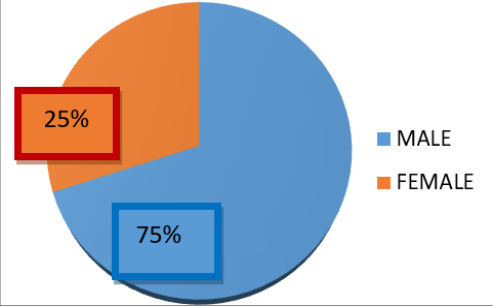 Figure 1
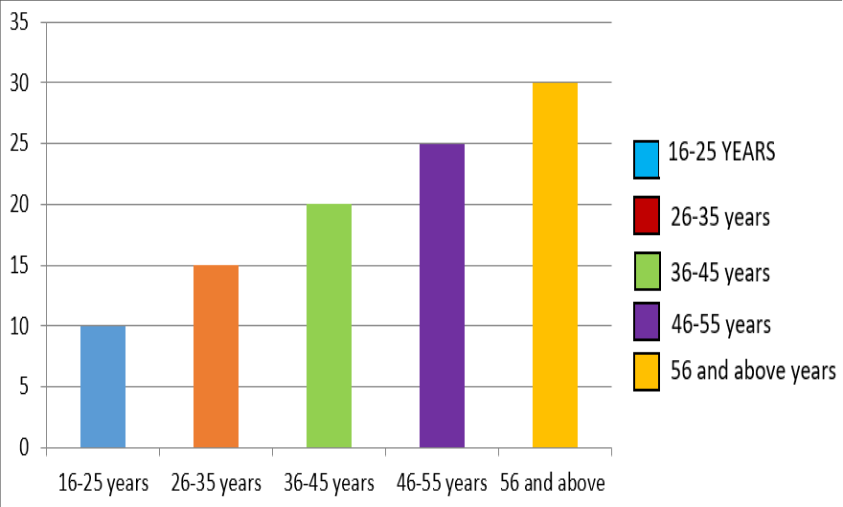 Figure 2
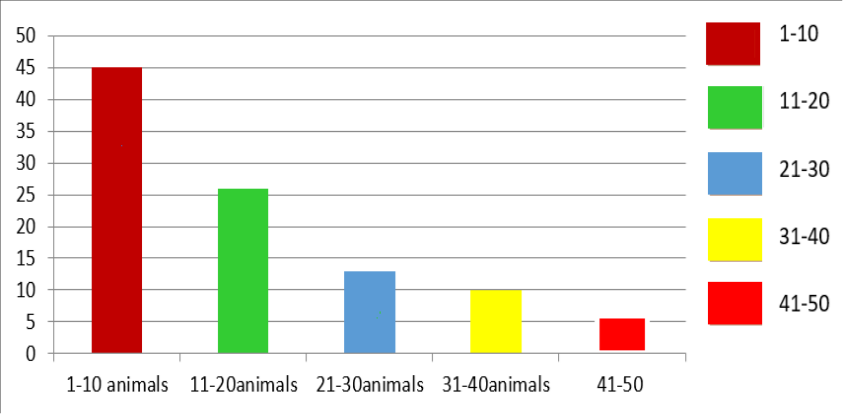 Figure 4
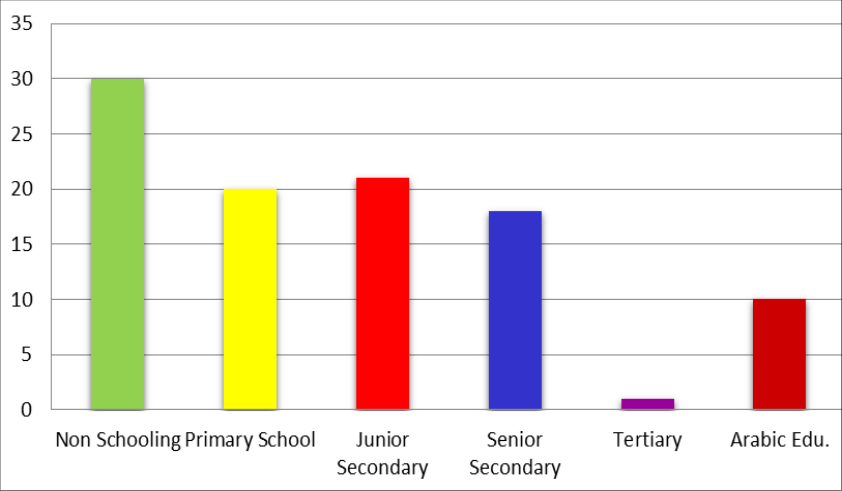 Figure 3
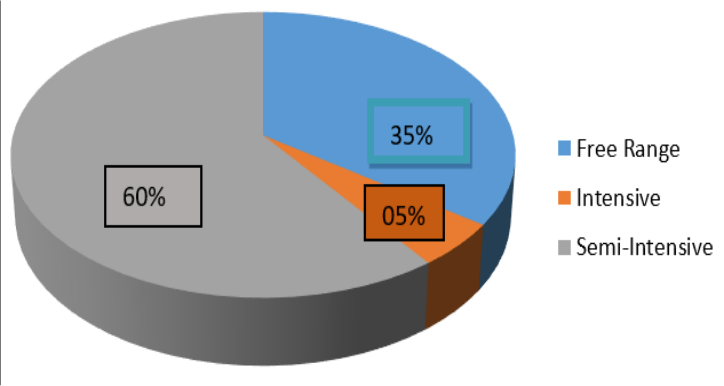 Figure 5
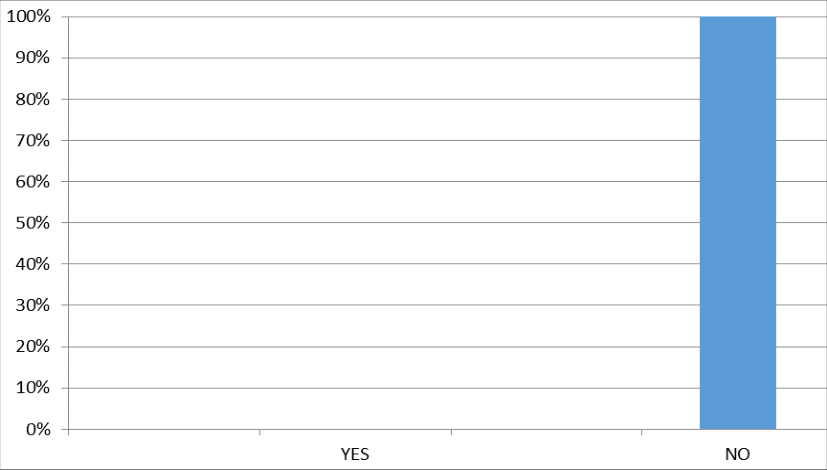 Figure 6
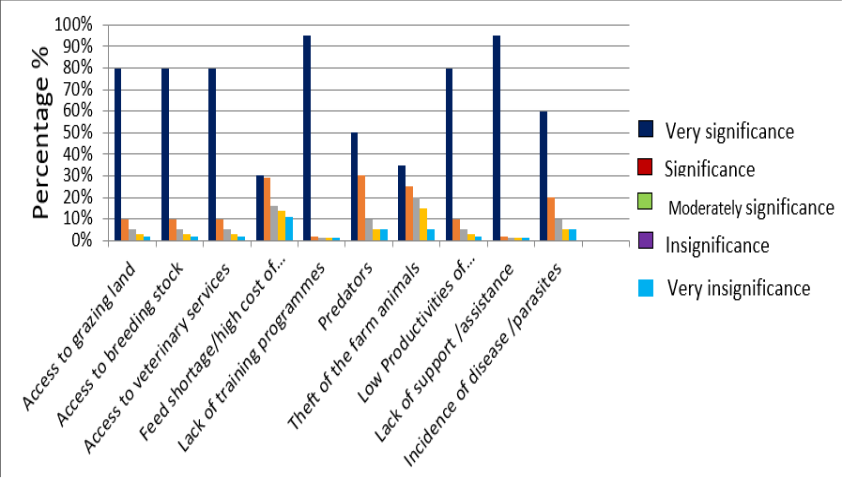 Figure 7
Introduction
Basically, small ruminants (sheep, goats) are grazing animals. Sheep and goat are the major species of livestock in Sierra Leone (FAO, 2009) [6] . Small ruminants (sheep and goat) are typically reared by farmers at a subsistence level or traditional way in most rural communities in West Africa (Fidèle et al., 2023) [16] . In 2007, about 8.5 percent and 6.6 percent of households in Sierra Leone owned sheep and goats (SSL, 2013) [13] . The three management systems commonly practiced by livestock farmers in Sierra Leone include, the extensive / free range system, the semiintensive and in some cases, the intensive management systems. During the rain the raining season, the semi intensive system of management is reported to be predominantly practiced by livestock farmers. The raining season is a cropping season and it is mandatory for all livestock farmers to control movement of their grazing animals to prevent them from destroying crop farms (Mustapha, et al., 2022) [11] . Small ruminants are either tethered on grazing fields or fed on cut-and-carry grasses by their owners or allowed to browse in pens or confined areas. In the dry season, the extensive management system for sheep and goats are mostly practiced. After the harvesting periods, small ruminants (sheep and goats) are released to browse freely on the just harvested crop lands. The advantage of this system is that, it is less labour intensive and the animals through scavenging activities can feed adlib and increased in weight for market values or other purposes (Mustapha, et al., 2022) [11] . Under the intensive system, very few livestock farmers practiced it in rural communities of West Africa. In the intensive management system, sheep and goat are confined in pens or confinements and fodder, grasses, household wastes, combined with cassava peels or other crop by-products and water are supplied to the animals. Small ruminant enterprises are essential sector of trade within humid West Africa. Demand and consumption patterns for small ruminants (sheep and goats) differ but the importation of animals from the arid north indicates a vast potential market in the humid zone for locally produced animals. Small ruminants are raised almost exclusively for meat but also provide a flexible financial reserve for the rural population and play important social and cultural roles. Musa, et al. (1998) [10] , reported that small ruminants served as ready or emergency source of income and meat for households as the animals could be sold or slaughtered in time of their financial needs. The marketing of sheep normally reaches a peak at Muslim religious holidays, whilst goats are used for all ceremonies throughout the year, such as births, deaths, marriages and festivals. Therefore, the demand for goats is consistently high. Moreover, there is a clear price premium for male sheep during the festival period, and some early purchasing for fattening. Access to adequate and effective training and extension services are crucial to farmers in small ruminant production in rural settings for improve productivity and income of www.extensionjournal.com households. Training involves acquiring information, knowledge and developing abilities or attitudes, which will result in greater competence in the performance of work. Training of farmers and adoption of improved technologies can lead to increase in productivity and higher income to the farmers (Benin S & Pender J, 2001 & Yebanji O, 2011) [1,15] . The contributions of training to agricultural development has been highlighted as thus: providing farmers with the basic skills; improving rationality and increasing inquisitiveness; thereby improving receptivity to new ideas and; strengthening the willingness to economize and facilitate the adoption of new techniques (Mengistu, 2009) [9] . Thus, adequate and suitable training programmes are crucial for small ruminant farmers to acquire the necessary knowledge and skills for sustainable small ruminant production. A study conducted by Johnson, et al. (2020) [7] assessed the availability and effectiveness of training programs targeting small ruminant farmers in rural areas. The findings revealed that while some training programmes were available, their effectiveness was limited due to inadequate coverage, poor delivery methods, and a lack of focus on specific challenges faced by farmers. To address these issues, it is necessary to develop comprehensive training programmes that address the specific needs and constraints of small ruminant farmers. Small ruminant production in rural settings is an essential enterprise for small-scale farmers due to the procreative abilities of the animals. Both sheep and goats have the ability to produce or reproduce offspring within a relatively short period of five months. Goats normally give birth to twins and sometimes triplets, while sheep mostly produce between one and two lambs per parturition and these normally take place twice a year. Despite these advantages of small ruminant production to farmers in rural communities, management of these farm animals is greatly challenged or hampered by a number of production and environment factors. These challenges can affect the animals in terms of number (animals' kept by households) and productivity (Conroy, 2005) [2] . Mustapha et al. (2022) [11] , in their findings reported that, majority (60.1%) of the respondents in their study area have not used animal health service in the last 12 months. The unavailability of vaccines for treatment of animals in rural settings, high cost of the relatively available vaccines and drugs and the absence of animal health workers were some of the challenges mentioned in their survey that hampered small ruminant production. Nutritional constraints in the humid zone of West Africa are sometimes considered to be less severe than in other ecological zones of Africa. Whilst quantity might often be adequate, the quality of feed offer to animals is often poor. In many production systems, there is little attempt to overcome these deficiencies. Moreover, as indicated by CTA (2006) [3] , the informal and poor marketing systems through which sheep and goats were often sold results in under-estimation of the economic value of the small ruminants. Therefore, this study intends to investigate the challenges to small ruminant production in Bagbwe chiefdom, Bo District in Southern Sierra Leone and this work will also provide valuable insights to stakeholders such as policy makers in the Ministry of Agriculture and Food Security (MAFS), development partners and small ruminant farmers on the challenges to small ruminant production and develop strategies for an improved production and livelihood per household.
Purpose and Specific Objectives of the Study
The purpose of this study was to investigate "Challenges to Small Ruminant Production". Bagbwe Chiefdom, Bo District, in Southern Sierra Leone. The specific objectives of the study were. 1. To identify and assess the socio-economic characteristics of small ruminant farmers in Bagbwe chiefdom. 2. To assess the level of availability, adequacy, and suitability of the training programmes that target small ruminant farmers in Bagbwe chiefdom. 3. Identify and assess the challenges encountered by farmers in small ruminant production in Bagbwe chiefdom.
Methodology Description of the study area
This study was conducted in Bagbwe chiefdom, Bo District, in the Southern Province of Sierra Leone during 2023.
Bagbwe chiefdom is about 20 miles from Bo, the second largest city in Sierra Leone. From the 2015 Population and Housing Census conducted in Sierra Leone, it was reported that the chiefdom has a population of approximately 20,951 residents. The population of the chiefdom is ethnically diverse, although the Mende people form the plurality of the chiefdom. The chiefdom is endowed with flat terrains with very few hills and lowland ecology. The main economic activities of the people in the chiefdom are subsistence farming and petty trading. Moreover, the inhabitants of Bagbwe chiefdom engaged in raising poultry (chicken and ducks) and small ruminants (sheep and goat) on a free range / extensive system during the dry season and semi-intensive management system during the raining season (cropping period). Also, rice, cassava, sweet potatoes, groundnut, yam, oil palm, cocoa, coffee cola nuts, and vegetables are among the crops grown in the study area.
Design of the study
The purpose of this study is to investigate the challenges to small ruminant production in Bagbwe chiefdom, Bo District. The study was a mixed design, which employed both quantitative and qualitative approaches to elicit credible data from the respondents through questionnaires, Focus Group Discussion (FGD) and observations.
Population and sample size of the study
All the small ruminant farmers in Bagbwe chiefdom, Bo District were the population of the study. The entire chiefdom is divided into five (5) research zones and two (2) communities were selected from each of the five research zones, thus, making a total of ten (10) communities namely, Njala Kendima and Gbonjema in the Nyawa section; Yendema and Bijia in the Jongo section, Benduma and Nganyahun in the Kenoh section, Ngalu and Nyagoihun in the Samawa section and Mano Pendobu and Kowama in the Nyallay section. These communities were purposively selected for the study based on the dominant practice of small ruminant production. In each community, a list of farmers rearing small ruminants (sheep and goats) was www.extensionjournal.com prepared and eight (8) farmers were randomly selected from the list by balloting. A total of 80 respondents formed the sample size for the study.
Instrumentation and Data Collection Procedure
The researchers prepared and developed questionnaires based on the study's objectives to solicit relevant data pertinent to the investigation. A pilot test was conducted with the questionnaires with a selected sample of respondents in a neighboring chiefdom to test for their validity and reliability. A panel of experts from the Department of Agricultural and Home Economics Education reviewed the instrument to ensure its content validity. Data were collected using questionnaires having close-ended questions that were completed through one -on -one, oral interviews with respondents, because most of the respondents were illiterates. However, relevant information was also obtained through focus group discussions among key informants and observations of farmers' activities in small ruminant production.
Data Analysis
Data collected through the questionnaires were analyzed by utilizing Microsoft Excel and Statistical Package for Social Sciences (SPSS) version 20. Data were presented into frequency counts and percentages using pie charts, bar charts and pictograms.
Results and Discussions Socio-economic Characteristics of Small Ruminant
Farmers in Bagbwe Chiefdom: From figure 1 above, the results revealed that most of the respondents in the study area were males, representing75% which was greater than the number of female respondents (25%). This indicates that male farmers dominate in small ruminant production in the study area. The gender distribution could probably be as a result of gender roles in agricultural production, where most households were headed by males. The male household heads could probably have to explore more means of generating income in order to meet the basic needs of households.
Source: Survey Data, 2023 were within age range 56 and above years. As shown in figure 2, majority of the respondents (25.0% and 30.0%) fell within the aged categories of (46-55) years and (56 and above) years respectively. This indicates that the respondents were adult farmers, who embarked on small ruminant (sheep and goats) production in the study. This implies that older farmers are expected to make sound farming decisions, ensuring sustainability of their projects; forecasting and guarding against risks (Douglas et al. 2017) [4] . www.extensionjournal.com Source: Survey Data, 2023 As indicated in figure 3 on the educational levels of respondents, majority of the respondents (30.0%) were illiterates since they had no schooling in their life. Whilst the rest of respondents had one form of formal education or the other (20.0% had primary education, 21.0% had Junior Secondary School education, 18.0% had Senior Secondary School education, 1.0% had tertiary education and 10.0% had Arabic education). This implies that the educated ones may be equipped to embrace training programmes in livestock production as well as capable to adopt improved technologies in small ruminant production as compared to their counterpart. This was in consistent with Okanlade A. Lawal-Adebowale & Alarima CI (2011) [12] , reported that, with the exception of 27.0% of sheep and goats farmers, nearly all others had one form of formal education or the other. Also, 14% of the respondents acquired Arabic or koranic education. This might probably be that most of the respondents were coming from Islamic backgrounds and koranic learning was a mandatory aspect of practicing their faith or religion.
Source: Survey Data, 2023 Figure 5 illustrates the management system of small ruminants, it was revealed that, majority of the respondents (60.0%) managed sheep and goat in the semi-intensive system especially in the cropping season (raining season), where the animals were tethered during the day and confined to pens or housing units at night to prevent conflict with crop farmers in their communities. 35% of the respondents raised their sheep and goats under the free range or extensive system. The extensive management system was mostly practiced by small ruminant farmers during the dry season, after the crops have been harvested in the fields. Under this system, sheep and goats were released to roam and search for feedstuffs, water for drinking and sometimes shelters to lie at night. This implies that, most of the sheep and goat were predisposed to disease and parasite infestation, predators and theft. This was in line with Okanlade A Lawal-Adebowale, & Alarima, CI, 2011 [12] , reported that 37.0% of farmers managed sheep and goat under the extensive management system where the farmers hardly provided the animals with additional feed. They added that, the extensive system normally exposed the animals to environmental dangers and economic losses. According to figure 6, access to training programmes by farmers in small ruminant production, revealed that, all (100%) of the respondents claimed that they did not have access to training programmes in small ruminant production in their communities. The lack of training programmes might probably have adverse effects in small ruminant production in the study area. This implies that, the farmers were still practicing the tradition methods of raising sheep and goats in the study area. Thus, this could probably be one factor among others for the low level of production in small ruminant production in Bagbwe chiefdom. www.extensionjournal.com production in the study area. The findings of the study revealed that 80.0% of the respondents claimed that access to grazing land was rated as very significant; Majority of the respondents (80.0%) rated access to breeding stock and access to veterinary services as very significance respectively. Inadequacy of grazing land, good quality of breed stock, and inadequacy of veterinary services were reported by farmers as major challenges influencing the effective and efficient production of small ruminants in the selected sampled communities. Farmers were unable or could not afford veterinary services for their small ruminant animals due to the fact that, the health care services were very expensive, inadequate in supplies as well as the limited number of veterinarians in units of MAFS. As reported by Fabusoro et al., (2007) [5] , most of farmers in small ruminant production considered patronage of veterinary services as expensive and thus, resulted to ethos or other alternatives treatment Moreover, majority of the respondents (30.0%) in each case, rated the shortage of feed / high cost of feeds as very significant and significant, 18% of them rated it moderately significant, 12% rated it as insignificant and 10% rated it as very insignificant. Furthermore, the result revealed that 95.0% of the respondents stated that the lack of training programmes for farmers in small ruminant production was a major challenge as it was rated as very significant. This could probably be as a result of very low adoption of improved technologies in small ruminant production. Though goat-research has generated a number of useful technologies (Kumar and Pant, 2003) [8] , but there was constraints in their dissemination and adoption. The lack of awareness and training programmes in the selected sampled communities has led to majority of small ruminant farmers not to seek improved package of practices but aimed at low input and low output system. With regards to predators, majority of the respondents (50.0%) rated it as very significant, 30% rated it as significant. Another major challenge that faced by farmer was the theft of their small ruminants (sheep and goat) in the study area. Majority of the respondents (35.0%) rated it as very significant whilst 25.0% rated it as significant. The reason might probably be, as long as the animals are allowed to roam about the issue of theft may always exist in Bagbwe chiefdom.
Levels of availability, adequacy, and suitability of training programmes that target small ruminant farmers in Bagbwe chiefdom
Levels of availability, adequacy, and suitability of training programmes that target small ruminant farmers in Bagbwe chiefdom
Challenges Encountered by Farmers in Small Ruminants Production
The study also revealed that, 80.0% of the respondents rated low productivity and performance of animals as very significant. The result also revealed that 95.0% of the respondents rated the lack of support / assistance for small ruminant production as very significant. This could probably be linked to several factors which include but not limited to: lack of training and extension programmes for farmers in small ruminant production, lack of good quality breeding stock, lack of support services, lack of veterinary services, poor feed and nutrition, lack of credit facilities and lack of animal healthcare programmes. Thus, the above factors could likely result to low productivity of small ruminants in the study area. The result of the study also revealed that almost all (95.5%) of the respondents rated the incidence of disease and parasites as very significant. This could probably be associated with the lack of veterinary services due to limited veterinary workers, lack of / inadequate veterinary drugs and equipment, and poor road net-work in rural settings. Thus, this might likely lead to high rates of morbidity and mortality of sheep and goat in the study area.
Conclusion
From the findings of the study the following conclusions were made: Majority of small ruminant farmers were males, belonged to the aged category of adults, were illiterates whilst the rest had one form of formal education or the other, practiced semi-intensive and extensive management systems based on the seasons, With regards to access to training programmes, it could be concluded that www.extensionjournal.com there were no training programmes for small ruminant farmers in the study area, as was confirmed by all of the respondents (100%). Moreover, it could be concluded that the farmers encountered multiple challenges in small ruminant production, which were mostly rated by respondents as very significant and significant.
Recommendation
Based on the findings and conclusions of the study, the following recommendations were made:
1. Adequate and effective training and extension services are to be an integral of all development plans and programmes for small ruminant production in the Bagbwe chiefdom and the other parts of Sierra Leone where livestock production is practiced. 2. Veterinary units in the MAFS across the country particularly in Bagbwe chiefdom should be equipped with more staff, veterinary equipment and drugs. 3. Farmers must be trained and retrained to develop their management skills for proper feeding including fodder development and conservation, proper breeding skills, disease prevention and control, simple record keeping and market skills. 4. Government through MAFS, NGOs, and other developmental partners should provide adequate and timely support services to farmers for small ruminant production in Bagbwe chiefdom and the country as a whole.
Figures and tables from the paper
References
8 in the original paper- Dougas K, Singh AS, Zvenyika KR. Perceptions of Swaziland's Youth towards Farming: A case of manzini region. Forestry research and engineering: International Journal. 2017;1(3):84-89.
- Fabusoro E, Lawal-Adebowale OA, Akinloye AK. A study of rural livestock farmer's patronage of veterinary services for healthcare of small farm animals in OGUN State. Nigerian Journal of Animal Production. 2007;34(1):132-8.
- FAO -Food and Agriculture Organization. Global Livestock Production and Health Alas. Food and Agriculture Organization; c2009. Available from: https://www.fao.org/ag/againfo/resources/en/publicatio ns/sector-briefs/Isb-SLE.pdf (Accessed on 15 June 2022).
- Kumar S, Pant KP. Development perspective of goat rearing in India: Status Issues and Strategies. Indian J Agric Econ. 2003;58(4):752-767.
- Okanlade A, Adebowale L, Alarima CI. Challenges of Small Ruminants Production in Selected Urban communities of Abeokuta, Ogun State, Nigeria. Agriculturae Conspectus Scientificus. 2011;76(2):129134.
- Statistics Sierra Leone (SLL). The Statistical Digest 2007 -2013 Edition; c2007. [Online]. (Accessed Jun 21, 2021) https://www.statisticsSL/Documents/Publications/2013/ annual-statistical-digest-2007-2013.pdf.
- Oyebanji OO. Assessment of the Impact of Extension Activities in Agricultural Production in the Nigeria Agricultural Research Strategy Plan and Extension Delivery Policy Concept and Consensus to the Year 2010. In: Adedipe NO, Bakshi JS, editors. Agriculture Conspectus Scientificus. 2011;76(2):129-134.
- Fidèle TD, Roland MN-T, Almamy K, Adama K, Hamidou TH, Gaston BAM. Ethnoveterinary study on livestock practices and the use of medicinal plants against gastrointestinal parasites of small ruminants in the BWA community in Burkina Faso. Int J Vet Sci Anim Husbandry. 2023;8(4):100-107.