
Research article · 2024 · Full text
International Journal of Biology SciencesEffects of anthropogenic activities of Okwangwo people on the survival of cross river gorilla (Gorilla gorilla diehli) in Boki L.G.A, cross river state, Nigeria
Volume 6(1) · Pages 01–06 · DOI: 10.33545/26649926.2024.v6.i1a.173 ↗
Research areasWildlife Ecology and ConservationPrimate Behavior and EcologyZoonotic diseases and public health
Abstract
Author-writtenThis study assessed the effects of anthropogenic activities of Okwangwo people on the survival of Cross River Gorilla (Gorilla gorilla diehli). Data were collected through questionnaires and participatory rural appraisal techniques. Percentage and student Chi-square were used in data analysis. The results obtained showed that majority (88%) of the respondents are males, 60% fell within the age group of 25-30 years. The results further showed that majority of the respondents (60%) are farmers while 32% are hunters. These suggest that farming within the gorilla range posed serious threat to this species survival because its habitat and foods are destroyed, thereby exposing them to danger of hunting and extinction. The major reasons why people engaged in these activities that are detrimental to species survival were identified to be; food, income/revenue, shelter as well as for medicinal purposes. To reduce the pressure on these animals and their habitats, conservation education and enlightenment campaign, job creation as well as creation of alternative sustainable livelihoods to the people of Okwangwo are recommended.
Summary
Source-checkedPlain-language reading of the full paper, prepared with AI and checked against the text. Each point links to the authors' own words.
Why it matters
- The Cross River gorilla is listed as critically endangered by the IUCN due to its small population size, habitat fragmentation, and ongoing threats from hunting and habitat destruction. View evidence ↗
- The total remaining population of Cross River gorillas is estimated to be fewer than 300 individuals. View evidence ↗
- Gorillas in the Afi-to-Kagwene landscape typically concentrate in rugged hill areas to avoid human disturbances like farming and hunting. View evidence ↗
The question
- The study aimed to assess how human activities by the Okwangwo people affect the survival of the Cross River gorilla. View evidence ↗
What they did
- The researchers administered 120 questionnaires to a variety of local respondents, including farmers and hunters, with 100 questionnaires returned for analysis. View evidence ↗
- Data collection involved questionnaires and participatory rural appraisal techniques, which were then analyzed using percentages and student Chi-square tests. View evidence ↗
- The study was conducted in the Okwangwo community located in the Boki Local Government Area of Cross River State, Nigeria. View evidence ↗
What they found
- The majority of respondents involved in socio-economic activities that threaten the gorillas were male (88%). View evidence ↗
- Farming was the primary occupation of respondents (60%), followed by hunting (32%). View evidence ↗
- Access to forest collection is largely uncontrolled, with 80% of respondents affirming this lack of control. View evidence ↗
- The primary reason for hunting in the area is income generation (44%), followed by pleasure or medicinal purposes (36%) and consumption (20%). View evidence ↗
- A majority of respondents (72%) reported that they have not encountered the Cross River gorilla, suggesting the species has become rare. View evidence ↗
- Recent gorilla killing has decreased, with 96% of respondents reporting they have not killed a gorilla in the recent past, likely due to conservation laws. View evidence ↗
- Agricultural revenue is significant, with cocoa generating an estimated N392,000,000 and bush mango generating N228,000,000 annually. View evidence ↗
What it means
- The authors conclude that human activities, including logging, agricultural clearing, poaching, and forest collection, tremendously threaten the survival of the Cross River gorilla. View evidence ↗
- The authors recommend increasing conservation awareness through education and developing alternative sustainable livelihoods to reduce human pressure on the forest. View evidence ↗
Visual summary
3 visualsIllustrations explain the paper; charts are replotted from the paper's own table values.
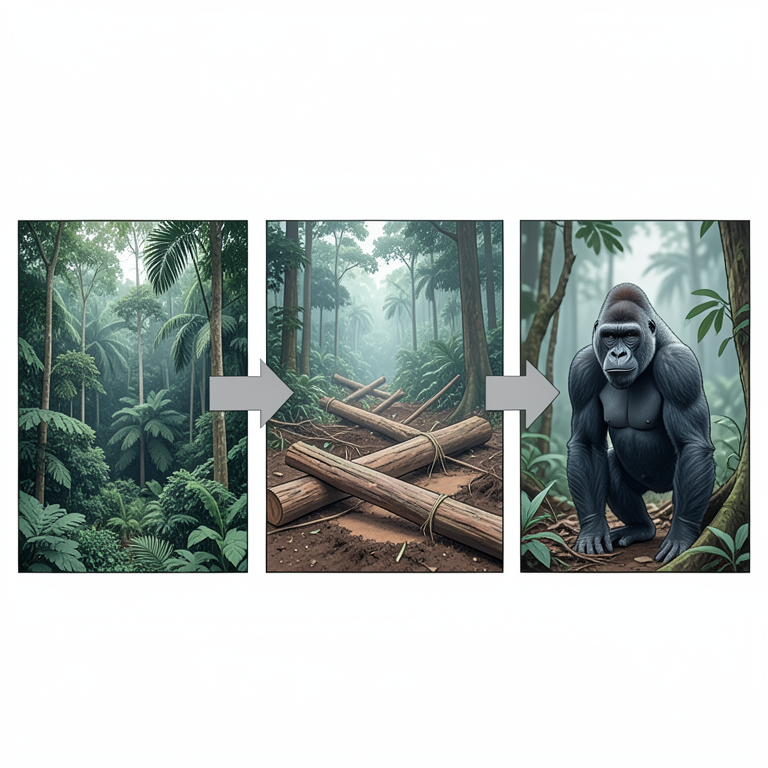
Threats to Cross River Gorilla
AI-generated conceptual illustration (Cross River gorilla (Gorilla gorilla diehli) in a tropical rainforest). It explains the idea and does not show study data.
View source evidence ↗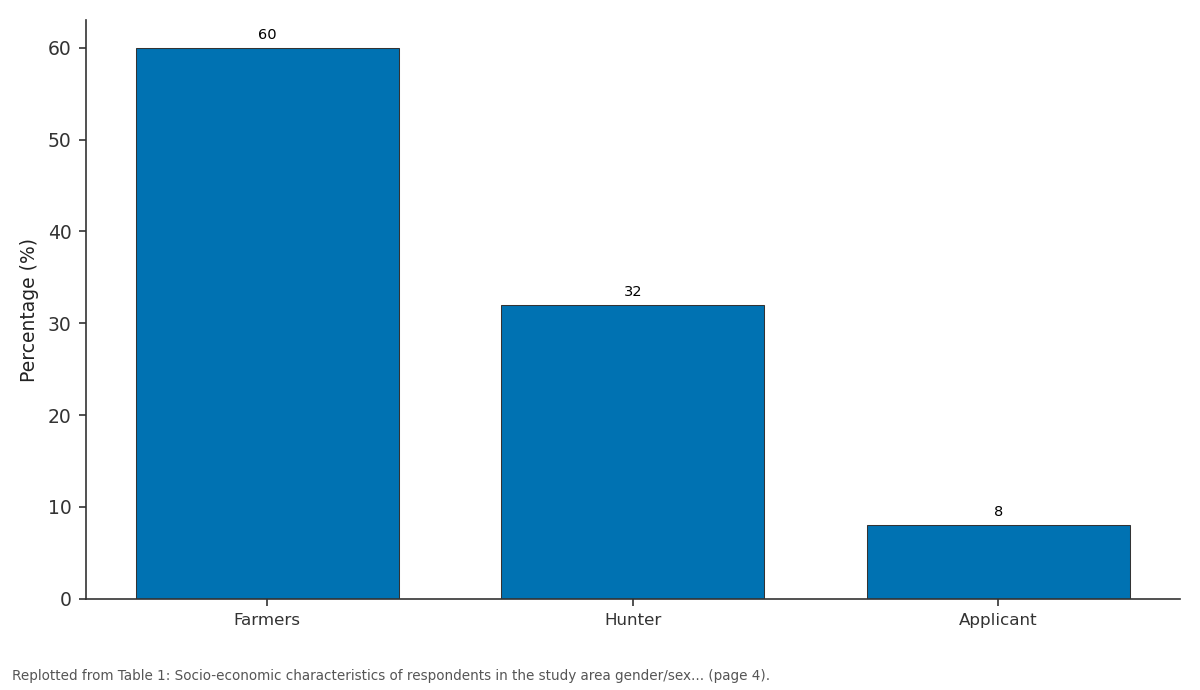
Percentage (%): Farmers vs Hunter vs Applicant
Replotted from Table 1 (page 4) of the original paper. Every bar is the paper's own table value.
View source evidence ↗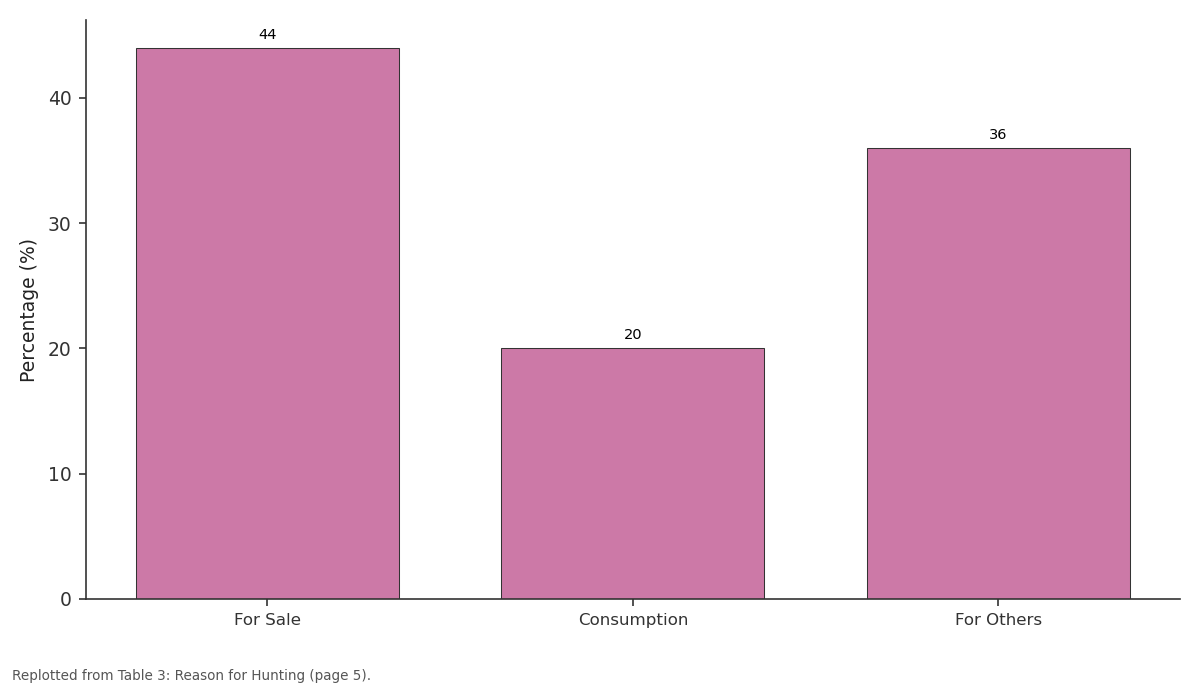
Percentage (%): For Sale vs Consumption vs For Others
Replotted from Table 3 (page 5) of the original paper. Every bar is the paper's own table value.
View source evidence ↗Figures & tables
From the original paper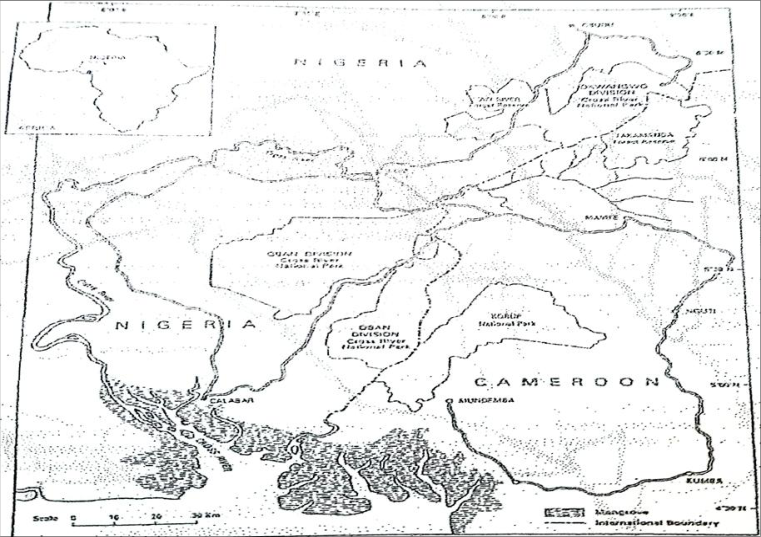 Figure 1
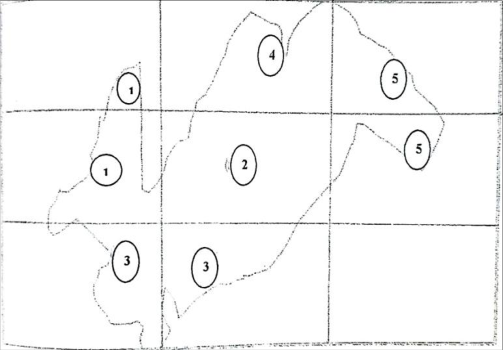 Figure 2
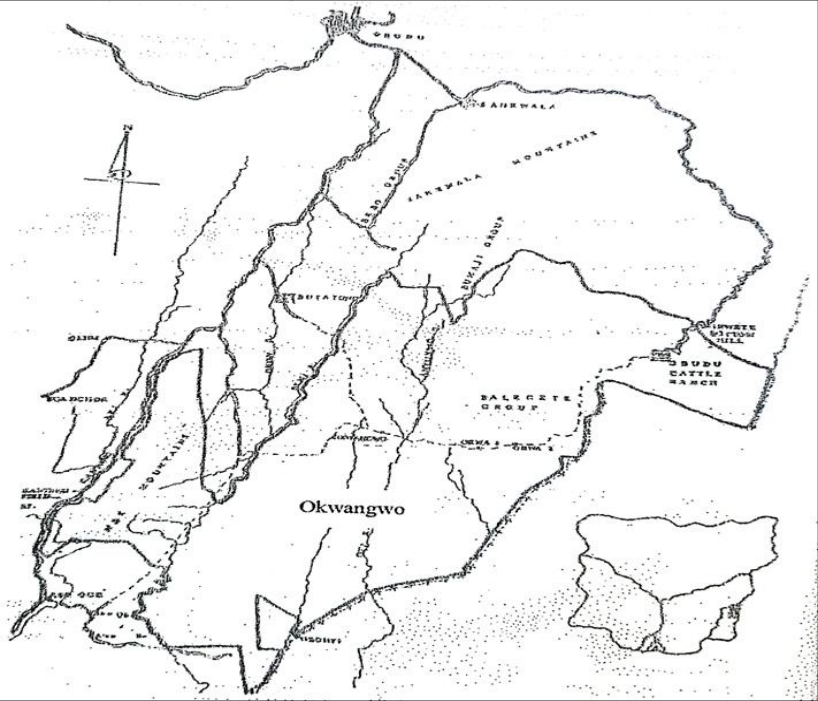 Figure 3
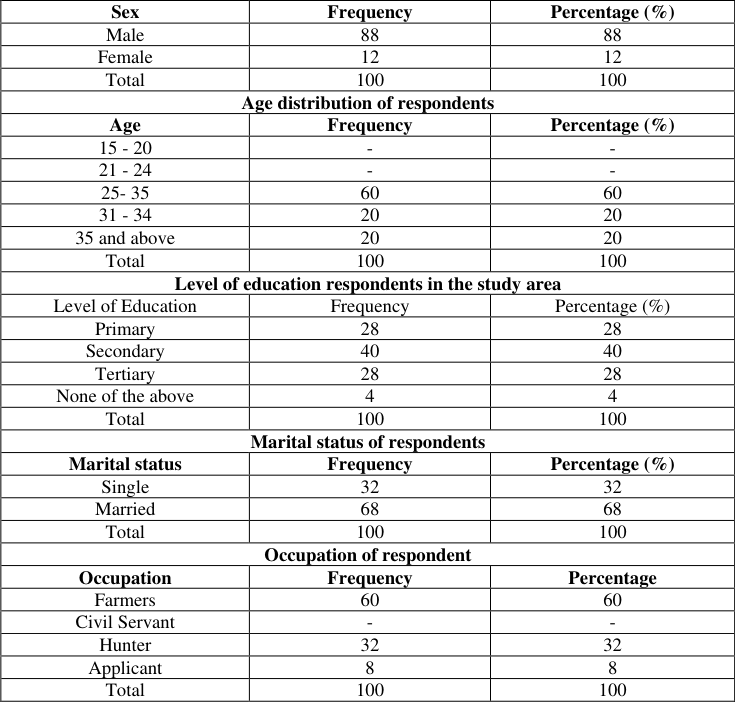 Table 1
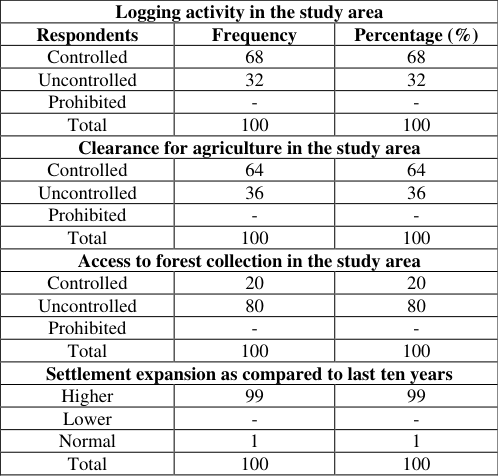 Table 2
 Table 5
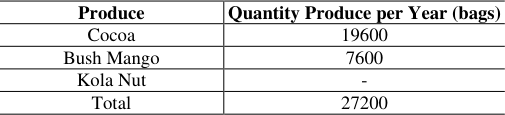 Table 6
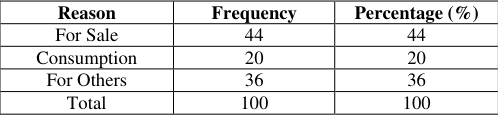 Table 3
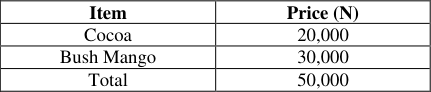 Table 7
 Table 4
Introduction
The Cross River Gorilla (Gorilla gorilla diehli) is the northern and western-most gorilla subspecies found in the montane rain-forest region along the Nigeria -Cameroon border, which forms the head waters of the Cross River. This population is separated by about 300 km from the nearest population of western lowland gorillas (Gorilla gorilla gorilla), and about 200 km from the recently discovered gorilla population in the Ebo Forest of Cameroon. Based on the small size of the remaining Cross River gorilla population, its fragmentation across a large complex landscape, and continuing threats to its survival from habitat destruction and hunting, the subspecies is listed as critically endangered in the International Union of Conservation of Natural Resources Red list (IUCN, 2006) [16] . Gorillas in this region first became known to science in 1904 when the German taxonomist Paul Matschie described skulls collected from the area of today's. Takamanda Forest Reserve in Cameroon, as representing a new species, gorilla diehli; (Calabar, 2006) [5] . Subsequent studies of gorilla anatomy and taxonomy reclassified Cross River gorillas as a subspecies of Gorilla gorilla (Rothschild 1905, 1908) [18,19] and later subsumed them (along with all western gorillas) within the monotypic subspecies Gorilla gorilla gorilla (Coolidge, 1929) [6] . However, new measurements and analysis of existing data, led to a realization that the skeletons of gorillas in the Cross River region are significantly distinct from those of other western gorillas to merit their recognition as the subspecies Gorilla gorilla diehli (Stumpf et al., 2003) [17] . Today, the total population of Cross River gorillas may number fewer than 300 individuals. This population is spread across a broad landscape, including a more-or-less continuous forest area of about 8,000 km 2 from Afi. Mountain in the west to Kagwene Mountain in the east of Cameroon, together with a possibly isolated outlying locality in the forest near Bechati in the south east of Cross River. In the Afi-to-Kagwene landscape, the gorillas concentrated in rugged hill areas that are difficult for people to reach and therefore least disturbed by farming and hunting.
New genetic studies (Bergl, 2006, Bergl and Vigilant, 2007) [3, 4] , suggest that individual animals do occasionally move between known gorilla localities in this landscape and therefore the gorilla of Afi-to-Kagwene may be considered as one population. The rugged nature of the terrain inhabited by the Cross River gorillas, and the generation of hunting to which they have been exposed, have led them to be rare, and exceedingly difficult to study. A few anecdotal accounts of their natural history were published between 1932 and 1957 (Allen, 1932, March, 1957) [1,13] but it was not until the 1980s when serious interest was shown in the survival of this special gorilla population. In 1987, the first systematic population survey took place, but was restricted to Nigeria (Harcourt et al., 1988) [9] . Following this survey, coordinated by the Nigerian Conservation Foundation (N.C.F), planning for formal conservation was initiated in Nigeria in 1990 by the World Wide Fund for nature (WWF), working in partnership with NCF and the government of Cross River State. That effort led to the establishment of Cross River National Park in 1991, with gorillas protected in the Okwangwo Division of the parks. In 1996, long-term ecological research on Cross River gorillas commenced at Afi Mountain in Nigeria (Mcfarland, 2007) [11] , and in 1999, a concentrated survey effort commenced in Cameroon (Groves, 1999) [7] . These initiatives have grown into a broad program of research and conservation activities in both Nigeria and Cameroon (Oates et al., 2003) [15] . This program has involved universities, government agencies in both countries, and non-governmental conservation organizations (in particular, the Wildlife Conservation Society (WCS), NCF, WWF, Fauna and Flora International (FFI), the Pandrillus Foundation, and Cameroon's Environment and Rural Development Foundation.
Materials and Methods
The study area The enclave community of Okwangwo is located between 6°18 N and 9°13`13 E in Boki Local Government Area of Cross River State, lies in the equatorial rainforest between longitude 8 °E and latitude 6 °E and 9 °S of the equator. It occupies the area immediately north of the Cross River at the south eastern edge of Nigeria, north-west of Ikom town and stretching to about 14 kilometers south of Ogoja town, and about 24 kilometers south of Obudu town. The name Boki refers to an ethnic group, a language and an administrative unit in Nigeria. It also refers to a nation with international status as it is found in two countries: Nigeria and Cameroon. The language spoken is, traditionally, known as "Nfua" but came to be known as "Bokyi" after the research work of Maria et al., (2002) [12] an expatriate group that were interested in the development and documentation of the language. Haige (1930) [8] , noted that Boki forms the largest continuous language unit in the northern divisions of the Cross River State of Nigeria, occupying a land area of about 3,268.17 square kilometers. With a population of over 200,000 people (National Population Commission, Census, 1996) [14] .
Gorilla distribution and range in the study area
The landscape across which the Cross River gorilla population is scattered has a surface area of approximately 12,000 m 2 and ranges in elevation from less than 200 m in the valleys of some of the major Cross-river tributaries (such as the River Oyi) to 2,037m at Kagwane on the edge of the Bamenda Highlands (Mcfarland, 1999) [10] (fig 1). The natural vegetation in the lowlands of this region is moist semi-deciduous tropical forest; this changes to sub-montane forest at 700-800 m height with a transition to montane forest at about 1,500 m height. Where there are human settlements, mosaic of farmland, farm bush and secondary forest occurs, and along the northern fringe of this landscape, most of the upper elevation forest has been converted to grassland that is maintained through annual burning by pastoralist and farmers. Within this landscape, eight areas can be delineated as sites for action in Cross River gorilla conservation: Afi, Mbe and Okwangwo in Nigeria; Takamanda, Mone, Mbulu, Kagwene and Bechati-Fossimondi-Besali in Cameroon (Mcfarland, 2007) [11] .
Occupation and population distribution of Okwangwo
The people of Okwangwo are basically farmers and hunters. With no access road, they have to contend with subsistence farming. Income is generated mainly from the sale of bushmeat and Non-Timber-Forest-Products (NTFP), like bush mango (Irvingia Gabonensis and Irvingia wombolu) salad (Gnetum africanum), hot leaf (Gongronema latifolium), bush pepper (Piper guineense), etc. Fishing also provides a minimal income. The fishing season usually starts from October when fishes come out to spawn in some of the numerous streams, and lasts through April, when the rainy season sets in. A few young people also engage in petty trading. The village set up is that of rural settlements with a few numbers of commercial centers.
Climate, vegetation and drainage of the study area
The climate is seasonal -tropical with a distinct rainy season (March -November) and dry season (December -February). Rainfall is heavy up to 4280 mm distributed unevenly within the nine months. Ambient temperatures are high but lower temperatures 14 °C -10 °C daily minima; and 18° -25° daily maxima) are recorded on the highland areas of Obudu Plateau and Sankwada Mountains. The vegetation is tropical forest that extends to Cameroon; bounded in the north by the secondary forest and oil palm country (as it was known in the past) stretching from Bansara to Ogoja and Obanliku/Obudu. The rain forest is endowed with several species of rare plants and animals. Among the plant species are Iroko, Obeche (Triplochyton Scheroxylon) Opepe and Mahogany. Animals' species include Elephants, gorillas, and different kinds of monkeys, pangolins and reptiles. This explains why this forest has become the point of attraction to conservationists. There are three major rivers; Oyi, Bemi and Okon which are tributaries of the Cross River drain the area. Oyi River is fed by Anyukwo River which drains Obudu Plateau and the Northern extremes of the park around Ochakwe and the Mache, Asache and Magbe rivers (drains eastern boundary of the part around Balegete). The Bemi drains the Boshi area of the parks and flows south along its western boundary to join Okon river which collects further drainage from the Mbe Mountains (Mbe River) before it crosses into the Cameroon (Figure 3).
Data collection:
The methods used for Data were collected using questionnaires and interviews. A total of 120 copies of questionnaires were administered on respondents (farmers, hunters, traders, students and applicants) and 100 were returned.
Data analysis
The data obtained was analyzed using descriptive statistics involving percentages and Chi-Square.
Results and Discussion
Results and Discussion
Socio-economic characteristics of respondents of the study area
The socio-economic characteristics of the respondent shows that males are more involved in the socio-economic activities that posed threat to the survival of Gorilla gorilla diehli than the female counterparts. Marital status of the respondents shows that 68% are married and 32% unmarried (single). Majority of respondents are within the age limit of 25-30, (60%) this is an indication that middle aged people are more committed in those activities that are inimical to the survival of wildlife species. Educational level of the respondents as represented in the educational distribution table shows that majority (40%) of the respondents are secondary school leavers. The reason being, that they have no sponsors and money to continue their education to higher levels, and this reason compelled them to go into these activities (farming and hunting) in order to generate money to further their education. Occupational distribution of the respondents indicates that; the primary occupation of the respondent is farming, the wildlife species suffers much from this human activity because; the activity destroys the habitats of this sub-species through clearance of vegetation covers and their feeds. 32% of the respondents are hunters; hunting in the study area has a direct negatives effect on this species of animals. Anon (1934) [2] reported that hunting is one of the major threats to the existence of gorilla. Gorilla hunting in this region, as elsewhere is not purely for subsistence; gorilla meat is consumed and their bones are used in traditional medicine and fetishes. Because gorillas are such impressive animal hunters often keep the skulls of individuals they have killed (Table 1).
| Sex | Frequency | Percentage (%) |
|---|---|---|
| Male | 88 | 88 |
| Female | 12 | 12 |
| Total | 100 | 100 |
| Age distribution of respondents | ||
| Age | Frequency | Percentage (%) |
| 15 - 20 | - | - |
| 21 - 24 | - | - |
| 25- 35 | 60 | 60 |
| 31 - 34 | 20 | 20 |
| 35 and above | 20 | 20 |
| Total | 100 | 100 |
| Level of education respondents in the study area | ||
| Level of Education | Frequency | Percentage (%) |
| Primary | 28 | 28 |
| Secondary | 40 | 40 |
| Tertiary | 28 | 28 |
| None of the above | 4 | 4 |
| Total | 100 | 100 |
| Marital status of respondents | ||
| Marital status | Frequency | Percentage (%) |
| Single | 32 | 32 |
| Married | 68 | 68 |
| Total | 100 | 100 |
| Occupation of respondent | ||
| Occupation | Frequency | Percentage |
| Farmers | 60 | 60 |
| Civil Servant | - | - |
| Hunter | 32 | 32 |
| Applicant | 8 | 8 |
| Total | 100 | 100 |
Table text extracted from the original PDF; superscript letters are shown inline. The original table image is below.
View original table image
Anthropogenic activities that threaten the survival of Gorilla gorilla diehli in the study area
The anthropogenic activities carried out in the study area as represented in the table 2 shows that, majority of the respondents (68%) affirmed that logging activities is under control, while 32% affirmed that logging is not under control. The recent control on logging in the study area is as a result of the anti-logging law and campaign enacted and carried out by the state government and non-governmental organizations interested in conservation and preservation of wildlife and its habitats. 80% of respondents affirmed that; access to forest produce collection is uncontrolled. As highly intelligent as gorilla is, it detects and identifies any slightest human influence or activity in the forest (its habitat) and this consequently make it to run away, thereby causing this species to become endangered. Results indicated that clearing of land for agriculture is controlled in the area (64%) which is a good omen for gorilla conservation. Most crops cultivated by the people in the area are coconut (19,600 bags/annum) followed by bush mango (7,600 bags/annum). Although bush mango is revealed to yield more returns (N30,000/100 kg) (Table 6 and7) respectively. Results indicated that access to forest collection is uncontrolled in the area (80%) which leads to threats to gorilla in the area. There is also an indication that, the rate of settlement expansion in the study area is high.
| Produce | Quantity Produce per Year (bags) |
|---|---|
| Cocoa | 19600 |
| Bush Mango | 7600 |
| Kola Nut | - |
| Total | 27200 |
Table text extracted from the original PDF; superscript letters are shown inline. The original table image is below.
View original table image
| Logging activity in the study area | — | — |
|---|---|---|
| Respondents | Frequency | Percentage (%) |
| Controlled | 68 | 68 |
| Uncontrolled | 32 | 32 |
| Prohibited | - | - |
| Total | 100 | 100 |
| Clearance for agriculture in the study area | ||
| Controlled | 64 | 64 |
| Uncontrolled | 36 | 36 |
| Prohibited | - | - |
| Total | 100 | 100 |
| Access to forest collection in the study area | ||
| Controlled | 20 | 20 |
| Uncontrolled | 80 | 80 |
| Prohibited | - | - |
| Total | 100 | 100 |
| Settlement expansion as compared to last ten years | ||
| Higher | 99 | 99 |
| Lower | - | - |
| Normal | 1 | 1 |
| Total | 100 | 100 |
Table text extracted from the original PDF; superscript letters are shown inline. The original table image is below.
View original table image
Reason for hunting
The table below shows that 44% (majority) of the respondents do hunt for sale (income generation). Hunting in the area is mainly for either pleasure, by-products like hide and skin, bones or for medicinal purposes etc. which accounts for (36%) followed by consumption 20% i.e. human usage (Table 3). Gorilla rate of encounter by respondents in the study area Gorilla encounter rate by respondents in the study area revealed that majority of the respondents (72%) have not encountered this species. This may be due to decreasing population caused by habitat destruction or fragmentation and hunting pressure hence making the population to be rare and endangered (Table 4).
| Reason | Frequency | Percentage (%) |
|---|---|---|
| Yes | 28 | 28 |
| No | 72 | 72 |
| Total | 100 | 100 |
Table text extracted from the original PDF; superscript letters are shown inline. The original table image is below.
View original table image
| Reason | Frequency | Percentage (%) |
|---|---|---|
| For Sale | 44 | 44 |
| Consumption | 20 | 20 |
| For Others | 36 | 36 |
| Total | 100 | 100 |
Table text extracted from the original PDF; superscript letters are shown inline. The original table image is below.
View original table image
Gorilla killed by respondents
Results indicated that killing of gorilla in the area has reduced because of the law forbidding hunting as majority (96%) have not killed gorillas in the recent past. This may be attributed to the low population and the rugged terrain making hunting expedition difficult and the success of the conservation laws in the area prohibiting hunting in the area by government (Table 5). The estimation quantity of harvest and annual total revenue generated from hunting posed challenges because there were no defined parameters employing the hunters to sale their bush meat products since most of the hunting are illegal in protected areas, hence respondents only stated their annual income from sales of bush meat which is high (N168,000/annum). Annual quantity of agricultural produce in bags (100 kg) in the study area as at the time of the research The result as represented in the table below indicates that of all the predominant agricultural crop produce in the study area, more people engaged in cocoa farming than bush mango, while none in kola nut, and as such, the quantity of cocoa produce is 19, 600 bags while that of bush mango is 7, 600 bags. The reasons why more people engage in cocoa farming could be; the duration of cocoa from planting to the producing stage is shorter than of bush mango, as well as more available markets for cocoa than bush mango etc. (Table 6). Price of agricultural produce per bag (100kg) in the study area Price of agricultural produce as represented in table 7 below shows that a bag (100 kg) of cocoa cost N20, 000 and N30, 000.00 for a bag of bush mango. Annual revenue generated from cocoa and bush mango are estimated as; N392, 000, 000.00 and N228, 000, 000.00 respectively, making a gross revenue generated from agricultural produce to be N620, 000, 000.00.
| Item | Price (N) |
|---|---|
| Cocoa | 20,000 |
| Bush Mango | 30,000 |
| Total | 50,000 |
Table text extracted from the original PDF; superscript letters are shown inline. The original table image is below.
View original table image
| Reason | Frequency | Percentage (%) |
|---|---|---|
| Yes | 4 | 4 |
| No | 96 | 96 |
| Total | 100 | 100 |
Table text extracted from the original PDF; superscript letters are shown inline. The original table image is below.
View original table image
Conclusion
This research work showed that; the anthropogenic activities of the people of Okwankgwo affect the survival of the Cross River gorilla tremendously, such activities like logging, clearance of forest for agriculture, hunting (poaching), and forest produces collection as well as fragmentation of forest for settlement and road construction. It is an obvious fact that Gorilla gorilla dielhi is in a precarious situation and well deserves its IUCN Red list status as a critically endangered tax on. For the sake of the generation yet unborn and the attendant negative ecological effects on man and his environment, these animals must be preserved as well as
conserving their habitats. It is therefore recommended that more awareness for conservation should be created through conservation education and development of alternative sustainable livelihood to reduce pressure on forest and its resources.
Acknowledgement
AcknowledgementThe authors are grateful to the people of Okwankgwo community in Boki LGA Cross Rive State, Nigeria for the