
Research article · 2024 · Full text
International Journal of Veterinary Sciences and Animal HusbandryCharacterization and typology of local poultry production systems in central region of Burkina Faso
Volume 9(1) · Pages 11–20 · DOI: 10.22271/veterinary.2024.v9.i1a.851 ↗
Research areasLivestock and Poultry ManagementAgriculture and Rural Development Research
Abstract
Author-writtenThis study focuses on the characteristics and typology of local poultry production systems in Burkina Faso's Central region. Using a sample of 102 households across 17 villages, the research employs Multiple Correspondence Analysis and Hierarchical Ascendant Classification to analyze various aspects of poultry farming. Key findings include a dominant male involvement in poultry farming, reliance on traditional housing and feeding practices, and a notable diversity in chicken strains. The study reveals major challenges in nutrition, health management, and housing, highlighting the need for more structured training and support for farmers. The conclusion emphasizes the importance of poultry farming in this region for income generation and cultural practices, advocating for targeted interventions to enhance poultry production systems.
Summary
Source-checkedPlain-language reading of the full paper, prepared with AI and checked against the text. Each point links to the authors' own words.
Why it matters
- The livestock sector is a major economic driver in Burkina Faso, contributing an average of 11.52% to the national GDP annually over the last ten years. View evidence ↗
- Poultry farming of indigenous chicken breeds is critical for diversifying rural income and providing essential animal protein. View evidence ↗
- There is a lack of documented research regarding poultry production systems and breeding selection criteria specifically within the Central region of Burkina Faso. View evidence ↗
The question
- The study aims to analyze diverse chicken farming systems and create a typology of poultry farmers in the Central region of Burkina Faso. View evidence ↗
What they did
- Researchers surveyed 102 households across 17 villages, using Multiple Correspondence Analysis (MCA) and Hierarchical Ascendant Classification (HAC) for data analysis. View evidence ↗
- The study was conducted in the Kadiogo province of Burkina Faso's Central region, specifically in the municipalities of Saaba, Koubri, Komsilga, and Pabré. View evidence ↗
- The sampling criteria focused on households raising local breeds with flock sizes between 3 and 20 poultry. View evidence ↗
What they found
- Poultry farming in the region is dominated by men, who make up 89.22% of farmers compared to 10.78% women. View evidence ↗
- For 70.59% of the respondents, poultry farming is their primary economic activity. View evidence ↗
- All surveyed farmers (100%) list sales as a primary objective, while 71.56% also prioritize self-consumption. View evidence ↗
- Most farmers (76.47%) rely on traditional poultry housing constructed from local materials. View evidence ↗
- Foraging is the primary feeding method, used by 98.04% of the poultry production systems. View evidence ↗
- Vaccination is widely practiced, with 90.19% of farmers following vaccination protocols. View evidence ↗
- When selecting breeding roosters, farmers primarily prioritize growth rate (75.50%), followed by disease resistance (12.20%) and laying rate (10.78%). View evidence ↗
- The most significant constraints facing poultry farmers are housing (75.50%), nutrition (68.63%), and health (51.96%). View evidence ↗
- The study identified a typology of farmers, including Group 1, which consists mainly of senior males from Koubri and Saaba who are primarily engaged in agriculture. View evidence ↗
What it means
- The authors conclude that there is a critical need for targeted interventions to address inadequate housing, nutrition, and health issues caused by a reliance on traditional practices. View evidence ↗
- Poultry farming has the potential to be a sustainable livelihood if the identified multifaceted challenges are addressed. View evidence ↗
Visual summary
2 visualsIllustrations explain the paper; charts are replotted from the paper's own table values.
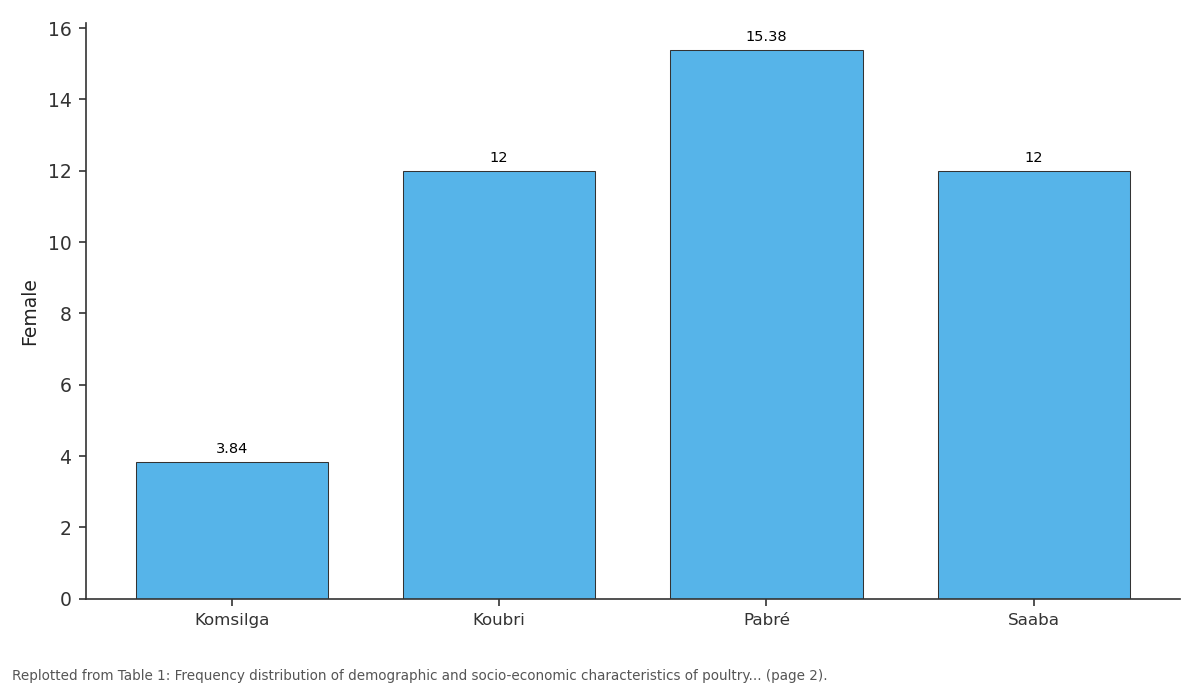
Female: Komsilga vs Koubri vs Pabré vs Saaba
Replotted from Table 1 (page 2) of the original paper. Every bar is the paper's own table value.
View source evidence ↗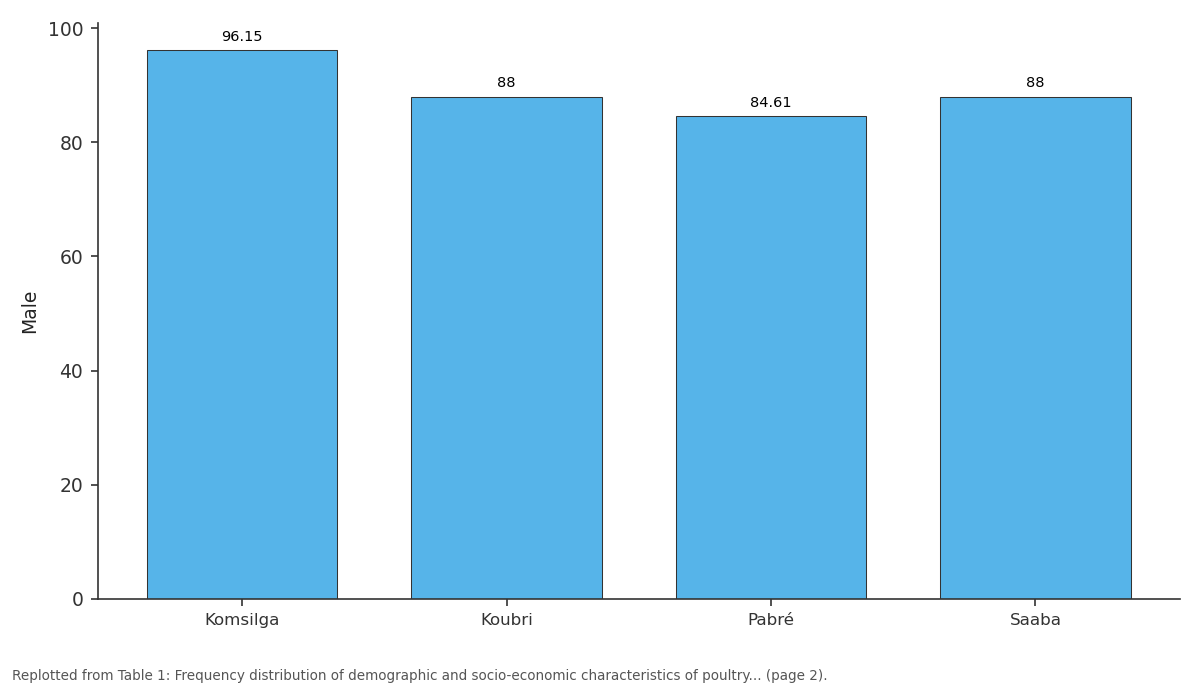
Male: Komsilga vs Koubri vs Pabré vs Saaba
Replotted from Table 1 (page 2) of the original paper. Every bar is the paper's own table value.
View source evidence ↗Figures & tables
From the original paper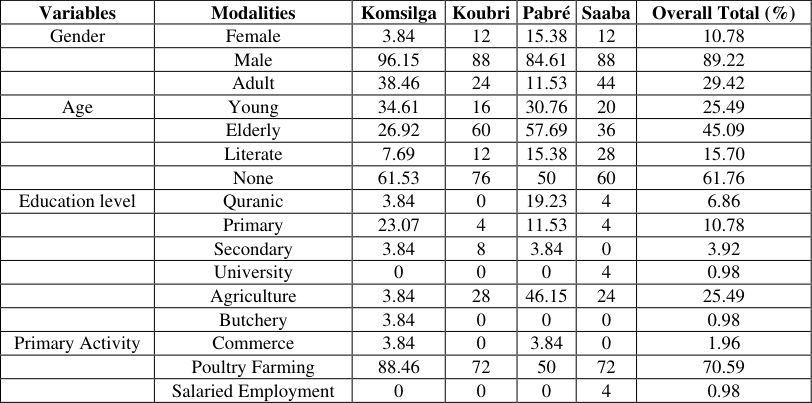 Table 1
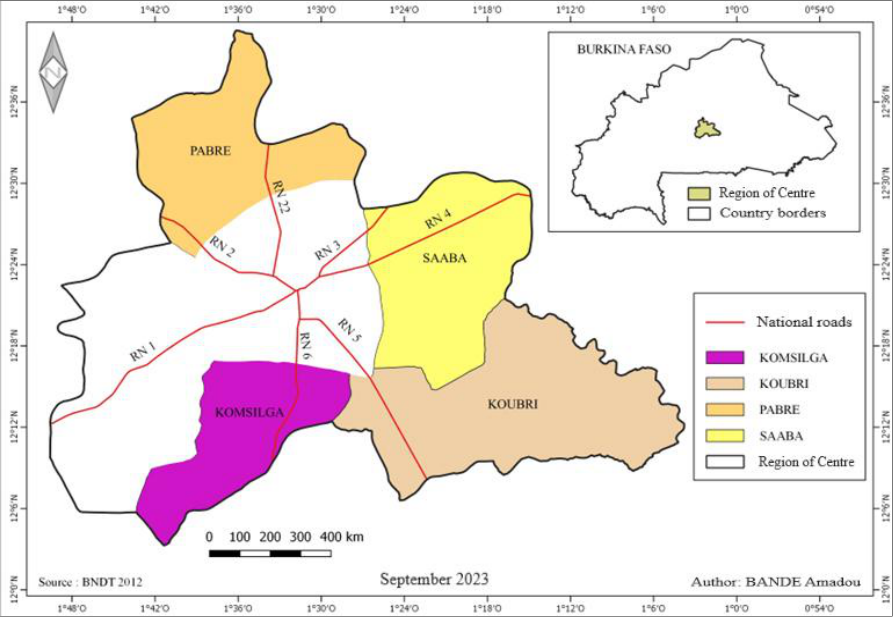 Figure 1
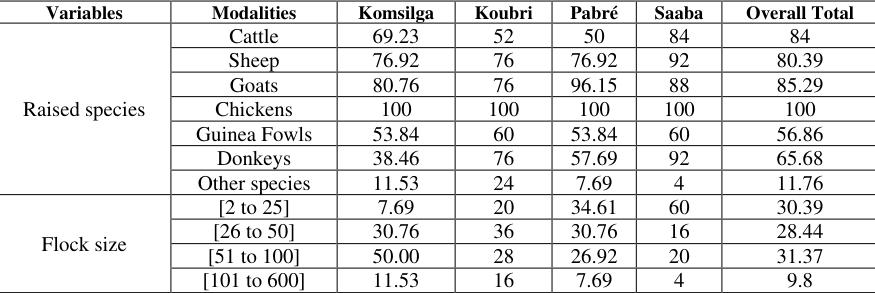 Table 2
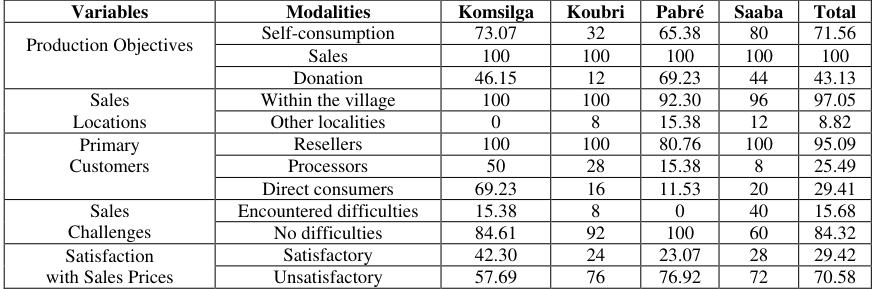 Table 3
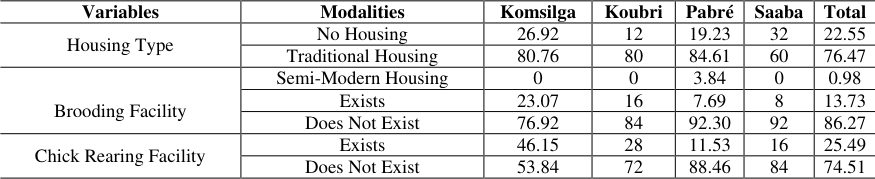 Table 4
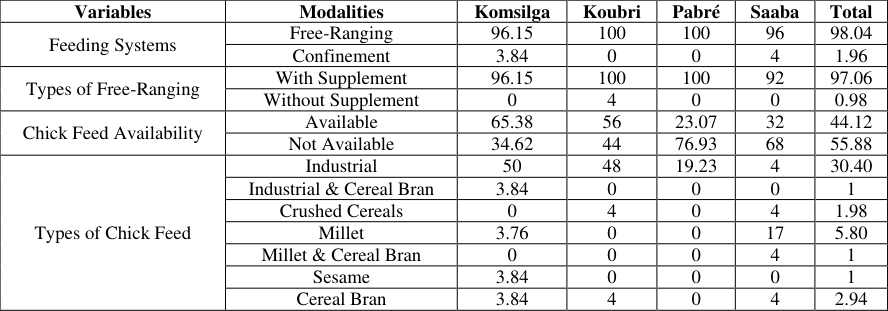 Table 5
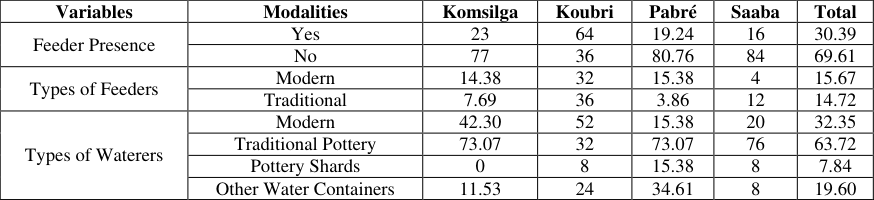 Table 6
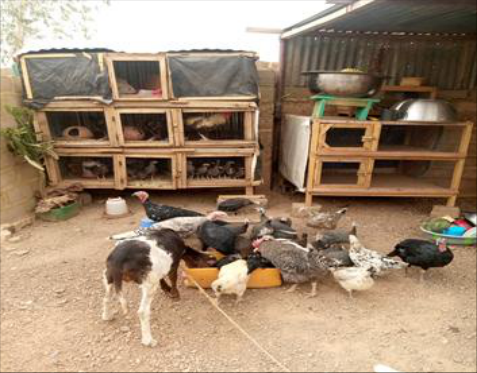 Figure 2
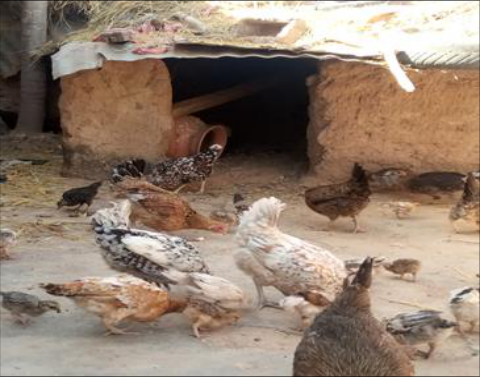 Figure 2
 Table 7
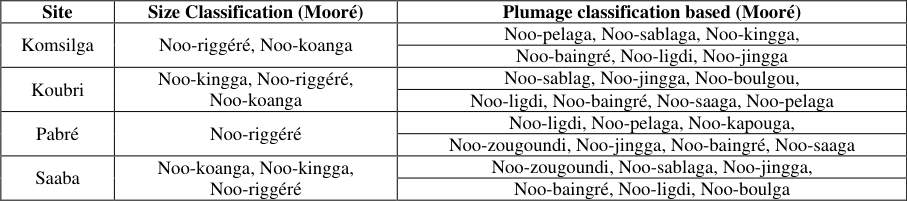 Table 8
 Table 9
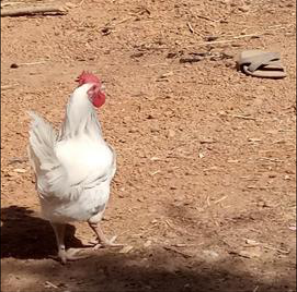 Figure 3
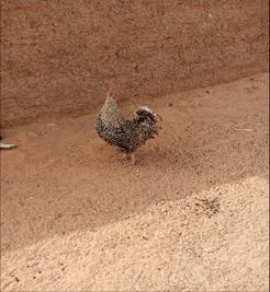 Figure 3
 Table 10
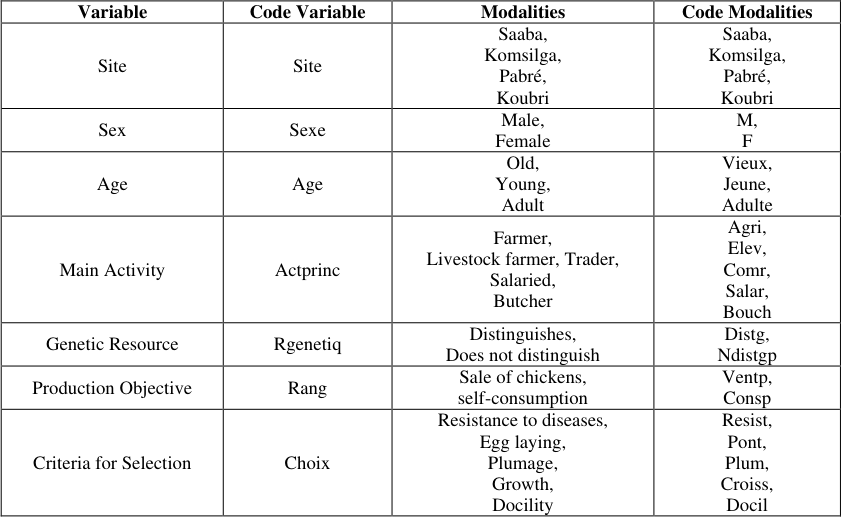 Table 10
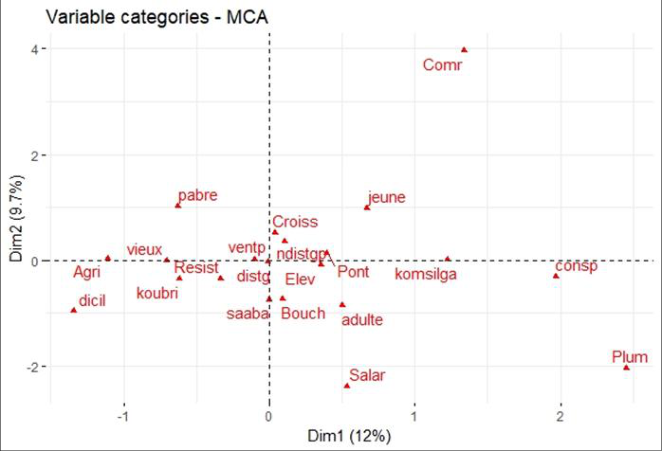 Figure 4
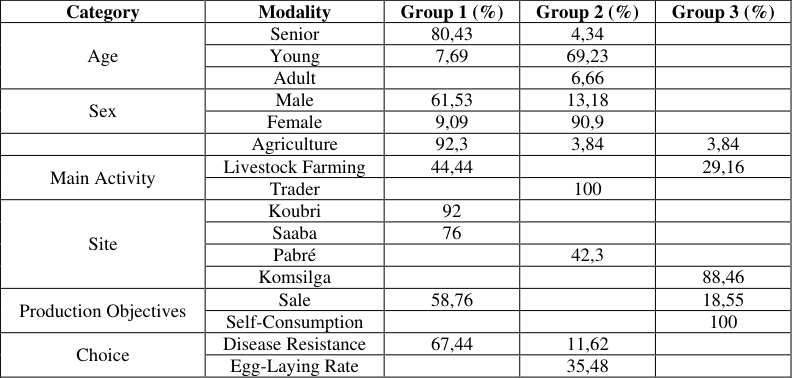 Table 11
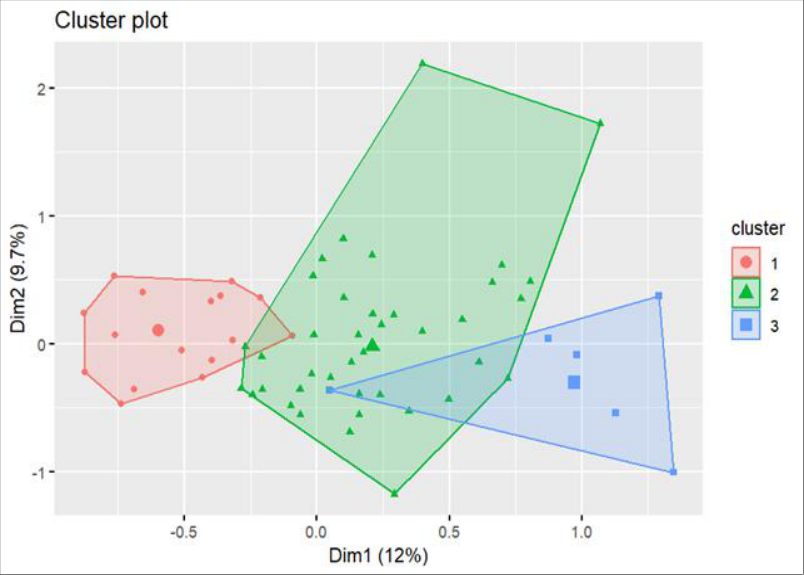 Figure 5
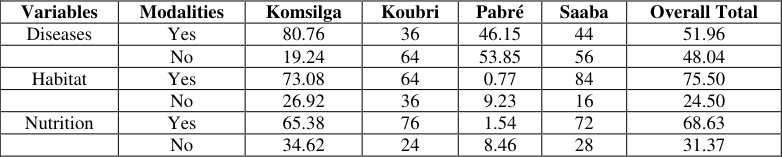 Table 12
Introduction
The livestock sector in Burkina Faso has a significant impact on the country's GDP, contributing on average about 11.52% annually over the past decade, according to the INSD 2021 report. Central to this sector is poultry farming, especially the husbandry of indigenous chicken breeds (Gallus gallus domesticus). This traditional practice not only diversifies rural income but also serves as a vital source of animal protein. Despite its criticality, there is a discernible gap in the literature, particularly concerning the characteristics of poultry production systems and breeding selection criteria in the Central region of Burkina Faso. Prior research has primarily focused on other regions, such as the Sahelian zone and the North-Western province of Sourou (Bonkoungou, 2005; Ouédraogo et al., 2015) [2,3] , leaving a lacuna in understanding this area. This study aims to bridge this knowledge gap by meticulously documenting and analyzing the diverse chicken farming systems and developing a typology of poultry farmers within this region.
Materials and methods
Materials and methods
Study area:
The present study was conducted in the Central region of Burkina Faso, encompassing the municipalities of Saaba, Koubri, Komsilga, and Pabré, within Kadiogo province (figure 1). The area is noted for its diverse poultry farming practices. A total of 102 households across 17 villages and four municipalities were included. Sampling criteria focused on the prominence of poultry farming in socio-economic activities, traditional livestock rearing's relative importance, and farmer availability. Households with 3 to 20 poultry, especially those raising local breeds, were selected. Livestock Technical Support Zones (ZATE) leaders in each municipality identified 25 to 28 poultry farmers for the study. At the time of the survey, each poultry farmer had at least three (03) adult subjects eligible for reproduction. https://www.veterinarypaper.com
The key topics addressed in the surveys include the identifiers of the farmer, their economic activities, the objectives of their production, marketing management, livestock farming systems, the genetic resources utilized, farmers' perceptions of these resources, the management of these resources, and the constraints in production.
Data analyses:
Data was analyzed, first using Microsoft Excel 2016 with pivot tables for initial insights into qualitative characteristics. For deeper analysis, Multiple Correspondence Analysis (MCA) and Hierarchical Ascendant Classification (HAC) were used to develop a farmer typology by identifying patterns in the data. This analysis was performed in the R programming environment, utilizing the Factoextra package (Kassambara & Mundt, 2020) [5] for its effectiveness in extracting and visualizing MCA results, enhancing data interpretation and presentation.
Results
Results
Socio-Economic characteristics of poultry farmers:
Table 1 presents the socio-economic characteristics of poultry farmers, providing detailed breakdowns across the municipalities of Komsilga, Koubri, Pabré, and Saaba. A predominant male engagement in poultry farming, with males representing 89.22% of the farmer population, while female participation stood at 10.78%. It was observed that a substantial portion of these farmers, amounting to 61.76%, lack formal education. Poultry farming emerged as the primary economic activity for the majority of respondents, accounting for 70.59% of the total. This was followed by agriculture (25.49%), commerce (1.96%), and a smaller proportion engaged in butchery and salaried employment, each constituting 0.98%. A notable presence of the elderly population was observed, particularly in Koubri (60%) and Pabré (57.69%). 2). The number of chickens per farm varies considerably, ranging from as few as 3 to as many as 600. 31.37% of farmers are reported having between 51 to 100 chickens, closely followed by those maintaining smaller flocks of 2 to 25 chickens (30.39%). Farmers with 26 to 50 chickens comprised 28.44% of the sample, while those with larger flocks of 101 to 600 chickens were less common, representing only 9.8% of the respondents. The majority of poultry owners (90%) across the four surveyed municipalities are heads of households. A regional variation is seen in Saaba, where 60% of farmers reported having smaller flocks of 2 to 25 chickens, while Komsilga had a higher percentage of farmers with medium-sized flocks of 51 to 100 chickens. The predominant method of sustenance for poultry is foraging, which accounts for 98.04% of the feeding practices (Table 5). 97.06% of the farmers supplement their poultry's diet with additional feedstuffs, including cereals (58%), a combination of cereals and household by-products (27%), industrial compound feeds (8%), and a mix of cereals with industrial feeds (6%). It is noteworthy that 91% of farmers administer these supplements on a regular basis. Confinement feeding, where poultry are restricted and provided ready-to-consume industrial feeds, is practiced by a minority (1.96%), specifically in the municipalities of Komsilga (3.84%) and Saaba (4%). Additionally, specialized chick feed is provided by some farmers (44.15%), with industrial chick feed being the predominant type (30.40%). Other feed components include millet (5.80%), cereal bran (2.94%), and occasionally, crushed cereals (1.98%). A minor subset reported using sesame (1%), a combination of industrial chick feed with cereals (1%), and a blend of millet, bran, and cereals (1%).
| Variables | Modalities | Komsilga | Koubri | Pabré | Saaba | Total |
|---|---|---|---|---|---|---|
| Feeding Systems | Free-Ranging | 96.15 | 100 | 100 | 96 | 98.04 |
| Confinement | 3.84 | 0 | 0 | 4 | 1.96 | |
| Types of Free-Ranging | With Supplement | 96.15 | 100 | 100 | 92 | 97.06 |
| Without Supplement | 0 | 4 | 0 | 0 | 0.98 | |
| Chick Feed Availability | Available | 65.38 | 56 | 23.07 | 32 | 44.12 |
| Not Available | 34.62 | 44 | 76.93 | 68 | 55.88 | |
| Types of Chick Feed | Industrial | 50 | 48 | 19.23 | 4 | 30.40 |
| Industrial & Cereal Bran | 3.84 | 0 | 0 | 0 | 1 | |
| Crushed Cereals | 0 | 4 | 0 | 4 | 1.98 | |
| Millet | 3.76 | 0 | 0 | 17 | 5.80 | |
| Millet & Cereal Bran | 0 | 0 | 0 | 4 | 1 | |
| Sesame | 3.84 | 0 | 0 | 0 | 1 | |
| Cereal Bran | 3.84 | 4 | 0 | 4 | 2.94 |
Table text extracted from the original PDF; superscript letters are shown inline. The original table image is below.
View original table image
| Variables | Modalities | Komsilga | Koubri | Pabré | Saaba | Overall Total (%) |
|---|---|---|---|---|---|---|
| Gender | Female | 3.84 | 12 | 15.38 | 12 | 10.78 |
| Male | 96.15 | 88 | 84.61 | 88 | 89.22 | |
| Adult | 38.46 | 24 | 11.53 | 44 | 29.42 | |
| Age | Young | 34.61 | 16 | 30.76 | 20 | 25.49 |
| Elderly | 26.92 | 60 | 57.69 | 36 | 45.09 | |
| Literate | 7.69 | 12 | 15.38 | 28 | 15.70 | |
| None | 61.53 | 76 | 50 | 60 | 61.76 | |
| Education level | Quranic | 3.84 | 0 | 19.23 | 4 | 6.86 |
| Primary | 23.07 | 4 | 11.53 | 4 | 10.78 | |
| Secondary | 3.84 | 8 | 3.84 | 0 | 3.92 | |
| University | 0 | 0 | 0 | 4 | 0.98 | |
| Agriculture | 3.84 | 28 | 46.15 | 24 | 25.49 | |
| Butchery | 3.84 | 0 | 0 | 0 | 0.98 | |
| Primary Activity | Commerce | 3.84 | 0 | 3.84 | 0 | 1.96 |
| Poultry Farming | 88.46 | 72 | 50 | 72 | 70.59 | |
| Salaried Employment | 0 | 0 | 0 | 4 | 0.98 |
Table text extracted from the original PDF; superscript letters are shown inline. The original table image is below.
View original table image
Feeders and waverers in traditional poultry farming:
The survey indicates a predominant use of repurposed materials for feeding equipment (Table 6). A notable 69.61% of farmers forgo the use of conventional feeders, preferring instead to scatter feed directly on the ground. Modern feeders are found to be more common in the Koubri municipality (32%) but are less frequently used in Saaba (4%). In terms of watering systems, traditional pottery is the water container of choice for a majority of farmers (63.72%), with some supplementing these with modern alternatives (32.35%). Less conventional options such as canisters and barrels are also utilized, making up 19.60% of responses. The clay pot canister emerges as the most frequently cited semi-improved model. Notably, Koubri reports a higher utilization of both modern feeders (64%) and water troughs (52%) in comparison to other municipalities, where the preference for traditional pottery is more prevalent (32%). 3.4.4. Poultry genetic resources and their management local chicken strain identification: Within the surveyed sites, a significant diversity of chicken strains has been documented, as presented in Table 8. Farmers identify these strains using traditional langage "Mooré" nomenclature, reflecting not only the physical attributes but also the cultural significance of these classifications. In Komsilga, chickens are distinguished by size with terms such as 'Noo-riggéré' for small and 'Noo-koanga' for large ( Despite this diversity, the farmers report no marked differences in meat quality across the strains, suggesting that the variations are primarily aesthetic and cultural rather than gastronomic.
| Site | Size Classification (Mooré) | Plumage classification based (Mooré) |
|---|---|---|
| Komsilga | Noo-riggéré, Noo-koanga | Noo-pelaga, Noo-sablaga, Noo-kingga, |
| Noo-baingré, Noo-ligdi, Noo-jingga | ||
| Koubri | Noo-kingga, Noo-riggéré, Noo-koanga | Noo-sablag, Noo-jingga, Noo-boulgou, |
| Noo-ligdi, Noo-baingré, Noo-saaga, Noo-pelaga | ||
| Pabré | Noo-riggéré | Noo-ligdi, Noo-pelaga, Noo-kapouga, |
| Noo-zougoundi, Noo-jingga, Noo-baingré, Noo-saaga | ||
| Saaba | Noo-koanga, Noo-kingga, Noo-riggéré | Noo-zougoundi, Noo-sablaga, Noo-jingga, |
| Noo-baingré, Noo-ligdi, Noo-boulga |
Table text extracted from the original PDF; superscript letters are shown inline. The original table image is below.
View original table image
| Variables | Modalities | Komsilga | Koubri | Pabré | Saaba | Total |
|---|---|---|---|---|---|---|
| Feeder Presence | Yes | 23 | 64 | 19.24 | 16 | 30.39 |
| No | 77 | 36 | 80.76 | 84 | 69.61 | |
| Types of Feeders | Modern | 14.38 | 32 | 15.38 | 4 | 15.67 |
| Traditional | 7.69 | 36 | 3.86 | 12 | 14.72 | |
| Types of Waterers | Modern | 42.30 | 52 | 15.38 | 20 | 32.35 |
| Traditional Pottery | 73.07 | 32 | 73.07 | 76 | 63.72 | |
| Pottery Shards | 0 | 8 | 15.38 | 8 | 7.84 | |
| Other Water Containers | 11.53 | 24 | 34.61 | 8 | 19.60 |
Table text extracted from the original PDF; superscript letters are shown inline. The original table image is below.
View original table image
Table 8: Classification of chicken strains by local langage "Mooré" nomenclature in Burkina Faso The MCA biplot (Fig 4) shows links between farmer characteristics, production aims, and local criteria. Two main dimensions emerge, capturing 19% of the data's inertia. Dimension 1 (12% variance) contrasts economic aims, differentiating commercial aspects (like "Comr" for Merchant, "Ventp" for Sale of chickens) from subsistence ones (e.g., "Consp" for Home consumption). Dimension 2 (7% variance) underscores demographic and strategic differences, like older ("Vieux") versus younger farmers ("Jeune"), and focuses on disease resistance versus growth, hinting at generational shifts in farming goals. Spatially, regional variations are evident with locations such as "Saaba," "Komsilga," "Pabré," and "Koubri." "Pabré" aligns with older farmers and traditional methods, while "Komsilga" is closer to younger farmers and productivity features like egg laying ("Pont"). Production. The hierarchical ascending classification enables the identification of three (03) distinct groups (Fig 5).
Site
The group 1, predominantly consists of senior farmers (80.43%) mainly from Koubri (92%) and Saaba (76%). They primarily engage in agriculture (92.30%) and are mostly male (61.53%). Their main production objective is chicken sales (58.76%), selecting breeding roosters based on disease resistance (67.44%) (Table 11). The group 2 includes mostly traders from Pabré (42.30%), with all individuals engaged in commerce. It is characterized by a high percentage of women (90.90%) and young people (69.23%). They prioritize egglaying rate (35.48%) in choosing breeding roosters. This group 3 is mainly composed of farmers from Komsilga (88.46%), all of whom produce chickens for selfconsumption. A smaller portion (29.16%) engages in livestock farming as their primary activity. The predominance of male involvement in poultry farming in Burkina Faso's Central Region aligns with the patriarchal management structure typical of rural households. This observation is consistent with studies conducted in the Democratic Republic of Congo (Bisimwa et al., 2019) [6] . However, it contrasts with patterns observed in the Burkinabe Sahel (Ouédraogo et al., 2017) [4] and Senegal (Grégoire et al., 2019; Saliou, 2022) [7,25] , where women play a more significant role in poultry farming, suggesting regional sociocultural influences on gender dynamics in poultry farming.
| Category | Modality | Group 1 (%) | Group 2 (%) | Group 3 (%) |
|---|---|---|---|---|
| Age | Senior | 80,43 | 4,34 | |
| Young | 7,69 | 69,23 | ||
| Adult | 6,66 | |||
| Sex | Male | 61,53 | 13,18 | |
| Female | 9,09 | 90,9 | ||
| Agriculture | 92,3 | 3,84 | 3,84 | |
| Main Activity | Livestock Farming | 44,44 | 29,16 | |
| Trader | 100 | |||
| Site | Koubri | 92 | ||
| Saaba | 76 | |||
| Pabré | 42,3 | |||
| Komsilga | 88,46 | |||
| Production Objectives | Sale | 58,76 | 18,55 | |
| Self-Consumption | 100 | |||
| Choice | Disease Resistance | 67,44 | 11,62 | |
| Egg-Laying Rate | 35,48 |
Table text extracted from the original PDF; superscript letters are shown inline. The original table image is below.
View original table image
The enhanced presence of poultry farmers in these areas may be linked to decreasing arable land availability due to population growth and increasing industrial activities, especially in peri-urban zones around Ouagadougou. Poultry farming primarily serves as a source of income (Fagrach et al., 2021; Pindé et al., 2020) [23,13] , underlining its role in poverty alleviation and promoting gender equity.
Comparatively, in regions like Kenya, women often own poultry production assets, indicating regional variations in gender roles within poultry farming (Garsow et al., 2022) [24] . In Burkina Faso, poultry farming, predominantly by small to medium-scale farmers, contributes to social and cultural cohesion through practices like gifting and sacrifices, similar to observations in Côte d'Ivoire (Loukou, 2013) [16] .
Poultry farming system characteristics 4.2.1. Feeding practices:
The primary sustenance of poultry in Burkina Faso's Central Region predominantly involves free-range foraging, supplemented by additional feed. This practice reflects a broader trend among local poultry farmers who generally do not prioritize or invest significantly in specialized poultry nutrition. Instead, they rely on minimal inputs and supplementary feeding strategies, utilizing available grain reserves on a seasonal basis. This approach is notably influenced by the modest income levels typical among rural farmers in the region.
Our findings in Burkina Faso resonate with similar studies conducted in Senegal (Ayssiwede et al., 2015) [21] and Ethiopia (Sonaiya & Swan 2004) [12] , indicating a regional pattern of poultry farming practices across West Africa. In the Central-West Region of Burkina Faso, as well as in the Sahel, similar feeding practices are observed. However, our detailed analysis reveals notable exceptions in certain villages. Here, contrary to the predominant trend of free-ranging, poultry is often confined. This variation may be attributed to the heightened commitment and possibly different socioeconomic circumstances of individuals dedicated to poultry farming in these locales. In a departure from the practices documented in other studies, the poultry farming facilities we observed in Burkina Faso are equipped with rudimentary tools for feeding and watering, such as repurposed broken pots and cans. These practices are echoed in observations from Côte d'Ivoire (Koné et al., 2017) [14] . The adoption of such basic yet functional equipment is likely a result of initiatives by governmental bodies and development agencies. These entities have been supporting micro-projects and providing grants to farmers, thereby encouraging the uptake of improved farming practices. This trend of adopting simple, yet more effective farming tools and practices aligns with the findings of Alders et al. (2018, 2005) [26] , highlighting the impact of targeted support and education in enhancing agricultural practices in developing regions.
Housing:
The investigation brings to light rudimentary poultry houses constructed from local materials, residential buildings, or free-ranging practices. The predominant model is traditional, bereft of standards, utilizing local materials (sticks, wood, mud bricks, etc.). This lack of standardized practices explains the prevailing scenario, with findings resonating with those reported by (Moula 2012) [11] 80% of rural poultry houses fashioned from mud bricks (73%) or straw (7%). On occasion, animals are left without shelter, perched on trees at night, exposed to predation and inclement weather. Shelters are seldom maintained, remain nondisinfected, and function as storage spaces (Kondombo, 2007) [9] . Rural poultry farming, typically undertaken by untrained farmers, underscores the imperative for training programs to enhance farming practices.
Reproduction and genetic resource management:
The almost complete absence of a controlled breeding system, in concordance with (Kondombo, 2007) [9] and (Bonkoungou, 2005) [2] , is a notable feature. Our inquiry reveals that farmers select breeding roosters based on criteria such as growth, reproductive capacity, resistance to avian diseases, and morphology. Roosters with fused combs are considered adept breeders, while small hens are favored for reproduction (exemplary brooders and protective of chicks). Some farmers take into account the performance of the rooster's ancestors and/or past generations. These practices are deeply rooted in ancestral knowledge relevant to rural settings. Phenotypically, diverse varieties of African local hens have been identified based on their structure and plumage. This phenotypic diversity reflects their adaptability and unpredictable reproduction, resulting in various strains within their population (Fotsa et al., 2010, Saira et al, 2021) [17,8] . Our study catalogues nine (09) varieties of hens by feather color and three (03) by size, aligning with (Kondombo, 2000) [15] for the Central Region of Burkina Faso and in Algeria (Tair, 2021) [19] . Farmers evaluate each strain considering both advantages and disadvantages, thereby justifying the observed diversity. Nonetheless, certain strains are particularly esteemed. For instance, Noo-Koanga (large-sized chicken) is appreciated for its rapid growth, while Noo-riggéré (smallsized chicken) stands out for its high productivity (excellent for brooding and raising chicks).
Sanitary status:
Poultry farming in the Sahelian region, including Burkina Faso's Central Region, suffers from high mortality rates, particularly among young chicks and guinea fowl keets, as noted by Brou et al. (2020) [22] . Health concerns are significant, with prevalent diseases like pseudo-avian pest, Newcastle disease, and coccidiosis. Veterinary care is hindered by high costs and a shortage of health personnel. Vaccination gaps, often due to limited knowledge and financial constraints, worsen the situation. Mixed-age rearing and inadequate shelters, leading to poor hygiene, further aggravate health issues. Rural hens, lacking proper protection, are more vulnerable to weather, theft, and predators, a problem also observed by Bisimwa et al. (2019) [6] in other African regions.
Conclusion
The study has revealed significant insights into the socioeconomic dynamics, livestock diversity, farming objectives, marketing practices, housing and feeding strategies, health management, and genetic resource utilization within the poultry farming community. The predominance of traditional practices, coupled with the challenges of inadequate housing, nutritional deficiencies, and health issues, underscores a critical need for targeted interventions. The study highlights the potential of poultry farming as a sustainable livelihood option, provided that these multifaceted challenges are comprehensively addressed.
Figures and tables from the paper
| Variables | Modalities | Komsilga | Koubri | Pabré | Saaba | Overall Total |
|---|---|---|---|---|---|---|
| Raised species | Cattle | 69.23 | 52 | 50 | 84 | 84 |
| Sheep | 76.92 | 76 | 76.92 | 92 | 80.39 | |
| Goats | 80.76 | 76 | 96.15 | 88 | 85.29 | |
| Chickens | 100 | 100 | 100 | 100 | 100 | |
| Guinea Fowls | 53.84 | 60 | 53.84 | 60 | 56.86 | |
| Donkeys | 38.46 | 76 | 57.69 | 92 | 65.68 | |
| Other species | 11.53 | 24 | 7.69 | 4 | 11.76 | |
| Flock size | [2 to 25] | 7.69 | 20 | 34.61 | 60 | 30.39 |
| [26 to 50] | 30.76 | 36 | 30.76 | 16 | 28.44 | |
| [51 to 100] | 50.00 | 28 | 26.92 | 20 | 31.37 | |
| [101 to 600] | 11.53 | 16 | 7.69 | 4 | 9.8 |
Table text extracted from the original PDF; superscript letters are shown inline. The original table image is below.
View original table image
| Variables | Modalities | Komsilga | Koubri | Pabré | Saaba | Total |
|---|---|---|---|---|---|---|
| Production Objectives | Self-consumption | 73.07 | 32 | 65.38 | 80 | 71.56 |
| Sales | 100 | 100 | 100 | 100 | 100 | |
| Donation | 46.15 | 12 | 69.23 | 44 | 43.13 | |
| Sales Locations | Within the village | 100 | 100 | 92.30 | 96 | 97.05 |
| Other localities | 0 | 8 | 15.38 | 12 | 8.82 | |
| Primary Customers | Resellers | 100 | 100 | 80.76 | 100 | 95.09 |
| Processors | 50 | 28 | 15.38 | 8 | 25.49 | |
| Direct consumers | 69.23 | 16 | 11.53 | 20 | 29.41 | |
| Sales Challenges | Encountered difficulties | 15.38 | 8 | 0 | 40 | 15.68 |
| No difficulties | 84.61 | 92 | 100 | 60 | 84.32 | |
| Satisfaction with Sales Prices | Satisfactory | 42.30 | 24 | 23.07 | 28 | 29.42 |
| Unsatisfactory | 57.69 | 76 | 76.92 | 72 | 70.58 |
Table text extracted from the original PDF; superscript letters are shown inline. The original table image is below.
View original table image
| Variables | Modalities | Komsilga | Koubri | Pabré | Saaba | Total |
|---|---|---|---|---|---|---|
| Housing Type | No Housing | 26.92 | 12 | 19.23 | 32 | 22.55 |
| Traditional Housing | 80.76 | 80 | 84.61 | 60 | 76.47 | |
| Brooding Facility | Semi-Modern Housing | 0 | 0 | 3.84 | 0 | 0.98 |
| Exists | 23.07 | 16 | 7.69 | 8 | 13.73 | |
| Does Not Exist | 76.92 | 84 | 92.30 | 92 | 86.27 | |
| Chick Rearing Facility | Exists | 46.15 | 28 | 11.53 | 16 | 25.49 |
| Does Not Exist | 53.84 | 72 | 88.46 | 84 | 74.51 |
Table text extracted from the original PDF; superscript letters are shown inline. The original table image is below.
View original table image
| Variables | Modalities | Komsilga | Koubri | Pabré | Saaba | Overall Total |
|---|---|---|---|---|---|---|
| Vaccination | Vaccinate | 92.30 | 88.00 | 100.00 | 80.00 | 90.19 |
| Do Not Vaccinate | 7.69 | 12.00 | 0 | 20.00 | 9.81 | |
| Deworming | Deworm | 80.76 | 64.00 | 46.15 | 32.00 | 44.12 |
| Do Not Deworm | 19.23 | 36.00 | 53.84 | 68.00 | 55.88 |
Table text extracted from the original PDF; superscript letters are shown inline. The original table image is below.
View original table image
| Variables | Modalities | Komsilga | Koubri | Pabré | Saaba | Overall |
|---|---|---|---|---|---|---|
| Breeding Control | Controlled | 0 | 4 | 0 | 8 | 2.94 |
| Uncontrolled | 100 | 96 | 100 | 92 | 97.06 | |
| Rooster Selection Criteria | Growth/Size | 80.76 | 64 | 76.93 | 80 | 75.50 |
| Laying rate | 15.38 | 4 | 0 | 24 | 10.78 |
Table text extracted from the original PDF; superscript letters are shown inline. The original table image is below.
View original table image
| — | Disease resistance | 15.38 | 8 | 3.90 | 28 | 12.20 |
|---|---|---|---|---|---|---|
| Other criteria | 0 | 0 | 0 | 8.44 | 1.52 | |
| Individual Observed for Selection | Rooster | 100 | 92 | 100 | 92 | 96.07 |
| Ancestors | 0 | 0 | 0 | 4 | 0.98 | |
| Brooding Method | Other | 0 | 8 | 0 | 8 | 2.95 |
| Natural | 100 | 100 | 100 | 100 | 100 | |
| Artificial | 0 | 0 | 0 | 4 | 0.98 |
Table text extracted from the original PDF; superscript letters are shown inline. The original table image is below.
View original table image
| Variables | Modalities | Komsilga | Koubri | Pabré | Saaba | Overall Total |
|---|---|---|---|---|---|---|
| Diseases | Yes | 80.76 | 36 | 46.15 | 44 | 51.96 |
| No | 19.24 | 64 | 53.85 | 56 | 48.04 | |
| Habitat | Yes | 73.08 | 64 | 0.77 | 84 | 75.50 |
| No | 26.92 | 36 | 9.23 | 16 | 24.50 | |
| Nutrition | Yes | 65.38 | 76 | 1.54 | 72 | 68.63 |
| No | 34.62 | 24 | 8.46 | 28 | 31.37 |
Table text extracted from the original PDF; superscript letters are shown inline. The original table image is below.
View original table image
References
22 in the original paper- Institut national de la statistique et de la démographie (INSD). Statistical yearbook. 2021. Online Avalable: [www.mra.gov.bf]. Accessed on 25th December 2021 http://www.mra.gov.bf/annuaire/statistique
- Bonkoungou GFX. Characteristics and performance of Guinea fowl production in the Sahelian region of Burkina Faso. Poultry Science. 2005;84(5):68-82.
- Ouédraogo B, Balé B, Zoundi JS, Sawadogo L. Characteristics of village poultry farming and the influence of improvement techniques. International Journal of Biological and Chemical Sciences. 2015;9(3):1528-1543.
- Ouédraogo B, Zoundi JS, Sawadogo L. Characteristics of poultry farming in the Sahelian zone of Burkina Faso. Rev. Ivoir. Sci. Technol. 2017;30:263-280.
- Kassambara A, Mundt F. Factoextra: Extract and Visualize the Results of Multivariate Data Analyses. R Package Version 1.0.7. 2020.
- Bisimwa NP, Ayagirwe BR, Lugamba RT, Wasso SD, Aksanti B, Bisimwa BE. The local chicken production system in South Kivu. Journal of Animal Science. 2019;97(4):13821-13830.
- Grégoire NA, Walter O, Ayao M, Simplice BA. Socioeconomic analysis of family poultry farming. International Journal of Agricultural Economics. 2019;13(7):3131-3143.
- Saira B, Muhammad FK, Shumaila N, Aqsa R, Nasir K, Sajid M, et al. Morphological characteristics of native chickens in village Chhajjian, Haripur Pakistan. Poultry Genetics Journal. 2021;67(3):15-20.
- Kondombo SR. Review of the poultry sector in Burkina Faso. World's Poultry Science Journal. 2007;63(2):43-56.
- Pousga B. Synthesis of research work on poultry farming in Burkina Faso. International Network for the Development of Family Poultry. 2009;18(1/2):28-35
- Moula N, Farnir F, Moussiaux AN, Leroy P. Village poultry in Bas-Congo, democratic republic of Congo (DRC). Livestock Research for Rural Development. 2012;24:2-18.
- Pindé S, Tapsoba ASR, Traoré F, Ouédraogo R, Ba S, Sanou M, et al. Characterization and typology of local chicken farming systems. Journal of Animal & Plant Sciences. 2020;46(2):8212-8225.
- Koné NG, Sylla M, Nacambo S, Kenis M. Production of house fly larvae for animal feed through natural oviposition. Journal of Insects as Food and Feed. 2017;3:1-10.
- Fotsa JC, Rognon X, Tixierboichard M, Coquerelle G, Pone KD, NGoungoupayou JD, et al. Characterization of local chicken populations. Animal Genetics Resources. 2010;46:49-59.
- Alders RG, Dumas SE, Rukambile E, Magoke G, Maulaga W, Jong J, et al. Family poultry: Multiple roles, systems, challenges, and options for sustainable contributions to household nutrition security through a planetary health lens. Poultry International. 2018;42(5):14-28.
- Pousga B. Synthesis of research work on poultry farming in Burkina Faso. International Network for the Development of Family Poultry. 2009;18(1/2):28-35.
- Ayssiwede SB, N'dri KM, Gbati O, Missohou A. Comparative study of the sensitivity of different chicken strains to avian coccidiosis. Poultry Science. 2011;90(1):138-142.
- Brou GKG, Adou CFD, Kouassi KD, DiomandE D. Technical analysis of traditional chicken farming. African Journal of Agricultural Research. 2020;15(2):14-28.
- Fagrach A, Abdeladim R, Fellahi S, Bouslikhane M. A retrospective study of traditional chicken farming in Morocco. Journal of Poultry Science. 2021;45(3):7-12.
- Garsow AV, Kim EG, Colverson KE, Ilic S, Kunyanga C, Bainah A, et al. A review of the roles of men, women, and youth in ensuring food safety in the smallholder poultry value chain in Kenya. Frontiers in Sustainable Food Systems. 2022;6:1041472.
- Saliou F. Phenotypic characterization and management of poultry farming in the Kolda region. Journal of Advanced Research in Science and Technology. 2022;4(1):13-25.
- Alders R, Dumas SE, Rukambile E, Magoke G, Maulaga W, Jong J, et al. Family poultry: Multiple roles, systems, challenges, and options. Global Journal of Poultry Research. 2018;12(3):123-136.
Cited by 2
From OpenAlex, OpenCitations and reference lists read by Scinovex
- Diversité phénotypique et performances de la poule locale cou nu dans le système d'élevage traditionnel du Burkina Faso ↗
E.A.W Pilabré, Arnaud Stéphane Rayangnéwêndé Tapsoba, S. Pindé, Somlawendé Epiphane Sawadogo, Fabiola Gnine Traoré, Bernadette Yougbaré et al. · Sciences Naturelles et Appliquées · 2026
La poule locale cou nu (Gallus gallus domesticus) portant le gène Na (naked-neck)représente une ressource génétique d'intérêt majeur pour l'aviculture traditionnelle enzones tropicales. Ce gène autosomal à dominance incomplète confère une réductionpartielle du plumage cervical, améliorant la dissipation thermique et la tolérance austress calorique. La présente étude vise à caractériser les systèmes d'élevage, ladiversité phénotypique et les performances productives de…
❝ 0PDF - Detection of blaCTX-M, blaTEM, and blaSHV genes in ESBL-producing enterobacterales from poultry farms in the peri-urban area of Ouagadougou, Burkina Faso ↗
Juste O. Bonkoungou Isidore, Edith Malatala Nikiema Marguerite, Garba Zakaria, Bako Evariste, Belem Souleymane, Djifahamaï Soma et al. · Journal of Microbiology and Antimicrobials · 2025
❝ 0PDF