
Research article · 2023 · Full text
International Journal of Advanced Chemistry ResearchAdsorption of Cd (II) and Hg (II) from aqueous phase by adsorbent prepared from Cassia tora fruit shell
Volume 5(2) · Pages 52–57 · DOI: 10.33545/26646781.2023.v5.i2a.159 ↗
Research areasExtraction and Separation ProcessesAdsorption and biosorption for pollutant removal
Abstract
Author-writtenThe Cd (II) and Hg (II) are highly toxic when enters into the body of a living being. Present study describes the adsorption behaviour of these metal ions from aqueous phase using Cassia tora fruit shell substrate. The effect of various parameters like pH, contact time, initial metal ion concentration, doses of adsorbent and temperature on adsorption of metal ions was studied. Freundlich and Langmuir adsorption isotherm best fitted with experimental data. The adsorption capacity for Cd (II) and Hg (II) at pH 6 for optimum contact time of 75 minutes at 100 ppm concentrations was found to be 27.247 and 12.545 mg g-1, respectively. An effective adsorption of about 85-92% of metal ions was observed in single batch. The temperature has inverse effect on extent of adsorption of metal ions and it increases with doses of substrate. The fruit shell substrate was found to be efficient medium for removal of Cd (II) and Hg (II) ions from aqueous solution.
Summary
Source-checkedPlain-language reading of the full paper, prepared with AI and checked against the text. Each point links to the authors' own words.
Why it matters
- Heavy metals like cadmium (Cd) and mercury (Hg) are persistent, non-biodegradable environmental pollutants that are highly toxic to living organisms. View evidence ↗
- Cadmium is classified as carcinogenic and can cause severe lung damage and kidney dysfunction, potentially leading to death upon chronic exposure. View evidence ↗
- Mercury can convert to methyl mercury, which bioaccumulates in food chains and causes serious damage to the brain, heart, liver, kidneys, and metabolic systems. View evidence ↗
The question
- The study aims to evaluate the effectiveness of an eco-friendly, low-cost adsorbent made from the fruit shells of the Cassia tora plant for removing Cd(II) and Hg(II) from water. View evidence ↗
What they did
- The adsorbent was prepared by grinding sun-dried Cassia tora fruit shells and treating the powder overnight with a solution of 25 ml formaldehyde in 100 ml 0.1 N nitric acid. View evidence ↗
- The researchers tested the effects of various parameters, including metal ion concentration, contact time, temperature, and pH levels ranging from 2 to 9. View evidence ↗
What they found
- The highest removal efficiency for both cadmium and mercury ions occurred at pH 6. View evidence ↗
- Adsorption increased over time, reaching equilibrium for both metal ions after 75 minutes. View evidence ↗
- The percentage of metal removal decreased as the initial concentration increased because the available adsorption sites became exhausted. View evidence ↗
- Increasing the adsorbent dose from 0.1 to 1.0 g led to a gradual increase in the percentage of metal ions removed. View evidence ↗
- The maximum removal efficiency was achieved at room temperature (30 °C), and efficiency decreased as the temperature increased. View evidence ↗
- At pH 6, 100 ppm concentration, and 75 minutes of contact time, the adsorption capacities were 27.247 mg/g for Cd(II) and 12.545 mg/g for Hg(II). View evidence ↗
- A single batch process achieved an effective adsorption rate of approximately 85-92% for the metal ions. View evidence ↗
- The Langmuir model provided a better fit for Hg(II) (R² > 0.99), and the adsorption process was identified as a physical mechanism involving weak bonds. View evidence ↗
What it means
- The authors conclude that the Cassia tora fruit shell substrate is an effective adsorbent for treating metal ions in aqueous solutions. View evidence ↗
Visual summary
1 visualsIllustrations explain the paper; they do not show study data.
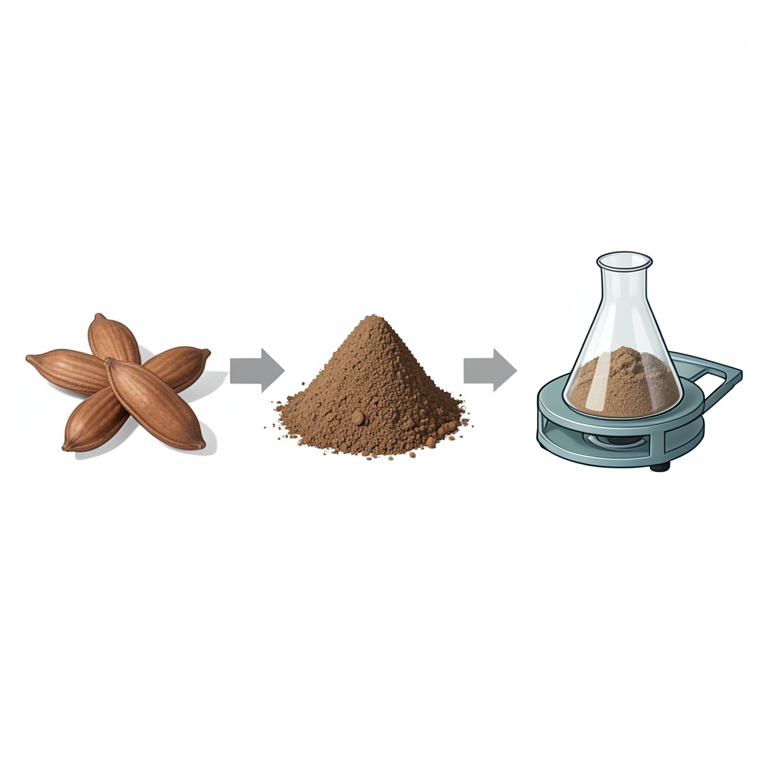
Adsorbent Preparation Process
AI-generated conceptual illustration (Cassia tora fruit shells). It explains the idea and does not show study data.
View source evidence ↗Figures & tables
From the original paper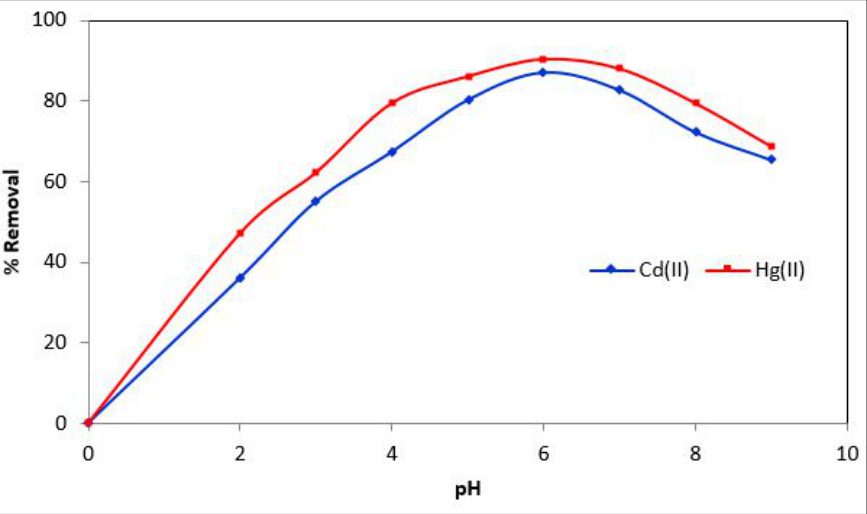 Figure 1
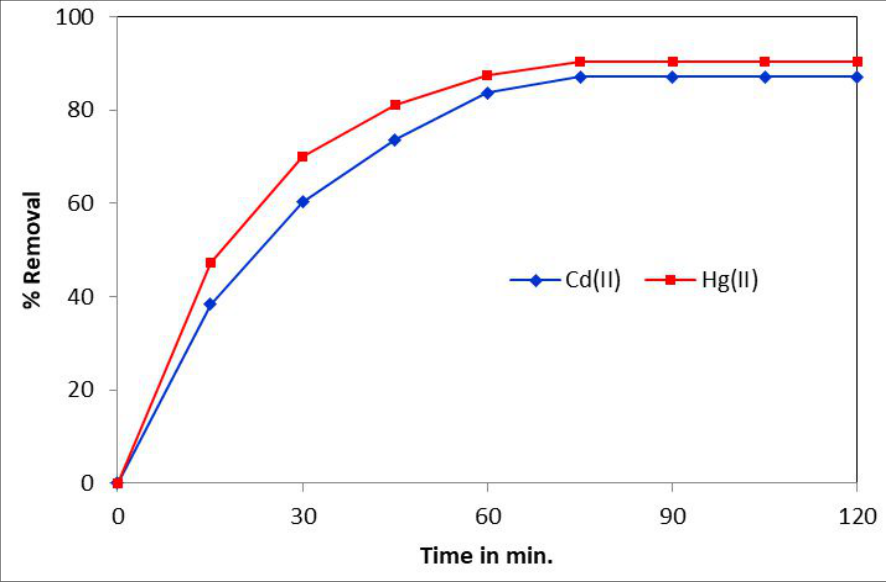 Figure 2
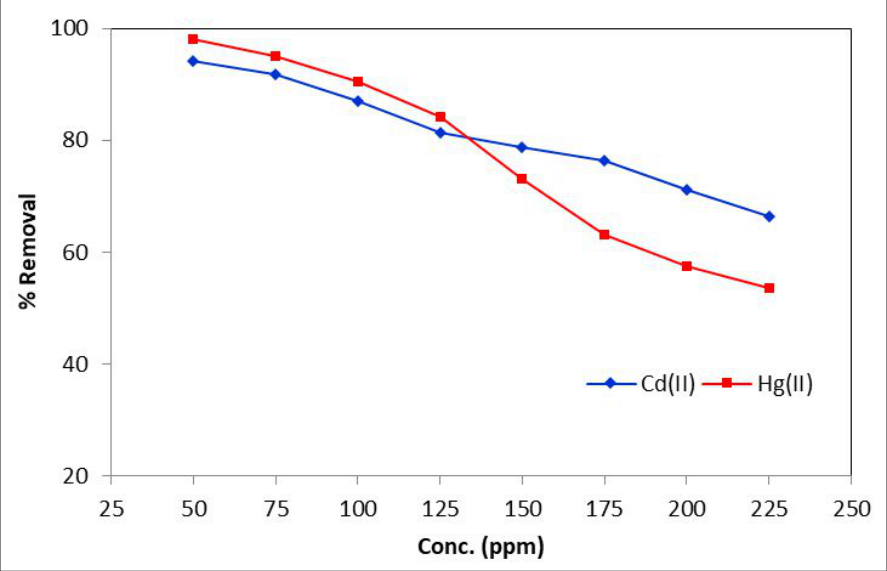 Figure 3
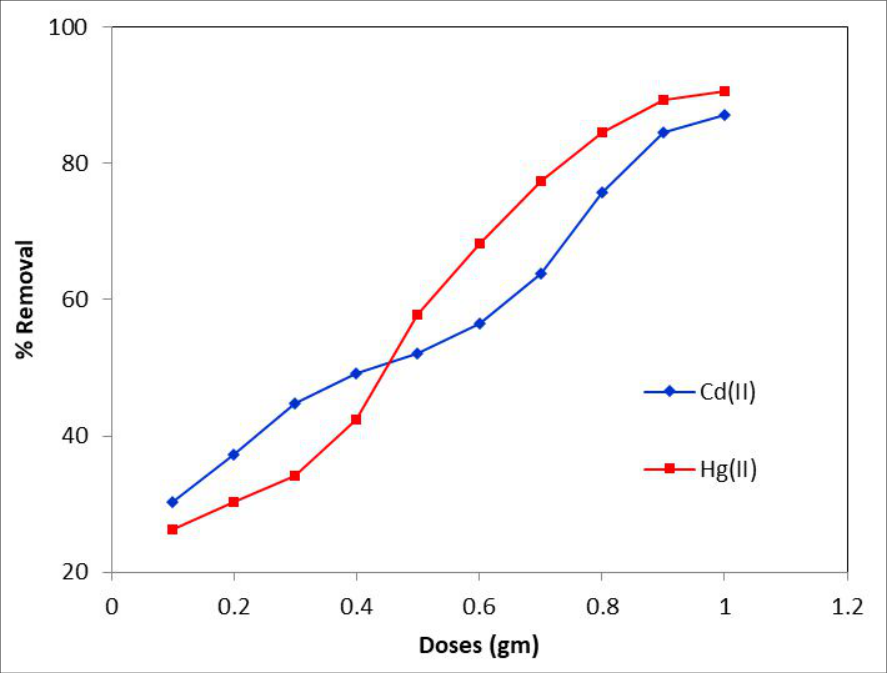 Figure 4
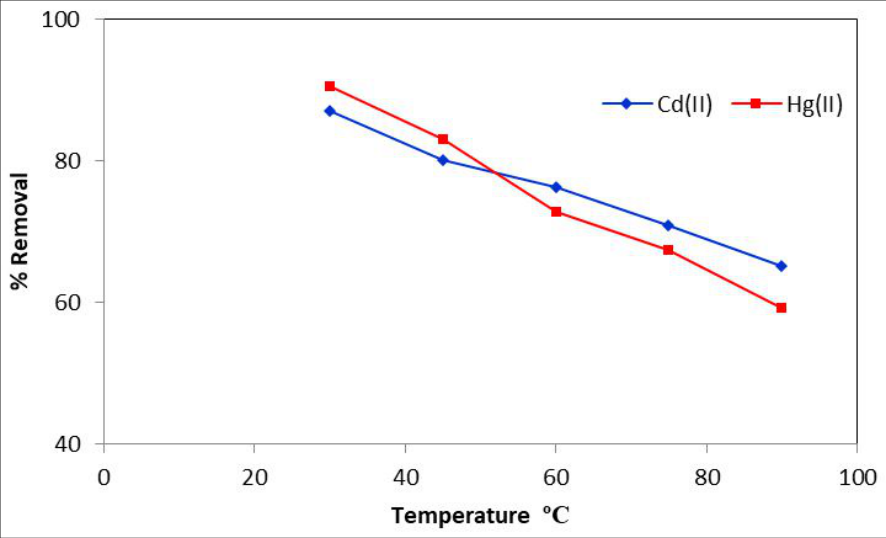 Figure 5
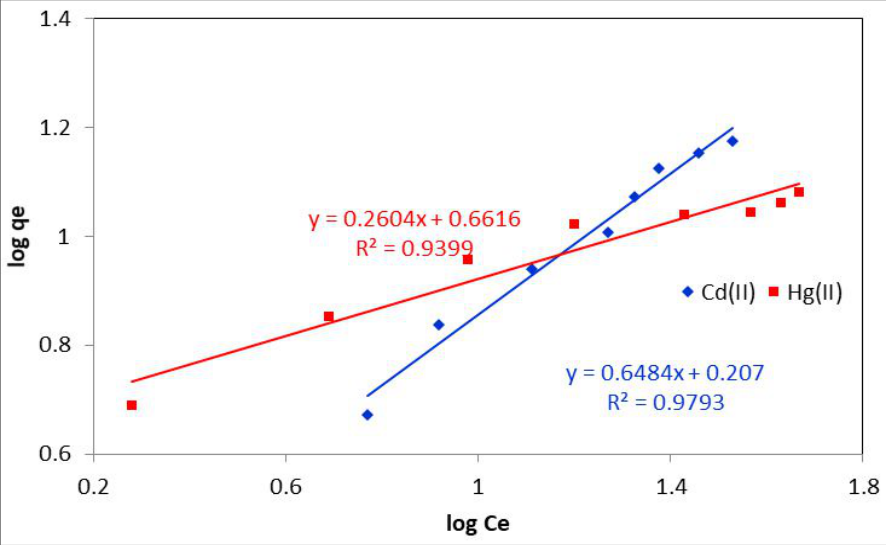 Figure 6
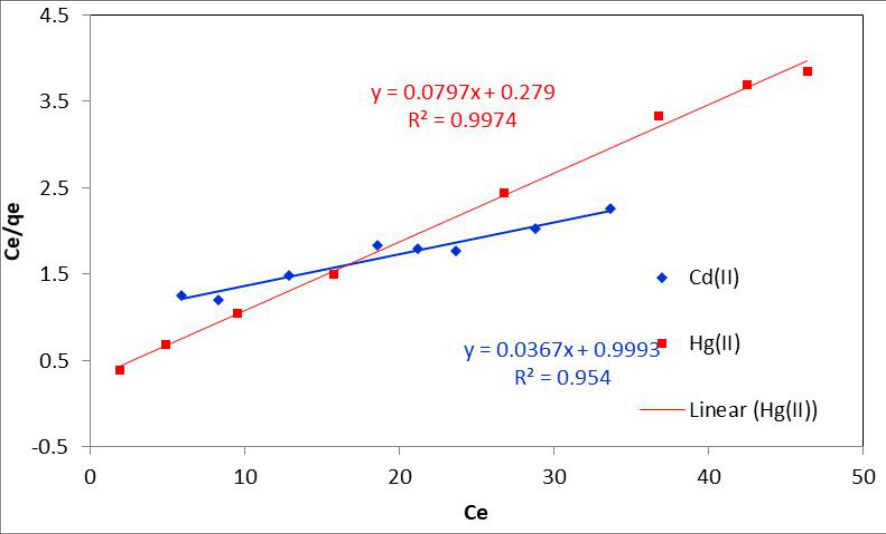 Figure 7
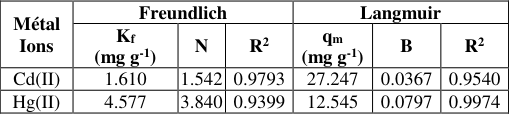 Table 1
Introduction
In this portion, the main problem, selected in the study should be discussed with the relevant earlier literature and the proposed method or solution. Proper references should be used in support to the content. The heavy metals such as As, Cd, Cr, Hg, Pb etc. are non-biodegradable, persistent and considered as significant environmental pollutants [1] and are highly toxic to living organisms. They enter in natural water bodies and causes water pollution and at higher concentration threat living organisms and human beings [2] . The maximum permissible limits for discharge of toxic heavy metals in aquatic ecosystem has been set by different regulatory bodies, but still the concentration in water bodies are at much higher level than prescribed limits. This results in environmental pollution. So, it becomes very important to remove heavy metal ions from water before discharge to protect the public health. Toxic heavy metals accumulated in natural water bodies by different natural and industrial sources. Various techniques are available for removals of toxic heavy metals are adsorption, coagulation, oxidation, membrane separation etc. Adsorption is the most effective and widely used method for metal removal [3] . The Cd (II) and its compounds are classified as carcinogenic by IARC [4] . The ingestion and inhalation of cadmium may cause kidney dysfunction and severe damage to lungs; and its chronic exposure may lead to death [5] . Hg (II) is another potential pollutant converts into methyl mercurya major organic mercury in natural water causing high bioaccumulation in food chains. It leads to serious damage in the brain, heart, liver, kidneys as well as nervous and metabolic systems and may cause cancer [6] . Maximum permissible limit of Cd (II) prescribed by WHO in drinking water is 0.003 ppm and that of Hg (II) is 0.002 ppm [7] . In present work, we are trying to use an eco-friendly low coast adsorbent material for removal of Cd (II) and Hg (II) from water. A biotechnological approach involving fruit shell substrate of Cassia tora (Charota) plant for removal of Cd (II) and Hg (II) offers best solution.
Materials and Methods:
The detailed experimental protocols, instruments and software etc. used in the study should be described here with their proper references. The details of the study area should also be provided.
a) Preparation of Adsorbent
Fruit shells of Cassia tora plant have been collected, sun dried, powdered in grinder and screened to get homogeneous powder. The powder was treated overnight with solution 25 ml formaldehyde in 100 ml 0.1 N nitric acid with occasionally shaking in electronic shaking machine. Then filtered and washed with distilled water to remove acid residue. Finally, sun dried and the adsorbent prepared was used for study.
b) Preparation of metal ion solution
All chemicals used in the study were of AR grade supplied by m/s Merk. Solutions were prepared by using metal salts of Cd (II) and Hg (II). The pH was adjusted by using dilute solution of nitric acid and/or sodium hydroxide, if necessary. Stalk solutions of 500 ppm of Cd (II) and Hg (II), were prepared respectively. Other dilutions prepared from respective stalk solutions.
c) Batch Study
Batch experiments were performed to know the effect of different parameters like pH, contact time, initial concentration of metal ions, doses of adsorbent, temperature etc. on adsorption of metal ions. 100 ml solution of metal ion agitated with different doses of fruit shell substrate ranging from 1-4 gm in 250 ml corked bottle on a shaking machine. Different concentrations of metal ion, different time duration and different temperature have been set for study. The amount of Cd (II) and Hg (II) adsorbed on treated biomaterial was recorded by using standard methods. Percentage removal of metal ions was calculated using equation-
Where, Co is initial concentration and Cf is final concentration of metal ions in ppm.
Results
Results
Effect of pH
The pH of solution affects adsorption of metal ions [8] .
Removal of Cd (II) and Hg (II) changes with pH of solution ranging from 2-9. Variation of % Removal with pH is shown in Fig. 1. The maximum removal of Cd (II) and Hg (II) was observed at pH 6. At higher pH both metal ions precipitated due to the formation of hydroxides. At low pH higher concentration of hydrogen ions make metal binding sites unavailable metal ions. Negative charge density on adsorbent increases with pH due to deprotonating of metal binding sites, increasing adsorption of metal ions [9] .
Fig 1: Effect of pH
Fig 1: Effect of pH
Effect of contact time
The parameter is required to find out time required to establish equilibrium. 1 gm Cassia tora fruit shell substrate with 100 ml of metal ion solution at pH 6 was agitated for different time intervals of 15-120 minutes. The concentrations of solution were fixed to 100 ppm. The % removal of metal ions increases with time until equilibrium is reached after 75 minutes for each metal ion [10] . The results are shown in Fig. 2. availability of more adsorption sites and at higher concentration most of adsorption sites are covered and adsorption capacities exhausted due to non-availability of active sites. Hence, % removal decreases at higher concentration [11] .
Fig 3: Effect of initial metal ion concentration
Effect of doses: Effect of adsorbent doses investigated by taking doses of adsorbent ranging from 0.1 to 1.0 g. Optimum condition was fixed as 100 ppm metal ion concentrations, pH 6 of solution, 75 min contact time, at room temperature. The results are given in Fig. 4. The % removal of both metal ions gradually increased with dosage from 0.1 to 1.0 g. The number of adsorbent sites increased with adsorbent doses [12] . Hence, 1 g dose of adsorbent was considered enough for the removal of Cd (II) and Hg (II) from 100 ml solution under given conditions [13] .
Fig 4: Effect of adsorbent doses
Fig 4: Effect of adsorbent doses
Effect of temperature
Temperature has marked effect on adsorption of metal ions [14] . 100 ml Cd (II) and Hg (II) solutions at fixed optimum conditions agitated with 1 gm of adsorbent at different temperatures from 30-90 C. The results are shown in Fig. 5. Maximum % removal was observed at room temperature (30 C). It decreases with increase of temperature, so, all further experiments were conducted at room temperature. Adsorption Isotherm: Freundlich and Langmuir adsorption isotherms were selected in the present study to understand mechanism of adsorption [15] . An empirical equation of Freundlich isotherm employed to describe adsorption on heterogeneous surface [16] . Given as:
Where, Kf is Freundlich constant (mg g -1 ); 1/n is absorption intensity (calculated from slope of the plot log qe versus log Ce); qe is amount of metal ion adsorbed per gram of adsorbent; Ce is equilibrium metal ion concentration.
Freundlich isotherm for adsorption is given in Fig. 6.
Fig 6: Freundlich adsorption isotherm
Langmuir isotherm is based on monolayer adsorption processes. Langmuir isotherm equation is represented as [17] follows:
Where, qm is maximum metal ions uptake (mg g -1 ); b is Langmuir constant (L mol -1 ) A plot of Ce/qe versus Ce gives a straight line of the slop 1/qm and intercept 1/(qm b). Langmuir isotherm is shown in Fig. 7.
Discussion
Parameters of Freundlich and Langmuir isotherms for adsorption of Cd (II) and Hg (II) are given in Table 1. Langmuir isotherm model fits very well than Freundlich model for Hg(II) as R 2 of Langmuir plot >0.99 close to unity [18] . Freundlich constant n is the measure of deviation from linearity of adsorption. If n is below unity, adsorption process is governed by a chemical mechanism, but if n is above unity, adsorption is favourable a physical process. The values of n at equilibrium are >1, indicates physical mechanism refers to weak bonds.
| Métal Ions | Freundlich | — | — | Langmuir | — | — |
|---|---|---|---|---|---|---|
| Kf (mg g-1) | N | R2 | qm (mg g-1) | B | R2 | |
| Cd(II) | 1.610 | 1.542 | 0.9793 | 27.247 | 0.0367 | 0.9540 |
| Hg(II) | 4.577 | 3.840 | 0.9399 | 12.545 | 0.0797 | 0.9974 |
Table text extracted from the original PDF; superscript letters are shown inline. The original table image is below.
View original table image
Conclusion
The study based on use of Cassia tora fruit shell substrate for removal of Cd (II) and Hg (II). It has been found that adsorption of metal ions was fast and equilibrium maintained in 75 minutes. The % removal of metal ions was increasing with pH and more than 8 pH leads to precipitation. With increasing adsorbent doses adsorption also increases and temperature has inverse effect on % removal. Freundlich and Langmuir equations have been used to describe the adsorption behaviour of Cd (II) and Hg (II). The values of correlation coefficients show Langmuir model provide better correspondence. The monolayer adsorption capacity of fruit shell substrate on the basis of Langmuir isotherm for Cd (II) and Hg (II) ions were found equal to be 27.247 and 12.545 mg g -1 , respectively. These values are quite satisfactory. Thus, the substrate was found better adsorbent for treatment of metal ions from aqueous phase.
Acknowledgement
AcknowledgmentsThe author is very thankful to Head, Department of Chemistry, Science College, Pauni for his cooperation during the work and also Principal, Science College, Pauni for providing laboratory facilities.
Figures and tables from the paper
References
18 in the original paper- Nagjyothi PC. Heavy metals, occurrence and toxicity for plants: A review. Environmental Chemistry Letters. 2010;8:199-216. DOI: 10.1007/s10311-010-0297-8.
- Atkovaka K. Adsorption of Fe(II) and Zn(II) ions from landfill leachate by natural bentonite. Journal of Chemical Technology & Metallurgy. 2016;51(2):215222.
- Aravind S, Kamath S. Conversion of Solid Waste into Biologically useful material. The International Journal of Innovative Research in Science, Engineering and Technology. 2015;4(6):4999-5002.
- Henson MC, Chedrese PJ. Endocrine disruption by cadmium, a common environmental toxicant with paradoxical effects on reproduction. Experimental Biology and Medicine. 2004;229(5):383-392. DOI: https://doi.org/10.1177/153537020422900506.
- Pravin K, Pawan K. Removal of cadmium (Cd-II) from aqueous solution using gas industry-based adsorbent. SN Applied Sciences. 2019;1:365. DOI: https://doi.org/10.1007/s42452-019-0377-8.
- Mangdan Xia. Removal of Hg(II) in aqueous solutions through physical and chemical adsorption principles. RSC Advances. 2019;9(36):20941-20953. DOI:10.1039/c9ra01924c.
- WHO Guidelines for Water Quality Recommendations, WHO. Geneva.1984;1:81.
- Aksu Z. Equilibrium and kinetic modelling of cadmium (II) biosorption by C. vulgaris in a batch system: Effect of temperature. Separation and Purification Technology. 2001;21(3):285-294.
- Ho YS. Effect of pH on lead removal from water using tree fern as the sorbent. Bio-resource Technology. 2005;96(11):1292-6.
- Thilagam G. Adsorption behavior of Fe (II) ion from aqueous solution onto nano carbon. International Journal of Chemical Studies. 2016;4(1):96-102.
- Kavitha K. Removal of hexavalent chromium from aqueous system by low cost adsorbent (AAVNS). Journal of Chemical and Pharmaceutical Research. 2014;6(6):6-15.
- Tahir SS, Naseem R. Removal of Fe (II) from the wastewater of a galvanized pipe manufacturing industry by adsorption onto bentonite clay. Journal of Environmental Management. 2004;73(4):285-292.
- Gorzin F, Bahri MM. Adsorption of Cr (VI) from aqueous solution by adsorbent prepared from paper mill sludge: Kinetics and thermodynamics studies, Adsorption Science and Technology. 2018;36(12):149169.
- Horsfall M, Spiff AI. Effects of temperature on the sorption of Pb2+ and Cd2+ from aqueous solution by Caladium bicolor (Wild Cocoyam) biomass. Electronic Journal of Biotechnology. 2005;8(2):162-169.
- Tikomolora K. Adsorption on quartz of Co(II) and Ni(II) in the form of hydroxide nanoparticles or metal ionic species from solution with pH close to that onset of hydroxide formation. Russian Journal of General Chemistry. 2002;72(7):989-996.
- Yarkandi NH. Removal of lead (II) from waste water by adsorption. International Journal of Current Microbiology and Applied Sciences. 2014;3(4):207228.
- Balasubramaniam R. Equilibrium Isotherm Studies for the Multicomponent Adsorption of Lead, Zinc, and Cadmium onto Indonesian Peat. Industrial and Engineering Chemistry Research. 2009;48(4):20932099.
- Hall KR. Pore and solid-diffusion kinetics in fixed-bed adsorption under constant-pattern conditions. Industrial and Engineering Chemistry Fundamentals. 1966;5(2):212-223.