
Research article · 2023 · Full text
International Journal of Veterinary Sciences and Animal HusbandryA participatory appraisal of the farming business environment, gender issues and service delivery by veterinary para-professionals in Uganda
Volume 8(6) · Pages 201–207 · DOI: 10.22271/veterinary.2023.v8.i6d.837 ↗
Research areasAnimal Disease Management and EpidemiologyVeterinary Practice and Education StudiesZoonotic diseases and public health
Abstract
Author-writtenThis study assessed the farming business environment and gender issues and their effect on service delivery by the veterinary para-professionals (VPPs) in Sembabule and Soroti districts. The study employed Participatory Rural Appraisal research method. The study found that treatment of animals (39%), vaccination (20%), and farmer advisory service (19.5%) were the services most demanded by smallholder livestock farmers. On the other hand, the production system of the study area was of low input low output system. Tethering and communal grazing were the most practiced livestock production systems in the study areas.Majority of farmers preferred Male VPPs to female VPPs. The reason given was that women extension agents are very few in the field and they slow in responding to case calls. This could be affecting opportunities for women small holder farmers to access veterinary services since it has been proven in most cases, women farmers prefer female extension agents.
Summary
Source-checkedPlain-language reading of the full paper, prepared with AI and checked against the text. Each point links to the authors' own words.
Why it matters
- The livestock sector is a critical driver of economic development and poverty alleviation in Uganda, contributing 17% to the agricultural GDP and supporting approximately 4.5 million households. View evidence ↗
- Rural livestock farmers in Uganda face limited access to veterinary services, relying heavily on veterinary para-professionals (VPPs) as the primary service providers. View evidence ↗
- Variations in the quality and quantity of VPP training can lead to inappropriate treatments, resulting in animal suffering and financial losses for farmers. View evidence ↗
The question
- The study aimed to evaluate how the farming business environment and gender-related issues affect the delivery of services by VPPs in the Sembabule and Soroti districts of Uganda. View evidence ↗
What they did
- The researchers used a qualitative approach based on Participatory Rural Appraisal (PRA), utilizing focus group discussions, key informant interviews, and participant observations. View evidence ↗
- The study involved 63 respondents in focus group discussions and 13 key informant interviewees across the two districts. View evidence ↗
- In Soroti, the study sampled 30 primary respondents, consisting of five males and five females from each of the three selected sub-counties. View evidence ↗
What they found
- The most demanded services from VPPs were animal treatment (39%), vaccination (20%), and advisory services (19.5%). View evidence ↗
- Selling livestock and livestock products is the primary source of income for farmers, with an average proportional allocation of 72.75%. View evidence ↗
- There is a general preference among farmers for male VPPs over female VPPs. View evidence ↗
- Farmers identified fellow farmers as the most important service providers due to the lack of accessibility of professional veterinarians and VPPs. View evidence ↗
- The primary challenges for livestock farmers are diseases and parasites, followed by drought/water shortages and the high cost of veterinary drugs. View evidence ↗
What it means
- The authors conclude that deliberate interventions are needed to increase the number of female veterinary personnel to better support women in livestock production. View evidence ↗
- The study concludes that the farming business environment negatively impacts both the service delivery capacity of VPPs and the nature of farmer demand. View evidence ↗
Visual summary
2 visualsIllustrations explain the paper; charts are replotted from the paper's own table values.
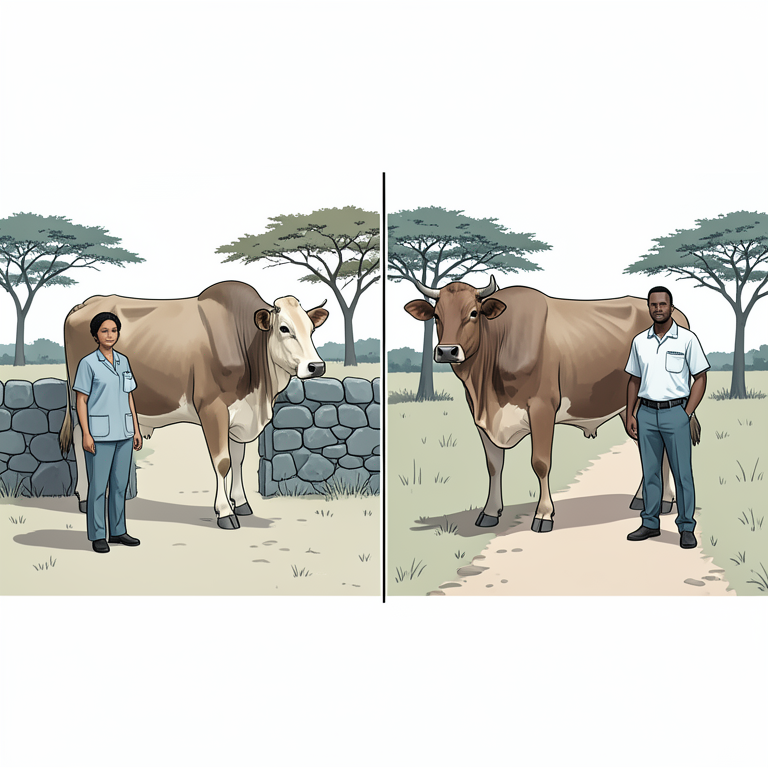
Gender Barriers in Veterinary Service Delivery
AI-generated conceptual illustration (female and male veterinary para-professionals with cattle in rural Uganda). It explains the idea and does not show study data.
View source evidence ↗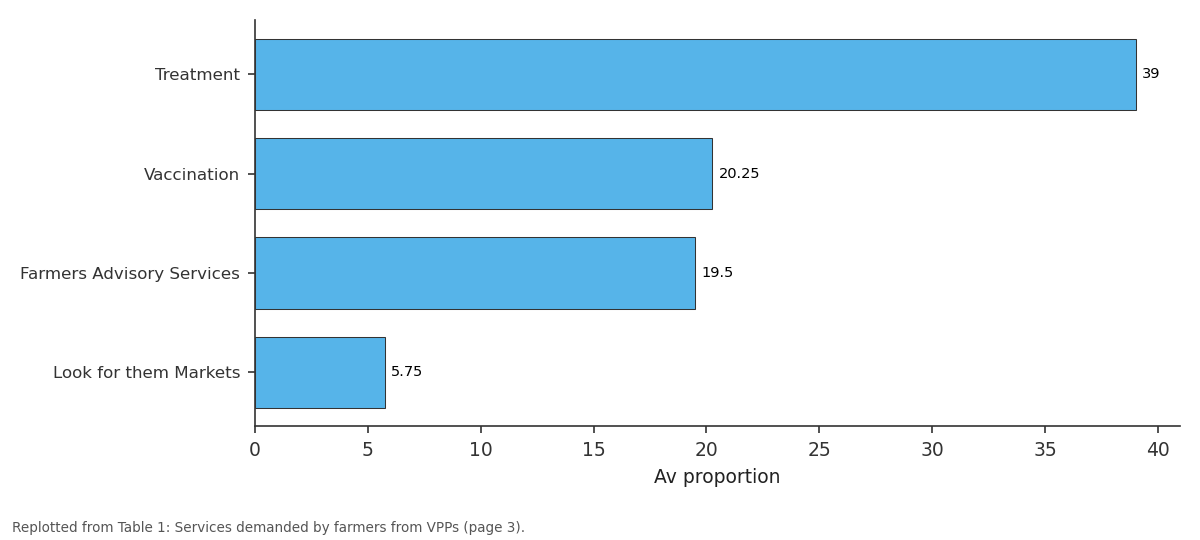
Av proportion: Treatment vs Vaccination vs Farmers Advisory... vs Look for them Markets
Replotted from Table 1 (page 3) of the original paper. Every bar is the paper's own table value.
View source evidence ↗Figures & tables
From the original paper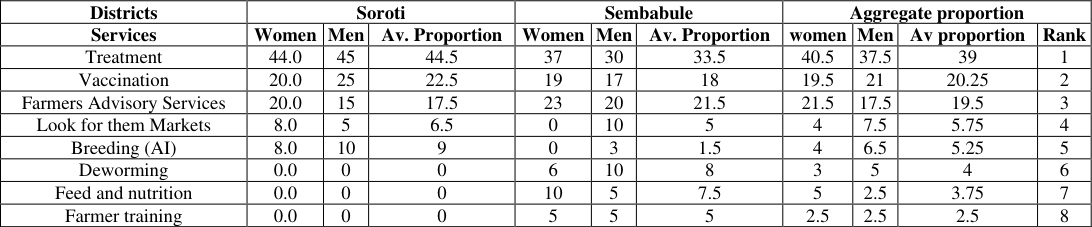 Table 1
 Table 2
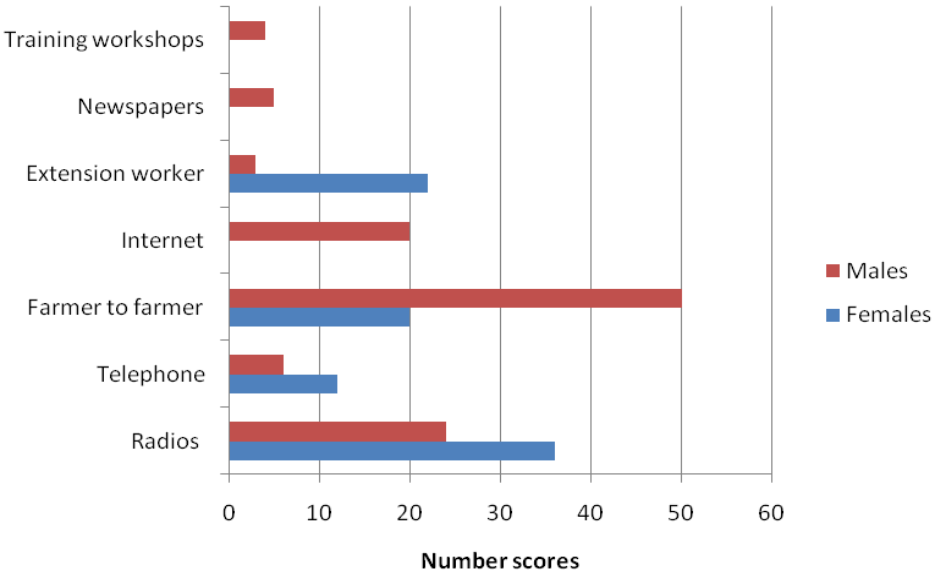 Figure 1
 Table 3
Introduction
The livestock sector contributes 17 percent to Uganda's agricultural sector GDP and is a source of livelihood to about 4.5 million households in the country. Uganda currently has about 14.2 million cattle, 16 million goats, 4.5 million sheep, 47.6 million poultry and 4.1 million pigs (UBOS, 2009) [12] , making livestock a very critical launching pad for poverty alleviation and economic development. The study was conducted in two districts; Sembabule in central and Soroti in eastern Uganda. Livestock rearing is a very important economic activity in the study districts with about 260,000 and 65,000 cattle population in Sembabule and Soroti respectively. In economic value, cattle are considered the most important livestock species in Uganda followed by goats, sheep, pigs and poultry. Livestock farmers in rural Uganda have reported limited access to veterinary services, with VPPs making up the majority of service providers (Dione et al., 2018; Gertzell, 2020) [5,7] . The quantity and quality of VPPs training is varied, and as a consequence, much as they could offer important advice and support to smallholders, sometimes VPPs cause losses to farmers and severe animal suffering due to inappropriate treatment administered (Ilukor 2014; Dione et al. 2018) [9,5] . Consequently, even seemingly minor and non-fatal problems, such as worms and diarrhea, could significantly constrain production and lead to livestock loss (Chenais and Fischer, 2018). These issues emerge at a time when the veterinary profession is under profound scrutiny [3] internationally. Animal health service providers (AHSPs) are not looked at merely in terms of ensuring animal health, welfare and increased productivity but also inter alia, ensuring public health and food safety, early detection and prevention of emerging diseases, facilitating international trade, prevention of bioterrorism, and aiding biomedical research. Consequently, the factors mentioned above, either singularly or in combination, create a tumultuous business environment in which the veterinary paraprofessionals must operate with the intention of making a profit and at the same time meet the expectations of their clients and the regulatory authorities.
This study assessed the effects of farming business environment and gender issues on service delivery by the veterinary para-professionals (VPPs) in Sembabule and Soroti districts, Uganda. The study specifically assessed the animal health care services demanded by smallholder livestock farmers; and the farmers' perspective on the skills needed by VPPs.
Methodology
The study used qualitative research methods (Damaskinidis, 2017) [4] employing participatory rural appraisal (PRA) tools including focus group discussions (FGDs), key informant interviews (KIIs) and participant observations (POs). It was conducted in Sembabule and Soroti districts representing different agro-ecological zones and livestock production systems (Map 1). Sembabule from central region represented the dry land ecosystem and agro-pastoralist production system while Soroti represented the greater north eastern region. Three sub-counties were purposively selected for proper representation of the different production factors and farm characteristics from each study district. In Soroti, Gweri (predominantly livestock keeping), Arapai (crop and livestock), and Eastern Division (peri-urban) were selected while Mateete (peri-urban), Ntutsi (livestock keeping), and Mijwala (crop and livestock) were selected from Sembabule. The study protocol obtained research ethics approval from Makerere University Social Sciences Research Ethics Committee (Number MAKSSREC 11.2022.611). Participants for FGDs and KIIs were purposively selected basing on several criteria including; gender, their knowledge about the subject matter, those affected by the animal health care constraints or provided animal health care services to smallholder livestock farmers. FGDs, KIIs and Participant Observations were conducted to analyze community issues using participatory visual tools, namely proportional piling with farmers. The study sampled ten (10) primary respondents in each of three sub-counties of Soroti district including five females and five males making a total of 10 per sub-county and thirty (30) per district. These smallholder livestock farmers were engaged in Focus Group Discussions (FGDs). The total number of respondents engaged in FGDs in the two districts were 63, and 13 Key Informant Interviewees KIIs. The study conducted 12 FGDs in the two study districts. Each FGD session lasted two hours which was sufficient to exhaust questions and gather the information that was needed for this study. FGDs were guided by a facilitator and a note taker following a checklist covering important issues of interest to the study. In addition to proportion piling, further analysis of the views gathered was achieved through scoring and ranking.
Data Analysis
The data collected was analyzed using qualitative analysis tools using; organizing data into themes, using extracts and quotes, organizing the information from different groups and interviews, presenting quantitative data from proportional piling matrices, scoring and ranking, using pictures, tables and drawing diagrams.
Results and Findings
The livestock farming business environment was assessed through; analyzing the services provided to smallholder farmers (SHFs) by VPPs, farmers' main sources of income, livestock production systems, farmers' access to animal health services information, challenges faced by farmers, and challenges faced by VPPs. Using proportional piling, farmers ranked the following as the most important services to them; treatment/clinical services, which ranked number 1, vaccination which ranked number 2, and farmer advisory services which ranked number 3 (Table1). Farmer respondents further indicated that the most important animal health service provider was the fellow farmers. This was to express their displeasure that veterinarians and VPPs are not readily accessible to the livestock farmers. This was followed by the private VPPs, then the government VPPs and finally the veterinarians came last because they are the least accessible animal health service providers. The experienced farmers treated more frequently for fellow farmers because they were more accessible and "have experience in disease diagnosis and treatment since they have been with their animals for all their lives unlike the trained veterinary personnel who only have school knowledge". Besides, lack of enough veterinary personnel or limited access to veterinarians and VPPs, the cost of veterinary services is also prohibitive. Farmers indicated that the main source of information/ knowledge on animal health services was farmer to farmer followed by radio (Figure1). Farmer to farmer was ranked high; because farmers have various farmer platforms or spaces where they meet and share information for example churches, weddings, burial ceremonies and livestock markets. Whereas radio was ranked highly because many families own radios and there are several radio stations that host farmers programs in local languages or dialectics that are listened to by many farmers, and some radio stations provide opportunities for live discussions where farmers call in, ask questions and obtain answers to their questions.
| Districts | Soroti | — | — | Sembabule | — | — | Aggregate proportion | — | — | — |
|---|---|---|---|---|---|---|---|---|---|---|
| Services | Women | Men | Av. Proportion | Women | Men | Av. Proportion | women | Men | Av proportion | Rank |
| Treatment | 44.0 | 45 | 44.5 | 37 | 30 | 33.5 | 40.5 | 37.5 | 39 | 1 |
| Vaccination | 20.0 | 25 | 22.5 | 19 | 17 | 18 | 19.5 | 21 | 20.25 | 2 |
| Farmers Advisory Services | 20.0 | 15 | 17.5 | 23 | 20 | 21.5 | 21.5 | 17.5 | 19.5 | 3 |
| Look for them Markets | 8.0 | 5 | 6.5 | 0 | 10 | 5 | 4 | 7.5 | 5.75 | 4 |
| Breeding (AI) | 8.0 | 10 | 9 | 0 | 3 | 1.5 | 4 | 6.5 | 5.25 | 5 |
| Deworming | 0.0 | 0 | 0 | 6 | 10 | 8 | 3 | 5 | 4 | 6 |
| Feed and nutrition | 0.0 | 0 | 0 | 10 | 5 | 7.5 | 5 | 2.5 | 3.75 | 7 |
| Farmer training | 0.0 | 0 | 0 | 5 | 5 | 5 | 2.5 | 2.5 | 2.5 | 8 |
Table text extracted from the original PDF; superscript letters are shown inline. The original table image is below.
View original table image
Main Sources of Income for Farmers
The main sources of income for farmers included selling of livestock and livestock products which ranked number one with the highest proportional piles. In fact, women respondents in Sembabule put all their 100/100 counters on the livestock and livestock products. Overall, livestock and livestock products were allocated an average pile of 72.75% (Table 2). Women were predominantly engaged in rearing poultry (chicken), goats and pigs especially back yard small scale farming. On the other hand, men were mainly engaged in cattle rearing especially in Sembabule. Crop farming and selling of crop produce was ranked as the second most important source of income. This was allocated an average pile of 11.75 out of 100 by men in the two study districts, but women allocated it zero. The range of the proportions between the first highly ranked source of income and the second is very high, i.e. 61%. This is an indicator of the position livestock holds in the households of the communities in the two study districts.
| District | Soroti | — | — | Sembabule | — | — | Aggregate proportion | — | — | — |
|---|---|---|---|---|---|---|---|---|---|---|
| Sources | Women | Men | Av. proportion | Women | Men | Av. proportion | Women | Men | Av. Proportion | Rank |
| Selling livestock and livestock products | 68 | 61 | 64.5 | 100 | 62 | 81 | 84 | 61.5 | 72.75 | 1 |
| Selling crops | 0 | 15 | 7.5 | 0 | 32 | 16 | 0 | 23.5 | 11.75 | 2 |
| Casual/manual Labor | 26 | 7 | 16.5 | 0 | 0 | 0 | 13 | 3.5 | 8.25 | 3 |
| Fishing | 0 | 7 | 3.5 | 0 | 0 | 0 | 0 | 3.5 | 1.75 | 4 |
| Fish farming | 0 | 0 | 0 | 0 | 6 | 3 | 0 | 3 | 1.5 | 5 |
| Merchandise selling other businesses | 6 | 0 | 3 | 0 | 0 | 0 | 3 | 0 | 1.5 | 5 |
Table text extracted from the original PDF; superscript letters are shown inline. The original table image is below.
View original table image
Livestock Farming Practices
Tethering/rope tying was highly ranked by farmers in Soroti, especially women as the commonest form of system of raising livestock. This was followed by communal/free range grazing which were ranked equally in Sembabule and Soroti with an average proportional allocation of 22.8%. Fenced farms came third, with high proportional allocation by both men and women farmers in Sembabule (Table 3). Farmers in Sembabule indicated that fencing was mainly for cattle and goats, free range system mostly for poultry, and intensive system mostly for piggery. Reasons why fencing was ranked highly in Sembabule were that it helps in disease control since animals do not freely mix with other animals from different farms, animals have adequate land for grazing, theft of animals is prevented or minimized, and avoids conflicts among neighbouring farmers for instance, cases such as livestock straying and eating neighbour's crops were avoided. [1] .
| District | Soroti | — | — | Sembabule | — | — | Aggregate proportion | — | — | — |
|---|---|---|---|---|---|---|---|---|---|---|
| Practice | Women | Men | Av. proportion | Women | Men | Av proportion | Women | Men | Av. Proportion | Rank |
| Tethering/ Rope tying) | 59 | 28.5 | 41.25 | 10 | 14 | 12 | 34.5 | 21.25 | 26.6 | 1 |
| Free range/ communal Grazing | 20 | 23.5 | 24.25 | 23 | 24 | 23.5 | 21.5 | 23.25 | 24 | 2 |
| Fencing | 6 | 10 | 8 | 40 | 35 | 37.5 | 23 | 22.5 | 22.8 | 3 |
| Intensive (Poultry) | 10 | 24 | 17 | 10 | 8 | 9 | 10 | 16 | 13 | 4 |
| Zero grazing | 5 | 14 | 9.5 | 14 | 13 | 13.5 | 9.5 | 13.5 | 11.5 | 5 |
| Semi-intensive | 0 | 0 | 0 | 3 | 6 | 4.5 | 1.5 | 3 | 2.25 | 6 |
Table text extracted from the original PDF; superscript letters are shown inline. The original table image is below.
View original table image
During water shortage or drought, animals roam around looking for water and pasture, and they are even taken to game reserves where they interface with wild animals thereby picking diseases and parasites from other domestic animals and wildlife. Shortage of veterinary personnel was ranked very low, meaning that farmers no longer consider it a serious challenge because they have resorted to buying veterinary drugs and other inputs and treating for themselves. In Sembabule, women (especially those from peri-urban and crop growing sub-counties) ranked shortage of vaccines as a challenge, compared to other groups who did not see this as a problem. This is because these women are venturing into commercial poultry keeping which requires routine vaccinations. But it is until recently that these poultry vaccines could be got in Sembabule (but even then, on a small scale). Farmers had to travel to Masaka over 50 kilometres away to buy vaccines.
Challenges faced by the Veterinary Para-professionals
The challenges faced by the VPPs can be structured into two categories; a) lack of effective regulation of the veterinary sector which has resulted into several weaknesses in the sector including; i) rampant quacks, ii) lack of recognition by government, iii) inexistence of the Uganda Veterinary Board (national veterinary profession regulatory body)offices at the district level, iv) poor communication between the private and public veterinary personnel, v) enforcement of regulatory body is weak, and vi) weak bio-security enforcement, and b) lack of farmer demand/willingness to pay for the services which has contributed towards; i) misuse of drugs by farmers, ii) farmers not willing to pay for services rendered to them by VPPs, iii) VPPs lack of motivation to acquire more skills to serve livestock farmers better, iv) high cost of inputs/cost of drugs, and v) lack of incentives or motivation for farmers to use laboratories for diagnosis.
Effect of gender on provision of animal health services by Veterinary Para-professionals
Many respondents, both men and women, farmers and VPPs, in Sembabule and Soroti indicated that generally farmers prefer male VPPs to female VPPs for animal health services due to various reasons including; women service providers are few, some people think such jobs as treating animals are for men, female VPPs are constrained by pregnancy/babies, female VPPs can be stopped to go for work by their husbands, a woman VPP cannot restrain large animals, men are preferred because they are strong compared to women, men are quick whereby they can easily ride to the farm when called compared to the female VPPs who fear to ride motorcycles, many farms do not have crushes to restrain animals, this makes it hard for female VPPs, and male VPPs keep time since women have a lot of gender responsibilities at home. The following quotes from participants summarize the gender predicament of female VPPs in the field: 'I have never practised in the field. I think it is weird for women to practise in the field. It is hard for women to wrestle with cows'-Female VPP Key informant-Sembabule. 'Originally they used to despise me that I am a woman. They would tell me that they want a real doctor. They sometimes think am not a real VPP. There is where you go and there is no cattle crush and you can't manage to treat the animals. Mainly men despise women VPPs, especially pastoralists. They despise women'a female VPP Key informant-Sembabule. 'Initially, they used to despise me but with time, they accepted me. Now they come for advice. At first male farmers tried to make sexual advances to me. Wives of male farmers are insecure. When the man buys drugs from my shop consistently, the wife gets worried-by female VPP Key informant-Sembabule. 'When I had just started, they would despise me as a woman. But now, they have abandoned the quacks. Wiseacres are mainly women. They were shocked to see a woman treat large animals. They would think that I would not manage' by female VPP Key informant-Soroti. Nonetheless, there are some farmers who indicated that they prefer female VPPs because; a) working with female VPPs is good because they listen, do right things compared to men who have many clients and do the work hurriedly to go and attend to other farmers.
Discussions
Business Environment refers to the sum total of all individuals, institutions and other forces or factors outside the control of an enterprise but affect its performance (Macdonald 2013) [14] . In this study, the business environment was assessed through analyzing services provided to SHFs by VPPs, VPPs main source of income, farmer's main sources of income, analyzing livestock production systems, analyzing farmers access to animal health services information, challenges faced by farmers, and challenges faced by VPPs. In Uganda, the livestock farming business environment is predominantly of low input-low output in nature (MAAIF, 2020) [13] . The bulk of milk in the country is produced from indigenous cattle, mainly in the cattle corridor, on communal grazing and free range land. However, commercial dairy systems have been adopted by some farmers in the central, western and south-western milk sheds (ILRI, 1996) [8] . In this study majority (72.5%) of respondents scored livestock and livestock products to be their main source of income. This is in agreement with the earlier study by FAO which reported that in Uganda, 58% of households depended on livestock for their livelihoods (FAO, 2019), which although are largely subsistent in nature. Tethering/rope tying was ranked by farmers (especially women) in Soroti as the commonest way of keeping cattle, and this was followed by communal/free range grazing. This finding was in agreement with a previous study which reported that the bulk of milk in Uganda is produced from indigenous cattle, mainly in the cattle corridor, on communal grazing land (ILRI, 1996) [8] . However, it can be noted that commercial farmers have more economic possibilities and invest more in the health of their animals (FAO, 2018) [6] . This means, with the current production system, professional veterinary service providers may not necessarily be optimally and fully engaged.
The main services demanded and provided by VPPs to smallholder farmers are; treatment, farmer advice, and vaccination (both public vaccination campaigns and private good vaccination services). It can be noted that currently, some actors that are involved in providing veterinary services do so without adequate regulation and supervision (Ilukor, 2012) [10] . The importance of VPP in the provision of animal health care cannot be overemphasized. However, their training in animal health and welfare is regarded as insufficient (Ilukor, 2014) [9] . According to Bugeza et al (2017) [2] , some of the main factors affecting VPPs' service quality inter-alia include; limited technical capacity to diagnose diseases, reluctance of farmers to engage them and or pay for services rendered, and inadequate facilitation. The main challenges of VPPs are; inadequate skills and knowledge in veterinary sciences especially those graduating from private institutions, and rampant quacks. The other challenges impacting on the VPPs work are farmers not wanting to pay for the services offered by the VPPs. Some farmers especially pastoralists think that fellow farmers know more about matters concerning animals and are better animal health service providers than the vet personnel since they have lived with them longer. Worse still, this is exacerbated by the weak or non-existent referral system, weak reporting and accountability system, and lack of farm infrastructure such as cattle crushes that facilitate safe handling and restraint of large animals or large ruminants such as cattle (cows or bulls) during treatment, all which affect VPPs work. Ilukor (2014) [9] argues that the delay in reporting of sick animals by owners is a big problem. Farmers first attempt to use local remedies and self-treatment. When the situation fails to improve, and most times when the animal is beyond redemption, that is when they call for professional attention. When the animal fails to recover, the farmer becomes reluctant to pay (Ilukor 2014) [9] which will affect the VPP's attitude and service delivery. [17] . At the household level, livestock are a form of wealth storage accounting for 20% of the productive assets (Lubungu and Mofya-Mukuka 2012) [11] . Nonetheless, women's access to information and training in modern livestock disease management is indirect, and through men, lowering their involvement and efficiency (Mugisha, et al., 2023) [15] . Women also lack access to livestock services and input delivery systems, which are male dominated (Njuki & Sanginga 2013) [16] . Thus, to enhance the success of women in livestock production, there is need for deliberate interventions to increase the number of female veterinary personnel in the field.
Conclusion
It can be concluded that the business farming environment affects the VPPs in terms of their capacity for service delivery, and in some ways the demand by farmers for the services offered by VPPs. Whereas treatment is well known to be a private service and farmers are well aware that they are obliged to pay for it, farmer advice is perceived by many farmers to be free and vaccination to be the responsibility of government, except vaccination in commercial poultry. Also, private VPPs are main players in the animal health service delivery. They attend to more than 50% of the cases. Currently, the first line of animal disease management is treatment. Vaccination and farm bio-security are secondary. Some Smallholder Farmers still hold negative attitude towards vaccination. They think it does more harm than good, especially in spreading animal diseases. Male VPPs are more preferred to female VPPs. This is affecting opportunities for women small holder farmers to access veterinary services since it has been proven in most cases, women farmers prefer female extension agents.
Acknowledgement
AcknowledgementsWe highly acknowledge Food Agriculture Organization (FAO) for funding this study. Farmers and veterinary personnel's participation in this study is highly appreciated.
References
5 in the original paper- Baluka SA, Hisali E, Wasswa F, Ocaido M, Mugisha A. Socio-economic risk factors associated with foot and mouth disease, and contagious bovine pleuropneumonia outbreaks in Uganda. Livestock Research for Rural Development. 2013, 25(12).
- Chenais E, Fischer K. Increasing the local relevance of epidemiological research: Situated knowledge of cattle disease among Basongora pastoralists in Uganda. Front Vet Sci. 2018;5:1-12. DOI: 10.3389/fvets.2018.00119.
- Damaskinidis G. Qualitative research and subjective impressions in educational contexts. Am J Educ Res. 2017;5(12):1228-33. DOI: 10.12691/education-5-12-10.
- Dione M, Masembe C, Akol J, Amia W, Kungu J, Lee HS, et al. The importance of on-farm biosecurity: Seroprevalence and risk factors of bacterial and viral pathogens in smallholder pig systems in Uganda. Acta Trop. 2018;187:214-221. DOI: 10.1016/j.actatropica.2018.06.025.
- Quisumbing AR, Rubin D, Manfre C, Waithanji E, van den Bold M, Olney D, et al. Gender, assets, and marketoriented agriculture: Learning from high-value crop and livestock projects in Africa and Asia. Agric Human Values. 2015;32(4):705-25. DOI: 10.1007/s10460-0159587-x.