
Research article · 2023 · Full text
International Journal of Agriculture and Food ScienceEffect of addition of moringa leaf flour on physical chemical properties and organoleptic quality chicken meatballs
Volume 5(2) · Pages 117–123 · DOI: 10.33545/2664844x.2023.v5.i2b.154 ↗
Research areasMoringa oleifera research and applicationsRabbits: Nutrition, Reproduction, HealthAnimal Nutrition and Physiology
Abstract
Author-writtenOne alternative for diversifying livestock products is making meatballs. Meatballs are a processed product that is very popular with various elements of society. In general, meatballs are made from beef, chicken, and other meat. The process of making meatballs starts from grinding and adding other spices to add flavor. To increase the nutritional content and improve the quality and characteristics of meatballs, it is necessary to look for additional ingredients that have good nutritional content, including Moringa leaves. Moringa leaf flour has a high protein, carbohydrate, and calcium content, contains vitamins A, B, and C, and also contains antioxidants. This research aimed to determine the effect of adding Moringa leaf flour on physical, and chemical properties and organoleptic quality. The treatments used in this research were as follows: P0 = 0% Moringa leaf flour and 250 gr meat, P1 = 1.5% Moringa leaf flour and 250 gr meat, P2 = 3% Moringa leaf flour and 250 gr meat, P3 = 4, 5% Moringa leaf flour and 250 gr meat, P4 = 6% Moringa leaf flour and 250 gr meat. This research used a Completely Randomized Design (CRD) consisting of 5 treatments and 4 replications. The data were analyzed using ANOVA, and then a further BNJ test was carried out. The research variables are pH value, DMA, cooking loss, protein, fat content, and crude fiber. The results showed that the addition of Moringa leaf flour had a very significant effect (p0.05). Based on the results of research and data analysis, it can be concluded that the addition of Moringa leaf flour up to 3% (P3) can increase protein and crude fiber, can also reduce fat content, and produce better organoleptic quality.
Summary
Source-checkedPlain-language reading of the full paper, prepared with AI and checked against the text. Each point links to the authors' own words.
Why it matters
- Meatballs are a widely popular processed food product. View evidence ↗
- Adding ingredients like Moringa leaves can be used to enhance the nutritional content and overall quality of meatballs. View evidence ↗
- Moringa leaf flour is a nutrient-dense ingredient containing high levels of protein, calcium, carbohydrates, antioxidants, and vitamins A, B, and C. View evidence ↗
The question
- The study aimed to evaluate how adding Moringa leaf flour affects the physical, chemical, and organoleptic (sensory) properties of chicken meatballs. View evidence ↗
What they did
- The study employed a Completely Randomized Design (CRD) with four replications for each of the five treatments. View evidence ↗
- The measured variables included pH, water binding capacity (DMA), cooking loss, protein, fat content, and crude fiber. View evidence ↗
What they found
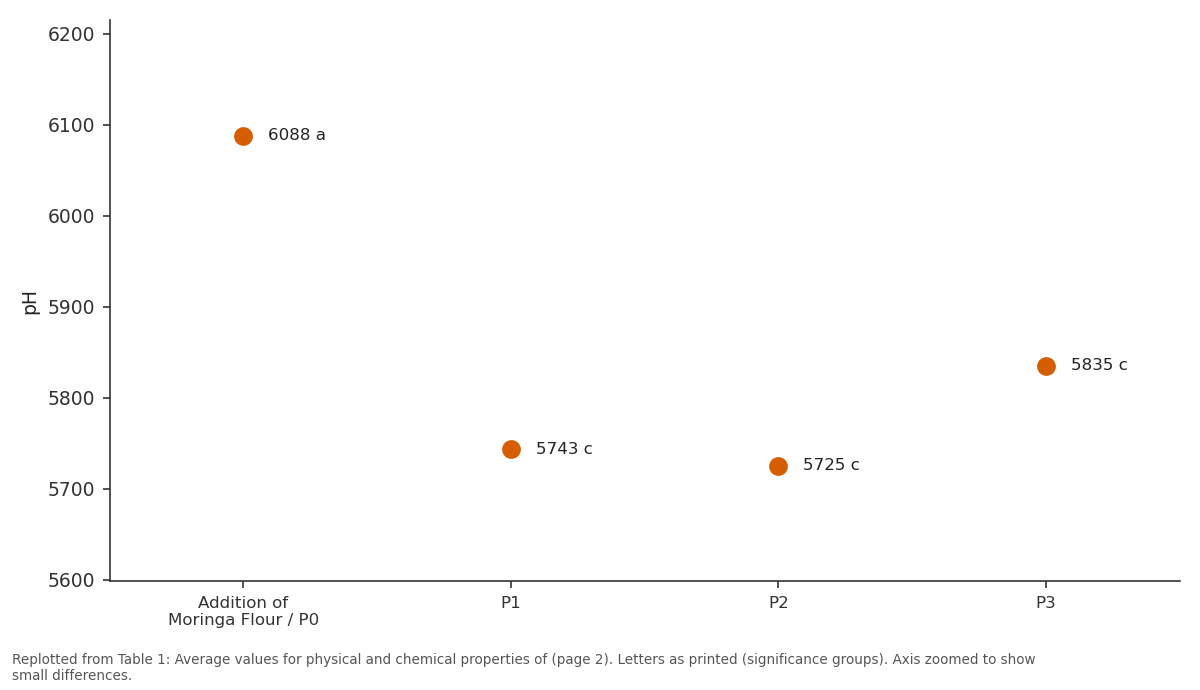
- The pH of the meatballs decreased with the addition of Moringa leaf flour, ranging from 6.088 in the control (P0) to a low of 5.72 in the 3% treatment (P2). View evidence ↗
What it means
- The authors concluded that adding Moringa leaf flour significantly affects meatball quality, identifying the 3% addition (P2) as the optimal treatment. View evidence ↗
Visual summary
1 visualsIllustrations explain the paper; charts are replotted from the paper's own table values.
pH: Addition of Moringa... vs P1 vs P2 vs P3
Replotted from Table 1 (page 2) of the original paper. Every bar is the paper's own table value.
View source evidence ↗Figures & tables
From the original paper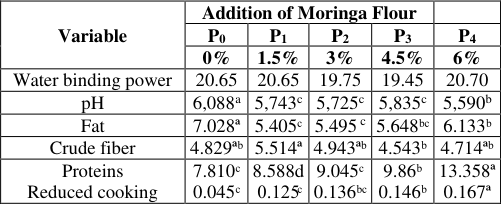 Table 1
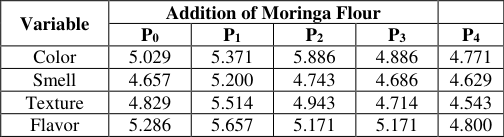 Table 2
Introduction
One of the livestock products is meat. Chicken meat is meat that is widely sold on the market at affordable prices. According to Suradi (2006) [25] , chicken meat has a delicious taste and odor, a soft texture, and a relatively cheap price. The characteristics of good meat are bright white-yellowish meat, with a water content of 74%, protein of 22%, calcium, phosphorus, iron, fat, and vitamins A, C, and E. (Trownutrition, 2011) [29] . One of the finished products from meat processing is meatballs. Chicken meat is a food sourced from livestock that is easily damaged so it has a limited shelf life if it is not processed. Meatballs are one of the ways to extend the shelf life of meat. Meatballs are a processed livestock product made from a mixture of meat and spices which are processed using the restructuring method. Meatballs are a typical Indonesian food that are usually served hot and have high nutritional value because they are rich in animal protein, which the human body needs, especially for growth (Ahmadi, Akhadiyah and Wahyudi, 2007) [2] . Meatballs are made using various mixtures of ingredients and spices, such as tapioca flour, shallots, garlic, pepper, ice cubes, sugar, and salt, with the main ingredient being chicken meat. There have been many developments in meatballs over time, from original meatballs to some modified with the addition of vegetables. Chicken meatballs are added with certain ingredients that contain a chemical composition that is expected to provide balanced nutrition. Another alternative is making meatballs by adding Moringa leaves. Apart from carrots, sago flour, jackfruit seed flour, and seaweed which are added in making meatballs, there is another alternative that can be added in making meatballs, namely Moringa leaves. Moringa leaves contain lots of protein, vitamins, and minerals. Moringa leaves are compound leaves with long stems, bearing irregularly, and are oval (Ulfa, 2016) [32] . Moringa leaves are usually used for clear vegetables, tea, powder, and others. Moringa leaves have a lot of nutritional content, and the high iron content in Moringa leaves can also overcome iron deficiency in anemia (Krisnadi, 2013) [7] . Moringa leaves have the Latin name Moringa oleifera and are a legume plant that is often used by breeders as animal feed. Moringa can also be used as a food ingredient because it has high nutritional value, one of which is processing it into Moringa leaf flour as a mixture of various preparations. Moringa leaf flour can be used as an additional ingredient in meatballs to increase the nutritional value, fiber content, and taste. Moringa leaf flour contains 11.97% fiber, 14.79% inorganic material, 4.39% crude fat, 24.3% crude protein, and antioxidants (Krisnadi, 2013) [7] . Based on the background above, research has been carried out to determine the effect of adding moringa leaf flour (Moringa oleifera) on the physical and chemical properties and organoleptic quality of chicken meatballs. fiber content, protein content, cooking loss, and organoleptic. Organoleptic tests use hedonic tests including color, odor, taste, and elasticity. All data of the variables were analyzed according to an analysis of variance (ANOVA) procedure from a Completely Randomized Design and to find out which treatments were statistically significantly different, testing was carried out using the Duncan Test. If the treatment has a real effect, then continue with the test (BNJ).
Results and Discussions
Average data on the physical and chemical properties of chicken meatballs with the addition of Moringa oleifera leaf flour can be seen in Table 1. 13.358ª 0.167ª Note: superscripts on the same line show very significant differences (p<0.01).
| Variable | Addition of Moringa Flour | — | — | — | — |
|---|---|---|---|---|---|
| P0 | P1 | P2 | P3 | P4 | |
| 0% | 1.5% | 3% | 4.5% | 6% | |
| Water binding power | 20.65 | 20.65 | 19.75 | 19.45 | 20.70 |
| pH | 6,088a | 5,743c | 5,725c | 5,835c | 5,590b |
| Fat | 7.028ª | 5.405ᶜ | 5.495 c | 5.648ᵇᶜ | 6.133ᵇ |
| Crude fiber | 4.829ªᵇ | 5.514ª | 4.943ªᵇ | 4.543ᵇ | 4.714ªᵇ |
| Proteins Reduced cooking | 7.810ᶜ 0.045ᶜ | 8.588d 0.125 ͨ | 9.045ᶜ 0.136ᵇᶜ | 9.86ᵇ 0.146ᵇ | 13.358ª 0.167ª |
Table text extracted from the original PDF; superscript letters are shown inline. The original table image is below.
View original table image
Water binding power
The water-binding capacity of protein is the ability of the meat to bind water or be added during the influence of external factors like cutting meat, heating, grinding, and pressure (Soeparno, 2005) [22] . Water binding capacity is important for the quality of meat and its products including meatballs (Natasasmita et al., 1987) [15] . The greater the binding capacity, the higher the percentage of water bounded in its product. The results of measuring the water binding power of meatballs with the addition of Moringa leaf flour as listed in Table 1, shows that the average value of the water binding power in this study ranged from 19.45% to 20.70% with the lowest average percentage of added Moringa leaf flour being 4.5% (19.45%) and the highest average percentage of Moringa leaf flour addition was 6% (20.70%). Based on the results from the diversity analysis in Table 1, show that the treatments had an insignificantly different effect (p>0.05) on water water-holding capacity of the meatballs. However, there was a tendency for the greatest holding capacity to be found in treatment P4, while the smallest holding capacity was to be found in treatment P3. Further analysis using the BNJ test showed that treatment P0 (without the addition of moringa leaf flour) was significantly different from treatments P1, P2, P3, and P4 but not significantly different between treatments. This research shows that the higher the percentage of Moringa leaf flour added, the higher the ability of the meatballs to bind water. Starchy flour can increase water binding capacity because it can retain water during processing and heating (Ockerman, 1983) [39] . If starch is heated, the starch granules will vibrate rapidly until finally the bonds between the molecules are broken and the hydrogen side will be able to bind water in greater quantities (Whistler and Daniel, 1985) [40] .
pH
The pH value is a very important indicator of the quality of the meat by considering the quality of technology and its influence on the quality of fresh meat. Observing pH is important because changes in pH affect the quality of the meatballs produced (Sudrajat 2007) [41] . The results of measuring the pH of meatballs with the addition of Moringa leaf flour as listed in Table 1, shows that the average pH value of meatballs with different percentages of Moringa leaf flour ranges from 5.725 to 6.088 with the highest average value for meatballs without the addition of Moringa leaf flour, namely 6.088 and the lowest found in the percentage of 3% Moringa leaf flour (P2), namely 5.72. The low pH value can be caused by the meatball-making process. Because during the process of making meatballs, there will be a new change in the hydrogen balance in the dough. However, according to Bourne (2002) [42] , the pH of meatballs ranges from 5.5 to 7.2, this means that the pH value in this study still meets the pH limits based on the Indonesian National Standardization. The results of diversity analysis showed that the treatments had very significantly different effects (p<0.01) on pH. The BNJ test showed that treatment P4 produced a pH that was very significantly (p<0.01) lower than treatments P0, P1, P2, and P3, furthermore, treatment P0 produced a pH that was very significantly (p<0.01) higher than treatment P1, P2, P3, and P4. Meanwhile, treatments P1, P2, and P3 produced pH that was not significantly different (p>0.05). From the results of this research, it can be seen that the pH value tends to decrease. This is influenced by the basic ingredients used, namely meat and flour. The pH value of this basic ingredient causes changes in the pH value of the meatballs. This occurs due to changes in the hydrogen balance in meatballs as an influence on the pH value of the basic ingredients used in making meatballs. Mixing the ingredients creates a new hydrogen balance point in the meatballs. According to the opinion of Pearson and Dutson (1994) [60] , changes in the structure of restructuring meat in its function as meat protein have been proven to influence the pH of the product produced.
Fat level
Fat is one of the nutritional contents found in food that is important for the body. Fat is an energy source that can provide approximately 2.25 times more energy than the energy provided by carbohydrates (sugar, starch) or protein (Muchtadi, 2009) [43] . Fat provides taste and improves the texture of food, as well as being a source of energy and solvent for vitamins A, D, E and K. Fat is a certain organic compound and does not dissolve in water (Winarno, 2004) [36] . Based on the results of diversity analysis, it showed that the treatments had very significantly different effects (p<0.01) on fat content. The BNJ test showed that treatment P0 produced a fat content that was very significantly (p<0.01) higher than treatments P1, P2, P3, and P4. Furthermore, treatment P1 produced a fat content that was very significantly (p<0.01) lower than the treatments P0, P2, P3, and P4, while treatments P1 P2, and P3 produced fat that was not significantly different (p>0.05). The lower fat content in making meatballs with added Moringa leaf flour is compared with that without Moringa leaf flour because Moringa leaf flour contains Vitamin A which functions to stop the chain reaction of free radicals, so it does not attack the lipid membrane (Sumarno et al., 2013) [45] . Kurniawati et al., (2018) [38] stated that the fat content of Moringa leaf flour was found to be 6.74%, not much different from the results of research (Moyo et al., 2011) [46] namely 6.50%. Therefore, the fat content in meatballs with the addition of Moringa leaf flour does not increase due to the small amount of fat contained in Moringa leaf flour, so these meatballs can be used as an energy source and based on SNI 01-3818-2014 seen from the research fat content perspective, according to National Standards where the fat content of meatballs according to SNI 01-3818-2014 is a maximum of 10%.
Crude Fiber Content
Crude fiber is the part of food that is resistant to heat and cannot be hydrolyzed by the chemicals used. Muchtadi (2001) [44] , states that crude fiber is the part of food that cannot be hydrolyzed by certain chemicals, namely sulfuric acid (H2S4) and NaOH, while dietary fiber is the part of food that can be hydrolyzed by digestive enzymes. Based on the test results for the crude fiber content of meatballs with the addition of different concentrations of Moringa leaf flour in each treatment, it can be seen in Table 1. It shows that the average value of crude fiber content for meatballs with different percentages of Moringa leaf flour ranges from 4,543 to 5,514. Based on research, adding Moringa leaf flour affects the crude fiber content of chicken meatballs. The more Moringa leaf flour added, the higher the fiber content of the product. This was stated by Krisnadi (2015) [10] that the fiber content in Moringa leaves is very high, namely five times more than other vegetables in general. Then (Aminah S et al., 2015) [1] stated that fresh Moringa leaves contain 7.92% fiber, dried Moringa leaves contain 12.63% fiber, and in Moringa leaf flour the fiber content increases to 19.2%. The addition of Moringa leaf flour can increase the fiber content in chicken meatballs so that they are safe for consumption by consumers who are on a diet. However, adding too much, will make the product taste bitter and the odor more pungent, making some consumers dislike it (Ruth Ariesta, et al. 2021) [20] .
Protein Content
Protein is an important nutrient because it can produce a source of energy, as well as being a building and regulating substance for the body. According to Estien (2006) [64] , the function of protein, apart from being a builder, is also a material for forming new tissue in the body. The results of measuring the protein content of meatballs with the addition of Moringa leaf flour as listed in Table 1, shows that the average value of protein content from meatballs with different percentages of Moringa leaf flour ranges from 7,810 to 13,358 with the highest average value of protein content in meatballs with the addition of Moringa leaf flour 6%, namely 13,358 (P4) and the lowest in meatballs without addition of Moringa leaf flour, namely 7,810 (P0). The data in the diversity analysis results table shows that treatments had a very significantly different effect (p<0.01) on protein content. The BNJ test showed that treatment P4 produced a crude protein content that was very significantly (p<0.01) higher than treatments P0, P1, P2, and P3, while treatment P0 produced a protein content that was very significantly (p<0.01) lower than treatments P1, P2, P3 and P4.
The highest protein content value was in treatment (P4) 6% and the lowest protein content value was in treatment P0 without the addition of Moringa leaf flour. Based on research results, meatballs with the addition of Moringa leaf flour have a higher protein content. This was explained (Krisnadi, 2015) [10] that Moringa leaf flour contains high levels of protein (amino acids). The high protein content in meatballs treated with P4 with the use of Moringa leaf flour (6%) is due to the highest content of nitrogen, essential amino acids, and sulfur amino acids in Moringa leaf flour where Moringa leaf flour will bind the protein content in making chicken meatballs so that does not undergo a denaturation process. In the opinion of Teixeira et al. (2014) [47] , Moringa leaves have a high crude protein content, namely 6.7 grams per 100 grams of material. This is in line with the opinion of Zakaria et al., (2016) [61] who states that the protein content of the ingredients will increase with the addition of more Moringa leaf flour. According to Panjaitan (2013) [62] , the protein content of Moringa leaf flour reaches 27%, so adding Moringa leaf flour can increase the protein content of meatballs. Research by Teixeira et al., (2014) [47] also stated that Moringa leaves have high crude protein.
According to the Indonesian National Standard (SNI 01-3818-2014), the quality requirements for meatballs are a minimum of 8% protein, this means that in the research it still meets the protein content limits.
Reduce Cooking
The results of measuring the cooking loss of meatballs with the addition of Moringa leaf flour listed in Table 1, show that the average value of the cooking loss value of meatballs with different percentages of Moringa leaf flour ranges from 0.045 to 0.167 with the highest average value for meatballs without addition of Moringa leaf flour, namely 0.167 (P4) and the lowest was found in the percentage of 0% Moringa leaf flour (P0), namely 0.045 The data in the diversity analysis results table shows that the treatments had a very significantly different effect (p<0.01) on loss from cooking. The BNJ test showed that treatment P1 produced cooking losses that were very significantly (p<0.01) higher than treatment P3, while treatment P3 produced losses from cooking that were very significantly (p<0.01) lower than treatments P0, P1, P2, and P4, while treatments P0, P2, and P4 produced losses from cooking that were not significantly different (p>0.05). According to the opinion of Nullah et al., (2016) [16] the use of different flour influences the cooking loss of meatballs. The lower the cooking loss value, the better the product quality because there will be less nutritional loss, conversely, the higher the cooking loss value, the lower the product quality (Rosita et al., 2015) [17] .
Organoleptic
The average data from the analysis of the effect of adding moringa leaf flour (Moringa oleifera) on the organoleptic quality characteristics of chicken meatballs can be seen in Table 2 below. The results of the diversity analysis showed that the treatments had an insignificant (p>0.01) different effect on color. However, the tendency for the highest color value was in treatment P2, while the lowest color value was in treatment P4. This is because the more Moringa leaf flour added to the meatball product, the lower the level of panelists' acceptance of the resulting color. The color of meatballs is usually brownish-white. The more the concentration of Moringa leaf flour is added, the less color the resulting meatballs will be, because in making the meatballs it has been mixed with other ingredients so that it can affect the color of the chicken meatballs produced (Mulyani, 2009) [48] . This is also because Moringa leaves contain chlorophyll or the green pigment found in green vegetables. Chlorophyll is the green substance found in chloroplasts together with carotene and xanthophyll (Winarno, 2004) [36] so that the resulting meatballs are practically pale white. Turn green, the higher the addition of Moringa leaf flour, the more intense the green color of the meatballs. In this study, the bright green color of the meatballs was caused by chlorophyll pigment contained in Moringa leaf flour. According to Krisnadi (2015) [10] , the chlorophyll pigment content from Moringa leaf flour is 162 mg per 8 grams of material.
| Variable | Addition of Moringa Flour | — | — | — | — |
|---|---|---|---|---|---|
| P0 | P1 | P2 | P3 | P4 | |
| Color | 5.029 | 5.371 | 5.886 | 4.886 | 4.771 |
| Smell | 4.657 | 5.200 | 4.743 | 4.686 | 4.629 |
| Texture | 4.829 | 5.514 | 4.943 | 4.714 | 4.543 |
| Flavor | 5.286 | 5.657 | 5.171 | 5.171 | 4.800 |
Table text extracted from the original PDF; superscript letters are shown inline. The original table image is below.
View original table image
Smell
Kemp et al., (2009) [49] , the odor is a response when volatile compounds from the food enter the nasal cavity and are felt by the olfactory system. Meanwhile, Setyaningsih et al., (2010) [50] , stated that the odor of food is detected from the five senses and smell in the form of the nose by capturing molecules that evaporate from food. The odor of meatballs is influenced by the odor of meat, the odor of filler flour, spices, and other added ingredients. Cooking can affect the color, smell, taste, and taste of meat products (Sudrajat, 2007 in Montolalu 2013) [41,12] . The organoleptic tests listed in Table 2 show that the level of panelists' liking for the odor of meatballs at different flour percentages ranged from the lowest average score of 4,629 (somewhat like) at the percentage of adding 6% Moringa leaf flour to the highest average score of 5,200 (liked) at this level. Moringa leaf flour 1.5%. The results of the research showed that the higher the percentage of added Moringa leaf flour, the lower the panelists' preference level. This is thought to be because the panelists preferred the meaty odor of meatballs compared to the odor of Moringa leaf flour. Data from diversity analysis showed that the treatments had an insignificantly different effect (p>0.05) on odor.
However, the tendency for the lowest odor value was in treatment P1, while the lowest odor value was in treatment P4. This shows that the higher the addition of Moringa leaf flour (P4), the higher the odor of the flour so the level of panelist acceptance is lower. This is because the addition of Moringa leaf flour to meatball products gives a pungent odor. This was stated by Ulfa and Ismawati (2016) [32] that Moringa leaves contain lipoxidase enzymes and essential oils, while in P1 the smell of Moringa leaves is not strong because the lipoxidase enzyme content and essential oils are not too much which causes the smell to not be dominant. This is in line with research. Ilona, (2015) [51] stated that the addition of Moringa leaf extract affects the odor because Moringa leaves contain epoxide enzymes, enzymes found in green vegetables. After all, epoxide enzymes hydrolyze or break down fat into compounds that cause unpleasant odors, which belong to the hexanol and hexanal groups.
Texture
Texture is also one of the factors that influences consumers in choosing a food product. The texture is characteristic of a material resulting from a combination of several physical properties which include size, shape, quantity, and elements forming the material which can be perceived by the senses of touch and taste, including the senses of the mouth and sight (Midayanto and Yuwono, 2014) [52] The texture of meatballs is determined by water content, fat, and some type of carbohydrate. The high water content will produce a soft texture, as well as high-fat content will produce meatballs with holes which can affect the texture of the meatballs. The aspect assessed from the texture of meatballs is characterized by the roughness or smoothness of the product produced (Soeparno, 2005) [22] . Chicken meat has a smooth texture because the meat has smaller muscle fibers, so it has a smaller myofibril structure. According to Lawrie (2003) [53] , one of the things that influence the texture of meat is the connective tissue content and the size of the muscle bundles. Apart from that, the protein content of chicken meat is also relatively high, which has a greater ability to emulsify fat, so it affects the texture of the meatballs. According to Triatmojo (1992) [63] , a dough with a stable emulsion will produce a better texture. Texture is also influenced by flour as a filler, where when cooked the shriveled meat protein will be filled with starch molecules which can compact the texture. The gluten content of the type of flour can affect the texture of the meatballs. The higher the gluten content of the flour used, the better the texture of the meatballs produced (Maharaja, 2008) [54] . This texture is also influenced by the salt used because the nature of the salt base causes a gel so that the viscosity of the carbohydrate increases with cooking and will produce a more compact product. The organoleptic tests listed in Table 2 show that the average value of the panelists' liking for the meatball texture ranges from 4, 543 (slightly smooth) to 5, 514 (smooth). The highest average score was at a percentage of Moringa leaf flour of 1.5% and the lowest average score was at a flour percentage of 6%. Data from diversity analysis showed that the treatments had no significant (p>0.05) different effects on texture. However, the panelists' liking level tended to be at the highest texture value in treatment P1, while the lowest texture value was in treatment P4. This is because when a higher percentage of Moringa leaf flour is added, namely 6% (P4), the texture of the meatballs becomes rough or tough, this is due to the fiber content contained in Moringa leaf flour. Fiber also functions as a texture enhancer because the fiber will absorb water. The higher the fiber content, the resulting product with a firmer and stronger texture, as a result, catfish macaroni with the addition of Moringa leaf flour becomes hard and its breaking strength increases (Winarno, 2004) [36] .
Flavor
Taste is one of the factors that plays an important role in determining consumer decisions whether to reject or accept a food product. Winarno (2004) [36] , states that taste is influenced by several factors, namely chemical compounds, temperature, concentration, and interactions with other taste components. The taste of meatballs is formed by various stimuli and sometimes even influenced by odor and color. However, in general, 3 types of meatball taste determine consumer acceptance, namely savoriness, saltiness, and meat taste (Andayani, 1999 in Montolalu 2013) [55,12] . The taste values in this study are listed in Table 2. It can be seen that the highest average was found in the treatment with the percentage addition of Moringa leaf flour 1.55 (T1), namely 5,657, and the lowest was found in the treatment with the percentage addition of Moringa leaf flour (P4), namely 4,800. The average value of the organoleptic test results from the four levels of flour ranged from 4,800 to 5,657. Data from the analysis of diversity showed that the treatments had an insignificantly different effect (p>0.05) on taste. However, there was a tendency for the highest taste value to be found in treatment P1, while the lowest odor value was found in treatment P4. According to Nurhayati (2009) [59] , testing the taste of meatballs depends on the panelists' preferences for the meat used. In this study, panelists generally preferred the taste of meatballs that still tasted of meat. This is in line with the opinion of Andayani, (1999) [55] who stated that most respondents liked meatballs with a strong meat taste. The use of flour as a filler can also affect the taste because amylose in flour can form inclusions with flavor compounds such as salt and spices (Goldshall & Solms, 1992) [56] . In this score test, it has been determined that the higher the score, the more preferred the meatballs produced. The range is between somewhat like to like. The results of the research showed that the higher the percentage of Moringa leaf flour added, the lower the panelists' liking for meatballs. This is because Moringa leaves contain tannin (Burlando et al., 2010) [57] . Tannin is an astringent compound that has a bitter taste from its polyphenol group so it can cause a dry and astringent feeling in the mouth after consumption. Tannins can cause an astringent taste when consumed, because cross-links will form between the tannins and proteins or glycoproteins in the oral cavity, causing a dry and wrinkled feeling or astringent taste (Rosyidah, 2016 in Ruth Ariesta, et al. 2021) [58,20] .
Conclusion
Based on the research results, the addition of Moringa leaf flour had a significant effect on the quality of the meatballs and the best treatment was the addition of 3% Moringa leaf flour (P2).
References
39 in the original paper- Aminah S, Tezar R, Muflihani Y. Nutritional Content and Functional Properties of Moringa Plants (Moringa oleifera). Agricultural Bulletin Urban. 2015;5(2):35-43.
- Ahmadi K, Akhadiyah A, Wahyudi IA. The Influence of Meat Type and Different Levels of Tapioca Flour Addition on Quality Meatball. Buana Science. 2007;7(2):139-144.
- Krisnadi AD. Super Nutritional Moringa. Revised Edition E-Book (accessed 15 July 2021); c2013.
- Kartikasari LR, Hertanto BS, Pamungkas ASD, Saputri IS, Nuhriawangsa AMP. Physical and Organoleptic Quality of Meatballs Made from Broiler Chicken Meat Fed with Purslane Flour (Portulaca oleracea) Supplementation. Journal of Animal Science. 2020;18(1):1693-8828.
- Montolalu S, Lontaan N, Sakul S, Dp Mirah A. Physico-Chemical Properties and Organoleptic Quality of Broiler Meatballs Using Sweet Potato Flour (Ipomoea batatas L). Zootek Journal. 2013;32(5):158171.
- Ngafifuddin M, Susilo, Sunarno. Application of Arduino-based pH meter design in an X-ray radiography film washing machine. Journal of Basic Science. 2017;6(1):66-70.
- Nullah LN, Hafid H, Indi A. Effect of Local Filler Ingredients on the Physical and Chemical Quality of Meatballs from Waste Laying Hens. Journal of Tropical Animal Husbandry Science and Technology. 2016;3(2):58-63.
- Rosita F, Hafid H, Aka R. Cooking Losses and Organoleptic Quality of Beef Meatballs with the Addition of Sago Flour at Different Levels. JITRO Journal of Tropical Animal Husbandry Science and Technology. 2015;2(1):14-20.
- Java RA, Saturday B, Armadianto H. Effect of Adding Moringa Leaf Flour (Moringa oleifera Lam) on the Chemical and Organoleptic Quality of Meatballs from Waste Laying Hens. Journal of Dry Land Animal Husbandry. 2021;3(4):1783-1791.
- Serena A, Bach KKE. Chemical and Physicochemical Characterization of co-products from the vegetable food and agroindustries. Journal of Animal Feed Science and Technology. 2018;139:109-124.
- Syukma YD. Cultivation and analysis of broiler chickens using vitamins and chickens that do not use vitamins (Herbal chickens). Ecopedon National Journal. 2016;3(1):77-82.
- Sari KA, Bambang S, Bambang D. Efficiency of Protein Use in Broiler Chickens with Feed Containing Kayambang Leaf Flour (Salvinia molesta). Agripet Journal. 2014;14(2):76-83.
- Indonesian National Standard No. 01-3818.1995. Meatballs. Indonesian Standardization Council, Jakarta.
- Trownutrition. Healty for Food for Healthy Life EBook. (http://www.Trownutrition.co.id. Accessed 01 August 2017); c2011.
- Thompson KR, Chambers DH. Sensory Characteristics of Ice Cream Produced in the Unileal States and Italy. Published in Journal of Sensory Studies. 2009;24:396414.
- Tiven NC, Marcus V. The effect of using different chewing ingredients on the chemical composition, physical and organoleptic properties of chicken meatballs. Agri-animal Journal. 2011;1(2):76-83.
- Ulfa S. The Effect of Increasing the Number and Initial Treatment of Moringa Leaves (Moringa oleifera) on the Organoleptic Properties of Meatballs. Food E-Journal. 2016;5(3):83-90.
- Untoro NS, Kushrahayu, Setiani BE. Water content, elasticity, content Fat and Flavor of Beef Meatballs with the Addition of Fish Presto milkfish (Chanos chanos Forsk). Animal Agriculture Journal. 2012;1(1):567-583.
- Wowor R, Ransaleleh, Tamasoleng, Komansilan. Long storage time at cold temperatures for broiler meat that is given musk lime juice (Citrus madurensis Lour.). Journal of Food Science and Preservation. 2014;28(3):234-240.
- Wattimena M, Bintoro VP, Mulyani S. Quality of Meatballs Basic Chicken Meat and Banana Heart with Flour Binder Sago. Journal of Food Technology Applications. 2013;2(1):36-39.
- Kurniawati S, Suryadarma D, Bima L, Yusrina A. Education in Indonesia: A white elephant?. Journal of Southeast Asian Economies. 2018;35(2):185-199.
- Ockerman HW, Szczawinski J. Effect of electrical stimulation on the microflora of meat. Journal of Food Science. 1983;48(3):1004-1005.
- Muchtadi D. Vegetables as a Source of Dietary Fiber to Prevent Degenerative Diseases. Journal Teknologi dan Industri Pangan, 2001, 12(1).
- Sumarno L. Handwritten word segmentation using Kaiser window. In 2013 International Conference on QiR). IEEE; c2013. p. 73-78.
- Moyo B, Masika PJ, Hugo A, Muchenje V. Nutritional characterization of Moringa (Moringa oleifera Lam.) leaves. African Journal of Biotechnology. 2011;10(60):12925-12933.
- Teixeira A, Baenas N, Dominguez-Perles R, Barros A, Rosa E, Moreno DA, et al. Natural bioactive compounds from winery by-products as health promoters: A review. International journal of molecular sciences. 2014 Sep 4;15(9):15638-15678.
- Kemp AC, Horton BP, Culver SJ, Corbett DR, Van De Plassche O, Gehrels WR, et al. Timing and magnitude of recent accelerated sea-level rise (North Carolina, United States). Geology. 2009;37(11):1035-1038.
- Nazir N, Setyaningsih D. Life cycle assessment of biodiesel production from palm oil and Jatropha oil in Indonesia. In 7 th Biomass Asia Workshop. Jakarta, Indonesia. 2010;29:1-6
- Ilona Losonczy L, Hsieh D, Hahn C, Fahimi J, Alter H. More than just meds: National survey of providers' perceptions of patients' social, economic, environmental, and legal needs and their effect on emergency department utilization. Social Medicine. 2015;9(1):22-28.
- Midayanto DN, Yuwono SS. Penentuan Atribut Mutu Tekstur Tahu Untuk Direkomendasikan Sebagai Syarat Tambahan Dalam Standar Nasional Indonesia [in Press Oktober 2014]. Journal Pangan Dan Agroindustri. 2014;2(4):259-267.
- Lawrie SM, Whalley HC, Job DE, Johnstone EC. Structural and functional abnormalities of the amygdala in schizophrenia. Annals of the New York Academy of Sciences. 2003;985(1):445-60.
- Maharaj CH, Costello JF, Harte BH, Laffey JG. Evaluation of the Airtraq® and Macintosh laryngoscopes in patients at increased risk for difficult tracheal intubation. Anaesthesia. 2008;63(2):182-188.
- Andayani B, Kumara A. Meningkatkan Ketrampilan Komunikasi Tertulis Melalui Pendekatan Perspektif. Jurnal Psikologi. 1999;26(1):41-50.
- Goldshall MA, Solms J. Flavor and sweetener interaction with starch. Food Technol. 1992;46(6):140145.
- Halimatun RR. The effectiveness of role play using stick puppets to improve the speaking skill of the tenth graders of SMA Negeri 1 Losari in the academic year 2014/2015. Diss. Diponegoro University; c2016.
- Nurhayati N, Gondé D, Ober D. Evolution of pyrrolizidine alkaloids in Phalaenopsis orchids and other monocotyledons: Identification of deoxyhypusine synthase, homospermidine synthase and related pseudogenes. Phytochemistry. 2009;70(4):508-516.
- Zakaria KM, Nawawi A, Salin AS. Internal controls and fraud-empirical evidence from oil and gas company. Journal of Financial Crime. 2016;23(4):11541168.
- Sitorus B, Panjaitan SD. Biogas recovery from anaerobic digestion process of mixed fruit-vegetable wastes. Energy Procedia. 2013;32:176-182.
- Hamdany AK, Parewangi ML, Saleh S, Bakri S, Akil F, Abadi S, et al. Comparison of plasminogen activator inhibitor-1 levels in chronic hepatitis B patients with hepatic cirrhosis and without hepatic cirrhosis. Open Access Macedonian Journal of Medical Sciences. 2022 Sep 1;10(B):2023-2028.