
Research article · 2023 · Full text
International Journal of Agriculture and Food ScienceAssessment of barriers to livelihood diversification among commercial motor drivers in Ekiti State, Nigeria
Volume 5(2) · Pages 113–116 · DOI: 10.33545/2664844x.2023.v5.i2b.153 ↗
Research areasUrban and Rural Development ChallengesMicrofinance and Financial InclusionAgricultural Innovations and Practices
Abstract
Author-writtenThe research investigated the evaluation of obstacles to expanding sources of income among commercial motor drivers in Ekiti State, Nigeria. A total of 120 commercial motor drivers were selected for the study using a multistage sampling method. The data was collected through pre-tested questionnaires administered to the respondents. Subsequently, the collected data was subjected to analysis, employing both descriptive statistics and Tobit regression analysis. The findings of the study revealed that 65.7 percent of the commercial drivers were male, and approximately 46.7 percent fell within the age range of 21 to 30 years, with 61.3 percent of them being married. Furthermore, 54.2 percent of the commercial motor drivers had households consisting of 1 to 5 individuals. A significant majority of the respondents (60.83 percent) reported earning between ₦500,001 and ₦1,000,000 on annual basis. Moreover, the study highlighted the strategies adopted by the respondents, with 24.4 percent engaging in crop production as the most prevalent method for diversifying their livelihoods. The finding also revealed that sex, marital status, membership of cooperative society and land acquisition were the factors influencing the involvement of commercial motor drivers in livelihood diversification in the stud area while inadequacy of credit/ capital, poor asset base and fear of taking risk were the constraints preventing the commercial motor drivers from involving in livelihood diversification. Therefore, it is recommended that the government allocate adequate funds and loans to registered commercial driver associations. This will provide essential support for the livelihoods of the respondents as they go about their daily activities, alleviating the stress of financial uncertainty.
Summary
Source-checkedPlain-language reading of the full paper, prepared with AI and checked against the text. Each point links to the authors' own words.
Why it matters
- Livelihood diversification is the process where households seek new income sources to increase their earnings and lower environmental risks. View evidence ↗
- While diversifying livelihoods helps mitigate risks associated with traditional agriculture, opportunities for engagement are not equal across all social groups. View evidence ↗
- There is a lack of existing research specifically addressing the challenges associated with rural livelihood diversification. View evidence ↗
The question
- The study aims to identify and examine the barriers that prevent commercial motor drivers in Ekiti State, Nigeria, from diversifying their livelihoods. View evidence ↗
What they did
- The researchers used a multi-stage sampling method to select 120 commercial motor drivers from three Local Government Areas (Ado, Ikere, and Ikole) in Ekiti State. View evidence ↗
- Data was gathered from the respondents using a structured questionnaire containing both open and closed questions. View evidence ↗
- The study employed descriptive statistics and Tobit regression analysis to evaluate the data. View evidence ↗
What they found
- The average annual income for commercial motor drivers in the area was ₦1,145,000, with 60.8% of respondents earning between ₦1,000,001 and ₦2,000,000. View evidence ↗
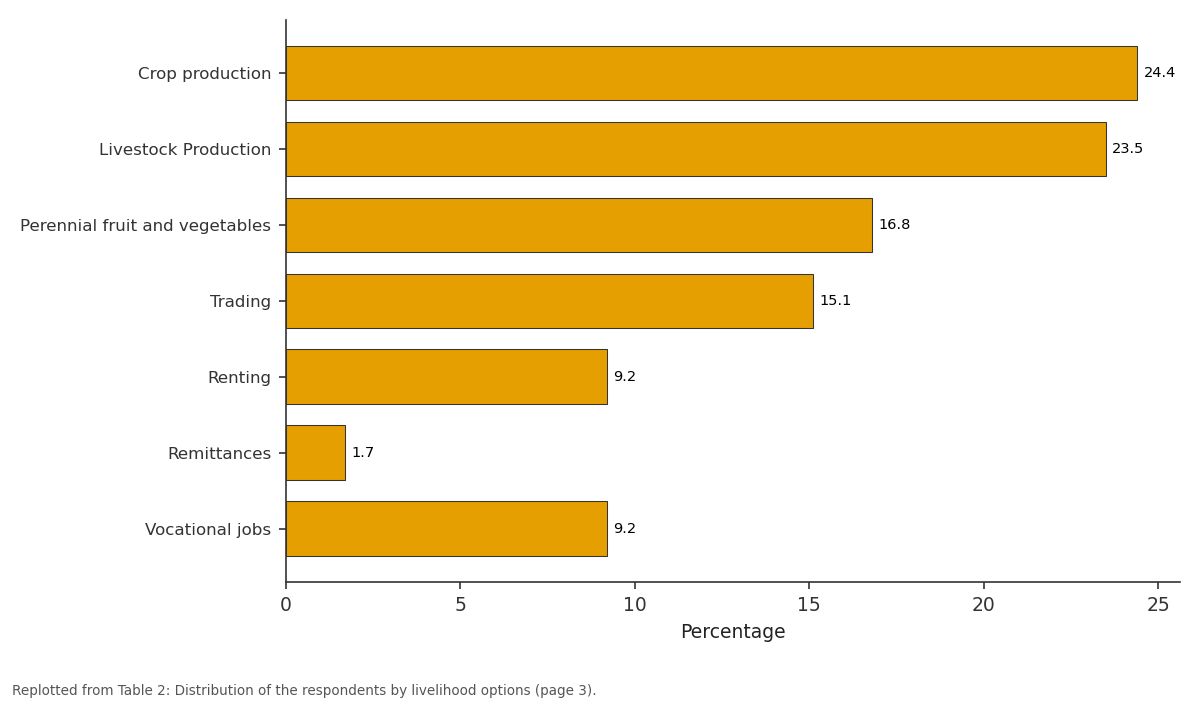
- Crop production was the most common diversification strategy, chosen by 24.4% of the drivers. View evidence ↗
- Marital status had a positive relationship with livelihood diversification, significant at the 5% level. View evidence ↗
- Membership in a cooperative society was negatively associated with livelihood diversification at a 1% significance level. View evidence ↗
- Land acquisition was found to be a factor that supports drivers in engaging in farming as a diversification option. View evidence ↗
- The primary barriers to diversification were insufficient credit/capital (24.4%), a poor asset base (23.5%), lack of knowledge (16.8%), and fear of risk (15.1%). View evidence ↗
What it means
- The authors suggest implementing training programs to give drivers the skills and knowledge needed to successfully diversify their income. View evidence ↗
Visual summary
2 visualsIllustrations explain the paper; charts are replotted from the paper's own table values.
Percentage: Crop production vs Livestock Production vs Perennial fruit and... vs Trading vs Renting
Replotted from Table 2 (page 3) of the original paper. Every bar is the paper's own table value.
View source evidence ↗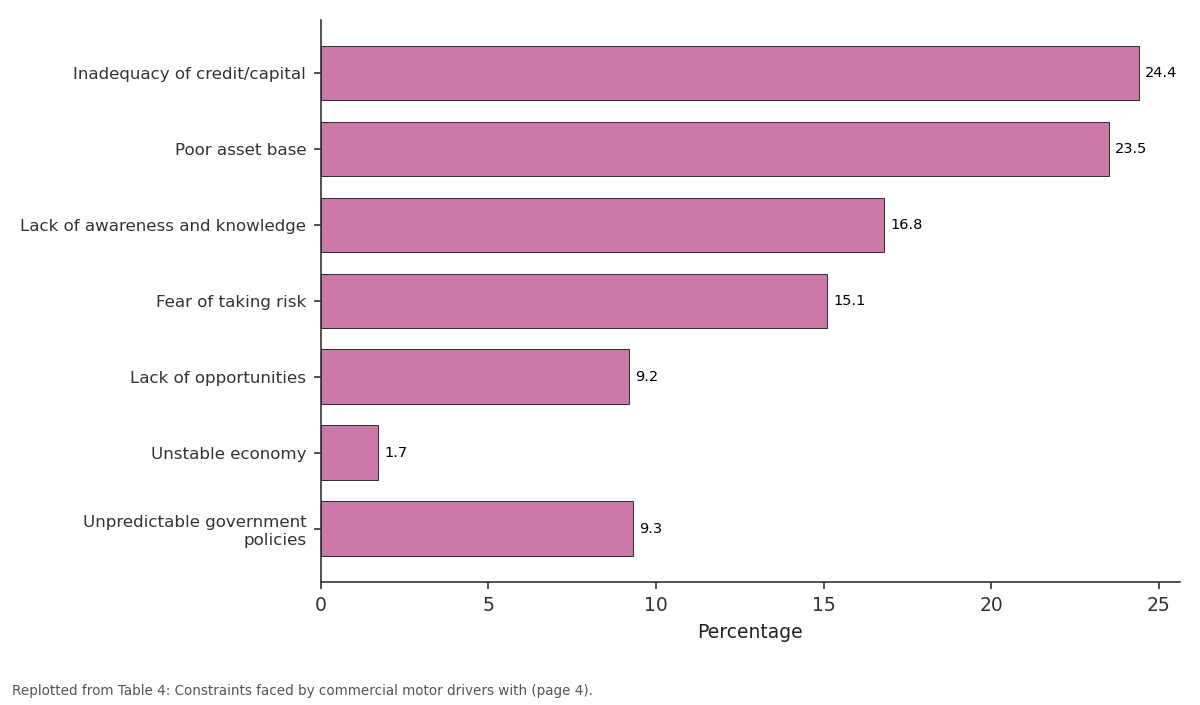
Percentage: Inadequacy of... vs Poor asset base vs Lack of awareness and... vs Fear of taking risk vs Lack of opportunities
Replotted from Table 4 (page 4) of the original paper. Every bar is the paper's own table value.
View source evidence ↗Figures & tables
From the original paper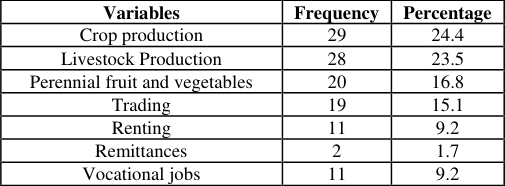 Table 2
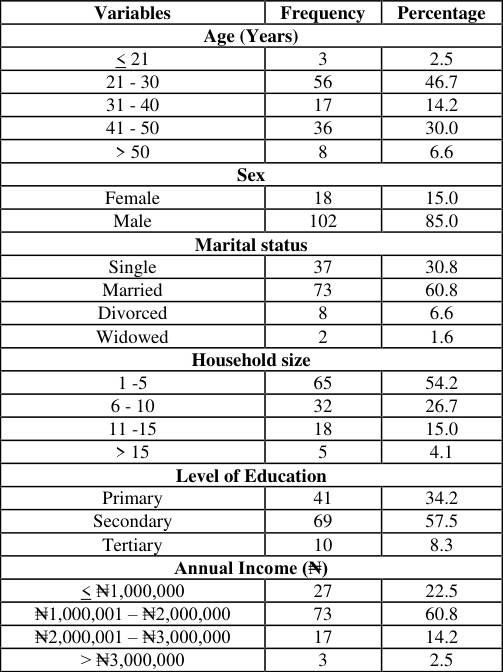 Table 1
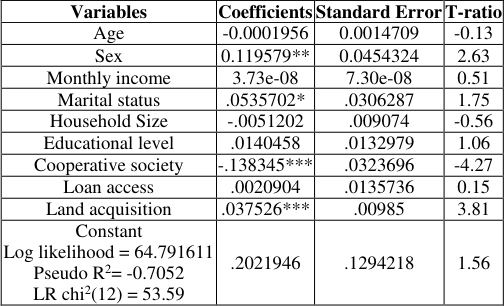 Table 3
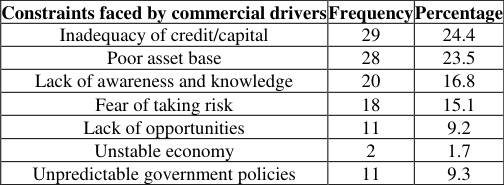 Table 4
Introduction
Livelihood diversification refers to attempts by individuals and households to find new ways to raise incomes and reduce environmental risks. It includes both on and off-farm activities, which are undertaken to generate additional income to the main household agricultural activities through the production of other agricultural and non-agricultural goods and services or self-employment undertaken in small firms and other strategies undertaken to spread risk. Livelihood diversification is becoming more rampant in Nigeria, presently, many teachers, civil servants and other government workers move from one office to the other selling different items during work hours to generate additional income while some farmers are commercial motorcyclists, bus conductors, night guards, on part time basis, shoe menders etc. Livelihood diversification strategies have become important income generating activities for rural households in major developing countries. Although agriculture has remained the dominant livelihood strategy for more than 85% of rural labor force in Sub-Saharan countries (World Bank, 2007) [7] , its productivity is one of the lowest and even showing a decreasing trend causing a decline in per capita cereal consumption Nandeeswara Rao and Bealu (2015) [3] . Because of rapidly growing rural populations and declining farm sizes, the rural employment problem needed to be addressed there as well (World Bank, 2008) [8] . To this end, the important role of non-farm livelihood strategies to ensure livelihood security has been noted by many scholars (Workneh, 2006 [9,1,5,9] .
Livelihood diversification smoothers risks associated with traditional agriculture, all households, and social groups do not have equal opportunities for engagement. Different factors such as experience, family size, educational attainment, level and physical assets of households can affect participation in diversification activities. Intensity of diversification is affected by the size of land holdings, value of livestock owned and level of income from crop production. It can also be pointed out that demographic factors, such as the age and gender of the household head, dependency ratio and number of female household members are determinants of participation. Supporting this, the meaning and reason for livelihoods diversification is different for rich and poor households and for the households headed by women and men. This indicates that livelihood strategies and diversification are dynamic and sensitive to geographic, socio-economic and institutional settings which need area specific investigation. In addition, there were few studies on the challenges of rural livelihood diversification. This study therefore, will attempt to fill this gap by assessing and examining barriers to livelihood diversification among commercial drivers in Ekiti state. Ekiti State is primarily an agricultural region, with key cash crops including cocoa, timber, oil-palm, and kolanuts. Food crops like cassava, yam, cocoyam, as well as grain crops such as maize and rice are also cultivated. In this area, men are predominantly engaged in farming, while women are primarily involved in trading activities. Even among the educated local residents employed in the formal sector, farming serves as a secondary occupation (Owoeye et al., 2023) [4] . The State experiences two distinct seasons: the rainy season and the dry season. As of the 2006 National Population Census, Ekiti State had a population of 3,423,535. The region is mainly agrarian, with agriculture serving as the primary source of livelihood. Tree crops, including cocoa, mango, cashew, citrus, oil palm, and arable crops such as maize, yam, cassava, cocoyam, tomatoes, and various vegetables, are cultivated in the area.
Methodology
Methodology
Sampling technique and sampling size
A multi-stage sampling techniques was used. In first stage, three (3) Local Government Areas were selected purposively based on the population of commercial motor drivers (i.e., Ado, Ikere and Ikole LGA). In the second stage, two (2) commercial associations were chosen from each LGA. Lastly, twenty (20) commercial motor drivers were chosen, making the sample size to be one hundred and twenty (120) respondents.
Data collection:
Primary data was collected through the aid of a well-structured open and close questionnaire which was used to collect quantitative data from the selected respondents to generate information on the general socioeconomic conditions and extract barriers to livelihood diversification among commercial motor drivers in Ekiti State.
Data analysis:
The data collected was analyzed using descriptive statistics and Tobit regression analysis.
Descriptive statistics:
Descriptive statistics such as frequency distribution, percentage and mean. The socioeconomic characteristics of the respondents which included the age, marital status, literacy level, sex and family size were analyzed with this tool.
Tobit Regression Analysis
Tobit model was used to assess the factors influencing the involvement of commercial motor drivers in livelihood diversification in the study area. This will be expressed as given in equation below;
Results and Discussions 3.1 Socio-Economic Characteristics of the Respondents
The findings presented in Table 1 offer insights into the socio-economic characteristics of the respondents within the study area. The results indicate that a significant portion, specifically 46.7% of the respondents, fell within the age range of 31-40 years. The average age of commercial motor drivers was 35 years, signifying that a substantial proportion of the respondents were relatively youthful adults, and they could be considered physically fit, active, and well-suited for the profession. Furthermore, the results provide a breakdown of the respondents by gender, revealing that the majority (85%) were male. This suggests that a higher number of males were engaged in commercial motor driving in the area. The data further showed that 68.9% of the respondents were married, while only approximately 6.7% were divorced, 0.9% were widowed, and 31.1% were single. This implies that the majority of the respondents in the area were married couples. The analysis of household size revealed that a substantial majority (54.2%) of the respondents had households consisting of 1-5 members, followed by 26.7% with 6-10 members, and 15.0% with 11-15 members. Those with household sizes exceeding 15 were the least represented. In terms of educational background, the International Journal of Agriculture and Food Science https://www.agriculturaljournals.com analysis showed that a majority (57.5%) had attained secondary education, with 34.2% having primary education, and only about 8.3% possessing tertiary education. This indicates that most of the commercial motor drivers were literate and should, therefore, encounter no significant challenges in smooth running of the profession with other livelihood options.
| Variables | Frequency | Percentage |
|---|---|---|
| Age (Years) | ||
| < 21 | 3 | 2.5 |
| 21 - 30 | 56 | 46.7 |
| 31 - 40 | 17 | 14.2 |
| 41 - 50 | 36 | 30.0 |
| > 50 | 8 | 6.6 |
| Sex | ||
| Female | 18 | 15.0 |
| Male | 102 | 85.0 |
| Marital status | ||
| Single | 37 | 30.8 |
| Married | 73 | 60.8 |
| Divorced | 8 | 6.6 |
| Widowed | 2 | 1.6 |
| Household size | ||
| 1 -5 | 65 | 54.2 |
| 6 - 10 | 32 | 26.7 |
| 11 -15 | 18 | 15.0 |
| > 15 | 5 | 4.1 |
| Level of Education | ||
| Primary | 41 | 34.2 |
| Secondary | 69 | 57.5 |
| Tertiary | 10 | 8.3 |
| Annual Income (₦) | ||
| < ₦1,000,000 | 27 | 22.5 |
| ₦1,000,001 – ₦2,000,000 | 73 | 60.8 |
| ₦2,000,001 – ₦3,000,000 | 17 | 14.2 |
| > ₦3,000,000 | 3 | 2.5 |
Table text extracted from the original PDF; superscript letters are shown inline. The original table image is below.
View original table image
Regarding annual income, the data indicated that the majority (60.8%) of the respondents realized between ₦1,000,001-₦2,000,000. This was followed by 22.5%
realizing not more than ₦1,000,000, and 14.17% receiving between ₦2,000,001 -₦3,000,000. The least represented group got more than ₦3,000,000, accounting for 2.5%. The mean income from commercial motor driving profession in the study area was ₦1,145,000. This is an indication that, though the profession is lucrative, there is still need to diversify or get engaged in other economic activities in order to cater for the pressing needs.
The major livelihood options available to the commercial motor drivers in the study area
In terms of the primary livelihood options adopted by the commercial drivers in the study, Table 2 provides insights. It is evident that 24.4% of them identified crop production as their preferred means for diversifying their livelihood, emerging as the most popular choice among the listed options. Following closely, 23.5% of the respondents engaged in livestock production as a strategy to diversify their sources of income, while 16.8% ventured into planting perennial fruits and vegetables. Furthermore, the data indicates that 15.1% of the respondents participated in trading activities as a means of livelihood diversification. Additionally, 9.2% of the respondents reported their involvement in rental services, either on a monthly or yearly basis, to diversify their livelihoods. A smaller proportion, 1.7%, practiced remittances as part of their livelihood strategies. Finally, the remaining 9.2% of the respondents pursued vocational jobs as their chosen approach for livelihood diversification.
| Variables | Frequency | Percentage |
|---|---|---|
| Crop production | 29 | 24.4 |
| Livestock Production | 28 | 23.5 |
| Perennial fruit and vegetables | 20 | 16.8 |
| Trading | 19 | 15.1 |
| Renting | 11 | 9.2 |
| Remittances | 2 | 1.7 |
| Vocational jobs | 11 | 9.2 |
Table text extracted from the original PDF; superscript letters are shown inline. The original table image is below.
View original table image
Factors influencing the involvement of commercial motor drivers in livelihood diversifications
Table 3 provides insights into the factors that influence the participation of commercial motor drivers in diversifying their sources of livelihood, including sex, marital status, cooperative society membership, extension contacts, and land acquisition. Regarding sex, the results demonstrate that the coefficient for the sex variable is statistically significant at a 1% level of significance, with a positive coefficient. This outcome suggests that sex plays a vital role in influencing the diversification of livelihoods among commercial motor drivers. In other words, male motor drivers are more likely to engage in livelihood diversification than their female counterparts, possibly due to the traditional gender roles and the predominant role of men in household decision-making. In terms of marital status, the analysis reveals that the coefficient for the farming experience variable is statistically significant at a 5% level of significance and carries a positive coefficient. This finding indicates a positive relationship between marital status and livelihood diversification. Married commercial motor drivers are better positioned to pool resources and support their families through various diversification activities, ultimately contributing to improved household nutrition. Concerning cooperative society membership, at a 1% level of significance, had a negative association with livelihood diversification. This implies that the more their involvement in cooperative societies, the lesser in livelihood diversification engagement. This might be attributed to their access to credit or loan to cater for their immediate needs whenever the occasion demands for it. The result further revealed a positive association between educational level and livelihood diversification, implying that the more educated among them tend to diversify livelihood options. It is presumed that being educated would give them access to useful and relevant information worthy of bettering their lives. As for land acquisition, a greater amount of agricultural land is likely to support commercial motor drivers in engaging in farming, which, in turn, can enhance their financial capacity to meet their basic needs. This also affords them the opportunity to explore other profitable businesses, reducing their reliance on income solely from commercial driving. Consequently, the respondents have the potential to explore various livelihood diversification practices. 4. This indicates that the respondents face several challenges in their pursuit of livelihood diversification, which is essential for improving their overall well-being and fostering a higher standard of living conducive to enhanced productivity.
| Variables | Coefficients | Standard Error | T-ratio |
|---|---|---|---|
| Age | -0.0001956 | 0.0014709 | -0.13 |
| Sex | 0.119579** | 0.0454324 | 2.63 |
| Monthly income | 3.73e-08 | 7.30e-08 | 0.51 |
| Marital status | .0535702* | .0306287 | 1.75 |
| Household Size | -.0051202 | .009074 | -0.56 |
| Educational level | .0140458 | .0132979 | 1.06 |
| Cooperative society | -.138345*** | .0323696 | -4.27 |
| Loan access | .0020904 | .0135736 | 0.15 |
| Land acquisition | .037526*** | .00985 | 3.81 |
| Constant Log likelihood = 64.791611 Pseudo R2= -0.7052 LR chi2(12) = 53.59 | .2021946 | .1294218 | 1.56 |
Table text extracted from the original PDF; superscript letters are shown inline. The original table image is below.
View original table image
Conclusion
From the study, it was concluded that the commercial motor drivers in the study were relatively young, fairly educated, mostly married and profitably engaged with the driving profession. The study further concluded that crop production, livestock production, perennial fruit and vegetables and trading were the main other livelihood options available in the study area It was also deduced from the study that sex, marital status, membership of cooperative society and land acquisition were the major factors influencing livelihood diversification among commercial motor drivers in the study area. Lastly, it was concluded from the study that inadequacy of credit/capital, poor asset base, lack of awareness and knowledge, fear of taking risks were the major constraints preventing them from engaging in livelihood diversification.
Recommendations
The study's key takeaway is that commercial drivers should actively pursue livelihood diversification to mitigate the financial constraints associated with their driving profession. Additionally, the study suggests that associations for commercial drivers should be established to facilitate easier access to loans and credit.
In line with the study's findings, the government is encouraged to promote policies that emphasize the development of effective training programs. These programs should aim to equip commercial drivers with the necessary knowledge and skills to explore various livelihood diversification strategies, thereby benefiting both them and their families. These initiatives will enhance the ability of commercial drivers to utilize financial services, ultimately improving their quality of life. Therefore, it is recommended that the government allocate adequate funds and loans to registered commercial driver associations. This will provide essential support for the livelihoods of the respondents as they go about their daily activities, alleviating the stress of financial uncertainty. Furthermore, extension agencies should work to raise awareness about available educational programs and opportunities that these associations can tap into for their benefit. Such efforts can significantly assist commercial drivers in prospering during these challenging times. Lastly, the government should create low-risk business opportunities that are both ethical and capable of increasing the daily earnings of commercial drivers. It is crucial that the government ensures a favorable economic environment and implements policies that do not impede the peaceful activities of commercial drivers.
Figures and tables from the paper
| Constraints faced by commercial drivers | Frequency | Percentage |
|---|---|---|
| Inadequacy of credit/capital | 29 | 24.4 |
| Poor asset base | 28 | 23.5 |
| Lack of awareness and knowledge | 20 | 16.8 |
| Fear of taking risk | 18 | 15.1 |
| Lack of opportunities | 11 | 9.2 |
| Unstable economy | 2 | 1.7 |
| Unpredictable government policies | 11 | 9.3 |
Table text extracted from the original PDF; superscript letters are shown inline. The original table image is below.
View original table image
References
7 in the original paper- Ansoms A, McKay A. A quantitative analysis of poverty and livelihood profiles: The case of rural Rwanda. Food Policy. 2010;35(6):584-598.
- Jannat M, Hossain MK, Uddin MM. Socioeconomic factors that favour forest conservation reducing forest dependency of local communities in developing countries: Lesson learnt from the Rangamati hill district in Bangladesh. International Journal of Geography, Geology and Environment. 2020;2(1):28-33.
- Nandeeswara Rao P, Bealu T. Analyzing Productivity in Maize Production: The Case of Boricha Woreda in Sidama Zone, Southern Ethiopia. International Journal of Recent Science Research. 2015;6(10):6984-6989.
- Owoeye RS, Ijigbade JO, Bunmi AO. Assessment of Food Safety Practices among Smoked Fish Sellers in Ekiti State, Nigeria. Asian Food Science Journal. 2023;22(9):122-130.
- Soltani A, Angelsen A, Eid T, Naieni MSN, Shamekhi T. Poverty, sustainability, and household livelihood strategies in Zagros, Iran. Ecol. Econ. 79(0):60-70. Supply decision of adults in rural Ethiopia: Double hurdle approach. Journal of Development and Agricultural Economics. 2012;2(4):154-165.
- Workneh F, Rush CM. Weather factors associated with development of sorghum ergot in the Texas Panhandle. Plant disease. 2006;90(6):717-22.
- Assan JK, Beyene FR. Livelihood Impacts of Environmental Conservation Programmes in the Amhara Region of Ethiopia. Journal of Sustainable Development. 2013;6(10):87-105.