
Research article · 2023 · Full text
International Journal of Horticulture and Food ScienceStudy on diversity and therapeutic potential of aquatic macrophytes in the freshwater bodies of Canchipur, Manipur (India)
Volume 5(2) · Pages 48–52 · DOI: 10.33545/26631067.2023.v5.i2a.178 ↗
Research areasAquatic Ecosystems and Phytoplankton DynamicsBiological Control of Invasive Species
Abstract
Author-writtenThe state of Manipur in North- east India is endowed with a rich repository of medicinal and aromatic plants and more over well-known for its diverse culture of human races. This could be due to its climatic condition, perennial rivers, fertile soil and dense forests. Despite of such wide availability of aquatic vegetation, the literature pertaining to the therapeutic utility of these plants is meagre because of their unproductive and impractical nature. Hence, keeping these facts in mind, the present investigation was formulated to study the diversity of aquatic macrophytes of some freshwater bodies of Canchipur and to document their therapeutic potential prevailing among the local community. In the present investigation, thirty-two macrophytes were found to have medicinal value, whereas twenty-one species were found to be crop related wild species, nine species belonged to wild edible leafy vegetables, three species were wild edible tubers, two species were wild edible seeds and one species belonged to wild edible fruit. The study also revealed the presence of fourteen invasive species, seven species were identified as exotic plants, nineteen species were found to be perennial herbs, fifteen annual herbs, ten perennial aquatic herbs, four aquatic ferns, one semi-aquatic herb and one aquatic bryophyte. The present work will be of immense help to future researchers in evaluating the therapeutic effect or isolated components of these aquatic macrophytes by applying in the field of medicine.
Summary
Source-checkedPlain-language reading of the full paper, prepared with AI and checked against the text. Each point links to the authors' own words.
Why it matters
- Manipur, India, possesses a significant variety of aromatic and medicinal plants due to its climate, soil, and forests. View evidence ↗
- There is limited existing literature on the therapeutic uses of aquatic plants despite their abundance. View evidence ↗
- While aquatic plants are often viewed as nuisances, many possess valuable medicinal properties. View evidence ↗
The question
- The study aimed to identify the diversity of aquatic macrophytes in Canchipur and document their therapeutic uses as known by the local community. View evidence ↗
What they did
- The research was conducted in Canchipur, located approximately 7 km from Imphal City. View evidence ↗
- Field surveys were performed monthly from January 2021 to January 2022 at random sites. View evidence ↗
- Plants were identified using standard flora, literature, and online databases like Kew and World Flora Online. View evidence ↗
What they found
- The study identified 32 aquatic macrophytes with medicinal importance in the region. View evidence ↗
- Five of the identified medicinal species were exotic: Alternanthera sessiles, Aponogeton crispus, Alternanthera philoxeroides, Enhydra fluctuans, and Marsilea quadrifolia. View evidence ↗
- The most common therapeutic property found was anticancer (11 plants), followed by antidiabetic (6 plants). View evidence ↗
- The whole plant was the most used part for medicine (50%), while fruits, tubers, seeds, corms, and flowers were the least used (9%). View evidence ↗
- The medicinal plants consisted of 18 Dicots, 13 Monocots, and 1 Pteridophyte. View evidence ↗
What it means
- The authors conclude that this documentation provides a basis for pharmacologists to develop new drugs with high therapeutic value and few side effects. View evidence ↗
- The authors recommend that these plants undergo detailed chemical and pharmacological evaluation, including clinical trials, to validate their efficacy. View evidence ↗
- The authors note that aquatic plant diversity in the area is threatened by changing land use patterns and shrinking freshwater bodies. View evidence ↗
Visual summary
1 visualsIllustrations explain the paper; they do not show study data.
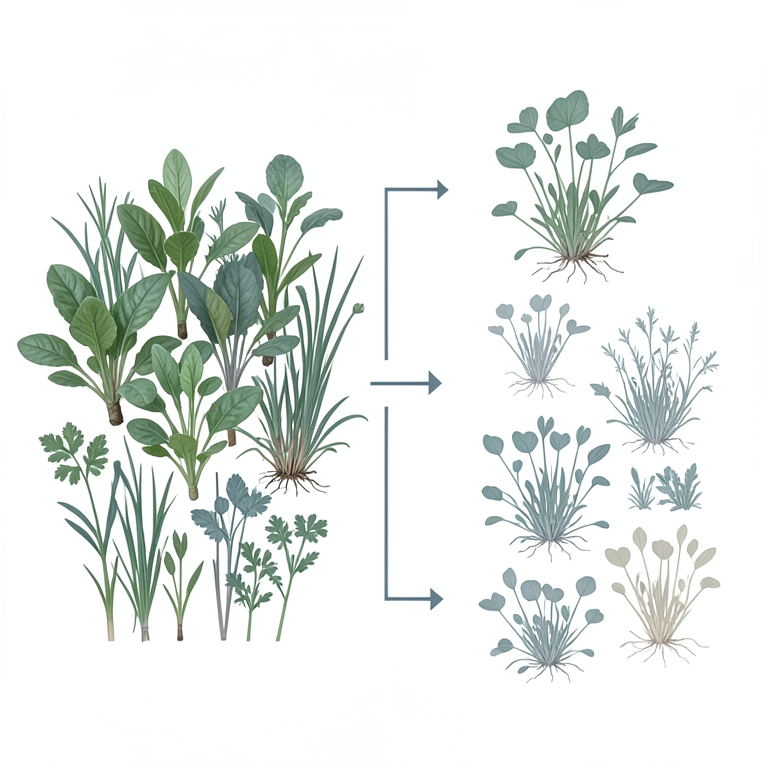
Therapeutic Properties Distribution
AI-generated conceptual illustration (aquatic macrophytes from freshwater bodies in Manipur). It explains the idea and does not show study data.
View source evidence ↗Figures & tables
From the original paper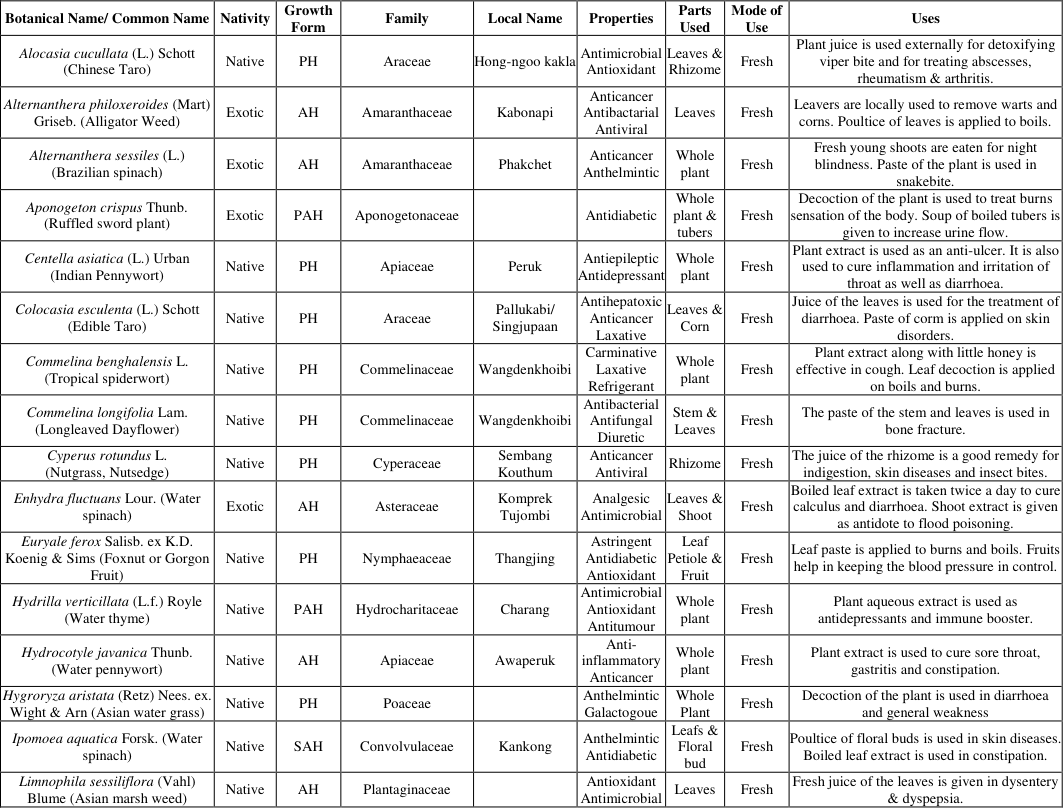 Table 1
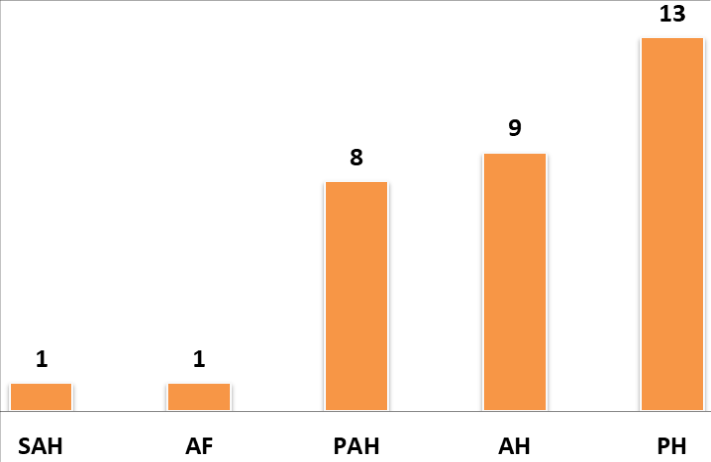 Figure 1
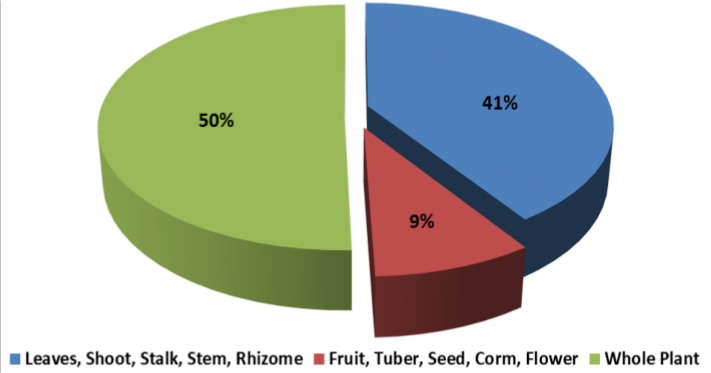 Figure 2
Introduction
Since time immemorial, human beings have utilised the plant parts like rhizome, stem, roots, fruits, leaves, in various ways for the treatment of different kinds of ailments. Medicinal plants have proved to be an effective protagonist in the health care system, especially in most of the developing nations of the world (Dar et al., 2017) [1] . It has also been proved that natural products are better options for their therapeutic effectiveness even comparable to synthetic molecules (Imtiaz et al., 2020; Subramaniyan et al., 2019) [2,3] . The use of medicinal plants can be traced back as early as the Rig-Veda period (4590 BC -1600 BC) which is perhaps the oldest depository of human knowledge. Over the centuries, the use of medicinal herbs has become an important part of day to day life. According to the WHO more than 80 percent of the world's population relies on traditional herbal medicine for their primary healthcare (Singh et al., 2015; Vijayan et al., 2007) [4,5] . In North-East India, particularly the state of Manipur, since pre-historic days, there are herbal physicians locally known as Amaiba (Male vaid) who have prescribed and habitually used plants as folk medicine with their mystic invocation. In fact, the art of healing and the knowledge of healing herbs are as old as man. But its progress is far behind as compared to other modern systems of treatment; however, the system of home treatment is accurate with no side effects or after effects like antibiotics of the modern allopathic medicine (Singh, 2013) [6] . There have been many reports by different researchers in recent years on folkloric treatment with herbal medicine that are being used to treat different diseases by the people of Manipur viz. Yumnam & Tripathi (2012) [7] ; Yumnam et al. (2012) [8] ; Devi et al. (2011) [9] and Devi and Singh (2008) [10] .
Many impressive works done on the aquatic plants of India have been reported by Khusboo et al. (2021) [11] ; Pandey and Pandey (2009) [12] ; Hogeweg and Brenkert (1969a, b) [13,14] ; and Kaul and Zutshi (1967) [15] . Sporadic mention on the wetland flora of Manipur were made by; Sharma, H.M (2014) [16] ; Devi, Ch. N (2002) [17] , Sharma et al., (2002) [18] Devi, Ch. U (2000) [19] ; Sharma et al., 2002 [20] and Sharma et al. (1997, 1998a, b) [20,31,22] . Aquatic plants are generally considered as menace, but a large number of these plants have medicinal properties which are worth mentioning. Keeping these facts in mind, the present investigation was formulated to study aquatic macrophytes of Canchipur, Manipur and to document their therapeutic potential and remedies which is prevalent among the local community.
Materials and Methods
The present study was conducted at Canchipur, which is about 7 km from Imphal City and located between 24.75 0 N Latitude and 93.93 0 E Longitude. The climate of the study area is sub-tropical, monsoonal with moderate temperature, rainfall and relative humidity and lies at an elevation of 782 m above sea level. Extensive field tours were conducted on a monthly basis from January 2021 to January 2022 at randomly selected sites and the macrophytes were identified using standard literature and flora as well as online data resources (www.worldflora.online.org; and www.kew.org) [23, 24] . Botanical names, common names, properties, parts and their curative uses were recorded. Data, both oral (Non-codified) and written form which has relevant findings of aquatic medicinal plants were also consulted. . A total of 32 aquatic macrophytes of medicinal importance has been recorded from the freshwater bodies of Canchipur. The recorded aquatic plants belonged to 23 families. The families, Apiaceae and Commelinaceae contributed 3 species each, Amaranthaceae, Araceae, Hydrocharitaceae, Nymphaeceae and Onagraceae contributed 2 species each. Other remaining families were restricted to 1 species only. Again, among the 32 aquatic macrophytes, 5 species were found to be exotic viz. Alternanthera sessiles, Aponogeton crispus, Alternanthera philoxeroides, Enhydra fluctuans and Marsilea quadrifolia. There were 18 Dicots among the aquatic plants followed by 13 Monocots and 1 Pteridophyte. Altogether, there were 13 perennial herbs (PH), 9 annual herbs (AH), 8 perennial aquatic herbs (PAH), 1 semiaquatic herb (SAH) and 1 aquatic fern (AF). (Fig. 1) In the present investigation, 11 aquatic plants were found to have anticancer properties, 6 (Antidiabetic), 3 (Diuretic), 3 (Antiviral), 3 (Antidote) and 1 aquatic plant was found to have astringent properties. The use of whole plant for medicinal purposes was found to be 50%, leaves, shoot, stalk, stem and rhizome contributed 41% while fruit, tuber, seed, corm and flower comprised of 9% (Fig. 2). Poultice of leaves is applied in itching. Fresh root paste is taken along with honey to cure sore throat.
Results
Results
Result of the present investigation is enumerated in Table
Result of the present investigation is enumerated in Table
Discussion
It is a well-known fact that freshwater bodies around the globe is shrinking rapidly and hence their resources both plants and animals are depleting in the same pace (Jain et al., 2007) [25] . Needless to say, it is also a matter of grave concern that land use pattern in Canchipur is changing fast and water bodies are a soft target of this change. The survival of aquatic plant diversity is threatened both species wise and population wise. Almost same concern has been expressed by other workers, viz. Devi, AR, et al. (2019) [26] , Devi, O.A. et al. (2021) [27] and Yadav, T (2021) [28] , Bhumia and Mandal (2009) [29] .
Freshwater bodies not only provide useful resources for maintaining the ecology and climate of the region, but they also harbour many medicinal aquatic plants used in the treatment of common diseases by the local people like cold, fever, sore throat, jaundice, insect bite, indigestion, stomach ache, etc. Therefore, conservation of these freshwater bodies needs to be addressed urgently so that highly useful aquatic plants can be saved and protected. It is also noteworthy to mention that most of the traditional uses of aquatic plants are novel and they need popularization, preservation and documentation.
Several freshwater ecosystems are drying due to climatic condition and transmute into other landforms such as paddy fields, human settlements, a land modification for developmental purposes, and indirectly by rainfall shifting patterns. It is suggested that a strenuously participatory approach is very much essential for the sustainable management of freshwater bodies. To accomplish the said objective, there needs to be a well-thought-out protocol for community linkages so that necessary training can be imparted to them.
Conclusion
The present investigation would provide a scope for future researchers and pharmacologists to discover plant based novel drugs with minimal side effects and maximal therapeutic values. These aquatic medicinal plants also need a proper evaluation on chemical, pharmacological properties through elaborate studies and clinical trials for the validation of their therapeutic efficacy. The interactions between researchers and local community have brought a sense of understanding as well as their orally handling down traditional practices for the cure and management of various diseases and ailments. A joint holistic approach between the researchers and local community is very much necessary for the conservation and protection of such invaluable resources to enhance the population of the threatened aquatic medicinal plants in their natural habitat for the wellbeing of future generation
Figures and tables from the paper
References
24 in the original paper- Dar, RA, Shahnawaz M, Qazi PH. General Overview of medicinal plants: A review. The Journal of Phytopharmacology. 2017;6(6):349-351.
- Imtiaz H, Hossain A, Islam F, Sultana R, Rahman MM. Bioactivities of Aeschynomene aspera (Fabaceae) Leaf Extract. Bangladesh Pharmaceutical Journal. 2020;23(2):109-116.
- Subramanyam V, Kayarohanam S, Ashok Kumar J, Kumarasamy V. Impact of herbal drugs and its clinical application. International Journal of Research in Pharmaceutical Sciences. 2019;10(2):1340-1345.
- Singh U, Naseeruddin Shah KH, Rana DK. Medicinal importance of unexploited vegetable under North Eastern regions of India. Journal of Medicinal Plants Studies. 2015;3(3):33-36.
- Vijayan A, Leju UB, Reena, John JV, Parthipan B, Renuka C, et al. Traditional remedies of Kani tribes of Kottor reserve forest Agarthavanam, Thiruvananthapuram, Kerala. Indian Journal of Traditional Knowledge. 2007;6(4):589-594.
- Yumnam JY, Tripathi OP. Traditional knowledge of eating raw plants by the Meitei of Manipur as medicine/nutrient supplement in their diet. Indian Journal of Traditional Knowledge. 2012;11(1):45-50.
- Yumnam RS, Devi CH O, Abujam SS, Chetia D. Study on the Ethnomedicinal System of Manipur. International Journal of Pharmaceutical & Biological Archives. 2012;3(3):587-591.
- Devi WI, Devi GS, Singh CB Traditional Herbal Medicine Used for the Treatment of Diabetes in Manipur, India. Research Journal of Pharmaceutical, Biological and Chemical Sciences. 2011;2(4):709-711.
- Devi YN, Singh PK. Ethnobotany of Verbenaceae in Manipur, Ethnobotany. 2008;20(1&2):111-114.
- Khusboo G, Mohapatra L, Sharma N. Indian Aquatic Plants as Prospective Therapeutic Options. Journal of Tianjin University Science and Technology. 2021;54(7):525-551.
- Pandey RK, Pandey C. Medicinal value of aquatic wetland plants of Varanasi. Indian Journal of Tropical Biodiversity. 2009;17(2):141-150.
- Hogeweg P, Brenkert AI. Brenkert. Structure of aquatic vegetation: A comparison of aquatic vegetation in India, the Netherlands and Czechoslovakia. Tropical Ecology. 1969;10:139-162.
- Hogeweg P, Brenkert AI. Affinities between growth forms in aquatic vegetation. Tropical Ecology. 1969;10:182-194.
- Kaul V, Zutshi DP. A study of aquatic and marshland vegetation in Srinagar. Proceedings of the Natural Institute of Science, India, B. 1967;33(3-4):111-127.
- Sharma HM, Devi AR, Sharma BM. Plant diversity of Loktak Lake (Manipur) II. Dicotyledons. In: Ecology and Conservation of Lakes, Reservoirs and Rivers (Ed: Arvind Kumar). ABD Publishers, Jaipur. 2002;2:544555.
- Sharma HM, Sharma BM, Devi AR. Contributions to the flora of Manipur. The Journal of Economic and Taxonomic Botany. 1997;21(1):233-238.
- Pratap Chandran R, Anusha Vijayan S, Silpa S, Sruthy P, Sreelekshmi S. Isolation of pathogens from leaf, root and rhizosphere water samples of aquatic weeds, Eichhornia crassipes and Pistia stratiotes present in the backwaters of YMCA canal, Alappuzha, Kerala, India. International Journal of Biological Sciences. 2021;3(2):24-29.
- Sharma HM, Sharma BM, Devi AR. Macrophytes of Loktak Lake (Manipur) I: Monocotyledons, gymnosperms, pteridophytes and bryophytes. Journal of Freshwater Biology. 1998;10(1-2):15-23.
- Alka Jain R, Roshanibala PB, Kanjilal RS, Singh HB Singh. Aquatic plants used in herbal remedies in the wetlands of Manipur, Northeast India. Indian Journal of Traditional Knowledge. 2007;6(2):346-351.
- Devi AR, Sunitibala Devi Y, Sharma HM. Plants used in the treatment of Diabetes by the Meitei Community in Imphal East District of Manipur (India). Research Journal of Life Sciences, Bioinformatics, Pharmaceutical and Chemical Sciences. 2019;5(1):913931.
- Yadav T. Study on Diversity of Aquatic Plants and Their Ethnomedicinal Uses in Some Ponds of Bilaspur, Chhatisgarh. International Journal of All Research Education & Scientific Methods. 2021;9(5):591-599.
- Bhumia D, Mondal AK. The exploration of aquatic medicinal plants of Paschim Midnapur District of West Bengal. Ecology and Environment. 2009;27(1):64-70.
- Kumar R, Jahangir R, Husain N, Trak T, Banerjee S. Macrophytes used as the nesting material by Indian sarus crane (Grus antigone) in Sehore district of Madhya Pradesh. International Journal of Botany Studies. 2022;7(1):403-406.
- Sharma HM, AR, Sharma BM. Aquatic and marshy dicotyledonous plants of Manipur, J Freshwater Biol. 1998;10(1-2):11-14.