
Research article · 2023 · Full text
International Journal of Research in AgronomyEffect of biological fertilizers on the production of tomato (Solanum Lycopersicum L.) in the district of Ngaoundere I (Adamawa, Cameroon)
Volume 6(2) · Pages 20–28 · DOI: 10.33545/2618060x.2023.v6.i2a.181 ↗
Research areasAgriculture and Rural Development Research
Abstract
Author-writtenTomato remains the most profitable vegetable crop in the country and is the most consumed and cultivated in Cameroon. However, the production of crop tomatoes is not enough due to soil degradation. To change this situation, the study of the effect of biological fertilizers on tomato (Solanum Lycopersicum L.) production in the district of Ngaoundere I (Adamawa, Cameroon) was done. The experimental set-up was a complete randomized block with 6 treatments: Chicken Droppings (Cd), mycorrhizae (M), Vivianite Rock Phosphate (VRP), combinations of 2 fertilizers (M + VRP, M + Cd, and VRP + Cd), the positive control (C+) which receive NPK 20-10-10 and the negative control (C-) which receive nothing repeated 3 times. These biological fertilizers used in this study improved the yield production of Lycopersicon esculentum by 70%, 60%, and 54% for Cd + M, Cd + VRP, and M + VRP treatments respectively compared to the negative control (C-).
Summary
Source-checkedPlain-language reading of the full paper, prepared with AI and checked against the text. Each point links to the authors' own words.
Why it matters
- Tomatoes are the most cultivated, consumed, and profitable vegetable crop in Cameroon. View evidence ↗
- In the Adamawa region, plant productivity is limited by soil fertility loss caused by intensive agriculture, flooding, and rainfall leaching. View evidence ↗
- The exclusive use of chemical fertilizers can degrade soil organic matter, increase acidity, and worsen the soil's physical state. View evidence ↗
The question
- The study aimed to evaluate how organic fertilizers affect the growth and production parameters of tomatoes (Lycopersicon esculentum). View evidence ↗
What they did
- The field experiment took place in Ngaoundere I, Adamawa Region, Cameroon, during the 2020 cropping season. View evidence ↗
- The study used a complete randomized block design with eight groups: chicken droppings, mycorrhizae, Vivianite Rock Phosphate, three combinations of these, a negative control, and a positive control (NPK 20-10-10), with three repetitions. View evidence ↗
- The experimental area was divided into three blocks, each containing eight units of 4.255 m², with 12 plants per unit. View evidence ↗
What they found
- Seedling recovery rates were highest in plots with biological fertilizers (ranging from 91.66% to 100%) compared to the negative control (61.11 ± 8.5%) and positive control (72.22 ± 9.1%). View evidence ↗
- In the second week, mycorrhizae (M) produced the tallest plants (77.46 ± 1.25 cm), significantly exceeding the negative control (52.06 ± 6.20 cm). View evidence ↗
- At six weeks after transplanting, plants treated with chicken droppings had the largest collar diameter (1.00 ± 0.06 cm), while the negative control had the smallest (0.72 ± 0.04 cm). View evidence ↗
- The highest average fruit weights were found in the mycorrhizae (52.0 ± 9.07 g) and chicken droppings + mycorrhizae (50.33 ± 9.71 g) treatments, compared to the negative control (21.4 ± 2.82 g). View evidence ↗
- Fruit yield per hectare was highest for the Cd + M combination (169,996.08 ± 17,323 fruits/ha), representing a 70% gain over the negative control (99,490.79 ± 38,783.84 fruits/ha). View evidence ↗
What it means
- The authors concluded that combinations of biological fertilizers (Cd+M, Cd+VRP, and M+VRP) are more effective for tomato growth and production than chemical fertilizers or no treatment. View evidence ↗
- Future research is needed to test these fertilizers on different tomato varieties and to analyze their impact on nutritional content, such as vitamins A and C, fibers, and carbohydrates. View evidence ↗
Visual summary
1 visualsIllustrations explain the paper; they do not show study data.
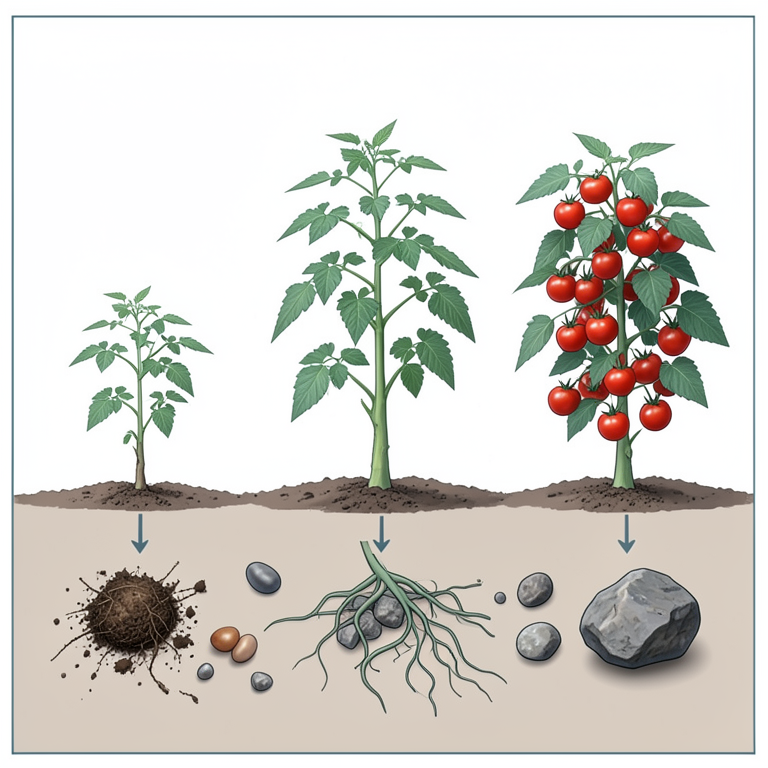
Experimental Treatment Groups
AI-generated conceptual illustration (tomato plants (Solanum lycopersicum)). It explains the idea and does not show study data.
View source evidence ↗Figures & tables
From the original paper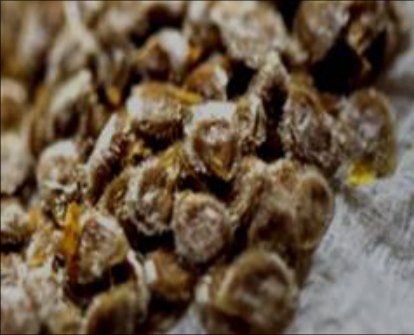 Figure 1
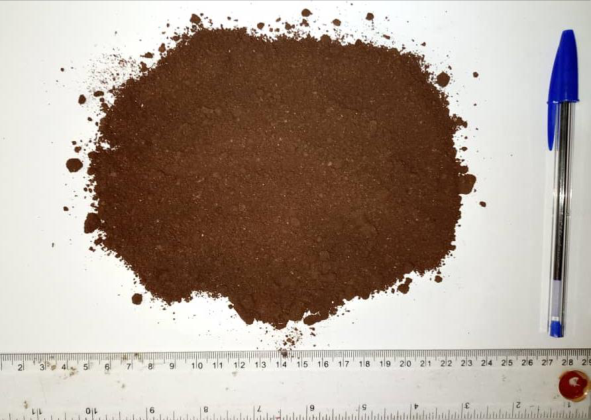 Figure 2
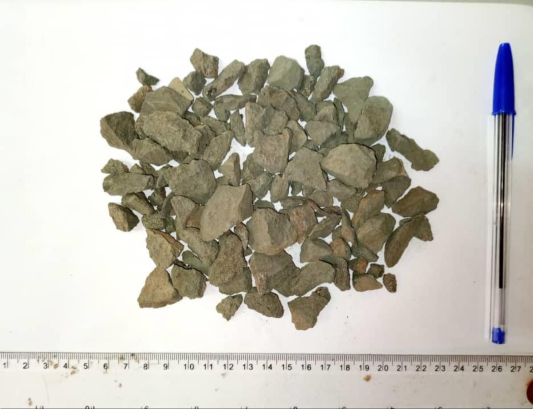 Figure 3
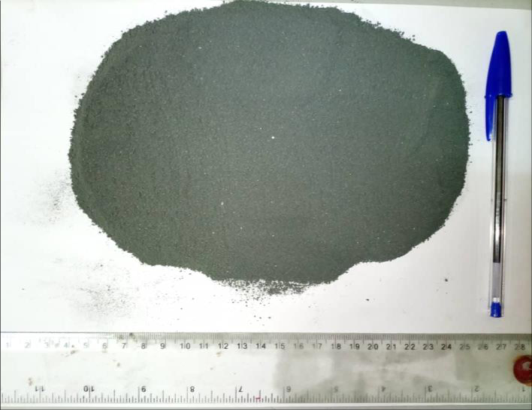 Figure 3
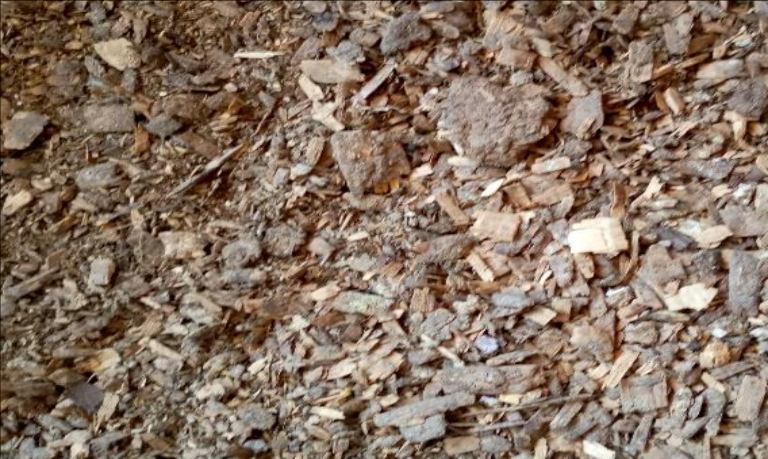 Figure 4
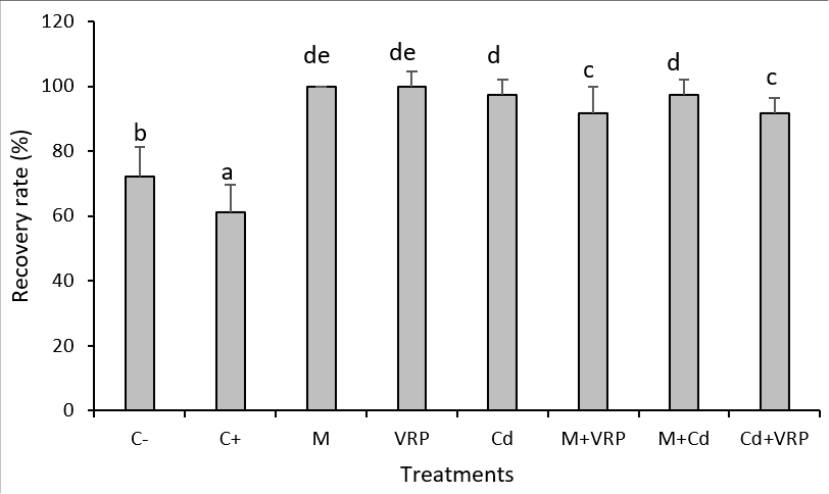 Fig. 5
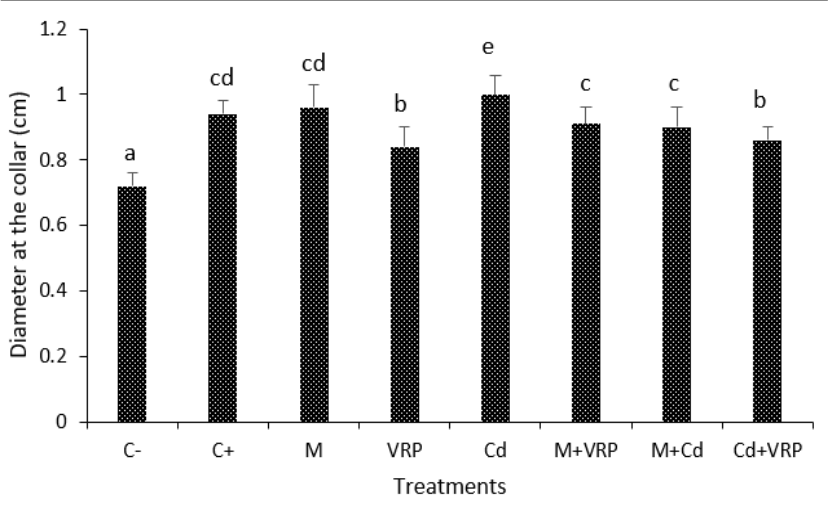 Figure 7
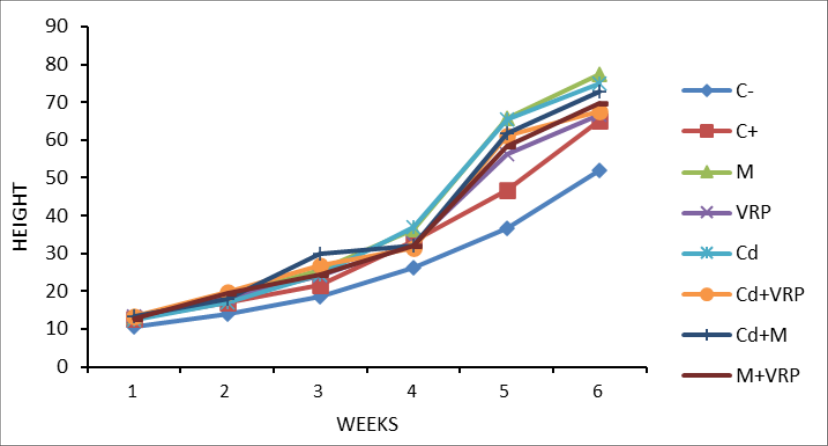 Figure 6
 Table 1
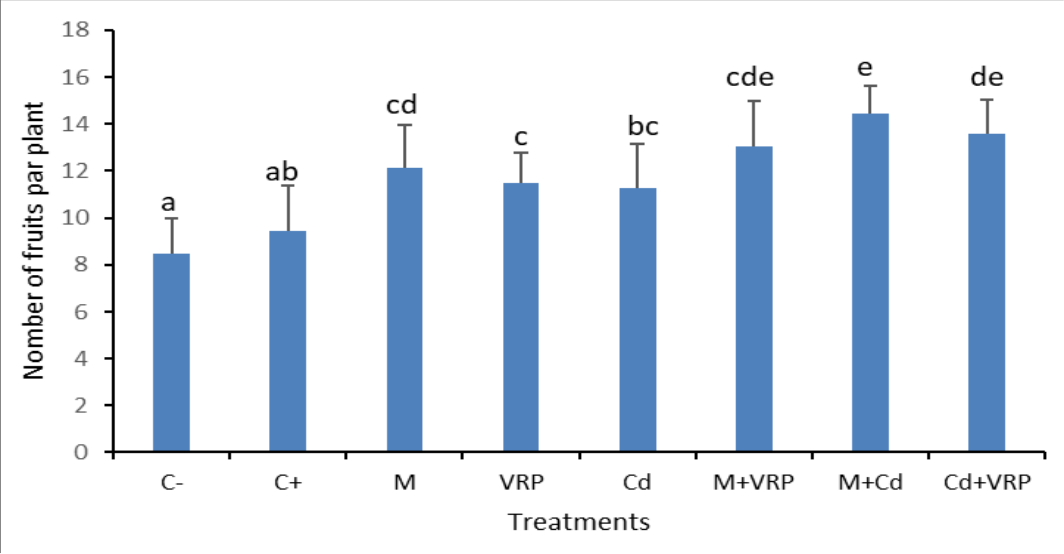 Figure 8
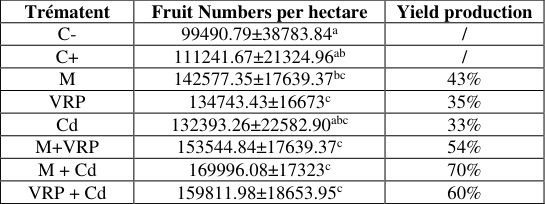 Table 2
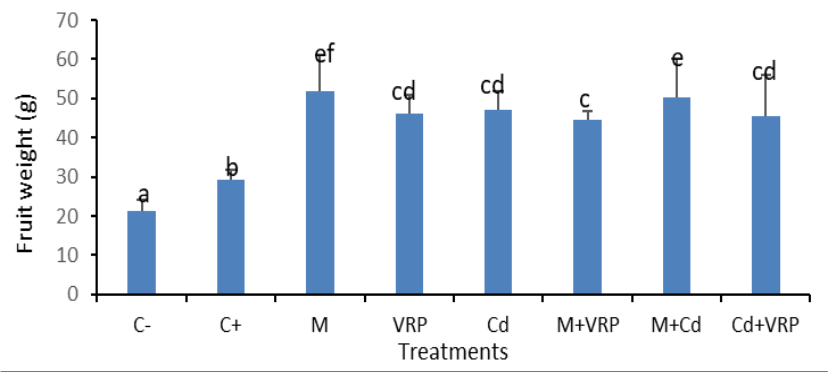 Figure 9
Introduction
The world's population in general and that of Africa, in particular, has experienced considerable demographic growth in recent years (Fresco, 2003) [16] . Cameroon has not been left behind, as from 1960 to 2022, its population has grown rapidly. The Cameroonian population has increased almost 4-fold since its independence in 1960 with an annual growth rate of 2.5% (Piebiep, 2008) [34] . At this rate, Cameroon's population will double in about 27 years, around 2037 (MINEPAT, 2010) [27] . This growth has generated an increase in demand for food resources that can only be met by intensifying agricultural activity (Kasongo et al., 2008) [20] . To meet this demand for food, Cameroun will have to increase its agricultural production by 4% per year (Griffon et al., 1993) [17] . This requires an increase in food production and a frantic search for strategies that can contribute to increasing crop yields (Kimuni et al., 2014) [21] . Loss of soil fertility is a fundamental problem that limits plant productivity in the Adamawa region where soils are subject to leaching by rainfall, flooding, and intensive agriculture. This soil leaching accentuates nutrient deficiencies, especially in nitrogen and phosphorus (Anonymous, 2008) [5] . Tomatoes remain the most profitable vegetable crop in the country as the evaluation of gross margins per crop shows that tomatoes accounted for about CFAF 5.5 billion, followed by onions with CFAF 4.5 billion (Mahrh, 2011) [25] . Because of the vitamins and minerals that they provide to the body, they occupy an essential place in the diet (Christel et al., 2008) [8] . The tomato is the most consumed vegetable and the most cultivated of all vegetable crops in Cameroon. National production was around 5,000 tons per year between 1990 and 2000 (Dossou and Soulé, 2006) [11] . This is not enough to cover the needs of the population, which is estimated at 100 000 tons of tomatoes per year (Christel et al., 2008) [8] . To meet the population's demand, it will be necessary to increase national production by a factor of 20 in 2035. Therefore, the use of chemical fertilizers, due to their immediate beneficial action on the productivity of food crops provides an immediate solution to this problem of mineral deficit and declining fertility, but their high cost and unavailability make them almost inaccessible to small farmers (Useni et al., 2013) [37] . In addition, its exclusive use leads to an increase in acidity, a degradation of the physical status, and a decrease in soil organic matter (Mulaji, 2011) [29] . Thus, the great challenge of the 21 st century is to provide for the food needs of a growing population by adopting agricultural methods that are both ecological and profitable (FAO, 2003) [13] . Scientific research recommends adapting strategies based on the use of biological fertilizers such as compost, chicken droppings, cow dung, rabbit dung, mycorrhizal fungi, and phosphorussolubilizing microorganisms are also part of this list (Bationo et al., 2004; FAO, 2005; Ngakou et al., 2008; Megueni et al., 2011; Amardip & Ghosh., 2012; Maimouna et al., 2020) [6,15,31,26,4,24] . To this end, the use of organic fertilizers rich in mineral elements is important for production in quantity and quality (FAO, 2004) [14] . In the Adamawa region, several organic fertilizers can be used to amend the soil and improve agricultural production. In the Adamawa region, several organic fertilizers can be used to amend soils and improve agricultural production. Mycorrhizae, chicken droppings, and Vivianite Rock Phosphate are among these fertilizers, which are rich in nitrogen, phosphate, potassium, and even trace elements and are easily accessible to farmers and less expensive. The general objective of this work is to evaluate the growth and production parameters of Lycopersicon esculentum by the use of organic fertilizers. Specifically, the study aims to evaluate the effect of these fertilizers on the growth, on production, and yield of tomatoes.
Materials and Methods
The study site: A field experiment was conducted during the 2020 cropping season. The work was carried out in the locality of Ngaoundere I, VINA Department, in the Adamawa Region of Cameroon. The study was conducted in the city of Ngaoundere. The geographical coordinates are 07°19'56.97''N latitude, 13°35'09.99''E longitude, and 987 m altitude. Regarding the chemical composition of the soil site is: Humidity (14.36 ± 0.28%), it pH is moderately acidic (6.23 ± 0.07) and the conductivity is good (53.70 ± 0.61 µs/cm), as well as the cation exchange capacity (CEC) (15.46± 1.16 meq/100 g). But this soil has low assimilable phosphorus (P: 1.26 ± 0.01%), and low Mg (0.34 ± 0.02%), Ca (0.25 ± 0.03%), K (0.8± 0.05%), and Fe 2+ (1.96 ± 0.02%). The Organic matter is 15.80±0.51%, the Nitrogen concentration is 4.01±0.04% and C/N is 2.07±0.02.
Material Plant material
The plant material on which the experiment is based consists of pre-germinated seeds and young tomato seedlings from the nursery (Lycopersicum esculentum) belonging to the Solanaceae family (Fig. 1). The variety of this tomato is locally called "blindé"; with a cycle of about 3.5 to 4 months. It is the most cultivated variety in the locality.
Biological material Mycorrhizal inoculum
The mycorrhizal inoculum (Fig. 2) used for this work comes from the microbiology laboratory of Nkolbissong (University of Yaoundé I). The inoculum consisted of sand, root fragments with spores of fungi of the genus Glomus hoï, Glomus intraradices; Gigaspora margarita, Scutellospora dipurpurescens with a concentration of 20 spores/g of the substrate.
Rock vivianite Phosphate
The rock vivianite Phosphate used for this work comes from Hangloa, a locality located 23 km from the University of Ngaoundere. The rocks collected were transformed into Powder when using local equipment (Fig. 3).
Chicken droppings
The chicken droppings used in this work were purchased from a farmer. They are droppings of the subspecies Gallus domesticus (Fig. 4). The chemical composition of chicken droppings is the dry matter (DM) content is 80.57±1.82, the organic matter (OM) content is 33.26±2.24%, the water content (W) isn23.98±2.57%, and the total mineral content (TM) is 74.99±2.33%. The pH of chicken droppings is 6.81±0.42. The chicken droppings have significant contents of major nutrients namely nitrogen (N), phosphorus (N), and potassium (K) with 15.70 ± 0.90 g/kg, 492.27 ± 9.48 mg/kg, and 19.85 ± 0.64 mg/kg respectively.
Chemical fertilizers
The fertilizer used as a chemical fertilizer in this work is NPK 20-10-10, a granular fertilizer available and sold on the local market. It is a fertilizer that contains 20% nitrogen (N), 10% phosphorus, and 10% potassium (K).
Methods
Methods
Preparation of the experimental site and experimental setup
After cleaning the field, the experimental soil was sampled at a depth of 0 to 25 cm. Soil samples were taken from the perimeters and diagonals of the plot to obtain a representative mixture. One kilogram (1 kg) of the composite sample was then sent to the Chemical Engineering Laboratory of the National School of Agro-Industrial Sciences of the University of Ngaoundere for chemical analysis. As for fertilizers, 1 kg of chicken droppings were sent to the same laboratory.
Data collection and statistical analysis
During plant emergence, the average plant height over time, number of leaves, leaf area, and flowering dates were evaluated. Field survival rate (%) was evaluated on ten days after transplanting. It was calculated by the following formula. Field survival rate = Number of survival plants total plants x 100. Plant height (cm) was recorded in centimeters by measuring the height of sample plants from the ground level to the main apex with a meter. Stem diameter (cm) was measured as the diameter of the plant just above the graft union. At maturity, the yield is calculated by the formula: average weight of grain (AWg/grams) multiplied by the average number of grains per plant (ANg) and the number of plants per hectare (NP/ha): Fresh yield = (AWg) x (ANg) x (NP/ha) / 1000000. NP/ha=(X*Y) /10000. Statistical analyses are performed using the software "Stratigraphic Plus version 5.0", which performs the analysis of variance (ANOVA), to determine the interactions between treatments. Duncan's test is used to judge the difference between the means of the treatments.
Results
Results
Effects of fertilizers on tomato growth parameters Percentage of tomato plant recovery
Figure 5 summarizes the percentage recovery of cuttings according to the different treatments. The analysis of variance performed reveals a very high significant difference (P < 0.001). The results showed that for the fertilized plots, the seedlings gave a good rate of emergence except for the plots having received treatment with the chemical fertilizer (NPK 20-10-10). However, the percentage of seedling recovery on the plots fertilized with mycorrhiza (100 ± 0.0%), Vivianite Rock Phosphate (100 ± 4.95%), chicken droppings (97.22 ± 4.81%), Vivianite Rock Phosphate + mycorrhiza treatments (91.66 ± 8.33%), chicken droppings + Vivianite Rock Phosphate (91.66 ± 4.81%) and chicken droppings + mycorrhiza (97.22 ± 5.0%) were the highest compared to the negative control (C-) and positive control (C+) plots which had low recovery rate with 61.11 ± 8.5% and 72.22 ± 9.1% respectively.
Effects of fertilizers on plant length
Figure 6 shows the effect of treatments on tomato plant height growth as a function of time. It shows that the change in plant height is continuous for all treatments throughout the trial. Comparing the means of tomato plant height, the analysis of variance (ANOVA) reveals that there is a significant difference (P<0.05) between treatments throughout the trial. One week after transplanting, the analysis of variance revealed a significant difference (P<0.05) between the amended plots and the control treatment. In the second week, the treatments were as follows: M > Cd > Cd + M >M + VRP > Cd + VRP> VRP > C+> C-. The plant height of the M treatment (77.46 ± 1.25f cm) was significantly higher than that of Chicken Droppings (74.86 ±3.10e cm), Chicken Droppings + Mycorrhiza (72.69 ± 2.5de cm), Mycorrhiza + Vivianite Rock Phosphate combination (69.73 ± 1.20d cm), Chicken Droppings + Vivianite Rock Phosphate (67.52 ± 3.50bc cm), Vivianite Rock Phosphate (66.66 ± 1.45b cm), C+ (65.06 ± 5.12b cm) and that of the negative control (52.06 ± 6.20a cm). Similarly, at week eight, the length of the plants treated with mycorrhizae, chicken droppings, Vivianite Rock Phosphate, chicken droppings, and mycorrhizae combination, is significantly higher (P <0.05) than that of the negative control plants (52.06 ± 6.20a cm). Indeed, the high plant length in the treatments M, Cd, Cd + M, VRP + M could be explained by the high nitrogen (N) and phosphorus (P) content in these fertilizers.
Effect of different treatments on the collar diameter
Figure 7 shows the collar diameter of tomato plants at six (6) weeks after transplanting (AR) in our study area. The analysis of variance shows that the different treatments have a significant influence (p<0.05) on the lateral growth of tomato plants. The plants on the plots treated with chicken droppings (Cd) had the highest diameter (1.00 ± 0.06e cm) and the smallest diameter came from the negative control plot (C-: 0.72 ± 0.04a cm). The other treatments, M, C+, M + VRP, Cd + M, Cd + VRP and VRP, had values of 0.96 ± 0.07cd cm, 0.94 ± 0.04cd cm, 0.91 ± 0.05c cm, 0.90 ± 0.06c cm, 0.86 ± 0.04b cm and 0.84 ± 0.06b cm respectively.
Effects of fertilizers on the variation of production and yield components
Flowering dates of tomato plants: Table 1 shows the effect of treatments on the flowering of tomato plants. It appears from this table that apart from the plants of treatment C+, M, VRP, and M+VRP which started their flowering early respectively at 47 th , 46 th , 46 th , and 46 th day after planting and reached 50 and 100% of flowering respectively at 51 st and 59 th , 50 th , 56 th , 50 th and 57 th , 51 st and 57 th , the plants of treatments Cd, Cd + VRP, Cd + M, and C-started to flower insignificantly at 48 th , 48 th , 48 th and 53 rd DAP respectively. The achievement of 50 and 100% flowering in these treatments is effective respectively at the 51 st and 58 th DAP for the plants of the C treatment, at the 53 rd and 57 th DAP for Cd + VRP, at the 53 rd and 57 th DAP for Cd + M, and finally at the 57 th and 63 rd DAP for C-which is the latest.
| Traitements | First flowering | 50% flowering | 100% flowering |
|---|---|---|---|
| C- | 53 | 57 | 63 |
| C+ | 47 | 51 | 59 |
| M | 46 | 50 | 56 |
| VRP | 46 | 50 | 57 |
| Cd | 48 | 51 | 58 |
| M + VRP | 46 | 51 | 57 |
| VRP + Cd | 48 | 53 | 57 |
| M + Cd | 48 | 53 | 57 |
Table text extracted from the original PDF; superscript letters are shown inline. The original table image is below.
View original table image
Number of fruits per plant
The effect of treatments on the average number of fruits per tomato plant at the end of the experiment is presented in Fig. 8. The ANOVA thus applied to the values obtained reveals that there is a significant difference (p< 0.05) between the average number of fruits per plant and treatments. The analysis made shows that there is a highly significant difference (p< 0. Tomato fresh fruit yield per hectare Table 2 shows the effect of the different treatments on the production yield of the number of fruits per hectare (ha) of each treatment. The ANOVA applied to the values obtained reveals that there is a significant difference (p< 0.05) between the means of the treatments. Thus, the production is significantly (p< 0.05) better for the treatments Cd + M (169996.08±17323c NF/ha), Cd + VRP (159811.98±18653.95c NF/ha) and M + VRP (153544.84±17639.37c NF/ha). The percentage gain was 70%, 60%, and 54% for Cd + M, Cd + VRP, and M + VRP treatments respectively compared to the C-treatment which had a value of 99490.79±38783.84a fruits/ha. The combinations of treatments positively induced a very good fruit yield of tomatoes.
| Trématent | Fruit Numbers per hectare | Yield production |
|---|---|---|
| C- | 99490.79±38783.84a | / |
| C+ | 111241.67±21324.96ab | / |
| M | 142577.35±17639.37bc | 43% |
| VRP | 134743.43±16673c | 35% |
| Cd | 132393.26±22582.90abc | 33% |
| M+VRP | 153544.84±17639.37c | 54% |
| M + Cd | 169996.08±17323c | 70% |
| VRP + Cd | 159811.98±18653.95c | 60% |
Table text extracted from the original PDF; superscript letters are shown inline. The original table image is below.
View original table image
Discussion
The low soil pH could decrease soil microbial activity and promote soil toxicity by increasing the solubility of certain elements such as aluminum (Segalen, 1973) [35] . These results are consistent with the work of Djao (2022) [10] and Mounkene (2020) [28] which low concentration of P (1.26 ± 0.01%) in the experimental site is believed to be because it is sequestered by aluminum and iron. The results of the analyses showed that the droppings can straighten the cation balance and the C/N ratio of the study soil. This adjustment is possible because the manure will provide sufficient amounts of N, P, K, Ca, Mg, and OM (Agbede et al., 2008) [2] . Organic Matter (OM) provided by manure improves the physical properties of the soil. A study showed that the bulk density and temperature of the soil undergo a reduction with the provision of OM (Agbede et al., 2008) [2] while the total porosity, moisture, and water holding capacity are improved. The latter reduces the daily soil temperature, thus reducing water loss (Akanni, 2005) [3] . The increased emergence rate observed in mycorrhizal plants could be due to the bioregulatory effect of mycorrhizal fungi and their spores. Indeed, these fungi would have optimized the growth conditions of the plants in the soil by promoting the bioavailability of water, increasing the soil moisture and the availability of soil nutrients, and regulating its temperature. These results thus mirror those obtained by Abakar (2015) [1] , and Koulagna (2015) [22] who showed that inoculation of cotton grains would lead to an increase in emergence rate by a value of 97% compared to the control. Indeed, chicken droppings contain phosphorus, which would have influenced the installation and the start of this plant at emergence. Bennai and Benabbas (2007) [7] , showed that phosphorus acts on root development by activating histogenesis. The growth parameters of tomatoes were positively affected by the use of fertilizers. Indeed, the increase in tomato growth would be due to the nitrogen, phosphorus, and minor mineral elements contained in these fertilizers. These results obtained could be explained by the fact that the incorporation of chicken droppings, known for their richness in major nutrients, in the different cell structures (nitrogen base, structural proteins, enzymatic proteins) is necessary for the establishment of membranes according to the results of Dauda et al. (2009) [9] and Kra (2002) [23] . Indeed, studies conducted by some authors have shown that local resources such as organic waste, applied to poor and acidic tropical soils can provide nutrients necessary for the feeding and growth of plants (Mulaji, 2011) [29] . These results are thus consistent with those of Ndiaye et al. (2007) [30] on Acacia Senegal and Sterculiasetigera; Haro et al. (2012) [19] on cowpea; Abakar (2015) [1] and Koulagna (2015) [22] on cotton. Flowering is very early in plants treated with RA, M, T+, and TM+Pr combinations compared to the negative control. This leads us to believe that the nutrients provided by the Vivianite Rock Phosphate and their influence on soil properties resulted in faster growth and development of tomato plants. Therefore, the application of RA allows tomato plants to complete their development cycle quickly. These results corroborate those obtained by Douzene (2012) [12] on bell pepper, Abakar (2015) [1] , and Koulagna (2015) [22] on cotton. The higher number of fruits observed on plants amended with the combination of chicken droppings and mycorrhiza, chicken droppings, and Vivianite Rock Phosphate could be explained by the fact that these fertilizers would have progressively released the necessary nutrients at the origin of root multiplication of tomato plants. Fruit number is an indicator of fruit yield. Similar results have been obtained by several researchers such as Nwaga (2000 and 2008) [32,33] on tomatoes, Douzeune (2012) [12] , Hamza (2014) [18] , Abakar (2015) [1] , and Koulagna (2015) [22] on cotton. The combinations of treatments positively induced a very good fruit yield of tomatoes. These results corroborate those of Hamza (2014) [18] who obtained again in watermelon fruit yield per hectare of 32.54%. This also reflects the results obtained by Tcheunteu (2009) [36] on Ricinus communis and by Douzeune, (2012) [12] on bell pepper.
Conclusion
The overall objective was to contribute to the improvement of tomato (Lycopersicon esculentum) productivity through the use of fertilizers in Ngaoundere in the Adamawa region (Cameroon). The application of chicken manure, mycorrhiza, and Vivianite Rock Phosphate significantly and positively (p< 0.05) improved tomato growth and production compared to the negative control. The combination of chicken droppings + mycorrhiza (Cd + M), the combination of chicken droppings + Vivianite Rock Phosphate (Cd + VRP), and the combination of mycorrhiza + Vivianite Rock Phosphate (M+VRP) were found to be more effective for the cultivation of this plant compared to the chemical fertilizer and the control treatment concerning the growth and production parameters. In perspective, it would be desirable: to test the effectiveness of these fertilizers on other varieties of tomato and to determine the contribution of these fertilizers to the content of vitamin A, and vitamin C on the antioxidant activity, the content of fibers, and carbohydrates.
Figures and tables from the paper
References
36 in the original paper- Abakar AS. Effets des mycorhizes et des extraits aqueux de Cyperus rotundus (Cyperaceae) et Hyptis suaveolens (Lamiaceae) sur la protection du cotonnier vis-à-vis de Hélicoverpa armigera en zone soudano-sahélienne du Cameroun. Mémoire de Master, Université de Ngaoundéré Cameroun, 2015, 64.
- Agbede TM, Ojeniyi SO, Adeyemo AJ. Effect of poultry manure on soil physical and chemical properties, growth and grain yield of sorghum in South West, Nigeria. American Eurasian Journal Sustainable Agric. 2008;2(1):72-77.
- Akanni DI. Response of nutrient composition and yield components of tomato livestock manure. Ph.D. Thesis, Department of Crop, Soil and Pest Management, Federal 2005; University of Technology, Akure, 2015, 120.
- Amardip S, Ghosh. Screening and Assessment of Phosphate Solubilizing Microbes as Potential Biofertilizer, Isolated from Selected Wetlet and Rain-Fed Ecosystem of Bihar. Society of Applied Sciences. 2012;3(2):397-406.
- Anonyme. Valoriser le phosphore des déjections et des couverts végétaux: Flash technique du bassin versant de la Fresnay, 2008, 2.
- Bationo A, Koala S, Ayuk E. Fertilité des sols pour la production céréalière en zone sahélo-soudanienne et valorisation des phosphates naturels. Cahiers Agricultures. 1998;7(5):365-371.
- Bennai M, Benabbas B. L'amélioration des rendements des céréales par une fertilisation adaptée aux conditions pédoclimatique algériennes. Constantine. Ed, Profert, 2007, 33.
- Christhel SJ, Padonou. Analyse comparée du revenu et de sa distribution entre les producteurs de tomate utilisant les bio-pesticides et les pesticides chimiques en zone périurbaine du Sud. Thèse d'ingénieur agronome à la Faculté d'Agronomie de l'Université de Parakou-Bénin. Option: Economie et Sociologie Rurales d'information, Quebec, 2008, 35.
- Dauda S, Ajayi F, Ndor E. Growth and yield of watermelon (Citrullus lanatus) as affected by poultry manure application. Electronic Journal of Environmental, Agricultural and Food Chemistry. 2009;8(4):305-311.
- Djao MC, Maimouna A, Tchuenteu TL, Nguetnkam JP, Megueni C. Effect of Pyroclastic Powder on the Growth and Seeds Nutritional Values of Common Bean (Phaseolus vulgaris L.) on Ferralitic Soils in Adamawa (Cameroon, Central Africa) IJPSS, European Journal of Nutrition & Food Safety. 2022;34(21):211-225.
- Dossou J, Soulé I. Analyse économique de la production de purée de tomate à petite échelle, DPME, 2006, 239.
- Douzeune KD. Effets de l'inoculation mycorhizienne et de NPK sur la production et les propriétés chimiques des fruits chez le poivron (Capsicum annum L.) à Dang Ngaoundéré. Mémoire de Master II, Université de Ngaoundéré Cameroun, 2012, 65.
- FAO. Utilisation des phosphates naturels pour une agriculture durable. Bulletin Fao engrais et nutrition végétale, 2004, 176.
- FAO. Notions de nutrition des plantes et de fertilisation des sols. Manuel de formation, Projet Intrants, Niger, 2005, 24.
- FAO. Engrais et leurs applications précises à l'usage des agents de vulgarisation agricole. Quatrième édition, édition FAO., IFA. (Paris France) et IMPHOS (Casablanca, Maroc), 2003, 84.
- Fresco OL. Les engrais et l'avenir. In: la sécurité mondiale et le rôle de la fertilité durable. Maisonneuve Larousse (eds). Conférence IFA/FAO. Rome. Italie, 2003, 51-67.
- Griffon M, Cleaver K, Freud EH, Freud CM. Quelles stratégies pour les agricultures en Afrique subsaharienne ? CIRAD, Coll. Notes et Documents. 1993;16:62-90.
- Hamza N. Application des mycorhizes arbusculaires en culture maraichère cas de la pastèque (Citrullus lanatus). Mémoire de Magister, Université Ferhat Abbas Setif, Maroc, 2014, 63.
- Haro H, Sanon BK, Diop I, Kane A, Dianda M, Houngnandan P, et al. Réponse à l'inoculation mycorhizienne de quatre variétés de niébé [Vigna unguiculata (L.) Walp] cultivés au Burkina Faso et au Sénégal. Int. J Biol. Chem. Sci. 2012;6(6):2097-2112.
- Kasongo LME. Système d'évaluation des terres à multiples échelles pour la détermination de l'impact de la gestion agricole sur la sécurité alimentaire au Katanga R.D.Congo. Thèse de doctorat, Université de Gand Belgique, 2008, 336.
- Kimuni L, Marlene M, Mulenbo T, Jonas LW, Antoine L, Becker K, et al. Effets . Journal of Applied Biosciences. 2014;77:6509-6522.
- Koulagna IH. Effets des mycorhizes sur la production du cotonnier (Gossypium hirsutum L. (Malvaceae) dans la zone soudano-sahélienne (Extrême-Nord, Cameroun). Mémoire de Master II, Université de Ngaoundéré Cameroun, 2015, 45.
- Mémoire de Maîtrise. Unité de Formation et de Recherche des Sciences de la Nature, Université d'Abobo Adjamé, Abidjan (Côte d'Ivoire), 2002, 28.
- Maimouna Abba, Tchuenteu Tatchum Lucien, Nguetnkam Jean Pierre, Megueni Clautilde, Phosphate Solubilizing Microorganisms for Cereal Production in Adamawa (Cameroon). European Journal of Biology and Biotechnology. 2020;1(6):1-8.
- Marh. Rapport d'analyse du module maraîchage. Ouagadougou, Burkina Faso, 2011, 12.
- Megueni C, Awono ET, Ndouenkeu R. Effet simultané de la dilution et de la combinaison du rhizobium et des mycorhizes sur la production foliaire et les propriétés physico-chimiques des jeunes feuilles de Vigna unguiculata (L.) Walp. Journal of applied biosciences. 2011;40:26682676.
- Minepat. La population du Cameroun en 2010 (3è RGPH). Ministère de la planification et de l'Administration territoriale, 2010, 67.
- Mulaji KC. Utilisation des composts de biodéchets ménagers pour l'amélioration de la fertilité des sols acides de la province de Kinshasa (République Démocratique du Congo). Thèse de doctorat, Gembloux Agronomy biology technolohy, 2011, 220.
- Ndiaye M, Diop TA, Manga AGB, Leye EHM, Ndiaye F, Sylla-Gaye C. Réponse à l'inoculation mycorhizienne de deux espèce sylvicoles productrice de gomme: Acacia senegal et Sterculia setigera. Journal des sciences, 2007;7(7):17-25.
- Ngakou A, Nwaga D, Nebane CLN, Ntonifor NN, Tamo M, Parh AI. Arbuscular Mycorrhizal Fungi, Rhizobia, and Metarhizium anisoplae enhance P, N, Mg, K and Ca accumulation in field grown cowpea. Journal of Plant Sciences. 2007;5:518-529.
- Nwaga D. Agriculture biologique et alternative de la bio fertilisation. In: Utilisation des biofertilisants microbiens pour une agriculture biologique. Acte du premier atelier de formation sur l'utilisation des biofertilisants du 31 mars au 1er avril 2001; Yaoundé Cameroun, 2000, 23-24.
- Nwaga D. Biofertilisants Mycorhiziens. 4 ème édition, février, Université de Yaoundé I, Cameroun, 2008, 6.
- Piebiep Goufo. Rice Production in Cameroon: À Review. Research Journal of Agriculture and Biological Sciences. 2008;4(6):745-756.
- Segalen P. L'aluminium dans le sol. ORSTOM, sér. Pédol. 1973;22:85-235
- II, Université de Ngaoundéré Cameroun, 2009, 50.
- Useni SY, Chukiyabo KM, Tshomba KJ, Muyambo ME, Kapalanga KP, Ntumba NF, et al. Utilisation des déchets humains recyclés pour l'augmentation de la production du maïs (Zea mays L.) sur un ferralsol du sud-est de la RD Congo. Journal of Applied Biosciences. 2013;66:50705081.
Cited by 5
From OpenAlex, OpenCitations and reference lists read by Scinovex
- Evaluating organic and bio fertilizers as an integrated nutrient management practice in Tomato (Solanum lycopersicum L.)
Ruksana Khan, Amit Saurabh, Gitam Singh, Nazam Khan, Diksha Saini, H. M. Kapoor · International Journal of Horticulture and Food Science · 2025
In India, organic inputs are primarily used in agriculture. The process of increasing farmer production through the effective use of organic inputs such as vermicompost, neem cake and biofertilizers is known as integrated nutrient management. These organic fertilizers enhance the soil quality and growth parameters, as well as its properties, which makes it healthier over the long run. Due to previous decays, the majority of farmers use chemical fertilizers, which reduce soil fertility. In order to produce high-quality food and maintain healthy soil, the majority of farmers now use integrated n
- Germination Response of Traditional tomato (Solanum Lycopersicum) Species to Organic Treatments in Polyhouse Conditions in Nagaland
Kulvinder Singh, Nagato K Aye, Tumei Konyak · International Journal of Biology Sciences · 2025
This study investigates the germination percentages and optimal organic treatments for three traditional tomato species in Nagaland, India: Tomato (Solanum lycopersicum L. Syn. Lycopersicon esculentum Mill.), Cherry tomatoes (Solanum pimpinellifolium), and Tree tomato or Tamarillo (Solanum betaceum Cav.). Conducted from 2022 to 2023 in polyhouses at K-Station, Tseminyu, and Pfutseromi, Phek, the research reveals that and cherry tomato seeds exhibited superior germination rates compared to tree tomato seeds. The selection of treatments significantly influenced germination percentages, with comb
- The Compost-Vivianite Powder-Liquid Manure Combination: a Better Fertiliser for Excellent Tomato Profitability ↗
Jeanne D’arc Maboule, T. L. Tchuenteu, Godwe Dieudonné Wanbitching, Megueni Clautilde · Polnohospodarstvo · 2025
Abstract This study aims to improve tomato growth under the High Guinean Savannah Climate of Adamawa-Cameroon through agro-ecology fertilisation. Field experimentations were carried out during both 2023 and 2024 cropping years. A randomised complete block experimental design with 8 treatments (unfertilised plot (T0), chemical fertiliser (T1), compost derived poultry litter (T2), Pennisetum purpureum manure (T3), vivianite powder (T4), compost derived…
❝ 0PDF - The role of genome editing in enhancing disease resistance in hydroponic urban agriculture ↗
John M. Carter, Sabine Müller, Carlos P González · International Journal of Plant Pathology and Microbiology · 2025
Genome editing techniques, such as CRISPR-Cas9, have revolutionized the field of agriculture, offering new opportunities for enhancing disease resistance in crops. Hydroponic urban agriculture, a rapidly growing practice in cities worldwide, provides a controlled environment for crop cultivation but faces several challenges, including plant diseases that threaten crop yields. The application of Genome editing in hydroponics systems can improve disease
- Exploring the impact of intercropping on soybean growth and seed yield: A homoeopathic perspective on soil health ↗
Ahmed Al-Farsi, Maria Lopez Garcia, Robert Kamau · Journal of Homeopathy Studies · 2025
Intercropping, the practice of growing two or more crops in the same area, has been widely recognized for its ability to enhance soil health, improve crop yield, and promote sustainability in agriculture. This research explores the impact of intercropping on soybean (Glycine max) growth and seed yield, focusing on the role of soil health from a homoeopathic perspective. The primary