
Research article · 2023 · Full text
International Journal of Agriculture Extension and Social DevelopmentThe role of agricultural extension in disseminating the technology of organic farming among greenhouse farmer’s in India
Volume 6(2) · Pages 23–27 · DOI: 10.33545/26180723.2023.v6.i2a.190 ↗
Research areasAgricultural Systems and PracticesPlant and soil sciencesDiverse Educational Innovations Studies
Abstract
Author-writtenAgricultural extension plays a vital role in disseminating the technology of organic farming among greenhouse farmers in India. In recent years, there has been a growing demand for organic produce due to increased awareness about the environmental and health benefits of organic farming practices. Greenhouses provide controlled environments for crop production and offer potential for organic farming due to their ability to minimize external inputs and protect crops from pests and diseases.This abstract focuses on the role of agricultural extension in promoting and educating greenhouse farmers about organic farming practices in India. It highlights the importance of extension services in bridging the knowledge gap between researchers and farmers, facilitating the adoption of sustainable agricultural practices.The abstract discusses the key objectives of agricultural extension in the context of organic farming in greenhouses, including:1.Knowledge dissemination: Extension services provide information about organic farming techniques, such as composting, crop rotation, natural pest control, and soil management. They play a crucial role in educating farmers about the benefits of organic farming and its impact on soil health, biodiversity, and food safety.2.Training and capacity building: Extension agents organize training programs, workshops, demonstrations, and field visits to enhance the skills and knowledge of greenhouse farmers. These initiatives help farmers understand the principles of organic farming and enable them to implement best practices.3.Advisory services: Extension agents act as advisors and consultants, providing personalized guidance to greenhouse farmers. They help diagnose problems, recommend appropriate organic solutions, and offer support throughout the farming process. This improves the chances of successful adoption and implementation of organic farming techniques.4.Networking and collaboration: Agricultural extension fosters collaboration among farmers, researchers, agricultural institutions, and other stakeholders in the field of organic farming. It facilitates the sharing of experiences, challenges, and success stories, leading to collective learning and innovative solutions.
Summary
Source-checkedPlain-language reading of the full paper, prepared with AI and checked against the text. Each point links to the authors' own words.
Why it matters
- There is an increasing demand for organic produce because people are more aware of the health and environmental benefits of organic farming. View evidence ↗
- Greenhouses are well-suited for organic farming because they allow for controlled environments that protect crops and reduce the need for external inputs. View evidence ↗
- Agricultural extension services are essential for transferring scientific knowledge and innovative techniques to farmers. View evidence ↗
The question
- The paper examines how agricultural extension services promote and educate greenhouse farmers in India regarding organic farming practices. View evidence ↗
What they did
- The analysis focuses on four key objectives of extension services: knowledge dissemination, training, advisory services, and networking. View evidence ↗
What they found
- In organic greenhouse farming, crops generally grow best when temperatures are maintained between 18-30 degrees Celsius. View evidence ↗
- For optimal productivity and growth, greenhouses need at least 6-8 hours of direct sunlight every day. View evidence ↗
- Extension workers bridge the gap between science and practice by translating research into understandable guidance for farmers. View evidence ↗
- Extension services help farmers obtain organic certification by assisting with documentation and regulatory requirements. View evidence ↗
- The ability to control environmental factors in greenhouses leads to more consistent and higher-quality crop production. View evidence ↗
What it means
- The authors conclude that agricultural extension is vital for the sustainability and success of organic greenhouse farming in India. View evidence ↗
- Agricultural extension is recommended as a key tool to improve farmer livelihoods, ensure future food security, and promote sustainable agriculture. View evidence ↗
Visual summary
1 visualsIllustrations explain the paper; they do not show study data.
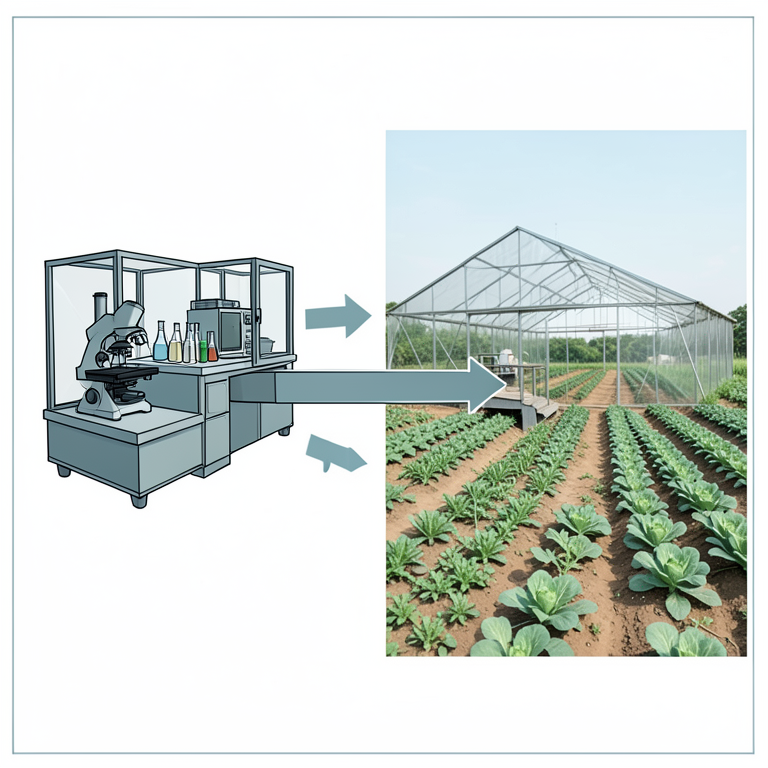
The Extension Service Bridge
AI-generated conceptual illustration (Greenhouse farms in India). It explains the idea and does not show study data.
View source evidence ↗Introduction
The role of Agricultural extension in disseminating the technology of organic farming among greenhouse farmers in India holds great significance. Agricultural extension services play a crucial role in bridging the gap between scientific knowledge and farmers, facilitating the transfer of new and innovative farming techniques. In the context of greenhouse farming, extension services act as a vital link between researchers, policymakers, and farmers, ensuring the successful adoption and implementation of organic farming practices. India's agriculture sector is a vital component of its economy, employing a significant portion of the country's workforce. With an increasing emphasis on sustainable and environmentally friendly agricultural practices, organic farming has gained substantial momentum in India. Greenhouse farming, in particular, presents unique opportunities for organic cultivation by creating controlled environmental conditions for crop growth. However, the adoption of organic farming methods and technologies in greenhouse farming requires proper training, awareness, and access to relevant information. This is where Agricultural extension services step in. Agricultural extension primarily focuses on disseminating knowledge, providing technical guidance, and improving farmers' capacities to adopt new farming practices. In the context of organic farming, extension services play a pivotal role in ensuring that greenhouse farmers across India have access to the necessary information, resources, and training required for successful implementation. The objectives of extension services in disseminating organic farming technology among greenhouse farmers are multi-fold. Firstly, they aim to promote the value and benefits of organic farming practices, creating awareness regarding the adverse effects of chemical-intensive farming methods and the need for sustainable alternatives. This includes educating farmers about the economic, environmental, and health-related advantages of organic farming, such as improved soil health, reduced reliance on chemical inputs, and better market opportunities. Secondly, Agricultural extension services facilitate the transfer of technology and knowledge related to organic www.extensionjournal.com farming specifically tailored for greenhouse cultivation. This involves providing farmers with information on organic fertilizers, pest and disease management strategies, crop rotation techniques, composting methods, and other organic inputs. Extension workers collaborate with research institutes and experts to translate scientific advancements into practical guidance that is easily understandable and applicable for greenhouse farmers. Furthermore, extension services act as key facilitators in bridging the gap between greenhouse farmers and organic certification agencies or regulatory bodies. They assist farmers in understanding and complying with the certification requirements and procedures for organic farming. This includes helping farmers with documentation, record-keeping, and access to certification agencies, enabling them to successfully obtain organic certifications for their produce. Lastly, Agricultural extension services organize training programs, workshops, and demonstrations to equip greenhouse farmers with the necessary skills and knowledge needed for organic farming. These training initiatives focus on various aspects, such as soil health management, organic pest and disease control, weed management, efficient use of organic fertilizers, and marketing strategies for organic produce.
A step-by-step guide to organic greenhouse farming in India Organic greenhouse farming in India offers numerous benefits, including year-round crop production, protection from pests and diseases, and reduced chemical usage. Here is a step-by-step guide to help you get started:
Step 1: Selecting a Suitable Site Choose a location with ample sunlight, good drainage, and minimal exposure to strong winds. The site should have easy access to water and electricity.
Step 2: Designing the Greenhouse Consider the type and size of greenhouse suitable for your needs. You can opt for options like polyhouse, shade net house, or naturally ventilated greenhouse based on your budget and crops.
Step 3: Soil Preparation Analyze the soil composition and make necessary amendments to improve its fertility. Organic matter like compost and well-rotted manure can be added to enhance the soil structure, nutrient content, and water-holding capacity.
Step 4: Crop Selection Choose the right crops for your greenhouse based on market demand, climate suitability, and personal preferences. Leafy greens, tomatoes, cucumbers, peppers, and herbs are commonly grown in greenhouse environments.
Step 5: Seed or Seedling Procurement Source quality organic seeds or healthy seedlings from reliable suppliers. Ensure that the seeds are free from genetically modified organisms (GMOs) and are suitable for greenhouse cultivation.
#Ideal location and temperature in organic greenhouse farming in India
When it comes to starting organic greenhouse farming in India, choosing the right location and understanding the ideal temperature conditions play a crucial role in the success of your venture. Here are some considerations for both aspects:
#Water treatment in organic greenhouse farming
Water treatment in organic greenhouse farming is a crucial aspect of maintaining a sustainable and environmentally friendly system. Here are some key benefits and practices associated with water treatment in organic greenhouse farming:
1. Reduced chemical usage: Organic greenhouse farming focuses on minimizing the use of synthetic chemicals, including those used for water treatment. Instead, natural and organic methods are employed, such as using biological agents to control pests and diseases, reducing the need for chemical treatments that can potentially harm the environment. 2. Improved soil health: Proper water treatment helps maintain the health and quality of the soil in organic greenhouse farming. By filtering and purifying water before irrigation, organic farmers can prevent the introduction of harmful substances and pollutants into the soil, preserving its fertility and promoting optimal plant growth.
Conservation of water resources:
Water is a finite resource, and organic greenhouse farming emphasizes the responsible use and conservation of water. Water treatment practices, such as recycling and reusing water, help minimize wastage and enhance overall water efficiency within the greenhouse system. 4. Protection of beneficial organisms: Organic greenhouse farming aims to promote biodiversity and sustainable ecological balance. By implementing effective water treatment methods, farmers can avoid the harmful effects of pollutants on beneficial organisms like beneficial bacteria, microbes, and insects that contribute to a healthy and thriving ecosystem within the greenhouse. 5. Compliance with organic certification standards: www.extensionjournal.com Organic greenhouse farmers must adhere to specific certification standards that prohibit the use of synthetic chemicals and promote sustainable practices, including water treatment. By incorporating organic water treatment methods, farmers ensure compliance with these standards and maintain the integrity of their organic produce.
#Business plan for organic greenhouse farming
When creating a business plan for organic greenhouse farming, it is crucial to consider these advantages and capitalize on them. Here are some key points to include: 1. Environmental Sustainability: Highlight how organic greenhouse farming methods minimize the use of harmful pesticides, herbicides, and synthetic fertilizers, preserving soil health and promoting biodiversity. Mention the reduced water usage due to controlled irrigation systems and the potential for implementing renewable energy sources to power the greenhouse. 2. Crop Quality and Yield: Emphasize the ability to control environmental factors like temperature, light, humidity, and air quality in a greenhouse, leading to enhanced crop quality, uniformity, and increased yield. Discuss how organic practices contribute to producing high-quality, nutrient-dense crops, meeting the growing demand for organic products in the market.
Season Extension and Year-round Production:
Showcase the advantage of greenhouse farming in providing a longer growing season by protecting plants from unpredictable weather conditions, frost, and pests. Explain how this enables year-round production, ensuring a continuous supply of organic produce and potential opportunities to capture premium prices during off-seasons. In conclusion, the role of Agricultural Extension in disseminating the technology of organic farming among greenhouse farmers in India is crucial for promoting sustainable agriculture, improving farmer livelihoods, and ensuring food security for the future. Modern technology has transformed agriculture, making it more productive, sustainable, and resilient. By leveraging these advancements, farmers can optimize their resources, reduce environmental impact, and meet the growing demand for food in a rapidly changing world. It facilitates knowledge transfer, provides training, and offers ongoing support to farmers, helping them adopt sustainable and environmentally friendly farming practices. This, in turn, promotes healthier crops, increased yields, and reduced environmental impact, contributing to the growth of the organic farming sector in India. Organic farming is an agricultural method that adheres to the principles of sustainable development. It's an agricultural production management method that does not utilize pesticides, chemical fertilizers, industrial synthetic products, or genetically modified organisms. The Indian economy is an agro-economy and depends highly on the agricultural sector. Despite just supporting the Indian Economy, the agricultural sector also supports the industrial sector and international trade in imports and exports. Although the contribution of the Agricultural Sector to the Indian Economy is reducing, it is the sector with the most number of people working in it around the country.
References
11 in the original paper- Anitha H, Navyashree C. Role of Information Technology in Agricultural Production and Marketing. Adarsh Journal of Management Research. 2015;5(2):11-16.
- Chatterjee S, Nath A. The Role of Information and Communication Technologies in Rural Development in India‖. International Journal of Emerging Technology and Advanced Enginee ring. 2015;5(3):251-259.
- Alaima K, Packntt E, Miles RA, Kruger DJ. Fruits and vegetable intake among urban community gardeners. Nutr Educt Behav 2008;40:94-101. DOI:10.1016/j.jneb.2006.12.0033.
- Altieri MA, Companion Canizaras K. The greening of the "barrier: urban agriculture for food security in Cuba Agric Human Values 1999;16:131-140. DOI:10.1023/A:10076453048614.
- Allen A. Environmental planning and management of the peri-urban interface: perspectives on an emerging field. Environ Urban. 2003;15:135-148. DOI:10.1177/0956247803015001035.
- Angell S, Farriency R, Gasol CCM. Environmental analysis of rainwater harvesting infrastructures in diffuse and compact urban models of Mediterranean climate. Int J Life Cycle Assess 2012;17:25-42. DOI:10.1007/s11367-011-0330-66.
- Bianchini F, Hewage K. Probabilistic cost-benefits analysis for green roofs: A lifecycle approach. Building Environ 2012;58:152-162. DOI:10.1016/J.buildenv.2012.07.0057.
- Coley D, Howard M, Winter M. Local food, food miles and carbons emissions: A comparison of farm shop and mass distributions approach, food supply a case study on deserts apples. Environ Mange 30:560-76. Policy 2009;34:155-155. DOI:10.1016/JFood Pol.2008.11.0018.
- Godfray HCJ, Bedding ion JR, Curt. Food security: the challenge of feeding 9 billion people. Science 2010;327:812-818. DOI:10.1126/science.1185383
- Kirwan J, Maye D. Food security farming within the UK and the integration of local food systems. J Rural Study 2012;29:91-100. DOI:10.1016/J.jrurstud.2012.03.00210.
- Kortright R, Wakefield S. Edible backyards: A qualitative study of household food growing and its contributions to food security: Agric Human Value 2010;28:39-53. DOI:10.1007-s10460-009-9254-1 .e
Cited by 3
From OpenAlex, OpenCitations and reference lists read by Scinovex
- Assessing Organic Farming Adoption in Selected Districts of Tamil Nadu: Challenges, Practices, and Pathways for Growth ↗
Estone Jiji Habanyati, Sivaraj Paramasivam, Parthasarathy Seethapathy, Sudheesh Manalil · Agronomy · 2024
This study investigates the specific challenges and opportunities faced by organic farmers in Tamil Nadu, focusing on how region-specific practices influence the adoption and success of organic farming. It draws insights from a survey of 300 organic growers across five districts: Coimbatore, Dindigul, Erode, Tirupur, and Villupuram. This study is particularly relevant because there is a lack of comprehensive research…
❝ 12PDF - An analysis of the extension education system in India: Structure, sub-systems, and emerging challenges
R. K. Mall, Pradeep Dwivedi, M Boopathy Raja, Vijay Laxmi Pandey · International Journal of Agriculture and Nutrition · 2025
This study critically examines the extension education system in India by exploring its institutional structures, sub-systems, ethical considerations, and evolving challenges. Extension education serves as a bridge between agricultural research institutions and rural farming communities, promoting the adoption of improved technologies and practices. Using a system-based perspective and qualitative content analysis, this paper outlines the strengths and deficiencies of the current system. The findings highlight the lack of curriculum standardization, weak ethical frameworks, and institutional f
- Central public policies to support for the welfare of agricultural farmers in India: An analysis ↗
Rama Rao Bonagani · International Journal of Political Science and Governance · 2025
Agriculture plays a vital role in India's economy. The constitution of India has mentioned the agriculture as a State list subject. As per the Census 2011, 54.6% of the total workforce is engaged in agriculture and allied sector activities. So far, 11 agricultural census were completed by the central government of India. Agriculture and allied sector accounts for 18.4 %