
Research article · 2023 · Full text
International Journal of Veterinary Sciences and Animal HusbandryBreeding managemental practices adopted by buffalo breeders in Godavari districts of Andhra Pradesh
Volume 8(6S) · Pages 15–20 · DOI: 10.22271/veterinary.2023.v8.i6sa.821 ↗
Research areasLivestock Management and Performance ImprovementAgricultural Economics and PracticesGenetic and phenotypic traits in livestock
Abstract
Author-writtenA study was conducted on buffalo managemental practices followed by dairy animal owners of East and West Godavari districts of Andhra Pradesh. To assess reproductive performance and to investigate occurrence of various forms of reproductive disorders in Godavari area. The study was conducted on a total number of 200 sample households consisting of 424 animals. Majority of the farmers have the small herd size with Graded Murrah (83.25%). It was observed that 54% of farmers observed frequent urination in heat detection where as 95.50% of the respondents resorted to artificial insemination, 93.50% of them following pregnancy diagnosis. Most of the farmers observed the age at puberty and age at first calving is below 36 (67.5%) and 45 months (66%), respectively. The results indicated that 83.5% of respondents reported below 300 days lactation length, 45.5% of the animals had dry period below 90 days and 52.5% of farmers had below 400 days calving interval animals. The results indicated that anestrum (34.5%) is major reproductive problem followed by repeat breeding (18%), endometritis (16%), Retention of placenta (7.5), pyometra (6.5%), dystocia (6%), uterine torsion (5.5%), abortions (3.5%), Prolapse of uterus (1.5%) and Still Birth (1%). Regarding feeding practices, 93.5% of farmers used commercial type concentrate mixture and dry fodder as such (100%). Regarding sick animal treatment, 50% buffalo keepers utilizing qualified veterinary services.
Summary
Source-checkedPlain-language reading of the full paper, prepared with AI and checked against the text. Each point links to the authors' own words.
Why it matters
- India possesses significant buffalo genetic diversity and the world's largest buffalo population, totaling 109.85 million heads as of 2019. View evidence ↗
- Buffalo breeders face major challenges with reproductive efficiency, specifically delayed puberty, seasonal breeding patterns, and long calving intervals. View evidence ↗
- Increasing milk demand, especially in summer, necessitates improvements in per-animal production via better breeding, feeding, and healthcare management. View evidence ↗
The question
- The study aimed to evaluate breeding, feeding, and healthcare practices and investigate reproductive disorders in buffaloes within the Godavari districts. View evidence ↗
What they did
- The research involved 200 sample households and a total of 424 animals. View evidence ↗
- A multi-stage sampling design was used to select respondents from four mandals (Kirlampudi, Yeleswaram, Pedavegi, and Denduluru) across East and West Godavari districts. View evidence ↗
- Data was collected through personal interviews with farmers using a pre-tested, structured interview schedule. View evidence ↗
What they found
- The majority of farmers (83.25%) raised Graded Murrah buffaloes, typically in small herd sizes. View evidence ↗
- High adoption rates were found for artificial insemination (95.50%) and pregnancy diagnosis (93.50%). View evidence ↗
- Most animals reached puberty before 36 months (67.5%) and had their first calving before 45 months (66%). View evidence ↗
- Reproductive metrics showed 83.5% had lactation lengths under 300 days, 45.5% had dry periods under 90 days, and 52.5% had calving intervals under 400 days. View evidence ↗
- Anoestrum was the most common reproductive disorder (34.5%), followed by repeat breeding (18%) and endometritis (16%). View evidence ↗
- Feeding practices included the use of dry fodder by all farmers (100%) and commercial concentrate mixtures by 93.5%. View evidence ↗
- Only half (50%) of the buffalo keepers utilized qualified veterinary services for treating sick animals. View evidence ↗
What it means
- The authors conclude that farmers need more education on breeding practices to achieve the goal of one calf per year. View evidence ↗
Visual summary
2 visualsIllustrations explain the paper; charts are replotted from the paper's own table values.
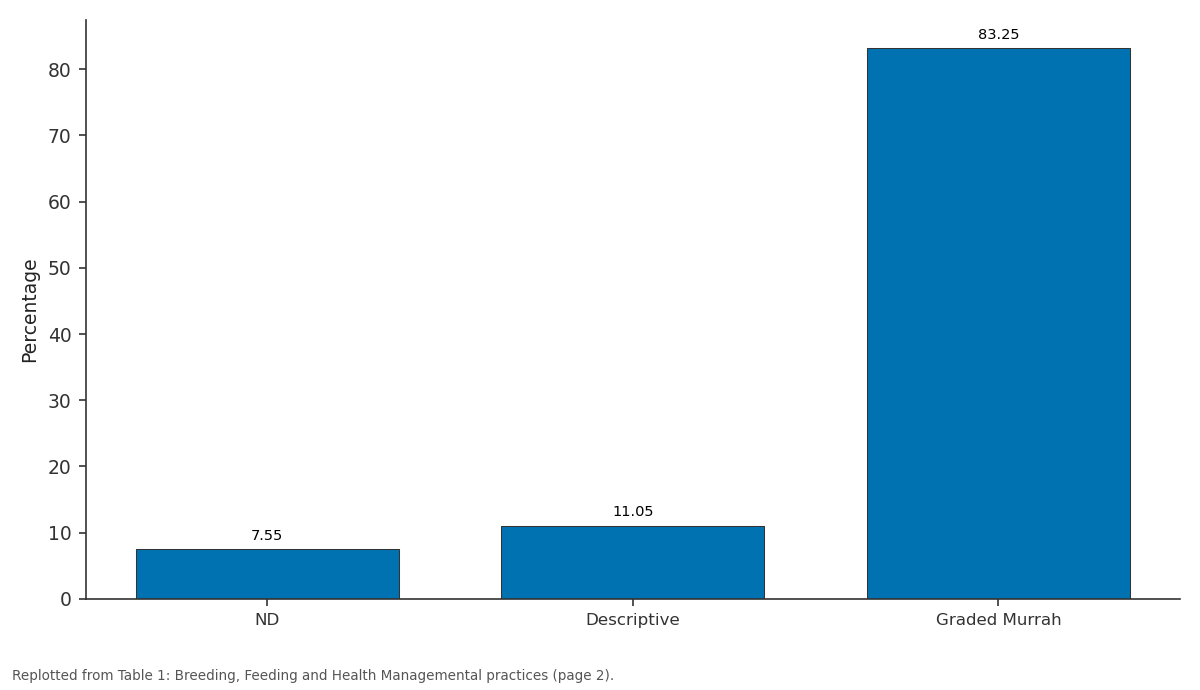
Percentage: ND vs Descriptive vs Graded Murrah
Replotted from Table 1 (page 2) of the original paper. Every bar is the paper's own table value.
View source evidence ↗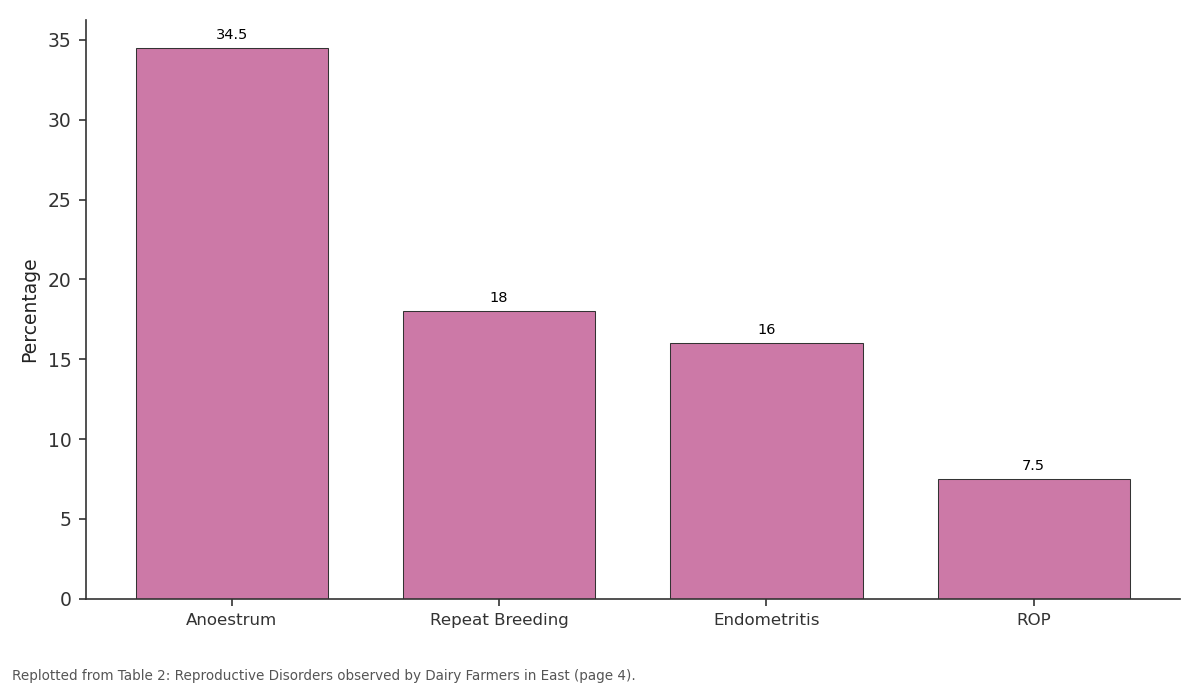
Percentage: Anoestrum vs Repeat Breeding vs Endometritis vs ROP
Replotted from Table 2 (page 4) of the original paper. Every bar is the paper's own table value.
View source evidence ↗Figures & tables
From the original paper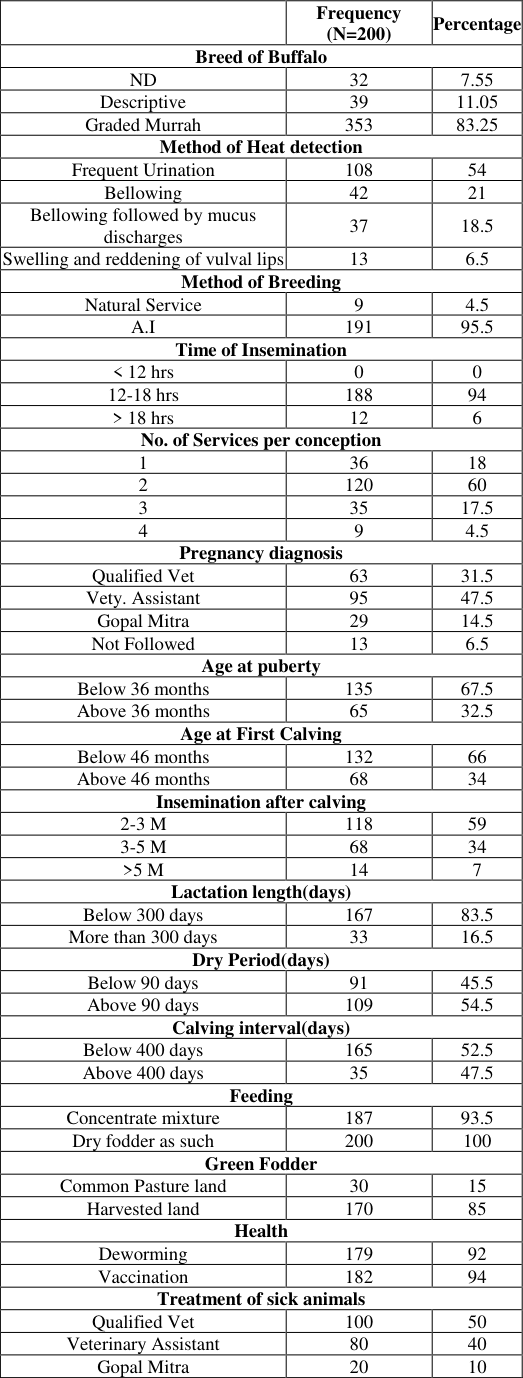 Table 1
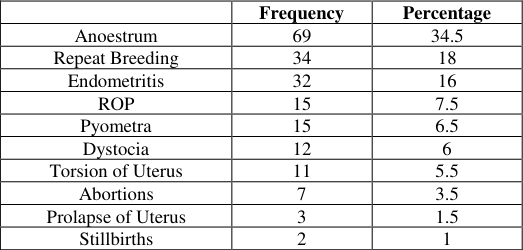 Table 2
Introduction
India had wide buffalo genetic diversity with twenty recognized breeds and ranks first in the world with buffalo population of 109.85 million heads (DHAD, 2019) [9] . The total buffalo milk production in the world reached 134.43 million tons of which 96% originating from Asian countries, particularly India (where more than 53% of the total milk is derived from buffaloes), Pakistan, and Nepal. Buffaloes exhibit remarkable versatility, efficiently converting low-quality feed sources like straws and agro-industrial waste into food fit for human consumption., indicating their rusticity and adaptability across various territories with different ecological systems. Additionally, they contribute to the enhancement of soil structure through biofertilization and can serve as a valuable financial asset that can be sold when needed. However, buffalo breeders and farmers grapple with significant challenges, including poor reproductive efficiency, marked by delayed puberty, seasonal breeding, and extended calving intervals (Singh et al., 2000) [32] and poor estrus detection hampers the reproductive efficiency of female buffaloes. Nevertheless, nowadays, the growing demand for milk, particularly during the summer season, which underscores the need to improve per-animal production through enhancing management practices related to breeding, feeding, health care, etc. Therefore, the present study was conducted to evaluate the breeding, feeding and healthcare management practices followed by the farmers of Godavari districts assessing production performance, and investigate the occurrence of various forms of reproductive disorders in buffaloes in the Godavari area. The objective is to identify strengths and weaknesses and provide assistance in the adoption of scientifically sound management practices in the region.
Materials and Methods
A multi-stage sampling design was used to select the 200 sample households from East and West Godavari districts of Andhra Pradesh. Two mandals from each district were selected i.e. Kirlampudi and Yeleswaram mandals from East Godavari, and Pedavegi and Denduluru mandals from West Godavari. Five villages from each mandal were randomly selected and ten respondents from each village were chosen, resulting in a total of 200 respondents. The selected respondent farmers were interviewed personally using a well-structured and pre-tested interview schedule to gather information on feeding and breeding and healthcare management practices they follow and reproductive disorders they encounter in rearing of buffaloes. The collected data was analysed.
Results and Discussion
The economic success of the dairy cattle and buffalo industry lies in the proper and optimal reproductive rhythm of each individual cow and buffalo in the herd within the normal physiological range. Any deviation or prolongation in the breeding rhythm results in cumulative economic losses. These losses manifest as reduced fertility, reduced calving resulting in reduced calf crop, lower lifetime production, longer calving intervals, and increased medical expenses and a high rate of culling in both dairy cows and buffaloes (Peeva and Ilieva, 2007) [22] . Further, reproductive efficiency of buffalo influenced by several factors including climate, management, nutrition, and diseases. Unfavorable climatic conditions can disrupt the estrus cycle, heat signs, and fertilization (Gendelman and Roth, 2012) [11] . Additionally, buffalo exhibit unique characteristics such as delayed puberty, asymmetrical estrus cycle, low signs of heat, silent heat, being a seasonal breeder, reduced conception rates, and an extended calving interval. Therefore, in the present study, the reproductive and productive performance parameters, studied are age at puberty, number of services per conception, conception rate, age at first calving, calving interval, service period, lactation length and dry period.
Breeding of Female animals
The breeding managemental practices adopted by buffalo farmers are represented in Table1. The results indicated that the majority of the farmers rearing graded Murrah buffaloes, which might be due to awareness about the advantage of rising graded Murrah buffaloes due to their adaptability to the local prevailing environmental conditions. The higher proportion (95.5%) of use of Artificial insemination (AI) was due to availability of good infrastructural facilities for preservation of semen and timely A.I services provided by A.I. workers in the village.
| — | Frequency (N=200) | Percentage |
|---|---|---|
| Breed of Buffalo | ||
| ND | 32 | 7.55 |
| Descriptive | 39 | 11.05 |
| Graded Murrah | 353 | 83.25 |
| Method of Heat detection | ||
| Frequent Urination | 108 | 54 |
| Bellowing | 42 | 21 |
| Bellowing followed by mucus discharges | 37 | 18.5 |
| Swelling and reddening of vulval lips | 13 | 6.5 |
| Method of Breeding | ||
| Natural Service | 9 | 4.5 |
| A.I | 191 | 95.5 |
| Time of Insemination | ||
| < 12 hrs | 0 | 0 |
| 12-18 hrs | 188 | 94 |
| > 18 hrs | 12 | 6 |
| No. of Services per conception | ||
| 1 | 36 | 18 |
| 2 | 120 | 60 |
| 3 | 35 | 17.5 |
| 4 | 9 | 4.5 |
| Pregnancy diagnosis | ||
| Qualified Vet | 63 | 31.5 |
| Vety. Assistant | 95 | 47.5 |
| Gopal Mitra | 29 | 14.5 |
| Not Followed | 13 | 6.5 |
| Age at puberty | ||
| Below 36 months | 135 | 67.5 |
| Above 36 months | 65 | 32.5 |
| Age at First Calving | ||
| Below 46 months | 132 | 66 |
| Above 46 months | 68 | 34 |
| Insemination after calving | ||
| 2-3 M | 118 | 59 |
| 3-5 M | 68 | 34 |
| >5 M | 14 | 7 |
| Lactation length(days) | ||
| Below 300 days | 167 | 83.5 |
| More than 300 days | 33 | 16.5 |
| Dry Period(days) | ||
| Below 90 days | 91 | 45.5 |
| Above 90 days | 109 | 54.5 |
| Calving interval(days) | ||
| Below 400 days | 165 | 52.5 |
| Above 400 days | 35 | 47.5 |
| Feeding | ||
| Concentrate mixture | 187 | 93.5 |
| Dry fodder as such | 200 | 100 |
| Green Fodder | ||
| Common Pasture land | 30 | 15 |
| Harvested land | 170 | 85 |
| Health | ||
| Deworming | 179 | 92 |
| Vaccination | 182 | 94 |
| Treatment of sick animals | ||
| Qualified Vet | 100 | 50 |
| Veterinary Assistant | 80 | 40 |
| Gopal Mitra | 20 | 10 |
Table text extracted from the original PDF; superscript letters are shown inline. The original table image is below.
View original table image
Heat detection
The intensity of estrus behavior in buffalo is notably less pronounced compared to that in cows. In this study, buffaloes displayed an estrus cycle length of 21 days, with the onset of estrous behavior predominantly occurring during the cooler parts of the morning and evening. Notably, the peak activity was observed in the morning (46%), which correlates with the findings of El-Wardani and El-Asheeri (2000) [10] . Their observations noted that buffaloes exhibited the estrus signs during the early morning hours (between 3:00 and 9:00 AM) and in the evening (between 3:00 and 9:00 PM), with a peak occurring in the early morning (approximately 37%), while a lower percentage was observed around noon. Buffalo is a polyestrous animal and exhibits estrous behavior throughout the year, there is, nevertheless, a noticeable seasonal variation in estrus display. This variation is primarily (1993) [23] due to their black and thick skin and very few sweat glands. Buffalo exhibit variations in both the intensity of heat expression and the length of the estrus cycle, as observed by Singh et al. (2000) [32] . During the summer months, there is a decrease in feed intake and significant alterations in the profile of reproductive hormones. Lower circulating levels of FSH (Razdan et al., 1982) [15] , LH (Rao and Pandey, 1982) [26] , and progesterone are detected during the summer, while prolactin levels are higher (Kaker et al., 1982) [15] . These changes result in weak estrus symptoms during the summer, leading to extended postpartum anestrus and, consequently, longer calving intervals in buffalo. In the present study, estrous symptoms such as frequent urination was observed in 54 percent of the animals, while 21 percent exhibited bellowing. Bellowing, followed by mucus discharge, was observed in 18.5% percent and remaining 6.5 percent of cases showed swelling and reddening of vulval lips although their expression was weak.
Time of Insemination
Maximum fertility and conception rates in buffalo cows relies on timely insemination, coupled with accurate heat detection techniques. Furthermore, the timing of insemination relative to ovulation is also crucial for achieving high fertility rates (Singh et al., 2009) [33] . In the present study, the majority of respondents (94%) allowed their female animals to be bred between 12 and 18 hours after detecting signs of estrus in order to improve the conception rate. These findings correlating with previous studies by Sabapara et al. (2010) [29] . Hamid (2018) [12] reported that the overall pregnancy rate among buffalo cows was 0% when inseminated within 0-6 hours, 50% within 6-12 hours, 60% within 12-18 hours, and 10% within 18-24 hours after observing the first signs of estrus.
Number of Service per conception (NS/C)
Number of Services per conception is important as it contributes to the efficient utilization of time, germplasm, and the productive life of the animal. In India, the average number of services required for conception in buffaloes falls within the range of 1.5 to 2.0 (Boro et al., 2020) [6] . In the present study majority of animals (60%) conceived by second insemination and very few were conceived by 4 th insemination (4.5%). Additionally, reported instances of the number of services per conception in Murrah buffaloes were 2 (Khan et al., 2009) [16] . The higher rate of service per conception may be attributed to improper heat detection and poor postpartum management, which can lead to reproductive problems in buffaloes. Notably, the type of feeding regimen appears to influence the number of services required for conception. Buffaloes fed a low-protein diet required 0.75 more services per conception compared to those maintained on a protein-rich diet (Juneja and Arora, 2006) [14] .
Pregnancy diagnosis:
In the present study pregnancy diagnosis was followed by 93.5% of the respondents, while remaining 6.5% did not engage in this practice for their dairy animals. Among those pregnancy diagnosis practice adopted, 47.5% relied on Veterinary Assistants, 14.5% by Gopal Mitras and 31.5% on qualified veterinary doctor at about 3 months of pregnancy. This finding is higher than findings of Gupta et al. (2009) [16] where the pregnancy diagnosis figure was 73%, which may be due to well awareness of farmers in Godavari area. Additionally, Yadav et al. (2009) [40] reported that 15% cases of pregnancy diagnosis are done by a veterinarian which is in contrast with the present findings.
Puberty/Age at Sexual Maturity (ASM)
The age at which sexual maturity for buffaloes was 30-40 months, with any period beyond these criteria considered as late maturity (Ashoo et al., 2020) [2] . In the present research, 67.5 percent of the animals reached puberty before the age of 3 years, while 32.5 percent achieved puberty above the age of 3 years. Age at puberty in buffaloes varies significantly, ranging from 16 to 22 months to 36 to 40 months in different countries (Borghese et al. in 1994) [5] . The delay in reaching puberty, and subsequently the delay in conception, is a key factor contributing to the lower reproductive efficiency of buffaloes, ultimately prolonging their nonproductive life. Research worldwide suggests that factors affecting puberty include genetic factors (Perera, 2011) [24] , feed scarcity, unavailability of balanced feed (Rafiq et al., 2008) [27] , and poor management (Perera, 2011) [24] . Therefore, effective heifer management should begin from birth to ensure proper weight gain, promoting growth and achieving early puberty.
Age at First Calving (AFC)
Early Age at First Calving (AFC) is vital as it leads to a longer productive life and a shorter generation interval, subsequently increasing genetic gains. In this particular study, 66 percent of the animals had an AFC below 46 months, while 34 percent had an AFC above 46 months, which is lower than the findings of Kumar, 2012 (48.2±0.30 months) due to better breeding practices of farmers in Godavari area.
Service Period
The duration of the Service Period (SP) plays a crucial role in determining the length of the calving interval. It's important to note that the Calving Interval is composed of both the service period and the gestation Period. As gestation period is constant for every species, a longer SP results in a correspondingly longer calving interval. Further, the service period is dependent on the restoration of normal post-partum uterine function, which is a prerequisite for achieving normal cyclicity. This restoration can be influenced by various environmental factors. Qureshi et al. (1999) [25] reported that the time required for uterine involution after calving ranged from 21 to 74 days in buffalo. These variations could be attributed to differences in genetics and diverse management practices applied in different regions. To maximize the productive life of a buffalo, it is essential to breed it within 100-150 days after parturition, allowing for the annual production of a calf and the commencement of a new lactation cycle, as recommended by Abdalla in 2003 [1] . In the present study almost 59 percent, 34 percent, and 7 percent of the respondents chose to rebreed their dairy animals after 2-3 months, 3-5 months, and after 5 months of calving, respectively. Similar findings were also reported by Sabapara et al. in 2010 [29] and Gupta et al. in 2009 [16] . However, a lower percentage of respondents followed this practice of rebreeding within 2-3 months, as reported by Jagdale et al. in 2000 [13] , and Malik et al. in 2005 [19] , which was 26.66 percent, 19.33 percent, and 20.00 percent, respectively. This variance may be attributed to the differing levels of awareness among the respondents.
Lactation length (LL)
The majority of respondents reported (83.5%) lactation length below 300 days while a very few respondents (16.5%) reported more than 300 days lactation length. These findings are in consistent with reports of 268±2.55 days (Christa Charlini and Sinniah, 2015) [8] and 297.8±1.9 days (Thiruvenkadan et al., 2014) [37] . It is important to note that lactation length is primarily influenced by the parity of lactation.
Dry Period
Dry period is essential for providing rest to the milch animals and nourishment to the growing foetus. In this study 45.5% of the animals had dry period below 90 days and 54.5% of animals had dry period above 90 days. Various studies have reported that the average Dry Period (DP) was observed as 226±13 day (Meena et al., 2016) [18] , 230.2±4.9 days (Thiruvenkadan et al., 2014) [37] , 250.5±15.9 (Thiruvenkadan et al., 2010) [36] and 179±4.43 days (Christa Charlini and Sinniah, 2015) [8] . Further, Suresh et al. (2004) [34] reported Dry Period as 189.15±8.39, 193.36±9.24, 189.37±10. 35 and 190.77±12.46 days for first, second, third and fourth parity, respectively in Murrah buffaloes. This variation in the dry period may be due to different managemental practices followed by farmers.
Calving interval (CI)
In buffalo, the interval from calving to resumption of ovarian function is longer when compared with cattle. This extended calving interval is one of the major problems in buffalo breeding. Several factors affect the resumption of postpartum ovarian activity and subsequent conception, such as breed, nutrition plan, milk yield, suckling, uterine involution and season of calving. Additionally, the Period of calving has a significant impact on calving interval in Murrah buffaloes (Suresh et al., 2004) [34] . In the present study, 52.5 percent animals have calving interval below 400 days and 47.5 percent animals have calving interval above 400 days. In another study, Sabapara et al. (2010) [29] reported 2.13, 90.42 and 7.45% of animals had 12-15 months, 16 to 18 months and more than 18 months calving interval, respectively. In other studies, calving interval of 532.8±5.5 (Thiruvenkadan et al., 2014) [37] and 470±4.87 days (Christa Charlini and Sinniah, 2015) [8] in Murrah buffaloes were reported. Proper heat detection is important for reducing the inter-calving period or age at first calving, ultimately leading to a higher number of calves and longer milk production. The results of present study is indicative of very high level of awareness among dairy farmers regarding this most important economic trait of reproductive management.
Breeding problems
The reproductive and productive efficiency of dairy herds lies in the state of postpartum uterine health. In the early postpartum period, the uterus is highly vulnerable to even minor injuries and infections. These conditions have the potential to impede uterine involution and lead to sustained inflammation of the endometrium causing infertility. Infertility was the primary reason for culling approximately 18-40% of cattle and buffaloes, resulting in significant losses for both farmers/dairy industry and the genetic resource (Sharma et al., 1993) [30] . The major infertility causing reproductive disorders are abortion, dystocia, retained fetal membrane (RFM), pyometra, metritis, prolapse (both uterine and vaginal), repeat breeder, and anoestrus have a significant economic impact on dairy farmers, as documented in studies by Parmar et al. (2016) [20] . Reproductive disorders observed by buffalo farmers in Godavari districts of Andhra Pradesh are represented in Table 2. The most common reproductive problems are anoestrum (34.5%) followed by repeat breeding (18%), endometritis (16%), retained placenta (7.5%), pyometra (6.5%), dystocia (6%), torsion of uterus (5.5%), abortions (3.5%), prolapse of uterus (1.5%) and still births (1%). These conditions often impede uterine involution and make the animal more susceptible to secondary infections and disruptions in the resumption of ovarian cyclicity and lead to reduced fertility (Azawi et al., 2008, Jadon et al., 2005) [4] , increased days open, and an increased number of services required for conception. In Nili-Ravi buffaloes, Usmani et al. (2001) [38] reported a 24% incidence of sub-clinical uterine infection. The infected group of buffaloes had a longer service period compared to the normal group. Further, according to Taraphder (2002) [35] , abnormal calvings in buffaloes had a detrimental impact on both the total milk production and the 305-day milk yield.
| — | Frequency | Percentage |
|---|---|---|
| Anoestrum | 69 | 34.5 |
| Repeat Breeding | 34 | 18 |
| Endometritis | 32 | 16 |
| ROP | 15 | 7.5 |
| Pyometra | 15 | 6.5 |
| Dystocia | 12 | 6 |
| Torsion of Uterus | 11 | 5.5 |
| Abortions | 7 | 3.5 |
| Prolapse of Uterus | 3 | 1.5 |
| Stillbirths | 2 | 1 |
Table text extracted from the original PDF; superscript letters are shown inline. The original table image is below.
View original table image
In the current study, the most prominent reproductive issues observed were anoestrum and repeat breeding, with an occurrence of 34.5% and 18%, respectively. These figures surpassed the percentages reported by Atwal et al. (2002) [3] for Murrah buffaloes. These problems may be linked to previous reproductive complications or other factors causing hormonal disturbances. Ashoo et al. (2020) [2] also recorded similar higher incidences of anestrus in buffaloes compared to repeat breeding, with significantly fewer obstetrical problems. However, the incidence of all other reproductive disorders was more or less consistent across the coastal belt of the Godavari district.
Feeding
Insufficient nutrient intake can deplete body energy reserves, resulting in a longer interval between calving and the first estrus. One of the primary challenges affecting buffalo reproduction in tropical regions is the seasonal shortage of fodder and nutritional imbalances (Vale, 2007) [39] . Providing sufficient fodder for buffaloes is crucial for their puberty, calving interval, service period, and overall fertility. Almost 93.5% farmers were offering concentrate mixture to the animals (Table 1). Approximately 85% of farmers adopted the stallfeeding system, while 15% took their animals to grazing fields apart from stall feeding. Most of the farmers supplementing concentrate mixture during late pregnancy, providing the additional nutrients required by the animals.
More than 91% of farmers fed common salt or mineral mixture to their bovines. Chaffed green fodder were offered at stalls and dry fodder fed as such. The practice of supplementary ration during late pregnancy and the addition of common salt or mineral mixture was commonly followed.
Health care practices
Effective health care management, including preventive measures, vaccination, deworming, and timely treatments, plays a crucial role in ensuring the well-being of animals, thereby enhancing their productivity (Singh et al., 2007) [31] . Among the respondents, 94% of farmers vaccinating their animals regularly against foot-and-mouth disease and hemorrhagic septicemia disease, while 6% did not follow this vaccination practice for these diseases (Table 1). Approximately 92% of farmers cleaned their sheds after calving to prevent infections. More than 95% of farmers isolating diseased animals from healthy ones. However, there is a need to train the remaining 5% of farmers to isolate diseased animals, thus minimizing the spread of contagious diseases. These findings are in correlation with Gupta et al.
(2009) [16] . The findings indicated a relatively high level of awareness among farmers regarding the importance of protecting their animals through vaccination. Deworming was practiced by 92% of respondents at regular intervals, aligning with the findings of Pawar et al. (2006) [21] , while Chowdhry et al. (2008) [7] reported that deworming was followed by less than 50% of respondents, which is in contrast with the present study. Only 50% of the respondents sought the services of a qualified veterinarian for treatment, which was in line with the findings of Malik et al. (2005) [19] . The study revealed that, overall, scientific breeding practices were well adopted. While regular vaccination for FMD and HS was prevalent, other health care practices like regular deworming for milch and young animals were followed.
Conclusion
The present study reveals that most of the managemental practices had considerable impact on the performance of the animals. The study indicates that there is a need for adaptation of certain managemental practices especially by small scale farmers in east and west Godavari districts to enhance the performance of their dairy animals. The study indicated that more importance has to be given to educate the farmers to follow breeding practices like artificial insemination, pregnancy diagnosis, more lactation length, decreasing dry period and maintaining appropriate calving interval to meet the goal of a calf in a year by reducing the incidence of reproductive disorders by maintaining proper farm records that will help them to address the problems in a more timely and efficient manner. The most prevalent reproductive disorders in buffaloes in Godavari Districts is anoestrum (34.5%). To combat this problem, efforts should be focused on identifying successful hormonal regimens to improve conception rates rather than merely inducing estrus in heataffected buffaloes. Further, apart from feeding good quality concentrates, area specific mineral mixture has to be given to combat the problem of mineral deficiency as it has greater role in attaining early sexual maturity in heifers. Health care management practices followed by farmers under study seems to be satisfactory due to timely awareness camps conducted by animal husbandry department and university. Regular training and awareness programs have to be conducted to create awareness among farmers with respect to breeding and managemental practices to be followed in buffaloes which in turn result in the enhancement of reproductive and productive efficiency of animals and the economy of the farmers.
References
37 in the original paper- Abdalla EB. Improving the reproductive performance of Egyptian buffalo cows by changing the management system. Animal Reproduction Science. 2003;75:1-8.
- Ashoo, Verma CH, Singh RK, Kumar R, Ramakant, Diwakar RP. Incidence of Reproductive Disorders in Cattle and Buffalo under Field Conditions in Eastern Plain Zone of Uttar Pradesh. Indian Journal of Veterinary Science and Biotechnology. 2020;16(1):66-68.
- Atwal KS, Prabhakar S, Guman SPS. Prevalence of various reproductive disorders in buffaloes in seleni ferous areas of Punjab. Indian Journal of Animal Reproduction. 2002;23:187-188.
- Azawi OI, Ali AJ, Lazim EH. Pathological and anatomical abnormalities affecting buffalo cows reproductive tracts in Mosul. Iraqi Journal of Veterinary Science. 2008;22:59-67.
- Borghese A, Terzano GM, Barile G, Annicchiarico S, Allegrini L, Esposito R, et al. Parmeggiani. Puberty and maintenance of ovarian cyclic activity in buffalo. Agric. Ric. 1994;153:5-16.
- Boro, Saharia, Bharali M, Sonowal SM, Brahma J. Productive and reproductive performances of Murrah buffalo cows: A review. Journal of Entomology and Zoology Studies. 2020;8(2):290-293.
- Chowdhry NR, Patel JB, Bhakat M. A study of adoption of milking and health care practices of dairy animals under cooperative network of Banas milk union of North Gujarat. Indian Journal of Animal Research. 2008;42(2):153-54.
- Christa Charlini B, Sinniah J. Performance of Murrah, Surti, Nili-Ravi buffaloes and their crosses in the intermediate zone of Sri Lanka. Livestock Research for Rural Development, 2015, 27(3).
- El-Wardani MA, El-Asheeri K. Influence of season and number of heat checks on detecting of ovulatory estrus in Egyptian buffaloes. Egyptian Journal of Animal Production. 2000;37(1):1-8.
- Gendelman M, Roth Z. Seasonal effect on germinal vesicle stage bovine oocytes is further expressed by alterations in transcript levels in the developing embryos associated with reduced developmental competence. Biol Reprod. 2012;86:1-9.
- Hamid MA. Study on the effect of insemination time on pregnancy rate of Bangladeshi buffalo in intensive farming. SAARC J Agric 2018;16(2):143-52.
- Jagdale SD, Patil RL, Atkare VG, Deshmukh AB. Adoption of recommended feeding and management practices of buffalo by dairy farmers. Indian Veterinary Journal. 2000;77(7):624-26.
- Juneja SC, Arora SP. Influence of level of nutrition and body weight on fertility in crossbred buffaloes. J Nucl Agric Biol. 2006;15:67-70.
- Kaker ML, Razdan, Galhotra. Serum prolactin levels of non-cycling Murrah buffaloes (Bubalus bubalis). Theriogenology. 1982;17:469.
- Khan HM, Mohanty TK, Raina VS, Gupta AK, Bhakat M. Effect of peripartum disorders on reproduction performance traits in Murrah buffaloes at an organized farm. Buffalo Bulletin. 2009;28(4):176-211.
- Meena BS, Verma HC, Singh A. Farmers' knowledge on productive and reproductive performances of buffalo under smallholder farming system Buffalo Bulletin. March, 2016, 35(1).
- Malik B, Meena BS, Rao SVN. Study of existing dairy farming practices in Uttar Pradesh. Journal of Dairying, Foods and Home Sciences. 2005;24(2):91-95.
- Parmar, Dhami AJ, Parmar CP, Chaudhary MM. Animal husbandry practices and problems of dairy farmers in Coastal areas of South Gujarat. The Indian Journal of Veterinary Science & Biotechnology. 2016;12(2):12-17.
- Pawar BK, Nalawade TH, Jagtap DZ. Adoption of bovine feeding practices and constraints faced by tribal farmers of Pune district. Journal of Maharastra agriculture University. 2006;31(3):329-30.
- Peeva T, Ilieva Y. Longevity of buffalo cows and reasons for their culling. Ital J Anim Sci. 2007;6:378-380.
- Parmeggiani A, Seren E, Esposito L, Borghese A, Di Palo R, Terzano MG. Plasma levels of melatonin in buffalo cows. Proc. International Symposium b Prospect of Buffalo Production in the Mediterranean and in the Middle EastQ, Cairo, Egypt, 9-12 November 1992, EAAP Publ. Pudoc, Wageningen. 1993;62:401-403.
- Perera O. Reproductive cycles of buffalo. Animal reproduction science. 2011;124(3-4):194-199.
- Qureshi MS, Safi GM, Dhannani J. Reproductive performance of dairy buffaloes (Bubalus bubalis) in the northern hilly tract of Pakistan. Buffalo J. 1999;15:3916.
- Rao LN, Pandey RS. Seasonal changes in plasma progesterone concentrations in buffalo cows (Bubalus bubalis). Journal of Reproduction Fertility. 1982;66:5761.
- Rafiq M, Chaudhry M, Jabbar M. Effect of level of concentrate supplementation on growth rate and age at maturity in growing buffalo heifers. Pakistan Veterinary Journal. 2008;28(1):37-39.
- Razdan MN, Kaker ML, Galhotra MM. Serum FSH levels during estrus and a 4-week period following mating in Murrah buffaloes (Bubalus bubalis). Theriogenology. 1982;17:175-181.
- Sabapara GP, Desai PM, Ranjeet Singh R, Kharadi VB. Breeding and health care management status of dairy animals in the tribal area of south Gujarat. Indian Journal of Animal Sciences. 2010;80(11):1148-51.
- Sharma VK, Gupta RC, Mishra SK, Khurana NK, Khar SK. An abattoir study of lesions in buffalo genetelia. Indian Veterinary Journal. 1993;70:1165.
- Singh M, Chauhan A, Chand S, Garg MK. Studies on housing and health care management practices followed by the dairy owners. Indian Journal of Animal Research. 2007;41(2):79-86.
- Singh JAS, Alanda GP. Adams. The reproductive pattern and efficiency of female buffaloes. Anim. Reprod. Sci. 2000;61:593-604.
- Singh J, Ghuman SPS, Honparkhe M, Singh N. Investigations on dominant follicle development, estrus response, ovulation time and fertility in PRID--Treated anestrous buffalo heifers. Indian Journal of Animal Sciences. 2009;79(8):773.
- Suresh R, Bidarkar DK, Gupta BR, Rao BS, Sudhakar K. Production and reproduction performance in Murrah buffaloes. Indian Journal of Animal Science. 2004;74:315-18.
- Thiruvenkadan AK, Panneerselvam S, Rajendran R, Murali N. Analysis on the productive and reproductive traits of Murrah buffalo cows maintained in the coastal region of India. Applied Animal Husbandry & Rural Development. ©South African Society for Animal Science, 2010, 3.
- Thiruvenkadan AK, Panneerselvam S, Murali N, Selvam S, Ramesh Saravanakumar V. Milk production and reproduction performance of Murrah buffaloes of Tamil Nadu, India. Buffalo Bulletin, 2014, 33(3).
- Usmani RH, Ahmad N, Shafiq P, Mirza MA. Effects of subclinical uterine infection on cervical and uterine involution, estrous activity and fertility in postpartum buffaloes. Theriogenology. 2001;55:563-570.
- Vale WG. Effects of environment on buffalo reproduction. Italian Journal of Animal Science. 2007;6(sup2):130-142.
- Yadav CM, Bhimawat BS, Khan PM. Existing breeding and healthcare practices of cattle in tribals of Dungarpur district of Rajasthan. Indian Research Journal of Extension Education. 2009;(1):36-38.