
Research article · 2023 · Full text
International Journal of Research in AgronomyAgronomic ineffectiveness of saffron (Crocus sativus) corms obtained from the vermicomposted medium the previous year when grown in the soil the following year
Volume 6(2) · Pages 13–19 · DOI: 10.33545/2618060x.2023.v6.i2a.180 ↗
Research areasSaffron Plant Research Studies
Abstract
Author-writtenThe experiment was conducted under soil in pots to study the growth rate and harmful or useful effects of mother corms of saffron which derived from excessive vermi composted media the before year. Treatments consisted of two rates of vermicompost (50% soil+50% vermicompost, 100% vermicompost) beside 100% soil (control) and two corm diameters (small:20±2 mm and big:32±2 mm). The corms grown in the vermin composted and soil (control) media the previous year were grown only in the soil medium the following year, and it was investigated whether the mother corms from the medium with vermicompost were effective on plant growth. When grown in the soil in the second year, the calculated data were; leaf number, plant height, emerged nodium number, flower number, fresh and dry stigma weight, stigma length, replacement corm number, replacement corm weight, replacement corm diameter, replacement ≥20 mm in diameter corm number, and replacement ≥20 mm in diameter corm weight. In the second year all measured parameters, except replacement corm diameter and replacement ≥20 mm in diameter corm number in small corms, showed no positive or negative effects on the plant, which was derived from mother corms from high vermi composted media. The small and big corms showed differences in all parameters except replacement corm diameter, and replacement ≥20 mm corm weight in previous vermi-composted or soil application in mean. In the overall evaluation, previously applied vermicompost showed no effectiveness on plant aerial part growth, but corm diameter was effective on plant growth.
Summary
Source-checkedPlain-language reading of the full paper, prepared with AI and checked against the text. Each point links to the authors' own words.
Why it matters
- Organic fertilizers are typically used to enhance plant growth and improve the properties of the soil. View evidence ↗
- Vermicompost is a specific type of organic fertilizer that has become increasingly popular in agricultural research. View evidence ↗
- Over-application of fertilizers can potentially lead to negative effects on crop yields in subsequent growing seasons. View evidence ↗
The question
- The study aimed to determine if saffron mother corms grown in excessive vermicompost in one year would experience harmful or beneficial effects when grown in soil the following year. View evidence ↗
What they did
- In the first year, saffron corms were grown in three different media: 100% soil, a 50/50 mix of soil and vermicompost, and 100% vermicompost. View evidence ↗
- Corms produced in the first year were categorized by size into small (20±2 mm, ~3.4 g) and big (32±2 mm, ~11.6 g) groups. View evidence ↗
- In the second year, all corms regardless of their previous medium were planted individually in field soil at a depth of 8 cm. View evidence ↗
- The study used a Completely Randomized Design with six treatments, three replicates per treatment, and five corms per replicate, totaling 90 bulbs. View evidence ↗
What they found
- The amount of vermicompost used in the previous year had no statistically significant effect on leaf number, plant height, or the number of emerged nodia. View evidence ↗
- Big corms consistently produced more leaves and emerged nodia compared to small corms. View evidence ↗
- Previous medium did not affect flowering or stigma characteristics in big corms, and small corms failed to flower regardless of the previous medium. View evidence ↗
- For small corms, the 50% soil and 50% vermicompost medium from the previous year resulted in significantly higher replacement corm diameters and a higher number of replacement corms ≥20 mm. View evidence ↗
- Big corms produced more and heavier replacement corms than small corms, but the previous use of vermicompost did not significantly influence these specific metrics. View evidence ↗
What it means
- The authors concluded that the initial size of the saffron corm is the primary factor determining growth and yield, rather than the previous year's medium. View evidence ↗
- The authors state that using mother corms from high-vermicompost media is unnecessary if the goal is to increase flowering. View evidence ↗
Visual summary
3 visualsIllustrations explain the paper; charts are replotted from the paper's own table values.
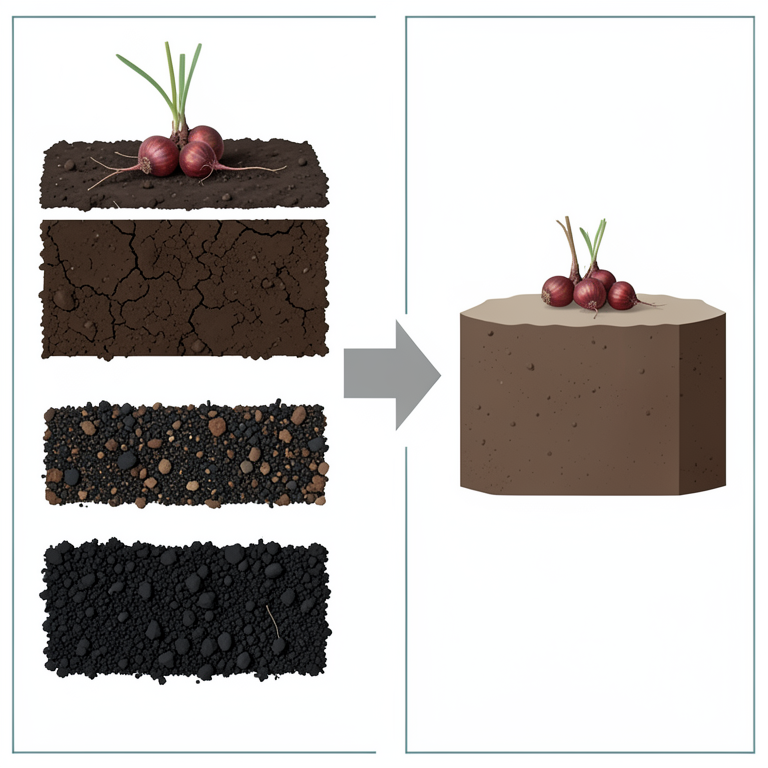
Two-Year Experimental Timeline
AI-generated conceptual illustration (Saffron (Crocus sativus) corms). It explains the idea and does not show study data.
View source evidence ↗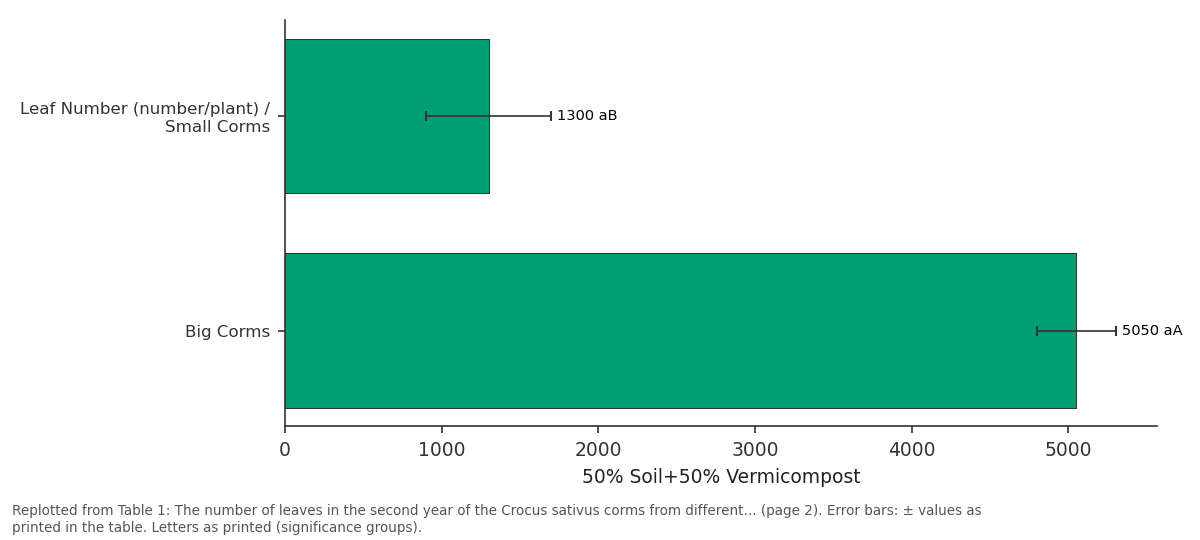
50% Soil+50% Vermicompost: Leaf Number... vs Big Corms
Replotted from Table 1 (page 2) of the original paper. Every bar is the paper's own table value.
View source evidence ↗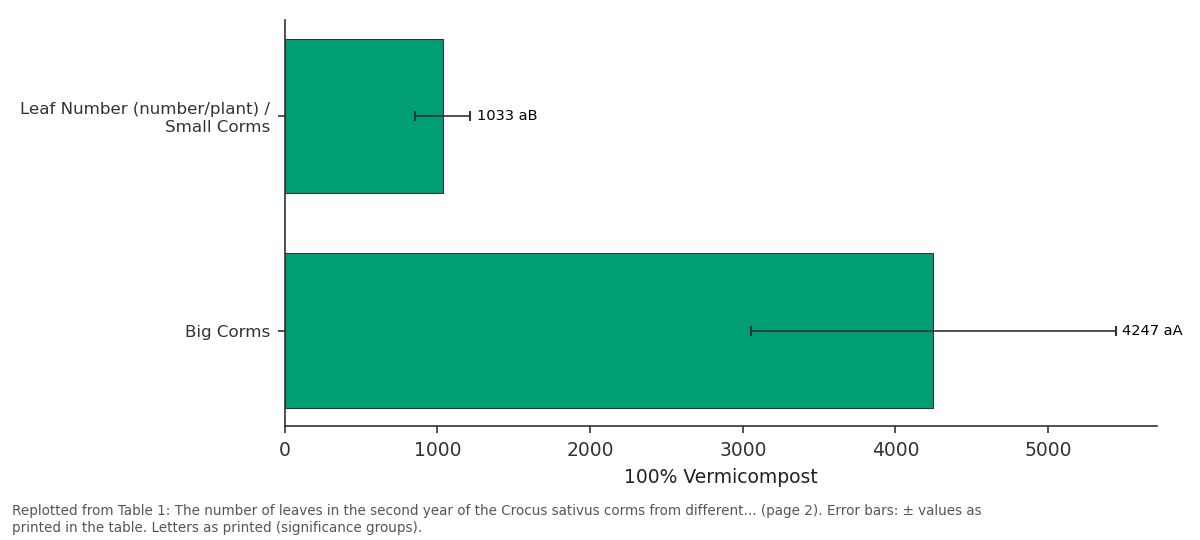
100% Vermicompost: Leaf Number... vs Big Corms
Replotted from Table 1 (page 2) of the original paper. Every bar is the paper's own table value.
View source evidence ↗Figures & tables
From the original paper Table 1Page 2
 Table 2Page 2
 Table 3Page 3
 Table 4Page 3
 Table 5Page 3
 Table 6Page 3
 Table 7Page 3
 Table 8Page 4
 Table 9Page 4
 Table 10Page 4
 Table 11Page 4
 Table 12Page 4
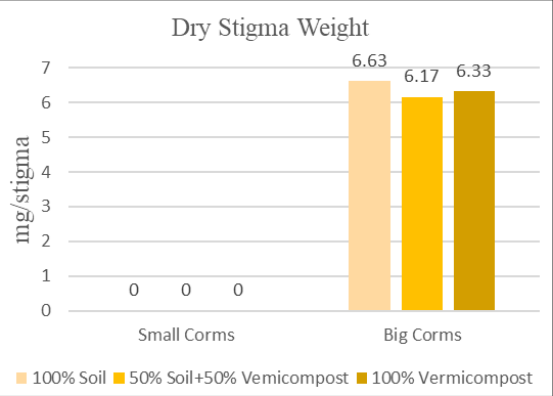 Figure 3Page 5
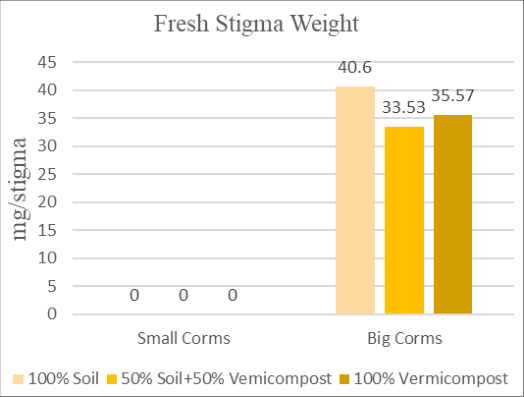 Figure 3Page 5
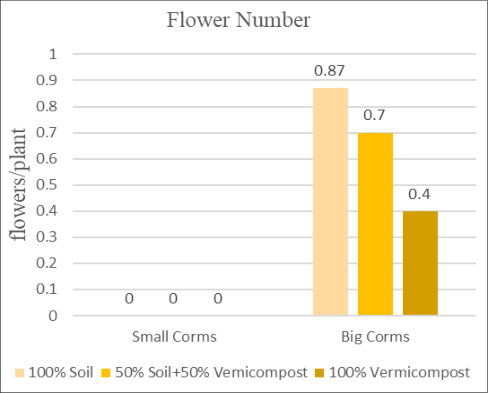 Figure 2Page 5
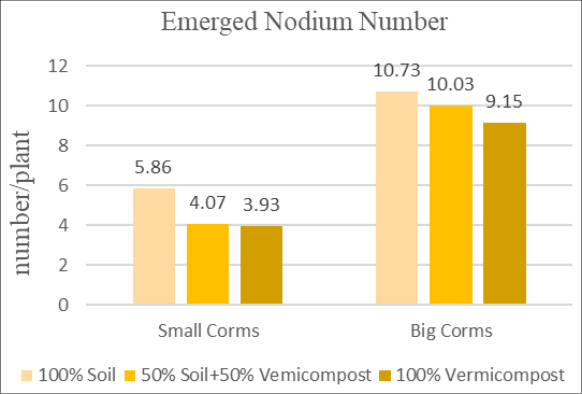 Figure 2Page 5
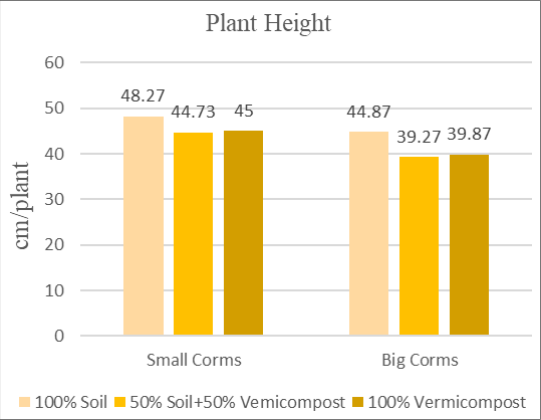 Figure 1Page 5
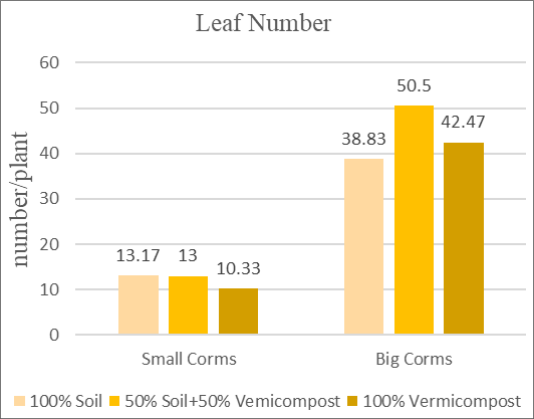 Figure 1Page 5
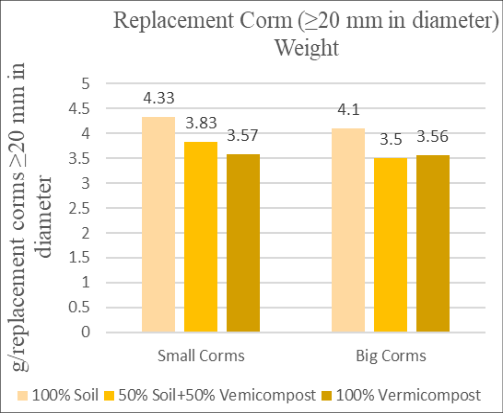 Figure 6Page 6
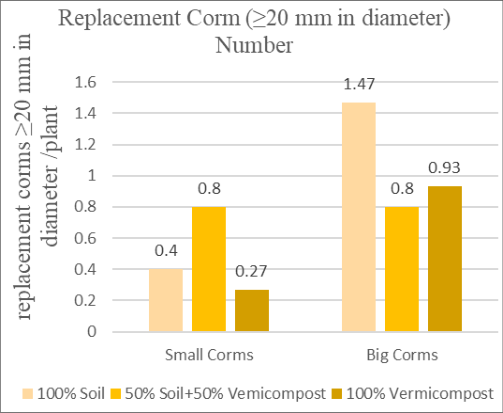 Figure 6Page 6
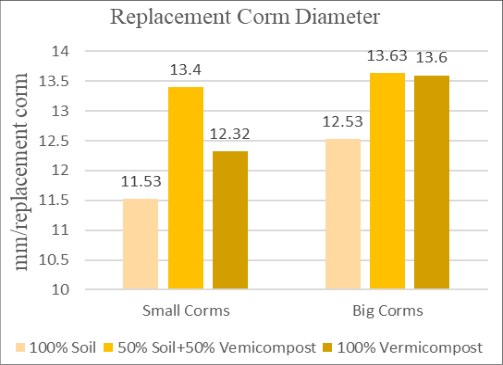 Figure 5Page 6
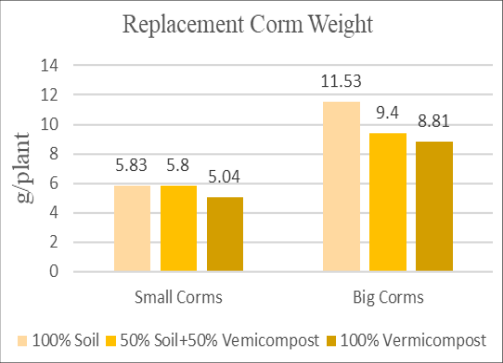 Figure 5Page 6
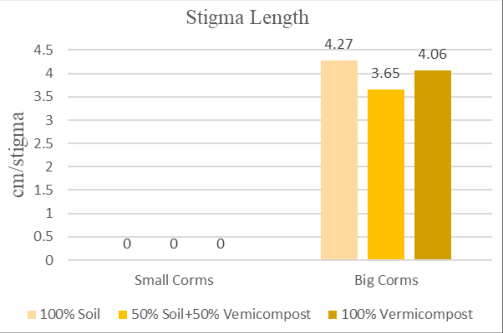 Figure 4Page 6
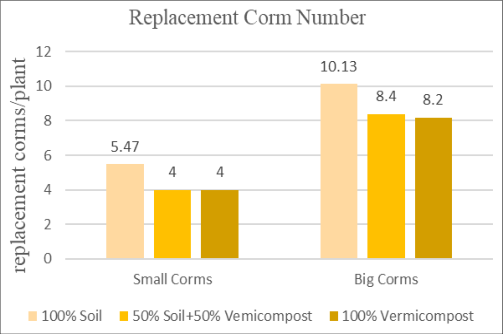 Figure 4Page 6
Introduction
There are many studies that describe organic and inorganic fertilizers and their benefits. Most of these were studied in field crops produced from seeds that are cultivated in large areas and were carried out to reveal the yield in the application year (Dimkpa et al., 2020; He et al., 2022; Jjagwe et al., 2020) [4,5,6] . In some other studies, there were plants produced from tubers such as potatoes, and most of them were again aimed at observing the differences in yield in the application year (Baniuniene and Zekaite, 2008; Ahmed et al., 2019) [3,1] . Organic fertilizers, which can be of plant, animal, or microorganism origin, are used with the hope of improving soil properties and increasing plant growth. Indeed, some of them change the soil reaction in favor of the plant, while others increase the uptake of essential elements by the plant. Vermicompost is a kind of organic fertilizer that is getting more and more attention. In recent years studies revealing the effect of vermicompost on plant development have gained momentum, and successful results have been obtained (Sallaku et al., 2009; Yadav and Kumar, 2023; Zucco et al., 2015) [7,8,9] . The most important point in this regard is to find the right dose and reveal the abnormalities that may occur in plant development in an overdose. Sometimes excessive and incorrect applications may adversely affect the yield of the plant in the following year. In this case, it is necessary to think differently and make different applications from plant to plant. In the second year, plants produced from vegetative organs such as corms and bulbs, rather than seeds such as saffron, may be affected by the excessive application of organic fertilizers in the previous year. In this study, the saffron plant was grown in soil as a control and in different ratios (50% and 100% in w/w) of solid vermicompost in the previous year, and the planting of classified saffron bulbs of different diameters and weights from these environments in the following year was carried out in normal soil. Thus, the development differences, beneficial, harmful, or inactive effects of an organic fertilizer such as vermicompost on the plant in the next year have been revealed.
Materials and Methods
In the first year, before the study, corms of saffron (Crocus sativus L.), which are 35±5 mm in diameter were grown into black plastic nursery crates each 54 x 36 x 30 cm in length, width, and height. The three crates consisted of 100% (w/w) soil,; the other three crates consisted of 50% Soil+50% (w/w) vermicompost; and the last three crates consisted of 100% (w/w) vermicompost. The solid vermicompost used was commercial. The crates with corms sown at a distance of 10 cm from each other, were arranged randomly in a plastic high tunnel in September 2020. After 9 months of growing season, the newly formed corms obtained from the 3 different media were arranged as small (20±2 mm in diameter, ca. 3.4 g/corm) and big (32±2 mm in diameter, ca. 11.6 g/corm). The arranged corms were kept in darkness until planting three months later. In the second year of the experiment, the arranged small and big sized corms were grown via sowing at a depth of 8 cm in black plastic nursery bags that were in 20 cm in height and 15 cm in diameter, and consisted of field soil and each bag contained only one corm. The sowing corms were arranged randomly in the plastic high tunnel in September 2021 for nine months without heating or cooling. Agromorphological parameters (Leaf Number, Plant Height, Emerged Nodium Number, Flower Number, Fresh and Dry Stigma Weight, Stigma Length, Replacement Corm Number, Weight and Diameter, Replacement ≥20 mm in diameter Corm Number, and Replacement ≥20 mm in diameter Corm Weight) were measured for obtaining the agronomic effect of corms obtained from vermicomposted medium the previous year when grown in soil the following year.The experiment laid out in a Completely Randomized Design (CRD) consisted of six treatments and with three replicates in each treatment. Each replication had five corms. Totally, the study consisted of 90 sown bulbs in 90 bags. The recorded data on features of vegetative, flower and daughter bulb related, were analyzed through statistical software for observation of whether the parameters were statistically significant or not at the 0.05% level.
Results and Discussions
Responses of vermicompost rates in the previous year on leaf number, plant height, and emerged nodium number were not significant p≤0, 05 which are presented in Table 1, Table 2, Table 3, Fig 1 andFig 2a. But the data showed that leaf numbers and emerged nodium numbers were always higher in big corms than in small ones. On the other hand, plant heights showed no differences between corm diameters in all media. Flower number, fresh and dry stigma weight, and stigma length in big corms were not affected by vermicomposted or soilderived mother corms, while in small corms there was no flowering in any media (Table 4, Table 5, Table 6, Table 7, Figure 2b, Figure 3, Figure 4a). Replacement corm number and replacement corm weight were always higher in big corms than small ones, but before the usage of vermicomposted media, they showed ineffectiveness (Table 8, Table 9, Figure 4b,Fig 5a). Only 50%soil+50% vermicomposted (w/w) substrate gave statistically higher results on replacement corm diameters and ≥20 mm in diameter replacement corm number in small corms (Table 10, Table 11, Figure 5b,Fig 6a). According to the ≥20 mm in diameter replacement corm weight, there are no differences between mother corm diameters or initial substrates (Table 12, Figure 6b). There are not so many studies about previous fertilizer effects on seeds or seed tubers, corms, bulbs etc. that will be used as planting material next year. One of the rare studies (Baiyeri et al., 2011) [2] was on passion fruit seed quality, seedling emergence and growth quality. In the study, poultry manure with or without N+K fertilizers was applied before obtained the seed materials to main plants. In the study, it was found that of nine parameters measured that related to the germination next year, three of them were not influenced by previous fertilization.
| Vermicompost Rates in The Previous Year (w/w) | Replacement Corm (≥20 mm in diameter) Weight (g/replacement corm ≥20 mm in diameter) | — | — |
|---|---|---|---|
| Small Corms | Big Corms | Mean | |
| 100% Soil | 4,33±0,31 a*A** | 4,10±0,17 a*A | 4,22±0,26 A*** |
| 50% Soil+50% Vermicompost | 3,83±0,31 aA | 3,50±0,41 aA | 3,67±0,37 A |
| 100% Vermicompost | 3,57±1,08 aA | 3,56±0, 05 aA | 3,56±0,68 A |
| Mean | 3,91±0,67 A | 3,72±0,37 A | 3,81±0,53 |
Table text extracted from the original PDF; superscript letters are shown inline. The original table image is below.
View original table image
| Vermicompost rates in the previous year (w/w) | Replacement Corm (≥20 mm in diameter) Number (replacement corms ≥20 mm in diameter number/plant) | — | — |
|---|---|---|---|
| Small Corms | Big Corms | Mean | |
| 100% Soil | 0,40± 0,20 b* B** | 1,47±0,12 a** A | 0,93±0,60 A*** |
| 50% Soil+50% Vermicompost | 0,80±0,00 a A | 0,80±0,35 a A | 0,80±0,22 A |
| 100% Vermicompost | 0,27±0,12 b A | 0,93±0,46 a A | 0,60±0,47 A |
| Mean | 0,49±0,27 B** | 1,07±0,42 A | 0,78±0,46 |
Table text extracted from the original PDF; superscript letters are shown inline. The original table image is below.
View original table image
| Vermicompost Rates in The Previous Year (w/w) | Replacement Corm Diameter (mm/replacement corm) | — | — |
|---|---|---|---|
| Small Corms | Big Corms | Mean | |
| 100% Soil | 11,53±0,71 b*A*** | 12,53±0,55 a**A | 12,03±0,79 B**** |
| 50% Soil+50% Vermicompost | 13,40±0,10 aA | 13,63±0,68 aA | 13,52±0,45 A |
| 100% Vermicompost | 12,32±0,74 abA | 13,60±1,04 aA | 12,96±1,07 AB |
| Mean | 12,42±0,96 A*** | 13,26±0,87 A | 12,84±0,99 |
Table text extracted from the original PDF; superscript letters are shown inline. The original table image is below.
View original table image
| Vermicompost Rates in The Previous Year (w/w) | Replacement Corm Weight (g/plant) | — | — |
|---|---|---|---|
| Small Corms | Big Corms | Mean | |
| 100% Soil | 5,83±0,40 a*B** | 11,53±2,57 a*A | 8,68±3,53 A*** |
| 50% Soil+50% Vermicompost | 5,80±1,14 aB | 9,40±1,40 aA | 7,60±2,27 A |
| 100% Vermicompost | 5,04±1,08 aB | 8,81±2,31 aA | 6,93±2,62 A |
| Mean | 5,56±0,90 B** | 9,91±2,24 A | 7,74±2,78 |
Table text extracted from the original PDF; superscript letters are shown inline. The original table image is below.
View original table image
| Vermicompost Rates in The Previous Year (w/w) | Replacement Corm Number (replacement corms/plant) | — | — |
|---|---|---|---|
| Small Corms | Big Corms | Mean | |
| 100% Soil | 5,47±1,68 a*B** | 10,13±1,63 a*A | 7,80±2,95 A*** |
| 50% Soil+50% Vermicompost | 4,00±1,04 aB | 8,40±1,44 aA | 6,20±2,66 A |
| 100% Vermicompost | 4,00±0,35 aB | 8,20±0,20 aA | 6,10±2,31 A |
| Mean | 4,49±1,24 B** | 8,91±1,43 A | 6,70±2,62 |
Table text extracted from the original PDF; superscript letters are shown inline. The original table image is below.
View original table image
| Vermicompost Rates in The Previous Year (w/w) | Stigma Length (cm/stigma) | — | — |
|---|---|---|---|
| Small Corms | Big Corms | Mean | |
| 100% Soil | 0,0±0,00 a*B** | 4,27±0,57 a*A | 2,13±2,36 A*** |
| 50% Soil+50% Vermicompost | 0,0±0,00 aB | 3,65±0,45 aA | 1,83±2,02 A |
| 100% Vermicompost | 0,0±0,00 aB | 4,06±0,31 aA | 2,03±2,23 A |
| Mean | 0,0±0,00 B** | 3,99±0,48 A | 2,00±2,08 |
Table text extracted from the original PDF; superscript letters are shown inline. The original table image is below.
View original table image
| Vermicompost rates in the previous year (w/w) | Dry Stigma Weight (mg/stigma) | — | — |
|---|---|---|---|
| Small Corms | Big Corms | Mean | |
| 100% Soil | 0,0±0,00 a*B** | 6,63±0,50 a*A | 3,32±3,65 A*** |
| 50% Soil+50% Vermicompost | 0,0±0,00 aB | 6,17±0,21 aA | 3,08±3,38 A |
| 100% Vermicompost | 0,0±0,00 aB | 6,33±1,59 aA | 3,17±3,61 A |
| Mean | 0,0±0,00 B** | 6,38±0,86 A | 3,19±3,34 |
Table text extracted from the original PDF; superscript letters are shown inline. The original table image is below.
View original table image
| Vermicompost Rates in The Previous Year (w/w) | Fresh Stigma Weight (mg/stigma) | — | — |
|---|---|---|---|
| Small Corms | Big Corms | Mean | |
| 100% Soil | 0,0±0,00 a*B** | 40,60±4,85 a*A | 20,30±22,44 A*** |
| 50% Soil+50% Vermicompost | 0,0±0,00 aB | 33,53±3,28 aA | 16,77±18,48 A |
| 100% Vermicompost | 0,0±0,00 aB | 35,57±6,28 aA | 17,78±19,88 A |
| Mean | 0,0±0,00 B** | 36,57±5,33 A | 18,28±19,17 |
Table text extracted from the original PDF; superscript letters are shown inline. The original table image is below.
View original table image
| Vermicompost Rates in The Previous Year (w/w) | Flower Number (flowers/plant) | — | — |
|---|---|---|---|
| Small Corms | Big Corms | Mean | |
| 100% Soil | 0,0±0,00 a*B** | 0,87±0,83 a*A | 0,43±0,71 A*** |
| 50% Soil + 50% Vermicompost | 0,0±0,00 aB | 0,70±0,27 aA | 0,35±0,42 A |
| 100% Vermicompost | 0,0±0,00 aB | 0,40±0,20 aA | 0,20±0,25 A |
| Mean | 0,0±0,00 B** | 0,66±0,49 A | 0,33±0,48 |
Table text extracted from the original PDF; superscript letters are shown inline. The original table image is below.
View original table image
| Vermicompost Rates in The Previous Year (w/w) | Emerged Nodium Number (number/plant) | — | — |
|---|---|---|---|
| Small Corms | Big Corms | Mean | |
| 100% Soil | 5,86±2,02 a*B** | 10,73±0,92 a*A | 8,30±3,01 A*** |
| 50% Soil + 50% Vermicompost | 4,07±0,99 aB | 10,03±0,75 aA | 7,05±3,36 A |
| 100% Vermicompost | 3,93±0,31 aB | 9,15±1,03 aA | 6,54±2,94 A |
| Mean | 4,62±1,47 B** | 9,97±1,05 A | 7,29±3,02 |
Table text extracted from the original PDF; superscript letters are shown inline. The original table image is below.
View original table image
| Vermicompost Rates in The Previous Year (w/w) | Plant Height (cm/plant) | — | — |
|---|---|---|---|
| Small Corms | Big Corms | Mean | |
| 100% Soil | 48,27±3,84 a*A** | 44,87±2,32 a*A | 46,57±3,39 A**** |
| 50% Soil+50% Vermicompost | 44,73±2,50 aA | 39,27±3,04 aA | 42,00±3,89 A |
| 100% Vermicompost | 45,00±2,62 aA | 39,87±2,21 aA | 42,43±3,55 A |
| Mean | 46,00±3,14 A*** | 41,33±3,46 B | 43,67±4,01 |
Table text extracted from the original PDF; superscript letters are shown inline. The original table image is below.
View original table image
| Vermicompost Rates in The Previous Year (w/w) | Leaf Number (number/plant) | — | — |
|---|---|---|---|
| Small Corms | Big Corms | Mean | |
| 100% Soil | 13,17±4,04 a*B** | 38,83±11,32 aA | 26,00±15,98 A*** |
| 50% Soil+50% Vermicompost | 13,00±3,99 aB | 50,50±2,52 aA | 31,75±2,76 A |
| 100% Vermicompost | 10,33±1,82 aB | 42,47±11,95 aA | 26,40±19,19 A |
| Mean | 12,17±3,28 B** | 43,93±9,80 A | 28,05±17,81 |
Table text extracted from the original PDF; superscript letters are shown inline. The original table image is below.
View original table image
Conclusion
The overall results obtained from this study revealed that Crocus sativus L. corm size was always essential to getting higher leaf number, emerged nodium number, flowering, replacement corm number, and weight in all media including 100% soil, 50% and 100% vermicomposted substrates. The results showed that no one of the media was effective on leaf number, plant height, emerged nodium number, flower and related data, replacement corm number, total and ≥20 mm in diameter replacement corm weight in small or big corms separately. Only 50% soil+50% (w/w) vermicomposted media gave statistically higher results on replacement corm diameters and ≥20 mm in diameter replacement corm number in small corms. If a study aimed to reach more flowering, using mother corms that come from excessive vermicomposted media would not be necessary.
Figures and tables from the paper
References
9 in the original paper- Ahmed F, Mondal MMA, Akter MB. Organic fertilizers effect on potato (Solanum tuberosum L.) tuber production in sandy loam soil. International Journal of Plant & Soil Science. 2019;29(3):1-11, 50614.
- Baiyeri KP, Ugese FD, Uchendu TO. The effects of previous fertilizer treatments on passion fruit seed quality, and seedling emergence and growth qualities in soilless media. Journal of Agricultural Technology. 2011;7(5):13971407.
- Baniuniene A, Zekaite V. The effect of mineral and organic fertilizers on potato tuber yield and quality. Latvian Journal of Agronomy. 2008;11:202-206.
- Dimkpa CO, Andrews J, Sanabria J, Bindraban PS, Singh U, Elmer WH, et al. Interactive effects of drought, organic fertilizer, and zinc oxide nanoscale and bulk particles on wheat performance and grain nutrient accumulation. Science of the Total Environment. 2020;722:137808.
- He H, Peng M, Lu W, Hou Z, Li J. Commercial organic fertilizer substitution increases wheat yield by improving soil quality. Science of The Total Environment. 2022;851:158132.
- Jjagwe J, Chelimo K, Karungi J, Komakech AJ, Lederer J. Comparative performance of organic fertilizers in maize (Zea mays L.) growth, yield, and economic results. Agronomy. 2020;10(1):69.
- Sallaku G, Babaj I, Kaciu S, Balliu A. The influence of vermicompost on plant growth characteristics of cucumber (Cucumis sativus L.) seedlings under saline conditions. Journal of Food, Agriculture and Environment. 2009;7(3&4):869-872.
- Yadav S, Kumar P. Influence of Vermicompost Derived from Rice Straw, Neem Leaves, and Cow Dung on Plant Growth Parameters of Solanum lycopersicum (Tomato). Indian Journal of Science and Technology. 2023;16(13):989-997.
- Zucco MA, Walters SA, Chong SK, Klubek BP, Masabni JG. Effect of soil type and vermicompost applications on tomato growth. International Journal of Recycling of Organic Waste in Agriculture. 2015;4:135-141.
Cited by 9
From OpenAlex, OpenCitations and reference lists read by Scinovex
- Wood Vinegar: A promising agricultural input: A review
G. Raviraja Shetty, A Meghana, Mahesh G Shetty, Balakrishna SM, Niranjan HG · International Journal of Agriculture Extension and Social Development · 2025
With the increasing emphasis on health and environmental sustainability, organic agriculture is gaining momentum. Wood vinegar, a by-product of wood pyrolysis, has emerged as a valuable organic agricultural input. It exhibits multifaceted roles, acting as a natural insecticide effective against various pests, including sucking pests, subterranean pests, storage and household pests, as well as non-insect pests such as snails, slugs, and mites. Additionally, wood vinegar serves as a fungicide targeting soil-borne and foliar phytopathogenic fungi. Beyond its pesticidal properties, it contributes
- Phytochemical extraction and evaluation of Vaijayanti (Barleria Cristata) plant parts ↗
Sonawane Nilam, Sonawane Kunal, Sonawane Kalpesh, Jitendra More, Namita Jadhav, Atish Salunkhe · International Journal of Pharmacognosy and Pharmaceutical Research · 2025
Barleria cristata (Vaijayanti), an important medicinal plant, holds significant potential due to its bioactive constituents such as flavonoids, alkaloids, glycosides, and phenolic acids. Traditional Indian medicine has long utilized this plant for treating various ailments. This review highlights the extraction methodologies, phytochemical analyses, pharmacological activities, and future prospects associated with B. Cristata flowers and leaves. Techniques like solvent extraction, column
- Influence of nitrogenous fertilizers (Urea and nano urea) on soil chemical properties: Post-harvest
Yashaswini KP, SM Prasanna, Somashekhargouda Patil · International Journal of Advanced Chemistry Research · 2025
Efficient nitrogen management is vital for sustaining soil fertility and enhancing crop productivity. This study evaluated the effects of different nitrogen fertilization strategies comprising conventional urea and nano urea on soil chemical properties following crop harvest. Twelve treatments were arranged using varying combinations and timings of urea and nano urea applications at three nitrogen levels: 100%, 75%, and 50% of the recommended dose (RDN). Soil samples collected after harvest were analyzed for pH, electrical conductivity (EC), and organic carbon (OC) content. Results revealed, p
- Comparative assessment of fertility management strategies and potato yield in south Asian smallholder systems ↗
Saraswoti Adhikari, Madan Koirala · South Asian Journal of Agricultural Sciences · 2025
Background: Potato is a key food and cash crop in South Asia, yet yields on smallholder farms remain well below attainable levels because of under- and imbalanced fertiliser use, declining soil organic matter and limited access to soil testing services [1-3]. Integrated nutrient management (INM) and site-specific nutrient management (SSNM) have been proposed as strategies to close yield gaps, enhance
- Homoeopathic remedies in enhancing plant growth in climate-smart urban farming systems ↗
H. Vos, Mélissa De Wilde, Saskia Vermeer · International Journal of Homoeopathic Sciences · 2025
Climate-smart urban farming systems demand innovative, low-input, and environmentally responsible strategies to enhance crop growth and productivity. In this context, homoeopathic remedies have emerged as a novel bio-stimulant category with the potential to regulate plant physiological responses at ultra-low dilutions. Despite their widespread use in alternative medicine, their scientific application in agriculture remains underexplored, particularly in controlled urban farming environments
- Use of charcoal and sawdust mulches in home gardening for enhancing grape vine growth ↗
Marı́a M. López, C.M. Rivera, P.J. Muller · International Journal of Home Science · 2025
The use of mulches in home gardening has gained significant attention as a means to enhance plant growth by modifying the microenvironment around the plants. This research investigates the application of charcoal and sawdust mulches in promoting the growth of grapevines, particularly focusing on their impact on vegetative growth parameters such as leaf area, stem diameter, and root length. Grape
- Exploring the Bioactive Compounds in Herbs Grown through Zero Budget Natural Farming Techniques ↗
Peter Mwangi, Mercy Achieng · International Journal of Pharmacognosy and Life Science · 2025
Zero Budget Natural Farming (ZBNF) represents a distinct agroecological model that emphasizes natural inputs, local resource use, and cost-neutral farming. While widely acknowledged for its sustainability, there is a growing need to understand how this farming method influences the phytochemical and pharmacological profile of herbs, many of which are cultivated for their bioactive compounds. This paper explores the interplay between
- Formulation and Efficacy of Natural Herbal Medicines from Zero Budget Farm Produce ↗
Faith C Achieng, Cheruiyot . · International Journal of Pharmaceutical Research and Development · 2025
❝ 0Found by Scinovex - Assessing the Nutritional and Medicinal Potential of Zero Budget Naturally Grown Crops ↗
Ignacio Soto · International Journal of Pharmaceutical and Clinical Research · 2025
❝ 0Found by Scinovex