
Research article · 2023 · Full text
International Journal of Veterinary Sciences and Animal HusbandryIsolation and antimicrobial resistance of salmonella isolates from commercial layer farms in and around Hyderabad, Telangana
Volume 8(5S) · Pages 321–324 · DOI: 10.22271/veterinary.2023.v8.i5se.807 ↗
Research areasSalmonella and Campylobacter epidemiology
Abstract
Author-writtenSalmonella is a most important zoonoticpathogen and its prevalence in animals is a global public health concern. Resistance to widely prescribed antibiotics has grown to be a significant issue for managing chickens and preventing illness. The current study was carried out to determine the presence of Salmonella spp. infection in poultry and to look at the antibiogram patterns of isolates from commercial Layer farms in and around Hyderabad, Telangana. A total of 261 samples of faeces (123) and cloaca (138) were collected and processed for the isolation of Salmonella. Twenty one (8.04%) of the samples tested were found to be positive for Salmonella. Out of 123 fecal samples and 138 cloacal swabs, the incidence of Salmonella spp. was 7.3% and 8.6% respectively. All the isolates were subjected to antibiotic sensitivity tests against 10 antimicrobials. The results revealed that bacterial isolates had 100% sensitivity for ciprofloxacin and enrofloxacin followed by levofloxacin, gentamycin, ampicillin, neomycin and amoxicillin were found to be the most intermediately sensitive antibiotics. Tetracycline, doxycycline and amikacin were the most resistant antibiotics. The biggest challenge at hand is multiple antibiotic resistance because many antibiotics are ineffective against infections caused by Salmonella. Therefore, the goal of the current study was to determine the pattern of antibiotic resistance exhibited by these Salmonella.
Summary
Source-checkedPlain-language reading of the full paper, prepared with AI and checked against the text. Each point links to the authors' own words.
Why it matters
- Salmonella is a critical zoonotic pathogen, making its prevalence in animals a significant global public health issue. View evidence ↗
- The development of resistance to common antibiotics has complicated the management of chicken health and the prevention of disease. View evidence ↗
- The frequent use of antibiotics in poultry for disease control and growth promotion is believed to be the main driver of bacterial antibiotic resistance. View evidence ↗
The question
- The study aimed to identify the presence of Salmonella spp. in poultry and analyze the antibiotic resistance patterns of isolates from commercial layer farms near Hyderabad, Telangana. View evidence ↗
What they did
- Researchers collected 261 samples from commercial layer farms in and around Hyderabad, Telangana, consisting of 123 fecal samples and 138 cloacal swabs. View evidence ↗
- Salmonella isolation involved pre-enrichment in buffered peptone water (BPW) followed by selective enrichment in tetrathionate broth, both incubated at 37 °C. View evidence ↗
- Primary isolation was performed by streaking cultures onto MacConkey, brilliant green, and Salmonella-Shigella agars, incubated at 37 °C for 24 hours. View evidence ↗
- Antibiotic sensitivity tests (ABST) were conducted using the disc diffusion method on Mueller Hinton Agar after initial inoculation in BHI broth. View evidence ↗
What they found
- The incidence of Salmonella spp. was 7.3% in fecal samples and 8.6% in cloacal swabs. View evidence ↗
- Tetracycline showed the highest resistance rate, with 76.1% of the 21 isolates being resistant. View evidence ↗
- Other antibiotics with high resistance rates included doxycycline (57.1%), amikacin (52.8%), and ampicillin (42.8%). View evidence ↗
- Intermediate resistance was observed for neomycin (66.6%), amoxicillin (57.1%), and gentamycin (38%). View evidence ↗
What it means
- The authors conclude that the indiscriminate use of antibiotics in poultry should be limited to combat resistance. View evidence ↗
- The authors suggest that the use of different therapeutic antibiotics may explain the variations in resistance patterns across different locations. View evidence ↗
Visual summary
2 visualsIllustrations explain the paper; charts are replotted from the paper's own table values.
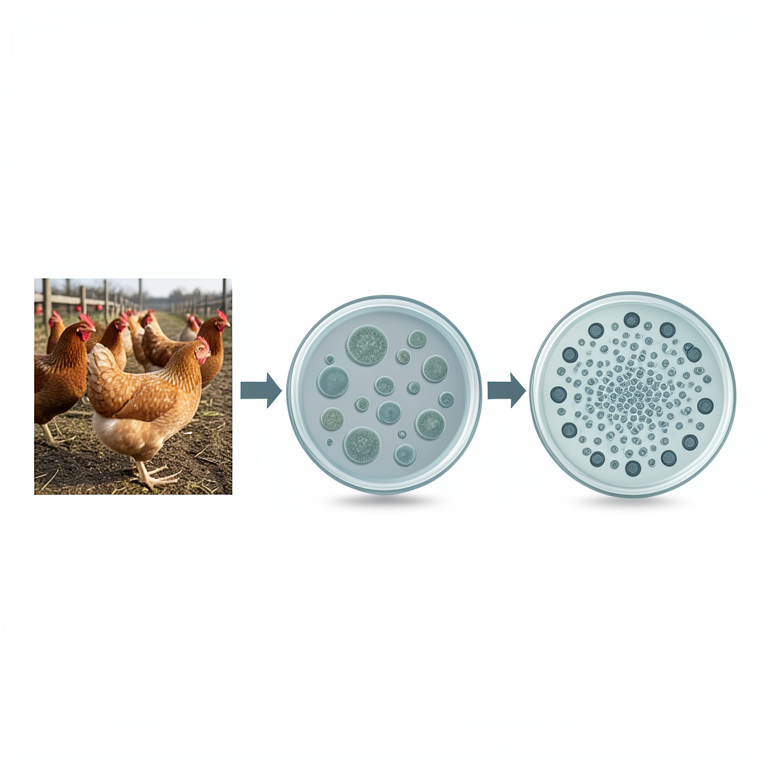
Study Workflow
AI-generated conceptual illustration (commercial layer chickens and laboratory microbiology equipment). It explains the idea and does not show study data.
View source evidence ↗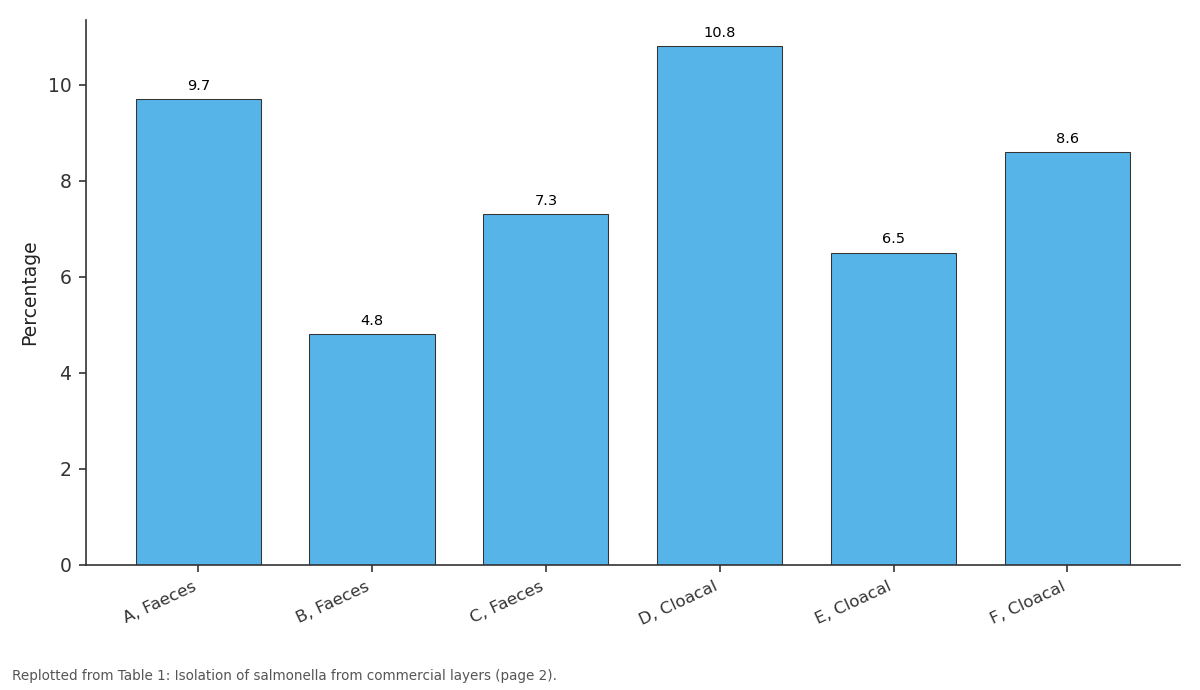
Percentage: A, Faeces vs B, Faeces vs C, Faeces vs D, Cloacal vs E, Cloacal
Replotted from Table 1 (page 2) of the original paper. Every bar is the paper's own table value.
View source evidence ↗Figures & tables
From the original paper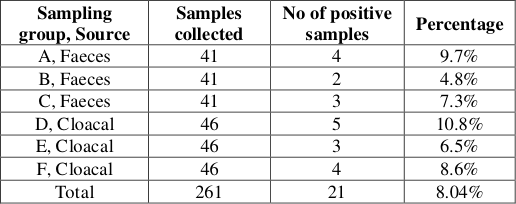 Table 1
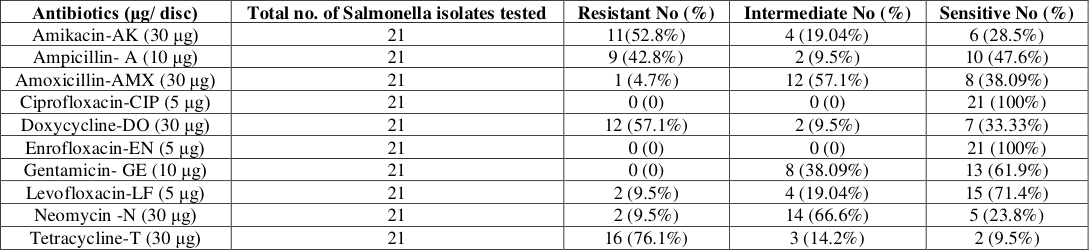 Table 2
Introduction
Poultry is one of the fastest-growing segments of the agricultural sector in India today. The production of eggs and broilers has increased at a rate of 8 to 10 percent annually, compared to the 1.5 to 2 percent annual growth of crops. In 2022-2023, the nation exported 664,753.46 MT of poultry products to the world for a total value of Rs. 1,081.62 crore, or 134.04 USD million (APEDA, 2022) [1] . Over the past forty years, India's poultry industry has experienced a dramatic transformation, moving from traditional farming methods to a commercial production system that incorporates cutting-edge technological advancements. According to the 20 th Livestock Census, the total Poultry population in India is 851.81 million. India possesses an abundance of livestock and poultry, which are essential for enhancing the socioeconomic status of the rural people (DHAD, 2022) [2] . The most widely known reservoir of Salmonella is poultry (Cohen et al., 1986) [3] . Salmonella species are facultative anaerobic, gram-negative, non-spore-forming, usually motile rods that are found in animals' digestive tracts and belong to the Enterobacteriaceae family (Barrow et al., 2009 [4] and Bell et al., 2007) [5] . Within the Enterobacteriaceae family, Salmonella is a significant genus that comprises only two species: S. enterica and S. bongori (Brenner, 2000) [6] . Fecal shedding allows Salmonella to be transmitted among birds in a flock. Salmonella spp. is widespread in poultry production. Prevalence varies considerably depending on country and type of production as well as the detection methods applied. It is known to be the etiological agent responsible for salmonellosis by Salmonella spp. in both humans and animals. Food-borne salmonellosis still occurs throughout the world (Bell et al., 2007) [5] . Antibiotics are widely used to control infectious diseases or as growth promoters in the production of poultry (Akond et al., 2009) [7] and excessive use of these antibiotics is thought to be the primary factor influencing bacterial resistance to antibiotics (Moreno, 2000) [8] .
Many resistant bacterial strains have emerged in recent years as a result of the widespread use of antibiotics in veterinary medicine. Over the past 20 years, reports of an increase in antibiotic resistance have been made in many countries, including India (Kapil et al., 2004) [9] . Since many antibiotics are ineffective against infections caused by Salmonella, antibiotic resistance is currently the biggest challenge for the pharmaceutical and health sectors. In view of the above facts, the present research work has taken up to know pattern of antibiotic resistance against Salmonella isolates from commercial layer farms in and around Hyderabad.
Materials and Methods
Materials and Methods
Collection of samples:
The current study was conducted in and around Hyderabad, Telangana and a total of 261 fecal samples (123) and cloacal swabs (138) were the samples collected from commercial layer farms. The samples were then transported in sterile wide-mouth screw-capped bottles under refrigeration to the Department of Veterinary Public Health and Epidemiology Laboratory, Rajendranagar, Hyderabad, where they were for further processed for the presence of Salmonella.
Isolation and identification of
Salmonella: Salmonella spp. was isolated using the standard microbiological procedures. Ten milliliters of buffered peptone water were used to pre-enrich each cloacal swab, 1 g of faeces were separately inoculated in 9 ml of BPW and incubated at 37 °C for 18-24 h. Later, 1 ml of pre-enriched culture was inoculated with 9 ml tetrathionate broth for selective enrichment of Salmonella organisms and incubated at 37 °C for 24 h in bacteriological incubator, a loopful of each culture was streaked on to MacConkey agar (MA), brilliant green agar (BGA) and Salmonella-Shigella (SS) agar as a selective medium for primary isolation and incubated. The temperature and the period of incubation were standardized at 37 °C for 24 h, respectively. The incubated media were then examined for bacterial growth after 24 hours. Morphology and cultural characteristics were used to determine an initial identification of suspected Salmonella cultures. The colonies were then stained using Gram's method and examined under a microscope to look for Gram-negative rods. The non-lactose fermenting colonies of MA were characterized microscopically using Gram's-stain. The organisms from the agar media were sub-cultured into Xylose-lysinedeoxycholate (XLD) agar, Hektoen Enteric Agar plates with the help of inoculating loop in case of gram-negative rods in the smears. Thus, a single pure colony was obtained. The pure isolates that were obtained in this manner were subjected to standard biochemical characterization techniques, including, nitrate reduction, indole test, motility, citrate utilization, methyl red, Voges-Proskauer, and urease.
Antibiotic sensitivity test (ABST):
Every Salmonella isolate was tested to see how sensitive it was to antimicrobial agents and ABST was conducted by the disc diffusion method in Mueller Hinton Agar as per Bauer et al (1966) [10] . Each isolate was inoculated in BHI (brain heart infusion) broth, following the 24 h of incubation at 37 °C, the broth was streaked by using sterile swabs on Mueller-Hinton agar and individual antimicrobial discs were gently pressed down on the agar surface with sterile forceps. The plates were incubated overnight at 37 °C. The concentrations of antibiotics used zone of inhibition around the disc was measured by a millimeter scale and interpreted as per Clinical and Laboratory Standard Institute (2022) standards (CLSI, 2022) [11] . Antibiotic discs (Hi-Media) of extensively employed antimicrobials such as ciprofloxacin (5 µg), levofloxacin (15 µg), amoxicillin (30 µg), ampicillin (10 µg), enrofloxacin (10 µg), doxycycline (30 µg), gentamicin (10 µg), tetracycline (30 µg), neomycin (30 µg) and amikacin (5 µg) were used. The susceptible, intermediate, and resistant categories were derived from the zone diameters of each antimicrobial agent.
Results and Discussion
Upon culture of the samples on various agars, the following observations were made: In the case of XLD agar, red colonies were initially produced after 24 h of incubation, which got blackened at the centre with prolonged incubation. Regarding Hektoen enteric agar, smooth, black-centred colonies have a greenish periphery that resembles a bull's eye, and it was found that colonies on MC agar were translucent and colourless. For BG agar, a pale pink colony was seen against a rose-pink background. On SS agar, colonies that were translucent, colourless, or occasionally black were seen. In the present study, 21 samples, or 8.04% of the 261 samples that were examined for salmonella were contaminated. Of the 138 cloacal samples, 12 samples (8.6%) contained salmonella, while 9 out of 123 faeces samples (7.3%) tested positive for the bacteria (Table 1). Out of 138 cloacal swabs collected from 138 birds in the present study, 8.6% tested positive to Salmonella. The results were close to (Kolhe et al., 2022) [12] with 6.29%. The study conducted by Li, X., et al. (2007) [13] reported a higher (30.8%) prevalence rate of Salmonella in faeces collected from layers. Murugkar & Rahman et al. (2005) [14] also reported higher isolation rate, 34 (14.7%) of the 231 cloacal swab samples from diarrhoeic birds showed presence of Salmonella. The isolation rate was higher than reported in this study, which could be attributed to the fact that only diarrheal birds' swabs were processed in their study. To determine antibiotic resistance among Salmonella isolates, antibiotic sensitivity tests were performed on 21 Salmonella isolates obtained from fecal and cloacal samples using 10 different antibiotics from different classes (Table -2). Ciprofloxacin and enrofloxacin were found to be 100% effective, whereas other agents disclosed varying degrees of sensitivity: levofloxacin (71.4%), gentamicin (61.9%), ampicillin (47.6%), and amoxicillin (42.8%). The higher sensitivity observed in the current study against ciprofloxacin and enrofloxacin is similar to that reported in previous studies by Suvethika et al. (2021) [15] , Kolhe et al. (2022) [12] and Renu et al. (2013) [16] . On the other hand, Tuhin-Al-Ferdous et al. (2013) [17] reported 68.75% resistance to Enrofloxacin. However, no resistance found against enrofloxacin indicating that resistance can vary greatly from farm to farm (Yildirim et al., 2011) [18] . Tetracycline had the highest percentage of resistance (76.1%) among 21 isolates, followed by doxycycline (57.1%), amikacin (52.8%), and ampicillin (42.8%). These findings are consistent with the observations made by Kolhe et al. (2022) [12] and Khan et al. (2005) [19] . [17] .
| Sampling group, Source | Samples collected | No of positive samples | Percentage |
|---|---|---|---|
| A, Faeces | 41 | 4 | 9.7% |
| B, Faeces | 41 | 2 | 4.8% |
| C, Faeces | 41 | 3 | 7.3% |
| D, Cloacal | 46 | 5 | 10.8% |
| E, Cloacal | 46 | 3 | 6.5% |
| F, Cloacal | 46 | 4 | 8.6% |
| Total | 261 | 21 | 8.04% |
Table text extracted from the original PDF; superscript letters are shown inline. The original table image is below.
View original table image
The results are in agreement with those of Suresh et al. (2019) [20] as Salmonella isolated from commercial poultry birds showed resistance to gentamycin. The occurrence of resistant samples to amikacin, doxycycline, and tetracycline can be attributed to their frequent use in veterinary care. The indiscriminate use of these antibiotics in animal husbandry and livestock production may have contributed to the development of resistance against them (Cohen et al., 1986) [3] . The variation in resistance exhibited by Salmonella across different environments, evaluating the antibiogram of isolates at the farm level is frequently helpful in determining the most effective antimicrobial agent.
Conclusion
The indiscriminate use of antibiotics as treatment adjuncts and feed additives causes variation in the antibiogram profile. This variation can be attributed to enzymatic degradation, mutations at binding sites, down regulation of outer membrane proteins, efflux pumps, and transduction of genes in bacterial isolates. As a result, enzymatic degradation, mutation, and transduction of genes do not occur, which may account for the resistance of bacterial isolates to the majority of the antibiotics. Therefore, it is best to limit the indiscriminate use of antibiotics in poultry. The use of various antibiotics for therapy may be the cause of the variations in antimicrobial resistance patterns observed in various locations.
Acknowledgement
The authors would like to express their sincere gratitude and thanks to the University authorities for providing the facilities required to conduct this research.
Figures and tables from the paper
| Antibiotics (μg/ disc) | Total no. of Salmonella isolates tested | Resistant No (%) | Intermediate No (%) | Sensitive No (%) |
|---|---|---|---|---|
| Amikacin-AK (30 μg) | 21 | 11(52.8%) | 4 (19.04%) | 6 (28.5%) |
| Ampicillin- A (10 μg) | 21 | 9 (42.8%) | 2 (9.5%) | 10 (47.6%) |
| Amoxicillin-AMX (30 μg) | 21 | 1 (4.7%) | 12 (57.1%) | 8 (38.09%) |
| Ciprofloxacin-CIP (5 μg) | 21 | 0 (0) | 0 (0) | 21 (100%) |
| Doxycycline-DO (30 μg) | 21 | 12 (57.1%) | 2 (9.5%) | 7 (33.33%) |
| Enrofloxacin-EN (5 μg) | 21 | 0 (0) | 0 (0) | 21 (100%) |
| Gentamicin- GE (10 μg) | 21 | 0 (0) | 8 (38.09%) | 13 (61.9%) |
| Levofloxacin-LF (5 μg) | 21 | 2 (9.5%) | 4 (19.04%) | 15 (71.4%) |
| Neomycin -N (30 μg) | 21 | 2 (9.5%) | 14 (66.6%) | 5 (23.8%) |
| Tetracycline-T (30 μg) | 21 | 16 (76.1%) | 3 (14.2%) | 2 (9.5%) |
Table text extracted from the original PDF; superscript letters are shown inline. The original table image is below.
View original table image
References
15 in the original paper- DHAD. Annual Report 2022-2023; Ministry of Fisheries, Animal Husbandry and Dairying, India.
- Cohen MC, Tauxe RV. Drug-resistant Salmonella in the United States: an epidemiologic perspective. Science. 1986;239:964e969.
- Brenner FW, Villar RG, Angulo FJ, Tauxe R, Swaminathan B. Salmonella nomenclature. J Clin Microbiol. 2000;38:2465-2467.
- Akond MA, Hassan SMR, Alam S, Shirin M. Antibiotic resistance of Escherichia coli isolated from poultry and poultry environment of Bangladesh. American Journal of Environmental Science. 2009;5:47-52.
- Moreno MA, Dominguez L, Teshoger T, Herrero IA, Porrero ME. Antibiotic resistances monitoring: The Spanish Programme. Int. J Antimicro. Ag. 2000;14:285290.
- Kapil A. The challenge of antimicrobial resistance: need to contemplate. Indian J Med Res. 2004;121:83-91.
- Bauer AW, Kirby WM, Sherris JC, Turck M. Antibiotic susceptibility testing by a standardized single disk method. Am. J Clin. Pathol. 1966;45(4):493-496.
- Kolhe RP, Waskar VS, Mehere PV. Antimicrobial Resistance Pattern of Salmonella Species Recovered from Livestock and Poultry. Asian Journal of Dairy and Food Research; c2022. DOI: 10.18805/ajdfr.DR-1927.
- Li X, Payne JB, Santos FB, Levine KE, Anderson, Sheldon BW. Population and prevalence of Salmonella spp. in layer faeces. Poultry Science. 2007;86(3):591e597.
- Murugkar H, Rahman Hidayatur, Kumar Ashok, Bhattacharyya D. Isolation, phage typing & antibiogram of Salmonella from man & animals in northeastern India. The Indian journal of medical research. 2005;122:237-42.
- Singh Renu, et al. Antimicrobial resistance profile of Salmonella present in poultry and poultry environment in north India. Food Control. 2013;33(2):545-548.
- Tuhin-Al-Ferdous, Kabir Lutful SM, Amin M, Hossain Kamran. Identification and Antimicrobial Susceptibility of Salmonella species Isolated from Washing and Rinsed Water of Broilers in Pluck Shops. Int. J Anim. Veter. Adv. 2013;5:1-8. 10.19026/ijava.5.5569.
- Yildirim Y, Gonulalan Z, Pamuk S, Ertas N. Incidence and antibiotic resistance of Salmonella spp. on raw chicken carcasses. Food Research International. 2011;44:725e728
- Khan MFR, Rahman MB, Khan MSR, Nazir KHMNH, Rahman M. Antibiogram and plasmid profile analysis of isolated poultry Salmonella of Bangladesh. Pakistan Journal of Biological Science. 2005;8:1614-1619.
- Suresh Y, et al. Multi drug resistance and ESBL profile of Salmonella serovars isolated from poultry birds and foods of animal origin. The Pharma Innovation Journal. 2019;8(4):277-282.