
Research article · 2023 · Full text
International Journal of Agriculture and NutritionUtilization of Trichoderma asperellum strain TR3, and types of compost on the growth of Palu valley red onion plant
Volume 5(2) · Pages 16–20 · DOI: 10.33545/26646064.2023.v5.i2a.124 ↗
Research areasShallot Cultivation and Analysis
Abstract
Author-writtenThis study aimed to determine the optimal combination of plant material compost and Trichoderma asperellum TR3 for enhancing the growth and yield of BM-VLP shallots in the Palu Valley. A factorial Randomized Group Design was employed to investigate the interactive effects of three Trichoderma asperellum TR3 dosages (0, 20, and 40 g) and four compost treatments (no compost, 5 kg Chromolaena compost, 5 kg gamal leaf compost, and 5 kg rice straw compost) on the growth parameters of BM-VLP shallots. The results indicated that the interaction between Trichoderma asperellum TR3 and compost treatments did not significantly influence BM-VLP plant height. However, the single application of Trichoderma asperellum TR3 at a dosage of 40 g significantly enhanced leaf greenness, with an average greenness value of 40.00. Among the compost treatments, gamal leaf compost exhibited the most favorable effects on the growth parameters, producing an average of 22.84 leaves per plant. Straw compost, on the other hand, promoted the highest plant height (25.65 cm) and leaf area ratio (155.00 cm2/g). These findings suggest that the combination of Trichoderma asperellum TR3 (40 g) and gamal leaf compost (5 kg) can effectively enhance the growth and yield of BM-VLP shallots in the Palu Valley.
Summary
Source-checkedPlain-language reading of the full paper, prepared with AI and checked against the text. Each point links to the authors' own words.
Why it matters
- The Palu Valley in Central Sulawesi produces a local shallot variety highly valued for its distinctive flavor when used in fried shallots. View evidence ↗
- Current farm-level yields of the Palu local shallot (3-5 tons ha-1) are significantly lower than the variety's genetic potential of 9.7 tons ha-1. View evidence ↗
- Soil nutrient deficiencies and poor soil structure are key factors that limit the growth, quality, and yield of shallots. View evidence ↗
The question
- The study sought to identify the best combination of plant-based compost and Trichoderma asperellum TR3 to improve the growth and yield of BM-VLP shallots. View evidence ↗
What they did
- The study utilized 36 experimental units in total, with each treatment combination replicated three times. View evidence ↗
- Palu valley shallot bulbs were planted individually in holes spaced 15 cm by 20 cm. View evidence ↗
What they found
- There was no significant interaction effect between the Trichoderma asperellum TR3 dosages and the compost treatments on the growth or yield of the plants. View evidence ↗
- Applying a single dose of 40 g of Trichoderma asperellum TR3 significantly improved leaf greenness, reaching an average value of 40.00. View evidence ↗
- Straw compost resulted in the highest plant height (25.65 cm), which was significantly better than using no compost. View evidence ↗
- Gamal leaf compost was the most effective for leaf production, yielding an average of 22.84 leaves per plant. View evidence ↗
- Straw compost promoted the highest leaf area ratio, measured at 155.00 cm²/g. View evidence ↗
What it means
- The authors conclude that combining 40 g of Trichoderma asperellum TR3 with 5 kg of gamal leaf compost is an effective strategy for enhancing BM-VLP shallot growth and yield. View evidence ↗
- The authors determined that the type of compost used was the most influential single factor affecting the growth and yield of the plants. View evidence ↗
Visual summary
2 visualsIllustrations explain the paper; charts are replotted from the paper's own table values.
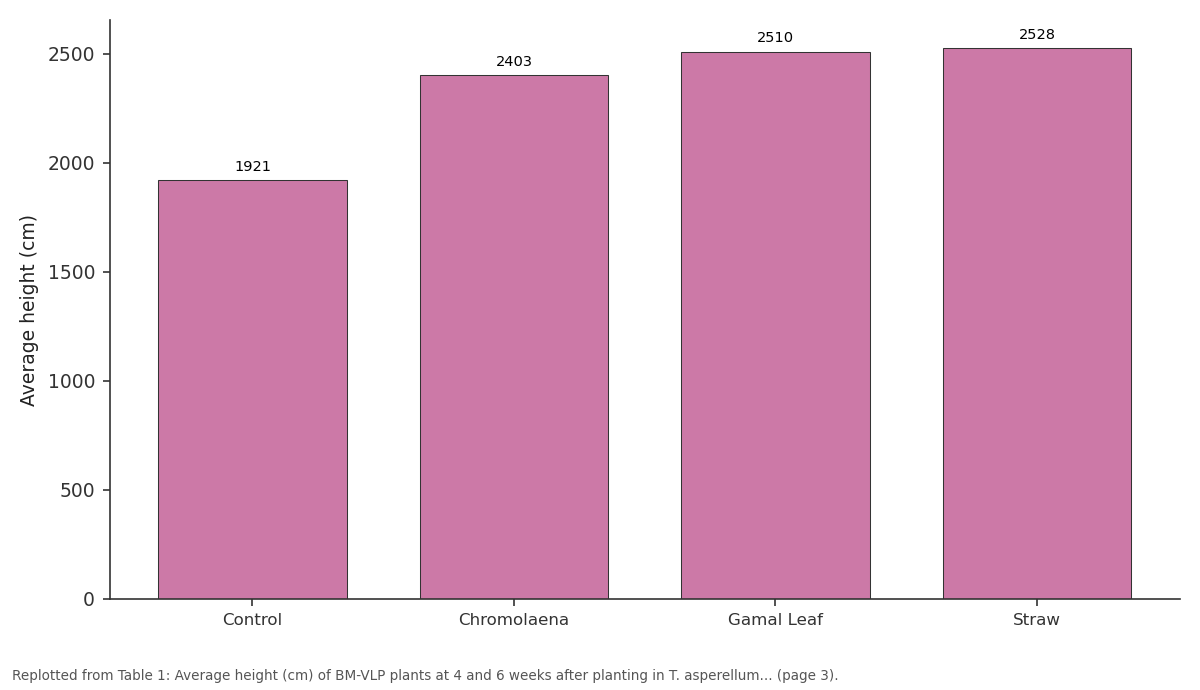
Treatment of. T. asperellum TR3 (T) g: Control vs Chromolaena vs Gamal Leaf vs Straw
Replotted from Table 1 (page 3) of the original paper. Every bar is the paper's own table value.
View source evidence ↗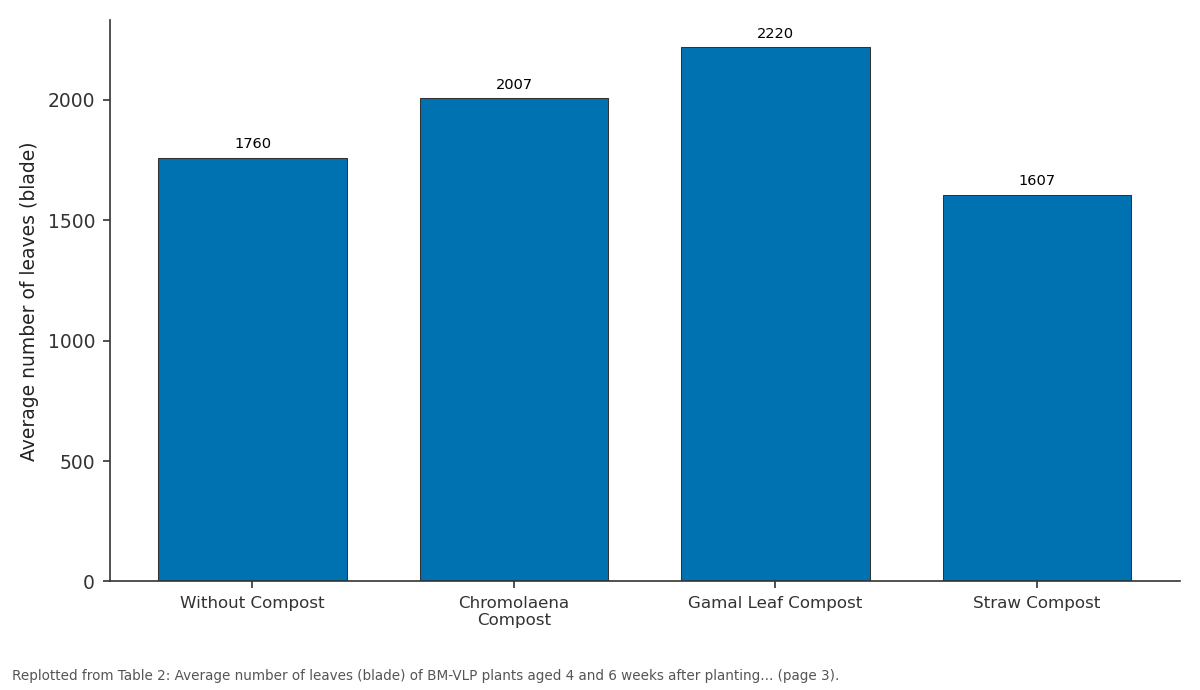
Treatment of T. asperellum TR3 (T) g: Without Compost vs Chromolaena Compost vs Gamal Leaf Compost vs Straw Compost
Replotted from Table 2 (page 3) of the original paper. Every bar is the paper's own table value.
View source evidence ↗Figures & tables
From the original paper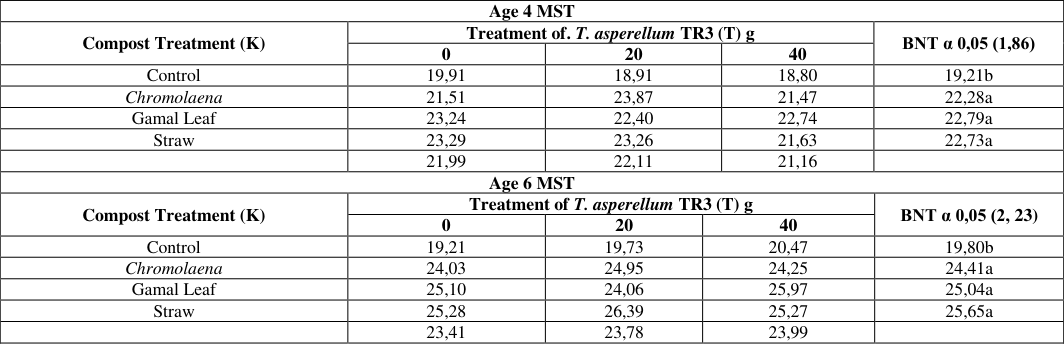 Table 1
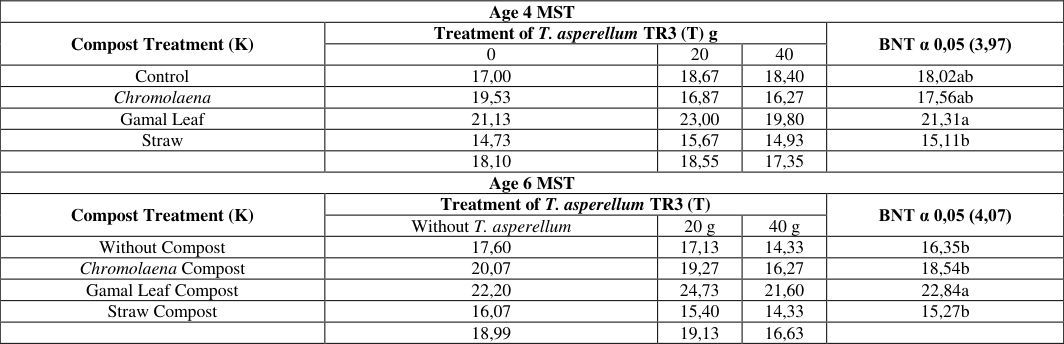 Table 2
 Table 3
Introduction
In Central Sulawesi Province, particularly in the Palu Valley, a renowned local shallot variety serves as a well-known source of raw material for fried shallots, which are known for their distinctive flavor compared to other onions in the country. Although the Palu local shallot variety is widely cultivated in the Palu Valley, production remains low [1] . The average farm-level yield of this variety remains low, at around 3-5 tons ha -1 . This productivity falls short of its genetic potential of 9.7 tons ha -1 . The low production of BM-VLP is attributed not only to environmental factors such as pests and climatic conditions but also to suboptimal cultivation practices. Nutrient deficiency in the soil is a common factor that hinders plant growth. Soil texture and structure significantly influence shallot quality and yield. Fertile and loose soil is essential for bulb development, and organic fertilizers, such as Chromolaena weed organic fertilizer, can help achieve this condition. To maximize the production of hammer valley shallot varieties, standardized cultivation practices must be implemented. Fertilization is a crucial aspect of cultivation that aims to achieve the desired outcomes. Increasing soil productivity by providing plant nutrients through fertilization is one strategy to boost shallot crop production [2] . Onion cultivation has traditionally relied on inorganic fertilizers and synthetic pesticides. However, the continuous use of these chemicals can have detrimental effects on agricultural products, leading to chemical residues, environmental pollution, and the emergence of resistant plant pests. Organic farming offers a promising solution to overcome these challenges by utilizing existing natural resources. Organic fertilizers, such as compost, are essential for improving soil water retention. Compost possesses natural properties that do not harm the soil and provides macro and micronutrients. It also enhances soil water holding capacity, soil microbiological activity, and cation exchange capacity values, leading to improved soil structure and ultimately affecting plant quality and production. Utilizing Siamese weeds as compost material offers a twofold advantage: firstly, weed utilization reduces crop yield losses due to competition; secondly, harmful weeds are transformed into something useful. Compost made from Siamese weeds supplemented with Trichoderma and manure is expected to be an innovative product that functions as both a fertilizer and an organic pesticide for plants. Compost fertilizer is organic material that is fermented using microorganisms, transforming nutrient-poor soil into productive soil through natural processes [13] . Trichoderma sp. fungus is one of the functional microorganisms used as a biofactor in this process. The addition of Trichoderma sp. during the composting process accelerates the composting process and enhances the quality of the compost produced. This fungus produces celobiohydrolase, endoglyconase, and glucosidase enzymes that work synergistically to promote a more rapid and intensive decomposition process [4] . Soil microbes, such as Trichoderma sp., are expected to expedite the composting of organic matter. Several Trichoderma species, including Trichoderma asperellum, have been isolated from plant rhizospheres at shallot planting sites. The addition of Trichoderma sp. fungus in organic fertilizer production offers several benefits. According to Munasir (2017) [6] , Trichoderma sp. enhances the biological activity of beneficial soil microorganisms, improves soil structure, and raises the pH of acidic soils [6] . Trichoderma sp. not only functions as a fertilizer but also decomposes organic matter.
Materials and Methods
Materials and Methods
Research methods
This study employed an experimental research design with a Randomized Group Design utilizing a two-factor factorial pattern. The first factor, Trichoderma concentration (T), comprised three treatments: T0 (control), T1 (20 g Trichoderma asperellum TR3), and T2 (40 g Trichoderma asperellum TR3). The second factor, the dose of composted plant material fertilizer (K), comprised four treatments: K0 (control), K1 (5 kg Chromolaena), K2 (5 kg gamal leaf), and K3 (5 kg rice straw). Each treatment was replicated three times, resulting in a total of 36 experimental units.
Land preparation
Prior to planting, the land was cleared of weeds to prevent the spread of pests and diseases. Subsequently, the land was measured and tilled using a hand tractor. The land was thoroughly processed, involving two plowing sessions, one harrowing session, and leveling. After the second tillage, beds were prepared with dimensions of 4 m x 1.2 m and a height of approximately 20 cm. Trenches measuring 30-40 cm in width were created between the beds to facilitate water drainage and irrigation. Soil analysis was conducted before treatment application to determine nutrient content.
Treatment application was carried out one day before planting according to the assigned treatment.
Planting
Onion planting typically utilizes bulbs. Before planting, the outer skin of dry seed bulbs was removed. Prior to planting, approximately ¼ of the bulb end was cut to encourage shoot growth and stimulate side bulb development. Planting was performed by digging holes with a spacing of 15 cm x 20 cm, and each hole was planted with one bulb of Palu valley shallot seed.
Maintenance
Plant maintenance included watering, replanting, and weed control. Watering was implemented by puddling in a trench surrounding the experimental plot with daily intensity for one week to stimulate initial plant growth, followed by watering every three days until two weeks before harvest. Replanting was conducted to replace seeds that did not germinate or died. Weed control was performed mechanically using a hoe and physically by removing weeds that grew on the growing media or planting beds until before harvest.
Treatment application
The Trichoderma asperellum starter used was 4 g per 1 kg of composted plant material. The recommended application rate for compost fertilizer is 10 tons ha -1 . Given the bed size of 4 m x 1.2 m per treatment unit, the recommended compost fertilizer application rate is 4.8 kg per experimental unit. Therefore, the Trichoderma asperellum starter used was 48 g per treatment unit. The application of Trichoderma asperellum TR3 treatment and composted plant material was carried out one day before planting Palu valley shallots according to the assigned treatment.
Results
Results
The observation results for BM-VLP plant height at 4 and 6 weeks after planting are presented in Appendix 1a and 1b, respectively, while the variance analysis is presented in Appendix 2a and 2b. The results of variance analysis showed that the interaction between Trichoderma asperellum TR3 and compost treatments, as well as the single factor of Trichoderma asperellum TR3, had no significant effect on the number of leaves of BM-VLP plants at 4 and 6 weeks after planting. However, the single factor of compost had a significant effect at both time points. The results of the BNT test (Table 1) indicate that a single compost treatment affects the height of BM-VLP plants at 4 and 6 weeks after planting. The single treatment of straw compost provided the best results for BM-VLP plant height, although it was not significantly different from the treatments of gamal leaf compost and Siamese weed compost. However, it was significantly different from the treatment without compos. Notes: Numbers followed by the same letter in the same column mean that they are not significantly different at the BNT test level a = 0.05.
| Age 4 MST | — | — | — | — | — |
|---|---|---|---|---|---|
| Compost Treatment (K) | Treatment of. T. asperellum TR3 (T) g | BNT α 0,05 (1,86) | |||
| 0 | 20 | 40 | |||
| Control | 19,91 | 18,91 | 18,80 | 19,21b | |
| Chromolaena | 21,51 | 23,87 | 21,47 | 22,28a | |
| Gamal Leaf | 23,24 | 22,40 | 22,74 | 22,79a | |
| Straw | 23,29 | 23,26 | 21,63 | 22,73a | |
| 21,99 | 22,11 | 21,16 | |||
| Age 6 MST | |||||
| Compost Treatment (K) | Treatment of T. asperellum TR3 (T) g | BNT α 0,05 (2, 23) | |||
| 0 | 20 | 40 | |||
| Control | 19,21 | 19,73 | 20,47 | 19,80b | |
| Chromolaena | 24,03 | 24,95 | 24,25 | 24,41a | |
| Gamal Leaf | 25,10 | 24,06 | 25,97 | 25,04a | |
| Straw | 25,28 | 26,39 | 25,27 | 25,65a | |
| 23,41 | 23,78 | 23,99 |
Table text extracted from the original PDF; superscript letters are shown inline. The original table image is below.
View original table image
Number of leaves (Blades)
The observation results for the number of leaves of BM-VLP plants at 4 and 6 weeks after planting are presented in Appendix 3a and 4a, respectively, while the variance analysis is presented in Appendix 3b and 4b. The results of variance analysis showed that the interaction between Trichoderma asperellum TR3 and compost treatments, as well as the single factor of Trichoderma asperellum TR3, had no significant effect on the number of leaves of BM-VLP plants at 4 and 6 weeks after planting. However, the single factor of compost had a significant effect at both time points. Notes: Numbers followed by the same letter in the same column mean that they are not significantly different at the BNT test level a = 0.05.
The results of the BNT test (Table 2) indicate that a single compost treatment affects the number of leaves of BM-VLP plants at 4 and 6 weeks after planting. At 4 weeks after planting, gamal leaf compost treatment provided the best results, although it was not significantly different from the treatments of Chromolaena weed compost and no compost. However, it was significantly different from straw compost. At 6 weeks of planting, the gamal leaf compost treatment yielded the best results and was significantly different from the other treatments.
| Age 4 MST | — | — | — | — |
|---|---|---|---|---|
| Compost Treatment (K) | Treatment of T. asperellum TR3 (T) g | BNT α 0,05 (3,97) | ||
| 0 | 20 | 40 | ||
| Control | 17,00 | 18,67 | 18,40 | 18,02ab |
| Chromolaena | 19,53 | 16,87 | 16,27 | 17,56ab |
| Gamal Leaf | 21,13 | 23,00 | 19,80 | 21,31a |
| Straw | 14,73 | 15,67 | 14,93 | 15,11b |
| 18,10 | 18,55 | 17,35 | ||
| Age 6 MST | ||||
| Compost Treatment (K) | Treatment of T. asperellum TR3 (T) | BNT α 0,05 (4,07) | ||
| Without T. asperellum | 20 g | 40 g | ||
| Without Compost | 17,60 | 17,13 | 14,33 | 16,35b |
| Chromolaena Compost | 20,07 | 19,27 | 16,27 | 18,54b |
| Gamal Leaf Compost | 22,20 | 24,73 | 21,60 | 22,84a |
| Straw Compost | 16,07 | 15,40 | 14,33 | 15,27b |
| 18,99 | 19,13 | 16,63 |
Table text extracted from the original PDF; superscript letters are shown inline. The original table image is below.
View original table image
The observation results for the leaf area ratio of BM-VLP plants are presented in Appendix 17a, while the variance analysis is presented in Appendix 17b. The results of variance analysis showed that the interaction between Trichoderma asperellum TR3 and compost treatments, as well as the single factor of Trichoderma asperellum TR3, had no significant effect on the leaf area ratio of BM-VLP plants. However, the single factor treatment of compost had a significant effect. 126,14 106,74 Notes: Numbers followed by the same letter in the same column mean that they are not significantly different at the BNT test level a = 0.05
The results of the BNT test (Table 3) indicated that the single compost treatment significantly affected the leaf area ratio of BM-VLP plants. The straw compost treatment provided the best results, although it was not significantly different from the treatments of Chromolaena weed compost and gamal leaf compost. However, it was significantly different from the treatment without compost.
| Compost Treatment (K) | Treatment of T. asperellum TR3 (T) g | — | — | BNT α 0,05 (29,63) |
|---|---|---|---|---|
| 0 | 20 | 40 | ||
| Control | 86,98 | 115,48 | 86,09 | 96,18b |
| Chromolaena | 11,91 | 101,47 | 90,81 | 102,40b |
| Gamal Leaf | 11,53 | 134,22 | 11,34 | 122,70b |
| Straw | 175,89 | 153,39 | 13,72 | 155,00a |
| 124,33 | 126,14 | 106,74 |
Table text extracted from the original PDF; superscript letters are shown inline. The original table image is below.
View original table image
Discussions Positive interactions between Trichoderma asperellum TR3 and straw compost on plant height growth
The application of 20 g of Trichoderma asperellum TR3 in combination with straw compost in the growing medium resulted in a positive interaction that promoted plant height growth. This suggests that the 20 g dose of Trichoderma asperellum TR3 added to the growing medium is sufficient to meet the requirements for accelerating the decomposition of organic matter from straw compost, thereby making nutrients available to plants.
Enhanced microorganism activity
The C-organic content in the soil serves as a catalyst for soil microorganism activity. Organic matter is a well-known source of energy for microorganisms explained that organic matter is a source of food/energy for soil microorganisms and animals, and it serves as a source of elements in the soil after undergoing the decomposition process [7] . Increased microorganism activity in the soil leads to an enhanced decomposition process and an increase in nitrogen fixation and phosphorus dissolution. The fungus Trichoderma asperellum, present in the compost, promotes Plant growth. This can occur because Trichoderma asperellum is a decomposer that accelerates the decomposition of organic matter in the soil, resulting in improved soil fertility, which ultimately stimulates plant vegetative growth.
Nitrogen fixation and nutrient availability
Apart from its role as a decomposer, Trichoderma asperellum also enhances nitrogen fixation. According to Harahap (2012) [8] , nitrogen fixation is a process that combines free nitrogen with other elements through a chemical process called nitrogen tethering [8] . One method involves the activities of symbiotic organisms that can convert atmospheric nitrogen into ammonia. Trichoderma asperellum TR3 is an isolate culture derived from local microbes found in shallot planting areas owned by farmers in Sigi Regency, Central Sulawesi. A high dose of Trichoderma asperellum TR3, up to 40 g, will produce a sufficient population of fungi in the medium to decompose organic matter in the soil. Charisma et al. (2012) explained that the application of Trichoderma asperellum TR3 functions as an inoculant to improve soil fertility through nutrient cycle regulation or as a reservoir (storage) of nutrients, ensuring that nutrients are readily available to plants [9] . The presence of Trichoderma asperellum TR3 in the soil fosters a symbiotic mutualism between plant roots and microorganisms. Plants benefit from the availability of nutrients required for the development of production component organs (such as tubers), while Trichoderma asperellum TR3 benefits from the supply of exudates released by plant roots [10] .
Compost as a nutrient source and microbial activator
The single factor of compost emerged as the most influential treatment affecting BM-VLP plant growth and yield in this study. This demonstrates the significant role of compost, particularly in providing essential nutrients and boosting soil microorganism activity. The organic matter content in compost determines the activity of microorganisms in the soil. This aligns with the statement by Rusdi et al. (2019) that the biological function of compost is to serve as a source of energy and food for soil microbes, and compost has the ability to increase soil microbial activity, which aids plants in nutrient uptake from the soil [11] .
Straw compost for enhanced plant growth
Straw compost produced the best results in terms of plant height and leaf area ratio. Leaf area ratio is a crucial parameter in determining plant growth rate and physiological processes. This index encompasses the processes of assimilate distribution and transformation to the leaves and the efficiency of substrate utilization in leaf area formation. Fariudin et al. (2013) explained that leaf area ratio is the proportion between leaf area or tissue that carries out photosynthesis and total plant tissue that carries out respiration or total plant biomass [12] . A larger leaf area leads to increased assimilate production. Leaf area serves as one of the variables used to measure the extent of the photosynthetic region of the plant. Therefore, a larger leaf area indicates an enhanced photosynthesis process. The application of straw compost to the plant growth medium results in a higher leaf area ratio for BM-VLP plants, and this difference is statistically significant compared to other treatments. This suggests that straw compost has the capacity to create a more favorable environment for plant growth compared to other plant material compost treatments.
Superiority of Gamal leaf compost
The Gamal leaf compost used in this study demonstrated advantages over Siamese weed compost and rice straw compost. The results of the chemical analysis of the compost revealed that the content of C-organic, nitrogen, phosphorus, and action exchange capacity in Gamal leaf compost was higher than in other plant material compost treatments.
Conclusion
The interaction between Trichoderma asperellum TR3 treatment and compost treatment had no significant effect on the growth and yield of BM-VLP plants. The single factor of compost significantly influenced the growth and yield parameters of BM-VLP plants. Gamal leaf compost treatment provided the best results, with an average leaf count of 22.84. Straw compost treatment produced the best plant height of 25.65 cm and leaf area ratio of 155.00 cm²/g.
Acknowledgement
AcknowledgmentsThe acknowledgments of the funding body, institutional head, co-workers, field assistants, local people etc. should be briefed and declaration of any conflict of interest related to the work.
References
9 in the original paper- Ansar M, Wahyudi I, Bahrudin B. Growth and Yield of Shallot Lembah Palu Variety on Different Direction and Form of Seedbeds Growing on Dry Land. AGROLAND the Agricultural Sciences Journal (eJournal). 2016;3(1):14-21.
- Susan EI, Christian OO, Emeka NK, Catherine EC, Michael OR. The assessment of floral abundance and composition of Neni-Nimo watershed in Anaocha L.G.A. of Anambra state, Nigeria. International Journal of Biological Sciences. 2021;3(1):01-09. DOI:10.33545/26649926.2021.v3.i1a.20
- Tiwari P, Misra BN, Sangwan NS. β-Glucosidases from the Fungus Trichoderma: An Efficient Cellulase Machinery in Biotechnological Applications. BioMed Research International. 2013;2013:203-235.
- Tsapikounis FA, Ipsilandis CG, Greveniotis V. Specific environment of aromatic plants cultivations and native microorganisms affect the effectiveness of the mycoparasites of the genus Trichoderma. Int J Hortic Food Sci. 2020;2(1):31-40.
- Charisma AMM. Pengaruh Kombinasi Kompos Trichoderma dan Mikoriza Vesikular Arbuskular (MVA) terhadap Pertumbuhan Tanaman Kedelai (Glycine max (L.) Merill) pada Media Tanam Tanah Kapur. LenteraBio: Berkala Ilmiah Biologi. 2012;1(3):111-116.
- Naher L, Yusuf U, Ismail A, Hossain K. Trichoderma spp.: A biocontrol agent for sustainable management of plant diseases. Pakistan Journal of Botany. 2014;46(4):1489-93.
- Rusdi E, WW, YY, Wahyuni D. The Effect of Soil and Bamboo Leaf Compost (Bambusa arundinacea) on the Growth of Cape (Mimusops elengi L) Seedlings. Journal of Warta Rimba. Journal Warta Rimba. 2019;7(3):127-136.
- Fariudin, Sulistiyaningsih, Waluyo. Growth and Yield of Two Cultivars of Lettuce (Lactuca sativa L.) in Aquaponics in Gurami Pond and Tilapia Pond. Journal Vegetika. 2013;2(1):66-81.
- Sánchez ÓJ, Ospina DA, Montoya S. Compost supplementation with nutrients and microorganisms in composting process. Waste Management. 2017;69:136153.