
Research article · 2022 · Full text
International Journal of Agriculture and NutritionDesign and development of impact hammer mill for limestone crushing for acidic soil
Volume 4(1) · Pages 75–82 · DOI: 10.33545/26646064.2022.v4.i1a.115 ↗
Research areasMineral Processing and Grinding
Abstract
Author-writtenSoil acidity becomes a serious threat to crop production in most highlands of Ethiopia particularly in Western parts of Oromia. Frequent tillage, removal of crop residues and mono-cropping and heavy rainfall contributes to soil acidification by leaching of cations. Agricultural limestone raises soil pH and reduces solubility of potentially toxic elements such as hydrogen, aluminum (Al3+) and manganese (Mn) at optimum nutrient uptake by crops. In an effort to alleviate the problems associated with soil acidity, a motorized agricultural limestone crusher was designed and fabricated. The prototype of limestone crusher machine has a feed table, hammer plate, concave sieve, discharge chute, and supporting frame.
Summary
Source-checkedPlain-language reading of the full paper, prepared with AI and checked against the text. Each point links to the authors' own words.
Why it matters
- Soil acidity is a significant threat to crop production in the Ethiopian highlands, especially in Western Oromia. View evidence ↗
- Agricultural limestone is used to treat acidic soil by raising the pH and reducing the solubility of toxic elements like aluminum and manganese. View evidence ↗
- Existing limestone hammer mills are typically designed for large-scale production, creating a need for affordable, locally maintainable small-scale machines for farmers. View evidence ↗
The question
- The objective of the study was to design and develop a prototype for an impact hammer mill machine. View evidence ↗
What they did
- The prototype was fabricated at the Bako Agricultural Engineering Research Center (BAERC) workshop. View evidence ↗
- The machine was constructed using various sheet metals (1.5 to 4 mm), angle iron, and a shaft with diameters of 20 and 40 mm, along with concave sieves with hole diameters of 2, 4, and 6 mm. View evidence ↗
- The milling process was tested by feeding dried limestone in quantities of 3.5 kg, 7 kg, and 10.5 kg into the chamber. View evidence ↗
- The design calculations determined that a diesel or petrol engine with more than 7.15 HP is required to operate the machine. View evidence ↗
What they found
- The machine achieved a maximum capacity of 630.32 kg/h and an efficiency of 99.61%. View evidence ↗
- The resulting crushed limestone had a geometric mean diameter of 0.26 mm. View evidence ↗
- The fuel consumption of the machine was measured at 26.37 ml/kg. View evidence ↗
- Structural analysis confirmed the design was safe because the maximum moment developed by the machine was less than the maximum allowable moments. View evidence ↗
- The shaft design satisfied torsional deflection requirements, as the calculated angle of twist was below the permissible limit of 1°/m. View evidence ↗
What it means
- The authors concluded that the impact hammer mill was successfully designed and constructed using materials available in the local market. View evidence ↗
- The authors recommend further improving the design to enable mass production, which could potentially generate income. View evidence ↗
Visual summary
1 visualsIllustrations explain the paper; they do not show study data.
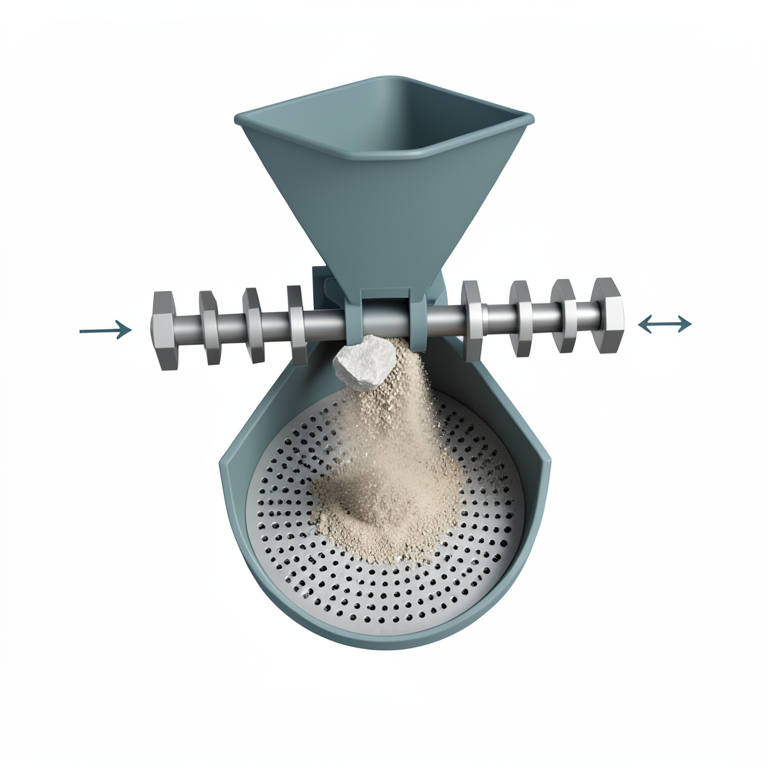
Hammer Mill Component Layout
AI-generated conceptual illustration (impact hammer mill for limestone crushing). It explains the idea and does not show study data.
View source evidence ↗Figures & tables
From the original paper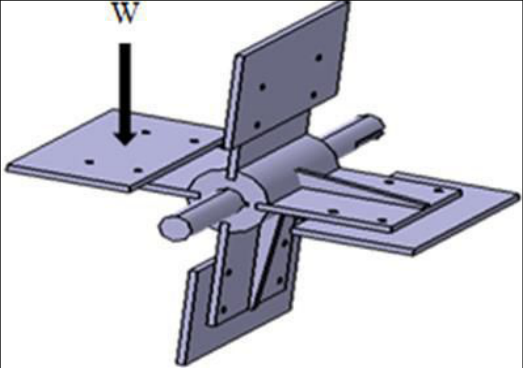 Figure 1
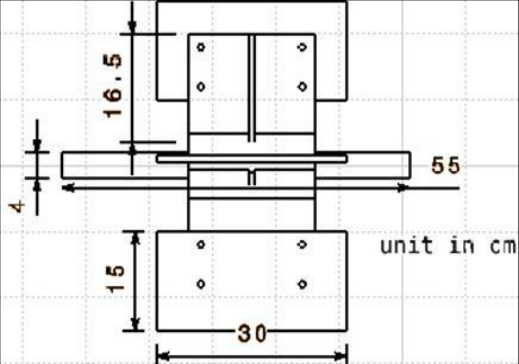 Figure 1
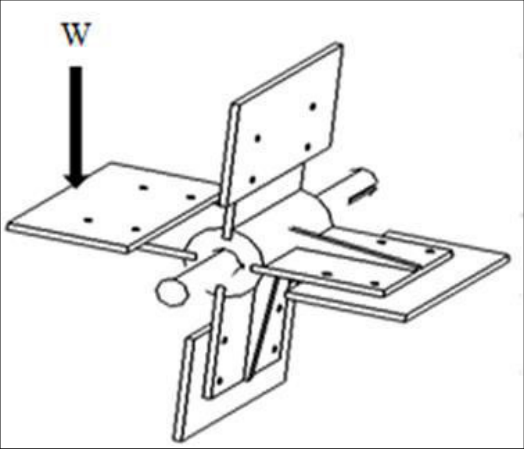 Figure 2
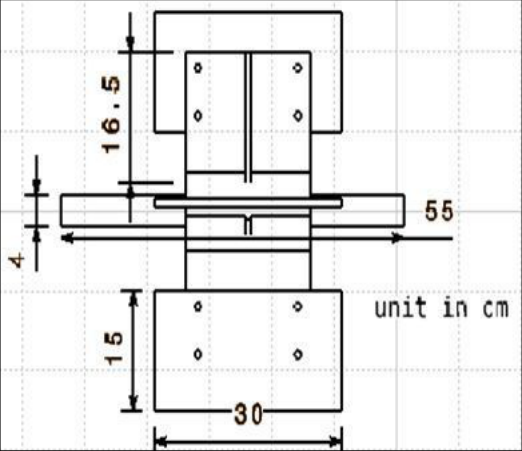 Figure 2
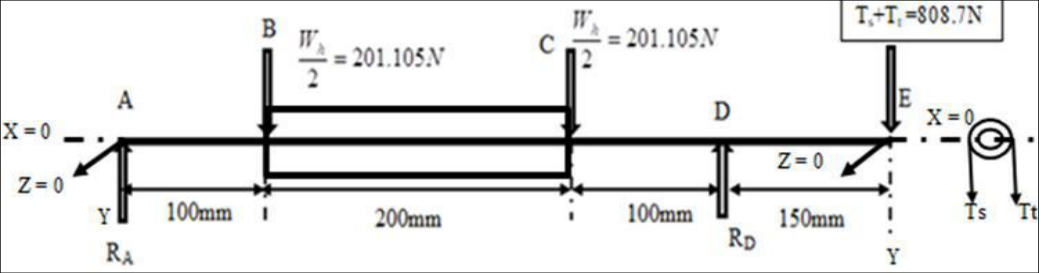 Figure 3
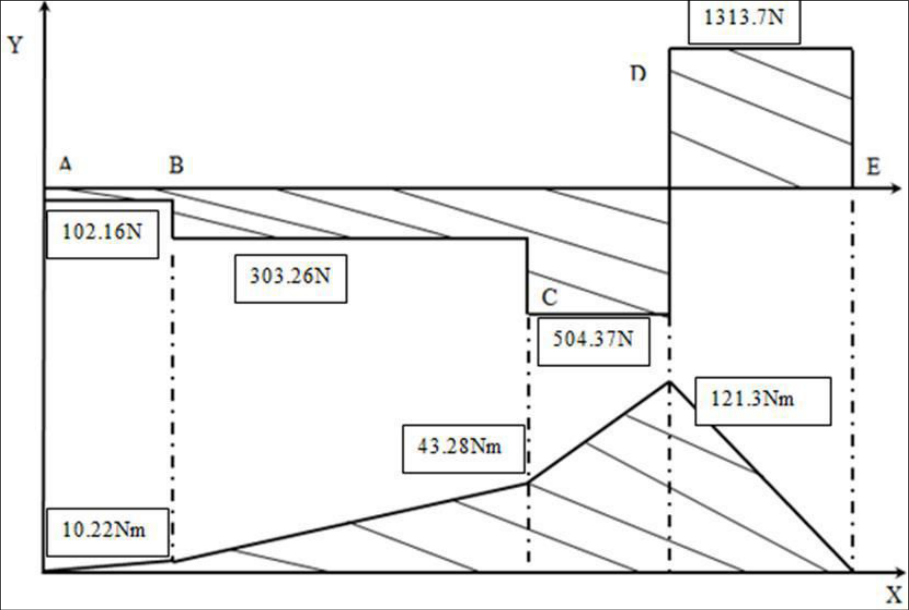 Figure 4
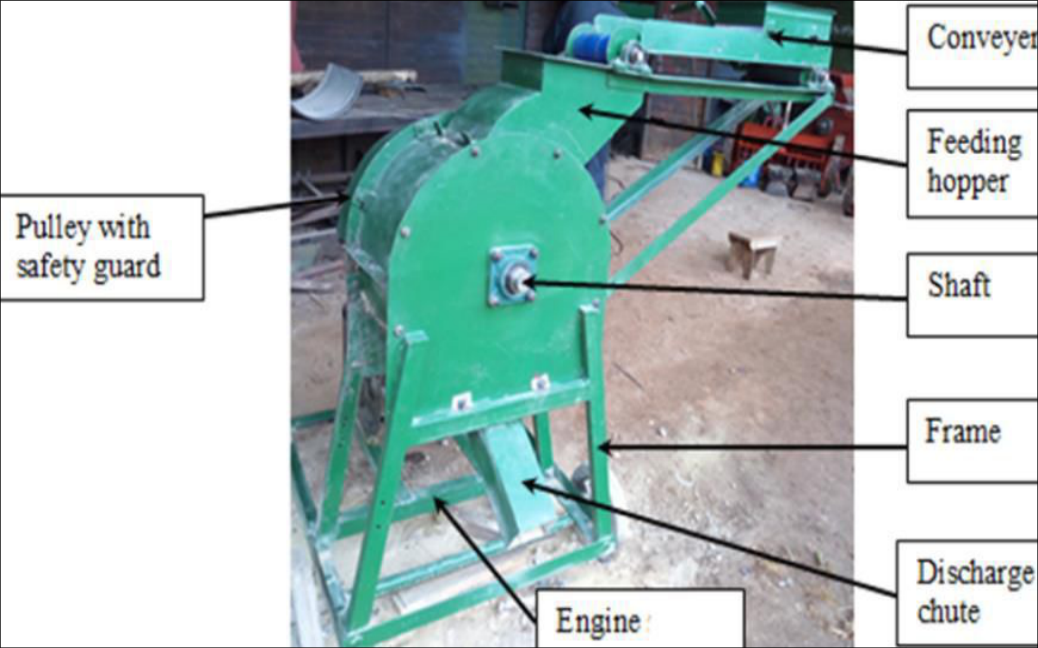 Figure 5
Introduction
A productive and sustainable agricultural system is fundamental to the well-being of a nation and a cornerstone of its development. Agriculture employs more than 80% of the population, contributes 40% to the GDP and more than 60% to exports in Ethiopia (Tegbaru, 2015) [11] . It is the major source of income, employment, food security and survival for the majority of the population. However, decreasing soil fertility due to soil erosion, continuous cropping, soil acidity and inadequate sustainable soil fertility management lead agricultural sector to low productivity (Van Straaten, 2002; Nyirinkwaya B., 2013) [13] . The disruption of fertilizer supplies by economic, political and other pressures can seriously impede the development and livelihood of rural inhabitants. Soil acidity becomes a serious threat to crop production in most highlands of Ethiopia in general and in the western part of the country in particular. Studies show that about 43% of the total land area of Ethiopia is affected by acidity (Tegbaru, 2015) [11] . About 28% of the cultivated agricultural land is acidic (pH<5.5) with significant impact on productivity for more than 3 million hectares of land. Areas which are most prone to acidity are the Northwestern, South-western, Southern and central regions of the country. Most of the acidaffected areas are in the highlands where wheat, maize and teff are predominantly grown.
Lime amounts of 2-5 t/ha is typically needed to neutralize acid soils sufficiently for crop production, depending on the type of soil and levels of acidity (Tegbaru, 2015) [11] . The Ethiopian government is undertaking initiatives and planned to rehabilitate 226,000 ha of agricultural land by the end of the GTP II period. To achieve this, it is planned to produce 450,000-900,000 tons of lime. However, up to now, the achievement is quite low. Limestone resource is a geological nutrient asset that could sustain and enhance crop production is necessary for soil amendments (Bosse et al., 1996) [14] . Agro-minerals are physically modified by crushing and grinding. Hammer mill is the most widely used in mineral processing industries because of its desirable characteristics which include the ability to handle a wide variety of raw materials, ability to handle hard stray objects and its robustness (Ajaka and Adesina, 2014) [2] . Most of the existing lime stone hammer mill machines are designed for very large-scale production by the national companies. Therefore, to supplement the existing limestone production industry, small-scale limestone crushing machine which can substitute import, produced and maintained locally, minimize cost (consider buying capacity of our farmers), simple, durable, efficient and effective machine should be developed. Mesozoic limestone, dolomite and marl are largely deposited in western and northern Ethiopia. Large areas of central plateau near Ambo town, in Didessa valley and smaller deposits occur in Kella area south of Addis Ababa.
Objectives
To design and develop impact hammer mill machine prototype
Methodologies used 2.1. Research Site
The experiment was conducted at BAERC, which is located in East Wollega Zone of Oromia National Regional State, Ethiopia. The machine was fabricated at BAERC workshop. The Center lies between 9 0 04'45'' to 9 0 07'15''N latitudes and 37 0 02' to 37 0 07'E longitudes.
Materials used
A prototype of the designed impact hammer mill was made from the drawings using basic manufacturing tools and equipment such as engineers try square, steel ruler, clamps, scriber, vernier caliper, dot punch, lathe machine, fixed grinder, bending and rolling machines, arc welding machines, hand drill and grinder, power hacksaw, milling machine and spraying gun and different thickness of sheet metal (1.5, 2, 3, 4 mm), angle iron (40x40x4mm), flat iron, pulley, bearings, engine, round bar, shaft Ø (20 and 40 mm), concave sieve (2, 4, 6 mm hole diameter) bolt and nut. Instruments such measuring tape, weighing balance, oven dry, tenso-meter, impact tester, different aperture size of sieve was used during prototype construction and data collection.
Design Analysis and Calculation
Design Consideration: The major components of the machine include the hammers, shaft, belt and pulley, casing and motor power.
Impact Bending Stress
For the maximum feed rates of (10.5 kg/min = 0.174 kg/s) and maximum revolution of 900 rpm of the rotor, there were 15/s impacts by 4 rotors in one second. a. When impact hammer mill blow bar was subjected to a concentrated load at the mid of its span as indicate in (figure 3.4) the following equation was used according to Khurmi and Gupta, (2008) [8] . The ratio I/y is known as section modulus and is denoted by Z.
Since, Maximum allowable moment > Maximum moment developed by the machine and the design was safe for this condition. When the impact hammer mill plate blow bar was subjected to a concentrated load at the tip it was calculated using equation ( 3
Determination of power requirement
The power required to operate the hammer milling machine was determined according to Bond, (1952) and was given as; The power required to operate the hammer milling machine was calculated using the following equation and the maximum crushing capacity, CC = 0.174 Kg/s was used to determine the power. P = 6.5 hp Considering 10% power loss due to friction, the total power required to crush was = 6.5 x 0.1 + 6.5 = 7.15 HP Where E = energy required to crush limestone (J/kg) P = Crushing power (kw) q = feed rate in (kg/min) D pb = average particle diameter before crushing (mm) D pa = average particle diameter after crushing (mm) Wi = work index (Kwh/t) So, a diesel or petrol engine of more than 7.15HP can be used to operate the machine. An electric motor of the same power rating can also be used where electrical power is available.
Selection of pulley
The machine required two pulleys; one driving pulley were mounted on the crank shaft of the engine and the driven pulleys were mounted on impact hammer mill shaft. Pulleys made from cast iron with 0.138 m diameter for driving pulley and 0.48 m diameter for driven pulley were selected based on its availability, low cost and high performance. Based on the required revolution per minute, the diameter of driven pulley was determined according to Khurmi R.S. and Gupta J.K., (2013) [7] ) 7 ( V-belt and pulley arrangements were adopted in this work to transmit power from the engine to the shaft of impact hammer mill. The main reasons for adopting the v-belt drive was its flexibility, simplicity and low maintenance costs. Additionally, the v-belt has the ability to absorb shocks there by mitigating the effect of vibratory forces (Khurmi and Gupta, 2005) [6] . Appendix B Table 1 gives list of V-belts (A, B, C, D and E) and their standard dimensions and power-carrying capacity. Length of the open belt was calculated according to Khurmi and Gupta (2005) [6] as given below:
The closest standard length of the belt was selected from standard table and found to be 2.312m (B 91 V-Belt) and C = 0.6m taken value.
Determination of belt contact angle
The belt contact angle was given by the following equation (Khurmi and Gupta, 2005) [6] .
Equation rad
Where 𝛼 1 = angle of wrap for the smaller pulley, rad. 𝛼 2 = angle of wrap for the larger pulley, rad. C = center to center distance between small and large pulley, mm
Determination of power transmitted to the shaft
Power transmitted per belt to the shaft was determined according to Barber (2003).
Determination of the belt tension
The belt tension developed in the slack side was determined according to Barber (2003)
Determination of the impact hammer shaft diameter
The design of shaft was based on combined shock and fatigue, bending and torsional moment. The diameter of the main shaft for a solid shaft having little or no axial loading was calculated according to Khurmi and Gupta, (2008) [8] . The tight and slick sides tensions in the belt was 504.62N, 147.12N and weight of pulley 16kg x 9.81 m/s 2 = 156.96 N respectively and (T 1 + T 2 ) = (504.62 + 147.12 + 156.96) N = 808.7 N and for hammer load (Wh) = (41 kg x 9.81 m/s) = 402.21 N. The values of K b and K t were taken as 3 and 2 respectively for the suddenly applied load on the rotating shaft and the allowable shear stress of the shaft (τ) as 40 MN/m 2 based on American Society of Mechanical Engineers (ASME).
Permissible angle of twist caused by torque on the shaft was determined according to the following equation. Note that the maximum permissible angle of twist = 1°/m., hence the shaft with in safe limit. The calculated angle of twist was less than the permissible angle of twist (1°/m). Hence, torsional deflection was satisfied.
Working Principles of Hammer Mill
Hammer mills operate on the principles of impact and pulverization (Lynch et al., 2005) [9] . The limestone was fed into the hammer mill through the feed hopper. The feed hopper was chamfered to facilitate the unidirectional flow of the limestone by gravity to the milling chamber and the hammers strike the dried lime stone and broke them into small pieces. The pulverized material was prevented from leaving the milling chamber until it was reduced to fine particles. On subsequent impact by the hammers, the larger particles or uncrushed materials was recycled to the crushing chamber. Dried limestone 3.5 kg, 7 kg and 10.5 kg was feed into the chamber through the hopper and the duration of the milling process was recorded. The hammer mill consists of four fixed hammers on a drum with steel shaft, which rotates at a high speed in the housing. On the bottom of the housing and close to the tip of the hammers, it has a sieve. The fine particles passing through the sieve and was collected and the fineness of the particles was controlled by using sieves of different mesh sizes.
Description of the Machine Components and construction of prototype
The main components of the impact hammer milling machine include conveyor and feed table, impact hammer mill, sieve, delivery unit and frame as shown in the figure 3.1.
Conclusion and recommendation
The design and construction of impact hammer mill machine have been carried out using available materials on the local market. The machine consists of pulley with safety Gard, engine, discharge chute, frame, shaft, feeding hopper and conveyer. The machine has best performance in terms of (capacity 630.32 kg/h, efficiency 99.61%, geometric mean diameter 0.26 mm, fuel consumption 26.37ml/kg). It is recommended to look into the possibility of improving on the design and fabrication with a view of going into mass production which can also create a possibility for income generation.
Acknowledgements
I would like to thanks Oromia Agricultural Research Institute (OARI) and BAERC for the delivery of funds to cover costs related with study work. I seriously indebted to the technicians of BAERC workshop who shared with me their wisdom, skill, experience and helped me during gathering of data and supported me with all the required inputs in the manufacture of the prototype from the very beginning up to end.
Figures and tables from the paper
References
5 in the original paper- Abdenna Deressa, Negassa Chewaka, Tilahun Geleto. Inventory of Soil Acidity Status in Crop Lands of Central and Western Ethiopia. Utilization of diversity in land use systems: Sustainable and organic approaches to meet needs, 2007 Oct 9-11.
- Ajaka EO, Adesina. Design, fabrication and testing of a laboratory-size hammer mill. Department of mining, school of engineering and the federal university of technology, Akure, Nigeria, 2014.
- Barber J. Production, Consumption and the world summit on sustainable development. Development and sustainability. 2003;5:63-93.
- Bond FC. The third theory of comminution. Trans. AIME. 1952;193:484-494.
- Van Straaten P. Rocks for Crops: Agro minerals of subSaharan Africa. ICRAF, Nairobi, Kenya, 338pp. Villar, L.F.S., de Campos, T.M.P., Azevedo, R.F., and Zornberg, J.G. (2009). Tensile Strength Changes under Drying and its Correlations with Total and Matric Suctions." Proceedings of the Seventeenth International Conference of Soil Mechanics and Geotechnical Engineering, Alexandria, Egypt, 5-9 October, 2002, 793-796.