
Research article · 2023 · Full text
International Journal of Advanced Biochemistry ResearchSelf-efficacy as a multifaceted belief
Volume 7(2S) · Pages 420–423 · DOI: 10.33545/26174693.2023.v7.i2sf.245 ↗
Research areasReligion, Spirituality, and Psychology
Abstract
Author-writtenSelf-efficacy is not the same as general self-confidence because it is a feeling of personal mastery. It is preferable to think of self-efficacy beliefs as a collection of detailed assessments of one's own skills. It is described as a person's confidence in their ability to perform a specific task. It is concerned with a person's ability to handle events as they come along. Self-efficacy and self-esteem are philosophically related. Self-efficacy seems to be more task- or scenario-specific, but self-esteem tends to be a more universal trait (it will be present in any situation).
Summary
Source-checkedPlain-language reading of the full paper, prepared with AI and checked against the text. Each point links to the authors' own words.
Why it matters
- Self-efficacy is distinct from general self-confidence as it specifically represents a feeling of personal mastery. View evidence ↗
- While philosophically related to self-esteem, self-efficacy is typically specific to a task or scenario, whereas self-esteem is a universal trait. View evidence ↗
- Self-efficacy is important because it is linked to an increase in a person's persistence. View evidence ↗
The question
- The paper explores self-efficacy as a multifaceted belief system and how it influences human behavior. View evidence ↗
What they did
- The authors conducted a theoretical review based on established psychological frameworks, citing key researchers such as Bandura and Gist. View evidence ↗
What they found
- Individuals with high self-efficacy tend to attribute failure to a lack of effort, whereas those with low self-efficacy attribute it to a lack of ability. View evidence ↗
- General self-efficacy serves as a predictor for how well a person adjusts to unfamiliar or ambiguous situations. View evidence ↗
- Self-efficacy levels generally rise following success and decline following failure. View evidence ↗
- Observing the successes and failures of others, known as vicarious experience, provides a source of information that can influence one's own efficacy beliefs. View evidence ↗
- Physiological states like anxiety can lead to lower self-efficacy views, as anxiety may be interpreted as an expectation of failure. View evidence ↗
- Self-efficacy is a more powerful influence on decision-making than actual skills, knowledge, or the expected consequences of an action. View evidence ↗
- A stronger sense of self-efficacy leads to increased tenacity and effort during an activity. View evidence ↗
- Low self-efficacy can cause individuals to perceive tasks as more difficult than they are, resulting in stress and a narrowed view of possible solutions. View evidence ↗
- Self-efficacy can be manipulated through four interventions: performance achievements, vicarious experience, verbal persuasion, and emotional arousal. View evidence ↗
What it means
- The authors conclude that to accurately examine the relationship between efficacy and behavior, one must measure the specific efficacy beliefs relevant to the behavior being studied. View evidence ↗
- The authors note that self-efficacy alone does not guarantee action, as external constraints, lack of resources, or social barriers can prevent skilled and confident people from acting. View evidence ↗
Visual summary
1 visualsIllustrations explain the paper; they do not show study data.
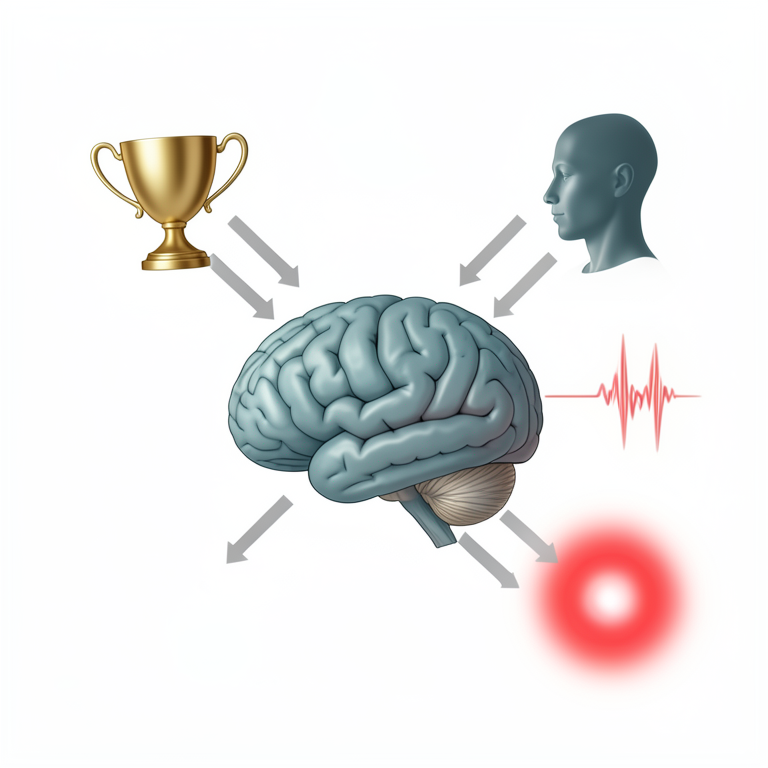
Sources of Self-Efficacy
AI-generated conceptual illustration (human brain and psychological cognitive processes). It explains the idea and does not show study data.
View source evidence ↗Introduction
The idea that one can succeed in a specific situation is known as self-efficacy (Bandura, 1986; Gist, 1987) [2,9] . Persistence increases with self-efficacy. People cultivate selfperceptions of competence that are crucial to the objectives they pursue and the control they may exert on their environment. Their performance and motivation are impacted by these beliefs. According to Pethe and Dhar (1999) [13] , people with high self-efficacy attribute failure to effort, while those with low self-efficacy attribute failure to ability. Self-regulatory mechanisms allow people to control their own behavior (Bandura, 1986) [2] . Self-observation, self-evaluation, and self-reaction are some of these systems. Self-concept, self-esteem, and values are three subprocesses of self-evaluation. Self-efficacy may affect the jobs that people choose since people tend to gravitate toward jobs that they feel confident in their ability to manage (Gist, 1987) [9] . High self-efficacy people are more likely to value and look for professions that give them the freedom to significantly alter their working environment. In circumstances with few chances and numerous constraints, people with high self-efficacy find creative and persistent ways to exert some degree of control (Bandura and Wood, 1989) [3] . General self-efficacy has been shown to predict adjustment to new, ambiguous, and unfamiliar situations, and may thus affect how controllable the work environment is considered to be (Sherer, Maddex, Mercandante, Prentice-Dunn, Jacobs®, and Rogers, 1982; Tipton and Worthington, 1984; Eden and Kinnar, 1991; Eden and Zuk, 1995) [14,16,6,7] .
Self-Efficacy and Control
Self-efficacy beliefs are very specific judgments of one's control over the ability to carry out a certain behavior. They do not represent widespread feelings of power. For instance, one needs to know a person's self efficacy beliefs particular to making the tennis team rather than their overall feelings of themselves as effective people if they want to determine if they will work hard to try out for the team (Taylor, Peplan, and Sears, 1997) [15] . In driving scenarios, one might have a high level of self-efficacy, but not in an athletic contest. General selfefficacy, on the other hand, seems to be a stable attribute that is the result of a lifetime of experience, as opposed to task-specific self-efficacy, which tends to be situation-specific and changeable (Eden and Kinnar, 1991) [6] . The extent to which people believe they are capable of such change determines how long they persist in their efforts to change when they attempt to cope with issues. If therapy clients don't think they can do something, they're unlikely to quit smoking, lose weight, or get over their fear of flying. Other research has revealed that overcoming social anxiety (Leary and Atherton, 1986) [10] , kicking a drug habit (Diclemente, 1986) [5] , and even excelling in athletics (Wurtele, 1986) [15] are significantly influenced by how much people believe they will be able to accomplish their objectives (Burger, 1990) [4] . Impact on Behaviour Self-beliefs have four different effects on behavior. They first have an impact on behavior selection. They avoid situations where they don't feel competent and confident. The link between self-efficacy, result expectancies, and knowledge and abilities must be accurately assessed. The degree to which individuals expect that their activities will result in a particular outcome is known as an outcome expectation. The degree to which someone expects to be effective in achieving a specific objective is known as their effectiveness expectation. It is the distinction between thinking something might happen and thinking one might influence it to happen (Bandura, 1977) [1] . Therefore, self-efficacy is a stronger factor in influencing people's decisions than either expected consequences or actual skills and knowledge pertinent to the behavior in question. The precursors to and creators of people's selfefficacy may be their knowledge, skills, and even the results they have experienced and anticipated, but the filtering effect of the created beliefs ultimately screens, redefines, distorts, or reshapes subsequent efforts and new information (Pajares, 2002) [12] . Second, people's self-beliefs influence how far they will go in an activity and how long they will stick with it. More effort and tenacity are put forth with a better sense of efficacy. This leads to a kind of self-fulfilling prophesy because the ability to improve self perceptions is limited when people give up, whereas the persistence associated with high efficacy is likely to result in improved performance. For people who are learning a task vs those who are performing established skills, efficacy has different consequences. For instance, a student with low self-efficacy develops self-doubt, which may be the necessary motivation for learning. Similar to this, a student with a high sense of effectiveness can believe that less effort and planning are required. Selfdoubt can be crippling when one is applying skills because high efficacy is more likely to help one sustain and exert intense effort. Self-beliefs also have an impact on how people think and feel, which is the third way they affect human agency. People with low efficacy could think that things are harder than they actually are, which can cause stress and a limited view of the optimal course of action. On the other side, high efficacy may inspire sentiments of assurance and calm when tackling challenging tasks. According to Nisbett and Ross (1980) [11] , it may be quite challenging to divorce one's self from their deeply held ideas since people take these beliefs seriously and may even conflate them with their own identity. We genuinely believe that we are what we say we are. Failure in an area where we have a strong sense of efficacy might just as readily be seen as a failure of self as it can be as a result of indifference. The straightforward idea that high efficacy is best may have negative consequences. Self-efficacy tends to increase with success and decrease with failure. Self-efficacy is positively impacted by past achievements, particularly when such successes are attributed to constants like innate talent or a tolerable degree of task complexity. However, if failure can be attributed to factors over which one has no control, like unluck, or those one can influence, like effort, then strong self-efficacy beliefs can still be upheld even in the face of failure. Failure is unlikely to change someone's sense of efficacy once success and experience have solidified it. People with a high sense of efficacy are more likely to attribute their mistakes to circumstances, effort, or ineffective strategies. This can motivate them to put forth more effort and perseverance, but people with an unreasonably high sense of efficacy might attribute mistakes to these things even when knowledge and skills are to blame. When a very strong effort succeeds in overcoming a particular failure, the event can inspire such strong efficacy beliefs that the person may believe he can conquer any challenge. It goes without saying that it can be difficult to distinguish between reasonable expectations and reckless presumptions. Vicarious experience, or being exposed to the efforts, accomplishments, and failures of others, is another source of knowledge on efficacy. Even just observing someone else complete a task effectively might boost one's confidence in one's own ability to complete the same task. Bandura by constantly having them watch other kids their own age and sex approach and pet canines. The "If he can do it, so can I" sensation is less than active accomplishment, but people become more sensitive to it when they are unsure of their own talents or when they have little past experience. When the person has minimal past expertise with the work, the impacts of modeling are especially pertinent in this situation. Verbal reinforcement and encouragement of a person is known as verbal or social persuasion. However, the outcome is influenced by the communication's source and target's qualities. People are most effective at influencing others' judgments of their own self-efficacy when they are seen as credible and trustworthy. It will, however, need to be paired with other effective intervention areas in order to produce long-lasting change.
Manipulating Self-Efficacy
Efficacy beliefs can also be revealed by physiological processes as stress, arousal, terror responses, exhaustion, and aches and pains (Wagner III and Hollenbeck, 1992). One may have poorer self-efficacy views when they are anxious than when they are relaxed since we may think that our anxiety is a result of potential failure expectations.
Processing Efficacy Information
Ultimately, processing and interpreting all the data that people use to evaluate their sense of efficacy is necessary. In final efficacy assessments, the cognitive processing of selfefficacy information plays another important and significant role. The first is the kind of information that people are likely to take into account and employ when establishing their perception of efficacy, as was previously described. The second "concerns the combination rules or heuristics" that they employ to balance and combine such data into ultimate conclusions. The outcome is yet another complicated series of operations, rich in context and potentialities that influence both the sort of efficacy that will be invoked and the anticipated follow-up activities.
Assessing efficacy beliefs and forecasting behavior is more than a daunting task due to the abundance of choices. More hope for understanding human behavior may lie in the degree of congruence between perceived efficacy and other crucial factors than in the strength of efficacy alone. Self-efficacy assessments have a complicated and multifaceted mediating role in human behavior that is influenced by a variety of variables. Disincentives and performance constraints may exist, meaning that even highly effective and skilled people may decide not to act in accordance with their beliefs and abilities because they lack the motivation to do so, lack the resources to do so, or believe social constraints will impede their desired course of action or result. Efficacy will not work in these situations. A person could feel capable but be powerless because he is hindered by these actual or perceived limitations. Efficacy beliefs can be helpful in some circumstances but harmful in others, depending on how they interact with a variety of other factors. There are instructors who are highly qualified but suffer from low self-confidence, or there are instructors who are highly skilled but have poor pedagogical skills. Some people with low efficacy give up or never start a task, whereas others with identical efficacy beliefs persevere despite inevitable failure. Knowing exactly what abilities are needed to carry out a certain behavior properly is crucial since failing to do so might lead to inconsistencies between behavior and efficacy. Similar to this, people may make false task efficacy assessments when they are unsure of the nature of their work. those that are seen as being more demanding or tough than they actually are produce incorrect low efficacy readings, whilst those that are perceived as being less challenging might lead to overconfidence. Even more challenging, people frequently believe they only have parts of their skills mastered, feeling more confident in some areas than others. Their sense of efficacy regarding the task at hand will be significantly influenced by how they prioritize and evaluate these components. For self-efficacy assessments to be effective controllers and performance predictors, they must appropriately assess the objectives of the task and the performance levels necessary for its successful execution. This component is particularly important in circumstances where a person's success is socially assessed and one must rely on others to gauge how well one is doing. People are unable to effectively estimate their sense of efficacy in these circumstances because they lack the necessary experience, therefore they are forced to judge their abilities based on knowledge of prior experiences. The effects of this flawed self-awareness can be unpredictable. Effectiveness views can be distorted by a variety of reasons, and these distortions ultimately lead to subpar self-evaluations.
Misjudgment and Consequences
People frequently overestimate or underestimate their skills and pay the price for these mistakes of judgment. The ongoing process of efficacy self-appraisals includes these repercussions of error in judgment. When the repercussions are minimal, people might not feel the need to reevaluate their skills and might continue to act in ways that are beyond their capabilities. In such circumstances, skill judgment errors will muddy the connection between efficacy assessments and subsequent behavior. Periodically assessing self-efficacy is also necessary to determine how experiences affect competence. Strong efficacy beliefs are typically the result of time and a variety of experiences. They are extremely resilient and predictable. If weak efficacy beliefs are to be used as predictors, they must be constantly revised. Of course, either could have a life-changing experience or result. It is imperative to measure the self-efficacy beliefs that are pertinent to the behavior in question and vice versa when examining the relationship between efficacy and behavior. A relationship will become confusing if self-perceptions or performance are incorrectly assessed. Assessing the impact of beliefs on behavior frequently requires looking at how essential the beliefs in question are and how they relate to one another. Level, generality, and strength of efficacy beliefs vary, and how these factors interact has an impact on behavior. Additionally, discrepancies can appear if performance is assessed using a real-world scenario but efficacy is assessed using a simulation, or vice versa.
Conclusion
From the above study we conclude that Self-efficacy is not the same as general self-confidence because it is a feeling of personal mastery. It is preferable to think of self-efficacy beliefs as a collection of detailed assessments of one's own skills. Strong efficacy beliefs are typically the result of time and a variety of experiences. They are extremely resilient and predictable. If weak efficacy beliefs are to be used as predictors, they must be constantly revised. It is imperative to measure the self-efficacy beliefs that are pertinent to the behavior in question and vice versa when examining the relationship between efficacy and behavior.
References
10 in the original paper- Bandura A. Self-efficacy: Toward a unifying theory of behavioural change. Psychological Review. 1977;2:191-215.
- Bandura A, Wood R. Effect of perceived controllability and performance standards on self-regulation of complex decision making. Journal of Personality and Social Psychology. 1989;56:805-14.
- Diclemente CC. Self-efficacy and the addictive behaviours. Journal of Social and Clinical Psychology. 1986;4:302-315.
- Eden D, Kinnar J. Modeling Galatea: Boosting selfefficacy to increase volunteering. Journal of Applied Psychology. 1991;76:770-80.
- Eden D, Zuk Y. Seasickness as a self-fulfiling prophecy Raising self-efficacy performance at sea. Journal of Applied Psychology. 1995;80:628-35.
- Gist ME. Self-efficacy: Implications for organizational behaviour and human resource management. Academy of Management Review. 1987;12:472-85.
- Leary MR, Atherton SC. Self-efficacy, social anxiety and inhibition in interpersonal encounters. Journal of Social and Clinical Psychology. 1986;4:256-267.
- Sherer M, Maddux JE, Mercandante B, Prentice-Dunn S, Jacobs B, Rogers RW. The self-efficacy scale: Construction and validation. Psychological Reports. 1982;51:663-71.
- Tipton RM, Worthington EL (Jr.). The measurement of generalized self-efficacy: A study of construct validity. Journal of Personality Assessment. 1984;48:545-8.
- Wurtele SK. Self-efficacy and athletic performance: A review. Journal of Social and Clinical Psychology. 1986;4:290-301.
Cited by 1
From OpenAlex, OpenCitations and reference lists read by Scinovex
- Pengaruh Literasi Digital, Penggunaan Media Pembelajaran, dan Efikasi Diri terhadap Motivasi Belajar Pemasaran Digital Siswa Kelas XI Pemasaran SMK Negeri Kota Surakarta ↗
Wulan Utami, Harini Harini · Indonesian Journal of Innovation Multidisipliner Research · 2026
Penelitian ini bertujuan untuk mengetahui pengaruh literasi digital, penggunaan media pembelajaran, dan efikasi diri terhadap motivasi belajar pemasaran digital siswa kelas XI Pemasaran SMK Negeri Kota Surakarta. Latar belakang penelitian didasarkan pada lulusan SMK yang menjadi kelompok dengan Tingkat Pengangguran Terbuka (TPT) tertinggi dari tahun 2021-2025. Hal tersebut menunjukkan adanya ketidaksesuaian kompetensi yang dimiliki lulusan vokasi yang seharusnya lulusan tersebut…
❝ 0PDF