
Research article · 2023 · Full text
International Journal of Statistics and Applied MathematicsUnlocking the Potential: A review of Millet marketing through farmer producer organizations (FPOs) for sustainable agricultural development
Volume 8(6S) · Pages 01–05 · DOI: 10.22271/maths.2023.v8.i6sa.1345 ↗
Research areasArtificial Intelligence and Decision Support SystemsAgricultural Economics and Practices
Abstract
Author-writtenThis review paper provides a comprehensive analysis of the marketing of millets through Farmer Producer Organizations (FPOs) as a strategy for sustainable agricultural development. Millets are small-seeded cereals that retain excellent nutritional qualities which grows easily in dry climate, have smaller harvesting period and require minimal water quantity, Photo-insensitive & resilient to climate change, millets are hardy crops that have a low carbon and water footprint, can withstand high temperatures and grow on poor soils with little or no external inputs. Millets are also known as
Summary
Source-checkedPlain-language reading of the full paper, prepared with AI and checked against the text. Each point links to the authors' own words.
Why it matters
- Millets are hardy, small-seeded cereals that are highly resilient to climate change, requiring minimal water and external inputs while thriving in poor soils and high temperatures. View evidence ↗
- Millets provide significant nutritional value, containing protein, fiber, B-complex vitamins, and essential minerals, and are suitable for individuals with gluten intolerance. View evidence ↗
- Small and marginal farmers face significant barriers, including imperfect market conditions, lack of credit, and inadequate access to technical knowledge and extension services. View evidence ↗
The question
- The paper aims to analyze how marketing millets through Farmer Producer Organizations (FPOs) can serve as a strategy for sustainable agricultural development. View evidence ↗
What they did
- The authors conducted a systematic literature review focusing on millet cultivation and marketing, specifically within the Indian context. View evidence ↗
What they found
- India is a global leader in millet cultivation, contributing 19% of the world's total millet crop production. View evidence ↗
- By 2020, pearl millet was expected to represent 40.51% of global production, while sorghum was expected to account for 8.09%. View evidence ↗
- Millet farming has become unprofitable for many small-scale farmers, resulting in a notable decrease in both production and plantings. View evidence ↗
- FPOs support farmers by managing input procurement, establishing market linkages, facilitating finance, and providing technical training and quality control. View evidence ↗
- FPOs face their own challenges, including poor infrastructure, limited market access, low customer awareness, and a lack of farmer expertise in value addition. View evidence ↗
- Millets are more water-efficient and require less irrigation than major cereals such as wheat and rice. View evidence ↗
- Intercropping millets with other crops or vegetables improves overall crop yields and soil health in dryland agriculture. View evidence ↗
What it means
- The authors conclude that FPOs are vital for sustainable development because they pool resources and foster collaboration across the agricultural value chain. View evidence ↗
- The authors recommend comprehensive policy support and strategic campaigns to fully realize the potential of millets in India. View evidence ↗
Visual summary
1 visualsIllustrations explain the paper; they do not show study data.
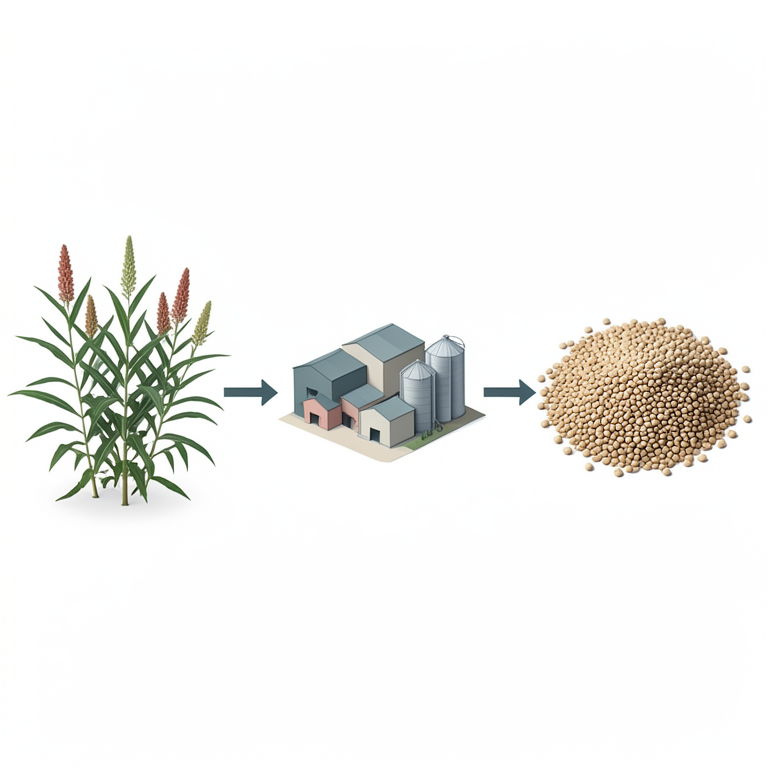
Study overview
AI-generated conceptual illustration (Pearl millet crops and rural agricultural cooperatives). It explains the idea and does not show study data.
View source evidence ↗Introduction
Millet has been originated from Latin word "Milum" meaning Grains belonging to family Poaceae which is a group of small seeded grass. It has been grown widely all over the world for food and fodder purpose. They are renowned for their resilience and capacity to flourish in a range of environments, including dry and semi-arid climates. In India, millets have been mentioned in some of the oldest Yajurveda texts, identifying Foxtail millet (priyangava), Barnyard millet (aanava), and Black finger millet (shyaamaka), thus indicating that millet consumption was very common in India (ICRISAT). Millets are sturdy, resilient crops that can endure high temperatures, have a low carbon and water footprint, grow on poor soils with little to no external inputs, and are photo-insensitive and climate change resistant.
Significance of Millets:
United Nation has declared 2023 as "International Year of Millets".
Nutritional Value and Food Security:
The cereal millet is very healthy and filled with nutrients. It contains a lot of vital nutrients, such as protein, fibre, B-complex vitamins, and minerals including iron, magnesium, and phosphorus.
People with gluten intolerance can consume as it is glutenfree. Millet is a low-input crop that provides an affordable way to improve diets and fight malnutrition, particularly in areas with high rates of food insecurity and nutrient deficiencies.
Sr. No Common name Botanical Name
Nutrient Health benefits Reference
Calcium, Dietary fiber, Phytates, Protein, Minerals, and Phenolics.
Anti-Diabetic, Anti-Diarrhoeal, Antiulcer, antiinflammatory, Antitumorigenic, Atherosclerogenic effects, Antimicrobial and Antioxidant Properties Chandra et al., (2016) [5] . [21] & Jukanti et al., (2016) [11] . [23]
Climate Resilience and Adaptability
Millet's outstanding resilience shines out in the face of irregular weather patterns and climate change. It has been praised for withstanding drought, sweltering heat, and low soil fertility, making it a good fit for areas with harsh environmental conditions. Sustainable agriculture can be advanced by lowering the susceptibility of farming communities to dangers brought on by the climate.
Biodiversity Conservation
Because it is frequently planted in mixed cropping systems with other crops and because local communities cultivate traditional types of millet, its production helps to preserve biodiversity. Maintaining a variety of crop species and landraces helps to strengthen ecosystem resilience and protect genetic resources, which supports sustainable agriculture.
Water Conservation
When compared to other major cereals like rice and wheat, millet is a water-efficient crop and requires less irrigation. It is a great choice for areas with scarce water supplies because of its capacity to grow in such conditions. It is possible to encourage sustainable agricultural practises, which will result in responsible water management and lessened water stress on ecosystems, by promoting millet planting.
Soil health and Carbon Sequestration
The risk of soil deterioration and contamination is decreased by millet's low requirement for external inputs like synthetic fertilisers and pesticides. Its deep root system also contributes to better soil structure, boosting water infiltration and nutrient cycling. Additionally, millet participates in carbon sequestration, which helps to slow down climate change by absorbing and storing carbon dioxide from the atmosphere in the soil.
Crop Diversity and Resilience
Agro-biodiversity and the agricultural system's resilience are both improved by encouraging the production of a variety of crops, including millet, in a given area. By introducing millet into cropping systems, farmers are able to diversify their sources of income, reduce their reliance on a single crop, and lower their risk of crop failure.
Sustainable livelihood for small holder farmer
Smallholder farmers, who make up a sizable section of the world's agricultural population, are well suited to millet cultivation. Farmers can produce food with less financial strain thanks to its low input needs and versatility. By integrating millet into the agricultural system, smallholders are given more control over their lives, their income rises, and their socioeconomic standing improves-all of which eventually promote sustainable rural development.
Market Diversification
The growth of millet farming encourages market and food production diversification. By reducing reliance on a few dominating crops, integrating millet into mainstream markets can help create resilient and sustainable food systems.
Source: APEDA Systematic Literature Review 1. Millet Production and Global Significance The Indian millet industry contributes 19% of the world's millet crop production, which makes it a major player in millet cultivation around the world. The production of pearl millet is expected to account for 40.51% of the global millet production by 2020, followed by sorghum with 8.09% (Rathod et al., 2016) [22] . Six Indian states are growing a variety of millets in their rural areas, including sorghum, pearl millet, finger millet, foxtail, kodo, proso, barnyard, and little millet (APEDA).
Challenges in Millet Cultivation and Marketing
There is evidence that the farming of millet is unprofitable for small-scale farmers, which is leading to a significant reduction in millet plantings and production. For millet farmers in rural areas, price fluctuations and low returns are a result of fragmented marketing structures and traditional marketing strategies that create fragmented marketing strategies (Rathod et al., 2016) [22] . In order to offer farmers, hope for the future, Farmer Producer Organizations (FPOs) have been developed to facilitate collective marketing, aggregation, and market access for millet farmers (Ponnusamy, 2015) [18] .
Climate-Smart Agriculture and Millets
With the advent of climate change, millets are becoming increasingly valuable crops in terms of their drought resistance and water efficiency. Besides being a rich source of essential nutrients, millets are also an important source of protein and micronutrients in rural communities, which makes them an important source of food security. In addition, millets are easily adaptable to different climates and soil conditions. Diversifying households' production portfolios with millets can thus reduce the households' exposure to climate risks (Fischer et al., 2016) [6] .
Potential of Millets for Nutrition and Livelihoods
The benefits of consuming millets have been proven to be significant nutritionally (Padulosi et al., 2015) [18] , with an abundance of phytochemicals, vitamins, and fiber. Adding value to millet products increases income opportunities and livelihood options for communities while improving their health and nutrition (Jahan et al., 2020) [9] . In regions like Gammawa, Nigeria, millets are an economically viable crop option for small and marginal farmers (Adebayo et al., 2008) [1] .
Enhancing Millet Value Chains and Sustainability
By intercropping millets with vegetables and other crops, it improves the yield of the crops and the soil health, thus making millets an essential component of sustainable agriculture in drylands (Maitra, 2020) [16] . There is evidence that developing a market for minor millets can enhance its diversity within a farm, especially when it comes to less fertile areas in the drylands (Takeshima et al., 2012) [25] . In the Malian Sahel, farmers are faced with challenges in adopting certified seed due to the challenges of accessing certified seed (Smale et al., 2012) [24] .
Conclusion
The systematic literature review on millet cultivation in India reveals the multifaceted significance of these resilient crops. Millets contribute not only to global food security, but also to addressing pressing challenges. This review highlights the need to address fragmented marketing structures and traditional marketing strategies that hinder smallholder farmers' access to official markets. As farmer producer organizations (FPOs) pool resources and foster collaboration across the agricultural value chain, they are emerging as beacons of hope.
The climate-resilient nature of millets makes them indispensable in the context of climate change, offering a means to reduce households' exposure to climate risks. In addition, millets provide essential nutrition, are economically viable for small farmers, and are potentially valuable as a source of value-added products.
A variety of challenges and opportunities are presented by millet cultivation in different parts of India. Maharashtra's FPOs serve as exemplars for empowering small and marginal farmers. Due to their robust attributes, millets offer a sustainable and nutritious approach to addressing the world's nutritional and agricultural challenges. A comprehensive policy support and strategic campaign are essential to unleash millets' full potential in India.
References
22 in the original paper- Adhikari A, Pradhan K, Chauhan JK, Reddy SK. Analysing the perceived impact of farmers' producer organization (FPOs) on sustainable economic development. Indian Res. J Ext. Edu. 2021;21(2&3):8082.
- Anonymous. Farmer Producer Organisations -Frequently Asked Questions (FAQs). National Bank for Agriculture and Rural Development, Mumbai; c2015. https://www.nabard.org/demo/auth/writereaddata/File/FA RMER%20PRODUCER%20ORGANISATIONS.pdf (12.17PM,28 th February 2022).
- APEDA. India Millet Production. Retrieved on 18/07/2023 from URL https://www.google.com/search?q=apeda+millet+product ion&rlz=1C1CHBF_enIN973IN973&ie=UTF-8.
- Chandra D, Chandra S, Sharma AK. Review of Finger millet (Eleusine coracana (L.) Gaertn): A power house of health benefiting nutrients. Food Science and Human Wellness. 2016;5(3):149-155.
- Fischer HW, Reddy NN, Rao MS. Can more drought resistant crops promote more climate secure agriculture? Prospects and challenges of millet cultivation in Ananthapur, Andhra Pradesh. World Development Perspectives. 2016;2:5-10.
- Gokul VU, Balaji P, Sivakumar SD. Role of actors in Farmer Producer Organization (FPO) based millet value chain. Madras Agricultural Journal. 2019;106(Special):288-291.
- ICRISAT.https://www.icrisat.org/a-short-history-ofmillets-andhow-we-are-recognising-their-importance-inthe-moderncontex.15/07/2023.time-12:54.
- Jahan A, Arunjyothi R, Shankar A, Reddy M, Reddy TP, Rajasheker M, et al. Enhancing Entrepreneurship Opportunities through Millet Based Value Added Products to Farm Women of Nagarkurnool District. Current Journal of Applied Science and Technology. 2020;39(48):293-299.
- Jukanti AK, Gowda CL, Rai KN, Manga VK, Bhatt RK. Crops that feed the world 11. Pearl Millet (Pennisetum glaucum L.): an important source of food security, nutrition and health in the arid and semi-arid tropics. Food Security. 2016;8:307-329.
- Kumar A, Tomer V, Kaur A, Kumar V, Gupta K. Millets: a solution to agrarian and nutritional challenges. Agriculture & food security. 2018;7(1):1-15.
- Louhar G, Bana RS, Kumar V, Kumar H. Nutrient management technologies of millets for higher productivity and nutritional security. Indian J. Agric. Sci. 2020;90:2243-2250.
- Maitra S. Intercropping of small millets for agricultural sustainability in drylands: A review. Crop Research. 2020;55(3and4):162-171.
- Nithiyanantham S, Kalaiselvi P, Mahomoodally MF, Zengin G, Abirami A, et al. Nutritional and functional roles of millets-A review. Journal of food biochemistry. 2019;43(7):e12859.
- Patel S, Naik RK, Sahu R, Nag SK. Entrepreneurship development through finger millet processing for better livelihood in production catchment. American International Journal of Research in Humanities, Arts and Social Sciences. 2014;8(2):223-227.
- Rani S, Singh R, Sehrawat R, Kaur BP, Upadhyay A. Pearl millet processing: a review. Nutrition & Food Science. 2018;48(1):30-44.
- Rathore S, Singh K, Kumar V. Millet grain processing, utilization and its role in health promotion: A review. International Journal of Nutrition and Food Sciences. 2016;5(5):318-329.
- Sachdev N, Goomer S, Singh LR. Foxtail millet: a potential crop to meet future demand scenario for alternative sustainable protein. Journal of the Science of Food and Agriculture. 2021;101(3):831-842.
- Smale M, Diakité L, Keita N. Millet transactions in market fairs, millet diversity and farmer welfare in Mali. Environment and Development Economics. 2012;17(5):523-546.
- Takeshima H, Nagarajan L. Minor millets in Tamil Nadu, India: local market participation, on-farm diversity and farmer welfare. Environment and Development Economics. 2012;17(5):603-632.
- Vedasri R, Mishra SN. Linking Farmer Producer Organizations with Other Markets-A Sustainable Change in Marketing of Farm Produce. International Journal of Environment and Climate Change. 2022;12(12):14251437.
- Vignesh G. Role of Actors in Farmer Producer Organization (FPO) based Millet Value Chain. Madras Agricultural Journal. 2019;106(March 1-3):1.
- Xu J, Wang W, Zhao Y. Phenolic compounds in whole grain sorghum and their health benefits. Foods. 2021;10(8):1921.
Cited by 3
From OpenAlex, OpenCitations and reference lists read by Scinovex
- Role of Millets for Food Security Under Climate Change ↗
Bibas B.K., Sneha Dahal, Manisha Koirala, Rashmi Poudel, Bishnu Prasad Kandel · Plant-Environment Interactions · 2026
The accelerating impacts of climate change pose significant threats to global food security, highlighting critical vulnerabilities within the agricultural system. As greenhouse gas emissions continue to rise, global temperatures have increased by 0.6°C over the 20th century, with projections indicating further increases of 0.1°C-2°C per decade. These trends are expected to reduce crop productivity and food availability, potentially leaving up…
❝ 6PDF - Pearl Millet: A Sustainable Source of Food and Nutrition in the Age of Climate Change ↗
Raneem Ismail Al-Khaleel, Tara Satyavathi Chellapilla, Chandra Nayaka Siddaiah · Anthropocene Science · 2025
❝ 3 - Unlocking the constraints and developing effective strategies for milletpreneurship in Odisha
Smruti Paik, P.K. RAY, Mohammad Harunur Rashid Bhuyan · International Journal of Agriculture Extension and Social Development · 2025
Millet the crop of revitalisation is gaining popularity in the modern growing world. The study aims to understand the challenges and opportunities faced by millet entrepreneurs and to identify the potential strategies for their empowerment and sustainable growth.This research was conducted in two districts of Odisha, where millet-based community approaches have been implemented. A purposive sampling technique was employed for selecting the respondents involved in millet-based activities in the operational area, which includes both millet farmers as well as people engaged in millet-based activi