
Research article · 2023 · Full text
International Journal of Veterinary Sciences and Animal HusbandryShea nut meal effect on rumen fermentation parameters of sheep
Volume 8(5) · Pages 423–427 · DOI: 10.22271/veterinary.2023.v8.i5g.780 ↗
Research areasRuminant Nutrition and Digestive Physiology
Abstract
Author-writtenAlthough ruminants have a greater capacity to utilize various feed sources with lesser risks, the impact of non-conventional feed on rumen function should be understood. This study investigated the effects of Shea nut meal (SNM) different inclusion levels on rumen parameters of sheep fed 70% Rhodes grass hay and 30% maize bran basal diets. Five diets (D) containing SNM at different levels of D1=0% SNM, D2=5% SNM, D3=10% SNM, D4=15% SNM and D5=20% SNM were fed to fifteen ewes clustered into three, in a completely randomized design (CRD). Rumen samples were collected in the 10th week of the feeding trial at hour 0, 3, 6, 9 and 12 post feeding and analyzed for pH, NH3-N, volatile fatty acids & protozoa count. SNM increased mean pH, and was in a range of (6.58-6.8) in SNM diets compared D1 (6.2). Mean NH3-N (mg/100ml) in SNM groups decreased with SNM increasing inclusion. Propionate (mmol/L) production was favored for SNM diets; 5% (1.379), 10% (1.375), 15% (1.377), 20% (1.365) compared to D1 (1.682) but total volatile fatty acids (mmol/L) (p
Summary
Source-checkedPlain-language reading of the full paper, prepared with AI and checked against the text. Each point links to the authors' own words.
Why it matters
- Increasing global demand for animal proteins has led to the search for new feed ingredients for livestock. View evidence ↗
- It is necessary to understand how new feed ingredients affect rumen function to determine safe usage limits and optimize animal performance. View evidence ↗
- Rumen protozoa facilitate methane (CH4) production; reducing this process in favor of volatile fatty acids (VFAs) can increase productivity. View evidence ↗
The question
- The study aimed to investigate the in vivo impact of Shea nut meal (SNM) on the rumen fermentation parameters of sheep. View evidence ↗
What they did
- Fifteen five-month-old Corriedale ewes were fed a basal diet of 70% Rhodes grass hay and 30% maize bran, supplemented with SNM at five levels: 0% (D1), 5% (D2), 10% (D3), 15% (D4), and 20% (D5). View evidence ↗
- Rumen fluid samples were pooled from two animals per group and collected at 0, 3, 6, 9, and 12 hours post-feeding during the 10th week of the trial. View evidence ↗
What they found
- Mean ruminal pH increased with higher SNM inclusion, ranging from 6.58 (D2) to 6.8 (D5), compared to 6.2 in the control (D1). View evidence ↗
- Total VFAs significantly decreased with SNM inclusion, with the control at 114.9 mmol/L compared to approximately 103.3-103.5 mmol/L in the SNM groups. View evidence ↗
- The acetate to propionate ratio improved (decreased) in all SNM diets (1.365 to 1.379) compared to the control (1.682). View evidence ↗
- Mean total protozoa counts significantly decreased as SNM inclusion increased, dropping from 8.53 in the control to 5.07 in the 20% SNM group. View evidence ↗
What it means
- The authors concluded that SNM has no adverse effects on rumen fermentation and can serve as a potential additive for essential oils and tannins to modify the rumen. View evidence ↗
- The authors state that further research is needed to investigate how SNM affects the rate of absorption, passage, and tissue metabolism of VFAs. View evidence ↗
Visual summary
2 visualsIllustrations explain the paper; charts are replotted from the paper's own table values.
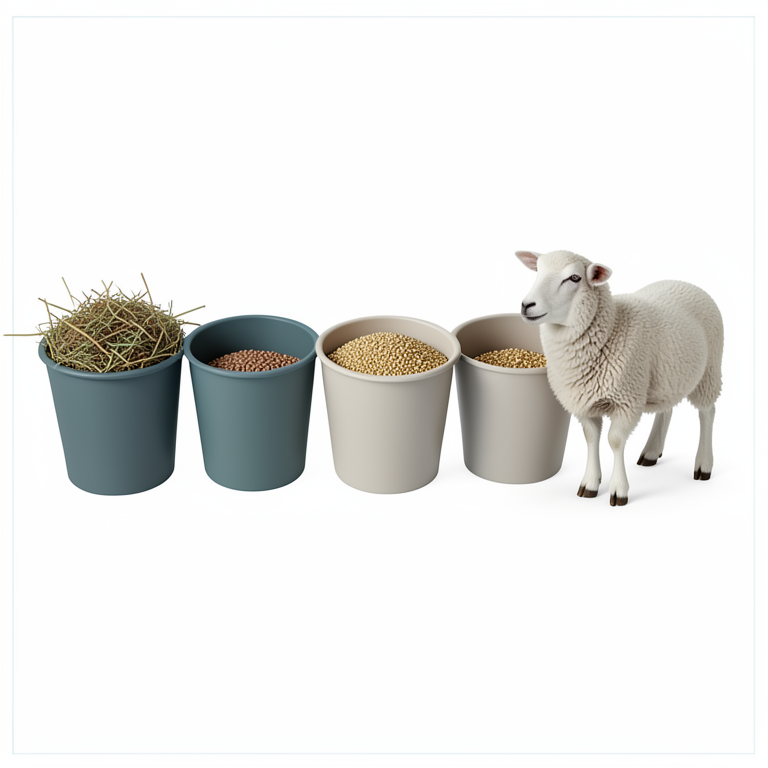
Experimental Diet Groups
AI-generated conceptual illustration (Corriedale ewes and feed buckets containing Rhodes grass hay, maize bran, and shea nut meal). It explains the idea and does not show study data.
View source evidence ↗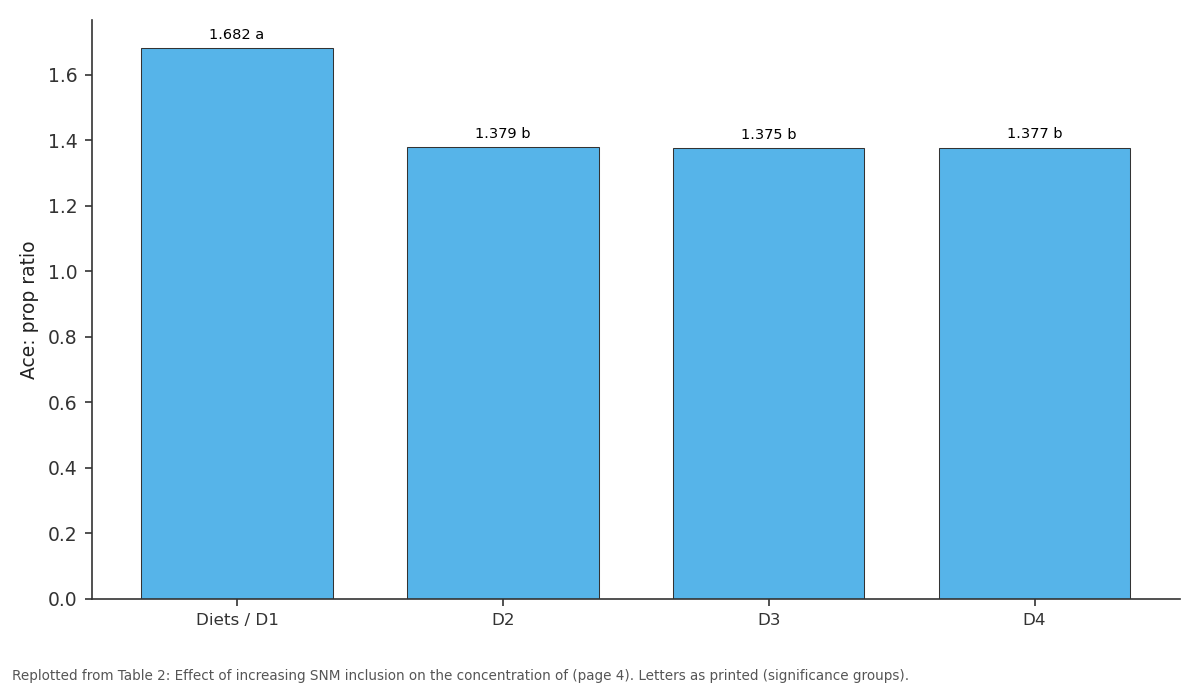
Ace: prop ratio: Diets / D1 vs D2 vs D3 vs D4
Replotted from Table 2 (page 4) of the original paper. Every bar is the paper's own table value.
View source evidence ↗Figures & tables
From the original paper Table 1
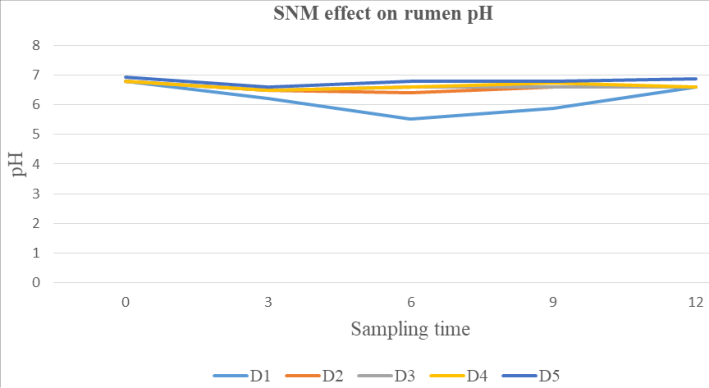 Figure 1
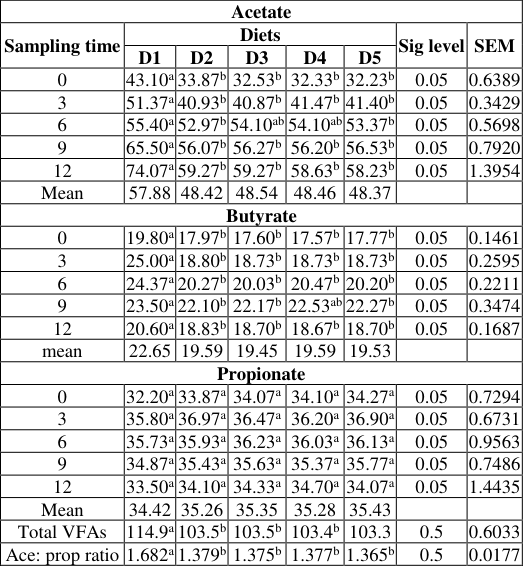 Table 2
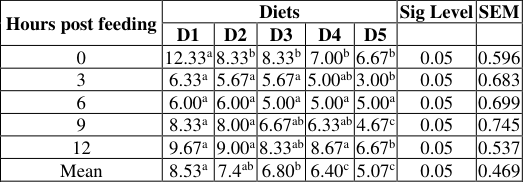 Table 3
Introduction
The intensification of livestock farming to meet a sustainable global demand for proteins of animal origin has birthed exploration for new possible feed ingredients for the livestock feed industry. Ruminants have a greater capacity to utilize various feed sources with lesser risks due to the unique well developed digestive system they possess, and the presence of microorganisms that not only aid fiber digestion but also detoxify toxins [35] . The impact of new feed ingredients on rumen function must, however, be understood to inform tolerable limits of such new feed for better formulations and animal performance. This is because the rumen function influences the ruminants' digestive heath, and will have a general impact on the human wellbeing through the quality of products produced and the enteric methane emitted [35, 18] . Not only does enteric methane impact the environment, but also causes a feed energy loss [9] which also disturbs the volatile fatty acid profile, affecting post absorptive metabolism [24] . Protozoa are key to facilitating CH4 formation. This is due to their ability to produce H2 and harboring methanogens, protecting them from oxygen toxicity [26] . Redirecting hydrogen flow away from CH4 to VFAs increases ruminant productivity [23] . Because volatile fatty acids are the precursors of almost 70% of the energy requirement in ruminants [3] . Feeding poor forages alone favors production of acetate and butyrate and little of propionate [22,23,20,19] . When comparing propionate, acetate and butyrate are not hydrogen sinks and their production results in the build-up of hydrogen which is then used in the formation of methane [6,28,23] . Supplementing diets of ruminants with concentrates at 30-40% improves rumen efficiency through maintaining high pH, optimum NH3-N concentration levels and increasing microbial protein synthesis and VFAs production, [21,32,35] , which results in improvement in diet digestibility and reduction in methane production [17,20] .
Plant compounds such as fat of unsaturated fatty acids included at levels of 5%-8% are reported to even yield better results as they act as hydrogen sinks, reducing methane production by about 33% [7] and tannins and saponin when added at 4% inhibit protozoa growth and cause a beneficial ruminal response that improves performance [28] . Shea nut meal (Vitellaria paradoxa) of recent has gained attention because of its increased availability [7,1] and surprisingly, the meal has all the mentioned metabolites in adequate quantities [8] [1] . This study seeks therefore, to investigate SNM impact on rumen fermentation parameters of sheep in vivo since no study has yet been done.
Materials and Methods
Experimental animals, diet and study design Rumen liquor samples were collected from Fifteen (15), five months old growing Corriedale ewes that were set in a completely randomized design (CRD) and were being fed diets of Rhodes grass hay (70%) and maize bran (30%) as a basal diet with shea nut meal offered as a supplement at five levels of i.e., D1 = basal diet + 0% SNM, D2 = basal diet + 5% SNM, D3 = Basal diet + 10% SNM, D4 = basal diet + 15% SNM and D5 = basal diet + 20% SNM. The detailed inclusion levels of different ingredients are as in [4] .
Sample collection and preparation
Rumen fluid samples were collected on the 10 th week of the feeding period using a flexible oral stomach tube as described in [37] . The samples were collected from 2 donor animals of individual groups and pooled, The were collected at 0, 3, 6, 9 and 12 hr post feeding into thermal flasks and taken to the laboratory within 15 minutes time, but pH measured immediately. Individual group liquors were divided into three portions. The first portions (about 50 ml each) rumen liquor was centrifuged at 16000 xg for 15 minutes and the supernatant was added 5 ml of 25% metaphosphoric solution and then stored at -20 °C, which was later used for VFAs analysis. The second portion of the liquor (about 50ml) was centrifuged at 10000 xg for 15 minutes and the supernatant was acidified with 5ml of 25% metaphosphoric acid solution and stored at -40 °C and was used for NH3-N analysis. The third portion (50 ml) of the rumen fluid was fixed with 2ml of 10% formalin solution and was later strained under a two layered phyllo cloth of about 2000 µm pore size as in [31] and was stored at -20 °C awaiting protozoa count.
Rumen pH, NH3-N, VFAs Analysis and Protozoa count
Rumen pH was measured using a mobile pH meter (6.6; tecnal, SP, Brazil). Ammonia nitrogen concentration (NH3-N) for individual groups sampled at different times was analyzed using Kjeldahl method described in [21] , without acid digestion and NH3-N concentration was estimated using the formula: NH3-N = V*0.005*f*14*100/A Where NH3-N = ammonia nitrogen concentration (mg/100ml), V= volume of hydrochloric acid (ml), f= the factor for the correction of hydrochloric acid concentration obtained with Na2CO3 solution (0.005N), 14= atomic weight of nitrogen and A=aliquot volume (ml). The VFAs were analyzed using Gas chromatograph (trace GC ultra-thermos scientific) with Crotonic acid from Shangai kefeng chemical reagent Co., ltd China as an internal standard and individual VFAs were identified by comparing relative retention time with the known standards of acetic, propanoic and butyric obtained from Sigma-Aldrich Co. LLC. USA. The GC temperature conditions were set at injection port temperatures of 220 °C, injection volume 1 uL, at a temperature program of 100 °C for 1 min, 100 °C to 190 °C increasing by 20 °C/min 190 °C for 3 min and total analysis time was 7.5 min as in [15] in procedure. Rumen protozoa density was microscopically identified and counted using Sedgewick-Rafter counting chamber [11] .
Statistical Analysis
A general linear model of the statistical analysis systems computer package (SAS 2009) was used to analyze data. Means were separated using least significance difference, and the difference between means was considered at (p<0.05). Diets, sampling time and errors were taken as sources of variation.
Results and Discussions Effect of increasing levels of SNM in diets of sheep on ruminal pH
The pH range post sampling hours of 0, 3, 6, 9 and 12 was variable across diets but was much affected for diet 0% at hour 3. The results agree with [36] who reported that pH is affected by sampling time. On the other hand, Shea nut meal had a general impacted on the mean pH. The mean ruminal pH from 0, 3, 6, 9 and 12-hour sampling post feeding was increased with SNM increasing inclusion in diets of sheep and was within optimum safe range in SNM and control diet : D2 (6.58), D3 (6.62), D4 (6.65) D5 (6.8) and D1 (6.2) respectively. pH results for sampling hours post feeding are presented in figure 1. The type of ration fed to ruminants is believed to influence the rumen pH that in turn affects the rumen microbes and thus the metabolic process. Acute ruminal acidosis could result especially if rumen pH is decreased to and maintained at a low range of 5.5-5.0 for quite long [19] . The low pH would eventually disrupt the microflora population, feed intake, digestibility, ruminal NH3-N concentration and the concentration of the different volatile fatty acids [12,14,7] . In this study, it was observed that SNM diets had high and slightly steady pH post feeding compared to the control diet 0%. This could be attributed to the presence of ether extracts. The outcome agrees with [34] who reported that pH was not affected when essential oils such as olive oil were included in diets of sheep and [13] who also observed a pH range of 6.2-6.51 when diets of sheep were supplemented with palm oil, linseed oil, whole soybean and protected. It was therefore concluded that; just like other essential oils, SNM exerts neutralizing properties and does not cause lowered pH that is observed with grain concentrate feeding [17,14] , making it a potential additive in prevention of ruminal acidosis
The ruminal NH3-N concentration post feeding was monitored at i.e., 0, 3, 6, 9 and 12 hours post feeding which was observed variable. The NH3-N concentration in the control diet D0 in the initial hours of 0 and 3 were (p<0.05) higher from the rest of the diets. However, Diets D2 and D3 at 9hour recorded (p<0.05) higher NH3-N and D4 at 6hour. Nevertheless, the mean NH3-N concentrations were observed to decrease (p<0.05) with increasing SNM inclusion in the diets, with diet D0 recording the higher mean NH3-N. Still yet, the NH3-N concentrations were within optimum levels in all diets as ruminal NH3-N concentration of about 5mg is thought to be optimum for ruminal microbial activities [29] , though higher concentrations are believed to improve total bacterial count, feed intake and digestibility [31] . The reduction in the mean NH3-N with increasing SNM in the diets can be attributed to the presence of tannins in SNM that must have protected the rapid degradation of proteins and the findings agree with [37,8] who similarly reported decrease in NH3-N with increasing SNM inclusion. Dietary fat with different fatty acid profile is also reported to improve rumen fermentation through reducing ruminal NH3-N concentration [5, 17, 14] . It can thus be concluded that SNM could become a potential source of tannins for protection of ruminal protein degradation hence enhancing the flow of proteins to the intestines. The results of NH3-N are showed in table 1.
| Sampling time | Diets | — | — | — | — | Sig level | SEM |
|---|---|---|---|---|---|---|---|
| D1 | D2 | D3 | D4 | D5 | |||
| 0 | 15.27a | 13.73b | 13.37b | 13.60b | 13.47b | 0.05 | 0.321 |
| 3 | 18.87a | 17.07b | 17.20b | 16.90b | 18.33a | 0.05 | 0.329 |
| 6 | 17.17ab | 16.93b | 17.87ab | 18.33a | 15.70c | 0.05 | 0.388 |
| 9 | 16.33b | 18.27a | 16.93a | 16.40b | 14.40c | 0.05 | 0.318 |
| 12 | 17.13ab | 17.90ab | 17.80a | 16.40b | 16.23b | 0.05 | 0.701 |
| Mean | 16.95 | 16.78 | 16.63 | 16.33 | 15.63 |
Table text extracted from the original PDF; superscript letters are shown inline. The original table image is below.
View original table image
Effect of increasing levels of SNM on sheep diets on the concentration of selected Ruminal VFAs, total VFAs and acetate propionate ratio (mmol/L)
The concentration of the selected volatile fatty acids (butyrate, propionate & acetate) post feeding was considerably variable. Mean butyrate and acetate (p<0.05) diminished with SNM inclusion but propionate increased though the increase was not (p>0.05) different among the diets. Total volatile fatty acids (tVFAs) were higher in control diet 0% compared to the SNM diets whose tVFAs decreased (p<0.05) with increased SNM inclusion. The declining tVFAs concentration with increased SNM can be attributed to increase in ether extract and tannins in SNM diets. Tannins bound nutrients, hence forming complexes and reducing digestibility and thus VFAs production. Also, fats increase VFAs ruminal absorption thus must have contributed to the low concentrations detected [17,16] . These findings agree with [34] who reported a reduction in VFAs in an In vitro experiment, and [8] who observed an increase in tVFAs when shea nut cakes were incubated together with polyethylene glycol (PEG). The acetate propionate ratio, however, improved with increasing SNM inclusion. This can be credited to the presence of fats. Fats with essential oil properties are believed to lower ruminal acetate yet increase propionate production and thus improving the molar acetate: propionate ratio composition [30,33] . The low acetate concentration could have been as a result of depression in the activity and growth of the fibrolytic bacterial species and thus reduced degradation of fibrous material. Oily products such as rubber seed oil, flaxseed oil and olive, sunflower, linseed oil, coconut oil and fish oil respectively were reported to change the rumen VFAs profile by increasing propionate proportion versus acetate proportion [7,5,13,30,33] a pathway with diminished methanogenesis [6,26] . The results of selected VFAs, tVFAs and acetate propionate ratio are presented in table 2.
| Acetate | — | — | — | — | — | — | — |
|---|---|---|---|---|---|---|---|
| Sampling time | Diets | Sig level | SEM | ||||
| D1 | D2 | D3 | D4 | D5 | |||
| 0 | 43.10a | 33.87b | 32.53b | 32.33b | 32.23b | 0.05 | 0.6389 |
| 3 | 51.37a | 40.93b | 40.87b | 41.47b | 41.40b | 0.05 | 0.3429 |
| 6 | 55.40a | 52.97b | 54.10ab | 54.10ab | 53.37b | 0.05 | 0.5698 |
| 9 | 65.50a | 56.07b | 56.27b | 56.20b | 56.53b | 0.05 | 0.7920 |
| 12 | 74.07a | 59.27b | 59.27b | 58.63b | 58.23b | 0.05 | 1.3954 |
| Mean | 57.88 | 48.42 | 48.54 | 48.46 | 48.37 | ||
| Butyrate | |||||||
| 0 | 19.80a | 17.97b | 17.60b | 17.57b | 17.77b | 0.05 | 0.1461 |
| 3 | 25.00a | 18.80b | 18.73b | 18.73b | 18.73b | 0.05 | 0.2595 |
| 6 | 24.37a | 20.27b | 20.03b | 20.47b | 20.20b | 0.05 | 0.2211 |
| 9 | 23.50a | 22.10b | 22.17b | 22.53ab | 22.27b | 0.05 | 0.3474 |
| 12 | 20.60a | 18.83b | 18.70b | 18.67b | 18.70b | 0.05 | 0.1687 |
| mean | 22.65 | 19.59 | 19.45 | 19.59 | 19.53 | ||
| Propionate | |||||||
| 0 | 32.20a | 33.87a | 34.07a | 34.10a | 34.27a | 0.05 | 0.7294 |
| 3 | 35.80a | 36.97a | 36.47a | 36.20a | 36.90a | 0.05 | 0.6731 |
| 6 | 35.73a | 35.93a | 36.23a | 36.03a | 36.13a | 0.05 | 0.9563 |
| 9 | 34.87a | 35.43a | 35.63a | 35.37a | 35.77a | 0.05 | 0.7486 |
| 12 | 33.50a | 34.10a | 34.33a | 34.70a | 34.07a | 0.05 | 1.4435 |
| Mean | 34.42 | 35.26 | 35.35 | 35.28 | 35.43 | ||
| Total VFAs | 114.9a | 103.5b | 103.5b | 103.4b | 103.3 | 0.5 | 0.6033 |
| Ace: prop ratio | 1.682a | 1.379b | 1.375b | 1.377b | 1.365b | 0.5 | 0.0177 |
Table text extracted from the original PDF; superscript letters are shown inline. The original table image is below.
View original table image
The results of protozoa count from different SNM treated diets are presented in Table 3. Shea nut meal addition to sheep diets had a negative impact on protozoa counts. The mean total protozoa count reduced with increasing SNM inclusion with the lower count observed at 20% (5.07), which was (p<0.05) lower compared to the control 0% (8.53). The reduction in protozoa count in SNM diets can be attributed to the tannins and ether extract present in SNM. This finding agrees with [8,34] who reported that tannins in shea nut by products negatively affected protozoa populations. Phytochemicals of some plants such as C-12:0 & C-14:0 medium chain fatty acids, and moderate tannins have been reported to be toxic to the protozoans [16,26] . Other studies using different oils at different levels of inclusion have also reported reductions in protozoa [27,25,7,30,33,13] . Rumen protozoa are important in methanogenesis, and it is believed that a reduction of their numbers below 7 log10 cells/ml could potentially reduce methane production and improve the flow of bacterial protein to the intestines [26,28,10] .
| Hours post feeding | Diets | — | — | — | — | Sig Level | SEM |
|---|---|---|---|---|---|---|---|
| D1 | D2 | D3 | D4 | D5 | |||
| 0 | 12.33a | 8.33b | 8.33b | 7.00b | 6.67b | 0.05 | 0.596 |
| 3 | 6.33a | 5.67a | 5.67a | 5.00ab | 3.00b | 0.05 | 0.683 |
| 6 | 6.00a | 6.00a | 5.00a | 5.00a | 5.00a | 0.05 | 0.699 |
| 9 | 8.33a | 8.00a | 6.67ab | 6.33ab | 4.67c | 0.05 | 0.745 |
| 12 | 9.67a | 9.00a | 8.33ab | 8.67a | 6.67b | 0.05 | 0.537 |
| Mean | 8.53a | 7.4ab | 6.80b | 6.40c | 5.07c | 0.05 | 0.469 |
Table text extracted from the original PDF; superscript letters are shown inline. The original table image is below.
View original table image
Conclusion
It is established that shea nut meal has no adverse effects on the rumen fermentation parameters of sheep as optimum pH levels and NH3-N were maintained within acceptable range. The acetate propionate ratio was improved with ant protozoan properties realized. SNM could serve as a potential additive source for essential oils and perhaps tannins when required in ruminant feed for rumen modification. Further studies should however be done to investigate SNM effect on rate of absorption, passage and/or potential alteration of VFAs metabolism at tissue metabolism as SNM diets lowered mean NH3-N and VFAs concentrations
Acknowledgement
AcknowledgementThe authors thank the Center of Excellence in Sustainable Agriculture and Agribusiness Management (CESAAM) for the financial support.
References
30 in the original paper- Abdul-Mumeen I. Biochemical and microbiological analysis of shea nut cake: A waste product from shea butter processing. Journal of Agricultural Biotechnology and Sustainable Development. 2013;5(4):61-68.
- Almeida RTR de, Do Prado RM, Porto C, Dos Santos GT, Huws SA, Pilau EJ. Exploring the rumen fluid metabolome using liquid chromatography-high-resolution mass spectrometry and Molecular Networking. Scientific Reports. 2018;8(1):17971.
- Aluwong T, Ishaku P, Abdullahi A. Volatile fatty acids production in ruminants and the role of monocarboxylate transporters: A review. African Journal of Biotechnology. 2010, 9.
- Atikah IN, Alimon AR, Yaakub H, Abdullah N, Jahromi MF, Ivan M, et al. Profiling of rumen fermentation, microbial population and digestibility in goats fed with dietary oils containing different fatty acids. BMC Veterinary Research. 2018;14(1):344.
- Beauchemin K, Mcallister T, McGinn S. Dietary mitigation of enteric methane from cattle. CAB Reviews: Perspectives in agriculture, veterinary science. Nutr. Natur. Resour. 2009, 4.
- Bhatt RS, Soren NM, Tripathi MK, Karim SA. Effects of different levels of coconut oil supplementation on performance, digestibility, rumen fermentation and carcass traits of Malpura lambs. Animal Feed Science and Technolog. 2011;164(1-2):29-37.
- Bhatta R, Mani S, Baruah L, Sampath KT. Phenolic Composition, Fermentation Profile, Protozoa Population and Methane Production from Sheanut (Butryospermum Parkii) Byproducts In vitro. Asian-Australasian Journal of Animal Sciences. 2012;25(10):1389-1394.
- Castillo-González A, Burrola-Barraza M, DomínguezViveros J, Chávez-Martínez. A Rumen microorganisms and fermentation. Archivos de Medicina Veterinaria. 2014;46(3):349-361.
- Dehority BA. Evaluation of subsampling and fixation procedure used for counting rumen protozoa. Research Gate. 1984;182-185.
- Faniyi TO, Adegbeye MJ, Elghandour MMMY, Pilego AB, Salem AZM, Olaniyi TA, et al. Role of diverse fermentative factors towards microbial community shift in ruminants. Journal of Applied Microbiology. 2019;127(1):2-11.
- Fiorentini G, Carvalho IPC, Messana JD, Canesin RC, Castagnino PS, Lage JF, et al. Effect of Lipid Sources with Different Fatty Acid Profiles on Intake, Nutrient Digestion and Ruminal Fermentation of Feedlot Nellore Steers. Asian-Australasian Journal of Animal Sciences. 2015;28(11):1583-1591.
- Freitas Júnior JE, Rennó FP, Gandra JR, Rennó LN, Rego AC, Santos MV, et al. Addition of unsaturated fatty acids improves digestion of mid lactating dairy cows. Archivos de Zootecnia. 2014;63(244):563-573.
- Hristov A, Domitrovich C, Wachter A, Cassidy T, Lee C, Shingfield KJ, et al. Effect of replacing solvent-extracted canola meal with high-oil traditional canola, high-oleic acid or high-erucic acid rapeseed meals on rumen fermentation, digestibility, milk production, and milk fatty acid composition in lactating dairy cows. Journal of Dairy Science. 2011;94(8):4057-4074.
- Jaramillo-López E, Itza-Ortiz MF, Peraza-Mercado G, Carrera-Chávez JM. Ruminal acidosis: Strategies for its control. Austral Journal of Veterinary Sciences. 2017;49(3):139-148.
- Kim ET, Guan LL, Lee SJ, Lee SM, Lee SS, Lee ID, et al. Effects of Flavonoid-rich Plant Extracts on In vitro Ruminal Methanogenesis, Microbial Populations and Fermentation Characteristics. Asian-Australasian Journal of Animal Science. 2015;28(4):530-537.
- Khampa NPS, Detmann E, Valadares Filho SC, Costa VAC, Pina DS, Gomes DI, et al. Accuracy of the estimates of ammonia concentration in rumen fluid using different analytical methods. Arquivo Brasileiro de Medicina Veterinária e Zootecnia. 2013;65:1752-1758.
- Knapp JR, Laur GL, Vadas PA, Weiss WP, Tricarico JM. Invited review: Enteric methane in dairy cattle production: quantifying the opportunities and impact of reducing emissions. Journal of Dairy Science. 2014;97(6):3231-3261.
- Ungerfeld EM. Shifts in metabolic hydrogen sinks in the methanogenesis-inhibited ruminal fermentation: A metaanalysis. Frontiers in Microbiology. 2015;6:37.
- Ungefeld EM. Metabolic Hydrogen Flows in Rumen Fermentation: Principles and Possibilities of Interventions. Frontiers in Microbiology. 2020, 11. 25. Majewska MP, Miltko R, Bełżecki G, Skomiał J & Kowalik B. Supplementation of rapeseed and linseed oils to sheep rations: Effects on ruminal fermentation characteristics and protozoal populations. Czech Journal of Animal Science. 2017;62(12):527-538.
- Nur IA, Abdul RA, Halimatun Y, Anjas AS, Su Chui LC, Wan Nooraida WM, et al. Effects of vegetable oil supplementation on rumen fermentation and microbial population in ruminant: A review. Tropical Animal Health and Production, 2012, 53(4).
- Patra AK, Yu Z. Effects of coconut and fish oils on ruminal methanogenesis, fermentation, and abundance and diversity of microbial populations In vitro. Journal of Dairy Science. 2013;96(3):1782-1792.
- Perdok HB, Leng RA. Effect of supplementation with protein meal on the growth of cattle given a basal diet untreated or ammoniated rice straw. Asian-Australasian Journal of Animal Sciences. 1990;3(4):269-279.
- Pi Y, Ma L, Pierce KM, Wang HR, Xu JC, Bu DP. Rubber seed oil and flaxseed oil supplementation alter digestion, ruminal fermentation and rumen fatty acid profile of dairy cows. Animal. An International Journal of Animal Bioscience. 2019;13(12):2811-2820.
- Rossi MF, Martinele I & D'Agosto M. Quantitative and differential analysis of ciliate protozoa in rumen content samples filtered before and after fixation. Revista Brasileira de Zootecnia. 2013;42(11):831-834.
- Sittisak K, Wanapat M. Manipulation of Rumen Fermentation with Organic Acids Supplementation in Ruminants Raised in the Tropics. Pakistan Journal of Nutrition. 2007, 6.
- Vargas JE, Andrés S, López-Ferreras L, Snelling TJ, Yáñez-Ruíz DR, García-Estrada C, et al. Dietary supplemental plant oils reduce methanogenesis from anaerobic microbial fermentation in the rumen. Scientific Reports. 2020;10(1):1613.
- Venkateswarlu S, Radhakrishnan L, Karunakaran R, Parthiban M, Selvan ST. Evaluation of methane reduction potential of sheanut cake-based concentrate rations by In vitro gas production. Indian Journal of Veterinary and Animal Sciences Research. 2018, 45633047.
- Wanapat M, Cherdthong A, Phesatcha K, Kang S. Dietary sources and their effects on animal production and environmental sustainability. Animal Nutrition. 2015;1(3):96-103.
- Wang L, Zhang G, Li Y, Zhang Y. Effects of High Forage/Concentrate Diet on Volatile Fatty Acid Production and the Microorganisms Involved in VFA Production in Cow Rumen. An Open Access Journal from MDPI. 2020;10(2):223.
- Wang M, Wang R, Janssen PH, Zhang XM, Sun XZ, Pacheco D, et al. Sampling procedure for the measurement of dissolved hydrogen and volatile fatty acids in the rumen of dairy cows. Journal of Animal Science. 2016;94(3):1159-1169.