
Research article · 2023 · Full text
International Journal of Biology SciencesImpact of solid waste dumping yard on ground water
Volume 5(2) · Pages 22–29 · DOI: 10.33545/26649926.2023.v5.i2a.167 ↗
Research areasLandfill Environmental Impact StudiesMunicipal Solid Waste ManagementElectrokinetic Soil Remediation Techniques
Abstract
Author-writtenMunicipal and industrial trash is frequently disposed of in solid waste dumps or landfills. However, these dump sites have a substantial impact on the quality and availability of groundwater, which is essential for supporting ecosystems and providing for human requirements in terms of water. In this article, the effect of solid waste disposal yards on groundwater is examined, along with any possible repercussions. Leachate, a fluid that introduces contaminants into the groundwater, can occur as a result of poor trash compaction, inadequate liners or barriers, or incorrect management of dumping yards. Although leachate composition varies, it frequently contains toxic materials, organic contaminants, and heavy metals. Since individuals might be exposed to these toxins through irrigation and drinking water, groundwater contamination poses serious dangers to the public’s health. Ecosystems and biodiversity are also disrupted, and rehabilitation attempts may be financially costly. Proper landfill site selection, the installation of liners and leachate collecting systems, as well as routine groundwater monitoring, are essential to reducing the impact. In order to avoid the negative effects of solid waste disposal yards on groundwater resources, effective waste management practises are crucial.
Summary
Source-checkedPlain-language reading of the full paper, prepared with AI and checked against the text. Each point links to the authors' own words.
Why it matters
- Groundwater is vital for human needs and ecosystems, but its quality and availability are significantly threatened by the common practice of disposing of municipal and industrial waste in landfills or dumps. View evidence ↗
- Contamination occurs via leachate, a fluid created by poor waste management, inadequate barriers, or poor compaction that carries pollutants into the groundwater. View evidence ↗
- Groundwater contamination is a serious public health risk because people are exposed to toxins through drinking water and irrigation. View evidence ↗
The question
- The study aims to thoroughly investigate how solid waste disposal yards affect groundwater, specifically focusing on microbiological elements, physicochemical characteristics, and heavy metals. View evidence ↗
What they did
- The authors used a methodology consisting of data collection, analysis, field investigations, and a literature review to reach their conclusions. View evidence ↗
What they found
- Heavy metals, including chromium, mercury, cadmium, and lead, are capable of leaching from waste sites into the groundwater. View evidence ↗
- Contamination of water by heavy metals can lead to severe health issues, such as cancer, kidney damage, and neurological diseases. View evidence ↗
- Leachate from solid waste alters the physicochemical properties of groundwater, specifically affecting TDS, COD, BOD, dissolved oxygen (DO), and pH. View evidence ↗
- Groundwater can be contaminated by bacteria, viruses, parasites, and pathogens from solid waste, creating significant health risks. View evidence ↗
- Solid waste dumping poses a risk of spreading antibiotic resistance genes and antibiotic-resistant bacteria into the environment. View evidence ↗
- Waste dumping can alter the geotechnical properties of the surrounding soil, increasing its compressibility and cohesion and making it more plastic. View evidence ↗
What it means
- The authors conclude that urgent action is required to address the challenges of groundwater contamination caused by dumping yards. View evidence ↗
Visual summary
1 visualsIllustrations explain the paper; they do not show study data.
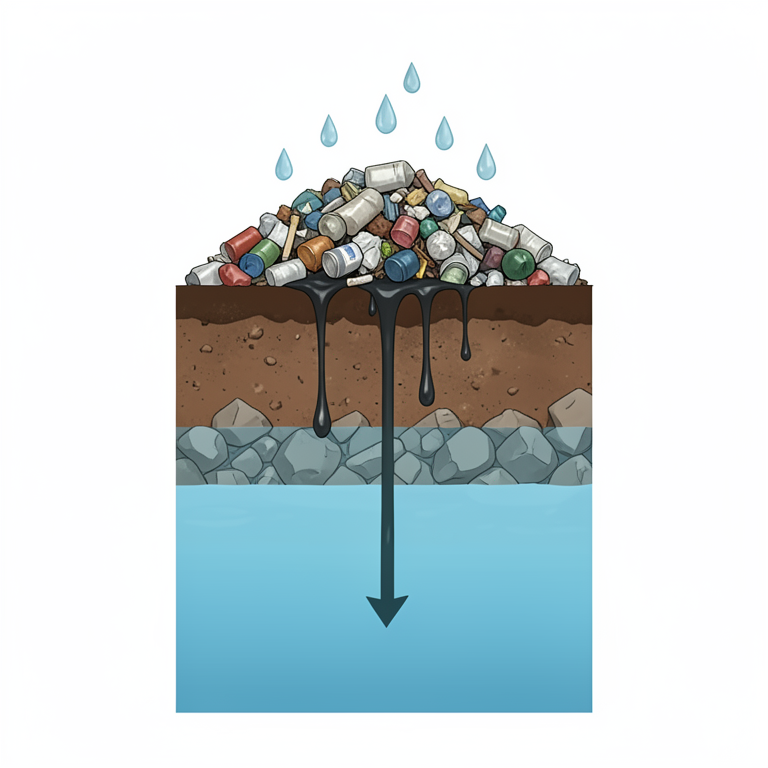
Mechanism of Groundwater Contamination
AI-generated conceptual illustration (A municipal solid waste landfill and an underground aquifer). It explains the idea and does not show study data.
View source evidence ↗Figures & tables
From the original paper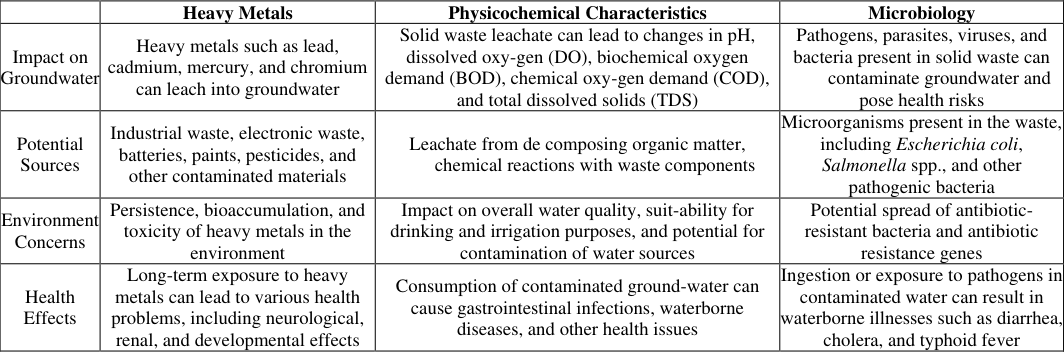 Table 1
Introduction
Given the enormous volumes of waste that urbanization and industrialization continue to produce, solid waste management is a major global concern [75,14,28] . The ecosystem is seriously threatened by improper solid waste disposal, especially in dumping yards, which can contaminate priceless groundwater supplies [46,40,17,74] . Understanding the possible effects of solid waste dumping yards on groundwater quality is essential since it provides the primary supply of drinking water for millions of people throughout the world s . The purpose of this study is to present a thorough investigation of the effects of solid waste disposal yards on groundwater, with an emphasis on the presence and effects of heavy metals, physicochemical characteristics, and microbiological elements [2,57] . Due to their tenacity, toxicity, and potential for bioaccumulation in the environment, heavy metals like lead, cadmium, mercury, and chromium are of special concern [54,8,35,12] . The general water quality and its suitability for different uses are greatly influenced by physicochemical factors, such as pH, dissolved oxygen (DO), biochemical oxygen demand (BOD), chemical oxygen demand (COD), and total dissolved solids (TDS). The ecosystems of groundwater and human health may be significantly impacted by changes in these parameters brought on by solid waste leachate penetration [27,7] . Careful consideration should be given to the microbiological effects of solid waste dumping yards on groundwater. Pathogens found in the waste, including parasites, viruses, and bacteria, can contaminate groundwater and pose serious health hazards to the communities that depend on it as a source of drinking water [55,23] . Concerns are also raised by the potential spread of microorganisms that are resistant to antibiotics from solid waste dumping sites. Thus, understanding how solid waste disposal yards affect groundwater is critical for developing successful waste management plans, regulations, and policies [42,13,43] . The papers is further divided as follows; Section 2 identifies the research questions to be studied. Section 3 talks about the related work while Section 4 discusses about the different parameters considered for solid waste dumping impact study. Finally Section 5 end with the conclusion for the paper.
Research Questions
The objective of this paper to identify the possible research questions for the mentioned subject such as: 1. Which are the most inclined parameters are considered amongst the researchers? 2. How can groundwater contamination from solid waste dumping yards affect human health? 3. What measures can be taken to prevent or mitigate the impact of solid waste disposal on groundwater? 4. How can communities or individuals monitor the quality of their local groundwater and detect any potential contamination from nearby dumping yards? 5. How can poor solid waste management practices be improved to prevent contamination of ground water? 6. What specific contaminants are studied in the work and why?
Literature Survey
Significant study has been conducted on the influence of solid waste dumping yards on groundwater quality, highlighting the possible environmental and health problems connected with inappropriate garbage disposal. The review papers emphasise how important it is to use appropriate waste management procedures, such as leachate management, monitoring systems, and remediation approaches, to reduce the negative effects of solid waste disposal yards on groundwater quality. To safeguard groundwater supplies and maintain environmental sustainability, they emphasise the necessity of thorough comprehension, careful planning, and adoption of sustainable waste management practices [37] conducted an evaluation of the influence of solid waste management on the environment and stressed the significance of adequate trash disposal to prevent pollution of groundwater. To reduce the threats to the environment posed by solid waste dumping yards, they emphasised the necessity for efficient waste management procedures. A thorough analysis focused on the effect of solid waste disposal yards on groundwater quality was carried out in [63] . They studied physicochemical properties, microbiological components, and the presence and consequences of heavy metals. The review emphasised the possible dangers of heavy metal buildup, modifications to physicochemical properties, and pathogen contamination of groundwater. An indepth analysis of the effects of solid waste dumping yards on groundwater contamination was conducted by [69] . They talked about the various contamination points, such as leachate infiltration and pollutant movement into groundwater. The review made clear the importance of good waste management procedures and efficient monitoring systems for preventing groundwater pollution. In [71] conducted a thorough analysis of the effects of solid waste dumping yards on groundwater quality. They discussed the intricate relationships between solid waste and groundwater, highlighting the significance of comprehending the interconnections and creating environmentally friendly waste management techniques. The evaluation emphasised the necessity for extensive monitoring, appropriate landfill design, and efficient leachate treatment to safeguard groundwater resources [62] research centered on the quantity and distribution of heavy metals in groundwater close to solid waste dumping sites. In order to avoid groundwater pollution, the review emphasised the necessity for efficient waste management procedures and emphasised the potential risks of heavy metal leaching. A review of the effects of landfill leachate on groundwater quality was done in 2009 by [52] . The study brought attention to the danger of groundwater pollution brought on by leachate intrusion from solid waste dumping yards. It highlighted the requirement for efficient leachate management plans to avoid groundwater pollution [74] . Undertook a detailed assessment of the physicochemical and microbiological aspects of groundwater contamination caused by solid waste dumping yards. In the review, it was covered how microbial pollution, conductivity, pH, and dissolved oxygen affect the quality of groundwater. To conserve groundwater resources, it emphasised the value of monitoring and good waste management procedures.
A review of the movement and fate of pollutants from solid waste dumping yards to groundwater was carried out by [26] .
The study explored potential dangers to groundwater quality and emphasised the channels and mechanisms of contamination movement. It emphasised the requirement for preventative measures, including as monitoring and liner systems, to reduce groundwater contamination. The effect of solid waste disposal on groundwater quality in developing nations was examined by [10] . The study focused on the need for sustainable waste management strategies to protect groundwater resources and examined the difficulties and effects of incorrect waste management practises.
Groundwater pollution from solid waste dumping yards was assessed and managed in a review by [65] . The study covered the monitoring methods, modelling frameworks, and corrective measures used to lessen the effect of solid waste disposal on groundwater quality. It made clear how crucial it is to combine several strategies for efficient groundwater protection [68] . Presents the effect of open dumping of municipal solid waste (MSW) on soil characteristics in the mountainous region of Himachal Pradesh, India. The solid waste of dumpsites contains various complex characteristics with organic fractions of the highest proportions. As leachate percolates into the soil, it migrates contaminants and affects soil stability and strength. The study includes the geotechnical investigation of dump soil characteristics and its comparison with the natural soil samples taken from outside the proximity of dumpsites. The geochemical analysis of dumpsite soil samples was also carried out by scanning electron microscopy (SEM) and energy dispersive X-ray spectroscopy (EDS). Visual inspection revealed that the MSW consists of a high fraction of organics, followed by paper. The soil samples were collected from five trial pits in the dumpsites at depths of 0.5 m, 1 m and 1.5 m. Then the collected soil samples were subjected to specific gravity tests, grain size analyses, Atterberg's limit tests, compaction tests, direct shear tests, California bearing ratio (CBR) tests and permeability analyses. The study indicated that the dumpsite soils from four study regions show decreasing trends in the values of maximum dry density (MDD), specific gravity, cohesion and CBR, and increasing permeability compared to the natural soil. The results show that the geotechnical properties of the soils at all four study locations have been severely hampered due to contamination induced by open dumping of waste [58] . Study quantifies the environmental impacts associated with municipal solid waste management (MSWM) in Rajkot city, India using the life cycle assessment (LCA). Presently, around 0. (iii) SC3-a combination of AD, composting, incineration, landfilling with energy recovery, and MRF, and (iv) SC4-a combination of AD, composting, landfilling with energy recovery, and MRF is examined using the LCA.
The authors' study in [44] was carried out to assess the impact of domestic waste disposal on groundwater quality at Samastipur, Bihar, India. The samples of groundwater were collected from hand pumps in and around the waste disposal site. The samples were analysed for various physicochemical parameters, viz. pH, electrical conductivity (EC), total hardness (TH), total dissolved solids (TDS), nitrate and phosphate. The results showed that water samples of many hand pumps were contaminated. Therefore, the dumping of municipal solid waste severely threatens groundwater quality. Thus, there is a need for Groundwater analysis around the dumpsite to know to what extent it is contaminated due to municipal solid waste disposal.
In [18] the disposals of municipal solid waste (MSW) in open dumps are a widespread activity around the vicinity of the urban area. When rainwater interacts with dumping yards, it generates leachate and percolates through the soil strata, and after a particular time, they pollute the groundwater and soil in the vicinity. Given this, an assessment of soil fertility around the MSW disposal site near sangamner city, Maharashtra, was carried out. Soil samples (n=16) close to the dumping yard and away from a considerable distance (controlled samples) were collected and analysed for parameters like pH, EC, organic carbon, available NPK and boron using standard methods. The pH, EC, organic carbon, available NPK and boron of soil samples were higher near the dumping site than in control samples. The pH of samples was found to be alkaline, ranging from 8.1 to 8.8, while EC increased from 0.2 to 8.3 dS/m, which is toxic to plants and crops in the nearby area. The percentage of organic carbon lies between 0.8 and 12.2. The available NPK varied from low to medium, and boron ranged from 0.5 to 9.7 ppm in the study area. The minimum dispersion was found in pH (0.23) and higher in N (71.61) from the standard deviation (SD) value. It was observed that, since the waste was disposed of, several contaminants readily penetrated and deteriorated the soil in the area. Thus, the disposal of waste should be discouraged, and waste management and treatment should be put in place for the protection of soil fertility around the dumping site near Sangamner City [73] . Talks about population growth and rural economic activity drive the waste generation rate. Rural waste management generally still applies conventional patterns and has the potential to damage the environment and threaten human health. Challenges and remedial measures for solid waste management in rural areas differ from urban ones. The first step in planning a waste management system is to identify the generation and characteristics of waste. Unfortunately, data on waste generation and characteristics in rural areas in developing countries are still minimal. The development of the tourism industry mainly causes problems, and it certainly requires waste management as the solution.
However, due to the unavailability of waste generation data, this study aims to measure and analyse waste characteristics in the southern zone of Gunungkidul Regency.
The study in [34] was carried out to study the impact of domestic waste disposal on groundwater quality in Delhi, India. Groundwater is one of the significant sources of drinking water in arid and semi-arid regions. Groundwater quality data and its distributions are essential for planning and management. The groundwater samples were collected and analysed for various physicochemical parameters: conductivity, total dissolved solids (TDS), alkalinity, hardness, calcium, magnesium, chloride, sulphate, nitrate, phosphate, fluoride, sodium and potassium. Among these parameters, TDS was found higher 1400, 1068, 1524, 1656, 840, 1106, 1540, 1330, 1900, 1960, 1914, 2061 mg/l at all the Ga1, Ga2, Ga3, Ga4, Ga5, Ga6, Ga7, Ga8, Ga9, Ga10, Ga11, Ga12, Ga13, Ga14, Ga15, Ga16 sampling sites respectively. TDS was observed beyond the desirable limits of BIS at all the sampling sites. The maximum value of TDS (2061 mg/l) was found at the sampling site Ga12 while the minimum value of TDS (1061 mg/l) was found at the sampling site Ga2. The maximum value of chloride (560 mg/l) was found at sampling site Ga4, while the minimum value of chloride (60 mg/l) was found at sampling site Ga5, and the rest of the other parameters were found within the permissible limits. The present study concluded that the chloride and TDS in water samples were above the desirable limit and below the permissible limit of BIS, and the rest of the other parameters were within the desirable limit [53] . the open waste dumping area and controlled site (away from the dumping yard) were examined, and variations in the soil composition were found. On the other hand, groundwater samples were collected from the nearby village bore wells and lakes were analysed and observed contamination of groundwater up to a specific limit. This paper presents the impact of open dumping of solid waste on surrounding water and soil [72] . Management and disposal of municipal solid waste (MSW) is one of the significant environmental problems in Indian cities. The current practices of the uncontrolled dumping of waste on the outskirts of towns/cities have created severe environmental and public health problems. The annual rate of growth of the urban population in India is 4%, and the rate of generation of solid waste increases exponentially with the growth rate. A typical landfill of MSW may occupy an area of several acres. Unscientific dumping pollutes the environment to a greater extent; hence, it is challenging to find the balance between economic growth and environmental protection. The dumping of municipal solid waste causes changes in the geotechnical properties of the soil and the quality of groundwater. The focus of the present study is to carry out a comprehensive laboratory study on soil and water collected from in and around the MSW dumping yard in Ariyamangalam, Tiruchirapalli and to investigate the changes in the index properties, compaction characteristics, hydraulic conductivity and shear strength properties of the soil. The results show that dumping has increased the cohesion and compressibility of the soil, making it more plastic. Coefficient of volume change, compression index and consolidation coefficient show a similar trend. Diffusion of organic content into the soil causes an increase in its compressibility. The increase in compressibility is also evident from the increase in the liquid limit. This can be attributed to the reaction of leachate with the soil. The groundwater is also severely polluted in the vicinity of the dumping yard. This observation of change in geotechnical properties may help carry out land development and water quality assessment activities to meet the land requirement in urban areas like Trichy and improve the quality of the suburban environment near the dump yard sites. These review articles cover a wide range of topics, including heavy metals, physico-chemical properties, microbiological issues, and environmental evaluation, and offer thorough insights into the effect of solid waste disposal yards on groundwater quality. The hazards, difficulties, and potential mitigation measures related to the disposal of solid waste and its effects on groundwater resources are all vital information that they provide.
Factors for Impact of Solid Waste Dumping Yard on Ground Water
This section briefs about different parameters of study for groundwater contamination due to solid waste dumping. Table1 shows the comparison of considered factors in the summary format.
Heavy Metals
It is essential to use proper waste management techniques, such as trash segregation, recycling, and safe disposal, to reduce the influence of heavy metals from solid waste on groundwater. The impact of heavy metals from solid waste on groundwater occurs due to several reasons and processes:
Leaching: Rainfall or other water sources can percolate through solid waste in landfills or dumping sites, leaching heavy metals. These metals can then travel into the soil beneath and finally reach groundwater [36,31,56,20] .
Contaminant transport: Heavy metals can be transferred through the soil matrix via infiltration and groundwater flow once they are freed from solid waste. Contaminated groundwater can transport heavy metals to nearby places, potentially harming bigger areas [73,38,30,25] .
Text it Bioaccumulation: Some heavy metals have the ability to bioaccumulate in organisms. Metals can accumulate in plant tissues if contaminated groundwater is utilized for irrigation or ingested by plants. This can result in heavy metals passing through the food chain, potentially affecting human and environmental health [68,65,62] .
Groundwater quality degradation: Elevated amounts of heavy metals in groundwater can cause water quality to deteriorate. Heavy metal contamination in water can harm human health, including neurological diseases, kidney damage, and cancer [1,29,45] .
Physico-Chemical
The term" physicochemical impact of solid waste on groundwater" describes the modifications made to the chemical and physical characteristics of groundwater as a result of the presence of waste products. The following physicochemical properties of groundwater are impacted by solid waste:
pH: The pH of groundwater can fluctuate due to the release of acidic or alkaline materials from solid waste. As an illustration, the pH may decrease as a result of the breakdown of organic waste, which produces organic acids. The groundwater's suitability for various uses may be impacted by this change in pH levels, which may make the water more acidic or alkaline overall and have an impact on water chemistry in general [24,49,11,47] .
Dissolved Oxygen (DO): Decomposition of solid waste can deplete the groundwater's dissolved oxygen supply. Oxygen is depleted as a result of the bacteria and other microbes in the trash metabolizing organic substances. In groundwaterdependent ecosystems, decreased dissolved oxygen concentrations can have a detrimental effect on aquatic creatures and the general health of the environment [5] .
Biochemical Oxygen Demand (BOD): Organic materials found in solid waste can be broken down by microbes while using oxygen to do so. The BOD is a measurement of the oxygen consumption needed by microorganisms to decompose organic materials. A high degree of organic pollution, as shown by high BOD levels in groundwater, may result in oxygen depletion and adverse effects on aquatic life [64,4,33] .
Chemical Oxygen Demand (COD):
In order to chemically oxidise both organic and inorganic materials in water, a certain amount of oxygen is needed, which is measured by the COD. The levels of COD in groundwater might rise as a result of the introduction of various organic and inorganic chemicals by solid waste. The quality of the water and aquatic ecosystems can be impacted by elevated COD levels, which are a sign of contaminants [5,9,32] .
Total Dissolved Solids (TDS): Dissolved solids concentrations in ground-water can rise as a result of solid waste. Salts, metals, and other dissolved solids can all dissolve and be carried by water as it interacts with waste products. The flavour, odour, and general quality of groundwater can be impacted by high TDS levels [3,50,51] .
Microbiology
The microbiological characteristics of groundwater can be affected in a number of ways by solid waste. Here are some significant variables that may be impacted. Bacteria can be introduced into groundwater sources via solid waste. Pathogenic bacteria, such as Escherichia coli (E. coli), Salmonella, or Campylobacter, which can cause waterborne illnesses, may be present in groundwater as a result of bacterial pollution [22] . Solid waste can include viruses, notably enteric viruses like norovirus and rotavirus, which can contaminate groundwater. These germs can endure in water and are dangerous to consume [21] .
Parasites that can survive in groundwater and are resistant to treatment, such Giardia and Cryptosporidium, may be present in solid waste. When consumed, these parasites might result in digestive disorders [6] . Antibiotic-resistant microorganisms can spread through solid waste. Antibiotic resistance among bacteria may be facilitated by the presence of antibiotics in the faeces. These bacteria represent a serious threat to public health when they get into groundwater [16] . The natural microbial equilibrium in groundwater can be upset by improper solid waste disposal procedures. This disruption may cause changes in the makeup of the microbial population, lowering the diversity of helpful microorganisms and possibly promoting the growth of bad or pathogenic germs [39] .
Conclusion
The impact of solid waste dumping yards on groundwater is a significant concern that requires urgent attention. This study has shed light on the various ways dumping yards can affect groundwater quality and availability and the potential consequences of this impact. Several key findings have emerged through a comprehensive research methodology encompassing literature review, field investigations, data collection, and analysis. Firstly, it is evident that solid waste dumping yards contribute to groundwater contamination by forming leachate. The leachate, containing pollutants such as heavy metals, organic compounds, and hazardous substances, can percolate through the soil and reach groundwater sources. This contamination poses a serious risk to public health, as individuals can be exposed to harmful substances through drinking water and irrigation. Furthermore, the impact of groundwater contamination extends beyond human health. Ecosystems and biodiversity also suffer as a result of polluted ground-water. The disruption of ecological balance can lead to the loss of species and degradation of habitats, with economic implications for the services provided by ecosystems. The economic costs associated with remediating contaminated groundwater sources are substantial. Remediation efforts involve the installation of extraction and treatment systems, as well as long-term monitoring programs. The financial burden falls on governments, communities, and individuals, diverting resources that could be used for other essential purposes. Several measures can be implemented to mitigate the impact of solid waste dumping yards on groundwater. These include proper landfill site selection, the use of good line and leachate collection systems, regular groundwater monitoring, and the promotion of effective waste management practices. The involvement of multiple stakeholders, including policymakers, waste management authorities, and communities, is crucial in implementing these measures and ensuring sustainable waste disposal practices. In conclusion, the impact of solid waste dumping yards on groundwater is a complex and multifaceted issue that requires comprehensive solutions. The findings of this study emphasise the need for urgent action to address the challenges associated with groundwater contamination. By implementing appropriate waste management practices and regulatory measures, it is possible to minimize the adverse effects of dumping yards on groundwater resources and protect the health and well-being of communities and ecosystems.
References
73 in the original paper- Abd El-Salam MM, Abu-Zuid GI. Impact of landfill leachate on the ground-water quality: A case study in Egypt. Journal of Advanced Research. 2015;6(4):579586.
- Abdel-Shafy HI, Mansour MS. Solid waste issue: Sources, composition, disposal, recycling, and valorization. Egyptian Journal of Petroleum. 2018;27(4):1275-1290.
- Aderemi AO. Assessment of groundwater contamination by leachate near a municipal solid waste landfill. African Journal of Environmental Science and Technology. 2011;5(11):933-940.
- Nigeria. European Journal of Scientific Research. 2008;23(1):122-133.
- Aluko O, Sridhar M, Oluwande P. Characterization of leachates from a municipal solid waste landfill site in Ibadan, Nigeria. Journal of Environmental Health Research. 2003;2(1):32-37.
- Angaye TC, Daokoru-Olukole C, ABOWEI JF. Microbiological assessment of municipal solid waste dumpsites in Yenagoa metropolis, Bayelsa state, Nigeria. Biotechnological Research. 2018;4(1):24-33.
- Bagheri M, Bazvand A, Ehteshami M. Application of artificial intelligence for the management of landfill leachate penetration into groundwater, and assessment of its environmental impacts. Journal of Cleaner Production. 2017;149:784-796.
- Banuraman S, Madavan V. Study of ground water in perungudi area of Chennai: Correlation with physicochemical parameters. Civil and Environmental Research. 2011;1(1):23-32.
- Bernard C, Colin JR, Anne LDD. Estimation of the hazard of landfills through toxicity testing of leachates: 2. comparison of physicochemical characteristics of landfill leachates with their toxicity determined with a battery of tests. Chemosphere. 1997;35(11):2783-2796.
- Bhandari G. Effect of solid waste disposal on groundwater quality in developing nations. Environmental Monitoring and Assessment. 2018;190(1):25.
- Biswas AK, Kumar S, Babu SS, Bhattacharyya JK, Chakrabarti T. Studies on environmental quality in and around municipal solid waste dumpsite. Resources, Conservation and Recycling. 2010;55(2):129-134.
- Boateng TK, Opoku F, Akoto O. Heavy metal contamination assessment of groundwater quality: A case study of OTI landfill site, Kumasi. Applied Water Science. 2019;9(2):33.
- Calvo N, Varela-Candamio L, Novo-Corti I. A dynamic model for construction and demolition (c & d) waste management in Spain: Driving policies based on economic incentives and tax penalties. Sustainability. 2014;6(1):416-435.
- Chhipa PR, Impact of solid waste disposal on ground water quality in different disposal site at Jaipur, India. International Journal of Engineering Sciences Research Technology IJESRT. 2014;3:93-101.
- Chowdhury FFK, Acharjee M, Noor R. Maintenance of environmental sustain-ability through microbiological study of pharmaceutical solid wastes. CLEAN-Soil, Air, Water. 2016;44(3):309-316.
- D´avalos-Pen˜a I, Fuentes-Rivas RM, Fonseca-Montes de Oca RMG, Ramos-Leal JA, Mor´an-Ram´ırez J, Mart´ınez Alva G, et al. Assessment of physicochemical groundwater quality and hydro geochemical processes in an area near a municipal landfill site: A case study of the Toluca valley. International Journal of Environ-mental Research and Public Health. 2021;18(21):11195.
- Deshmukh KK, Aher SP. Assessment of soil fertility around municipal solid waste disposal site near Sangamner City, Maharashtra, India. Current World Environment. 2017;12(2):401.
- Dr. Saini AK. Groundwater pollution, its causes, and enhancement by surface water pollution and prevention techniques. International Journal of Advanced Chemistry Research. 2022;4(2):346-350.
- Esakku S, Palanivelu K, Joseph K. Assessment of heavy metals in a municipal solid waste dumpsite. In: Workshop on sustainable landfill management. 2003;35:139-145.
- Finstein MS, Morris ML. Microbiology of municipal solid waste composting. Advances in Applied Microbiology. 1975;19:113-151.
- Gautam SP, Bundela PS, Pandey AK, Awasthi MK, Sarsaiya S. Diversity of cellulolytic microbes and the biodegradation of municipal solid waste by a potential strain. International Journal of Microbiology. 2012;2012:325907.
- Gerba CP, Smith JE. Sources of pathogenic microorganisms and their fate during land application of wastes. Journal of environmental quality. 2005;34(1):42-48.
- Goswami U, Sarma H. Study of the impact of municipal solid waste dumping on soil quality in Guwahati city. Pollution Research. 2008;27(2):327-330.
- Govil P, Sorlie J, Murthy N, Sujatha D, Reddy G, Rudolph-Lund K, et al. Soil contamination of heavy metals in the Katedan industrial development area, Hyderabad, India. Environmental Monitoring and Assessment. 2008;140:313-323.
- Hamoda MF. Review of the movement and fate of pollutants from solid waste dumping yards to groundwater. Journal of Environmental Management. 2015;156:52-62.
- He J, Feng XY, Zhou LR, Zhang L. The effect of leachate seepage on the mechanical properties and microstructure of solidified sludge when used as a landfill temporary cover material. Waste Management. 2021;130:127-135.
- Igboama WN, Hammed OS, Fatoba JO, Aroyehun MT, Ehiabhili JC. Review article on impact of groundwater contamination due to dumpsites using geophysical and physiochemical methods. Applied Water Science. 2022;12(6):130.
- Iqbal MA, Gupta S. Studies on heavy metal ion pollution of ground water sources as an effect of municipal solid waste dumping. African Journal of Basic and Applied Sciences. 2009;1(5-6):117-122.
- Jhamnani B, Singh S. Groundwater contamination due to Bhalaswa landfill site in New Delhi. International Journal of Civil and Environmental Engineering. 2009;3(3):181-185.
- Johnson C, Kersten M, Ziegler F, Moor H. Leaching behaviour and solubility-controlling solid phases of heavy metals in municipal solid waste incinerator ash. Waste Management. 1996;16(1-3):129-134.
- Kaczala F. Leaching characteristics of the fine fraction from an excavated landfill: Physico-chemical characterization. Journal of Material Cycles and Waste Management. 2017;19:294-304.
- Kamaruddin MA, Yusoff MS, Rui LM. An overview of municipal solid waste management and landfill leachate treatment: Malaysia and Asian perspectives. Environmental Science and Pollution Research. 2017;24(30):26988-27020. https://doi.org/10.1007/s11356-017-0303-9
- Kamboj N, Choudhary M. Impact of solid waste disposal on groundwater quality near Gazipur dumping site, Delhi, India. Environmental Monitoring and Assessment. 2013;185:5647-5659.
- Kanmani S, Gandhimath R. Investigation of physicochemical characteristics and heavy metal distribution profile in groundwater system around the open dump site. Applied Water Science. 2013;3:387399.
- Karnchanawong S, Limpiteeprakan P. Evaluation of heavy metal leaching from spent household batteries disposed in municipal solid waste. Waste Management. 2009;29(2):550-558.
- Kjeldsen P, Barlaz MA, Rooker AP, Baun A, Ledin A. Environmental impact assessment of solid waste management in copenhagen. Waste Management. 2002;22(8):803-808.
- Kloke A, Sauerbeck D, Vetter H. The contamination of plants and soils with heavy metals and the transport of metals in terrestrial food chains. In: Changing Metal Cycles and Human Health: Report of the Dahlem Workshop on Changing Metal Cycles and Human Health, Berlin; c1983. p. 113-141. Springer (1984)
- Kumar RN. How much spatial and temporal variation in groundwater microbiology can occur following open dumping of municipal solid waste? Water Practice & Technology. 2022;17(7):1369-1377.
- Bhawna KS. Physicochemical properties of groundwater around municipal waste disposal sites: A review. IOSR Journal of Engineering. 2020;10:12-21.
- Dr. Uvaraj S. GIS based analytical hierarchy process (AHP) and frequency ratio (FR) models for groundwater potential zone mapping. Int. J Geogr Geol. Environ 2021;3(2):83-91.
- Massoud MA, Tarhini A, Nasr JA. Decentralized approaches to wastewater treatment and management: applicability in developing countries. Journal of Environmental Management. 2009;90(1):652-659.
- Mishra MK, Prasad S, Jha AM. Assessment of ground water quality near municipal solid waste dump site at Samastipur: A case study. International Journal of Engineering and Advanced Technology (IJEAT). 2012;2(3):1492-1503.
- Mohan S, Gandhimathi R. Solid waste characterisation and the assessment of the effect of dumping site leachate on groundwater quality: A case study. International Journal of Environment and Waste Management. 2009;3(1-2):65-77.
- Mor S, Ravindra K, Dahiya R, Chandra A. Leachate characterization and assessment of groundwater pollution near municipal solid waste landfill site. Environmental Monitoring and Assessment. 2006;118:435-456.
- Mouhoun-Chouaki S, Derridj A, Tazda¨ıt D, SalahTazda¨ıt R. A study of the impact of municipal solid waste on some soil physicochemical properties: the case of the landfill of Ain-el-Hammam municipality, Algeria. Applied and Environ-mental Soil Science. 2019;2019:1-8.
- Okeke P. Impact of solid waste on physico-chemical properties of Ferrealsol in Owerri, Nigeria. African Research Review. 2014;8(3):116-122.
- Okunade DA, Adekalu KO. Physico-chemical analysis of contaminated water resources due to cassava wastewater effluent disposal. European International Journal of Science and Technology. 2013;2(6):75-84.
- Pandey RK, Tiwari RP. Physico-chemical analysis of subsurface water in the vicinity of municipal solid waste dumping sites of Satna district, India. IOSR Journal of Mechanical and Civil Engineering. 2016;13(1):37-42.
- Pardo P. Impact of landfill leachate on groundwater quality: A review. Water Research. 2009;43(14):33553370.
- Paruti B, Santhaveeranagoud B. Impact on groundwater and soil due to solid waste dump-A case study of S. Bingipur in Bangalore. Annals of the Faculty of Engineering Hunedoara. 2019;17(4):167-174.
- Patil V, Patil P. Physicochemical analysis of selected groundwater samples of Amalner town Injalgaon district, Maharashtra, India. E-Journal of Chemistry. 2010;7(1):111-116.
- Pedley S, Howard G. The public health implications of microbiological contamination of groundwater. Quarterly Journal of Engineering Geology and Hydrogeology. 1997;30(2):179-188.
- Prechthai T, Parkpian P, Visvanathan C. Assessment of heavy metal contami-nation and its mobilization from municipal solid waste open dumping site. Journal of Hazardous Materials. 2008;156(1-3):86-94.
- Przydatek G, Kanownik W. Impact of small municipal solid waste landfill on groundwater quality. Environmental Monitoring and Assessment. 2019;191:169. https://doi.org/10.1007/s10661-0197279-5
- Pujara Y, Govani J, Patel HT, Pathak P, Mashru D, Ganesh PS. Quantification of environmental impacts associated with municipal solid waste manage-ment in Rajkot city, India using life cycle assessment. Journal of Environmental Management. 2023;12:100364.
- Alansary Refat Elkhouly, Husen Elbashir Shafsha, Shaily Halab. Studies on hydro chemical characters of ground water in Sabratha region. Int. J Hortic Food Sci. 2021;3(1):51-59.
- Purandara B, Narayanasamy V, Jayashree K. Impact of sewage on ground water quality-a case study. Pollution Research. 2003;22(2):189-197.
- Rahman MS. Presence and distribution of heavy metals in groundwater near solid waste dumping yards. Environmental Monitoring and Assessment. 2016;188(11):650.
- Rani M, Gupta A. Effects of solid waste disposal yards on groundwater quality: Heavy metals, International Journal of Biology Sciences https://www.biologyjournal.net physicochemical characteristics, and microbiological aspects. Water Science and Technology: Water Supply. 2019;19(6):1834-1850.
- Ruchuwararak P, Intamat S, Tengjaroenkul B, Neeratanaphan L. Bioaccumulation of heavy metals in local edible plants near a municipal landfill and the related human health risk assessment. Human and ecological risk assessment: an international Journal. 2019;25(7):1760-1772.
- Sah A. Assessment and management of groundwater pollution from solid waste dumping yards: A review. Environmental Science and Pollution Research. 2020;27(5):5018-5032.
- Sahu J, Agarwal S, Meikap B, Biswas M. Performance of a modified multi-stage bubble column reactor for lead (ii) and biological oxygen demand removal from wastewater using activated rice husk. Journal of Hazardous Materials. 2009;161(1):317-324. https://doi.org/https://doi.org/10.1016/j.jhazmat.2008.0 3.094, https://www.sciencedirect.com/science/article/pii/S030 4389408004743
- Shahsavani A, Fakhri Y, Ferrante M, Keramati H, Zandsalimi Y, Bay A, et al. Risk assessment of heavy metals bioaccumulation: Fished shrimps from the Persian Gulf. Toxin Reviews. 2017;36(4):322-330.
- Sharma A, Gupta AK, Ganguly R. Impact of open dumping of municipal solid waste on soil properties in mountainous region. Journal of Rock Mechanics and Geotechnical Engineering. 2018;10(1):1-9.
- Sharma N. Impacts of solid waste dumping yards on groundwater contamination: A critical analysis. Environmental Science and Pollution Research. 2018;25(9):8446-8461.
- Sharma P, Dutta D, Udayan A, Nadda AK, Lam SS, Kumar S. Role of microbes in bioaccumulation of heavy metals in municipal solid waste: Impacts on plant and human being. Environmental Pollution. 2022;305:119248
- Srinivasalu S, Nagendran R, Nidheesh PM. Impact of solid waste dumping yards on groundwater quality: A comprehensive review. Journal of Environmental Management. 2020;268:110646.
- Sujatha ER, Gurucharan R, Ramprasad C, Sivakumar V. Impact of municipal solid waste dumping on the geotechnical properties of soil and groundwater in Ariyamangalam, Tricky, India. International Journal of Geotechnical Engineering. 2013;7:93-104.
- Syafrudin S, Masjhoer J, Maryon M. Characterisation and quantification of solid waste in rural regions. Waste Management & Research. 2023;9(2):337-352
- Vaverkov´a MD. Groundwater contamination by landfill leachate: A review. Environmental Monitoring and Assessment. 2013;185(6):4419-4430.
- Wijesekara S, Mayakaduwa SS, Siriwardana A, De Silva N, Basnayake B, Kawamoto K. et al. Fate and transport of pollutants through a municipal solid waste landfill leachate in Sri Lanka. Environmental Earth Sciences. 2014;72:1707-1719.
- El Fadili H, Ali MB, El Mahi M, Cooray AT. A comprehensive health risk assessment and groundwater quality for irrigation and drinking purposes around municipal solid waste sanitary landfill: A case study in morocco. Environmental Nanotechnology, Monitoring & Management. 2022;18:100698.
- Marshall R, Farahbakhsh K. Systems approaches to integrated solid waste man-agement in developing countries. Waste management (New York, N.Y.), 2013;33(4):988-1003. https://doi.org/10.1016/j.wasman.2012.12.023