
Research article · 2023 · Full text
International Journal of Advanced Biochemistry ResearchFlaxseed enriched dietary Peda: A nutritious delight with flaxseed powder
Volume 7(2S) · Pages 284–287 · DOI: 10.33545/26174693.2023.v7.i2sd.226 ↗
Research areasNatural Products and Biological ResearchFood Science and Nutritional StudiesPhytoestrogen effects and research
Abstract
Author-writtenIndia is the world's largest milk producer, with a record production of 209.96 million tons of milk per annum in 2020. Milk production in India has been increasing at an average annual growth rate of 6.3 percent over the past six years. The traditional dairy sector plays a significant role in India, accounting for over 90 percent of all dairy products consumed in the country. Khoa, a partially dehydrated whole milk product, is the main ingredient in various traditional Indian sweets like Peda and Burfi. Peda is a popular khoa-based indigenous dairy product, while Burfi is another khoa-based sweet. Flaxseeds, which are rich in omega-3 fatty acids, and Stevia, a natural sweetener, have been incorporated into Peda to make it more beneficial in terms of nutrition and health. This modified Peda recipe reduces the fat and sugar content, making it a healthier option, particularly for individuals with cardiovascular diseases. Flaxseeds contain omega-3 fats and lignans, which have anti-inflammatory and anti-thrombotic properties. Stevia, on the other hand, is a natural sweetener that provides sweetness without adding calories or affecting blood sugar levels.
Summary
Source-checkedPlain-language reading of the full paper, prepared with AI and checked against the text. Each point links to the authors' own words.
Why it matters
- India is the global leader in milk production, reaching 209.96 million tons annually in 2020. View evidence ↗
- Khoa, a dehydrated milk product, serves as the primary base for traditional Indian sweets such as Peda and Burfi. View evidence ↗
- Flaxseeds are considered functional foods because they contain lignans and omega-3 fats with anti-thrombotic and anti-inflammatory properties. View evidence ↗
The question
- The study aimed to improve the nutritional and health benefits of Peda by incorporating Stevia and flaxseed powder. View evidence ↗
What they did
- The research was conducted at the Institute of Agriculture Science, Banaras Hindu University, in Varanasi, India. View evidence ↗
- The study compared a control (T0: 30% sugar) against three flaxseed-enriched versions (FP1: 2%, FP2: 2.5%, and FP3: 3% flaxseed powder), all using 0.0375% Stevia as a sweetener. View evidence ↗
What they found
- Dietary fiber increased from 0% in the control to 3.12% in the FP3 sample. View evidence ↗
- Protein levels increased slightly with higher flaxseed incorporation, from 15.93% (T0) to 17.12% (FP3). View evidence ↗
- Moisture content decreased as flaxseed was added, dropping from 19.56% in the control to 17.7% in the FP3 sample. View evidence ↗
- The control Peda (T0) was sensory-preferred over all flaxseed variants, scoring highest in color (7.6), texture (7.4), flavor (7.5), and overall acceptability (7.8). View evidence ↗
- Overall acceptability scores declined as flaxseed concentration increased, falling from 8.48 (T0) to 5.48 (FP3). View evidence ↗
What it means
- The authors recommend incorporating flaxseed into khoa as a strategy to produce nutritionally enhanced Peda. View evidence ↗
Visual summary
2 visualsIllustrations explain the paper; charts are replotted from the paper's own table values.
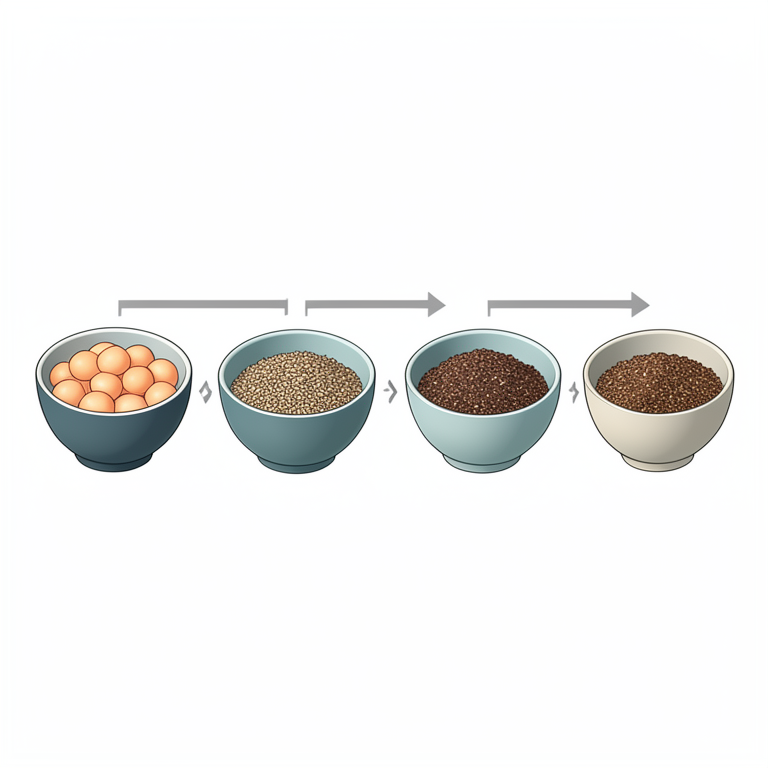
Treatment Comparison Layout
AI-generated conceptual illustration (Indian Peda sweets and flaxseed powder). It explains the idea and does not show study data.
View source evidence ↗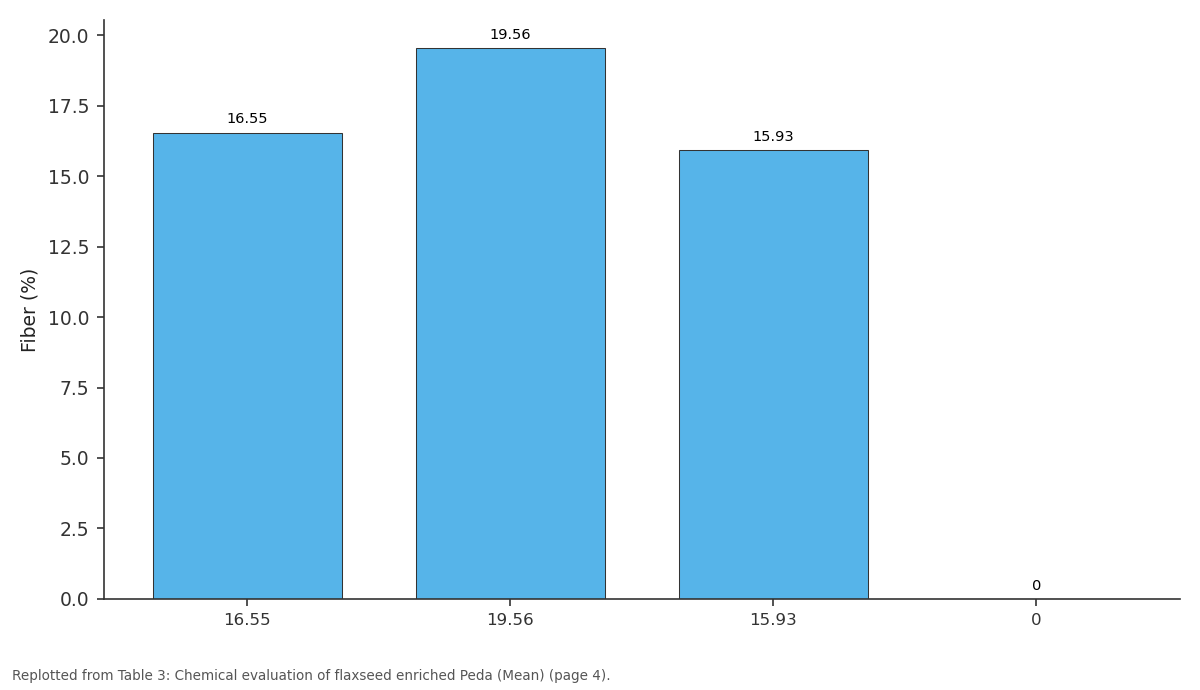
Samples / T0: 16.55 vs 19.56 vs 15.93 vs 0
Replotted from Table 3 (page 4) of the original paper. Every bar is the paper's own table value.
View source evidence ↗Figures & tables
From the original paper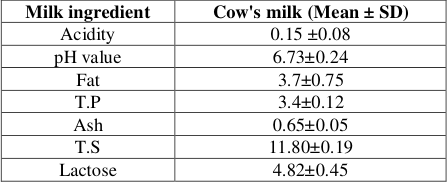 Table 1
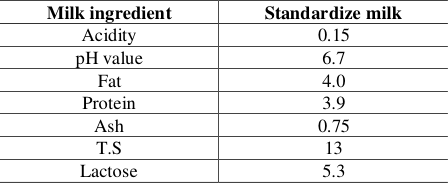 Table 2
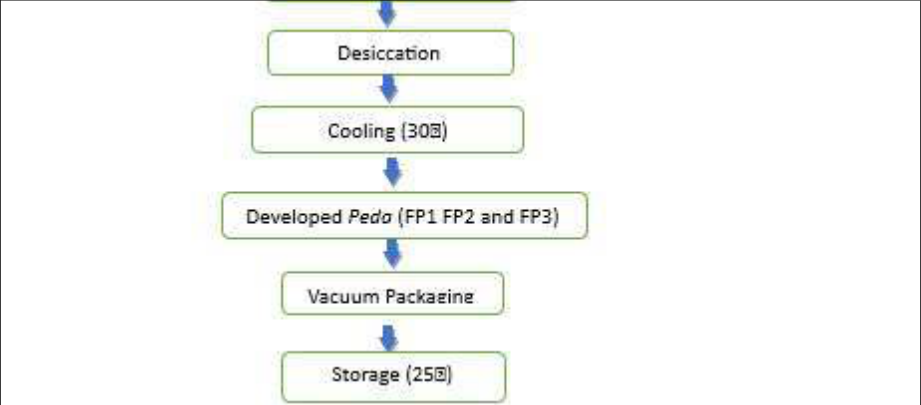 Figure 1
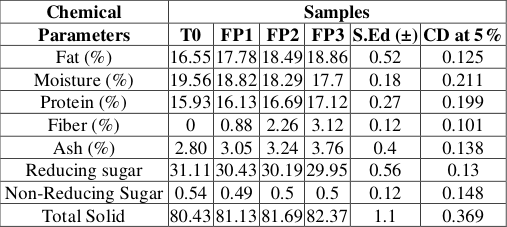 Table 3
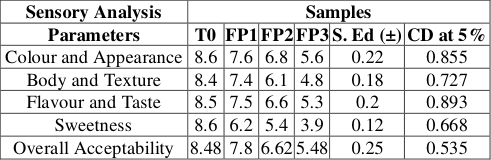 Table 4
Introduction
India has established itself as the world's foremost milk producer, boasting a record-breaking annual output of 209.96 million tons, surpassing the 2019-2020 production of 198.4 million tons (Food and Agriculture Organization Corporate Statistical Database -FAOSTAT). This impressive growth, averaging 6.3 percent annually over a six-year period, has been duly recognized by the Union Ministry for Fisheries, Animal Husbandry, and Dairying, which honoured the sector with the Gopal Ratan Award. Notably, khoa, accounting for 5.5 percent of total milk production, holds a special place in the production of sweets like Peda, burfi, kalakand, and gulabjamun (Banjare et al., 2015) [1] . Khoa, a heat-desiccated dairy product, has been an integral part of Indian sweets for centuries. Varieties such as Pindi, Danedar, Dhap, Mawa, or Kawa are all based on khoa, characterized by a minimum milk fat content of 30 percent on a dry matter basis, without added starch, sugar, or colouring matter (PFA, 2005, FSSAI, 2011) [14,15] . Peda, a beloved Indian sweet, is primarily crafted from khoa. Peda's appeal lies in its nutrition, texture, and flavor, derived from a carefully balanced mixture of khoa, sugar, and natural or artificial color and flavours. Peda and Burfi, two popular khoa-based sweets, enjoy immense popularity in India due to their delectable taste and nutritional richness (Dharam, 2000) [16] . While khoa-based products offer high profit margins, their production has remained predominantly small-scale, limiting their reach to local markets because of their relatively short shelf life. Peda, in particular, is favoured for its extended shelf life, making it an ideal offering at Hindu temples and religious events (Karthikeyan & Pandiyan, 2013) [17] . Due to consumer demand for foods with superior health advantages, Flaxseed now has fresh chances as a functional food. It has become a popular addition in diets personalized for specific purpose (Gul et al., 2016) [18] . Nutritionists and medical researchers are increasingly interested in flaxseed because of the possible health benefits related with its biologically active components-ALA lignin Secoisolariciresinol di glycoside (SDG) and dietary fibre. (Kajla et al. 2015) [6] . Mahato et al., (2021) [8] reported that using stevia to reduce the calorie content of flavoured milk is an alternative. It is vital to maintain customer approval of the product while lowering the sugar level.
Methods and Materials
The research "Development dietary Peda prepared from flaxseed powder" was conducted in the laboratory of Department of Dairy Science and Food Technology, Institute of Agriculture Science, Banaras Hindu University, Varanasi, (U.P.) India.
Procurement of raw milk and analysis of milk
The procurement of raw milk for the preparation of Peda from a dairy farm is a crucial aspect of our study. The method we employed involved a systematic approach to ensure the quality and safety of the raw milk. Firstly, we procure a raw milk from dairy farm, Department of Dairy Science and Food Technology, Institute of Agriculture Science, Banaras Hindu University, Varanasi known for its high-quality milk production. We conducted regular visits to the farm to observe the milking process, ensuring that it adhered to proper hygiene and sanitation standards. Raw milk analysis is done by different method by AOAC, (2003) which is moisture, protein, fat, and ash content of raw foe quality of ilk for Peda preparation.
Collection of raw ingredients for Peda preparation
The researchers obtained several key ingredients from the local market in Varanasi for their research. They acquired flaxseed powder, known for its high omega-3 fatty acid content and importance in health-related investigations, from a trusted local source. Sugar, a crucial element in various food-related investigations, was also obtained from the market. It plays a vital role in the development of palatable products and the study of sugar's impact on physiological parameters. Additionally, they procured powdered stevia, a natural sweetener, from a reliable local vendor. Stevia was used to explore its potential as a sugar substitute in certain applications.
Milk standardization
Standardizing cow milk for Peda preparation is a vital process in the dairy industry. It involves adjusting the milk's fat and solids-not-fat (SNF) content to achieve specific attributes required for high-quality Peda. Cream is added to increase the fat percentage, while Skimmed Milk Powder (SMP) enhances SNF content. Accurate measurement of these components ensures consistent flavor and texture in Peda batches, meeting consumer expectations. Additionally, the dietary fiber content of the Peda sample was determined using the method described by AOAC in 1975. The total solids content of the Peda sample was measured using the procedure outlined in IS (Indian Standards) 147-9 (Part-II) 1961. In order to determine the total sugar content of the Peda, the volumetric (Lane-Eynon) method as described in ISI (Indian Standards Institute) 1981 was employed. This comprehensive physico-chemical analysis provides valuable information regarding the composition of the flaxseed enriched Peda, enabling a better understanding of its nutritional profile.
Treatment combination for flaxseed and formulated
Treatment combination for flaxseed and formulated
Preparation of flaxseed powder incorporated Peda
Preparation of flaxseed powder incorporated Peda
Sensory evaluation
A sensory evaluation was conducted to assess the quality of Peda samples. The evaluation involved a panel of ten male and ten female judges randomly selected from the "Department of Dairy Science and Food Technology, BHU, Varanasi". The panel consisted of faculty members, research scholars, and postgraduate students. The sensory evaluation focused on various parameters, including colour and appearance, flavour, body and texture, and overall acceptability of the khoa samples and khoa-based sweets.
To ensure accurate assessments, the judges were provided with instructions to familiarize themselves with the evaluation method before the test. During the evaluation, each sample was rated on a scale of 1 to 9, with 1 representing extreme dislike and 9 indicating extreme liking. This approach allowed the judges to provide an objective assessment of their preference for each Peda sample.
Statistical analysis
The statistical designs data in the study were analyzed using Analysis of Variance (ANOVA) and Critical Difference (C.D) methods. The analysis was performed using both the WASP software and Excel software.
Results
Results
Analysis of raw milk
The outcomes of the chemical analysis of milk samples collected from animal farms presented in Table 1. Cow's milk exhibited higher fat (4.2%), total protein (3.4%), ash (0.65%), and total solids (11.80%). On the other hand, cow's milk had a greater lactose content (4.82%). Similar results are obtained in this research conducted by (Sharma et al., 2019) [13] .
| Milk ingredient | Cow's milk (Mean ± SD) |
|---|---|
| Acidity | 0.15 ±0.08 |
| pH value | 6.73±0.24 |
| Fat | 3.7±0.75 |
| T.P | 3.4±0.12 |
| Ash | 0.65±0.05 |
| T.S | 11.80±0.19 |
| Lactose | 4.82±0.45 |
Table text extracted from the original PDF; superscript letters are shown inline. The original table image is below.
View original table image
Standardize milk
The outcomes of the chemical analysis of standardize milk samples foe Peda in Table 1. Cow's milk exhibited higher fat (4.2%), total protein (3.4%), ash (0.65%), and total solids (11.80%). On the other hand, cow's milk had a greater lactose content (4.82%).
Chemical evaluation of flaxseed incorporated Peda
A study was conducted to assess the chemical composition of Peda incorporating flaxseed and sesame seeds. The experiment involved using honey as a substitute for sugar, and three different levels of flaxseed (2%, 2.5%, and 3%) were incorporated into the Peda. The samples were analyzed for moisture, fat, protein, ash, fiber, and antioxidant content.
The results of the analysis can be found in [5,9,13] .
Conclusion
Based on the findings of the study, it can be concluded that the inclusion of flaxseed in khoa for the preparation of nutritionally enhanced Peda by completely replacing sugar leads to positive sensory evaluation results. Peda made with flaxseed in treatment FP1 achieved the highest scores in sensory evaluation, particularly in terms of color and appearance, body and texture, flavor and taste, as well as overall acceptability. Therefore, incorporating flaxseed and in khoa can be considered as an effective strategy to produce Peda with superior sensory attributes.
Figures and tables from the paper
| Milk ingredient | Standardize milk |
|---|---|
| Acidity | 0.15 |
| pH value | 6.7 |
| Fat | 4.0 |
| Protein | 3.9 |
| Ash | 0.75 |
| T.S | 13 |
| Lactose | 5.3 |
Table text extracted from the original PDF; superscript letters are shown inline. The original table image is below.
View original table image
| Chemical | Samples | — | — | — | — | — |
|---|---|---|---|---|---|---|
| Parameters | T0 | FP1 | FP2 | FP3 | S.Ed (±) | CD at 5% |
| Fat (%) | 16.55 | 17.78 | 18.49 | 18.86 | 0.52 | 0.125 |
| Moisture (%) | 19.56 | 18.82 | 18.29 | 17.7 | 0.18 | 0.211 |
| Protein (%) | 15.93 | 16.13 | 16.69 | 17.12 | 0.27 | 0.199 |
| Fiber (%) | 0 | 0.88 | 2.26 | 3.12 | 0.12 | 0.101 |
| Ash (%) | 2.80 | 3.05 | 3.24 | 3.76 | 0.4 | 0.138 |
| Reducing sugar | 31.11 | 30.43 | 30.19 | 29.95 | 0.56 | 0.13 |
| Non-Reducing Sugar | 0.54 | 0.49 | 0.5 | 0.5 | 0.12 | 0.148 |
| Total Solid | 80.43 | 81.13 | 81.69 | 82.37 | 1.1 | 0.369 |
Table text extracted from the original PDF; superscript letters are shown inline. The original table image is below.
View original table image
| Sensory Analysis | Samples | — | — | — | — | — |
|---|---|---|---|---|---|---|
| Parameters | T0 | FP1 | FP2 | FP3 | S. Ed (±) | CD at 5% |
| Colour and Appearance | 8.6 | 7.6 | 6.8 | 5.6 | 0.22 | 0.855 |
| Body and Texture | 8.4 | 7.4 | 6.1 | 4.8 | 0.18 | 0.727 |
| Flavour and Taste | 8.5 | 7.5 | 6.6 | 5.3 | 0.2 | 0.893 |
| Sweetness | 8.6 | 6.2 | 5.4 | 3.9 | 0.12 | 0.668 |
| Overall Acceptability | 8.48 | 7.8 | 6.62 | 5.48 | 0.25 | 0.535 |
Table text extracted from the original PDF; superscript letters are shown inline. The original table image is below.
View original table image
References
19 in the original paper- Banjare K, Kumar M, Goel BK, Uprit S. Studies on chemical, textural and sensory characteristics of market and laboratory Peda samples manufactured in Raipur City of Chhattisgarh. Oriental Journal of Chemistry. 2015;31(1):231-238.
- Dharam P. Technological advances in the manufacture of heat desiccated traditional Indian milk products-an overview. Indian Dairyman. 2000;52(10):27-35.
- Gul K, Singh AK, Jabeen R. Nutraceuticals and functional foods: The foods for the future world. Critical Reviews in Food Science and Nutrition. 2016;56(16): 2617-2627
- Hirpara P, Prajapati JP, Mehta BM, Pinto SV. Development of Thabdi milk sweets of Gujarat State, India utilizing Ghee residue as an ingredient. Journal of Applied and Natural Science. 2020;12(4):575-581.
- Jha A, Kumar A, Jain P, Om H, Singh R, Bunkar DS. Physico-chemical and sensory changes during the storage of Lal Peda. Journal of Food Science and Technology. 2014;51(6):1173-1178. https://doi.org/10.1007/s13197-012-0613-3
- Kajla P, Sharma A, Sood DR. Flaxseed: A potential functional food source. Journal of food science and technology. 2015;52:1857-1871.
- Karthikeyan N, Pandiyan C. Microbial quality of Khoa and Khoa based milk sweets from different sources. International Food Research Journal. 2013;20:3.
- Mahato DK, Keast R, Liem DG, Russell CG, Cicerale S, Gamlath S. Optimisation of natural sweeteners for sugar reduction in chocolate flavoured milk and their impact on sensory attributes. International Dairy Journal. 2021;115:104922.
- Modha HM, Patel NM, Patel HG, Patel KN. Process standardization for the manufacture of Thabdi Peda. Journal of Food Science and Technology. 2015;52(6): 3283-3290. https://doi.org/10.1007/s13197-014-1391-x
- Meshram TA, Undratwad DT, Rathod RZP. Effect of singhara (Eleocharis dulcis) flour on chemical composition of Peda. International Journal of current Science. 2019;7(4):2631-2632.
- Oomah BD. Flaxseed as a functional food source. Journal of the Science of Food and Agriculture. 2001;81(9):889-894.
- Oomah BD, Mazza G Flaxseed proteins: A Review Food Chemistry. 2003;48:109-114.
- Sharma A, Gautam A, Ranadey VL. Development and quality evaluation of Peda manufactured from admixture of flaxseed and sesame seed The Pharma Innovation Journal. 2019;8(8):183-186. www.thepharmajournal.com
- Harrison P. The role of PFA-100® testing in the investigation and management of haemostatic defects in children and adults. British Journal of Haematology. 2005 Jul;130(1):3-10.
- Singh M, Iyer U, Chandorkar S. Nutrition labeling compliance of branded processed packaged foods with Indian food laws (FSSAI, 2011 Regulations). International Journal of Food and Nutritional Sciences. 2013 Oct 1;2(4):14-9.
- Dharam P. Technological advances in the manufacture of heat desiccated traditional Indian milk products-an overview. Indian Dairyman. 2000;52(10):27-35.
- Sudha M, Karthikeyan A, Anusuya P, Ganesh NM, Pandiyan M, Senthil N, et al. Inheritance of resistance to mungbean yellow mosaic virus (MYMV) in inter and intra specific crosses of mungbean (Vigna radiata). American Journal of Plant Sciences. 2013 Oct 1;4(10):1924.
- Gul K, Sohni S, Waqar M, Ahmad F, Norulaini NN, AK MO. Functionalization of magnetic chitosan with graphene oxide for removal of cationic and anionic dyes from aqueous solution. Carbohydrate Polymers. 2016 Nov 5;152:520-31.
- Kajla M, Yadav VK, Chhokar RS, Sharma RK. Management practices to mitigate the impact of high temperature on wheat. J Wheat Res. 2015;7(1):1-2.