
Research article · 2023 · Full text
International Journal of Veterinary Sciences and Animal HusbandryMassive insulin overdose in a dog requiring extended observation and management
Volume 8(5) · Pages 231–234 · DOI: 10.22271/veterinary.2023.v8.i5d.737 ↗
Research areasHyperglycemia and glycemic control in critically ill and hospitalized patientsDiabetes and associated disordersDiabetes Management and Research
Abstract
Author-writtenA case of 5.5 years old Golden retriever breed dog with history of shivering, dullness and seizures after insulin overdose was presented in Medicine emergency at multispecialty veterinary hospital, Guru Angad Dev Veterinary and Animal Sciences University, Ludhiana, Punjab. The blood glucose level was 36 mg/ dL on presentation and the dog was immediately put on I.V. 20 per cent dextrose supplementation. Continuous patient monitoring for body vitals and hourly blood glucose monitoring along with treatment of hypoglycemia using different concentrations of parenteral dextrose and oral feeding of complex carbohydrates was done for next 24 hours till the blood glucose level was maintained at normal physiological range.
Summary
Source-checkedPlain-language reading of the full paper, prepared with AI and checked against the text. Each point links to the authors' own words.
Why it matters
- Insulin is a critical medical discovery used as a life-saving treatment for type 1 diabetes to effectively lower high blood glucose levels. View evidence ↗
- In critical care, insulin is also used to treat hyperkalemia (excessive potassium) associated with renal failure. View evidence ↗
- Because of its potency, it is essential to understand the correct dosage and potential hazards of insulin before administration. View evidence ↗
The question
- The authors aim to report a rare case of a dog with renal failure and hyperkalemia that received a massive insulin overdose. View evidence ↗
What they did
- The subject was a 28 kg, 5.5-year-old male Golden Retriever presenting with seizures, shivering, and drowsiness. View evidence ↗
- The overdose occurred when a local veterinarian mistakenly injected 4 mL of insulin (160 I.U.) instead of the intended dose. View evidence ↗
- Blood glucose levels were monitored every hour using a hand-held Accu-Chek Active glucometer. View evidence ↗
- Initial emergency treatment included a 100 mL infusion of 20% dextrose, 2 mL of dexamethasone (8 mg), and oxygen supplementation. View evidence ↗
What they found
- Upon presentation, the dog's blood glucose level was severely low at 36 mg/dL. View evidence ↗
- The dog experienced a cycle where 20% dextrose raised glucose above 100 mg/dL, but levels dropped below 40 mg/dL within 30 minutes of switching to 5% DNS. View evidence ↗
- After 12 hours of treatment, the introduction of oral complex carbohydrates (sweet potatoes, dalia, and chapatis) helped stabilize blood glucose at 110 mg/dL by 3 PM. View evidence ↗
- By 3 PM, the dog's potassium level had decreased to 4.2 mEq/L, indicating a resolution of the initial hyperkalemia. View evidence ↗
- The dog was discharged at 5 PM after maintaining a blood glucose level of 108 mg/dL and returning to an active state. View evidence ↗
What it means
- The authors conclude that oral feeding of complex carbohydrates was key to breaking the cycle of rebound hypoglycemia caused by intravenous dextrose. View evidence ↗
- The authors state that accidental massive insulin overdose can be successfully managed through 24 hours of prolonged observation and combined parenteral and oral glycemic support. View evidence ↗
Visual summary
3 visualsIllustrations explain the paper; charts are replotted from the paper's own table values.
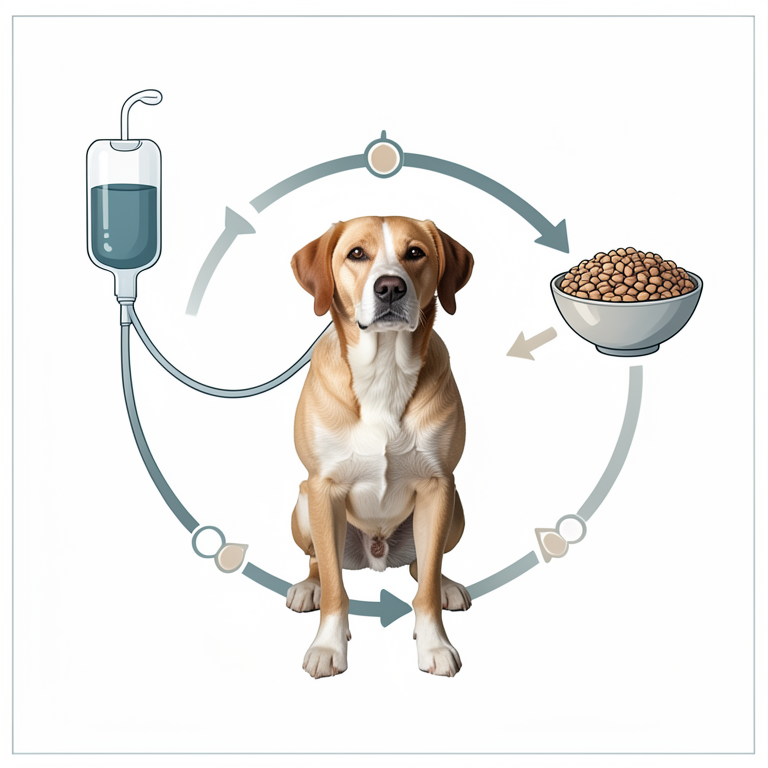
The Cycle of Rebound Hypoglycemia
AI-generated conceptual illustration (a domestic dog). It explains the idea and does not show study data.
View source evidence ↗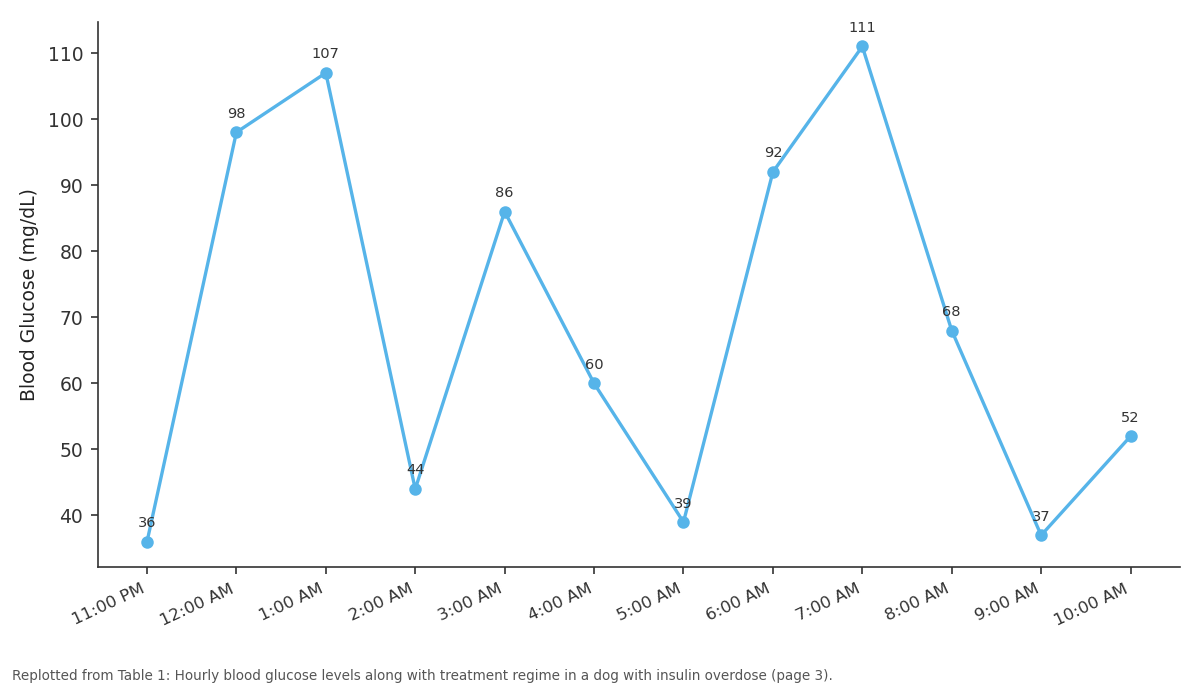
Blood Glucose (mg/dL): 11:00 PM vs 12:00 AM vs 1:00 AM vs 2:00 AM vs 3:00 AM
Replotted from Table 1 (page 3) of the original paper. Every bar is the paper's own table value.
View source evidence ↗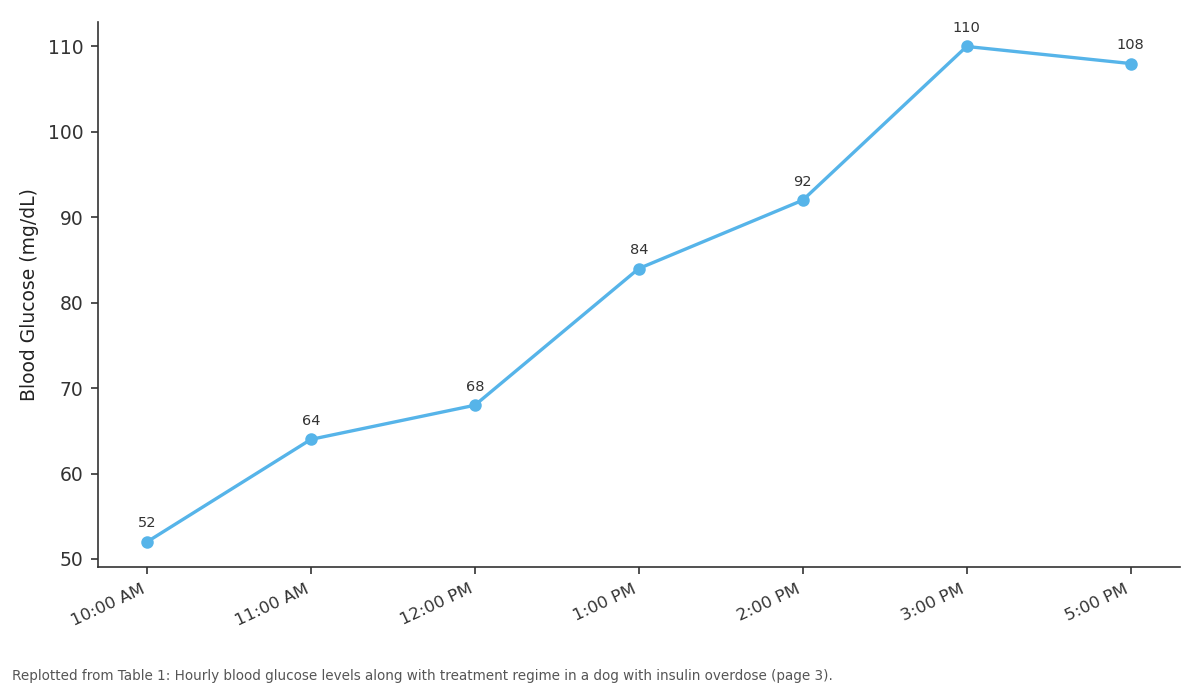
Blood Glucose (mg/dL): 10:00 AM vs 11:00 AM vs 12:00 PM vs 1:00 PM vs 2:00 PM
Replotted from Table 1 (page 3) of the original paper. Every bar is the paper's own table value.
View source evidence ↗Figures & tables
From the original paper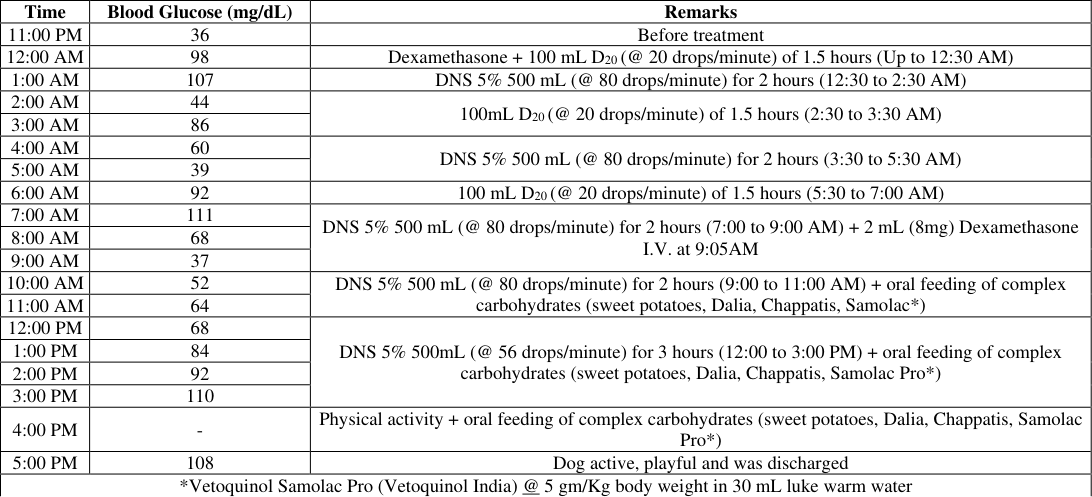 Table 1
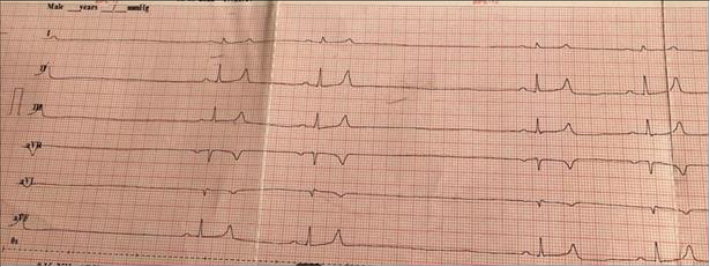 Fig. 1
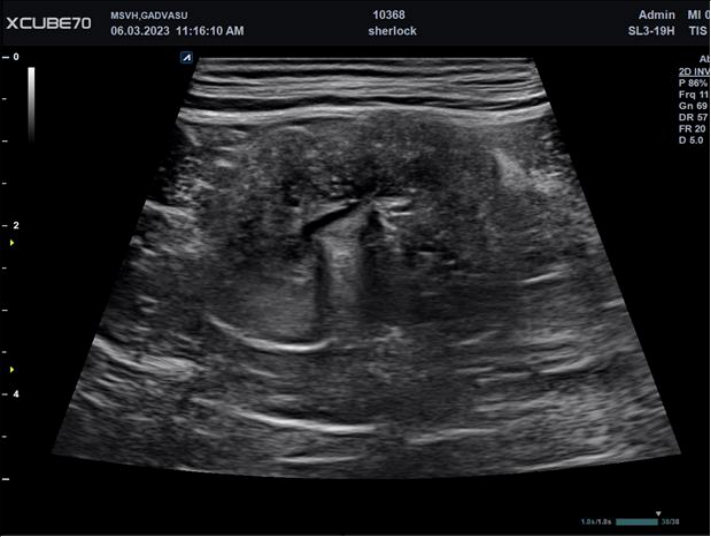 Fig. 2
Introduction
Insulin is an anabolic hormone synthesized by β-cells of pancreas (Thevis et al., 2010 and Kolb et al., 2020) [12,6] . Considered one of the greatest medical discoveries of the 20 th century, it was made in 1921. Insulin is a life-saving treatment for patients with type 1 diabetes and is considered the most effective drug in lowering hyperglycemia (Ahmed and Weisberg, 2001) [2] . For precise glycemic control, numerous varieties of human insulin and synthetic insulin analogues are now readily available. The best insulin therapy would closely resemble the insulin production of a healthy pancreas (Mayer et al., 2007; Greco et al., 1995; Adams et al., 2018) [8,3,1] . Another important role of insulin in critical care settings is treatment of hyperkalemia of renal failure. Therefore, it is crucial to comprehend its dosage, effects, therapeutic importance, and any possible hazards before using it. Insulin increases the activity of the Na+-H+ antiporter on the cell membrane, which promotes the entry of sodium into cells and activates the Na+-K+ ATPase, which results in an electrogenic influx of potassium., The kidney is primarily responsible for maintaining the balance of potassium in the body by modifying the rate of potassium excretion. Under typical physiological circumstances, just 10 per cent of the consumed potassium is expelled via the gut and rest by renal excretion. Thus, any insult to kidneys also hinders potassium clearance in addition to uremic toxins build-up.
Here we present a rare case report involving massive insulin over dose in a dog with hyperkalemia of renal failure.
History and Clinical findings
A 5.5 years old male Golder Retriever breed dog weighing 28 Kg was presented at Medicine emergency of multispecialty Veterinary hospital, Guru Angad Dev Veterinary and Animal Sciences University, Ludhiana, Punjab with complain of drowsiness, shivering and seizures. Previously, the dog was diagnosed with chronic kidney disease stage III and was undergoing incremental intermittent hemodialysis from past 11 months along with essential renal support medications (Anti-fibrotics, phosphate binders, anti-hypertensives, omega 3 fatty acid supplementation and gut prebiotics) to delay declining renal function. The dog was evaluated every month for renal health including blood pressure monitoring to adjust dose and forms (addition) of medications. As a routine monthly follow-up, the dog was presented to dialysis unit of GADVASU a day before the emergency presentation. During follow-up the dog was alert and playful with normal food and water intake.
Clinical examination revealed rectal temperature -102 0 F, heart rate-82 bpm with mild arrhythmia, respiration rate-28 breaths/minute, arterial blood pressure (Doppler)-165 mmHg, mucous membrane-mildly congested and normal lymph nodes. Hemato-biochemical profile of dog (1 day before emergency presentation) revealed Hb. 7.9 g/dL, TLC-12,150 involving absolute neutrophilia with mature neutrophils (N-96%, L-04%), BUN-104 mg/ dL, creatinine-6.3 mg/dL, phosphorus-12.9 mg/dL, GGT-9 u/L, total protein-5.3 g/dL, albumin-2.6 g/dL, glucose 100 mg/dL, Na-132 mEq/L, K-7.6 mEq/L, Cl-92 mEq/L and Ca-8.7 mg/dL. Previously, from past 11 months the dog's BUN and creatinine ranged from 70 to 120 mg/dL and 4.5 to 7 mg/dL, respectively with normal food intake and activity. Electrocardiogram of dog revealed height of T wave greater than 50 per cent than height of R wave (Figure 1).The ultrasound of abdomen revealed complete loss of cortico-medullary differentiation in left kidney (Figure 2) whereas, right kidney revealed mild to moderate loss of cortico-medullary differentiation, livernormal in size with uniform echotexture; spleen-normal in size and echotexture; gall bladder distended with sludge; urinary bladder-normally distended with mild thickening of bladder wall-4mm; pancreas and adrenal glands-normal. Urine specific gravity was 1.015. Keeping in view the high levels of potassium, the dog was prescribed N/2 DNS (500 mL) followed by isophane insulin @ 0.5 I.U./Kg body weight sub-cutaneous once a day for 3 days. Due to time constraints, the owner insisted for medication at her home by family paravet. On emergency presentation at 11 PM, careful evaluation of remaining insulin vial revealed erroneous injection of 4mL insulin (160 I.U.) by local vet due to misreading 40 I.U./mL with 40 I.U./10 mL.
Treatment and Discussion
As the health of dog was deteriorating with continuous shivering, deep breathing, seizures and dizziness, a hand-held glucometer (Accu-Chek® Active, Accu-chek, India) was arranged to monitor blood glucose levels at hourly intervals. The initial glucose reading at the time of presentation was 36 mg/dL. A 100 mL 20 per cent dextrose intravenous infusion was immediately initiated along with intravenous injection of 2 mL dexamethasone (8 mg/2 mL), oxygen supplementation and continuous patient monitoring using multi-parameter monitor. Over the next 12 hours, 20 per cent dextrose was alternated with 5 per cent DNS with a total of 300 mL of 20 per cent dextrose and 2 liters of 5 per cent DNS. The hourly blood glucose levels are provided in table 1. An increase in blood glucose levels above 100 mg/dL was noticed after every 100 mL infusion of 20 per cent dextrose followed by a decreasing trend (< 40 mg/dL) approximately after 30 minutes after stopping 20 per cent dextrose and initiating 5 per cent DNS. After 12 hours (11AM next day), the dog was orally fed with complex carbohydrate source like sweet potatoes, dalia and chapatis along with 5 per cent DNS infusion till 3PM. Renal function test was done at 3 PM and revealed BUN-96 mg/ dL, creatinine-5.9 mg/dL, phosphorus-12.5 mg/dL, Na-137 mEq/L, K-4.2 mEq/L and Cl-97 mEq/L. After 3 PM, the blood glucose level recorded was 110 mg/dL. The dextrose infusion was stopped and dog was only orally fed complex carbohydrates and allowed to play under observation for next 2 hours. After 2 hours (5PM) again blood sugar levels were estimated and revealed blood glucose 108 mg/dL. The dog was active and playful and was discharged with strict instructions to owners to feed complex carbohydrates at hourly intervals and perform hand held blood glucose estimation every 2 hours for next 6 hours. The dog remained normal after discharge and its blood glucose estimation post discharge by owner revealed glucose levels above 100 mg/dL. An excessive amount of insulin poses a serious health risk. In human patients, severe hypoglycemia is brought on by an insulin overdose caused by purposeful poisoning incidents, such as suicides (Johansen and Christensen, 2018) [5] . In Veterinary patients, insulin overdose is usually less prevalent and occurs due to faulty medication. One study (Whitley et al., 1997) [13] documented insulin overdose in dogs and cats and concluded that management factors or concurrent medical problems were major predisposing causes for insulin overdose. Hypoglycaemia is primarily treated with dextrose. When plasma insulin levels approach 50-60 U/mL, the hepatic glucose production is totally inhibited, necessitating the administration of exogenous glucose. Most patients require prolonged dextrose infusions. When a hypoglycaemic episode happens, it can be treated with either 50 or 20 per cent dextrose boluses and at other times with 5 or 10 per cent dextrose solutions. In insulin overdose, the typical amount of glucose needed until full recovery depends on amount, type and duration of overdose, and the length of treatment can be anywhere from 12 to 62 hours (Mégarbane et al., 2007) [9] . Protamine, a basic polyarginine peptide, is used to precipitate recombinantly synthesized human insulin with zinc to produce intermediate-acting NPH insulin. At a pH of 7, this action takes place with a 5:1 ratio of protamine to insulin. This formulation method gives NPH the property of protraction, i.e., slow release of insulin from the precipitated insulin present at the injection site after subcutaneous injection (Lucidi et al., 2015; Heinemann et al., 2000; Singh and Gangopadhyay, 2014) [7,4,11] . The solvent from the NPH insulin suspension diffuses into the subcutaneous tissue after the injection of the protein-insulin complex. The progressive dissolution of these insulin crystals, which are piled up at the injection depot, causes NPH's prolonged action. The onset of action of insulin NPH ranges from1 to 3 hours with time to peak effect in 4 to 8 hours. The time to reach peak effect in plasma is from 6 to 10 hours with total duration ranging from 14 to 24 hours (Saleem and Sharma, 2022) [10] . In present case, insulin overdose was injected at around 6:00 PM (5 hours before emergency presentation) and clinical signs of shivering and seizures were first noticed by owner at around 10:00 PM (4 hours post overdose). Following an initial bolus of intravenous dextrose (D 20 ) on presentation, there was initial increase in levels of blood glucose after 1hour but levels steadily declined as the dog was shifted on 5 per cent DNS. This was due to the fact that excessive intravenous dextrose stimulated endogenous insulin production, as the dog was non-diabetic having intact pancreatic function. This fuelled subsequent hypoglycaemia, which prompted additional dextrose boluses, creating a vicious cycle of recurrent dextrose boluses and rebound hypoglycaemia. This vicious cycle of rebounding hypoglycaemia was broken with oral feeding of complex carbohydrate sources which led to sustained release of glucose through enteral absorption thereby slowly diminishing the effect of rebound hypoglycaemia. Adequate care of electrolyte imbalances is crucial in addition to supplementary dextrose. Sometimes potassium replenishment via oral or intravenous administration is required. However, excessive potassium replacement should be avoided because hypokalaemia is brought on by an intracellular potassium shift. In this case we avoided additional parenteral potassium supplementation keeping in mind already existing hyperkalaemia and high potassium content in sweet potatoes. No hypokalemic episode was encountered in this case and serum potassium level was 4.2 mEq/L after 18 hours of initial presentation. The dog returned to its normal activity with consistently normal blood glucose levels after 24 hours of insulin overdose. Dexamethasone + 100 mL D20 (@ 20 drops/minute) of 1.5 hours (Up to 12:30 AM) 1:00 AM 107 DNS 5% 500 mL (@ 80 drops/minute) for 2 hours (12:30 to 2:30 AM) 2:00 AM 44 100mL D20 (@ 20 drops/minute) of 1.5 hours (2:30 to 3:30 AM) 3:00 AM 86 4:00 AM 60 DNS 5% 500 mL (@ 80 drops/minute) for 2 hours (3:30 to 5:30 AM) 5:00 AM 39 6:00 AM 92 100 mL D20 (@ 20 drops/minute) of 1.5 hours (5:30 to 7:00 AM) 7:00 AM 111 DNS 5% 500 mL (@ 80 drops/minute) for 2 hours (7:00 to 9:00 AM) + 2 mL (8mg) Dexamethasone I.V. at 9:05AM 8:00 AM 68 9:00 AM 37 10:00 AM 52 DNS 5% 500 mL (@ 80 drops/minute) for 2 hours (9:00 to 11:00 AM) + oral feeding of complex carbohydrates (sweet potatoes, Dalia, Chappatis, Samolac*) 11:00 AM 64 12:00 PM 68 DNS 5% 500mL (@ 56 drops/minute) for 3 hours (12:00 to 3:00 PM) + oral feeding of complex carbohydrates (sweet potatoes, Dalia, Chappatis, Samolac Pro*)
| Time | Blood Glucose (mg/dL) | Remarks |
|---|---|---|
| 11:00 PM | 36 | Before treatment |
| 12:00 AM | 98 | Dexamethasone + 100 mL D20 (@ 20 drops/minute) of 1.5 hours (Up to 12:30 AM) |
| 1:00 AM | 107 | DNS 5% 500 mL (@ 80 drops/minute) for 2 hours (12:30 to 2:30 AM) |
| 2:00 AM | 44 | 100mL D20 (@ 20 drops/minute) of 1.5 hours (2:30 to 3:30 AM) |
| 3:00 AM | 86 | |
| 4:00 AM | 60 | DNS 5% 500 mL (@ 80 drops/minute) for 2 hours (3:30 to 5:30 AM) |
| 5:00 AM | 39 | |
| 6:00 AM | 92 | 100 mL D20 (@ 20 drops/minute) of 1.5 hours (5:30 to 7:00 AM) |
| 7:00 AM | 111 | DNS 5% 500 mL (@ 80 drops/minute) for 2 hours (7:00 to 9:00 AM) + 2 mL (8mg) Dexamethasone I.V. at 9:05AM |
| 8:00 AM | 68 | |
| 9:00 AM | 37 | |
| 10:00 AM | 52 | DNS 5% 500 mL (@ 80 drops/minute) for 2 hours (9:00 to 11:00 AM) + oral feeding of complex carbohydrates (sweet potatoes, Dalia, Chappatis, Samolac*) |
| 11:00 AM | 64 | |
| 12:00 PM | 68 | DNS 5% 500mL (@ 56 drops/minute) for 3 hours (12:00 to 3:00 PM) + oral feeding of complex carbohydrates (sweet potatoes, Dalia, Chappatis, Samolac Pro*) |
| 1:00 PM | 84 | |
| 2:00 PM | 92 | |
| 3:00 PM | 110 | |
| 4:00 PM | - | Physical activity + oral feeding of complex carbohydrates (sweet potatoes, Dalia, Chappatis, Samolac Pro*) |
| 5:00 PM | 108 | Dog active, playful and was discharged |
| *Vetoquinol Samolac Pro (Vetoquinol India) @ 5 gm/Kg body weight in 30 mL luke warm water |
Table text extracted from the original PDF; superscript letters are shown inline. The original table image is below.
View original table image
1:00 PM 84 2:00 PM 92 3:00 PM 110 4:00 PM -Physical activity + oral feeding of complex carbohydrates (sweet potatoes, Dalia, Chappatis, Samolac Pro*) 5:00 PM 108 Dog active, playful and was discharged *Vetoquinol Samolac Pro (Vetoquinol India) @ 5 gm/Kg body weight in 30 mL luke warm water
Acknowledgement
AcknowledgementThe authors are thankful to internship students of B.V.Sc. & A.H. 2017 batch who helped in constant monitoring of patient vitals during the course of treatment.
References
12 in the original paper- Adams GG, Meal A, Morgan PS, Alzahrani QE, Zobel H, Lithgo R, et al. Characterisation of insulin analogues therapeutically available to patients. PLoS ONE. 2018;13:e0195010.
- Ahmed J, Weisberg LS. Hyperkalemia in dialysis patients. Semin Dial. 2001;14(5):348-356.
- Greco DS, Broussard JD, Peterson ME. Insulin Therapy. Vet. Clin. N. Am. Small Anim. Pract. 1995;25:677-689.
- Heinemann L, Linkeschova R, Rave K, Hompesch B, Sedlak M, Heise T, et al. Time-action profile of the longacting insulin analog insulin glargine (HOE901) in comparison with those of NPH insulin and placebo. Diabetes Care. 2000 May;23(5):644-649.
- Johansen NJ, Christensen MB. A systematic review on insulin overdose cases: Clinical course, complications and treatment options. Basic Clin Pharmacol Toxicol. 2018;122:650-59.
- Kolb H, Kempf K, Röhling M, Martin S. Insulin: Too much of a good thing is bad. BMC Med. 2020;18:224.
- Lucidi P, Porcellati F, Marinelli Andreoli A, Carriero I, Candeloro P, Cioli P, et al. Pharmacokinetics and Pharmacodynamics of NPH Insulin in Type 1 Diabetes: The Importance of Appropriate Resuspension Before Subcutaneous Injection. Diabetes Care. 2015 Dec;38(12):2204-2210.
- Mayer JP, Zhang F, DiMarchi RD. Insulin structure and function. Biopolymers. 2007;88:687-713.
- Mégarbane B, Deye N, Bloch V, Sonneville R, Collet C, Launay JM, et al. Intentional overdose with insulin: Prognostic factors and toxicokinetic/toxicodynamic profiles. Crit Care. 2007;11:R115.
- Saleem F, Sharma A. NPH Insulin. [Updated 2022 Jun 21]. In: Stat Pearls [Internet]. Treasure Island (FL): StatPearls Publishing; c2023 Jan-. Available from: https://www.ncbi.nlm.nih.gov/books/NBK549860/
- Singh AK, Gangopadhyay KK. Modern basal insulin analogs: An incomplete story. Indian J Endocrinol Metab. 2014 Nov;18(6):784-93.
- Whitley NT, Drobatz KJ, Panciera DL. Insulin overdose in dogs and cats: 28 cases (1986-1993). J Am Vet Med Assoc. 1997 Aug 1;211(3):326-330.