
Research article · 2022 · Full text
International Journal of Agriculture and Food ScienceComparative toxicological computability of turmeric, Curcuma domestica Valeton, Pavettia, Adhatoda vasica Nees and Hulhul, Cleome monophylla Linn. Against Bihar hairy caterpillar, Spilarctia obliqua Walk. (Lepidoptera: Arctiidae)
Volume 4(1) · Pages 59–65 · DOI: 10.33545/2664844x.2022.v4.i1a.145 ↗
Research areasInsect Pest Control StrategiesPhytochemicals and Medicinal PlantsEssential Oils and Antimicrobial Activity
Abstract
Author-writtenIn the present investigation alcoholic extract of two indigenous plant extracts viz., leaves of Pavettia, Adhatoda vasica Nees. (Acanthaceae), rhizomes of Turmeric, Curcuma domesticus Volten (Zingiberaceae), seeds of hulhul, Cleome monophylla Linn. (Capparidaceae), with control (benzene + emulsified water) were prepared with the help of the soxhlet apparatus under the laboratory conditions. These extracts were tested to find out insecticidal effects against third instars larvae of Bihar hairy caterpillar, Spilarctia obliqua Walk. (Lepidoptera: Arctiidae). The data depicted from results that rhizomes extract of C. domesticus Vol. gave the maximum mortality. It killed 66.35 per cent Spilarctia obliqua larvae followed by A. vasica Nees. (65.70 per cent), and C. monophylla Linn (64.16 per cent) whereas untreated control showed only 12.26 per cent mean mortality to the caterpillar of S. obliqua. The plant extract of C. domesticus differed significantly from remaining once except C. monophylla, from which it does not differs significantly to one another.
Summary
Source-checkedPlain-language reading of the full paper, prepared with AI and checked against the text. Each point links to the authors' own words.
Why it matters
- The Bihar hairy caterpillar (Spilarctia obliqua) is a serious pest that causes significant qualitative and quantitative losses to various vegetables and cruciferous crops. View evidence ↗
- This pest is widely distributed across Asia, including India, Pakistan, Sri Lanka, China, Japan, Borneo, and eastern Asia. View evidence ↗
- Variations in insecticide dosages can lead to insects developing resistance, necessitating frequent changes to labeled doses. View evidence ↗
The question
- The study aims to investigate the use of bio-rational insecticides in an integrated manner with other agrochemicals to control the Bihar hairy caterpillar. View evidence ↗
What they did
- Alcoholic extracts were prepared using a soxhlet apparatus from the leaves of Adhatoda vasica (Pavettia), rhizomes of Curcuma domesticus (Turmeric), and seeds of Cleome monophylla (Hulhul), with a benzene and emulsified water control. View evidence ↗
- The experiments were conducted using third instar larvae of the Bihar hairy caterpillar. View evidence ↗
- Plant-based insecticides were tested using a dry film technique, where 1.0 ml of solution was sprayed into 10 cm diameter glass petri dishes. View evidence ↗
- The study tested three to five different concentrations in three replications, compared against a control of benzene and emulsified water. View evidence ↗
What they found
- Curcuma domesticus extract caused the highest mean mortality at 66.35%, followed by Adhatoda vasica at 65.70% and Cleome monophylla at 64.16%. View evidence ↗
- A concentration of 2.0% was the most effective, killing 81.54% of the grubs, outperforming the 1.0% and 0.5% concentrations. View evidence ↗
- Mortality increased over time, with the difference between 24 hours (79.71%) and 12 hours (74.31%) being greater than the difference between 12 hours and 6 hours (29.56%). View evidence ↗
- The extract of Curcuma domesticus showed a significant difference in efficacy compared to other extracts, except for Cleome monophylla. View evidence ↗
What it means
- The authors conclude that these plant extractives can serve as low-cost botanical insecticides for the integrated management of the Bihar hairy caterpillar in vegetable production. View evidence ↗
Visual summary
3 visualsIllustrations explain the paper; charts are replotted from the paper's own table values.
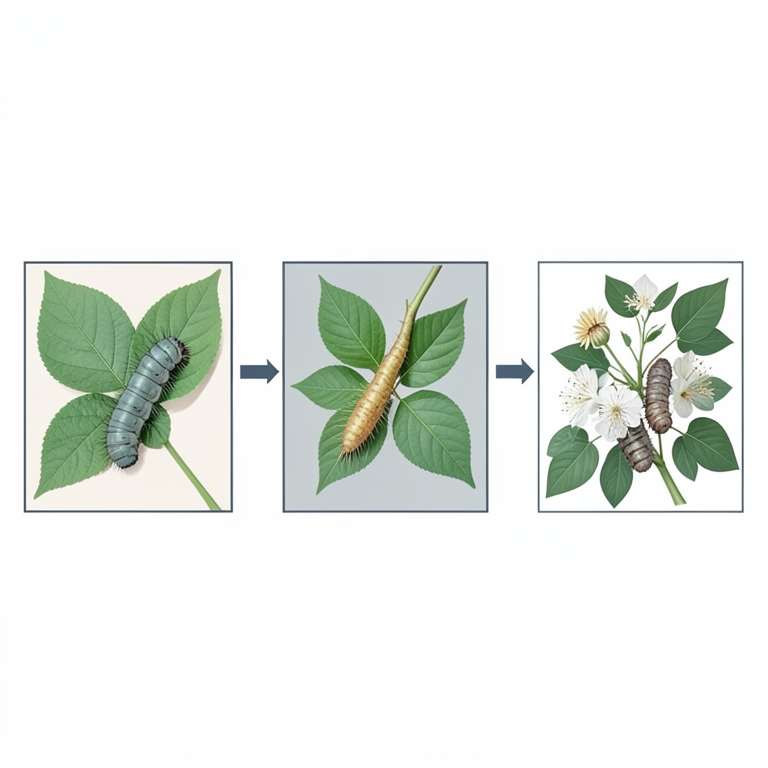
Comparative Mortality of Plant Extracts
AI-generated conceptual illustration (Bihar hairy caterpillar (Spilarctia obliqua)). It explains the idea and does not show study data.
View source evidence ↗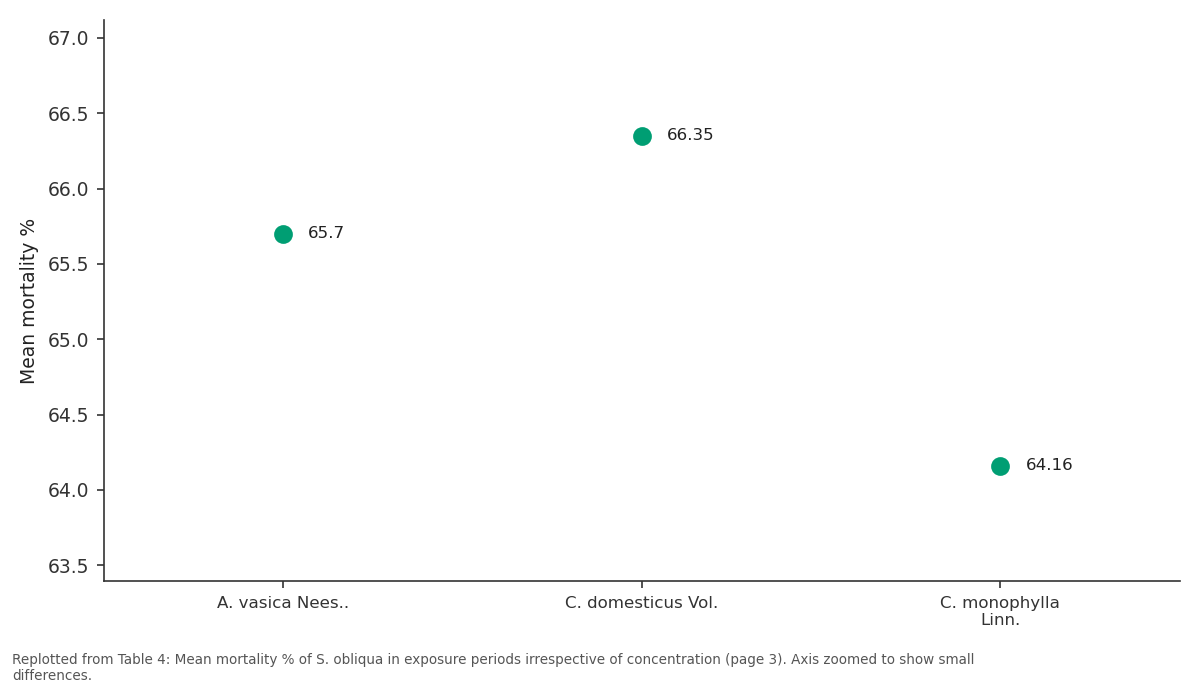
Mean / mortality / G.T.: A. vasica Nees.. vs C. domesticus Vol. vs C. monophylla Linn.
Replotted from Table 4 (page 3) of the original paper. Every bar is the paper's own table value.
View source evidence ↗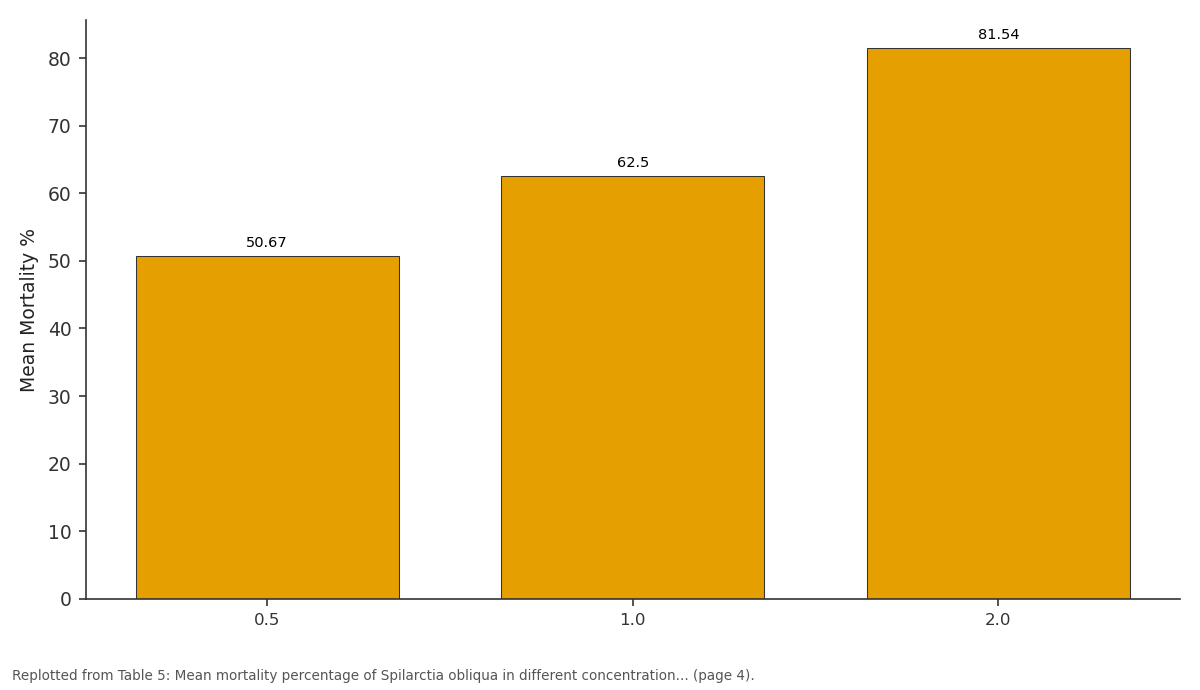
Mean / G.T.: 0.5 vs 1.0 vs 2.0
Replotted from Table 5 (page 4) of the original paper. Every bar is the paper's own table value.
View source evidence ↗Figures & tables
From the original paper Table 1
 Table 2
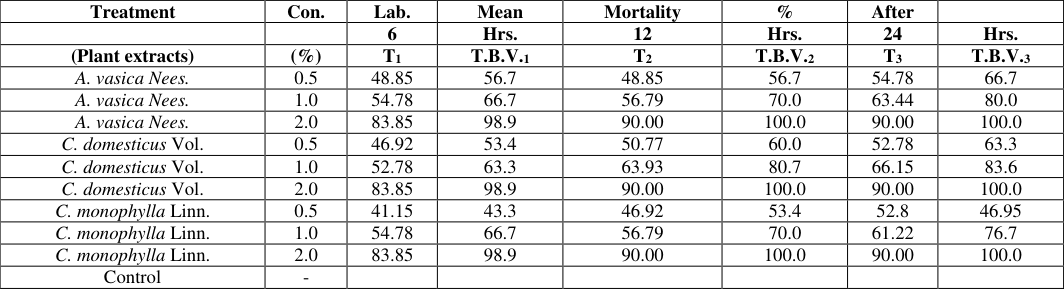 Table 3
 Table 4
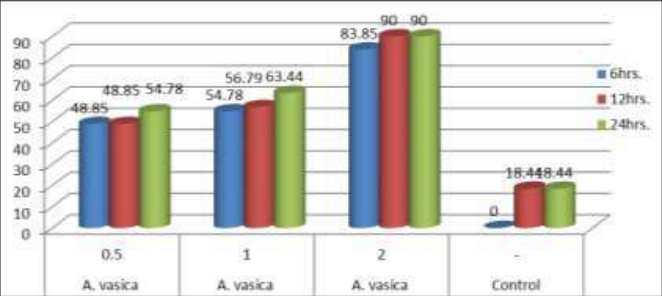 Figure 1
 Table 5
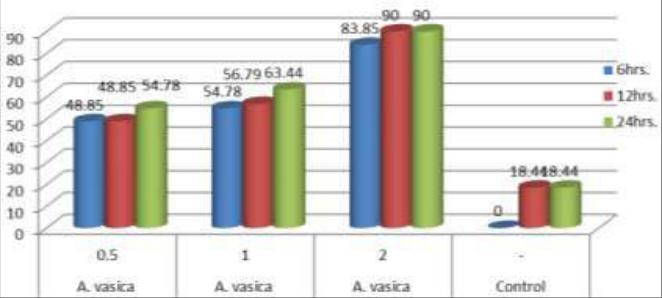 Figure 2
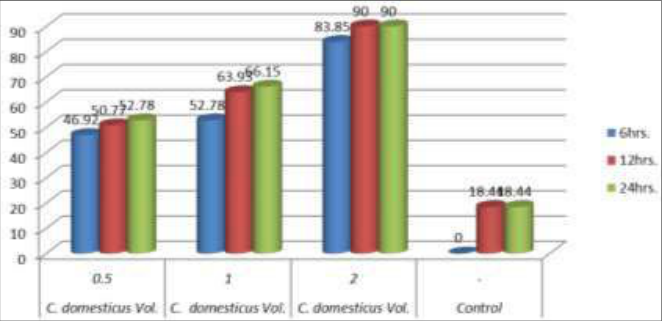 Figure 3
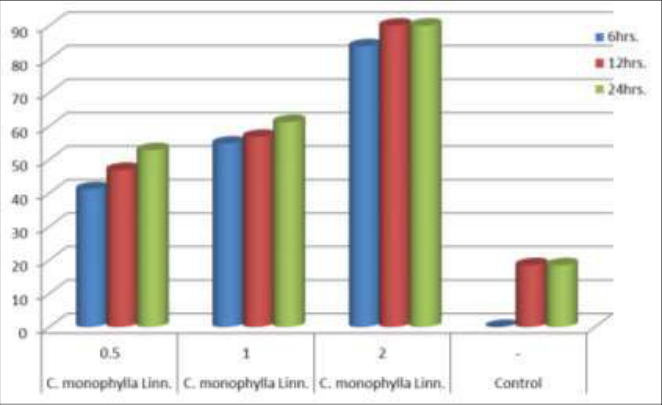 Figure 4
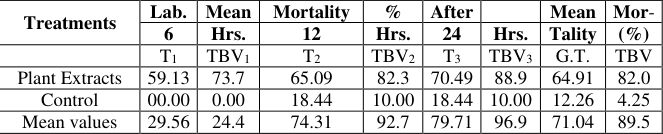 Table 6
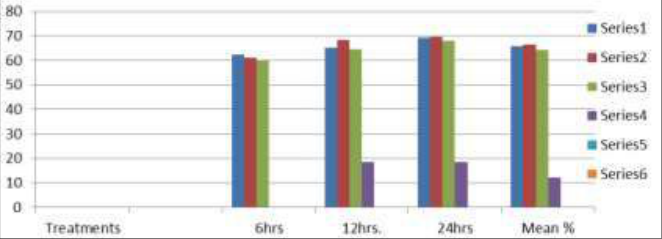 Figure 5
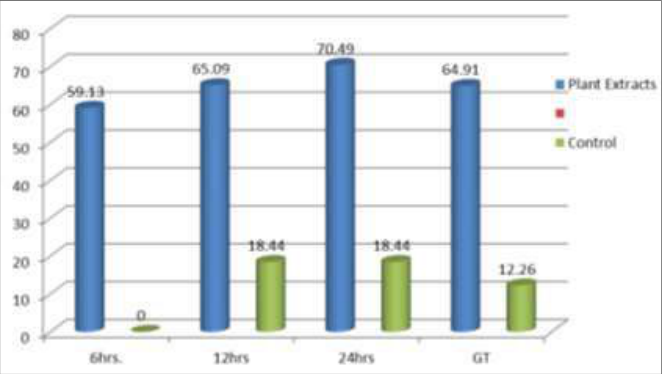 Figure 6
Introduction
The tests insect Bihar hairy caterpillar, Spilarctia obliqua Walk. (Lepidoptera: Arctiidae) is a the serious pests, causing enormous qualitative and quantitative losses to various Cruciferous crops and vegetables. The Bihar hairy caterpillar, Spilarctia obliqua (Walker) (Spilosoma obliqua Walker) is considered as a dominant polyphagous pest of various crops including soybean, pulses, oilseeds, legumes etc. (Bhattacharya and Rathore, 1977) [1] . This pest has been recorded in India, Pakistan, Sri Lanka, eastern Asia, Borneo, China and Japan (Biswas 2006) [2] . Use of various pesticides is widespread among farmers and plantation growers for the control of this pest. If other agrochemicals which are usually applied in the field for other purposes then controlling insects, and have insecticidal activity, then their use in combination to lesser concentration of insecticide can be incorporated in IPM module for the first instar larvae of this pest. Though, a large amount of literature is available for the management of this pest but there is a lot of variation is found among dosage used of different insecticides. This may be the reason that insects develop resistance to particular insecticide and so the labeled dose keeps on changing with time. Present research investigation has been focused on the role of agrochemicals in an integrated manner with the use of bio-rational insecticides in combination with other agrochemicals (fungicide, Plant growth regulator PGR) for the control of this pest. All rearing was carried out in glass jars (21´15 cm) covered with muslin cloth. Adults obtained from this culture were kept in glass jars (21 x 15 cm) lined with filter paper and covered with muslin cloth, for egg laying. Sucrose solution (10 per cent) was provided for adults, as food, by placing the soaked absorbent cotton in a small glass petri dishes in the bottle of glass jars. Eggs obtained from these adults were kept in glass petri dishes. Newly hatched larvae (0-24 h old) were obtained for experiments. During the period of study, the feeding habits of larvae have been noted. Generally, the larvae feed in the early and later parts of the day. In remaining period, due to hot sunshine they move towards the underside of the leaves and in soil to hide themselves. In cloudy weather, the larvae continue to feed on the upper surface of leaves throughout the day.
Materials and Methods
Materials and Methods
Experimental Site
To obtain regular supply of known aged larvae for laboratory and field study the culture was raised for Bihar hairy caterpillar, Spilarctia obliqua Walk on mustard leaves under laboratory. The start the culture, the larvae were collected from plots and reared in petridishes containing fresh mustard leaves. The food was changed daily and at maturation, the larvae were provided the sand in Jar for pupation. The newly emerged insects (adults) were separated according to their sexes and a pair of male and female were released on potted radish plant and kept under the glass chimneys top covered with muslin cloth and a pair of Bihar hairy caterpillar, Spilarctia obliqua Walk was carefully transferred to the fresh mustard plants for egg laying. The leaves having egg pouches were seen clearly and as soon as the hatching starts, the newly hatched larvae were transferred to the petridishes containing food over moist filter paper.
Selection and Extraction of Indigenous Plants
The plant materials used in the present investigation were collected mainly from wasteland; wild areas and some plants were collected from cultivated fields of the farmers. Thirty plants were collected from the nearby locality. A preliminary trial was undertaken in the laboratory by crude method to see which of them have more or less toxicity in the farm of food preference/antifeeding/repellent/insecticide against the insects. Thirteen plant materials were used for their biological efficacy against Bihar hairy caterpillar, Spilarctia obliqua Walk. The feeding deterrent and repellent activity of mentioned plant materials were tested against larvae of Bihar hairy caterpillar, Spilarctia obliqua Walk under laboratory conditions. A preliminary trial was conducted to test the biological efficacy of selected naturally occurring plant extracts under laboratory as well as field condition, against the test insect. 2.6 Preparation of 50 percent stock solution from pure extract: 50 ml. Extract in each case was taken into reagent bottle and 50 ml. Benzene was added in it to dissolve the constituents of the materials. This was the 50 percent stock solution, the mouth of the bottles were stopped with airtight corks and kept in refrigerator.
The Insecticidal Formulations
To make various concentration of extract the required quantity of the stock solution was calculated with the help of following formula:
The calculated amount of various ingredients required to make different concentrations from the 50 per cent stock solution and amount of ingredients taken are presented in the following table : The different concentrations of the insecticides were prepared from the stock solution using benzene as solvent and Triton X-100 as emulsifier. The level of solvents and emulsifier were kept constant at the rate of 5 per cent and 0.5 per cent, respectively, in the final spray.
2.8 Preparation Of 0.5 Per Cent Emulsifiable Water: 0.5 ml. of Triton X-100 was accurately measured into a large bottle with the help of a measuring cylinder, then 99.5 ml of distilled water was added and bottle was shaken well to dissolve the emulsifier. Thus emulsifiable water of 0.5 per cent strength was obtained and used for the preparation of different concentrations of the extracted materials (Schmidt and El,1997).
Experimental protocols
After conducting the preliminary trials the regular experiments were carried out under laboratory conditions. The third instars larvae of Bihar hairy caterpillar, Spilarctia obliqua Walk., were used for the purpose. The insecticides of the plant origins were tested by dry film technique. The spraying of the insecticides was done in glass petridishes (10cm diameter) by potters spray tower, using 1.0 ml. of solution (insecticical preparation) per petridish. Three or five concentrations were tested in three replications, along with over control (Benzene + emulsified water). To record the mortality, the spray petridishes were gently shaken under an electric fan till the liquid phase evaporated leaving behind a uniform dry film of insecticide on the glass surface. The spray tower was thoroughly rinsed with the insecticide solution. Ten larvae of known age were then released inside each pair of petridishes and allow remaining there up to two hours. After which, they were transferred to the fresh petridishes containing fresh food for feeding. These petridishes were kept as such under control conditions (27+2 o C temp. 75+5% relative humidity) and mortality count was taken after 6, 12, 24 hours of exposure. For contact toxicity test, the fresh leaves of mustard were taken from unsprayed field and washed thoroughly with tap water.
The each leaf was dipped into desired concentration of each extract and dried under the fan, then kept them into petridishes (15 cm in diameter) separately. A control with Benzene + emulsified water was run simultaneously. Now, ten known healthy caterpillars of Spilarctia obliqua Walk. were released into each petridishes after drying the extract of treated leaf. The mortality of caterpillar, Spilarctia obliqua Walk. were counted after 24, 48, 72 hours of the released. Table 5 indicates that all the three concentration differed significantly to one another. The concentration 2.0 per cent is superior to concentration 1.0 and 0.5 per cent. 2.0 per cent concentration killed grubs of S. obliqua (81.54 per cent). It is also observed that the difference in the percentage kill of grubs in concentration 2.0 per cent and 1.0 per cent (62.50%) is greater than the difference in concentration to kill the grubs in 1.0 per cent and 0.5 per cent (50.67%) in all the three periods
| Concen- trations | — | Lab. | Mean | Mortality | % | After | Mean | % |
|---|---|---|---|---|---|---|---|---|
| 6 | Hrs. | 12 | Hrs. | 24 | Hrs. | |||
| T1 | TBV1 | T2 | TBV2 | T3 | TBV3 | G.T. | TBV | |
| 0.5 | 45.19 | 50.4 | 49.74 | 58.2 | 57.09 | 70.5 | 50.67 | 59.8 |
| 1.0 | 56.96 | 70.3 | 62.23 | 78.3 | 68.38 | 87.0 | 62.50 | 78.7 |
| 2.0 | 75.25 | 93.5 | 83.32 | 98.7 | 80.06 | 97.1 | 81.54 | 97.9 |
Table text extracted from the original PDF; superscript letters are shown inline. The original table image is below.
View original table image
Figures and tables from the paper
| Scientific Name | Vernacular Name | Part Used | Faimly |
|---|---|---|---|
| Adhatoda vasica Nees | Pavettia | Leaves | Acanthaceae |
| Curcuma domesticus Vol. | Turmeric | Rhizome | Zingiberaceae |
| Cleome monophylla Linn. | Hulhul | Seeds | Capparidaceae |
Table text extracted from the original PDF; superscript letters are shown inline. The original table image is below.
View original table image
| Concentration (%) | Amount of Stock Solution (ml) | Amount of Benzene (ml) | Amount of Emulsifiable Water (ml) | Total Amount (ml) |
|---|---|---|---|---|
| 0.25 | 2.50 | 22.50 | 475.00 | 500.00 |
| 0.50 | 5.00 | 20.00 | 475.00 | 500.00 |
| 1.00 | 10.00 | 15.00 | 475.00 | 00.00 |
| 1.50 | 15.00 | 10.00 | 475.00 | 500.00 |
| 2.00 | 20.00 | 5.00 | 475.00 | 500.00 |
Table text extracted from the original PDF; superscript letters are shown inline. The original table image is below.
View original table image
| Treatment | Con. | Lab. | Mean | Mortality | % | After | — |
|---|---|---|---|---|---|---|---|
| 6 | Hrs. | 12 | Hrs. | 24 | Hrs. | ||
| (Plant extracts) | (%) | T1 | T.B.V.1 | T2 | T.B.V.2 | T3 | T.B.V.3 |
| A. vasica Nees. | 0.5 | 48.85 | 56.7 | 48.85 | 56.7 | 54.78 | 66.7 |
| A. vasica Nees. | 1.0 | 54.78 | 66.7 | 56.79 | 70.0 | 63.44 | 80.0 |
| A. vasica Nees. | 2.0 | 83.85 | 98.9 | 90.00 | 100.0 | 90.00 | 100.0 |
| C. domesticus Vol. | 0.5 | 46.92 | 53.4 | 50.77 | 60.0 | 52.78 | 63.3 |
| C. domesticus Vol. | 1.0 | 52.78 | 63.3 | 63.93 | 80.7 | 66.15 | 83.6 |
| C. domesticus Vol. | 2.0 | 83.85 | 98.9 | 90.00 | 100.0 | 90.00 | 100.0 |
| C. monophylla Linn. | 0.5 | 41.15 | 43.3 | 46.92 | 53.4 | 52.8 | 46.95 |
| C. monophylla Linn. | 1.0 | 54.78 | 66.7 | 56.79 | 70.0 | 61.22 | 76.7 |
| C. monophylla Linn. | 2.0 | 83.85 | 98.9 | 90.00 | 100.0 | 90.00 | 100.0 |
| Control | - |
Table text extracted from the original PDF; superscript letters are shown inline. The original table image is below.
View original table image
| Treatment | Lab. | Mean | mortality | % | after | — | Mean | % |
|---|---|---|---|---|---|---|---|---|
| 6 | Hrs. | 12 | Hrs. | 24 | Hrs. | mortality | ||
| (Plant extracts) | T1 | TBV1 | T2 | TBV2 | T3 | TBV3 | G.T. | TBV |
| A. vasica Nees.. | 62.49 | 78.7 | 65.21 | 82.4 | 69.40 | 87.6 | 65.7 | 82.3 |
| C. domesticus Vol. | 61.18 | 76.6 | 68.23 | 86.2 | 69.64 | 87.9 | 66.35 | 84.0 |
| C. monophylla Linn. | 59.93 | 74.9 | 64.57 | 81.6 | 68.00 | 86.0 | 64.16 | 81.0 |
| Control (Benzene+ H2O) | 0.00 | 0.00 | 18.44 | 10.00 | 18.44 | 10.00 | 12.26 | 4.25 |
Table text extracted from the original PDF; superscript letters are shown inline. The original table image is below.
View original table image
| Treatments | Lab. | Mean | Mortality | % | After | — | Mean | Mor- |
|---|---|---|---|---|---|---|---|---|
| 6 | Hrs. | 12 | Hrs. | 24 | Hrs. | Tality | (%) | |
| T1 | TBV1 | T2 | TBV2 | T3 | TBV3 | G.T. | TBV | |
| Plant Extracts | 59.13 | 73.7 | 65.09 | 82.3 | 70.49 | 88.9 | 64.91 | 82.0 |
| Control | 00.00 | 0.00 | 18.44 | 10.00 | 18.44 | 10.00 | 12.26 | 4.25 |
| Mean values | 29.56 | 24.4 | 74.31 | 92.7 | 79.71 | 96.9 | 71.04 | 89.5 |
Table text extracted from the original PDF; superscript letters are shown inline. The original table image is below.
View original table image
References
4 in the original paper- Nagpal M, Sood S. Role of curcumin in systemic and oral health: An overview. J. Nat. Sci. Biol. Med. 2013;4:3-7.
- Tavares WS. Ar turmerone from Curcuma longa (Zingiberaceae) rhizomes and effects on Sitophilus zeamais (Coleoptera: Curculionidae) and Spodoptera frugiperda (Lepidoptera: Noctuidae). Ind. Crop Prod. 2013;46:158-164.
- Mourão SA. Mortality of Anticarsia gemmatalis (Lepidoptera: Noctuidae) caterpillars post exposure to a commercial neem (Azadirachta indica, Meliaceae) oil formulation. Fla. Entomol. 2014;97:555-561.
- Ribeiro LP. Comparative bioactivity of selected seed extracts from Brazilian Annona species and an acetogenin-based commercial bioinsecticide against Trichoplusia ni and Myzus persicae. Crop Prot. 2014;62:100-106.